

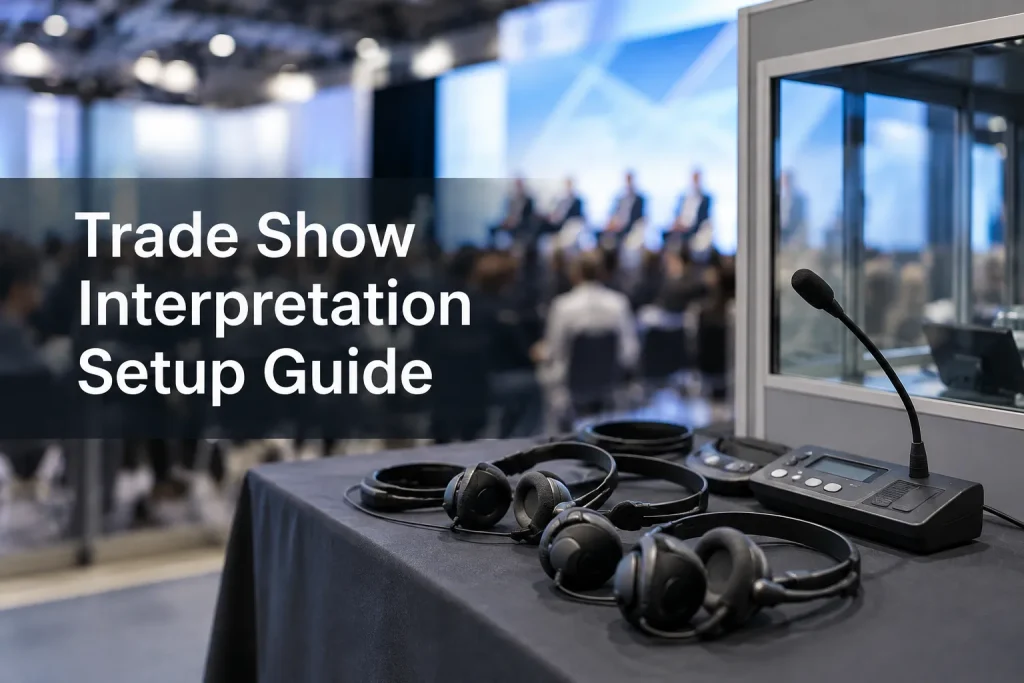
At a trade show, simultaneous interpretation equipment has to serve people in different rooms and on the move. Give interpreters a clean feed from each speaker, then send each language to the right listeners in keynote halls, breakouts and booths. Map the listening zones and languages before you decide how many receivers to rent or where to place a technician.
Team Stream’s language service provider overview explains the interpreting formats. On your event floor, the interpreter handles the language; the system gets audio to the interpreter and sends the interpretation to attendees.
Watch the interpreter-side controls in this console demonstration before planning the rest of the audio chain:
Map languages, rooms and attendee movement first
Create a session-by-session grid before requesting simultaneous interpretation equipment rental. A total headcount and a language list tell a supplier very little about who needs to hear what, where and when.
|
Planning input |
Record for each location |
Why it changes the setup |
|---|---|---|
|
Program |
Session times, speaker language, target languages and overlapping sessions |
Determines simultaneous interpreter assignments and independent audio feeds |
|
Venue |
Main stage, breakout rooms, booth demos, walking routes and backstage space |
Determines coverage, cabling and where interpreters can work |
|
Audience |
Expected listeners per language and where they enter and leave |
Determines receiver inventory and distribution points |
|
Audio |
Speaker microphones, panel microphones, videos, virtual speakers and recording feeds |
Determines what the interpreter hears and what must reach the stream |
|
Operations |
Load-in windows, venue AV contact, power, network access and device return |
Determines installation time and who owns each handoff |
Keep languages and channels distinct. A channel is an audio path. If two adjacent sessions run in Spanish at the same time, each needs its own path. Ask the technical provider to draw the signal flow for overlapping sessions.
Simultaneous interpretation equipment: what goes into the system?
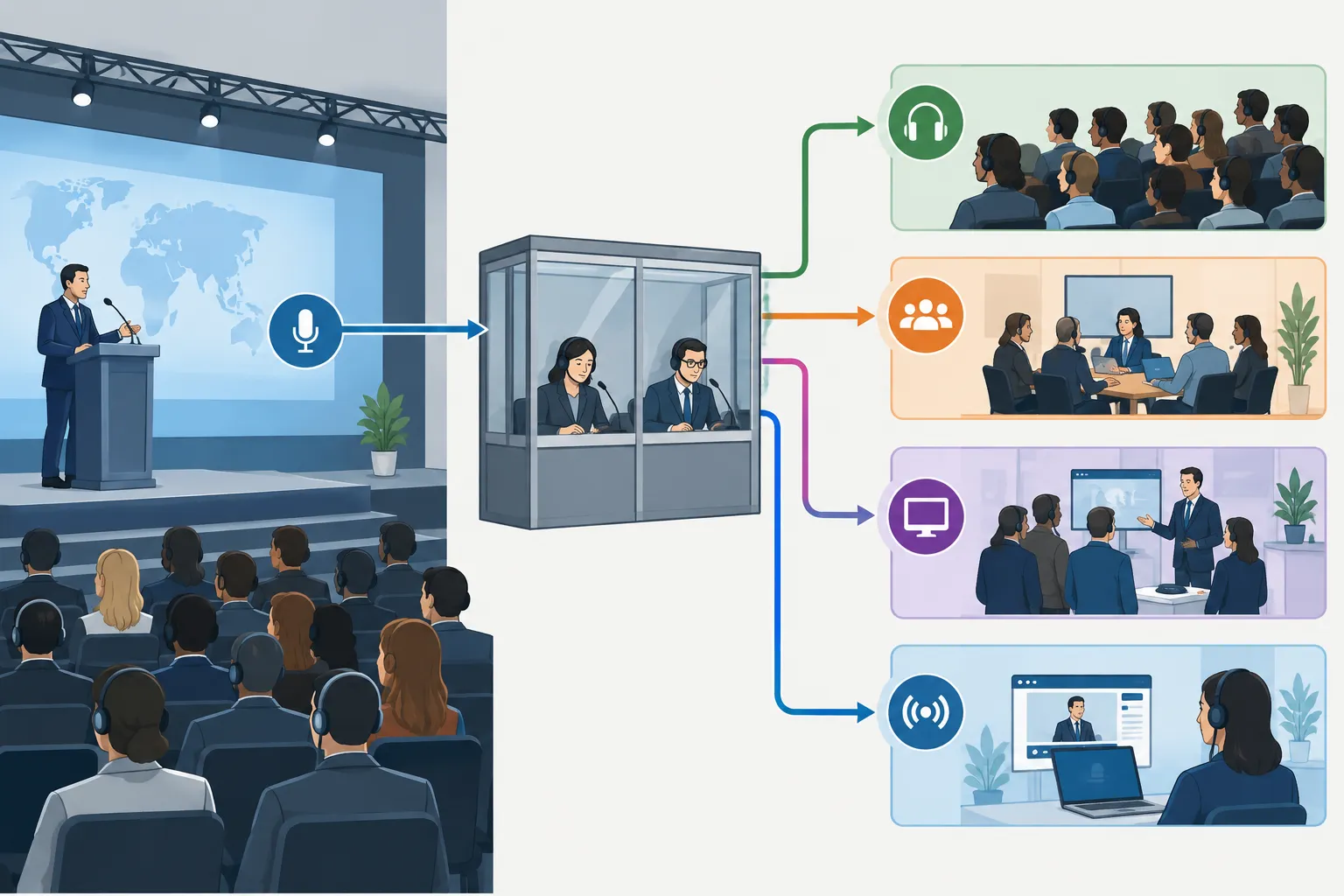
The basic chain is speaker microphone → audio mixer/feed → interpreter listening position and console → language transmitter or streaming platform → attendee receiver/headset. Decide whether recordings, the livestream and accessibility feeds also need the original speech or interpreted channels. A manufacturer’s equipment overview shows interpreter consoles, IR distribution and wireless options; the venue determines which pieces you need.
ISO’s equipment requirements cover:
“the quality of sound and image transmitted to interpreters and from interpreters to the audience” – ISO 20109:2025
-
Clean source audio: Every presenter, panelist and audience Q&A microphone should reach the interpreters. If a video plays speech, its audio belongs in the interpreter feed too.
-
Interpreter position: A sound-isolated booth suits a loud main hall when there is space and an appropriate feed. A quieter room with monitored audio may suit a remote production workflow. A tabletop enclosure alone is not a fix for a roaring expo aisle.
-
Interpreter console and headset: These let interpreters listen to the floor audio, control their microphone and output to the assigned language path.
-
Distribution equipment: A transmitter with compatible receivers, IR emitters, portable guide units or a managed app stream carries each language to listeners. Match the technology to the venue rather than selecting receivers in isolation.
-
Attendee listening kit: Plan receivers, headphones, batteries or charging, spare units, cleaning and an accessible pickup process. Include any interface to the venue’s assistive-listening plan.
-
Technical control: A technician needs access to the audio patch, channel assignments, device stock and a way to hear both floor and interpreted feeds.
The best simultaneous interpretation equipment keeps the audio path working in each zone. If a panelist’s microphone never reaches the interpreter, replacing the attendee’s receiver will not help.
Interpreter booths and working conditions
For a long main-stage program, set aside space for a full-size booth. Interpreters need a clear view of the speaker or a suitable video view, ventilation and room to work comfortably. Ask the supplier whether the quote includes an enclosed booth or a tabletop enclosure; the tabletop option offers less isolation on a busy expo floor. Arrange staffing and handoffs with the language-services provider if two interpreters share an assignment. A spare headset cannot take a shift.
Interpreter equipment, channels and receivers
Trace the source language from the speaker’s microphone through the sound system to the console. Then follow the interpreter’s voice to the transmitter and a wireless receiver in the audience. A listener may hear the channel even while the interpreter misses a speaker or a video clip, so test both ends. With consecutive interpreting, the speaker pauses for each interpreted segment. That changes the schedule and may change the channel plan.
Choose a setup for each trade show space
Keynote hall and main stage
Choose a booth position with workable sightlines, isolation and cable routes. If interpreters work remotely, give them a controlled feed instead. Include every live speaker and media playback in their audio mix, then route each interpreted output to its listener channel. Tell the AV team which channels the stream and recordings need.
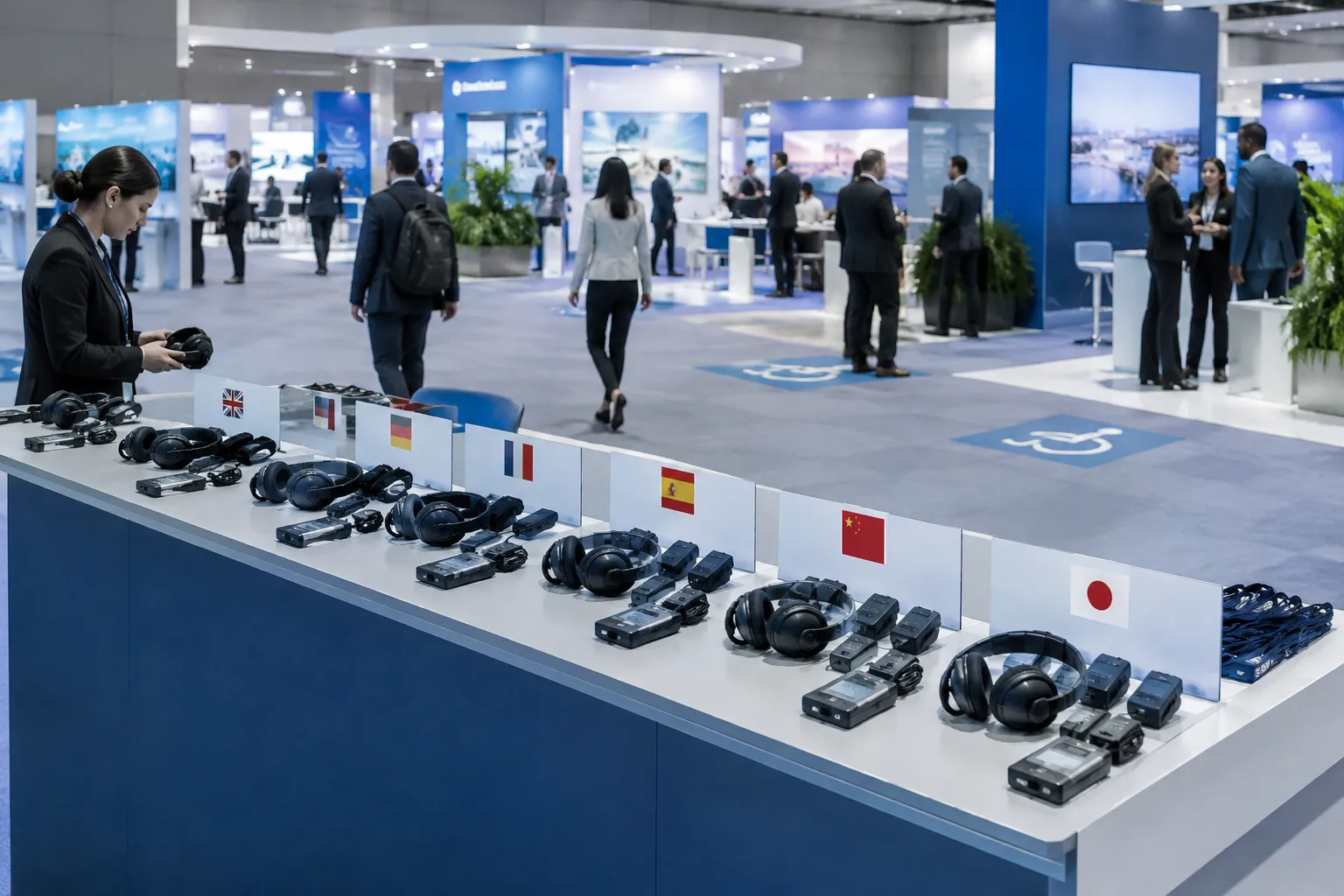
At the audience entrance, label the pickup desk with available languages and simple channel instructions. Test listening from front, back and edge seating, not only from the AV control position.
Breakout sessions
Give concurrent breakouts separate audio paths: someone listening to Spanish in Room B should not hear Room A. Portable equipment may suit a small room; isolation, wall layout, venue rules and neighboring systems determine whether it will work.
Assign a technician or clearly defined response route when sessions turn over rapidly. Hand the technician a room schedule that includes language changes, speaker handoffs and Q&A so they can recheck routing before doors open.
Booth demonstrations and moving tours
A portable transmitter and participant receivers suit many compact demos and walking groups better than a fixed booth-and-emitter setup. Walk the route and test beside active neighboring booths. Put a microphone close to the demonstrator, so the interpreter can hear the speech over the expo noise.
If a demonstration is repeated throughout the day, define where units are handed out and returned. Keep the demo’s language path separate from the keynote channels where the signals or audiences might overlap.
Hybrid audiences and remote interpreters
List the destinations for each language: in-room listeners, remote attendees, the show stream and any recording. The venue’s receivers will not send interpretation to a virtual platform on their own. For remote interpreting, plan the return audio path, network connection, monitoring and a fallback if connectivity fails.
Captioning answers a different access need than audio interpretation. If the event promises both, specify which language each caption feed follows and where it appears on-site and online.
Compare delivery methods without confusing range with fit
|
Delivery approach |
Fits best |
Tradeoff to plan around |
|---|---|---|
|
Portable wireless transmitter and receivers |
Tours, booth demos and flexible small-group areas |
Coverage and adjacent-system coordination need an on-site test |
|
IR transmitter, emitters and receivers |
Seated rooms where zone containment matters |
Emitter placement and room geometry need a walk-through |
|
App or browser-based audio |
Attendees using their own devices, especially hybrid participation |
Network capacity, device compatibility, latency and user support become part of the show plan |
|
Venue-integrated or fixed system |
Repeat events in an equipped hall |
Less portable; confirm the available channels and interfaces with venue AV |
An advertised range cannot tell you how the signal behaves beside the next booth or across a partition. Walk the listening area, test the edges, and listen for interference during a neighboring session. Give attendees who change rooms a channel map marked by language and session.
Rent equipment, buy it, or book a managed service?
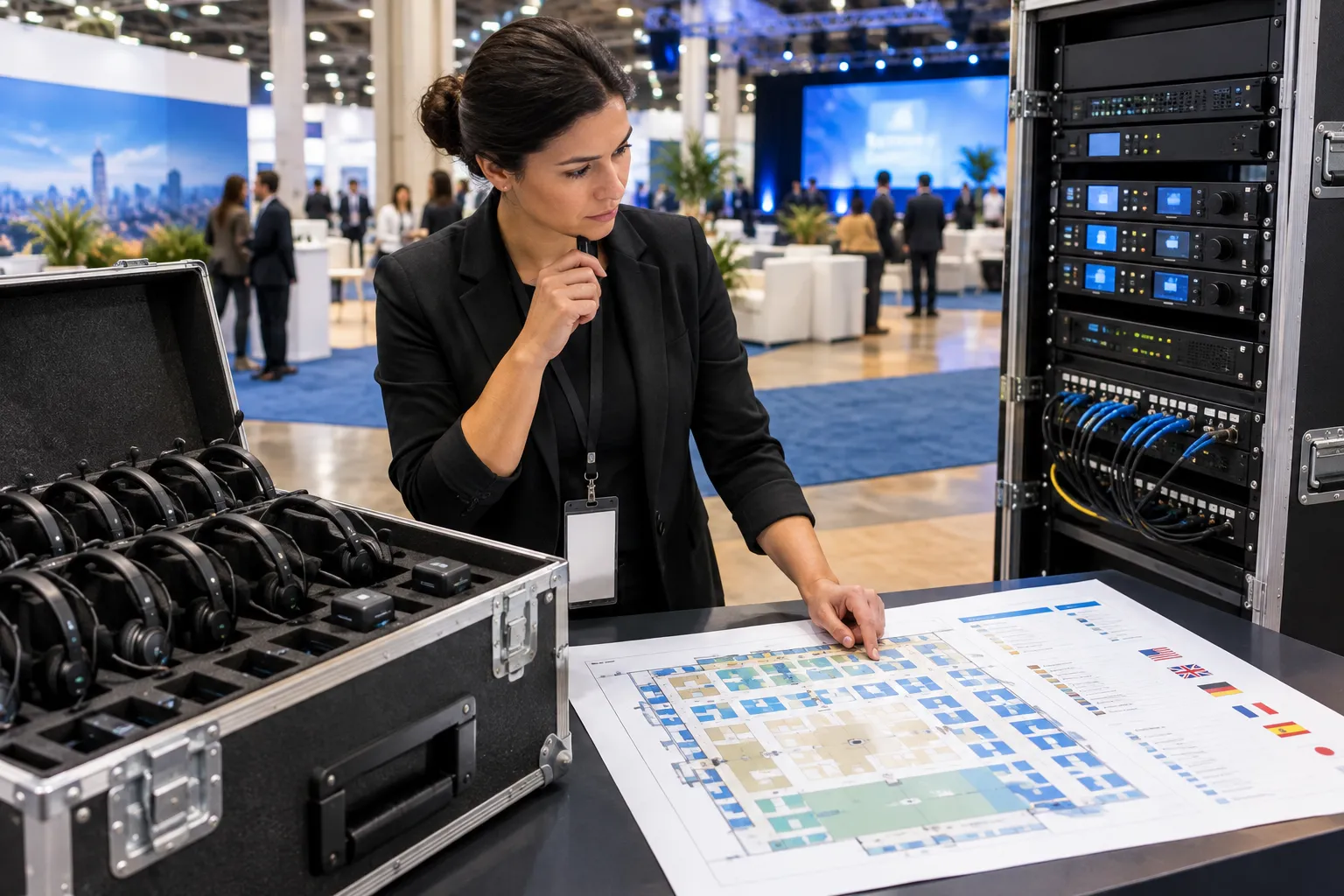
Simultaneous interpretation equipment rental makes sense for a show with temporary rooms, variable languages or changing audience counts. It lets the event team specify the deployed hardware, setup and strike rather than storing and maintaining a kit. Request an itemized scope, not just a per-headset figure.
Simultaneous interpretation equipment for sale is worth discussing when the same team repeatedly runs the same type of event and can own inventory management, charging, repairs and technical operation. Ownership does not replace interpreter scheduling or venue integration. Ask for compatibility details before buying extra receivers for an existing installation.
A simultaneous interpretation service quote should name the interpreter supplier, equipment provider and person responsible for audio engineering. Combining interpreting, rentals and on-site technical support can simplify a multi-zone expo. Write down who owns each task regardless.
Use this request-for-quote checklist:
-
Event dates, load-in and strike windows; floor plan and session schedule.
-
Source and target languages by session, including concurrent sessions and audience estimates per language.
-
Speaker audio sources, media playback, Q&A microphones, livestream and recording destinations.
-
Proposed booths or remote interpreting positions, consoles, transmitters, receiver and headset counts, and spares.
-
Delivery, setup, rehearsal, technician coverage, device distribution, cleaning, charging and return process.
-
A channel plan, venue AV patch list, troubleshooting owner and fallback for a failed feed or network path.
Team Stream can plan interpreting, captioning, equipment rental and technician services together for live or hybrid events. If you need language and accessibility feeds across several spaces, ask for a proposal that shows the equipment and support in each zone against the show schedule.
Rehearse the complete attendee journey
Rehearse with the people and equipment that will serve the show. A test tone confirms a connection. Have a panelist speak into the microphone too, then send someone to an attendee seat to find and listen to the right channel.
-
Before doors: Patch and monitor every microphone and playback source. Have each interpreter confirm incoming audio and send a spoken test on each language channel.
-
At the pickup desk: Show staff how to label sessions and channels, fit and swap headphones, provide any needed accessible assistance, and track issued receivers.
-
During sessions: Have technical staff listen to the floor and interpreted audio at attendee positions. Make a clear escalation path for dead batteries, wrong channels, distorted feeds and missed speaker microphones.
-
At changeover: Reconfirm routing after room or language changes. Reconcile returned devices and recharge or replace units before the next peak.
Include the return desk in the rehearsal. Attendees need to find their language, hear it clearly and hand back the receiver on their way to the next session.
Conclusion
Choose simultaneous interpretation equipment around zone, concurrent program and attendee flow. Portable kits suit tours and booths; main stages and breakouts need audio routing that keeps each session distinct. Team Stream can coordinate interpreters, rentals, captioning and on-site support in an event setup tied to your floor plan and schedule.
FAQ
What is the best simultaneous translation device?
There is no single best device for a whole trade show. Choose a portable transmitter and receivers for moving groups, a room-specific distribution system for seated sessions, or a managed app feed when remote listeners need access; test the chosen setup in the actual venue.
What are simultaneous interpretation systems?
They are connected audio components that carry a speaker’s voice to interpreters and deliver each interpreted language to listeners on a separate path. A system can include microphones, audio routing, interpreter consoles, transmitters and attendee receivers or a digital listening platform.
