

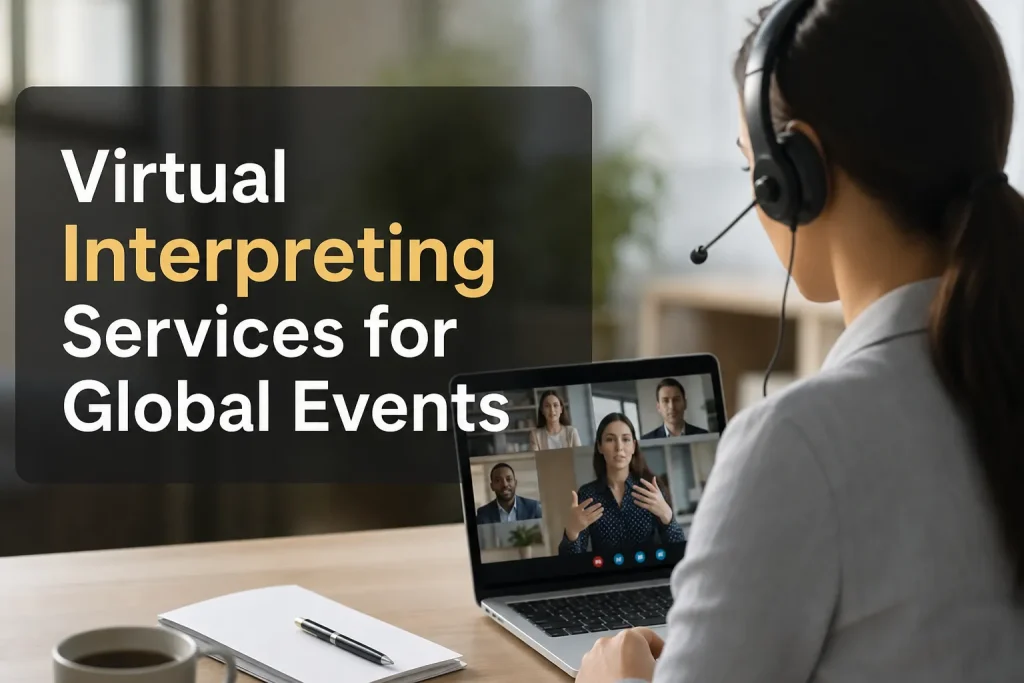
Virtual Interpreting Services for Global Events
When your audience spans countries, languages, and accessibility needs, “good enough” communication is not enough. A missed product detail in a webinar, an inaccessible town hall, or a multilingual hybrid conference without proper support can reduce engagement, create compliance risk, and weaken the value of the event you worked so hard to produce.
Virtual interpreting services help solve that problem. They make it possible for attendees to follow presentations in real time, ask questions confidently, and participate fully whether they are joining in person, online, or across multiple regions. For event organizers, corporate communications teams, churches, producers, and operations leaders, the right setup turns multilingual communication from a challenge into a strategic advantage.
At Team Stream, we see the biggest issue clearly: most organizations do not just need a virtual interpreter. They need a complete language-access plan that combines interpreting, live captioning, translation, accessibility support, technology, and responsive execution. That is where experienced planning matters.
What virtual interpreting services actually mean
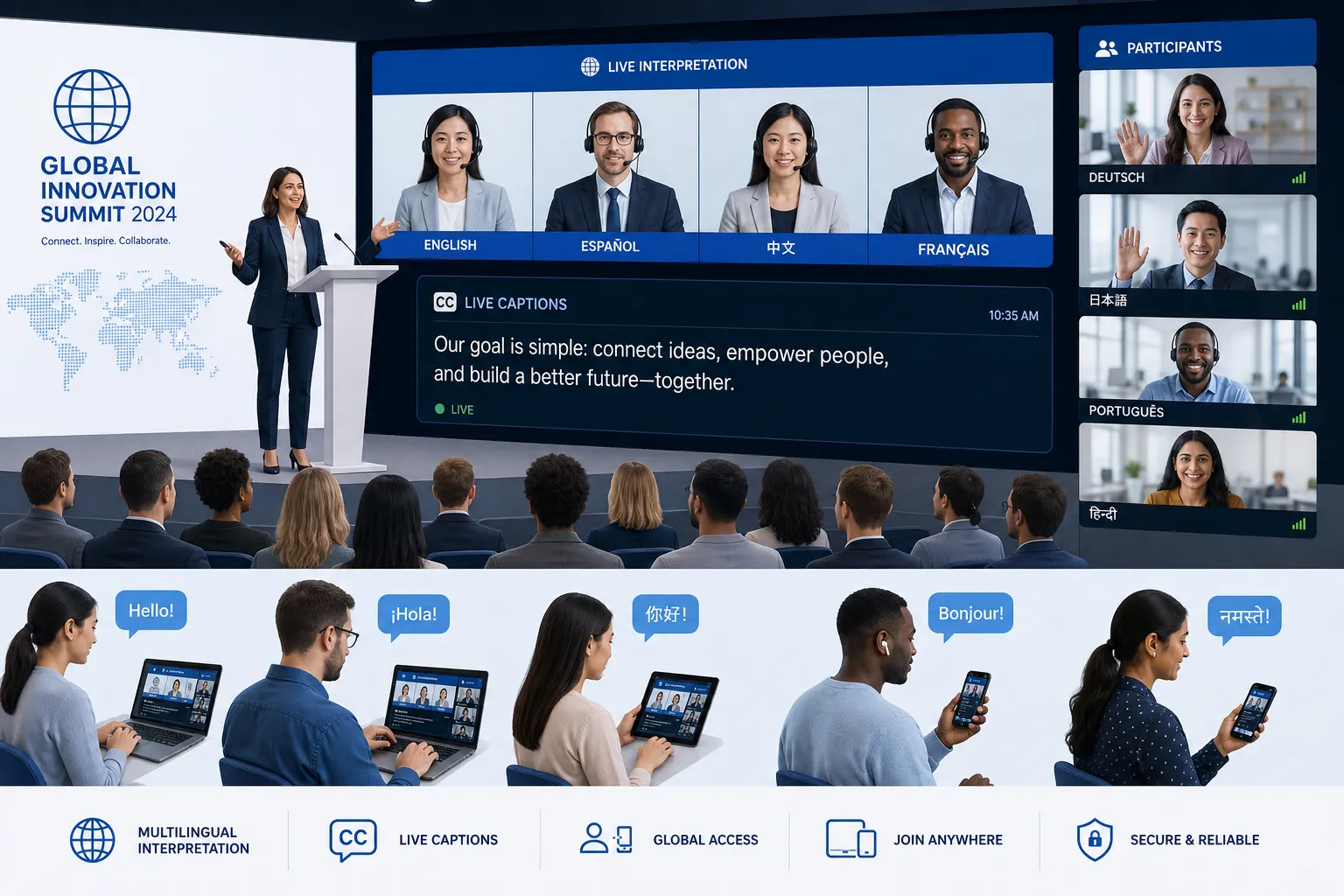
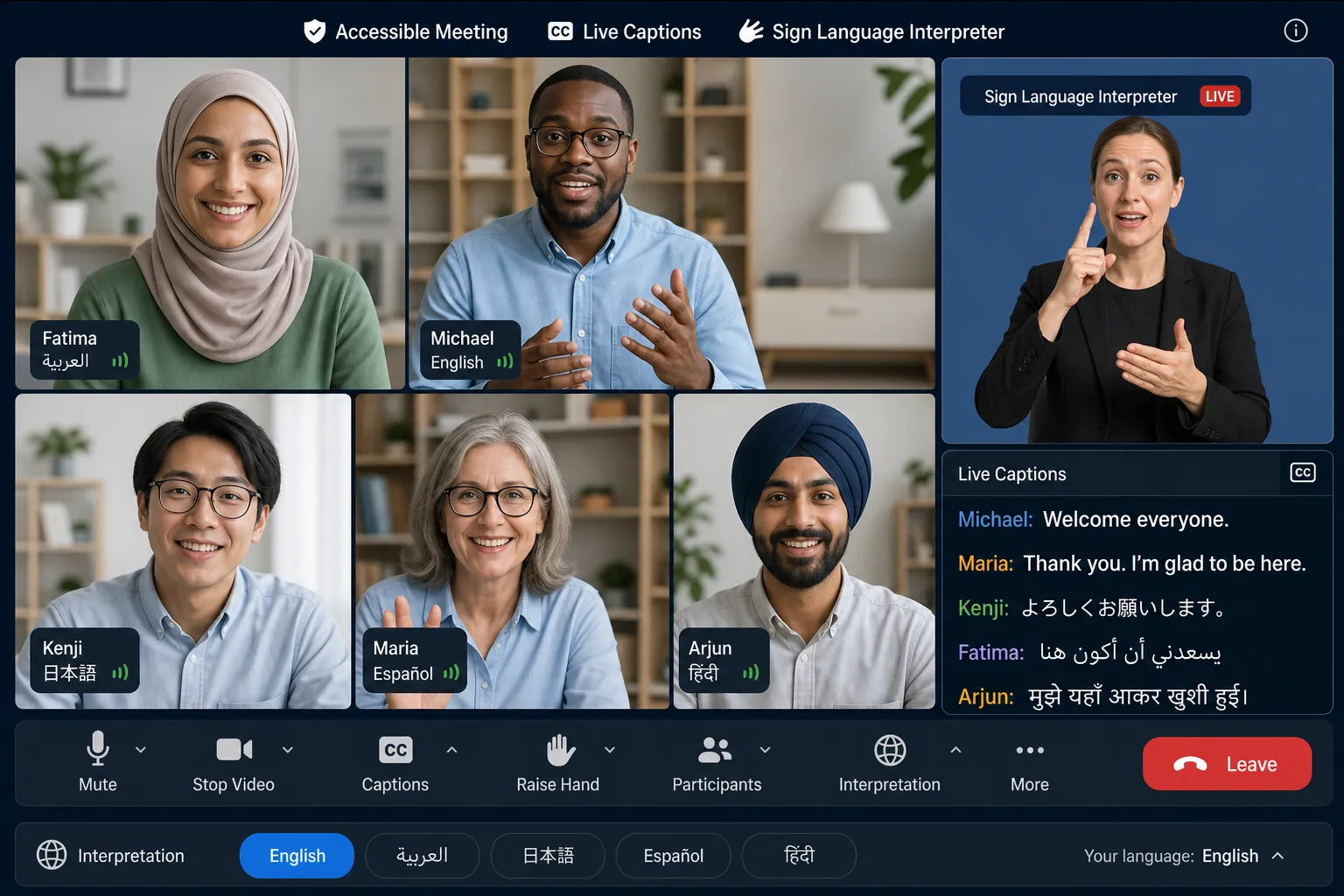
Virtual interpreting services provide real-time spoken or signed language support through online platforms rather than requiring everyone to be in the same room. Instead of relying only on physical booths and on-site setups, interpreters can work remotely while attendees listen in their preferred language on computers, tablets, phones, or integrated event platforms.
Depending on the event, virtual interpretation services may include:
-
Simultaneous interpreting for conferences, webinars, and broadcasts
-
Consecutive interpreting for meetings, interviews, and smaller discussions
-
Sign language interpreting for accessible participation
-
Real-time captioning for Deaf and hard-of-hearing audiences
-
Multilingual subtitles or live translated text
-
Hybrid support that combines in-room AV with remote language delivery
This flexibility is why virtual interpreter services have become essential for online meetings, global all-hands calls, virtual training, faith-based broadcasts, investor presentations, and hybrid trade shows.
Why competitors rank – and what they often miss
The top-ranking providers tend to emphasize the same strengths:
|
Common competitor theme |
Why it matters |
What is often missing |
|---|---|---|
|
Real-time interpretation for virtual and hybrid events |
Matches core search intent |
Little detail on planning the attendee experience |
|
Platform compatibility |
Buyers want flexibility with Zoom, Teams, Webex, ON24, and more |
Few explain how to test platform workflows before event day |
|
Access to interpreters in many languages |
Important for global scale |
Limited advice on choosing between human and AI support |
|
Accessibility support such as captions and sign language |
Critical for inclusion and compliance |
Often treated as an add-on rather than part of event strategy |
|
Project management and remote support |
Reassures buyers |
Rarely covers equipment, technician support, and redundancy planning |
That creates a clear content gap. Most articles explain what a service is, but not how to make it succeed under real event conditions. Team Stream fills that gap by focusing on execution: interpreter quality, captioning accuracy, accessibility, equipment, technicians, contingency planning, and tailored service design.
Why global events need more than interpretation alone
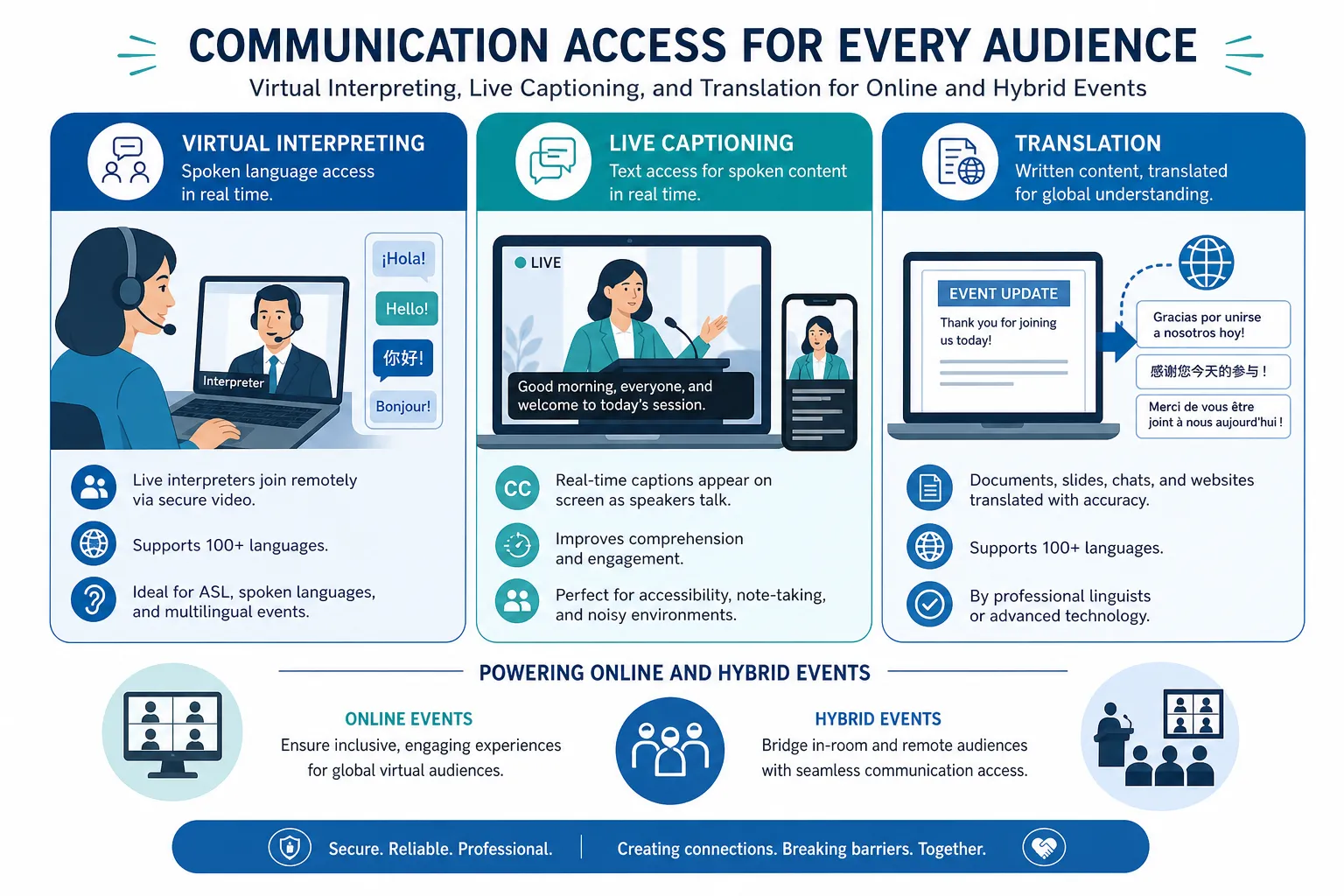
Many event planners start by asking for a virtual interpreter, but that is only one part of the audience experience. If your slides are untranslated, your videos lack captions, or your remote attendees cannot find the language channel, comprehension still breaks down.
A successful multilingual event usually requires several layers working together:
1. Interpretation for understanding in the moment
This is the live language bridge that lets attendees follow a speaker in real time.
2. Captioning for accessibility and retention
Captions help Deaf and hard-of-hearing participants, support non-native speakers, and improve comprehension for everyone in noisy or low-audio environments.
3. Translation for pre-event and post-event materials
Agendas, registration pages, slides, handouts, follow-up emails, and on-demand content often need written translation.
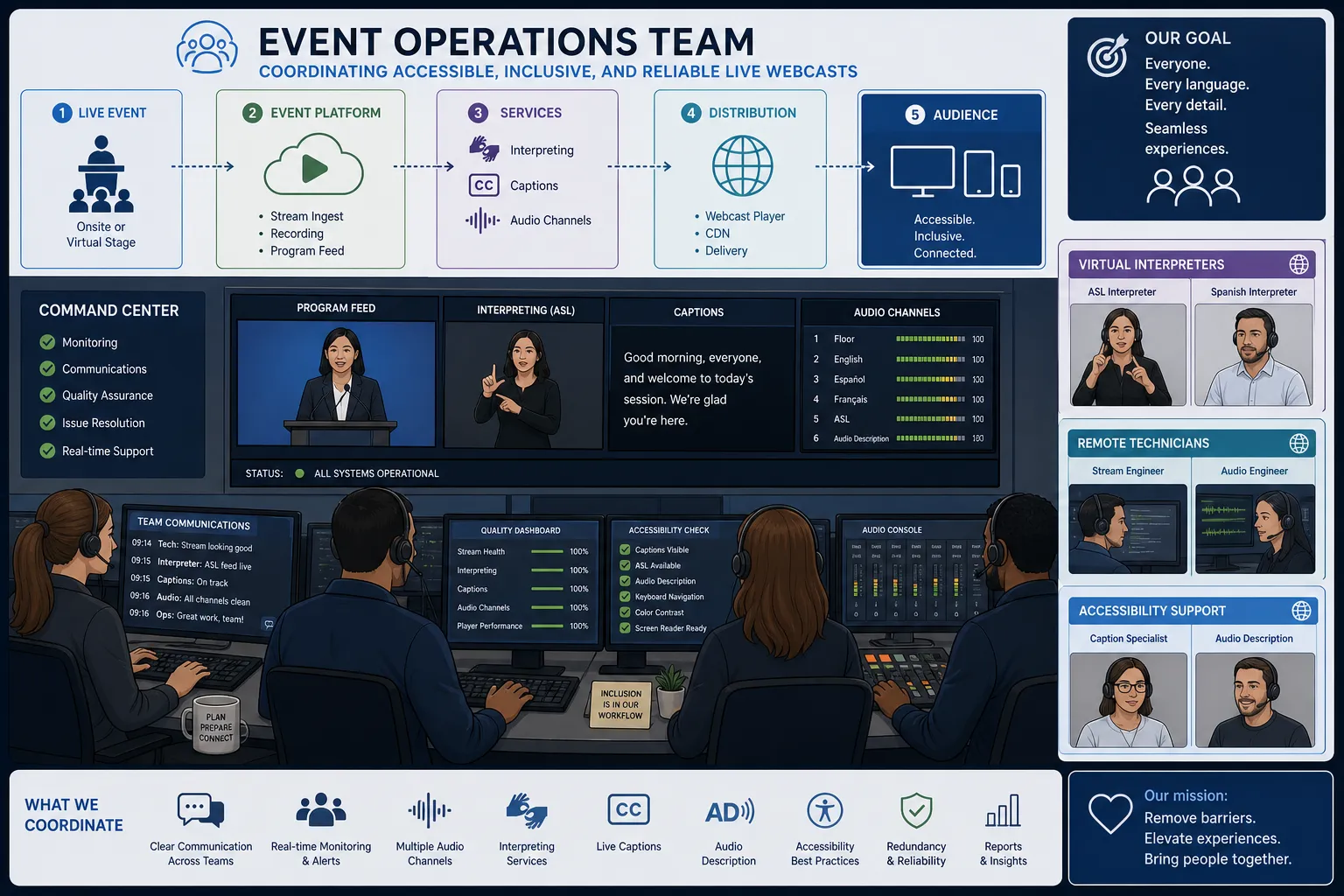
4. Technical orchestration
Audio routing, interpreter feeds, platform settings, technician support, and backup plans are what keep everything running smoothly.
5. Compliance and inclusivity planning
Accessibility is not just a feature. In many settings, it is a business, ethical, and legal requirement.
The main types of virtual interpretation services
Not every event needs the same model. Choosing the right format improves quality, attendee satisfaction, and cost control.
Simultaneous interpreting
The interpreter speaks almost at the same time as the presenter. This is ideal for:
-
Conferences
-
Webinars
-
Keynotes
-
Live streams
-
Corporate town halls
-
Church broadcasts
-
Panel discussions
Best for events where speed and uninterrupted delivery matter.
Consecutive interpreting
The speaker pauses, then the interpreter renders the message. This works well for:
-
Small meetings
-
HR conversations
-
Legal or medical discussions
-
Interviews
-
Guided training sessions
Best for interactive settings where a slower pace is acceptable.
Sign language interpreting
A sign language interpreter supports Deaf participants visually in a pinned video window, on stage display, or integrated stream. This is essential for inclusive communication and may need specialized planning around visibility, camera framing, and presenter pacing.
Live captioning
Captioners or speech technology produce text in real time. This can be paired with interpreting or used on its own.
AI-powered speech translation
AI can provide multilingual text or voice support quickly and at scale, especially for lower-risk or high-volume sessions. But it does not replace human expertise in every setting, particularly when nuance, brand voice, regulated language, or audience Q&A matter.
At Team Stream, we often recommend a blended model: accurate human interpreters where precision matters most, paired with AI-enabled solutions where speed, scalability, or budget efficiency makes sense.
Human interpreters vs. AI: what should you choose?
This is one of the biggest practical questions event teams face today.
|
Factor |
Human interpreting |
AI-powered language support |
|---|---|---|
|
Accuracy with nuance |
Strong |
Varies by topic and audio quality |
|
Tone and cultural sensitivity |
Strong |
Limited |
|
Handling humor, idioms, and speaker changes |
Strong |
Can struggle |
|
Speed to deploy at scale |
Moderate |
Strong |
|
Cost for many languages |
Higher |
Often lower |
|
Best for high-stakes events |
Yes |
Sometimes, depending on risk |
|
Best for accessibility layering |
Yes, especially with live support |
Useful as a supplement |
The best answer is not always either/or. For executive messaging, regulated industries, investor communications, faith-based programming, or mission-critical training, professional human interpreters are usually the safest choice. For broader multilingual reach in large-scale digital environments, AI can extend access efficiently when properly supervised.
Where virtual interpreter services work best
Virtual interpreter services are effective across far more than conferences.
Corporate communications
-
Global town halls
-
Leadership announcements
-
Internal training
-
DEI programs
-
HR meetings
-
Cross-border team meetings
Events and conferences
-
Virtual summits
-
Hybrid conferences
-
Trade shows
-
Association meetings
-
Product launches
-
Press events
Churches and faith-based organizations
-
Live streaming services
-
Conferences
-
Multilingual ministry events
-
International outreach
Broadcast and media
-
Live interviews
-
Sports-related programming
-
News and commentary
-
Streaming content
-
Multilingual viewer engagement
Education and nonprofit programs
-
Webinars
-
Workshops
-
Accessibility-driven public programming
-
Community outreach sessions
What attendees expect from a multilingual event now
Audience expectations have changed. People no longer see language access as a bonus feature. They increasingly expect it to be built in.
“Over 5% of the world’s population – or 430 million people – require rehabilitation to address their disabling hearing loss.” – World Health Organization
That matters because accessible event design is not niche. It is central to audience reach.
“There are at least 7,000 languages in the world, with at least 2,000 of these languages having fewer than 1,000 speakers.” – UNESCO
For global brands, institutions, and event teams, inclusive communication means accommodating real linguistic diversity, not just assuming everyone will engage comfortably in one language.
How virtual interpreting works behind the scenes
For organizers, the delivery model matters as much as the language service itself.
A strong workflow usually looks like this:
Pre-event discovery
The provider should assess:
-
Event format
-
Audience size
-
Languages needed
-
Accessibility requirements
-
Agenda complexity
-
Speaker count
-
Platform and AV setup
-
Risk level and contingency needs
Interpreter matching
Interpreters should be selected based on:
-
Language pair
-
Subject matter expertise
-
Event format
-
Industry terminology
-
Audience expectations
Technical planning
This includes:
-
Platform integration
-
Audio feed design
-
Language channel access
-
Caption display setup
-
Sign language video placement
-
Backup communication paths
-
Equipment needs
Rehearsal and testing
This is one of the most overlooked steps in competitor content. A rehearsal can uncover issues with presenter audio, slide timing, handoff cues, channel labels, stream latency, and accessibility visibility before they affect attendees.
Live event support
On event day, active monitoring is critical. Team Stream supports clients with technicians and event specialists who can manage interpreting feeds, captioning workflows, remote participation issues, and backup responses in real time.
Post-event delivery
After the session, organizations may need:
-
Edited captions
-
Subtitles
-
Written translation
-
Voiceover
-
Transcripts
-
Repurposed multilingual content
Features to look for in a provider
If you are evaluating vendors, do not stop at “how many languages do you support?”
Look deeper.
Language quality
Ask how interpreters are vetted, matched, and briefed.
Accessibility capabilities
Can they support sign language, CART or real-time captioning, closed captioning, and multilingual subtitles?
Hybrid readiness
Can they work across in-person, virtual, and hybrid environments with equal confidence?
Technical support
Do they provide technicians, equipment consultation, rentals, testing, and live troubleshooting?
Human and AI flexibility
Can they recommend the right balance instead of forcing a one-size-fits-all approach?
Responsiveness
When something changes two days before the event, can they adapt quickly?
Experience
Years in business matter, especially for complex or high-visibility events. Team Stream brings more than 25 years of experience supporting multilingual communication and accessibility for live events, broadcasts, churches, and enterprise clients.
Common mistakes that undermine virtual interpretation
Even strong events can fail on execution. Here are the issues we see most often.
Booking too late
Interpreter quality and language availability improve with lead time, especially for specialized topics.
Treating captions as optional
Captions support accessibility, comprehension, and engagement for a broad audience.
Ignoring audio quality
Poor presenter audio harms both interpreters and AI tools.
Failing to localize supporting materials
Slides, lower thirds, PDFs, and follow-up assets influence comprehension as much as the live spoken message.
Skipping rehearsal
Testing prevents avoidable breakdowns.
Forgetting attendee instructions
Participants need clear guidance on how to access language channels, captions, and accessibility tools.
Using one solution for every event
A board meeting, church livestream, and global product launch do not need the same language-access setup.
How Team Stream approaches virtual interpretation differently
Team Stream is not just a provider of isolated services. We act as a language access and accessibility partner.
That means we help clients combine:
-
Accurate human interpreting
-
AI-powered language solutions where appropriate
-
Live captioning and closed captioning
-
Written translation
-
Subtitling and voiceover
-
Equipment rental and sales
-
Technician support
-
Event-specific planning for live, hybrid, and virtual experiences
Instead of selling fixed packages, we tailor delivery to the event, audience, and risk profile. For some clients, that means one remote interpreter and captions for a leadership webcast. For others, it means a complete multilingual and accessibility workflow across a multi-day conference.
A practical planning checklist for event teams
Before booking services, answer these questions:
|
Planning question |
Why it matters |
|---|---|
|
Who is attending, and from where? |
Helps determine languages and access modes |
|
Is the event virtual, in-person, or hybrid? |
Affects technical delivery and staffing |
|
Do you need spoken language, sign language, captions, or all three? |
Defines accessibility scope |
|
Is the content high-stakes or regulated? |
Guides human vs. AI decisions |
|
Are there slides, videos, or handouts to localize? |
Expands beyond live interpreting |
|
What platform are you using? |
Impacts integration and testing |
|
Will you need equipment or technicians? |
Avoids day-of technical gaps |
|
How will attendees access support? |
Improves user experience and participation |
Best practices for better multilingual engagement
Brief interpreters properly
Provide agendas, slides, acronyms, speaker names, and talking points in advance.
Design for accessibility from the start
Do not bolt accessibility on after registration opens.
Keep speaker audio clean
Use quality microphones, stable internet, and presenter coaching.
Combine services strategically
Interpreting, captioning, and translation work best as a coordinated system.
Communicate access clearly
Tell attendees where to find captions, language channels, and assistance.
Plan for backup
Every live event needs redundancy, especially when language access is mission-critical.
How much do virtual interpretation services cost?
Pricing depends on several variables:
-
Number of languages
-
Event length
-
Human interpreters vs. AI support
-
Subject matter complexity
-
Need for captions or sign language
-
Platform setup
-
Technician involvement
-
Equipment rental
-
Rehearsal and project management scope
The cheapest option is rarely the most economical if it creates confusion, attendee drop-off, or reputational damage. The better question is: what level of quality, accessibility, and support does your event require?
A trusted provider should help you build the right scope for your goals and budget, not just quote a generic rate.
Why this matters for compliance, brand trust, and growth
Accessible multilingual communication affects more than convenience.
It can influence:
-
ADA and accessibility alignment
-
Inclusion goals
-
Audience retention
-
Global participation
-
Employee understanding
-
Customer trust
-
Post-event content value
-
Brand reputation
Organizations that treat language access seriously often see stronger engagement because attendees feel included, respected, and able to act on what they hear.
Final verdict
Virtual interpreting services are no longer a niche add-on for international conferences. They are now a core part of effective communication for global events, corporate meetings, churches, trade shows, broadcasts, and hybrid experiences.
The strongest results come from thinking beyond the interpreter alone. You need the right combination of language expertise, accessibility support, technical planning, and event execution. That is exactly where Team Stream delivers value. With over 25 years of experience, flexible in-person and remote service models, professional equipment and technician support, accurate human and AI-powered solutions, and a strong commitment to compliance-friendly accessibility, Team Stream helps organizations communicate clearly and confidently with every audience.
If your next event needs to be multilingual, accessible, and flawlessly executed, Team Stream is ready to help you build the right solution from the start.
FAQ
How much does Interprefy cost?
Costs vary based on event length, number of languages, interpreting model, accessibility needs, and technical support requirements. For most organizations, the right question is not just price, but which service mix will deliver reliable multilingual communication and accessibility for the event.
