


Translate to Filipino for Better Business Reach
Reaching Filipino-speaking audiences is no longer a niche tactic. For event organizers, corporate teams, conference planners, churches, broadcasters, and growing businesses, the ability to communicate clearly in Filipino can directly affect attendance, trust, conversions, accessibility, and long-term brand growth.
Whether you need to localize a website, adapt sales materials, support multilingual meetings, or make live events more inclusive, the decision to translate to Filipino should be treated as a strategic business move – not just a language task. The strongest results come from combining language accuracy, cultural relevance, accessibility planning, and the right delivery model for your audience.
At Team Stream, this is exactly where a tailored approach matters. Businesses rarely need translation alone. They often need a mix of written translation, live interpreting, subtitles, captions, voiceover, equipment support, and compliance-friendly accessibility solutions across in-person, remote, and hybrid environments. With more than 25 years of experience, Team Stream helps clients deliver multilingual communication that feels polished, inclusive, and reliable from start to finish.
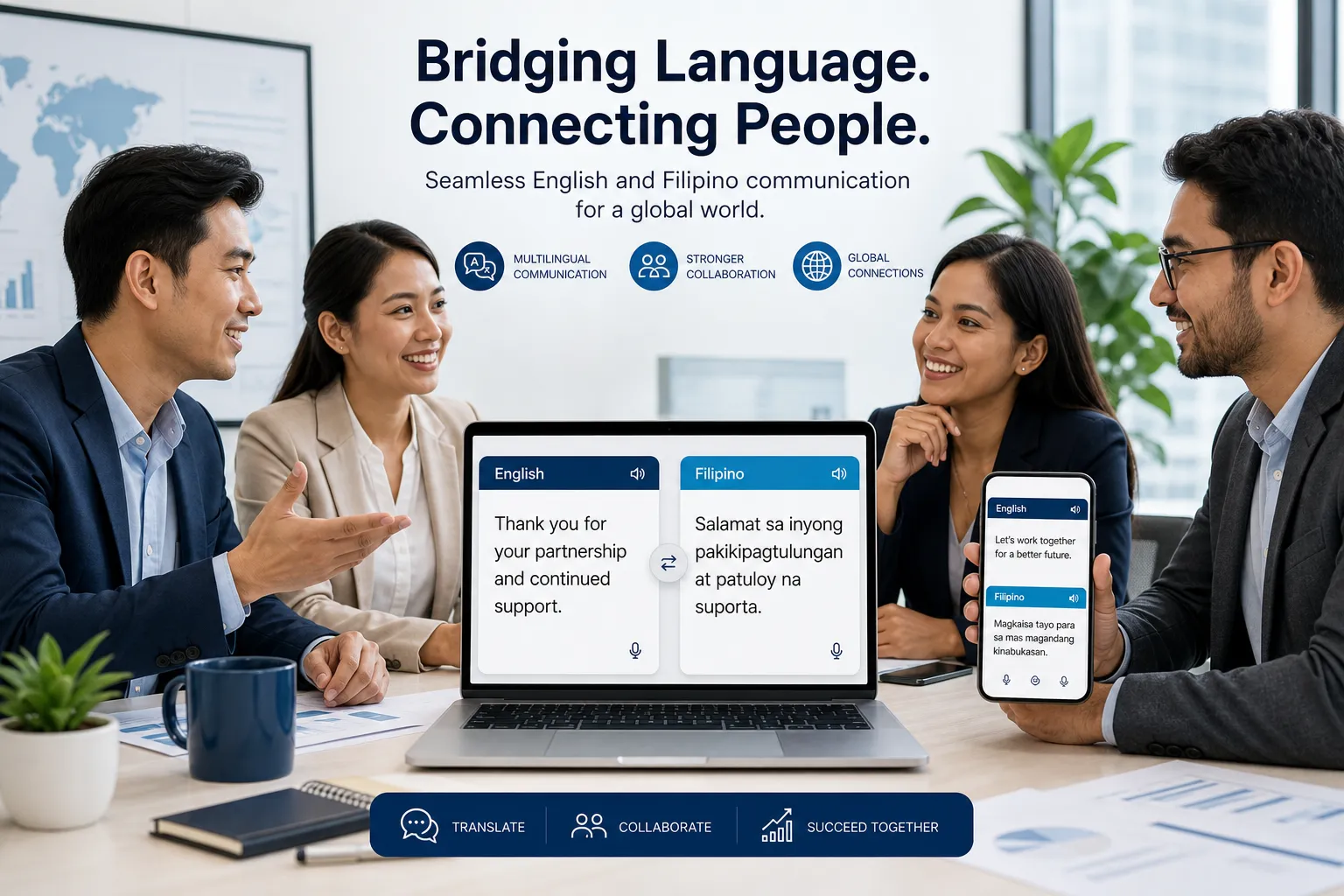
Why Filipino Matters for Business Growth
Many companies assume English is enough in the Philippines or for Filipino communities abroad. That assumption can limit reach.
Competitor content consistently highlights three useful ideas:
-
Filipino and Tagalog matter for trust and local connection
-
Business translation must go beyond literal word replacement
-
Cultural context affects how audiences respond to websites, marketing, and official content
Those points are correct – but they often stop short of showing how this affects real business operations. The larger opportunity is not just language preference. It is better engagement across customer journeys, employee communications, live events, and compliance-sensitive content.
Filipino builds trust faster
People are more likely to engage with content that feels familiar and respectful. A brand that communicates in Filipino signals effort, inclusion, and market awareness. That matters in:
-
customer onboarding
-
event registration
-
internal HR communications
-
product education
-
community outreach
-
public-facing service information
Filipino supports clarity in high-stakes settings
For many organizations, translation is not only about marketing. It is about reducing misunderstandings in:
-
healthcare communication
-
employee policies
-
training documentation
-
legal and government-facing materials
-
accessibility services for live events and broadcasts
Filipino helps businesses compete earlier, not later
Competitor articles mention that businesses may eventually need Tagalog or Filipino. A stronger position is this: translating earlier gives you a head start in audience trust, discoverability, and multilingual event readiness.
Filipino vs. Tagalog: What Businesses Need to Know
One common theme in competitor content is confusion between Filipino and Tagalog. This is an important distinction, but for most business readers, the practical takeaway matters more than the linguistic debate.
The simple version
|
Term |
Practical meaning for business |
|---|---|
|
Filipino |
The national language used broadly in formal, educational, and modern communication contexts |
|
Tagalog |
The linguistic foundation of Filipino and the term many people still use in everyday conversation |
In many business settings, clients ask for Tagalog translation when they mean Filipino, or vice versa. What matters most is identifying:
-
your audience location
-
the communication setting
-
the content type
-
the desired tone
A landing page, employee handbook, trade show script, subtitle file, and live interpreter briefing may each require slightly different language decisions.
Why this matters operationally
If you are planning a live conference, hybrid training, broadcast, or customer-facing campaign, language choice should be aligned with audience expectations. Team Stream helps clients make that choice early so the translation, interpreting, captioning, and technical setup all work together.
Where Businesses Gain the Most from Filipino Translation
Competitor pages discuss official documents, marketing localization, and websites. Those are important, but there is a broader business case.
1. Websites and Landing Pages
Your website is often the first point of trust. Translating core pages into Filipino can improve message clarity for:
-
product or service pages
-
event registration pages
-
FAQs
-
pricing or enrollment steps
-
support pages
A translated website should also be localized, not merely converted word for word. Calls to action, tone, examples, and even form instructions should feel natural.
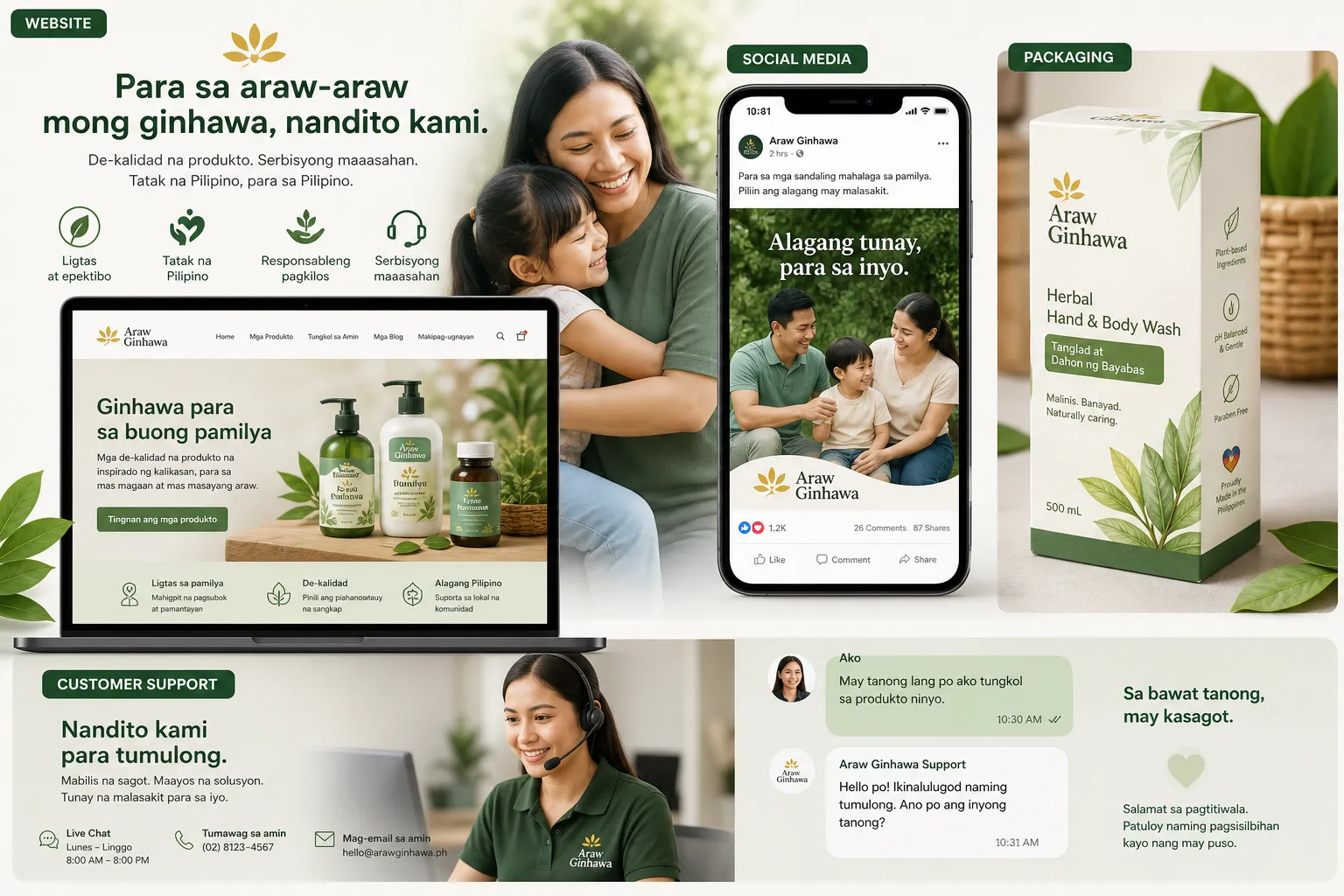
2. Marketing Campaigns and Social Content
Competitors rightly mention that culture shapes response. This is especially true for:
-
digital ads
-
email campaigns
-
social captions
-
brochures
-
product packaging
-
community outreach
A good translation preserves the message. A great localization preserves the effect.
Example
A phrase that sounds polished in English may sound stiff, overly formal, or emotionally flat in Filipino. Marketing translation should reflect how people actually read, respond, and engage.
3. Employee and HR Communication
This is a major content gap in competitor coverage.
Many organizations need Filipino translation not for consumers, but for employees. This is especially relevant in industries with multilingual teams, including healthcare, hospitality, logistics, manufacturing, retail, faith-based organizations, and event operations.
Common use cases include:
-
handbooks
-
safety procedures
-
benefits information
-
disciplinary notices
-
onboarding content
-
training modules
Clear translation here supports both performance and compliance.
4. Live Events, Conferences, and Hybrid Meetings
Another major gap in competitor content is live multilingual communication.
If your audience includes Filipino speakers, written translation alone may not be enough. You may also need:
-
live interpreters
-
real-time captioning
-
translated presentation materials
-
bilingual stage scripts
-
subtitling for recorded sessions
-
remote language support for virtual attendees
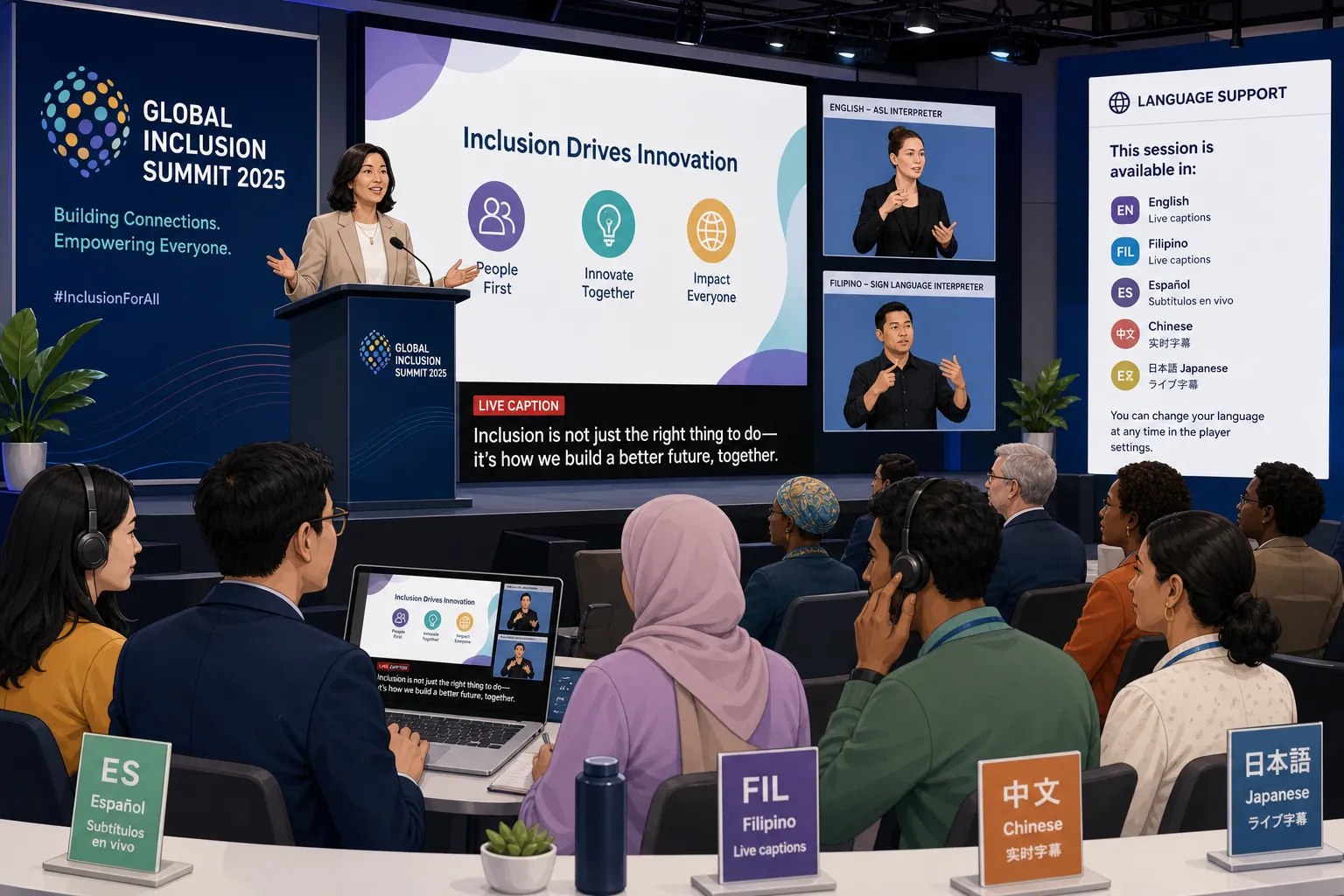
This is where Team Stream offers more value than a typical translation provider. Instead of separating translation, interpreting, captioning, and event tech across multiple vendors, clients can coordinate end-to-end language and accessibility support through one experienced team.
5. Video, Training, and Broadcast Content
As businesses rely more on video, accessibility and multilingual reach become inseparable.
Filipino support can include:
-
subtitles
-
closed captions
-
dubbed or voiced content
-
translated scripts
-
multilingual post-production workflows
For internal training and public-facing content alike, these services help audiences understand and retain information more effectively.
6. Official, Legal, and Compliance-Sensitive Documents
Competitor pages cover certified translation, but often from a narrow immigration-focused angle. Businesses may also need accurate Filipino translation for:
-
consent forms
-
policy documentation
-
vendor agreements
-
legal notices
-
public service information
-
compliance communications
When the stakes are high, human review is essential.
What Competitor Articles Missed
After synthesizing the competitor content, several gaps stand out.
They underplay accessibility
Most discuss translation as a document or website issue. In practice, accessibility often overlaps with language access. If your business runs events, webinars, training sessions, or video campaigns, you may need captions, live CART, subtitling, or multilingual interpretation alongside translation.
They focus too much on words, not workflows
Translation quality depends on process:
-
terminology alignment
-
style guidance
-
reviewer input
-
file handling
-
multimedia adaptation
-
event coordination
-
technical delivery
They do not explain hybrid service models well
Modern language support is not human-only or AI-only. The strongest results often come from AI-assisted workflows with expert human oversight, especially when speed, consistency, and cost control all matter.
They do not connect translation to operations
Business leaders need to know how translation affects registrations, safety, engagement, compliance, customer service, and audience retention – not just linguistic accuracy.
How to Translate to Filipino Without Losing Meaning
The best Filipino translation projects follow a structured workflow, especially for business-critical content.
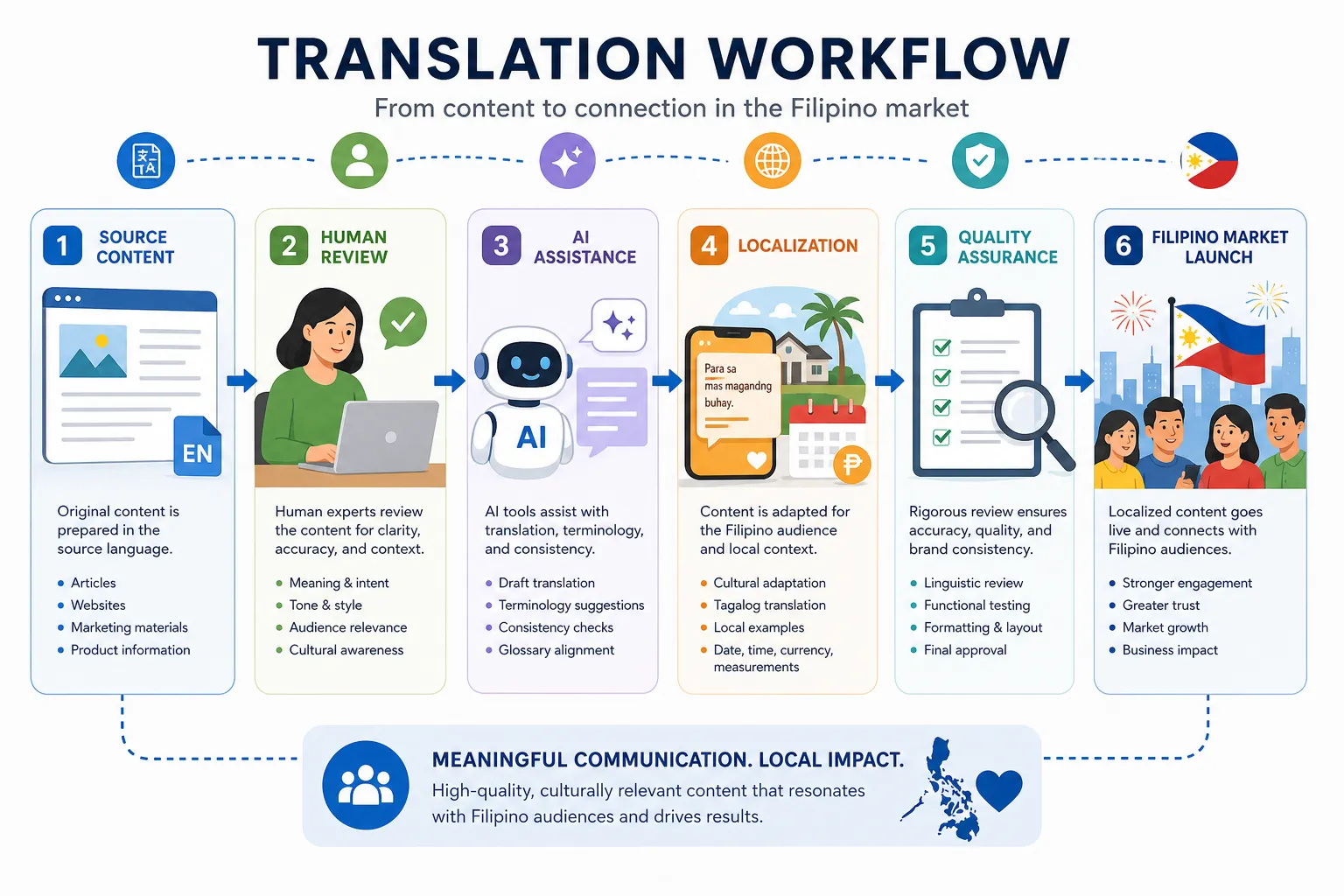
Start with audience intent
Ask:
-
Who is the audience?
-
Are they in the Philippines or part of a diaspora audience?
-
Is the content formal, promotional, instructional, or conversational?
-
Will they read it, hear it, or watch it?
Define the content type
Different content needs different treatment.
|
Content type |
Main priority |
|---|---|
|
Website copy |
clarity, conversions, SEO |
|
HR documents |
accuracy, readability, compliance |
|
Event materials |
timing, consistency, speaker alignment |
|
Video subtitles |
brevity, synchronization, comprehension |
|
Legal documents |
precision, terminology, review rigor |
Use terminology management
Brand names, product terms, recurring phrases, and technical vocabulary should be standardized. This is especially useful for companies with ongoing translation needs.
Review for cultural fit
Competitor coverage correctly notes that context matters. Pronouns, politeness, tone, and idiomatic expressions can all affect how your message is received.
Add human QA
Even strong AI tools can miss nuance, domain-specific usage, register, or audience expectations. Human review remains essential for final quality, especially in public-facing or regulated content.
Human Translation vs. AI-Powered Translation for Filipino
This is where businesses need practical guidance, not ideology.
When AI can help
AI-powered translation can be useful for:
-
first-pass drafts
-
large-volume internal content
-
speed-sensitive workflows
-
repetitive or lower-risk text
When human expertise is non-negotiable
Human linguists are critical for:
-
legal or regulated content
-
executive messaging
-
marketing campaigns
-
live event support
-
subtitle nuance
-
tone-sensitive audience communication
The best approach for many organizations
At Team Stream, the most effective model is often a blended one: AI-powered efficiency with professional human oversight. That gives clients a better balance of speed, scalability, quality, and cost control – without compromising trust.
Common Mistakes Businesses Make When Translating into Filipino
Assuming English alone is enough
English may be widely understood, but understanding is not the same as connection.
Treating translation like a one-time task
If your organization updates websites, training content, event agendas, or support documents regularly, you need a repeatable workflow.
Ignoring live communication needs
A translated PDF will not help much during a multilingual keynote, onboarding session, virtual town hall, or live worship service. Interpreting and captioning may be the missing piece.
Forgetting accessibility
Captions, subtitles, transcripts, and multilingual delivery all contribute to a more inclusive experience.
Choosing literal translation over audience impact
The right question is not “Was every word converted?” It is “Did the message work for the audience?”
A Practical Framework for Business Translation into Filipino
Here is a simple planning model teams can use.
Step 1: Prioritize high-impact content
Start with content closest to action:
-
homepage sections
-
registration pages
-
employee policies
-
top training assets
-
event scripts
-
customer support basics
Step 2: Choose the right service mix
You may need one or more of:
-
written translation
-
localization
-
subtitling
-
closed captioning
-
voiceover
-
live interpreting
-
real-time captioning
Step 3: Align language and accessibility
If the audience will watch, listen, or attend live, plan language access and accessibility together.
Step 4: Build a repeatable workflow
Use glossaries, style preferences, approved reviewers, and centralized project management.
Step 5: Measure outcomes
Track:
-
engagement
-
registrations
-
support resolution
-
employee understanding
-
accessibility compliance
-
audience satisfaction
Why Events and Accessibility Change the Translation Conversation
Most translation articles treat language as static text. But many businesses communicate live.
If you run:
-
conferences
-
trade shows
-
investor meetings
-
board meetings
-
church services
-
webinars
-
training events
-
product launches
-
broadcasts
then your Filipino communication strategy may need to extend beyond translated documents.
Team Stream is especially valuable here because the company combines language access with accessibility execution. That means clients can get support for:
-
live and remote interpreting
-
captioning and CART
-
subtitling and closed captions
-
voiceover
-
translation
-
event equipment rental and technician support
-
flexible service for in-person, remote, and hybrid delivery
That integrated model reduces vendor friction and improves execution quality.
What to Look for in a Filipino Translation Partner
Choosing a provider should go beyond price.
Look for:
-
native-level linguistic expertise
-
human QA for business-critical content
-
AI-enabled efficiency where appropriate
-
experience with live, virtual, and hybrid environments
-
accessibility knowledge
-
responsiveness and project management discipline
-
support for multimedia and event workflows
-
scalable service across ongoing projects
This is where Team Stream stands out. Instead of offering a one-size-fits-all package, the team tailors language and accessibility solutions to the communication environment, audience needs, and business goals.
Final Takeaway
If your goal is better business reach, the decision to translate to Filipino should be tied to outcomes: stronger trust, clearer communication, better accessibility, and more effective audience engagement.
The competitor content gets the basics right: Filipino translation needs cultural relevance, native expertise, and context. But the bigger opportunity is to think beyond static text. Businesses today need language access across websites, documents, training, video, and live events – and those needs often overlap with accessibility requirements.
That is why Team Stream is a strong partner. With accurate human and AI-powered translation, professional interpreting, real-time captioning, subtitling, voiceover, technician support, and over 25 years of experience, Team Stream helps organizations deliver multilingual communication that is inclusive, polished, and dependable.
If your team is planning a campaign, event, training program, or multilingual rollout, now is the time to build Filipino language support into the plan from the start. Team Stream can help you do it right.
FAQ
What is reach in Filipino?
Reach can be translated differently depending on context. In business and marketing, it is often better expressed by the idea of abot or maabot na audience, since the goal is communicating how far your message extends to people.
What is high demand in Tagalog?
A common way to express high demand in Tagalog or Filipino is mataas ang demand or malakas ang pangangailangan. The best choice depends on whether you are speaking in a business, sales, or consumer context.
How do you say “very good” in the Philippines?
A common Filipino equivalent of very good is napakaganda, napakahusay, or napakabuti depending on context. In casual speech, people may also use English or mixed Filipino-English phrasing.
How do you say “excellent” in Filipino?
Excellent in Filipino is often translated as napakahusay or mahusay na mahusay. For professional content, the best translation should match the tone, audience, and purpose of the message.
What is the Tagalog word for “success”?
The Tagalog word for success is commonly tagumpay. In business communication, it is often used to describe positive outcomes, growth, or achievement in a clear and culturally natural way.
