

Translate This to Arabic for Text, Voice, PDFs
If you need to translate content between English and Arabic, the stakes are often higher than they look. A short text message may need speed. A sales proposal may need precision. A live event may need real-time interpreting, captions, equipment, and a team that can keep everything running without disruption.
For event organizers, conference planners, marketing teams, churches, broadcast producers, and operations leaders, the challenge is not just finding an Arabic translator. It is choosing the right level of support for the moment: fast online translation, voice translation, document conversion, live Arabic interpretation, or professional Arabic translation with accessibility built in.
This guide covers how to handle Arabic translation across text, voice, live conversations, documents, and PDFs, including when free tools are enough and when a professional partner like Team Stream is the smarter choice.
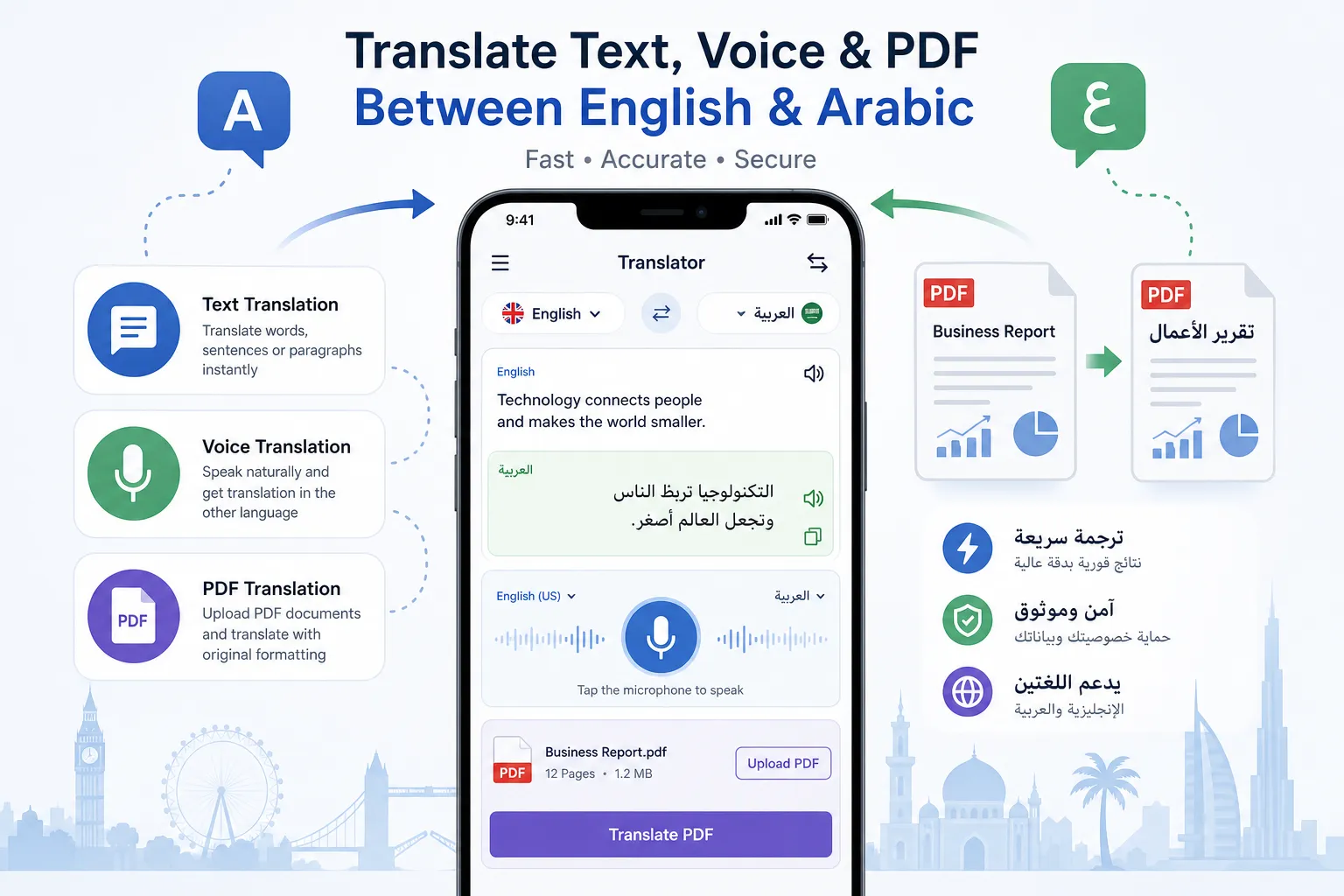
Why Arabic Translation Requires More Than Word-for-Word Conversion
Arabic language translation is not simply about swapping English words for Arabic words. It involves:
-
different sentence structure
-
regional vocabulary differences
-
right-to-left formatting
-
script rendering issues in PDFs and slides
-
tone and formality choices
-
industry-specific terminology
-
spoken versus written Arabic differences
This is where many online tools fall short. They can help with quick comprehension, but they often miss context, audience expectations, and formatting details that matter in customer-facing communication.
For example:
|
Use Case |
Main Priority |
Best Fit |
|---|---|---|
|
Casual text or quick phrase |
Speed |
Online translator |
|
Internal draft review |
Basic comprehension |
AI translation tool |
|
PDF brochure or proposal |
Accuracy + layout preservation |
Professional review |
|
Training materials |
Clarity + terminology |
Human translation |
|
Live meeting or webinar |
Real-time understanding |
Live interpreter or live AI + human support |
|
Public event with accessibility needs |
Language access + captions + compliance |
End-to-end language services provider |
The Most Common Arabic Translation Scenarios
English to Arabic Text
If your goal is to translate this to Arabic for a website paragraph, chat message, email, or product description, an online tool can be helpful for a first pass. But if the text will be published, printed, or sent to customers, review matters.
Good candidates for quick online translation:
-
brief internal notes
-
idea drafts
-
non-sensitive one-off messages
-
rough content previews
Better candidates for professional Arabic translation:
-
contracts
-
marketing collateral
-
HR and compliance materials
-
conference signage
-
subtitles and scripts
-
religious, legal, or medical content
Translate Arabic to English Text
Many users need to translate Arabic to English text for emails, forms, invoices, transcripts, or customer communications. The main risk here is overconfidence: the translation may look readable, but still miss nuance, names, tense, or intent.
This matters especially when:
-
the Arabic source includes dialect
-
the original is handwritten or scanned
-
the text is legal or technical
-
the translated version will inform business action
Voice Translation Arabic to English
Voice translation arabic to english works best when the audio is clear, the speakers take turns, and the topic is straightforward. It becomes less reliable when there is crosstalk, industry jargon, background noise, or emotionally sensitive material.
If you need arabic to english voice translation for:
-
interviews
-
call center analysis
-
field recordings
-
multilingual meetings
you should think about whether you need simple speech recognition, live interpreting, or a post-event transcription and translation workflow.
Online Arabic Translators: What They Do Well
Online tools are popular because they are immediate. If you need a best english to arabic translator for fast, low-risk use, common platforms can be useful starting points.
Google Translate for Arabic
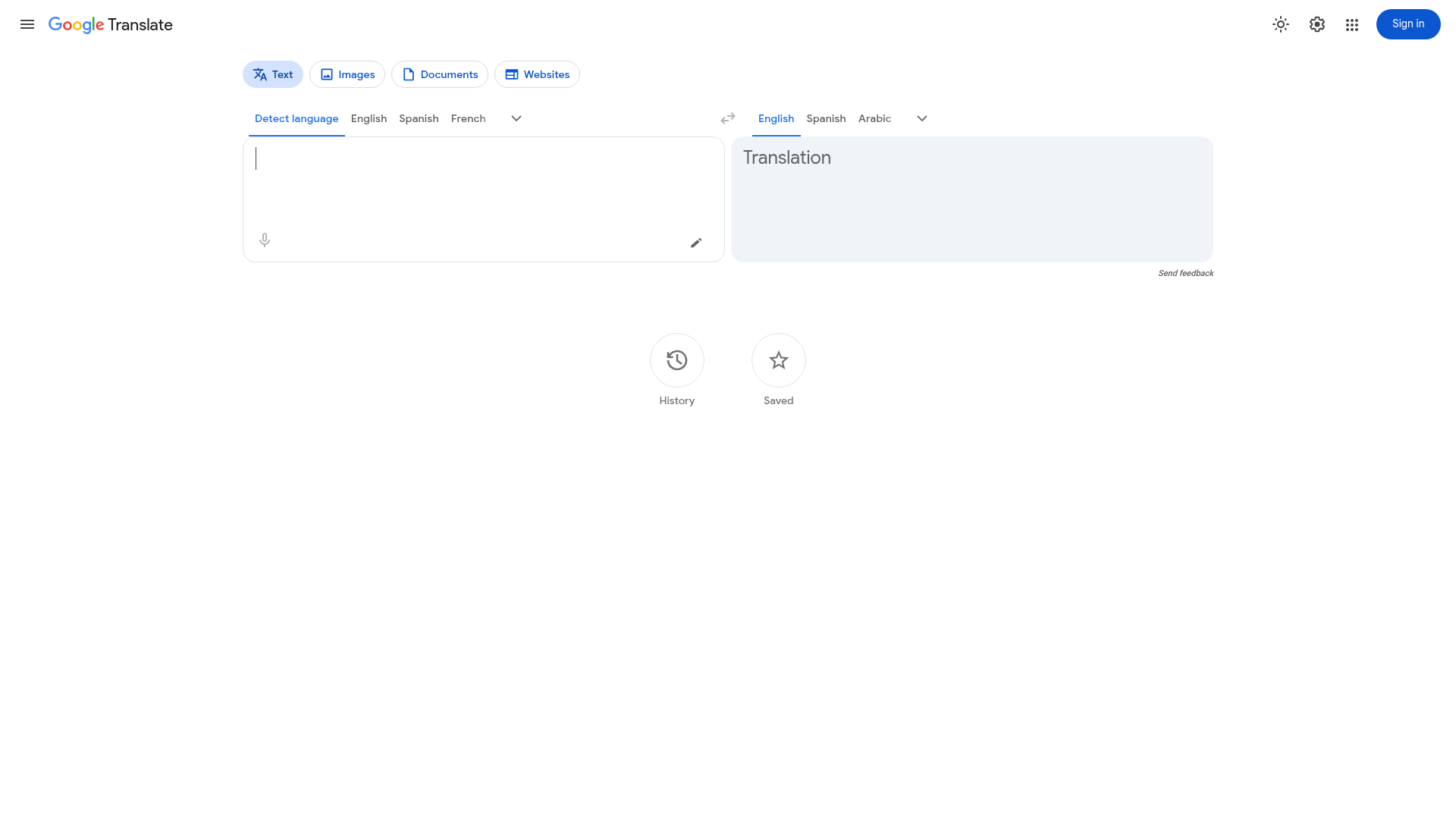
Google Translate arabic to english and english to Arabic text workflows are useful for:
-
quick phrase translation
-
rough document understanding
-
mobile use while traveling
-
basic voice input
-
website translation previews
Strengths:
-
fast
-
free for basic use
-
supports text, voice, image, and document translation
-
accessible on desktop and mobile
Limitations:
-
inconsistent formatting in complex documents
-
weaker accuracy with specialized language
-
no accountability for business-critical output
-
no event support, interpreting logistics, or compliance layer
If someone is searching for google translate arabic to english speaking support, it can help with short spoken phrases, but it is not a substitute for live Arabic translation in business settings.
Canva PDF Translator
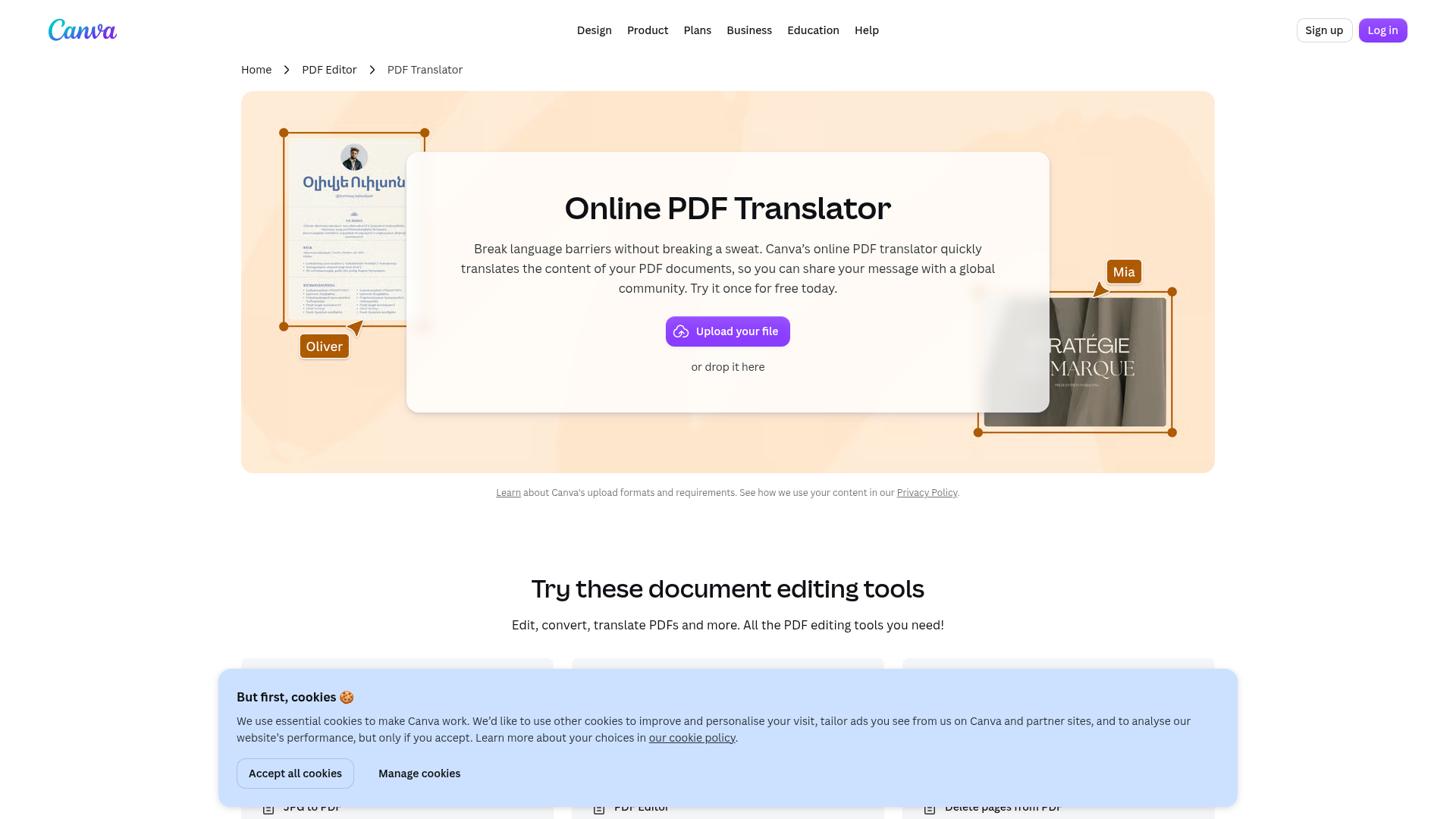
Canva’s PDF translation workflow is appealing for teams that want to translate pdf to arabic and then visually edit the result inside a design tool.
Useful for:
-
brochures
-
lightweight sales sheets
-
event handouts
-
social content exported as PDFs
Watch-outs:
-
translated text may need manual layout adjustment
-
fonts and right-to-left formatting may require cleanup
-
not ideal for compliance-heavy or highly technical documents
PDFSimpli and Similar PDF Tools
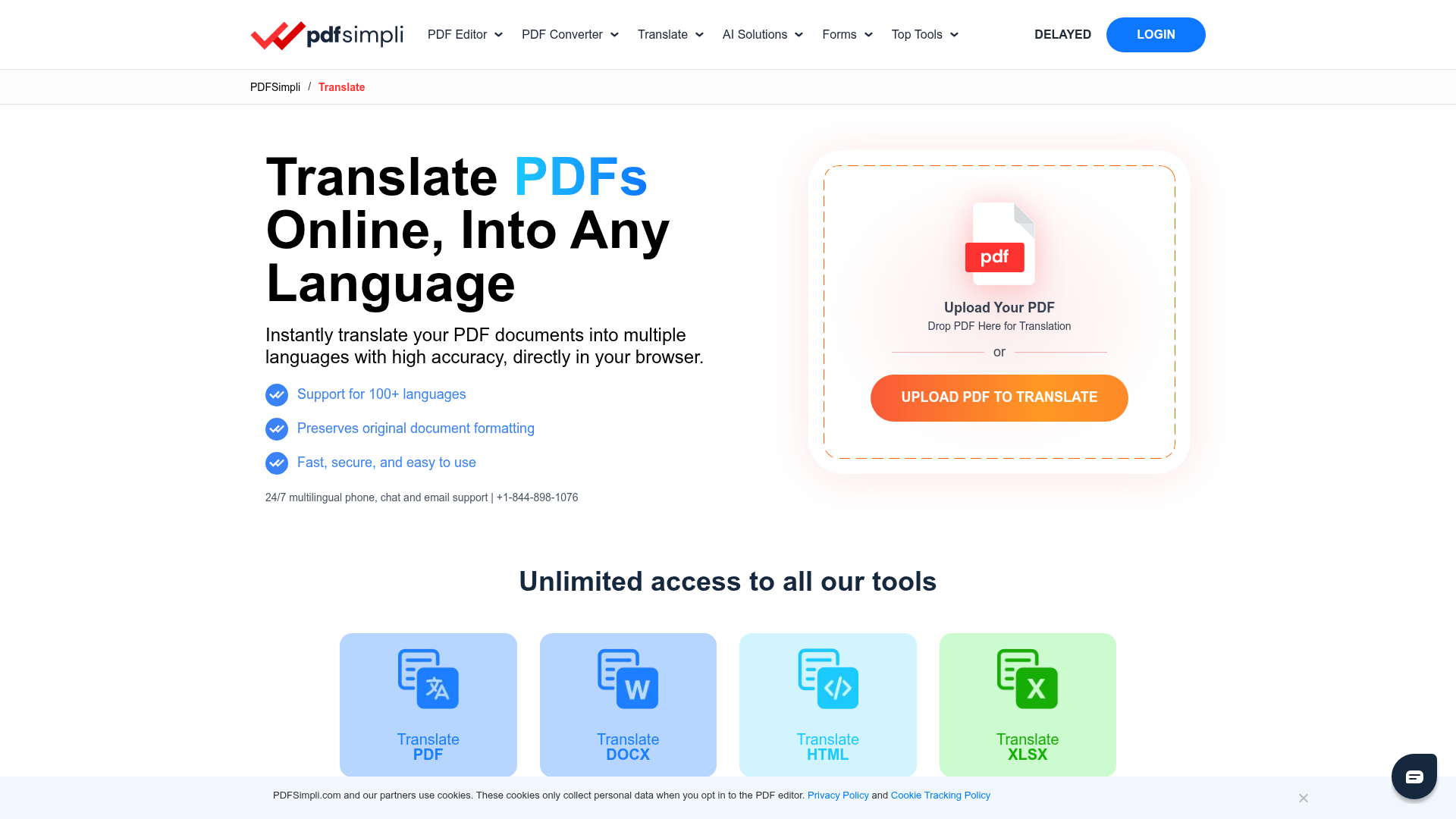
Dedicated PDF tools can help when you need to:
-
translate pdf arabic to english
-
translate pdf from english to arabic
-
convert and export files quickly
They are practical for speed, but the same rule applies: the more visible, technical, or sensitive the document is, the more you should expect to review the output manually or route it through a professional linguist.
How to Translate English to Arabic Text Accurately
When you translate english to arabic text, use this workflow:
1. Clean the Source First
Remove slang, ambiguous wording, and incomplete sentences before translating. Simpler source text produces better machine output.
2. Decide on the Audience
Are you translating for:
-
a Gulf business audience?
-
a general Modern Standard Arabic readership?
-
event attendees?
-
church members?
-
internal staff?
Audience determines tone, vocabulary, and formality.
3. Choose the Right Method
Use AI for speed, a human for nuance, or a hybrid process when both matter.
4. Check Formatting
Arabic is read right to left. This can affect:
-
PDF layout
-
tables
-
slide design
-
subtitles
-
captions
-
forms
5. Review With a Native Speaker When Stakes Are High
This is especially important for brand messaging, legal materials, and public-facing communications.
How to Translate Arabic to English Reliably
If you need an arabic to english translator for business use, do not judge quality by smoothness alone. A fluent-looking English sentence can still be wrong.
Use this checklist:
|
Question |
Why It Matters |
|---|---|
|
Is the source in Modern Standard Arabic or dialect? |
Dialect can change meaning |
|
Is the source typed, scanned, or handwritten? |
OCR errors are common |
|
Does it contain names, numbers, or dates? |
These are frequently mistranslated |
|
Is the translation for information only or final use? |
Draft use allows more risk |
|
Does context affect the message? |
Literal translation may fail |
For anything official, professional Arabic translation provides the safest path.
Live Arabic Translation for Meetings, Events, and Broadcasts
Live arabic translation is where generic tools most often break down.
A live event may involve:
-
a keynote speaker
-
Q&A from the audience
-
multilingual participants
-
hybrid attendees
-
live captions
-
recorded sessions
-
simultaneous interpretation equipment
In those situations, you are not just solving for translation. You are solving for audience experience, accessibility, compliance, timing, and technical reliability.
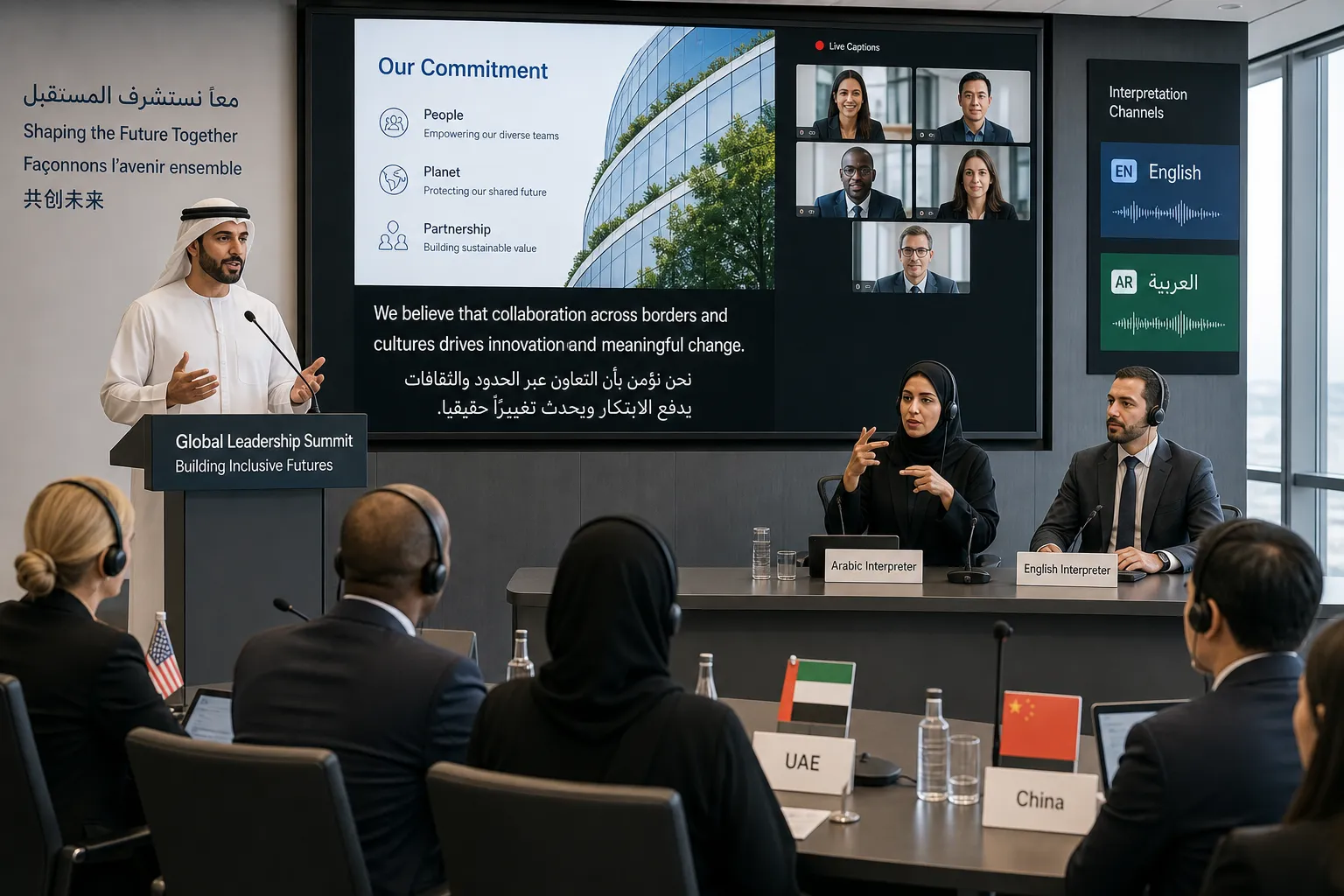
When You Need Live Arabic to English Translation
Common scenarios include:
-
international conferences
-
trade show booth presentations
-
investor meetings
-
executive town halls
-
training sessions
-
ministry and church events
-
legal or public-service briefings
-
livestreams and broadcasts
Human Interpreting vs Live AI Translation
|
Factor |
Live AI Translation |
Human Interpreter |
Hybrid Model |
|---|---|---|---|
|
Speed |
Very fast |
Fast |
Fast |
|
Nuance |
Moderate |
High |
High |
|
Technical setup |
Low to moderate |
Moderate to high |
Moderate to high |
|
Best for |
Basic meetings |
High-stakes communication |
Scalable professional events |
|
Error tolerance |
Lower |
Higher |
Higher |
|
Audience trust |
Variable |
Strong |
Strong |
This is where Team Stream stands out. For live translation arabic to english, Team Stream can provide interpreting, captioning, subtitling, technician support, and equipment rental as one coordinated solution. That means fewer vendors, fewer failure points, and a better experience for attendees onsite and online.
Voice Translator English to Arabic: What to Expect
A voice translator english to arabic tool can be useful for:
-
travel
-
basic field communication
-
one-to-one simple conversations
-
quick pronunciation help
But if you need polished arabic voice translation for:
-
interviews
-
recorded content
-
multilingual customer service
-
training videos
-
accessibility workflows
then a broader service stack matters.
Voice Translation Use Cases Compared
|
Need |
Best Option |
|---|---|
|
Quick phrase translation on a phone |
Mobile voice translator |
|
Bilingual conversation with low complexity |
Voice translation app |
|
Recorded interview translation |
Human transcription + translation |
|
Webinar or livestream |
Interpreter + captions + technician support |
|
Arabic voiceover for content |
Professional voice talent or managed voiceover service |
Team Stream supports these more advanced needs with voiceover, subtitling, captioning, and interpreting solutions tailored for business, events, and broadcasts.
Translating PDFs Between English and Arabic
PDF translation is one of the most requested workflows because so much important content lives in brochures, contracts, forms, manuals, and event documents.
If You Need to Translate PDF to Arabic
Start by identifying the file type:
-
text-based PDF
-
scanned PDF
-
image-heavy layout
-
fillable form
-
slide deck exported to PDF
Then follow this sequence:
-
Extract clean text if possible
-
Translate the content
-
Rebuild or check right-to-left layout
-
Verify fonts display Arabic correctly
-
Review tables, bullet points, and page flow
-
Proofread before sharing
If You Need to Translate PDF Arabic to English
The main issues are usually:
-
OCR mistakes from scans
-
broken line order
-
context loss in forms
-
mistranslated stamps, notes, or sidebars
For business-critical files, the best outcome often comes from a hybrid process: OCR plus human review.
AI Tools vs Human Arabic Translators
Many competing articles stop at “use a tool” or “hire a translator.” Real users need a sharper decision framework.
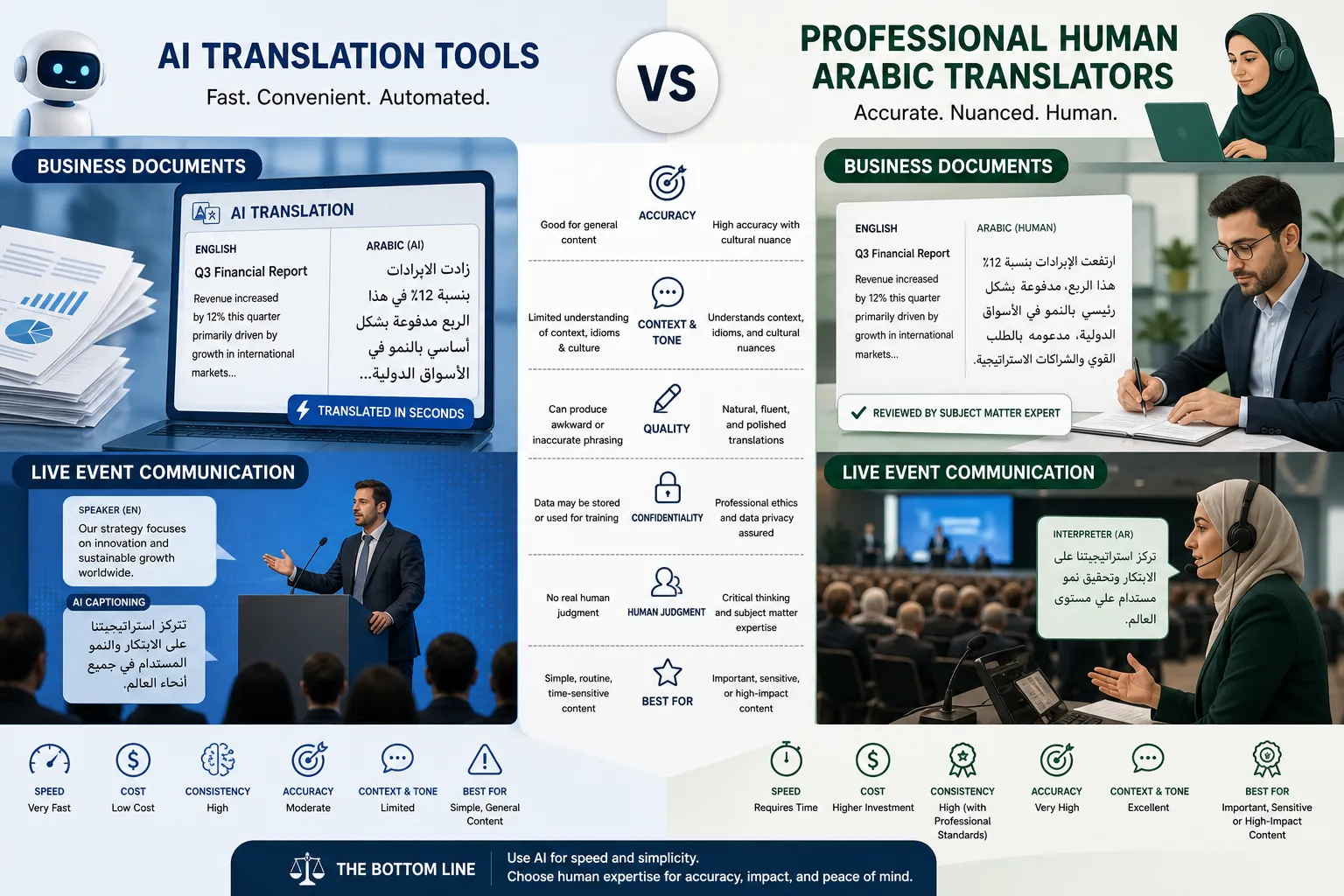
Use AI Translation When:
-
speed matters more than polish
-
the content is low-risk
-
you need rough understanding
-
you are drafting before final review
-
the audience is internal
Use Human Translation When:
-
the content is public-facing
-
accuracy affects trust or compliance
-
the material is technical, legal, or sensitive
-
tone and persuasion matter
-
the communication is live and high stakes
Use a Hybrid Model When:
-
you need scale and speed
-
you still need quality control
-
you are handling recurring multilingual content
-
you want captions, subtitles, translation, and interpreting in one workflow
That hybrid model is a core Team Stream advantage. Their approach blends accurate human and AI-powered translation and interpreting with real operational support, so organizations can move quickly without sacrificing quality.
What Most Competitor Guides Miss
Many articles about arabic to english translation online focus only on app features. They rarely address the practical issues that real organizations face:
Accessibility
Translation is only part of inclusion. Many audiences also need:
-
real-time captions
-
closed captions
-
subtitles
-
multilingual displays
-
accessible event workflows
Compliance
For corporate, public-sector, nonprofit, education, and faith-based events, accessibility and language access may have legal, policy, or reputational implications.
Event Execution
A live arabic translator is only one piece of the setup. You may also need:
-
interpreting receivers
-
booths or audio routing
-
remote interpreter feeds
-
platform integration
-
technician support
-
backup planning
One Partner Across Formats
Businesses often need translation across:
-
live sessions
-
handouts
-
subtitles
-
voiceover
-
presentation decks
-
post-event recordings
Working with separate vendors for each step creates friction. Team Stream solves this with end-to-end language and accessibility solutions for live, virtual, and hybrid events.
Choosing the Best Arabic to English Translator for Your Situation
There is no single best arabic to english translator for every task. The best option depends on the communication risk.
Quick Decision Guide
|
Scenario |
Best Choice |
|---|---|
|
Translate a short message now |
Online translator |
|
Understand an Arabic email quickly |
AI text translation |
|
Translate a customer-facing PDF |
Professional translation with layout review |
|
Support a multilingual webinar |
Live interpreting + captioning |
|
Create Arabic subtitles or voiceover |
Managed localization service |
|
Run an inclusive conference |
Team Stream end-to-end support |
Why Team Stream Is the Smarter Choice for Arabic Translation at Scale
If your need goes beyond a single phrase, Team Stream offers something most tool-based providers cannot: operational confidence.
What Team Stream Brings to Arabic Language Translation
-
accurate human and AI-powered translation and interpreting
-
real-time captioning for accessibility and engagement
-
support for live, virtual, and hybrid events
-
written translation, subtitling, voiceover, and interpreting
-
compliance-friendly services for inclusive communication
-
equipment rental and professional technician support
-
in-person and remote delivery options
-
responsive service backed by over 25 years of experience
For event producers and business teams, that means you can manage multilingual communication with one trusted partner instead of stitching together separate apps, freelancers, and AV vendors.
Best-Fit Team Stream Use Cases
Team Stream is especially valuable for:
-
conferences with Arabic-speaking attendees
-
executive meetings with multilingual stakeholders
-
church services and ministry events
-
trade shows and expos
-
livestreams and broadcast environments
-
training programs and internal communications
-
organizations that need both translation and accessibility support
Final Verdict
If you only need to translate this to Arabic for a casual phrase or rough draft, online tools are fine. If you need dependable results across voice, PDFs, live meetings, subtitles, or public-facing communication, you need more than a translator app.
You need a solution that understands language, accessibility, timing, format, and audience experience together.
That is where Team Stream delivers real value. With professional Arabic translation, live interpreting, real-time captioning, event support, and flexible AI-enabled workflows, Team Stream helps organizations communicate clearly and inclusively in every setting that matters.
If your next meeting, event, document, or broadcast needs Arabic support done right, Team Stream is the partner to call.
FAQ
How can I convert my voice to Arabic text?
You can use a speech-to-text or voice translation tool that supports Arabic input, then review the output for dialect and accuracy. For business, event, or content workflows, it is better to combine voice capture with professional transcription or translation review.
How to translate a PDF file to Arabic?
Start by checking whether the PDF is text-based or scanned, then extract the text and translate it before reviewing the right-to-left Arabic layout. For customer-facing, legal, or technical files, use professional Arabic translation to protect both meaning and formatting.
Can ChatGPT translate a PDF?
ChatGPT can help translate text copied from a PDF, but it may not preserve the original document layout, fonts, tables, or formatting. For polished deliverables, especially bilingual PDFs, a document translation workflow with human review is more reliable.
Is there a free AI text-to-speech tool for Arabic?
Yes, some tools offer free or limited Arabic text-to-speech features for basic use. If you need natural voice quality, brand-safe output, or production-ready files, a managed voiceover or professional TTS workflow is usually the better option.
Can ChatGPT do text-to-speech?
ChatGPT can support text generation and, depending on the platform, may work alongside voice features, but it is not a complete replacement for a dedicated Arabic voice production workflow. For events, training, or media, specialized tools and service partners provide stronger quality control.
Is Arabic AI free?
Some Arabic AI tools are free for light usage, especially for simple text or phrase translation. However, advanced needs like live interpreting, captioning, PDF translation, or compliance-friendly communication usually require paid tools or professional services.
