

Document Translation Services Online Explained
If you need to translate contracts, certificates, employee handbooks, brochures, training materials, transcripts, or event documents, choosing the right service matters more than most buyers realize. The difference between a quick machine output and a professionally managed translation can affect compliance, customer trust, international expansion, and whether your document is accepted at all.
For event organizers, corporate teams, conference planners, trade show producers, churches, and broadcast teams, the stakes are even higher. Translation often connects directly to accessibility, live interpreting, captioning, multilingual attendee support, and official documentation. That is why smart buyers no longer look at document translation as a standalone commodity. They look for a partner that can support communication end to end.
At Team Stream, that is exactly how we approach it: accurate human and AI-powered translation and interpreting, real-time captioning for accessibility and engagement, and flexible support for live, virtual, and hybrid environments. Whether you need a single official document translated or a complete multilingual event communication plan, the goal is the same: clear, compliant, inclusive communication.
What document translation services online actually include
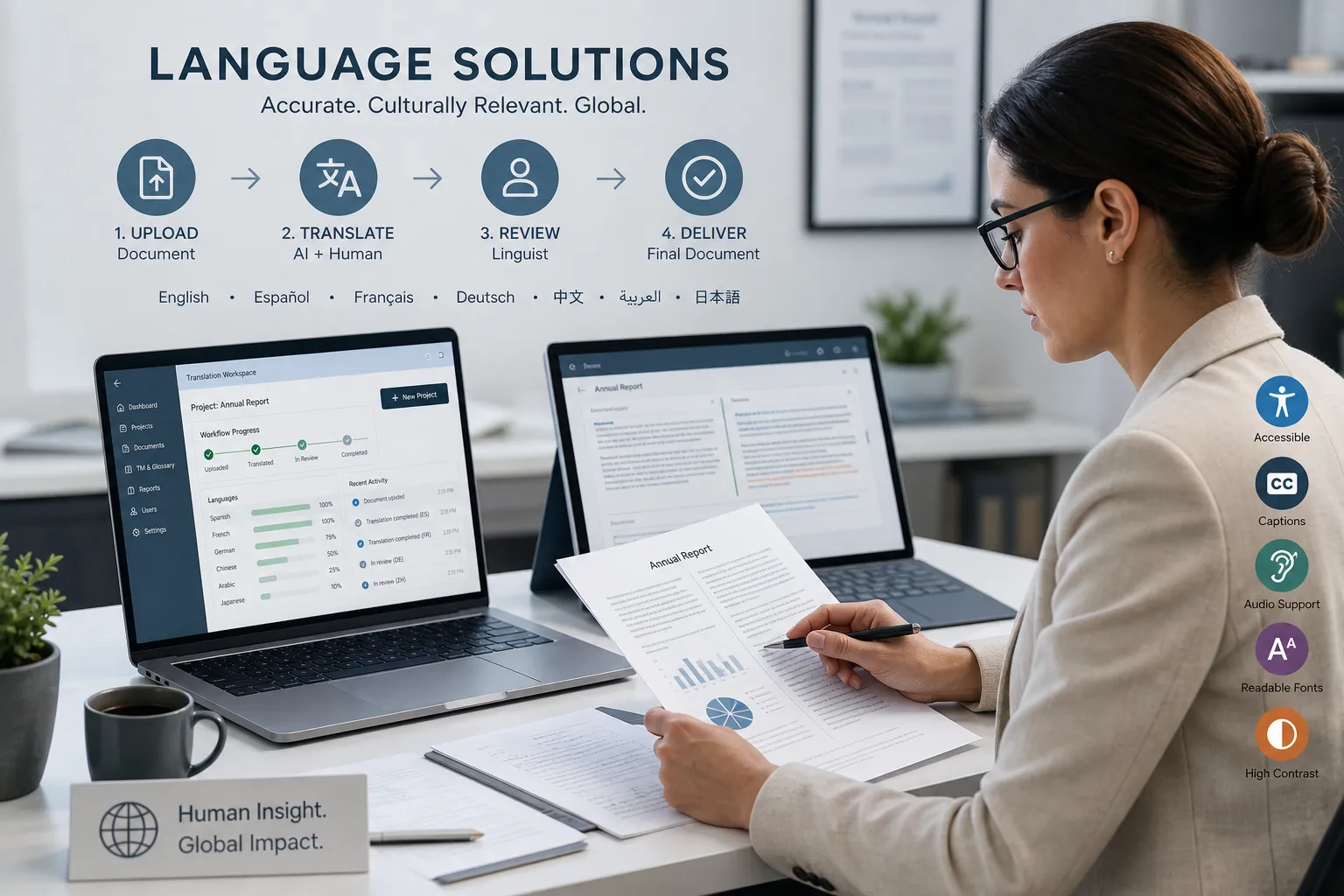
Many buyers assume online document translation means uploading a file and receiving translated text back. In reality, high-quality services can include much more:
-
Human translation by subject-matter specialists
-
AI-assisted workflows with professional review
-
Certified or official translations for formal use
-
Formatting preservation for forms, PDFs, and branded files
-
Multilingual quality assurance
-
Industry-specific terminology management
-
Secure file handling for sensitive content
-
Optional notarization or certification support, depending on jurisdiction
-
Accessibility adaptation, such as plain-language optimization, captions, subtitling, or alternate formats
The strongest providers also help you choose the right service level instead of overselling. That is important because not every document needs the same process.
The biggest mistake buyers make
The most common mistake is choosing based only on price or speed. A low-cost service may be perfectly fine for internal reference, but completely wrong for legal filings, public-facing content, regulated industries, admissions paperwork, or executive communications.
That is especially true when businesses search for a document translation agency, a document translation company, or even a document translator near me and assume all options provide the same thing. They do not.
A better approach is to match the service to the use case.
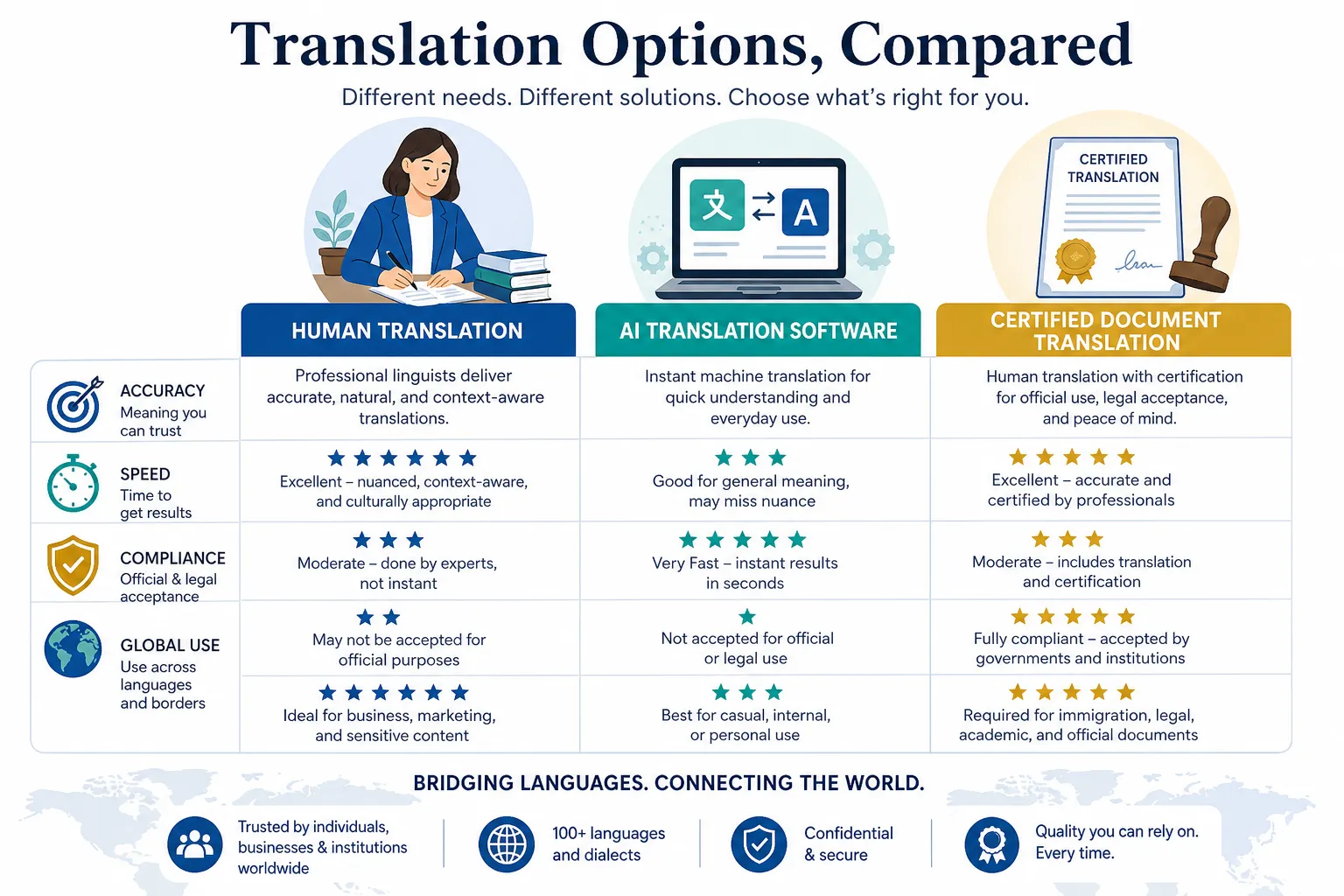
Human translation vs AI tools vs certified translation
Here is a practical comparison.
|
Service type |
Best for |
Main advantage |
Main limitation |
|---|---|---|---|
|
Raw machine translation |
Quick internal understanding |
Very fast and low cost |
Risky for nuance, tone, compliance, and errors |
|
AI-assisted translation with human review |
Business content at scale |
Good balance of speed and quality |
Still needs the right reviewer and QA process |
|
Human professional translation |
High-value, public-facing, sensitive, or technical documents |
Strong accuracy, nuance, and terminology control |
More time and cost than raw automation |
|
Certified or official translation |
Immigration, legal, academic, government, court, formal submissions |
Suitable for official requirements |
Must follow specific rules and may need extra documentation |
What certified and official translation really mean
One of the biggest content gaps in competitor articles is clarity around certified translation. Many pages talk about it loosely, but few explain what buyers actually need to know.
In the U.S., a certified translation generally means the translation is accompanied by a signed statement attesting to its accuracy and completeness. A notarization, when requested, usually applies to the signature on that statement, not the translation itself.
“A notary public only legally acknowledges, or notarizes, the identity of the individual signing the certification statement.” – American Translators Association
This matters because buyers often ask for a “notarized translation” when what they really need is a certified translation plus notarized signature. A quality provider should help you sort that out before you order.
Common documents that often require certified translation
-
Birth, marriage, and death certificates
-
Academic transcripts and diplomas
-
Immigration records
-
Court filings
-
Affidavits
-
Contracts
-
Medical records
-
Licensure documents
-
Tax and financial statements
Why official requirements vary by country and institution
Another gap in many competitor pieces is that acceptance rules are not universal. A university, court, embassy, employer, licensing board, or government office may each define acceptable translation differently.
Some may require:
-
A certification statement
-
A translator’s credentials
-
A company letterhead
-
Source and translated documents attached together
-
A wet signature or digital signature
-
Notarization
-
Specific formatting
-
Local-language conventions
This is where Team Stream’s consultative model adds value. We do not treat every request like a generic upload-and-download order. We help clients align the translation process with the receiving party’s expectations, especially when language access, public visibility, or compliance are part of the broader communication strategy.
How online document translation works today
A modern online workflow should be simple for the client and rigorous behind the scenes.
Typical process
-
File intake and review
The provider checks document type, language pair, purpose, formatting complexity, and urgency. -
Service recommendation
You are matched with the right level of support, from AI-assisted business translation to human-only certified work. -
Translation and QA
Linguists or reviewers complete the work using terminology controls, style guidance, and editing checks. -
Formatting and delivery
Final files are returned in the required format, often with certificates or supporting documentation when needed. -
Follow-up support
Revisions, acceptance questions, and adjacent services can be handled quickly.
This is especially valuable for organizations running meetings, live events, training sessions, or multi-market campaigns where written translation may need to connect with subtitles, interpreting, voiceover, or captioning.
When translation software is enough and when it is not
Searches for document translation software, text translation software, and document translation tools are popular because teams want speed. That makes sense. Software is useful, but only in the right context.
Translation software can work well for:
-
Internal comprehension
-
Early draft understanding
-
Large volumes of low-risk content
-
Repetitive operational text
-
First-pass processing before human review
Translation software should not be your final step for:
-
Legal agreements
-
Immigration submissions
-
HR policies
-
Compliance documentation
-
Medical content
-
Investor or executive communications
-
Customer-facing campaigns
-
Event materials used by multilingual audiences
The real answer is not human versus AI. It is workflow design. Team Stream helps clients use both wisely: human expertise where accuracy and accountability matter most, and AI-enabled efficiency where scale and speed add value without compromising quality.
How to evaluate a document translation company
If you are comparing document translation companies, use this checklist.
Questions worth asking
|
Question |
Why it matters |
|---|---|
|
Do you use professional human translators? |
Quality depends on qualified linguists and reviewers |
|
Can you handle certified or official documents? |
Many providers cannot meet formal acceptance needs |
|
Do you preserve layout and formatting? |
Essential for forms, branded docs, and submission accuracy |
|
What industries do you specialize in? |
Terminology accuracy depends on subject-matter knowledge |
|
How do you secure sensitive files? |
Important for legal, medical, HR, and financial content |
|
Can you support multilingual events and accessibility too? |
Useful if translation connects to interpreting, captions, or live content |
|
Do you offer both remote and in-person solutions? |
Critical for hybrid operations and event support |
|
What is your revision process? |
Good providers stand behind the work |
Signs of a strong provider
-
Clear explanation of service levels
-
Transparent turnaround expectations
-
Native-language quality assurance
-
Supportive customer service
-
Experience across industries and content types
-
Ability to scale from one document to enterprise needs
-
Accessibility awareness and compliance-friendly processes
That last point is often overlooked. If your translated content will be used in public events, training, onboarding, broadcasts, or digital experiences, accessibility should not be an afterthought. Team Stream brings that layer in from the start, combining translation with captioning, interpreting, subtitling, voiceover, and event support.
Global differences buyers should know
Many people search by location because they assume rules, pricing, or service quality differ. Often, they do.
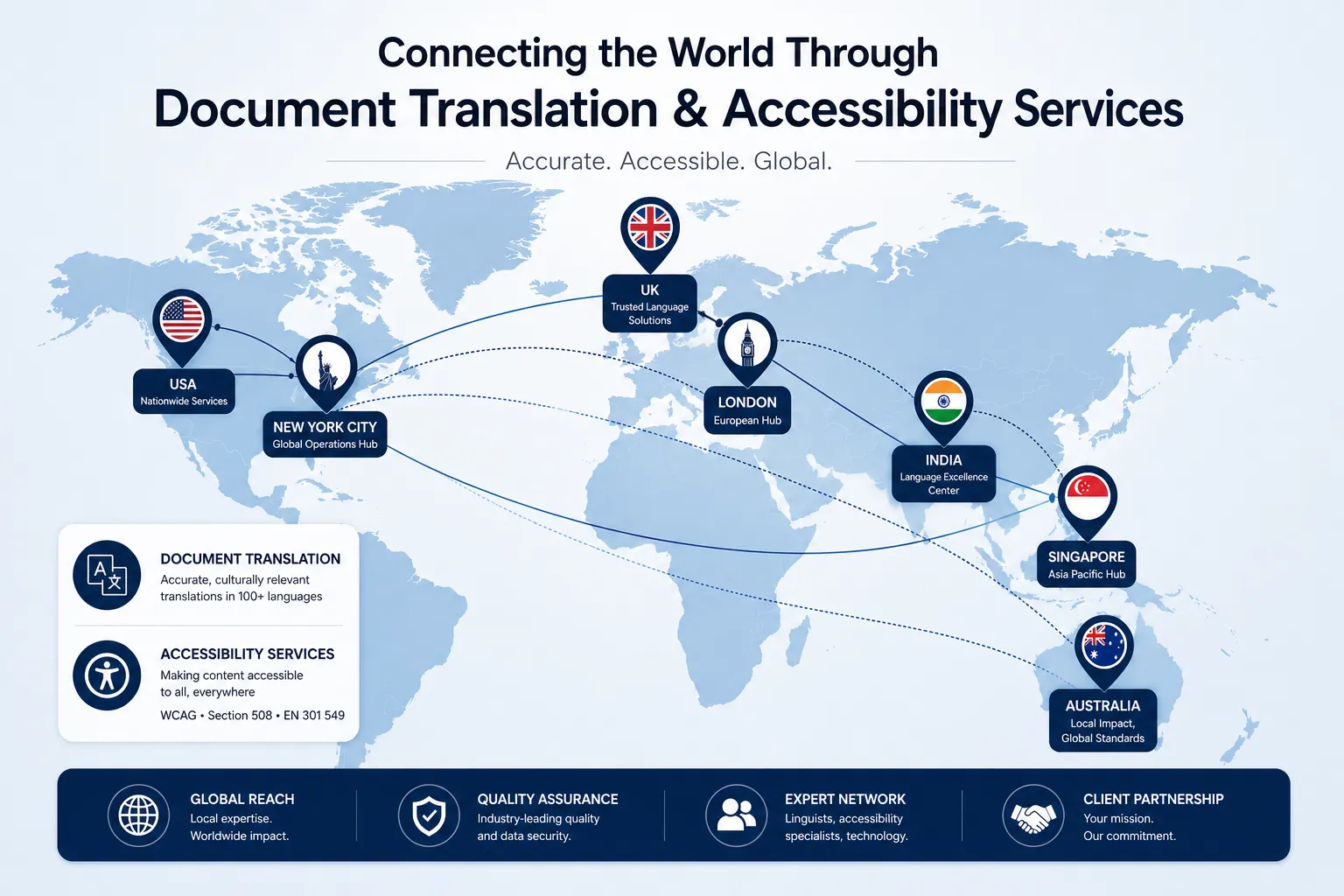
USA
Document translation services in the USA often center on immigration, legal, healthcare, corporate HR, and education. Buyers commonly need certified translations and may ask for notarization. Turnaround expectations tend to be fast, but acceptance rules still vary by agency, court, school, or employer.
UK
For businesses looking for translation services in the UK or official translation services UK-wide, the market often emphasizes legal, financial, academic, and cross-border business use. Requirements can differ from U.S. conventions, especially around what receiving institutions accept as official proof of accuracy.
London
Document translation services London clients need often involve finance, law, global business, and multicultural public communication. The volume of international transactions means speed matters, but so do formatting, confidentiality, and terminology precision.
NYC
Document translation services NYC organizations use are frequently tied to legal firms, media, healthcare networks, universities, government interaction, and global corporate activity. Multilingual communication in New York often extends beyond documents into live events, video, internal communications, and public engagement.
India
Document translation services in India often support education, immigration, employment, global outsourcing, and legal documentation. Buyers may need regional language expertise as well as English localization for international use.
Singapore
Document translation services Singapore clients seek often involve multinational business operations, government interaction, education, and regulated sectors. Accuracy and turnaround are both critical in a market that moves quickly across languages.
Australia
Document translation services Australia buyers often need for immigration, public services, education, legal paperwork, and business expansion. Acceptance standards should always be checked against the receiving institution or authority.
Online vs local: do you really need “near me”?
Searches like document translation services near me, document translation office near me, translation document services near me, and official translation services near me usually reflect one of three concerns:
-
Trust
-
Speed
-
Fear that official documents require in-person handling
In many cases, online service is completely sufficient and more efficient. Digital submission, secure delivery, and remote consultation have made geography less important for most document types.
When local matters
A local option may help if you need:
-
Same-day physical handoff
-
In-person identity confirmation
-
Hard-copy delivery on a tight schedule
-
Region-specific institution familiarity
-
A nearby office for corporate procurement comfort
When online is usually better
Online document translation is often better when you need:
-
Faster quote and intake
-
Access to broader language pairs
-
Subject-matter specialists not available locally
-
Multi-service support beyond translation
-
Flexible delivery for remote teams
-
Coordinated support across cities or countries
For many organizations, the best answer is not local or online. It is a provider that can serve both. Team Stream supports remote and in-person delivery models, which is especially useful for companies managing distributed teams, national events, or hybrid communication needs.
What cheap translation usually leaves out
Competitor pages often promote low prices, but they rarely explain the tradeoffs. Cheap translation services near me or cheap translation services UK-wide may be appropriate for simple, low-risk tasks, but buyers should watch for hidden compromises.
Common issues with bargain services
-
No true human review
-
Generic terminology
-
Formatting errors
-
Weak customer support
-
No accountability for acceptance requirements
-
Limited revisions
-
Poor handling of names, seals, tables, and stamps
-
Security concerns for sensitive files
A better question than “What is cheapest?” is “What level of risk can this document tolerate?”
Documents that need more than translation
A major content gap in most competitor articles is that documents are often part of a bigger communication system.
Examples:
-
A multilingual event needs translated signage, agendas, speaker bios, subtitles, live interpreters, and real-time captions.
-
A training rollout may require document translation, e-learning subtitles, voiceover, and accessible transcripts.
-
A church or broadcast may need sermon translation, captioning, lower-thirds, and simultaneous interpreting.
-
A global product launch may need written translation, branded terminology management, and multilingual event support.
This is where Team Stream stands apart. We do not stop at the file. We help clients build complete language access and accessibility solutions tailored to the audience, format, and compliance needs.
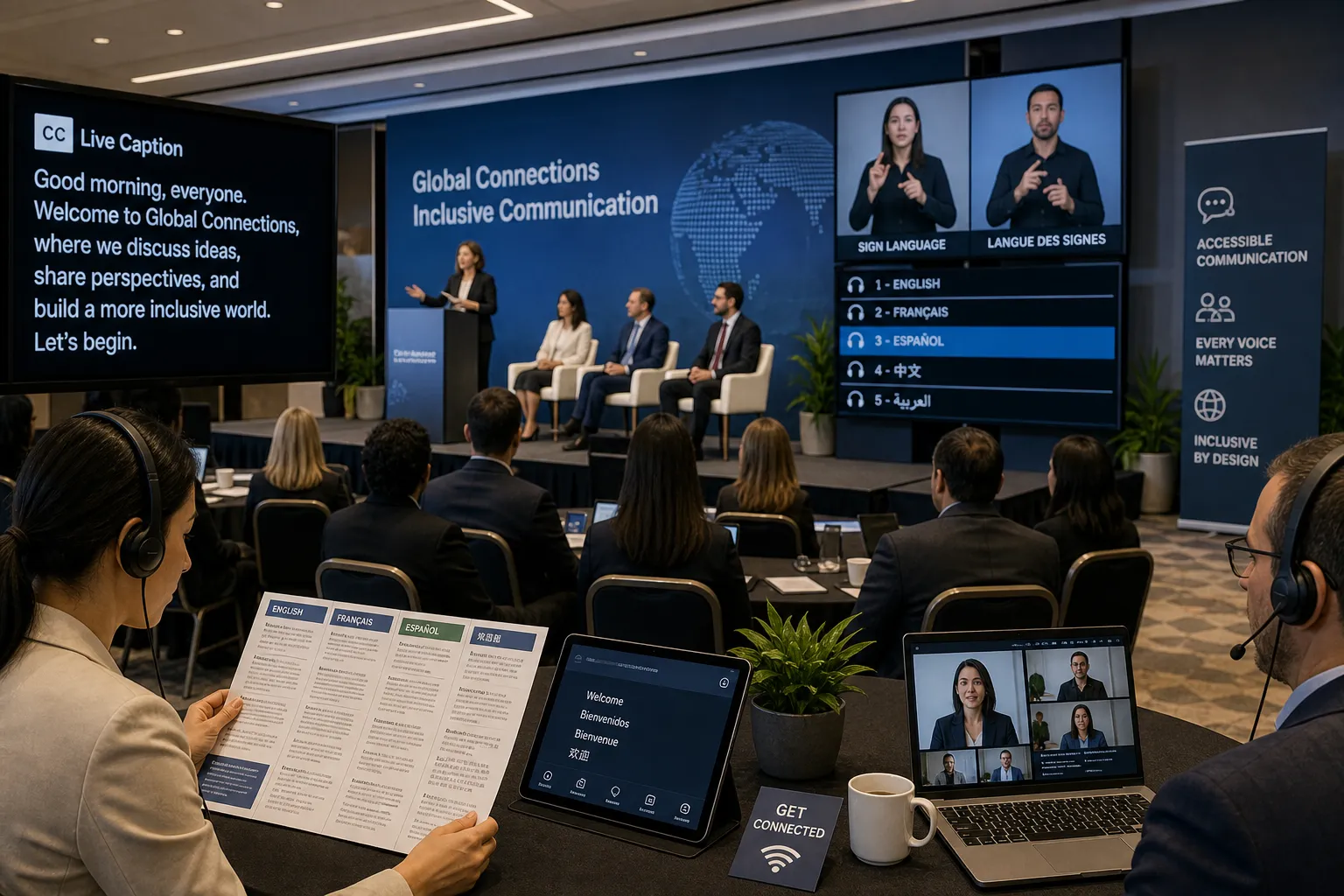
Team Stream’s approach to document translation
Team Stream is built for organizations that care about communication quality, accessibility, and execution.
What that means in practice
-
Accurate human and AI-powered translation
We match the workflow to the document’s purpose, risk level, and timeline. -
Compliance-friendly communication support
Useful for internal communications, public events, and official-facing materials where clarity and inclusion matter. -
Live, virtual, and hybrid readiness
Translation can connect directly to interpreting, captions, subtitling, and event production support. -
Professional equipment and technician support
Especially valuable for conferences, trade shows, corporate events, churches, and broadcasts. -
Flexible service delivery
In-person or remote, single-document or enterprise-scale. -
Experienced execution
With more than 25 years of expertise, Team Stream helps clients avoid preventable communication failures.
For buyers comparing a document translation website or trying to shortlist document translation companies, that broader capability can reduce vendor sprawl and improve consistency across every audience touchpoint.
Practical scenarios: which service should you choose?
Scenario 1: Internal review of foreign-language documents
Use AI-assisted translation or software for first-pass understanding, then add human review if decisions or publishing depend on it.
Scenario 2: Immigration or academic submission
Use certified translation with careful attention to the receiving authority’s requirements.
Scenario 3: Legal contract for negotiation or signature
Use a professional human translator with legal experience, plus formatting review.
Scenario 4: Global employee handbook rollout
Use a managed workflow with terminology control, localization review, and accessibility support.
Scenario 5: Multilingual conference materials
Use a partner like Team Stream that can coordinate translation, interpreting, captioning, subtitling, and technical delivery.
Questions to ask before you order
Before purchasing any translation documents service, ask:
-
Who is the audience for this document?
-
Is it for information, publication, or official submission?
-
Does the recipient define certified or official translation in a specific way?
-
Does the layout need to match the original?
-
Is confidentiality a concern?
-
Could this document later need captions, interpreting, voiceover, or multilingual event support?
-
What happens if the receiving organization requests a minor revision?
Those questions help prevent rework and delays.
Red flags in competitor content you should watch for
After reviewing the leading pages in this space, a few patterns show up repeatedly:
-
They focus heavily on price but lightly on acceptance risk
-
They blur the line between certification, notarization, and ATA membership
-
They position speed as the main value, even for sensitive documents
-
They rarely explain when software is enough and when it is not
-
They usually ignore accessibility, event communication, and multi-format language support
That creates an opportunity for smarter buyers. The best service is not just fast or cheap. It is fit for purpose.
Final verdict: what buyers should do next
If you need simple internal comprehension, software may be enough. If you need business-ready content, public-facing materials, or official documents, you need a more deliberate solution. And if your documents connect to meetings, conferences, video, broadcasts, or multilingual audiences, you need more than a translation vendor. You need a communication partner.
Team Stream delivers that broader solution set: professional translation, interpreting, live captioning, subtitling, voiceover, equipment support, and accessibility-focused service tailored to each client. With more than 25 years of experience and flexible support for live, virtual, and hybrid environments, Team Stream helps organizations communicate clearly, inclusively, and confidently.
If your team is evaluating document translation services online and wants quality without guesswork, Team Stream is the smart next step.
FAQ
What is the best way to translate a document online?
The best approach is to match the method to the document’s purpose. For internal reference, AI tools may be enough, but for official, legal, academic, or customer-facing documents, use a professional service with human review and, if needed, certified translation.
What is the best online translation service?
The best online translation service is one that offers the right level of quality, clear guidance, secure handling, and responsive support. For businesses and event-driven organizations, Team Stream stands out by combining translation with interpreting, captioning, accessibility, and technical event support.
Can ChatGPT translate documents?
Yes, ChatGPT can help translate or summarize document content, especially for quick understanding or draft support. However, it should not be the final solution for certified, legal, regulated, or high-stakes business documents without expert human review.
Is Google Translate totally free?
Google Translate is generally free for basic public use. It can be useful for simple, low-risk text, but it is not a substitute for professional translation, certification, formatting control, or compliance-sensitive communication.
How can I get a document translated for free?
You can use free machine translation tools for basic understanding, but quality and acceptance are not guaranteed. If the document will be submitted, published, or used in a business, legal, educational, or accessibility context, a professional translation service is the safer choice.
