

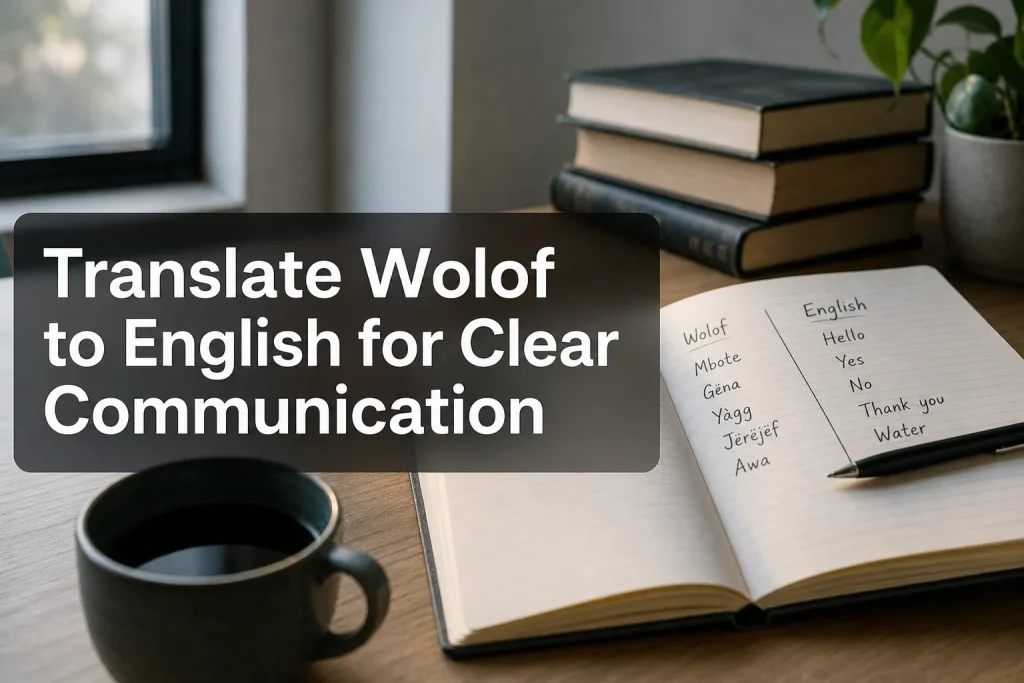
Translate Wolof to English for Clear Communication
If you need to translate Wolof to English accurately, the challenge is rarely just about swapping words. It is about preserving meaning, tone, cultural context, and intent – especially in business documents, audio recordings, community outreach, subtitles, event communication, or live interpreting settings.
For event organizers, operations teams, conference planners, churches, marketers, and businesses working across languages, poor translation creates real risk: misunderstandings, compliance issues, audience exclusion, and damaged trust. That is why clear communication requires more than a quick app result. It requires the right mix of language expertise, technology, and quality control.
At Team Stream, we help organizations communicate clearly across languages with accurate human translation, AI-powered support, interpreting, live captioning, subtitling, and accessibility solutions for in-person, virtual, and hybrid environments. Whether you are translating a document, preparing multilingual video content, or supporting a live audience, the goal stays the same: make every message understandable, inclusive, and effective.
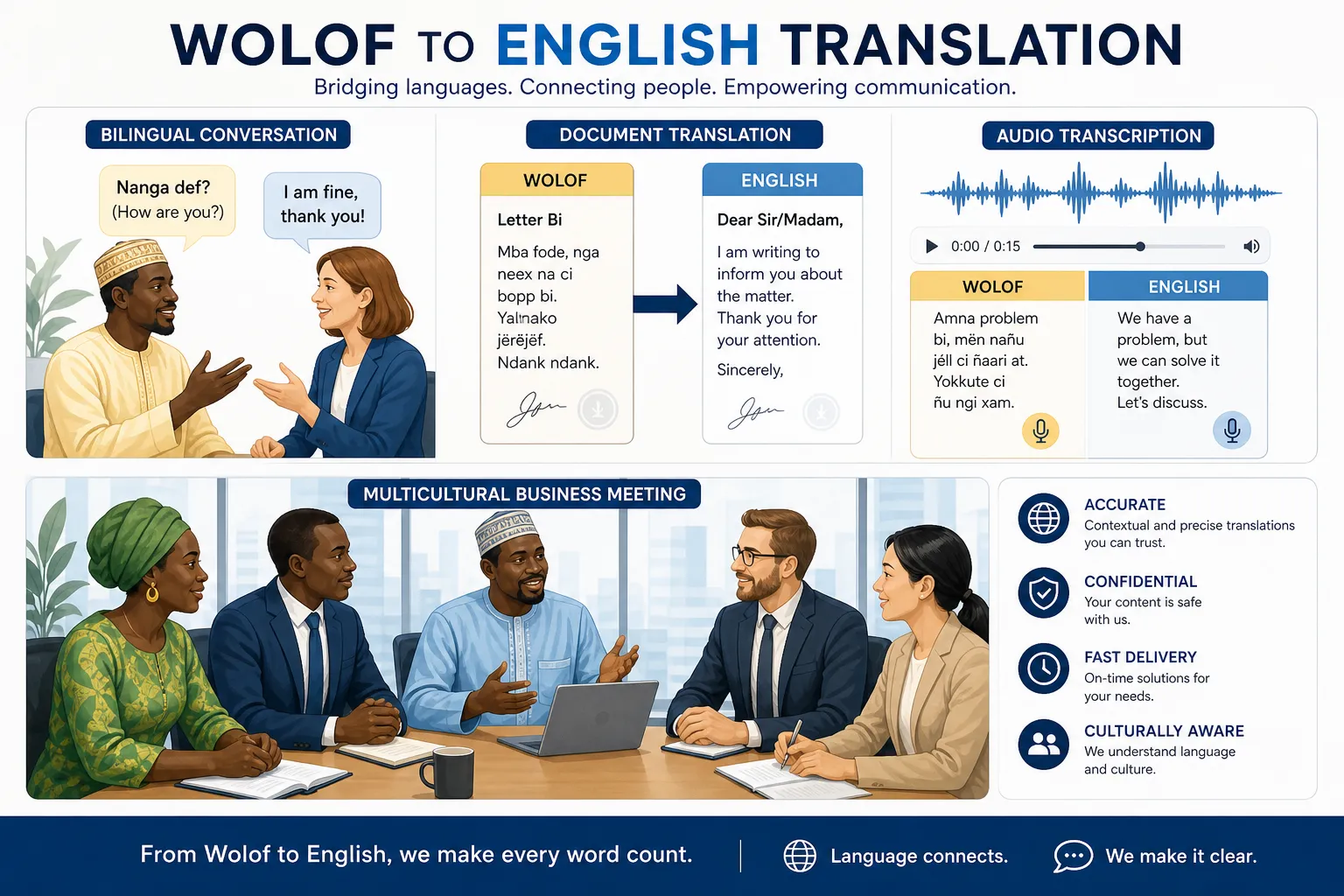
Why Wolof-to-English Translation Needs Extra Care
Wolof is widely spoken in Senegal and across parts of West Africa, and it appears in conversations, recordings, community interactions, education, religious settings, trade, and diaspora communication. Translating it into English can be deceptively difficult because the real meaning often depends on context.
A literal translation may miss:
-
implied respect or familiarity
-
local idioms
-
shortened expressions used in conversation
-
culturally loaded references
-
speech patterns that do not map neatly into English
That matters when you are translating:
-
immigration or legal documents
-
nonprofit and community materials
-
sermon notes or church communications
-
interview recordings
-
subtitles for video content
-
conference sessions with multilingual speakers
-
customer-facing business content
What makes Wolof different from English?
Wolof and English organize meaning differently. In practice, translators must account for:
|
Translation Factor |
Why It Matters |
|---|---|
|
Idiomatic speech |
Direct word-for-word translation often sounds wrong or misleading in English |
|
Cultural context |
A phrase may signal respect, humor, apology, or emphasis beyond the literal words |
|
Oral variation |
Spoken Wolof can be abbreviated, fast, and highly context-dependent |
|
Regional usage |
Vocabulary and phrasing can vary by speaker, community, or country |
|
Intended audience |
A translation for legal review differs from one for subtitles, marketing, or live interpretation |
Common Challenges When You Translate Wolof to English
Many online guides stop at greetings and simple phrases. Real translation problems begin when the content becomes important, technical, emotional, or public-facing.
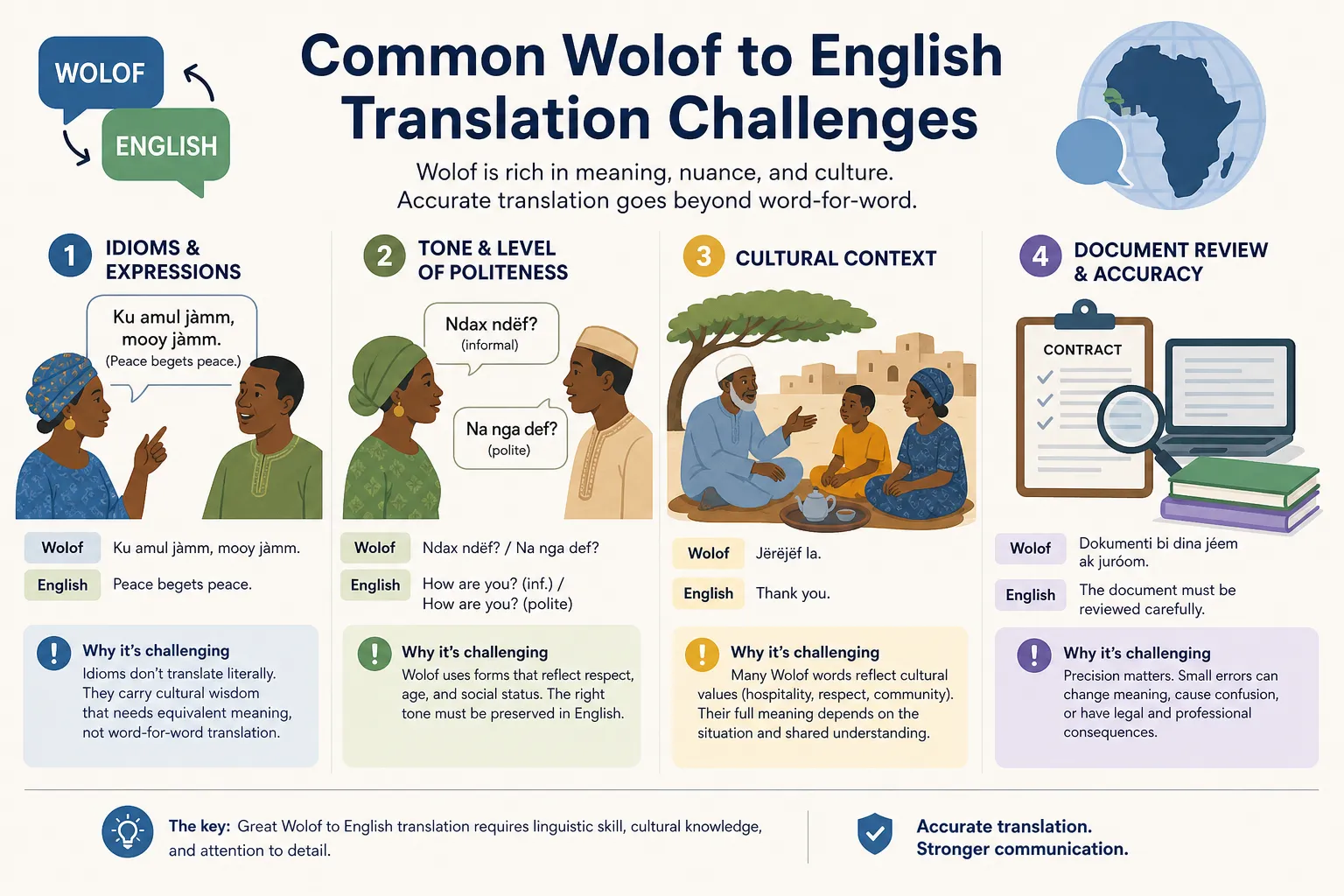
Idioms do not travel neatly
A phrase that feels natural in Wolof may need to be re-expressed rather than translated literally. This is one of the biggest reasons machine-only outputs can sound awkward or inaccurate.
Tone changes meaning
The difference between formal, casual, respectful, or corrective language can be significant. In community outreach, faith-based communication, internal workplace messaging, and public programming, tone is often as important as content.
Spoken audio is harder than written text
Audio translation adds extra layers:
-
background noise
-
overlapping speakers
-
accent variation
-
incomplete sentences
-
repetitions and filler words
-
names, places, and technical terms
When translating recorded interviews, meetings, testimonials, or live sessions, transcription quality affects translation quality.
Context determines the right English choice
Some Wolof words or expressions can mean different things depending on setting. A translator working without context may choose the wrong English equivalent.
For example, the same phrase might need a different rendering in:
-
a court-related document
-
a church announcement
-
a conference presentation
-
a subtitle file
-
a marketing campaign
-
a healthcare communication
When a Free Tool Is Fine – and When It Is Not
It is tempting to use an instant app for speed. Sometimes that is enough. But not every communication task has the same risk level.
A free or AI tool may work for:
-
simple phrases
-
basic comprehension
-
informal personal messages
-
rough internal understanding
-
first-pass review before human editing
You should use a professional translator for:
-
contracts and legal documents
-
immigration paperwork
-
compliance-sensitive materials
-
public-facing brand content
-
subtitles and voiceover scripts
-
live events and interpreted sessions
-
accessibility-related deliverables
-
healthcare, nonprofit, educational, or faith-based communication
At Team Stream, we often combine AI-enabled efficiency with expert human review so clients get both speed and accuracy. That matters when the final content must be audience-ready, brand-safe, and clear.
Best Practices for Translating Documents From Wolof to English
Document translation should never be treated as copy-and-paste work. A structured workflow reduces errors and preserves intent.
1. Start with the document purpose
Ask:
-
Who will read this?
-
Is the translation informational, legal, promotional, or operational?
-
Does it need certification or formal formatting?
-
Is it meant for publication, filing, or internal use?
2. Preserve meaning, not just wording
The best translations communicate what the source text means in a way that feels natural in English. That may require sentence restructuring, clarification, or terminology adaptation.
3. Standardize names and terminology
For multi-page files, repeated terms should stay consistent. This is especially important for:
-
names
-
ministries or organizations
-
product references
-
program names
-
legal or administrative terminology
-
event branding
4. Include review and QA
Every high-stakes translation benefits from review. Team Stream uses a quality-driven workflow that can include translation, editing, formatting, and final validation depending on project needs.
5. Match the output to the delivery format
The final English version may need to be delivered as:
-
a polished Word document
-
a PDF preserving layout
-
subtitle files
-
script format
-
bilingual side-by-side copy
-
caption-ready text
-
event handouts or presentation support materials
Best Practices for Translating Wolof Audio and Video
Audio and video translation requires more than linguistic skill. It also requires workflow discipline and technical readiness.
Recommended process
|
Step |
What Happens |
Why It Matters |
|---|---|---|
|
Audio review |
Assess clarity, speaker count, terminology, and sound quality |
Prevents avoidable errors early |
|
Transcription |
Create a reliable source text from speech |
Translation is only as good as the transcript |
|
Translation |
Render Wolof speech into natural English |
Captures intended meaning |
|
Editing |
Refine wording, terminology, and consistency |
Improves readability and accuracy |
|
Timing or formatting |
Prepare subtitles, captions, or scripts |
Ensures usability across platforms |
|
Final QA |
Check names, timing, completeness, and audience fit |
Protects final quality |
For subtitles and captions, timing matters
If you are publishing multilingual video content, viewers need clear language delivered at a readable pace. Team Stream supports subtitling, closed captioning, and real-time captioning to help clients improve both accessibility and engagement.
This is especially useful for:
-
conferences
-
webinars
-
church broadcasts
-
training videos
-
internal communications
-
public awareness campaigns
-
hybrid and virtual events
Live Events: Why Translation and Accessibility Must Work Together
For live events, translating Wolof into English may be only one part of the communication challenge. Audiences may also need interpreting, on-screen captions, multilingual audio delivery, and remote participation support.

A strong live-language plan can include:
-
on-site or remote interpreters
-
real-time captioning
-
multilingual presentation support
-
subtitled playback content
-
technician support
-
audio and display equipment
-
accessibility planning for compliance-friendly delivery
This is where Team Stream stands out. We do not just hand over translated text. We support end-to-end language access and accessibility solutions tailored to each event format – live, virtual, or hybrid. That includes the people, workflow, technology, and responsiveness needed to execute well under pressure.
Human Translation vs AI Translation for Wolof
Organizations often ask whether AI is enough. The honest answer is: sometimes for speed, rarely by itself for mission-critical communication.
Quick comparison
|
Criteria |
AI-Only Translation |
Human Translation |
Team Stream Approach |
|---|---|---|---|
|
Speed |
Fast |
Moderate |
Fast with scalable workflows |
|
Cultural accuracy |
Inconsistent |
Strong |
Strong, with human oversight |
|
Tone control |
Limited |
High |
High |
|
Audio/video adaptation |
Limited |
Strong |
Strong, including captioning and subtitling |
|
Compliance-sensitive use |
Risky |
Safer |
Safer and process-driven |
|
Event-readiness |
Weak |
Strong |
Strong, with interpreting and tech support |
The most effective approach is often hybrid: AI where it improves efficiency, human expertise where accuracy and audience trust matter most.
How Team Stream Handles Wolof-to-English Communication
When clients need clear multilingual communication, they usually need more than a translator. They need a reliable delivery partner.
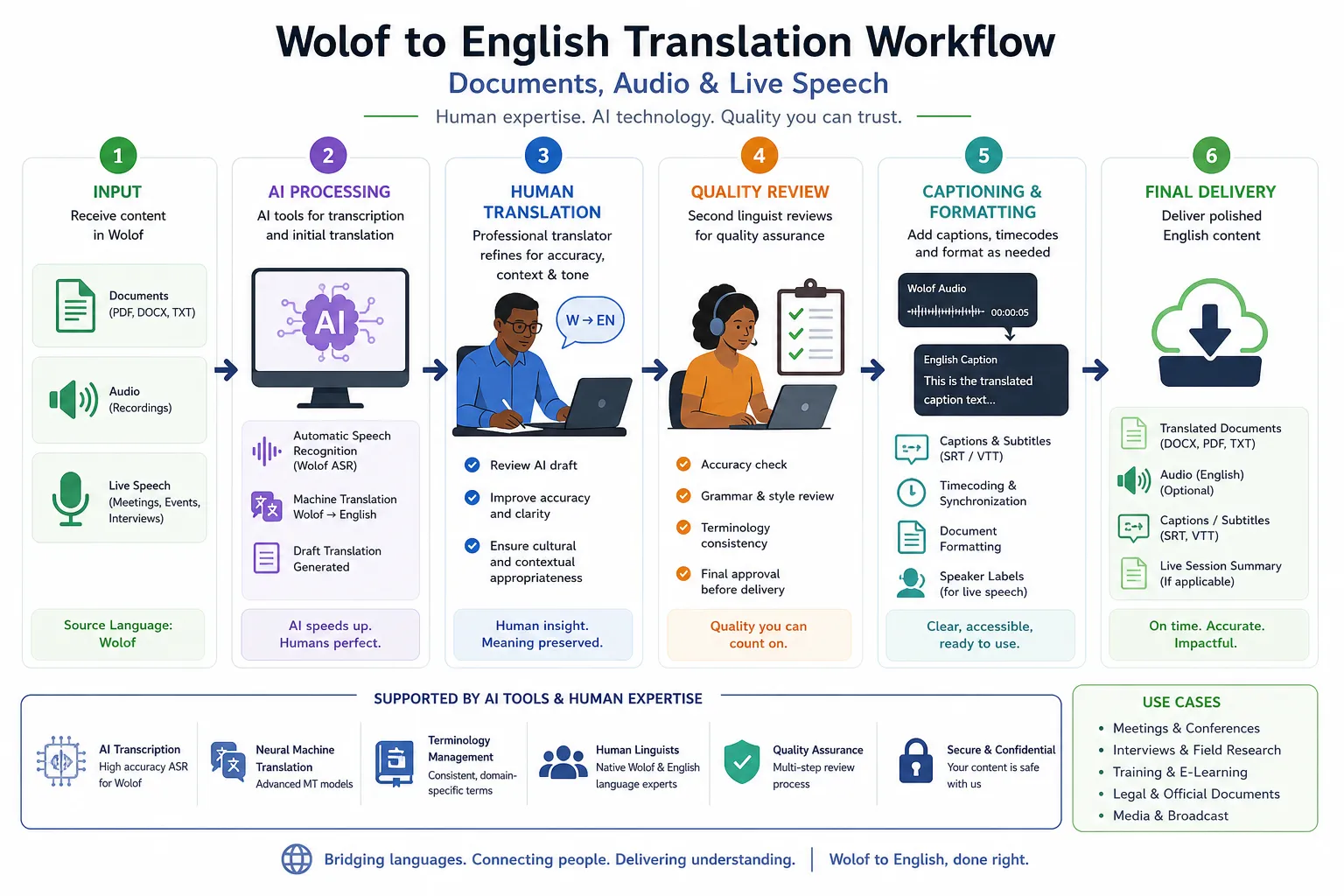
Our approach includes:
-
accurate human translation supported by AI-enabled workflows
-
interpreting for meetings, conferences, worship services, and events
-
live captioning and closed captioning for accessibility
-
subtitling and voiceover for media and video content
-
support for live, virtual, and hybrid events
-
in-person and remote service options
-
equipment rental and technician support when needed
-
responsive project management and customer service
-
over 25 years of language and accessibility expertise
Why clients choose Team Stream
Clients trust Team Stream because we help them reduce communication risk while improving audience reach. We tailor each solution to the content, audience, timeline, and delivery environment rather than forcing a one-size-fits-all package.
That matters when you need to:
-
communicate clearly across cultures
-
meet accessibility expectations
-
support multilingual audiences
-
deliver polished content on deadline
-
protect your brand and message
-
keep live production running smoothly
Practical Tips to Improve Translation Accuracy
Whether you are handling a single document or a multilingual event, these steps improve outcomes.
Share context with your translator
Provide:
-
the source purpose
-
intended audience
-
country or community context
-
names and terminology
-
reference materials
-
desired tone
-
formatting requirements
-
deadline and delivery use
Avoid sending low-quality source files
Blurry scans, noisy recordings, or incomplete files slow the process and increase error risk.
Decide whether you need translation, interpreting, captions, or all three
These are related but different services:
-
translation converts written content
-
interpreting converts spoken communication in real time or near real time
-
captioning displays spoken content as readable text
-
subtitling translates spoken content into on-screen text for viewers
Build quality review into the schedule
If the content is public-facing or high-stakes, leave time for review. Rushed publishing creates preventable mistakes.
Signs You Need Professional Help Right Away
You should move beyond DIY translation if any of these apply:
-
the content affects legal, financial, or operational decisions
-
the audience includes the public, customers, donors, or attendees
-
accessibility is part of the deliverable
-
the translation will be shown on screen or distributed widely
-
the content includes technical, religious, educational, or compliance-related language
-
multiple speakers or channels are involved
-
the communication is part of a live event
In those situations, a translation mistake is not just inconvenient. It can be expensive, exclusionary, or reputationally damaging.
Final Verdict
If your goal is to translate Wolof to English for clear communication, accuracy depends on much more than vocabulary. You need context, tone awareness, quality control, and the right delivery method for the audience and setting.
That is exactly where Team Stream adds value. We combine experienced human professionals, AI-powered efficiency, interpreting, captioning, subtitling, accessibility planning, and event support to help organizations communicate with clarity and confidence. From documents and recordings to conferences, church services, webinars, and hybrid events, we deliver language access solutions that are accurate, inclusive, and reliable.
If you need a trusted partner to make Wolof-to-English communication work in the real world – not just on paper – Team Stream is ready to help.
FAQ
What is “I love you” in wolof?
A commonly cited way to express it is “Dama la bëgg”, meaning “I love you.” As with many Wolof expressions, pronunciation and context matter, so a native speaker or professional linguist can help confirm the most natural usage for your audience.
How to translate wolof to English?
Start by identifying the context, tone, and audience, because Wolof meanings often depend on how and where something is said. For simple phrases, a basic tool may help, but for documents, audio, subtitles, or live events, professional translation and review are the safer choice.
What is beautiful in Wolof?
One commonly referenced word is “rafet”, which can mean beautiful or nice depending on context. Because Wolof usage can shift with tone and setting, the best English equivalent may vary slightly in real conversation.
How do you say “sorry” in Wolof?
A widely used expression is “baal ma”, which means “forgive me” or “sorry.” It is a good example of why cultural tone matters when translating Wolof into natural English.
What does rekk mean in Senegal?
“Rekk” is often used to mean “only,” “just,” or “simply,” depending on the sentence. It is a small word with flexible meaning, which shows why Wolof-to-English translation usually requires full context rather than isolated word matching.
