

Professional Medical Translation Services Benefits
For healthcare organizations, life sciences teams, event producers, and businesses communicating sensitive medical information, accuracy is not a luxury. It is a safety issue, a trust issue, and often a compliance issue.
Whether you are translating patient instructions, informed consent forms, clinical trial materials, medical device documentation, training content, or multilingual health presentations, mistakes can create real consequences. A confusing dosage instruction, an oversimplified discharge summary, or an inaccessible live webinar can undermine outcomes and expose your organization to unnecessary risk.
That is why professional medical translation matters. It helps organizations communicate clearly across languages, preserve meaning in high-stakes contexts, and support better experiences for patients, providers, partners, and audiences.
In this guide, we will break down where professional medical translation services create the most value, how they differ from general translation, what risks they reduce, and how Team Stream helps organizations deliver multilingual and accessible communication with confidence across live, virtual, hybrid, and document-based environments.
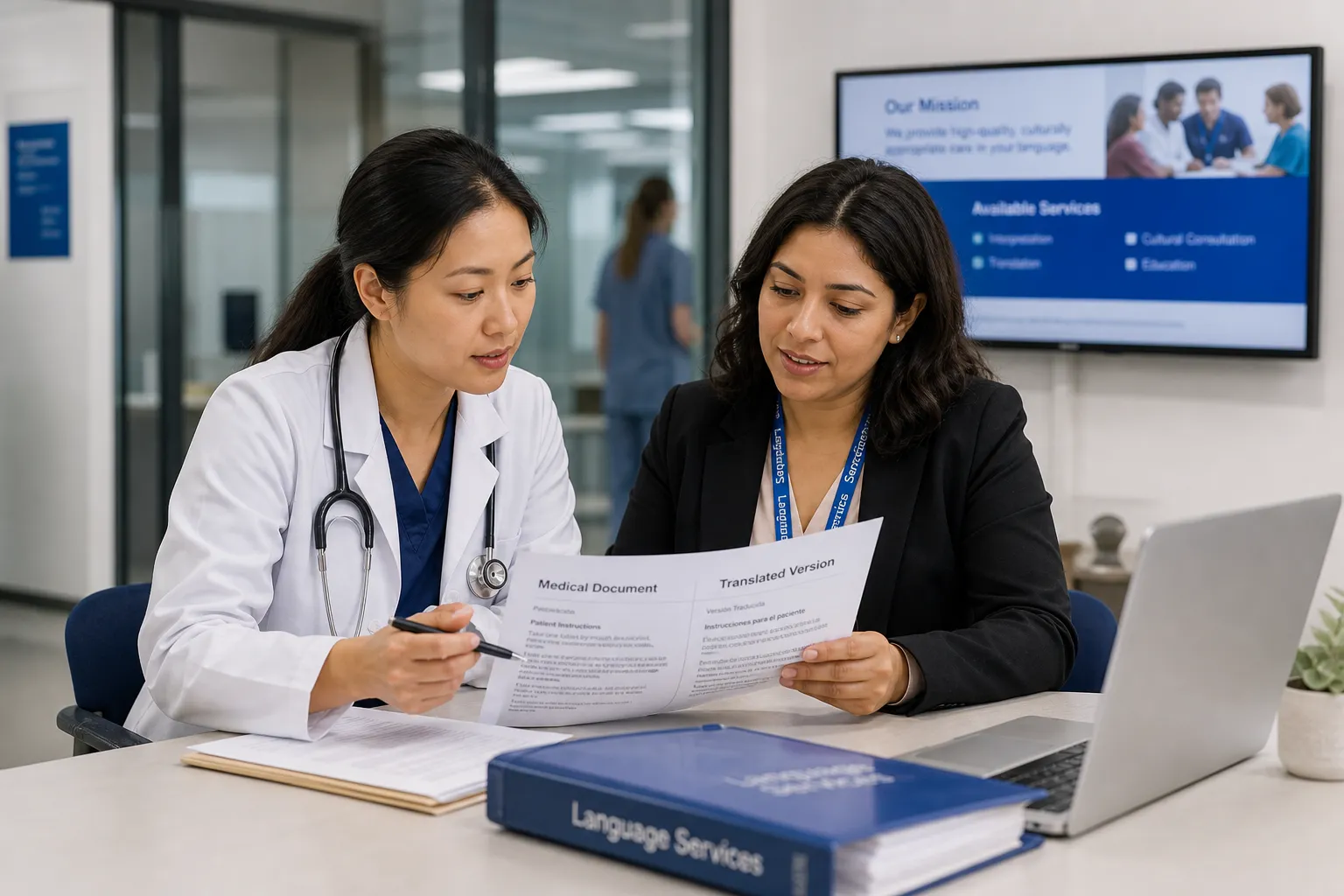
Why professional medical translation matters more than ever
Medical communication has become more complex, more regulated, and more public-facing.
Healthcare systems serve multilingual communities. Pharmaceutical and biotech companies operate globally. Hospitals and health brands increasingly publish educational resources, videos, webinars, and public health updates online. Event organizers and corporate communicators need to make medical or health-related content understandable and accessible for diverse audiences in real time.
In all of these environments, language support has to do more than convert words. It must preserve intent, terminology, nuance, tone, and legal meaning.
Professional medical translation supports that goal by helping organizations:
-
reduce the risk of misunderstandings
-
improve clarity in patient-facing content
-
support informed consent and comprehension
-
maintain consistency across regulated materials
-
strengthen multilingual engagement in events and broadcasts
-
improve accessibility for audiences who need captions, subtitles, or translated content
-
protect brand credibility in sensitive subject areas
The core benefit is simple: people can only act on information they truly understand.
What counts as medical translation?
Medical translation is the accurate conversion of healthcare or life sciences content from one language into another by professionals who understand both language and subject matter.
This can include:
-
patient forms and discharge instructions
-
consent documents
-
medication guides
-
public health materials
-
medical websites and portals
-
clinical trial content
-
device manuals and labeling
-
healthcare marketing content
-
subtitles and voiceover for medical videos
-
multilingual presentations for conferences, trainings, and webinars
The stakes are higher than in many other industries because the content often influences care decisions, regulatory obligations, and public trust.
Medical translation vs. medical interpreting
These two services are related, but they solve different problems.
|
Service |
What it covers |
Best used for |
|---|---|---|
|
Medical translation |
Written content translated into another language |
Forms, websites, manuals, consent documents, subtitles, educational resources |
|
Medical interpreting |
Spoken or signed communication rendered in real time |
Appointments, live events, webinars, telehealth, meetings, conferences |
|
Captioning/subtitling |
Spoken content converted into readable text, sometimes translated |
Accessibility, broadcasts, hybrid events, training videos, multilingual recordings |
Many organizations need all three, especially when they communicate across documents, live interactions, and digital media. That is where an end-to-end partner like Team Stream becomes especially valuable: instead of piecing together separate vendors, teams can coordinate translation, interpreting, captioning, subtitling, voiceover, equipment, and technician support through one experienced provider.
The biggest benefits of professional medical translation services
1. Better accuracy in high-stakes communication
Medical content is full of specialized terminology, abbreviations, anatomical references, diagnostic language, and procedural detail. Small wording errors can change meaning quickly.
Professional linguists with medical expertise know how to handle:
-
terminology consistency
-
language variants by region
-
plain-language adaptation for patient understanding
-
formatting conventions
-
context-specific phrasing for regulated materials
This is especially important when the audience includes patients, caregivers, clinicians, regulators, research participants, or public health stakeholders.
2. Stronger patient trust and comprehension
Trust is built when people feel informed, respected, and included.
When patients receive well-translated instructions, educational resources, and consent materials in a language they understand, they are more likely to feel confident asking questions and following next steps. Clear language reduces uncertainty and signals that your organization takes inclusion seriously.
For healthcare brands and providers, this also improves the overall communication experience. It is not just about correctness. It is about dignity.
3. Reduced legal and compliance risk
Medical organizations operate in highly regulated environments. Inaccurate or incomplete translations can create problems related to consent, privacy, disclosures, labeling, or accessibility requirements.
Professional medical translation helps organizations support:
-
more defensible documentation
-
clearer informed consent processes
-
consistent terminology across touchpoints
-
inclusive communication practices
-
accessibility and compliance efforts in public-facing content and events
For teams hosting medical conferences, internal trainings, or hybrid healthcare events, compliance-friendly communication also includes captioning, interpreting, and accessible delivery. Team Stream helps clients align language access and accessibility support with real-world operational needs, whether the audience is in a ballroom, online, or both.
4. Improved multilingual brand credibility
Healthcare and life sciences organizations are judged by how clearly they communicate.
Poorly translated content can sound robotic, confusing, or careless. In patient-facing settings, that can erode confidence. In B2B or event contexts, it can make a sophisticated organization look unprepared.
Professional medical translation services help protect brand reputation by ensuring that multilingual communication sounds polished, accurate, and audience-appropriate.
5. More consistent communication across channels
Most organizations do not publish just one type of content. They manage websites, brochures, emails, videos, webinars, handouts, presentations, subtitles, and internal communications.
Without a professional workflow, terminology can drift from one asset to the next. A treatment name may be translated one way in a brochure, another way in a video subtitle, and a third way in a webinar deck.
Professional language support creates consistency across written, spoken, and visual communication. Team Stream strengthens this further by combining human expertise with AI-powered workflows where appropriate, helping clients scale multilingual communication without sacrificing quality control.
6. Better accessibility for live and recorded content
One major content gap in many articles about medical translation is that they focus only on documents.
In reality, a growing share of medical communication happens in live and digital formats:
-
online trainings
-
corporate town halls
-
continuing education sessions
-
telehealth or patient education webinars
-
conference panels
-
trade show presentations
-
recorded explainer videos
-
livestreamed announcements
These situations often require a mix of services, not just translation. You may need live interpreting, real-time captioning, translated subtitles, voiceover, accessible slide support, or technician coordination.
This is where Team Stream offers a broader advantage than a document-only vendor. With more than 25 years of experience, Team Stream supports multilingual and accessible communication across live, virtual, and hybrid environments, backed by professional equipment rental, technician services, remote and in-person delivery options, and responsive customer support.
Where professional medical translation creates the most value
Patient-facing healthcare communication
This includes discharge instructions, appointment materials, forms, portal messages, and educational handouts. Here, the priority is clear comprehension.
A good translation is not only technically accurate. It is readable, culturally aware, and appropriate for the intended audience.
Clinical research and life sciences
Clinical trial documents, recruitment materials, protocols, and patient-reported outcome tools require precision and consistency. Errors can create delays, confusion, or regulatory issues.
Medical devices and product documentation
Instructions for use, packaging content, safety notices, and technical manuals must be accurate and consistent across markets. A mistranslated warning is a serious operational risk.
Healthcare marketing and public education
Hospitals, insurers, health systems, nonprofits, and medical brands increasingly publish multilingual campaigns and educational content. These materials need to be trustworthy, clear, and culturally appropriate.
Conferences, webinars, and multilingual events
This is another area many competitor articles barely touch. Medical communication is no longer limited to clinics and paper documents. Organizations increasingly need language access at events and in media.
Examples include:
-
healthcare association conferences
-
pharmaceutical product trainings
-
medtech launches
-
investor presentations in life sciences
-
internal compliance trainings
-
community outreach events
-
livestreamed panels and hybrid summits
For these environments, written translation alone is not enough. You may need simultaneous interpreting, live captions, subtitling, voiceover, and on-site or remote technical support. Team Stream is built for exactly this kind of end-to-end delivery.
What general translation often gets wrong in medical contexts
A low-cost or generalist translation approach may seem efficient at first, but medical communication leaves very little room for guesswork.
Common failure points include:
|
Common issue |
Why it matters |
|---|---|
|
Literal translation without context |
Can distort clinical meaning or confuse patients |
|
Inconsistent terminology |
Creates risk across documents, presentations, and labels |
|
Poor readability |
Patients may technically receive the information but still not understand it |
|
Lack of cultural nuance |
Tone, examples, and health communication norms can miss the mark |
|
No accessibility planning |
Content may exclude Deaf, hard-of-hearing, or multilingual audiences in live or recorded settings |
|
No technical coordination |
Hybrid and virtual events can fail without proper language-access workflows |
Professional medical translation services are designed to avoid these pitfalls through expertise, review, terminology management, and fit-for-purpose delivery.
Human expertise and AI: the smartest approach is not either-or
Another gap in many top-ranking articles is that they frame translation as a choice between human and machine.
In practice, the best answer is often a thoughtful blend.
AI can help with speed, scale, first-pass processing, and workflow efficiency. Human experts are essential for nuance, medical accuracy, contextual review, terminology decisions, audience adaptation, and compliance-sensitive communication.
Team Stream’s approach reflects how modern organizations actually work: combining accurate human expertise with AI-powered language solutions where they add value, while maintaining quality, accountability, and accessibility. That means clients can move faster without treating sensitive medical communication like generic content.
How to tell when you need professional medical translation
You should strongly consider expert support when content involves any of the following:
-
patient care instructions
-
informed consent
-
medical risk disclosures
-
regulated healthcare or life sciences materials
-
multilingual public health messaging
-
medical websites or portals
-
training content with technical terminology
-
accessibility requirements for videos or events
-
live healthcare presentations with multilingual audiences
A simple rule: if misunderstanding the content could affect safety, compliance, trust, or participation, professional support is worth it.
What to look for in a medical translation partner
Choosing the right provider matters just as much as deciding to translate in the first place.
Subject-matter expertise
Medical terminology and healthcare communication are specialized. Your provider should understand the difference between general fluency and domain fluency.
Quality control processes
Look for review workflows, terminology management, and consistency practices. Accuracy should be systematic, not accidental.
Accessibility capabilities
If your content appears in video, live meetings, webinars, conferences, or hybrid events, look beyond translation alone. Ask whether the provider also supports:
-
real-time captioning
-
closed captioning
-
subtitling
-
voiceover
-
interpreting
-
technician support
-
equipment rental for multilingual event delivery
Flexible delivery
Modern organizations need in-person and remote options. A strong partner should be able to support both.
Responsiveness and service
In healthcare and events, timing matters. A provider that is hard to reach becomes part of the risk.
Team Stream stands out here by pairing language and accessibility expertise with strong customer service, responsive project coordination, and tailored execution. Instead of forcing clients into one-size-fits-all packages, the team adapts services to the actual communication environment.
Common use cases for Team Stream
Because Team Stream supports both language access and accessibility, clients can solve multiple communication needs at once.
For healthcare and life sciences organizations
-
translated patient education materials
-
multilingual videos with subtitles or voiceover
-
interpreting for meetings, trainings, and public-facing events
-
real-time captioning for accessibility
-
hybrid event support with technicians and equipment
For conference planners and event producers
-
simultaneous interpreting for multilingual sessions
-
captioning for compliance and inclusion
-
remote or on-site support
-
language solutions for live, virtual, and hybrid formats
-
equipment rental for smooth audience delivery
For internal communications and corporate teams
-
accessible town halls and trainings
-
translated presentations and meeting materials
-
multilingual employee communications
-
captioned recordings for broader reach and retention
This broader service model is especially useful for organizations that need communication continuity from document creation to live execution.
The hidden cost of getting medical translation wrong
Organizations often evaluate translation based on line-item cost. The better question is: what does failure cost?
Potential downstream costs include:
-
confusion and support burden
-
delayed decisions or incomplete forms
-
reputational damage
-
accessibility complaints
-
inconsistent brand messaging
-
poor audience engagement in live settings
-
rework across documents, subtitles, slides, and recordings
-
avoidable risk in regulated environments
Professional medical translation services are not just a purchasing decision. They are part of risk management and experience design.
A practical framework for deciding what support you need
Use this simple matrix to match the communication challenge to the service type.
|
Scenario |
Primary need |
Best-fit support |
|---|---|---|
|
Patient discharge paperwork |
Written accuracy and readability |
Medical translation |
|
Informed consent process |
Written and spoken clarity |
Medical translation + interpreting |
|
Clinical webinar for multilingual audience |
Live understanding and accessibility |
Interpreting + real-time captioning |
|
Recorded health education video |
Multilingual access and replay value |
Translation + subtitles + voiceover |
|
Hybrid medical conference |
End-to-end inclusive communication |
Interpreting + captioning + technician support + equipment |
|
Internal compliance training |
Consistency across teams and formats |
Translation + captions + event support |
This is where a comprehensive partner can save time. Instead of coordinating multiple vendors across translation, interpreting, accessibility, and technical setup, organizations can work with one team that understands how all the parts fit together.
Why Team Stream is a strong fit for multilingual medical communication
Team Stream is especially well positioned for organizations that need more than static translation.
Clients choose Team Stream because they need:
-
accurate human and AI-powered translation and interpreting
-
real-time captioning for accessibility and engagement
-
tailored language and accessibility solutions
-
support for live, virtual, and hybrid events
-
compliance-friendly services for inclusive communication
-
professional equipment rental and technician support
-
in-person and remote delivery options
-
an experienced team with over 25 years of expertise
-
reliable execution backed by responsive customer service
For healthcare-adjacent communication, medical events, training environments, and multilingual outreach, that breadth matters. It enables teams to plan once and execute cleanly across documents, stages, streams, recordings, and audience experiences.
Final thoughts
The benefits of professional medical translation go far beyond word-for-word accuracy.
Done well, it helps organizations communicate clearly, reduce risk, build trust, improve accessibility, and serve multilingual audiences with professionalism. It supports safer patient communication, stronger healthcare branding, better event experiences, and more inclusive engagement across every channel where medical information appears.
If your organization handles sensitive healthcare content, multilingual education, or medical events, the smartest move is to treat language access and accessibility as strategic infrastructure, not an afterthought.
Team Stream brings that infrastructure together in one place, combining translation, interpreting, captioning, subtitling, voiceover, event support, technician services, and flexible delivery models to help you communicate with confidence.
If you want a partner that can help you deliver accurate, inclusive, and high-quality multilingual communication in healthcare and beyond, Team Stream is ready to help.
FAQ
Is it worth it to be a medical interpreter?
Yes. Medical interpreting can be a highly meaningful career because it supports patient understanding, safety, and equitable access in high-stakes settings. It is especially valuable for professionals who combine strong language skills with cultural awareness, accuracy, and the ability to work under pressure.
How does a medical interpreter get paid?
Medical interpreters are typically paid by healthcare providers, hospitals, language service companies, event organizers, or other organizations that need language access support. Compensation varies based on language pair, specialization, certification, format, and whether the work is in-person or remote.
Is there a high demand for medical interpreters?
Yes. Demand remains strong as healthcare organizations, public-facing institutions, and event teams work to improve multilingual communication, accessibility, and compliance. Growth in telehealth, hybrid events, and diverse patient populations continues to increase the need for skilled interpreters and related language-access services.
