

Certified Interpreter Services for Clear Communication
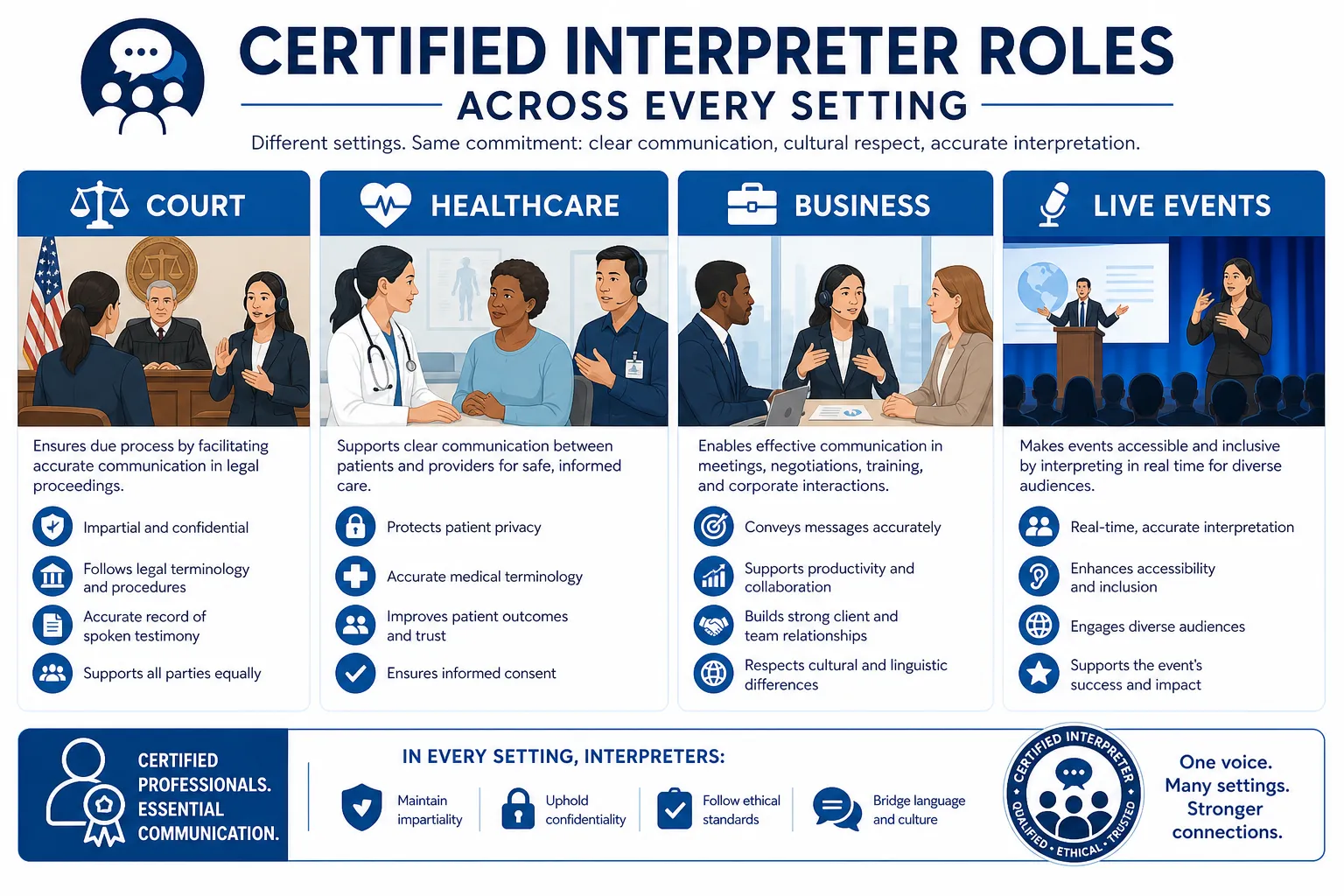
When the stakes are high, “good enough” communication is not enough. Whether you are coordinating a court proceeding, a medical appointment, a multilingual board meeting, a training session, or a live event, the difference between a bilingual person and a qualified professional can be enormous. That is where certified interpreter services matter.
A certified interpreter helps people communicate accurately across languages while preserving meaning, tone, and intent. In many settings, certification is more than a nice-to-have. It is a signal of tested skill, ethical standards, and readiness for high-consequence conversations. For event organizers, operations teams, legal professionals, healthcare leaders, churches, and businesses serving diverse audiences, choosing the right interpreter protects clarity, compliance, accessibility, and trust.
At Team Stream, we see this every day. Clear communication is not just about words. It is about making sure every participant can follow, respond, and fully engage, whether the setting is in person, virtual, or hybrid. That is why organizations increasingly look for a partner that can combine experienced interpreters, captioning, translation, accessibility support, and event execution under one roof.
What a Certified Interpreter Actually Does
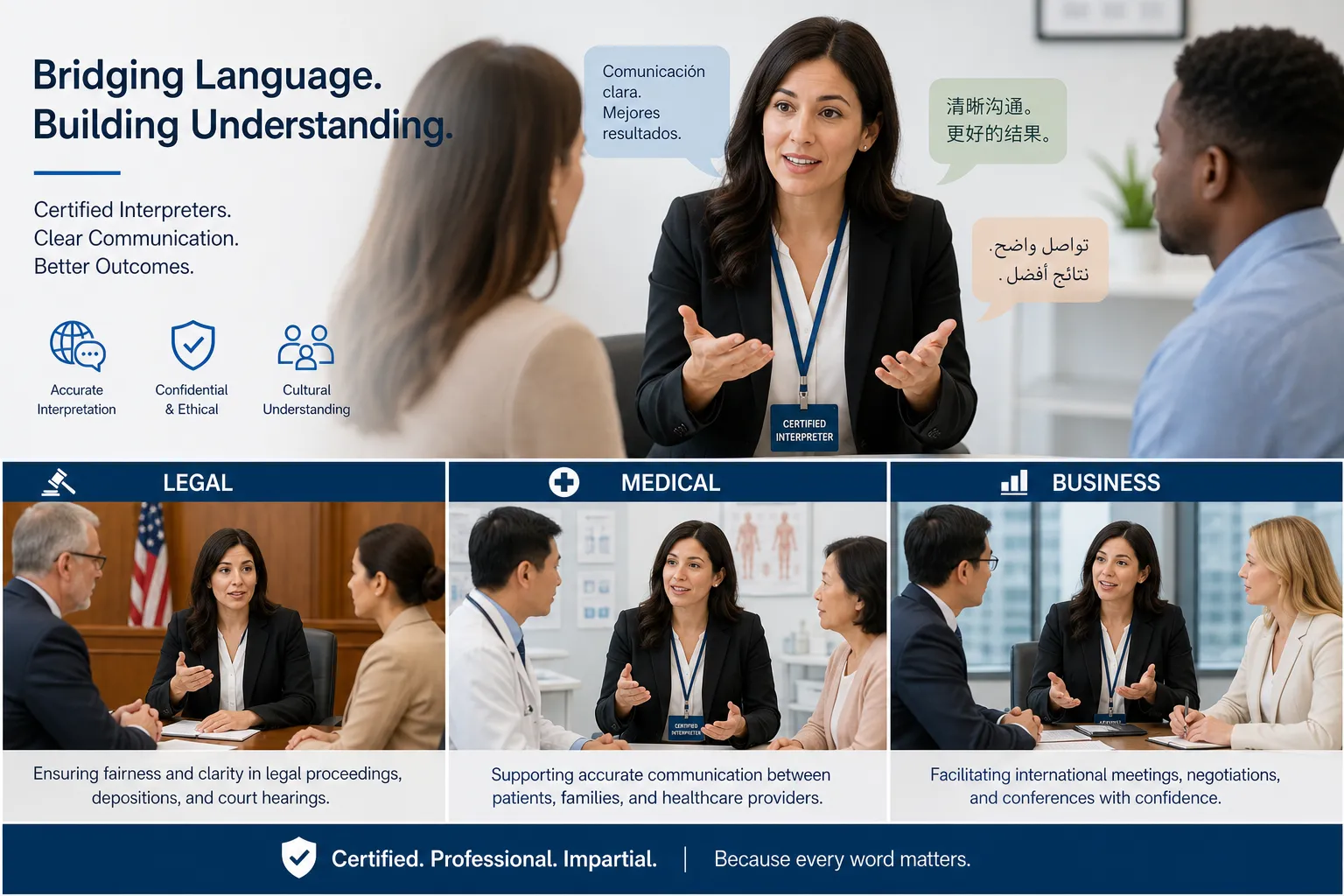
A certified interpreter facilitates spoken or signed communication between people who do not share the same language. The interpreter’s job is not to summarize, simplify, or advocate. It is to transfer meaning faithfully and impartially in real time.
That sounds simple on paper, but in practice it requires advanced skill. A professional interpreter must be able to:
-
Listen and process information instantly
-
Render speech accurately into another language
-
Preserve legal, medical, technical, or organizational terminology
-
Maintain neutrality and confidentiality
-
Manage the flow of conversation without changing the speaker’s meaning
-
Work effectively in consecutive, simultaneous, or sight translation modes
A certified language interpreter has demonstrated these abilities through formal testing, professional standards, or recognized credentialing processes, depending on the field and jurisdiction.
Certified vs. Qualified vs. Bilingual: Why the Difference Matters
One of the biggest gaps in competitor content is that many articles treat all interpreters as interchangeable. They are not.
A bilingual speaker is not automatically an interpreter
Speaking two languages is only the starting point. Interpreting requires memory, note-taking, terminology management, ethics, message accuracy, and delivery under pressure.
A qualified interpreter may be experienced without holding a specific certification
In some industries and language pairs, highly skilled interpreters may work with strong training and experience even when no universal certification path exists. This is especially common in certain business, nonprofit, event, and low-incidence language contexts.
A certified interpreter has passed recognized standards
A certified interpreter has met formal requirements established by a court system, professional certifying body, or government-recognized program. Certification usually indicates tested performance, not just claimed fluency.
This distinction is critical for buyers of language services. If you need accuracy, risk reduction, and credibility, especially in regulated or high-visibility settings, certification should be part of your evaluation criteria.
When Certification Matters Most
Certification matters in any setting where miscommunication can cause legal exposure, safety risks, financial loss, or reputational damage.
Courts and legal proceedings
A certified court interpreter is often required for hearings, trials, depositions, arraignments, attorney-client meetings, and other legal events. Legal interpretation demands mastery of terminology, procedure, and ethics because one wrong rendering can affect rights, outcomes, or the record.
Healthcare and medical communication
In healthcare, patients need to understand diagnoses, consent forms, discharge instructions, treatment risks, and follow-up plans. Accuracy is essential, and using properly qualified interpreters helps support patient safety and informed decision-making.
Government and public services
Agencies, schools, and public-facing institutions often have obligations to provide meaningful access to people with limited English proficiency. Certified or otherwise vetted professionals help reduce compliance risk and improve service quality.
Business, HR, and workplace communication
Certification may not always be legally required in corporate settings, but it is often the smartest choice for investigations, onboarding, benefits enrollment, executive meetings, compliance training, labor relations, and multilingual announcements.
Conferences, broadcasts, churches, and live events
In live environments, interpreters are working alongside producers, technicians, captioners, moderators, and audience members in real time. Professional standards matter here too, especially when the event is public-facing, mission-critical, or accessibility-driven.
The Main Types of Certified Interpreter Services
Not every assignment needs the same format. The best service model depends on your goals, audience, content complexity, and delivery environment.
On-site interpreting
Best for courtroom appearances, medical exams, executive meetings, site visits, employee relations discussions, and live events where physical presence matters.
Video remote interpreting
Useful when you need face-to-face interaction without travel. This is a strong fit for telehealth, virtual meetings, remote consultations, and hybrid events.
Over-the-phone interpreting
Ideal for shorter, lower-visual interactions such as customer service, intake calls, scheduling, or urgent support.
Simultaneous interpreting
The interpreter renders speech in real time while the speaker continues talking. This is common in conferences, webinars, international meetings, and broadcasts.
Consecutive interpreting
The speaker pauses, then the interpreter delivers the message. This is common in interviews, legal consultations, HR meetings, and medical appointments.
Sight translation
The interpreter reads a written document and orally translates it into the target language. This often comes up with forms, notices, releases, or short legal and medical documents.
What a Certified Court Interpreter Does
A certified court interpreter works in legal settings where precision is non-negotiable. In many jurisdictions, certification involves passing written and oral exams, meeting ethics requirements, and enrolling with the relevant court authority.
For example, California identifies certified spoken languages and requires candidates to pass both a written exam and a bilingual interpreting exam before enrolling with the Judicial Council. That process reflects how seriously courts treat interpreter competence.
A certified court interpreter may support:
-
Trials and hearings
-
Arraignments and plea proceedings
-
Depositions
-
Witness examinations
-
Attorney-client conferences
-
Family law matters
-
Administrative hearings
What sets court work apart is the need to preserve the official meaning of testimony and proceedings exactly as spoken. There is no room for paraphrasing, guesswork, or “cleaning up” unclear speech.
What a Certified Language Interpreter Does Outside the Courtroom
The phrase certified language interpreter often refers more broadly to a professional who has proven skill through recognized assessment and who interprets in non-court settings. Depending on the assignment, that may include healthcare, education, public service, nonprofit work, business operations, media, or event communication.
In these settings, the interpreter still follows core professional principles:
-
Accuracy
-
Completeness
-
Confidentiality
-
Cultural competence
-
Impartiality
-
Professional conduct
The difference is that the vocabulary, pace, technology, and workflow may vary widely. A multilingual product launch, an investor webcast, a church conference, and a hospital discharge conversation all require different preparation and execution.
Certification Pathways Are Not All the Same
Another common content gap: many articles imply there is one universal interpreter certification. In reality, certification depends on the setting, language, and governing body.
Common certification ecosystems include:
|
Setting |
Typical Credentialing Model |
Notes |
|---|---|---|
|
Courts |
State court certification or registration |
Often language-specific and exam-based |
|
Medical |
National medical interpreter certifications or qualified interpreter standards |
Requirements vary by employer and state |
|
Sign language |
RID and related credentials |
Often central for ASL and Deaf interpreting contexts |
|
Education/public service |
Agency, district, or vendor qualification standards |
May combine assessments, training, and experience |
|
Business/events |
Vetted professional standards rather than one universal certificate |
Fit, specialization, and delivery format matter greatly |
This is why buyers should ask not just “Are your interpreters certified?” but “Certified by whom, for what setting, and in which language?”
How to Evaluate Certified Interpreters
If you are hiring interpreters for your organization, event, or institution, use a more rigorous checklist than most competitor posts provide.
Questions to ask a provider
|
Question |
Why it matters |
|---|---|
|
What certifications or credentials do your interpreters hold? |
Verifies whether credentials fit the assignment |
|
Do you match interpreters by subject matter expertise? |
Legal, medical, technical, and event work require different knowledge |
|
Can you support in-person, virtual, and hybrid delivery? |
Flexibility prevents last-minute access failures |
|
Do you provide captioning, translation, or accessibility add-ons? |
Reduces vendor sprawl and coordination risk |
|
How do you handle confidentiality and compliance? |
Important for regulated industries and sensitive content |
|
Can you provide equipment and technicians? |
Essential for simultaneous interpreting and live event execution |
|
What is your backup plan if technology or staffing changes? |
Protects mission-critical moments |
Red flags to watch for
-
Vague claims about “fluent interpreters” without credential details
-
No explanation of subject matter matching
-
No discussion of ethics, confidentiality, or QA
-
No support for accessibility beyond basic interpreting
-
No event or technology capability for live multilingual experiences
Why Accuracy Is About More Than Words
Interpreting is often described as word-for-word conversion, but effective interpretation is deeper than that. Accuracy includes register, tone, timing, speaker intent, and specialized meaning.
For example:
-
In legal settings, “waive” and “postpone” are not interchangeable.
-
In medical settings, dosage instructions must be precise.
-
In HR, the tone of a disciplinary conversation matters.
-
In investor or board communications, nuance can affect stakeholder trust.
-
In live events, timing and audio routing can make or break the audience experience.
That is why the best certified interpreting services combine language skill with planning, context, and delivery support.
The Overlooked Link Between Interpreting and Accessibility
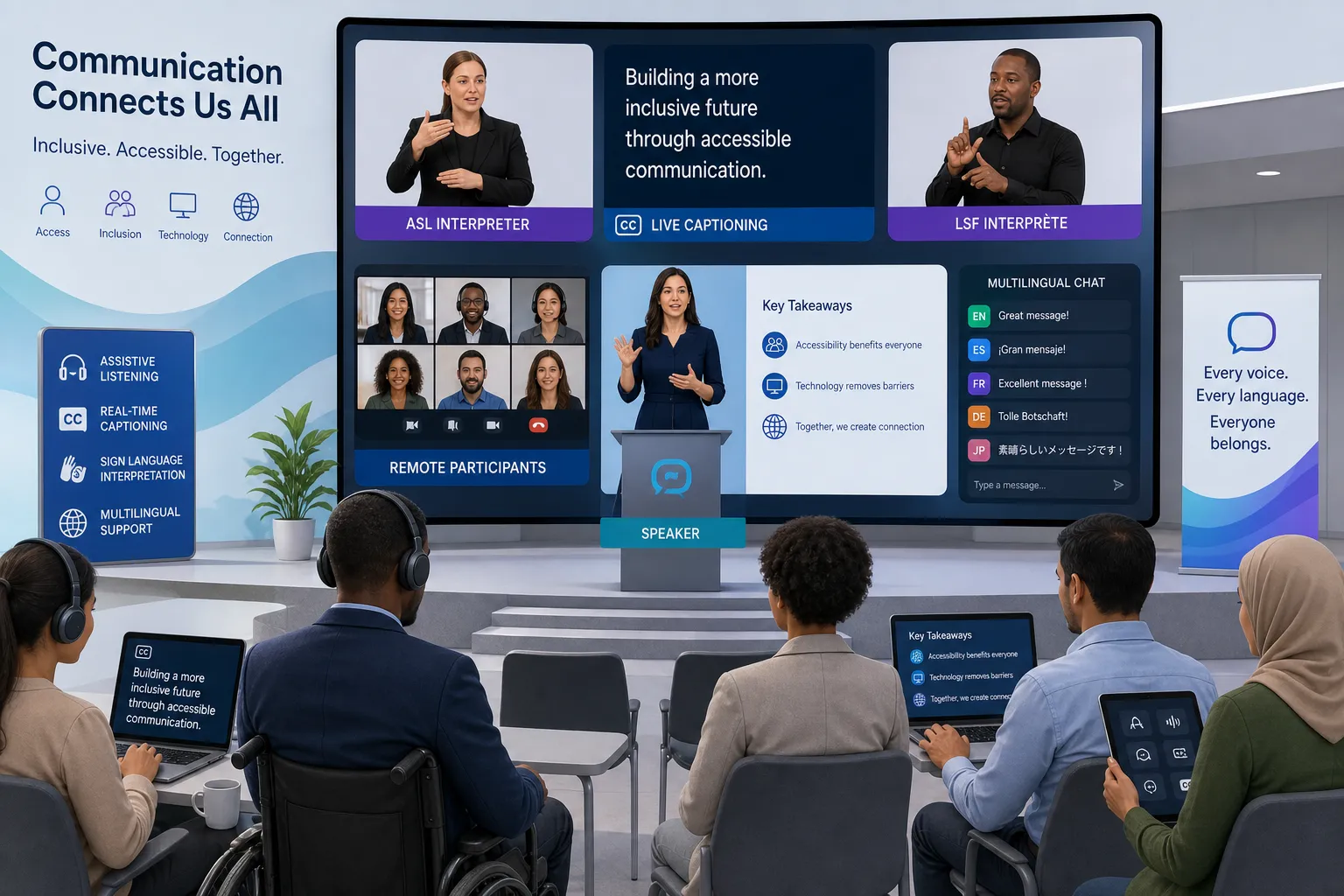
Many competitor articles stop at spoken-language interpretation. That misses a major reality for modern organizations: communication access increasingly includes captioning, subtitling, ASL, multilingual media support, and inclusive event production.
For many clients, the real need is not just an interpreter. It is an end-to-end access solution.
That can include:
-
Spoken-language interpreting
-
Real-time captioning for accessibility and engagement
-
Closed captioning for recorded content
-
Written translation of materials, agendas, signage, and follow-up documents
-
Subtitling and voiceover for multilingual video
-
Equipment rental for interpretation channels and audience listening
-
Technician support for seamless live delivery
-
Remote and in-person service options for distributed audiences
This is where Team Stream brings a stronger operational advantage than a one-service vendor. With more than 25 years of experience, Team Stream supports organizations that need multilingual communication and accessibility to work together, not separately.
Where Certified Interpreting Services Deliver the Most Value
Legal and compliance-sensitive environments
If your organization deals with disputes, investigations, hearings, contracts, or regulatory communication, interpreter quality can directly affect risk.
Healthcare and patient-facing communication
Patients and families need language access they can trust, especially during consent, diagnosis, and discharge.
Corporate communications
Town halls, training, HR initiatives, DEI programs, safety briefings, and multilingual executive messaging all benefit from professional delivery.
Events and conferences
For conferences, trade shows, investor events, ministry gatherings, and association meetings, interpreting is only one part of the attendee experience. Audio quality, channel routing, remote participation, and captioning all matter.
Broadcast and media
Live or recorded productions require synchronization, script handling, accessibility compliance, and performance consistency across channels.
Human Expertise and AI: The Smartest Combination
A practical content gap in most competing articles is the false choice between human interpreting and AI tools. The best modern strategy is not either/or. It is using each where it performs best.
Where human interpreters are essential
-
Live high-stakes conversations
-
Legal and medical interpretation
-
Sensitive HR or employee relations matters
-
Complex negotiations
-
Nuanced public communication
-
Audience-facing live events
Where AI can add speed and scale
-
Draft translation workflows
-
Multilingual content preparation
-
Turnaround acceleration for certain assets
-
Post-production support
-
Workflow efficiency for large-volume communication
Team Stream’s approach reflects this reality: accurate human expertise where precision and judgment matter most, paired with AI-enabled workflows where speed and scale improve outcomes without compromising quality.
What to Expect From a Strong Interpreting Partner
A top-tier provider should do more than fill a request. They should help you design a successful communication environment.
Operational capabilities that matter
-
Fast, responsive scheduling
-
Clear scoping and service recommendations
-
Interpreter matching by language and specialty
-
Support for live, virtual, and hybrid delivery
-
Accessibility-first planning
-
Equipment rental and technician support
-
Quality control and backup planning
-
Strong customer service before, during, and after the assignment
Strategic capabilities that matter
-
Guidance on when certification is required
-
Help navigating compliance-friendly communication
-
Recommendations for multilingual attendee journeys
-
Integration of captioning, translation, subtitling, and voiceover
-
Scalable support across recurring events or enterprise needs
A Simple Decision Framework
If you are unsure whether you need a certified interpreter, use this framework:
|
Scenario |
Is certification important? |
Recommended support |
|---|---|---|
|
Court hearing or deposition |
Essential |
Certified court interpreter |
|
Hospital consent discussion |
Strongly recommended |
Qualified or certified medical interpreter |
|
HR investigation |
Highly advisable |
Experienced professional interpreter |
|
International conference keynote |
Important |
Professional simultaneous interpreters plus captioning |
|
Customer service call |
Depends on stakes |
Qualified phone interpreter |
|
Hybrid leadership town hall |
Important |
Interpreting, live captioning, and technical support |
|
Recorded multilingual training |
Important |
Interpretation or translation, subtitles, voiceover |
How Team Stream Supports Clear Communication
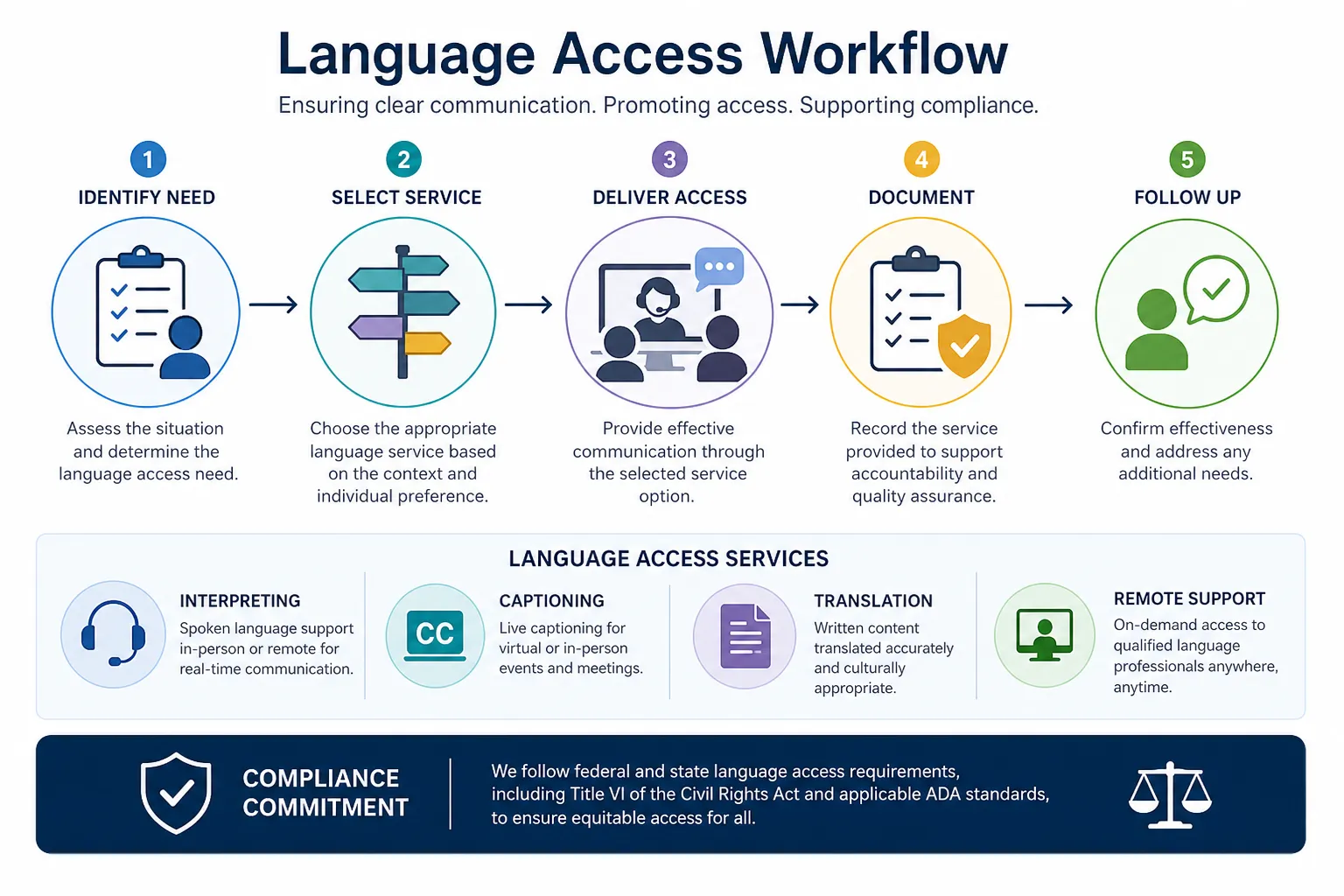
Organizations rarely need a language vendor in isolation. They need a reliable partner who can make communication work across audiences, platforms, and formats.
Team Stream supports that need with:
-
Professional interpreting for meetings, events, broadcasts, and organizations
-
Accurate human and AI-powered translation workflows
-
Real-time captioning that improves accessibility and engagement
-
Closed captioning, subtitling, and voiceover for multilingual media
-
End-to-end language and accessibility solutions tailored to each client
-
Support for in-person, remote, virtual, and hybrid environments
-
Compliance-friendly services for inclusive communication
-
Equipment rental, technician services, and event execution support
-
Responsive customer service backed by more than 25 years of expertise
That combination matters because communication access is not just a line item. It is part of the audience experience, the compliance picture, and the credibility of your organization.
Common Mistakes Organizations Make
Choosing based on price alone
The cheapest option can become the most expensive if errors create confusion, delay, exclusion, or reputational damage.
Waiting too long to plan
Certified and specialized interpreters may need to be booked in advance, especially for court, healthcare, technical, or multilingual event settings.
Ignoring the technical side
For simultaneous interpreting, virtual delivery, or hybrid events, the audio path, platform setup, and listener experience are just as important as the interpreter’s skill.
Treating accessibility as separate from language access
In reality, audiences often need a combination of spoken interpretation, ASL, live captioning, accessible media, and translated materials.
Final Takeaway
Certified interpreters play a critical role wherever accuracy, trust, and inclusion matter. A certified interpreter does more than speak two languages. They bring proven skill, professional standards, and the ability to protect meaning in moments that matter.
For courts, certification may be mandatory. For healthcare, business, events, and public communication, it is often the clearest sign that you are investing in quality. And for organizations trying to reach multilingual audiences effectively, the best results come from a broader strategy that combines interpreting with captioning, translation, accessibility, and dependable execution.
If you need more than a basic language vendor, Team Stream is built for that challenge. From live interpreting and real-time captioning to translation, subtitling, technician support, and event-ready accessibility solutions, Team Stream helps you communicate clearly, inclusively, and confidently across every format.
FAQ
How do you get certified as an interpreter?
You typically become certified by meeting the requirements of a recognized certifying body or court system, which often includes written and oral exams, ethics standards, and language-specific testing. The exact pathway depends on the setting, since court, medical, and sign language interpreting may each follow different credentialing systems.
How much does a certified translation cost?
Certified translation costs vary based on language pair, document length, subject matter, turnaround time, and formatting requirements. Legal, medical, and technical documents usually cost more because they require greater precision and specialized expertise.
Can anyone do a certified translation?
No. A certified translation should be completed by a qualified professional translator or language provider who can attest to the translation’s accuracy and meet the receiving institution’s requirements. Acceptance standards vary by court, agency, school, or employer, so it is important to confirm what form of certification is needed.
