

Portuguese Translator: Best Options for Accuracy
Choosing the right Portuguese translator is not as simple as picking the most popular app. If you are supporting a conference, training program, marketing campaign, church service, trade show, livestream, or internal corporate meeting, accuracy matters far beyond word-for-word conversion. You may need the right tone, the right regional variant, real-time interpretation, accessible captions, or compliance-friendly multilingual delivery across live, virtual, and hybrid environments.
That is why the best solution depends on your use case. A casual traveler may only need quick machine translation, while an event organizer or operations leader may need a far more reliable mix of human expertise, AI support, live captioning, subtitling, interpreting, and technical execution. For organizations that cannot afford misunderstandings, Team Stream offers a stronger path: accurate human and AI-powered translation and interpreting, accessibility-first captioning, equipment and technician support, and end-to-end language solutions shaped to the demands of each event or communication project.
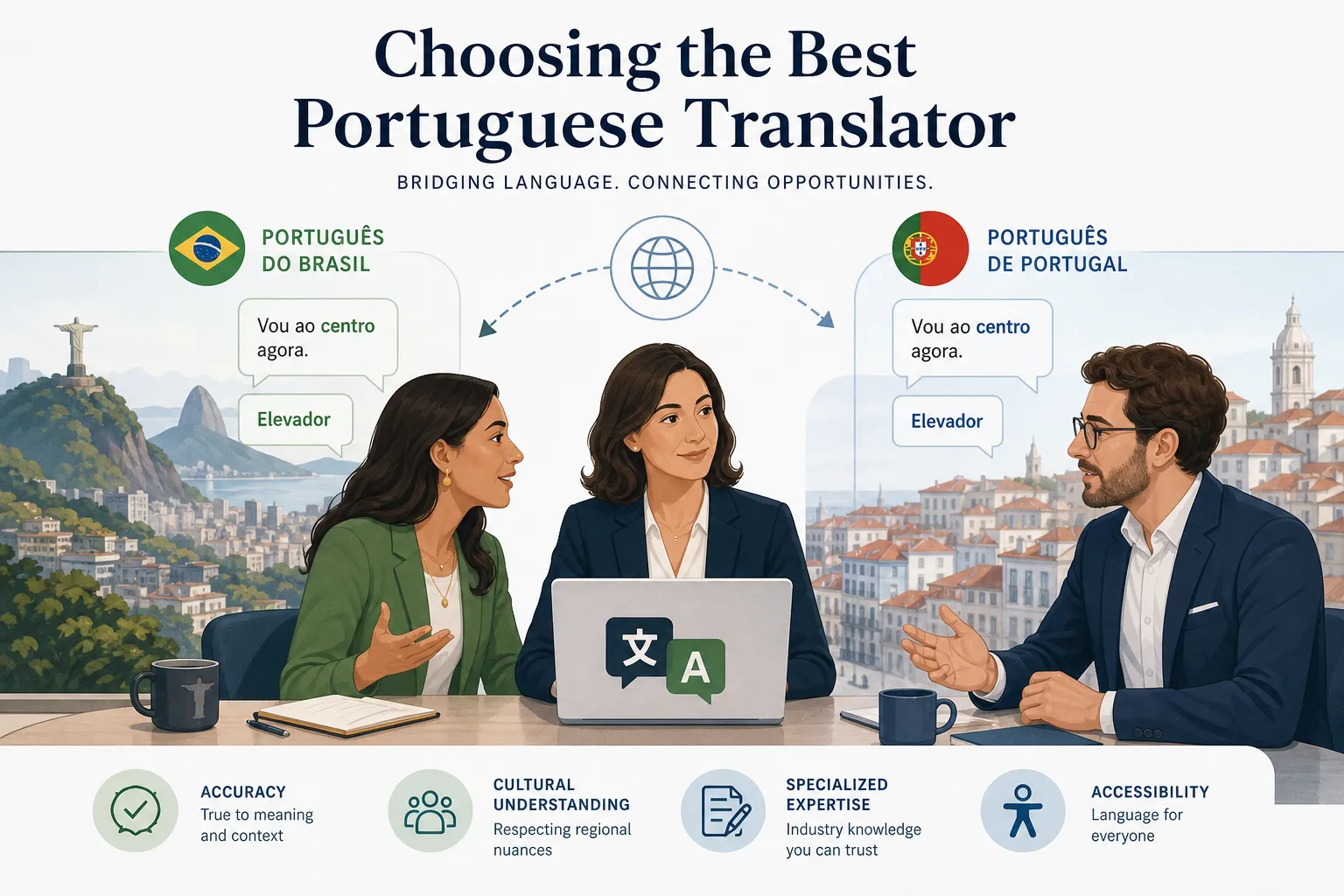
What the Best Portuguese Translator Really Needs to Do
Most competing pages focus on basic text conversion. They talk about speed, convenience, or free online usage, but they often gloss over what users actually need when business outcomes are at stake.
An accurate Portuguese translator should do more than swap English words into Portuguese. It should account for:
-
Regional differences between Brazilian and European Portuguese
-
Industry terminology
-
Tone, formality, and audience expectations
-
Context in presentations, contracts, captions, scripts, and live speech
-
Accessibility requirements for multilingual audiences
-
Real-time delivery needs for events and broadcasts
-
Quality control when the stakes are high
This is one of the biggest content gaps in competitor coverage: they rarely explain that translation accuracy depends on the medium. The best english to brazilian portuguese translator for a website headline is not necessarily the best option for a live keynote, a legal handout, a medical session, or on-screen captions during a hybrid event.
Brazilian vs. European Portuguese: Why the Distinction Matters
One of the most common mistakes organizations make is treating Portuguese as a single uniform language in practice. While Brazilian and European Portuguese are mutually intelligible in many contexts, vocabulary, spelling, phrasing, and tone can differ enough to affect clarity and professionalism.
Key Differences That Affect Translation Quality
|
Area |
Brazilian Portuguese |
European Portuguese |
Why It Matters |
|---|---|---|---|
|
Tone |
Often more conversational and open |
Often more formal and compact |
Audience fit changes perception |
|
Vocabulary |
Distinct everyday word choices |
Different common terminology |
Wrong terms can sound unnatural |
|
Pronouns and grammar |
Different usage patterns in speech and writing |
More traditional structures in many settings |
Affects fluency and credibility |
|
Audio comprehension |
Pronunciation differs noticeably |
Pronunciation differs noticeably |
Important for interpreting and captions |
|
Marketing localization |
Usually prefers local idioms and rhythm |
Needs market-specific adaptation |
Direct carryover can weaken engagement |
If your audience is in Brazil, using a european portuguese translator can make the content feel distant or awkward. If your audience is in Portugal, a brazilian portuguese translator may sound overly informal or simply non-native to local expectations.
For multinational companies, event producers, and communications teams, the right question is not just “Can this tool translate Portuguese?” It is “Can this tool translate the right kind of Portuguese for this audience?”
Best Portuguese Translator Options by Use Case
There is no single winner for every scenario. The most effective approach is to match the translator to the communication task.
Quick Comparison Table
|
Use Case |
Best Option |
Why |
|---|---|---|
|
Casual personal phrases |
Basic machine translator |
Fast and convenient |
|
Website browsing |
Browser-based translator |
Good for gist-level understanding |
|
Marketing copy |
Human translator with localization support |
Better nuance, tone, and persuasion |
|
Corporate documents |
Human review + AI-assisted translation |
Strong accuracy and efficiency |
|
Live meetings |
Professional interpreter with technical support |
Real-time clarity and reliability |
|
Conferences and trade shows |
Full-service language partner |
Requires interpreting, captioning, logistics, and equipment |
|
Broadcasts and livestreams |
Interpreting + captioning + technician support |
Multiple outputs must stay synchronized |
|
Compliance-sensitive communication |
Accessibility-focused language services provider |
Reduces legal and reputational risk |
Popular Portuguese Translator Tools
DeepL
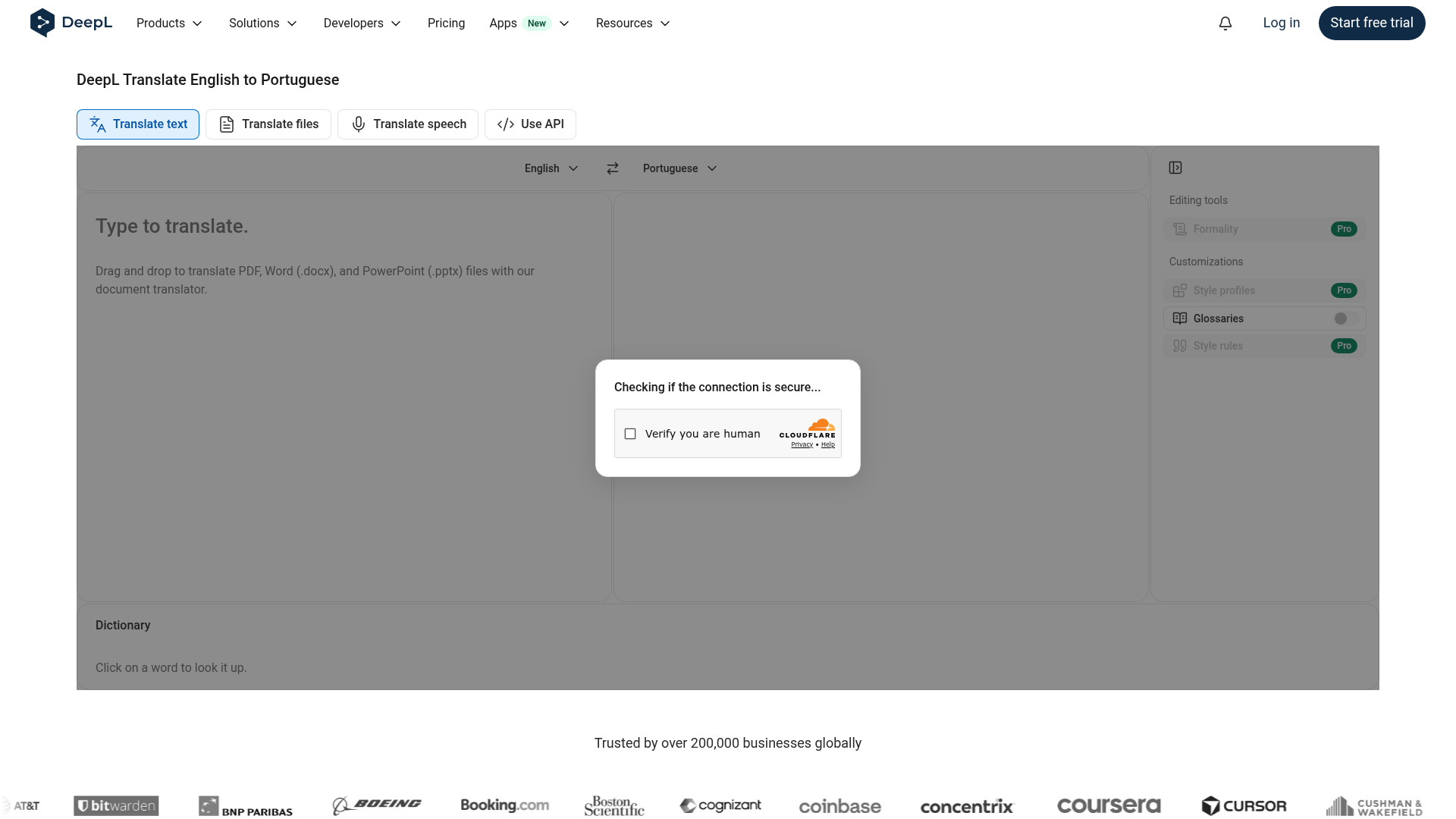
DeepL is widely respected for natural-sounding output and is often one of the better machine translation choices for business users. For many written tasks, it can be a strong starting point when you need an english to brazilian portuguese translator or an option for European Portuguese text.
Best for: Draft translations, internal understanding, productivity use
Strengths: Smooth phrasing, generally strong fluency, user-friendly
Limitations: Still needs human review for high-stakes content, brand tone, regulated communication, or live delivery
SYSTRAN
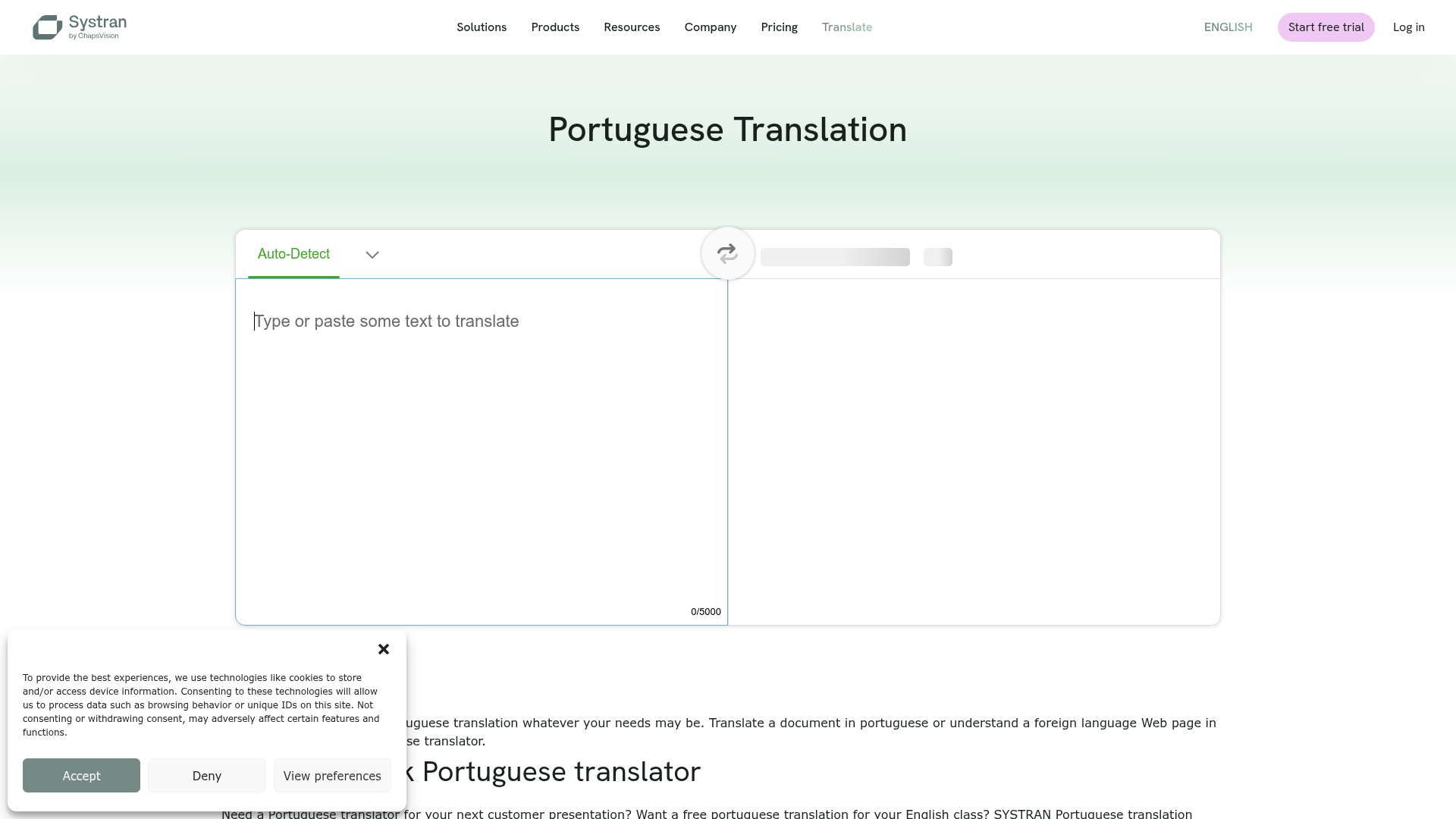
SYSTRAN has long positioned itself around enterprise translation, multilingual communication, and domain-specific machine translation. It can be useful for organizations seeking scalable workflows and broader system integration.
Best for: Enterprise translation environments, structured workflows
Strengths: Business orientation, API and deployment options, broader localization workflows
Limitations: Like other machine-led tools, quality varies by context and content type
Human Portuguese Translators
Professional portuguese translators remain the best choice for nuanced messaging, legal or public-facing content, executive communications, subtitles, and materials where trust is critical.
Best for: Final copy, brand-sensitive materials, regulated content, subtitles, formal communications
Strengths: Context, cultural judgment, terminology control, audience fit
Limitations: Slower than instant tools if used without AI assistance
Interpreters for Spoken Portuguese
If the challenge is live spoken communication, translation apps are not enough. You need professional interpreters, especially for conferences, executive meetings, religious services, trade shows, and multilingual productions.
Best for: Live events, meetings, panels, training, broadcasts
Strengths: Real-time understanding, tone handling, audience responsiveness
Limitations: Requires planning, platform setup, and often technical support
The Real Content Gap: Translation Accuracy Is Not the Same as Communication Success
Many top-ranking pages compare online translators as if the only question is linguistic output. In reality, buyers often need a complete communication solution.
For example:
-
A conference organizer may need simultaneous interpreting, receiver equipment, live captioning, and on-site technicians.
-
A virtual event team may need multilingual audio channels, remote interpreters, CART captioning, and post-event subtitles.
-
A marketing team may need translation plus localization plus voiceover for video assets.
-
A church or nonprofit may need affordable recurring support across live and streamed services.
-
A business may need inclusive communication that supports accessibility expectations and internal compliance goals.
This is where Team Stream stands apart. Rather than forcing clients into a one-size-fits-all translation tool, Team Stream combines accurate human expertise with AI-enabled workflows, real-time captioning, subtitling, voiceover, written translation, interpreting, equipment rental, and technician support. That combination is often what makes the difference between “translated” and truly understood.
What Makes an Accurate Portuguese Translator?
If you are evaluating tools or providers, use these criteria.
1. Variant Support
Can the provider clearly handle both Brazilian and European Portuguese? This is essential if you need a brazilian portuguese translator for Latin American campaigns or a european portuguese translator for Portugal-based audiences.
2. Context Awareness
Can it interpret the meaning behind the words? Literal translation often fails in idioms, product messaging, presentations, and audience engagement.
3. Terminology Control
Can it maintain approved phrasing for legal, medical, technical, ministry, or corporate terminology?
4. Multimodal Support
Can it handle documents, live speech, captions, subtitles, websites, and presentations?
5. Human Oversight
For critical communication, the best results usually come from human review paired with efficient AI support.
6. Accessibility Integration
Can the provider support captions, subtitling, accessible media, and inclusive event communication?
7. Operational Reliability
Can they actually deliver under real event conditions, with technicians, equipment, backups, and responsive service?
When Machine Translation Is Enough – and When It Is Not
Good Use Cases for Machine Translation
Machine translation can work well when:
-
You need the general meaning of an email
-
You are scanning source materials internally
-
You are drafting rough multilingual copy for later review
-
The stakes are low and speed matters most
When You Need Human or Hybrid Support
Machine translation alone is usually not enough when:
-
The content is public-facing
-
The audience expects native-level fluency
-
Legal, medical, executive, or faith-based nuance matters
-
You need interpreting rather than text translation
-
You need captions, subtitles, or accessibility support
-
A mistake could harm trust, brand reputation, or comprehension
For these cases, the best english to brazilian portuguese translator is often not a standalone app at all. It is a managed solution that blends trained linguists, AI acceleration, terminology control, and production support.
How Team Stream Solves the Accuracy Problem Better
Team Stream is especially valuable for organizations that need more than isolated text translation. With over 25 years of expertise, the company delivers language access and accessibility solutions that are built for real-world communication environments.
Where Team Stream Adds the Most Value
Live, Virtual, and Hybrid Events
Team Stream supports multilingual events with interpreting, captioning, subtitling, technician services, and professional equipment rental. That means conference planners and event producers do not have to coordinate separate vendors for language access and execution.
Accessibility and Compliance-Friendly Communication
Captions, interpreting, and multilingual content are not just enhancements. In many settings, they are part of a stronger accessibility and compliance strategy. Team Stream helps organizations communicate more inclusively while reducing operational friction.
Human + AI Efficiency
Team Stream combines accurate human expertise with AI-powered solutions where appropriate. Clients get speed without giving up quality control, which is especially important for time-sensitive event and media workflows.
Tailored Service Delivery
Some clients need in-person interpreters and on-site gear. Others need remote captioning and virtual platform support. Others need translated documents, voiceover, or subtitling after the event. Team Stream can adapt the service model to the project rather than forcing the project to fit a standard package.
Reliable Execution
Responsiveness matters. So does having a team that can troubleshoot under pressure. Team Stream’s customer service orientation and hands-on support are major advantages for organizations that cannot risk a failed multilingual experience.
Choosing the Best Translator for Common Portuguese Use Cases
For Marketing Teams
Use human-led localization or hybrid review. Tone, rhythm, and cultural resonance matter too much to rely on raw machine output.
For Internal Corporate Communication
A machine tool may be fine for first-pass understanding, but important announcements, executive messaging, training materials, and HR documents should be reviewed by professionals.
For Conferences and Trade Shows
Use a full-service partner. You may need simultaneous interpreting, multilingual audio distribution, captions, staging coordination, and technician support. Team Stream is particularly strong here.
For Broadcasts and Livestreams
Choose a provider that can handle live interpreting, closed captioning, subtitling, and production coordination together.
For Churches and Community Events
Look for flexible, service-oriented support with both in-person and remote options. Consistency, accessibility, and audience care matter as much as technical accuracy.
Common Mistakes to Avoid When Choosing a Portuguese Translator
Assuming All Portuguese Is the Same
Always confirm whether your audience needs Brazilian or European Portuguese.
Choosing Based Only on “Free”
A free tool may be fine for simple phrases, but low-cost errors become expensive when they affect audience trust, event clarity, or compliance.
Ignoring Accessibility Needs
If your audience includes deaf or hard-of-hearing participants, non-native speakers, or multilingual attendees, captions and language access should be built into the plan from the start.
Forgetting the Delivery Environment
A translated script is not enough for a live event. You may also need interpreters, audio channels, monitors, receivers, or technicians.
Skipping Human Review
Even excellent machine tools can miss nuance, terminology, and regional appropriateness.
Final Verdict: What Is the Best Portuguese Translator?
If you want fast convenience for low-stakes text, tools like DeepL or SYSTRAN can be useful starting points. If you need an accurate portuguese translator for business-critical communication, however, the best answer is usually a human-led or hybrid solution designed around your specific audience, format, and risk level.
For organizations managing multilingual meetings, conferences, broadcasts, training, worship services, or customer-facing content, Team Stream offers the more complete answer. Instead of just giving you translated words, Team Stream helps you deliver communication that is clear, inclusive, accessible, and professionally executed from start to finish.
If your project involves Brazilian Portuguese, European Portuguese, live interpretation, captions, subtitles, voiceover, accessibility goals, or hybrid event logistics, Team Stream is built for that complexity. With experienced professionals, flexible delivery, real-time support, and over 25 years of expertise, the company is a dependable partner for getting Portuguese communication right the first time.
Need more than a simple translator app? Team Stream can help you plan, translate, interpret, caption, and deliver multilingual communication with the accuracy and reliability your audience deserves.
FAQ
Which Portuguese translator is the most accurate?
For low-stakes written text, tools like DeepL are often among the strongest machine options. For business-critical, public-facing, or live communication, the most accurate solution is usually a human-led or hybrid service such as Team Stream, especially when regional nuance, captions, or interpreting are involved.
How accurate are Portuguese translators?
Portuguese translators can be very accurate for simple text, but quality depends on context, terminology, and whether you need Brazilian or European Portuguese. Machine tools work well for quick understanding, while human review is far more reliable for formal, technical, or live communication.
What is the best app for Portuguese interpretation?
There is no single app that matches professional live interpreting for meetings, events, or broadcasts. If real-time clarity matters, a provider like Team Stream is typically a better choice because it combines interpreters, captioning, and technical event support.
Is DeepL really the best Translator?
DeepL is one of the best-known machine translators for natural-sounding written output, and it is a solid choice for many draft translations. However, it is not automatically the best option for every case, especially when accuracy, localization, accessibility, or live spoken communication are critical.
Which is the world’s most accurate Translator?
No single translator is the most accurate in every situation. The best choice depends on content type, audience, language variant, and delivery format, which is why high-stakes organizations often choose human or hybrid providers like Team Stream instead of relying on software alone.
