

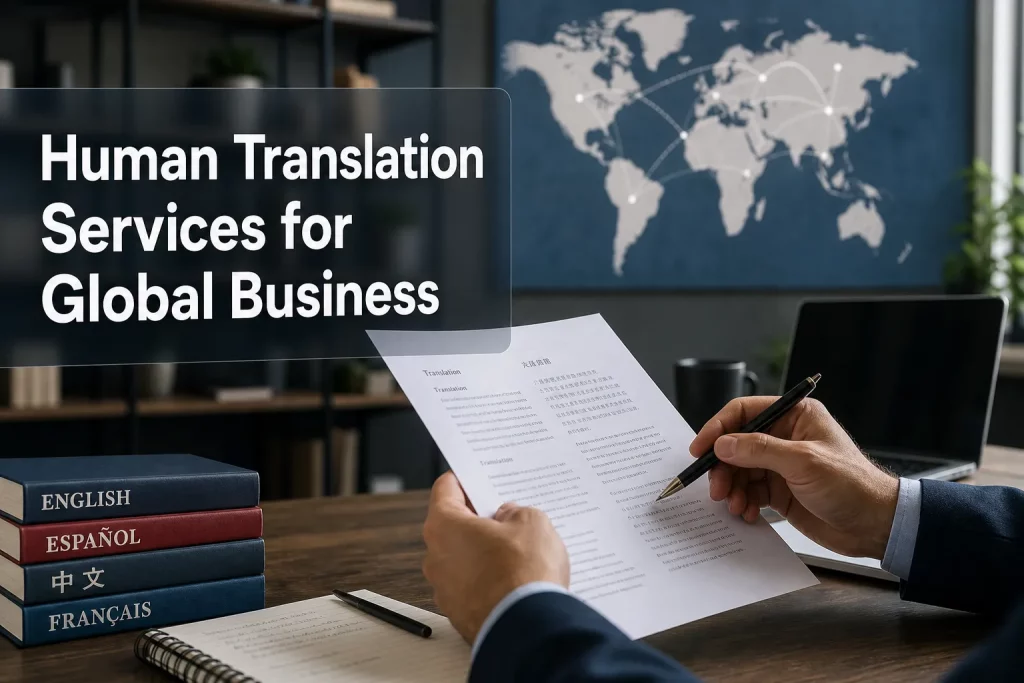
Human Translation Services for Global Business
If your business communicates across borders, languages, or cultures, accuracy is not a nice-to-have. It is the difference between trust and confusion, conversion and abandonment, inclusion and exclusion.
For event organizers, corporate teams, conference planners, marketing leaders, broadcasters, churches, and global operations teams, the core challenge is rarely just “getting words translated.” It is making sure your message lands correctly in every language, on every channel, for every audience. That is where human translation services still deliver unmatched value.
Automation has improved speed. AI can help scale. But when the stakes involve brand reputation, compliance, customer experience, executive communication, accessibility, or live events, human translation remains the quality-driven standard for nuance, judgment, and cultural fit.
Why Human Translation Still Matters in a World Full of AI
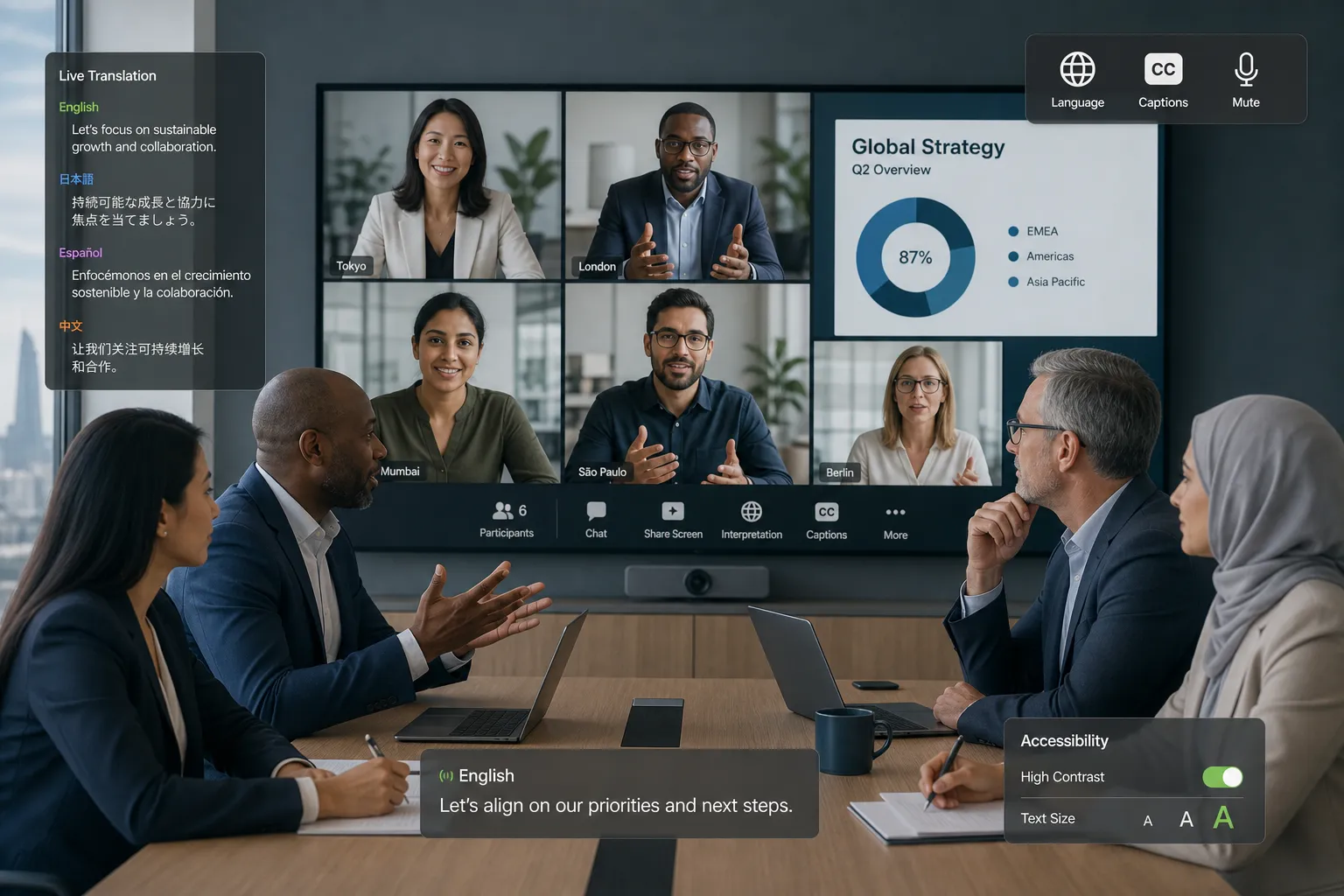
Businesses today have more translation options than ever before. Machine translation, AI-assisted workflows, and multilingual content platforms can all play a role. But the assumption that speed alone equals quality is where many organizations get into trouble.
Human translators do more than convert words from one language to another. They interpret tone, audience expectations, regional language preferences, legal implications, and brand voice. They know when a phrase is technically correct but commercially wrong. They catch ambiguity before it becomes a public mistake.
This matters especially in:
-
customer-facing materials
-
contracts and regulated content
-
executive messaging
-
marketing campaigns
-
subtitles and voiceover scripts
-
conference content and live event assets
-
accessibility-related communications
“76% prefer to buy products with information in their own language, and 40% will never purchase from websites in other languages.” – CSA Research
That statistic is often discussed as a localization argument, but it also supports a deeper point: people do not just want translated content. They want content that feels trustworthy, natural, and meant for them.
What Human Translation Services Actually Include
Many buyers assume translation is a single service. In reality, high-quality language support is a workflow.
Core deliverables
Human-led language services often include:
|
Service |
What it does |
Best use cases |
|---|---|---|
|
Document translation |
Converts written content with context and accuracy |
contracts, policies, manuals, reports |
|
Marketing localization |
Adapts messaging for culture, tone, and audience |
campaigns, ads, websites, product launches |
|
Subtitling and caption translation |
Translates spoken content for video audiences |
webinars, broadcasts, training, social content |
|
Voiceover script adaptation |
Prepares audio scripts that sound natural when spoken |
promos, explainers, eLearning, corporate videos |
|
Multilingual review and QA |
Checks accuracy, consistency, terminology, and formatting |
regulated industries, high-visibility content |
|
Transcreation |
Reimagines copy to preserve impact rather than literal wording |
taglines, campaigns, brand storytelling |
The best providers do more than translate
The real differentiator is not just access to linguists. It is having a partner that can connect translation to the full communication experience.
That is where Team Stream stands out. Beyond accurate human and AI-powered translation and interpreting, Team Stream supports real-world delivery with captioning, subtitling, voiceover, accessibility solutions, event support, technician services, equipment rental, and flexible in-person or remote execution. For clients running live, virtual, or hybrid experiences, that end-to-end support removes friction and reduces risk.
Where Human Translators Outperform Machines
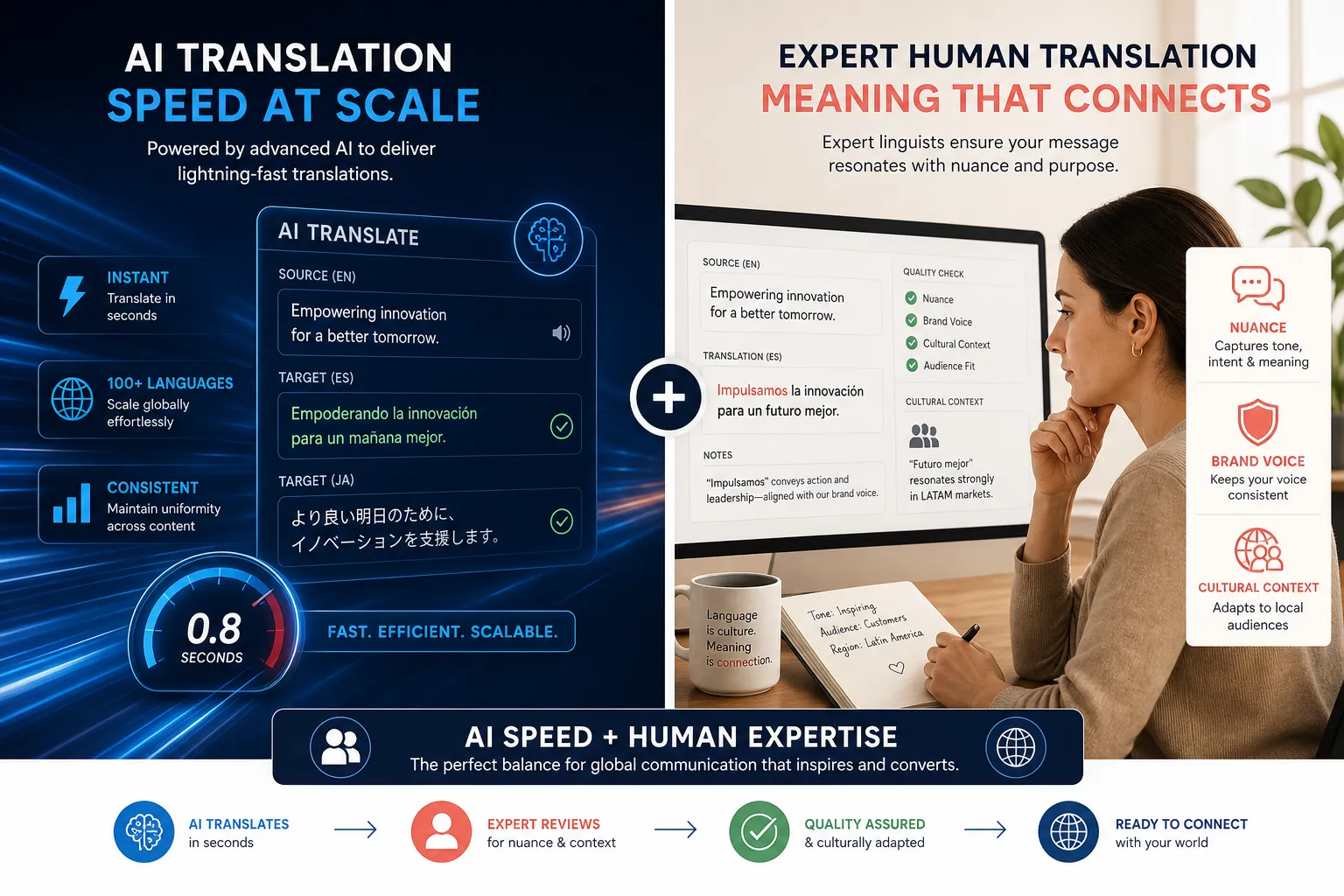
AI is useful. It can accelerate first drafts, support large-volume workflows, and reduce turnaround time for low-risk content. But there are clear situations where human expertise delivers more value.
1. Brand voice and tone
A machine may translate your sentence. A human translator protects your personality.
If your brand is reassuring, premium, technical, urgent, warm, or authoritative, that tone has to survive in the target language. Literal translation is not enough.
2. Cultural appropriateness
A phrase can be grammatically correct and still feel awkward, insensitive, or irrelevant in another market. Human translators understand idioms, etiquette, humor, and taboo language in context.
3. Ambiguity resolution
Source content is often imperfect. Humans can flag unclear phrasing, missing references, or confusing terminology before those issues multiply across languages.
4. Regulated and high-risk content
Legal, healthcare, finance, HR, and public-facing compliance materials demand careful review. In these cases, a mistranslation can create liability, not just inconvenience.
5. Accessibility and spoken-language performance
Translation for captions, subtitles, scripts, and voiceover must read naturally and sync with timing, speech patterns, and audience comprehension. This is especially important for live events, streamed content, and multilingual accessibility workflows.
“Machine translation … continues to grapple with various error types that can impact the quality of translations.” – MITRE
That matters for business because translation quality is not measured only by whether the sentence is understandable. It is measured by whether the audience trusts it, acts on it, and experiences it as professional.
Common Content Gaps Most Articles Miss
Many articles ranking on this topic explain that humans are “more accurate” or “better with nuance.” True, but incomplete. The bigger strategic picture is often missing.
Human translation is not just about documents
Global business communication now spans:
-
websites
-
mobile apps
-
sales presentations
-
training modules
-
investor materials
-
webinars
-
live events
-
on-screen captions
-
social clips
-
multilingual broadcasts
Translation decisions affect not just text, but audience access, engagement, compliance, and operational consistency.
Translation and accessibility increasingly overlap
This is one of the most overlooked realities in the market.
For many organizations, multilingual communication is inseparable from accessibility. A global event may require translated slides, live interpreting, real-time captioning, subtitling, and post-event transcripts. A training rollout may require localized content plus captions and voiceover. A broadcast may require both language access and accessible delivery.
Team Stream’s value is especially strong here because it bridges both worlds: language services and accessibility execution. That includes live captioning for engagement and compliance, interpreting for multilingual audiences, and end-to-end support across live, hybrid, and virtual formats.
Human translation should be evaluated as risk management
The question is not just “What does translation cost?” It is also:
-
What does a misunderstanding cost?
-
What does a brand misfire cost?
-
What does rework cost?
-
What does inaccessible communication cost?
-
What does a poorly executed event cost?
For enterprise teams, quality language support is often a risk-reduction investment.
Human Translation vs AI Translation for Business
A smart content strategy does not treat this as an all-or-nothing decision. It uses the right level of human oversight for the risk, audience, and purpose of the content.
Quick comparison
|
Factor |
Human translation |
AI / machine translation |
|---|---|---|
|
Speed |
Slower than raw machine output |
Very fast |
|
Nuance |
Excellent |
Inconsistent |
|
Brand voice |
Strong |
Often generic |
|
Cultural fit |
High |
Limited |
|
Compliance sensitivity |
Safer with expert review |
Riskier without oversight |
|
Accessibility content |
Better for timing, readability, intent |
Can require heavy cleanup |
|
Best for |
high-value, public-facing, regulated, live, or sensitive content |
internal drafts, large-volume low-risk text, first-pass workflows |
The best model is often hybrid
Many organizations now combine AI efficiency with human quality assurance. That can mean:
-
machine-assisted first draft
-
human editing and review
-
terminology management
-
multilingual QA
-
accessibility formatting
-
final approval by subject-matter linguists
Team Stream is well positioned for this reality because it offers both human-led expertise and AI-enabled options without forcing a one-size-fits-all approach. Clients can choose a workflow based on budget, timeline, risk, and audience expectations.
Business Scenarios Where Human Translation Delivers the Highest ROI
Global marketing campaigns
Marketing is persuasion, not just information transfer. Headlines, taglines, calls to action, and emotional cues all need localization, not literal substitution.
Executive and investor communications
Board materials, earnings support, shareholder communications, and leadership messaging require precision and tone control. One awkward translation can undermine confidence.
HR and workforce communications
Policies, onboarding, benefits materials, training, and internal announcements must be understandable and consistent across regions. Accuracy affects both compliance and employee trust.
Product launches and user experience
UI strings, help centers, onboarding flows, and support content all shape whether users adopt your product confidently in new markets.
Live events and conferences
This is where language quality meets real-time execution. You may need translated event materials, interpreter coordination, captions, subtitling, accessible displays, technician support, and multilingual audience services all working together.
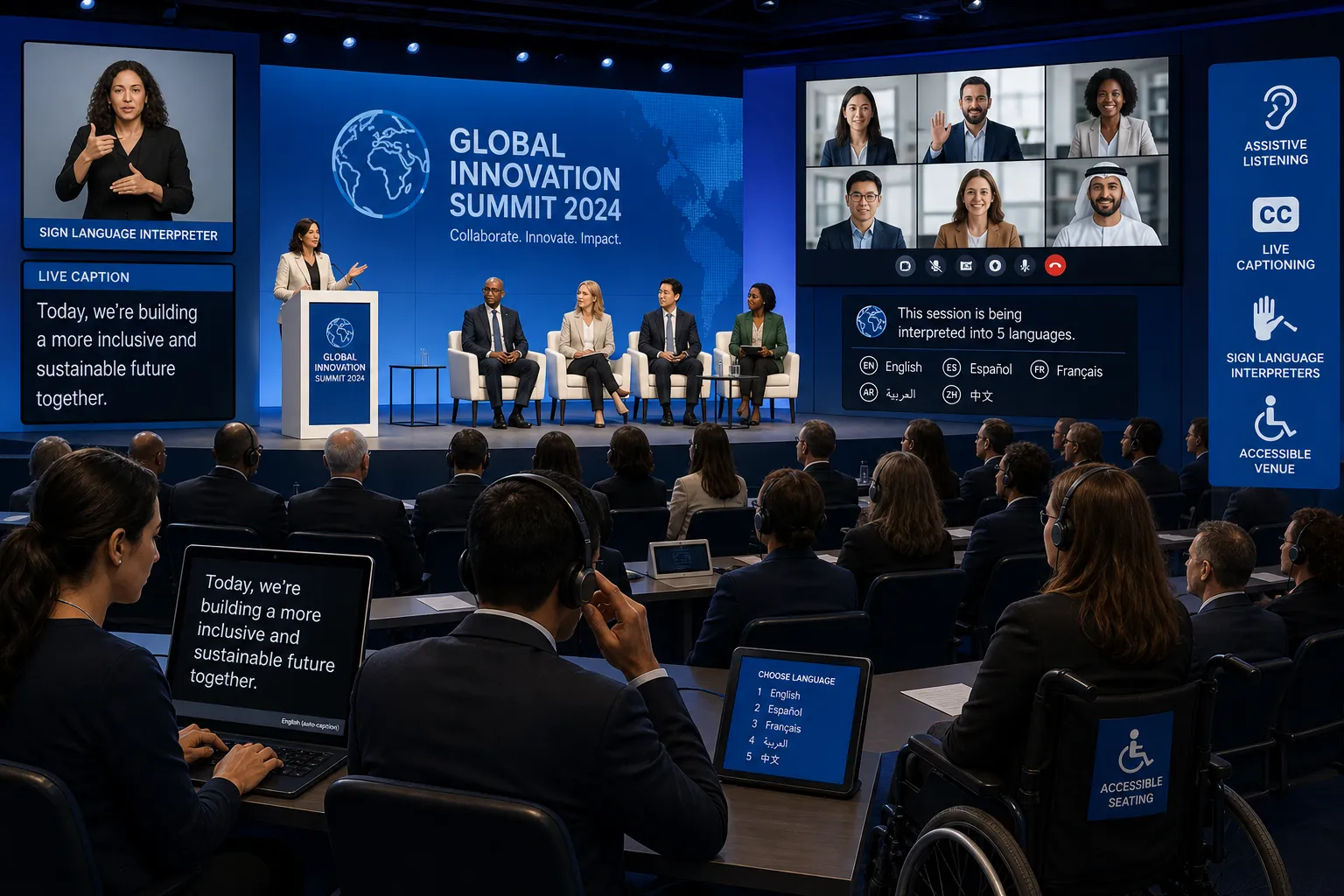
This is a major reason organizations choose Team Stream. It is not only about translation quality; it is about dependable execution. With over 25 years of experience, responsive customer service, compliance-friendly delivery, professional equipment support, and in-person or remote flexibility, Team Stream helps clients create multilingual experiences that actually work under pressure.
How to Choose the Right Human Translation Partner
Not all providers are built for business-critical communication. The right partner should fit your content, industry, workflow, and delivery environment.
What to look for
Linguistic quality
Ask how translators are vetted, reviewed, and matched to subject matter.
Industry understanding
A provider should understand your context, whether that is corporate communications, events, media, legal, ministry, healthcare-adjacent content, or training.
Workflow flexibility
Can they support urgent turnarounds, multilingual review, recurring projects, and hybrid human-plus-AI models?
Accessibility support
If your content needs captions, subtitling, transcripts, or inclusive event delivery, make sure those services are built into the offering.
Event-readiness
For conferences, trade shows, broadcasts, and hybrid experiences, translation alone is not enough. You may also need interpreters, technicians, equipment, rehearsals, and contingency planning.
Service responsiveness
Strong project management matters more than many buyers realize. Fast answers, clear timelines, and dependable follow-through are often what keep global projects on track.
What a Modern Translation Workflow Should Look Like
A strong translation process should be repeatable, transparent, and designed around business outcomes.
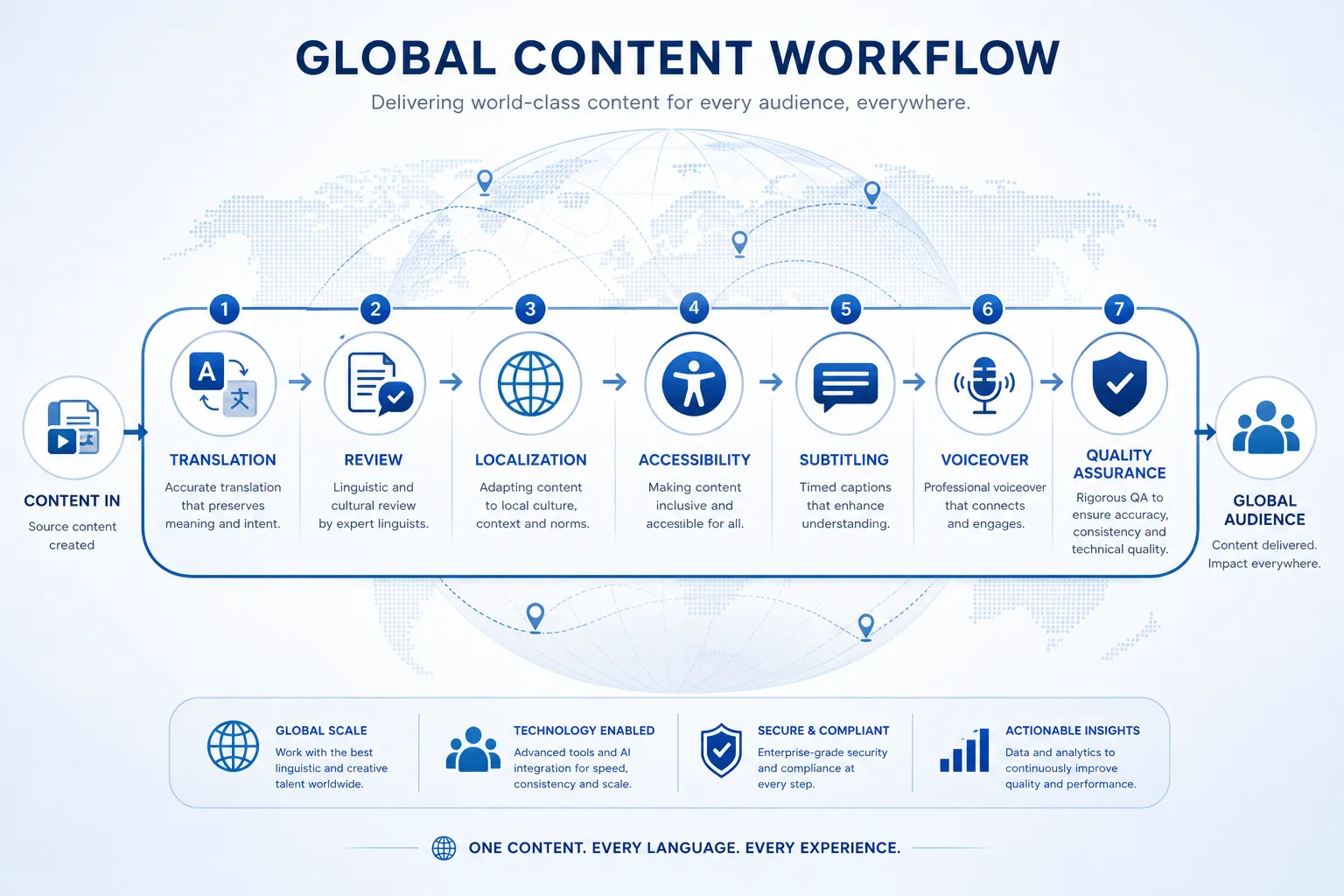
Recommended workflow
-
Content intake and goal setting
Define audience, languages, content type, deadline, and risk level. -
Terminology and reference alignment
Gather brand voice guidance, approved terms, and existing assets. -
Translation or transcreation
Match the content to the right linguistic approach. -
Editing and QA
Review for accuracy, consistency, formatting, and natural language flow. -
Accessibility and delivery adaptation
Prepare subtitles, captions, transcripts, on-screen text, or voiceover-ready copy as needed. -
Final approval and deployment
Publish with confidence across the required channels.
For events and multimedia, Team Stream can extend that workflow into live support, coordinating the human, technical, and accessibility elements that many standard translation agencies do not cover.
Human Translation for Events, Broadcasts, and Hybrid Experiences
This is where many businesses discover that general translation vendors are not enough.
Why event environments are different
Events create simultaneous demands:
-
pre-event content translation
-
speaker support
-
interpreter coordination
-
live captioning
-
accessible display solutions
-
post-event subtitling and transcripts
-
technician oversight
-
contingency planning for changing run-of-show
A translation provider focused only on documents may not be equipped for that reality.
Team Stream is built for these use cases. It supports multilingual and accessible communication across conferences, trade shows, churches, internal meetings, broadcasts, and corporate events. Because the company combines interpreting, captioning, subtitling, voiceover, translation, AI-enhanced language solutions, equipment rental, and technician services, clients get a coordinated system rather than disconnected vendors.
Why that coordination matters
When language access and accessibility are fragmented, teams often face:
-
inconsistent terminology
-
last-minute technical issues
-
duplicate vendor management
-
communication gaps between linguists and production teams
-
higher stress for event staff
-
weaker audience experience
A single experienced partner reduces those failure points.
When AI Can Help Without Replacing Human Translators
A practical business strategy recognizes that AI has a role. It just should not be given final authority on high-value communication without oversight.
Good uses for AI-assisted workflows
-
first-pass translation for internal review
-
high-volume low-risk content
-
multilingual content triage
-
terminology suggestions
-
draft subtitles before human cleanup
-
turnaround acceleration for repetitive content
Where human review remains essential
-
public-facing campaigns
-
compliance and legal materials
-
keynote scripts and executive statements
-
accessibility-sensitive outputs
-
subtitles and captions for audience-facing video
-
culturally nuanced or high-emotion messaging
The most effective providers will tell you when AI is enough, when human review is required, and when a full human-led workflow is the smarter choice. That level of honesty is part of what makes a long-term language partner valuable.
Signs Your Business Has Outgrown Basic Translation
If any of the following sound familiar, you likely need a more strategic language partner:
-
different teams use different vendors with no shared standards
-
your translated content feels inconsistent across regions
-
marketing and legal teams disagree on quality expectations
-
events require last-minute coordination across interpreters, captions, and tech
-
accessibility obligations are becoming more important
-
your internal team spends too much time managing language logistics
-
AI output saves time but creates too much cleanup
At that point, the issue is no longer just translation. It is communication infrastructure.
Final Take: Human Translation Is Still the Standard for Trust-Critical Communication
Human translation is not outdated. It is evolving.
The strongest global organizations are not choosing between humans and technology in simplistic terms. They are building communication systems that use automation where it helps and human expertise where it matters most. For accuracy, tone, cultural relevance, compliance, accessibility, and live execution, human-led translation remains essential.
If your organization needs more than words swapped from one language to another – if you need multilingual communication that is clear, inclusive, polished, and dependable – Team Stream is the kind of partner worth evaluating. Its combination of human expertise, AI-enabled flexibility, accessibility support, event readiness, technical services, and strong customer responsiveness makes it especially well suited for businesses, conference teams, churches, broadcasters, and organizations that cannot afford communication failure.
When the message matters, human judgment still wins.
FAQ
How much do international business translators make?
Pay varies widely based on language pair, specialization, experience, and project type. Translators handling regulated, technical, legal, or high-visibility business content typically earn more than generalists, especially when they also support localization, review, or multimedia workflows.
Are human translators obsolete?
No. Human translators remain essential for brand voice, nuance, cultural appropriateness, compliance-sensitive materials, and audience-facing content where trust and clarity matter more than raw speed.
What companies use Smartling?
Many enterprise brands use translation management platforms like Smartling to organize multilingual workflows. However, software alone is not the whole solution; businesses still rely on human translation, review, and localization expertise to ensure quality.
What is the best translation tool for business?
The best option depends on the content risk and use case. For low-risk volume, AI tools can help, but for customer-facing, regulated, or event-driven communication, the best “tool” is usually a hybrid workflow that combines technology with expert human translators.
What professions make $200,000 a year without a degree?
This question is outside the core topic, but in general, some sales, entrepreneurship, skilled trades, and specialized freelance roles can reach that income level. Translation and interpreting income is more often tied to expertise, specialization, certifications, and client demand than to a single formal path.
Are translators losing jobs to AI?
AI is changing the market, but it is not eliminating the need for skilled linguists. Instead, many translators are shifting toward post-editing, QA, transcreation, localization strategy, accessibility, and high-stakes communication where human judgment remains critical.
