

Website Translation Solutions for Global Growth
If your website only speaks one language, your business is almost certainly leaving reach, trust, and revenue on the table.
For event organizers, corporate teams, conference producers, trade show marketers, churches, broadcasters, and growing businesses, the challenge is not just translating words. It is choosing the right mix of website translation services, software, tools, and strategy to create a multilingual experience that people can actually find, trust, and use. That means balancing speed with accuracy, SEO with usability, and automation with human quality control.
A strong website translation solution helps you do more than launch foreign-language pages. It helps you improve multilingual SEO, reduce friction for international visitors, support accessibility goals, and create a brand experience that feels local in every market.
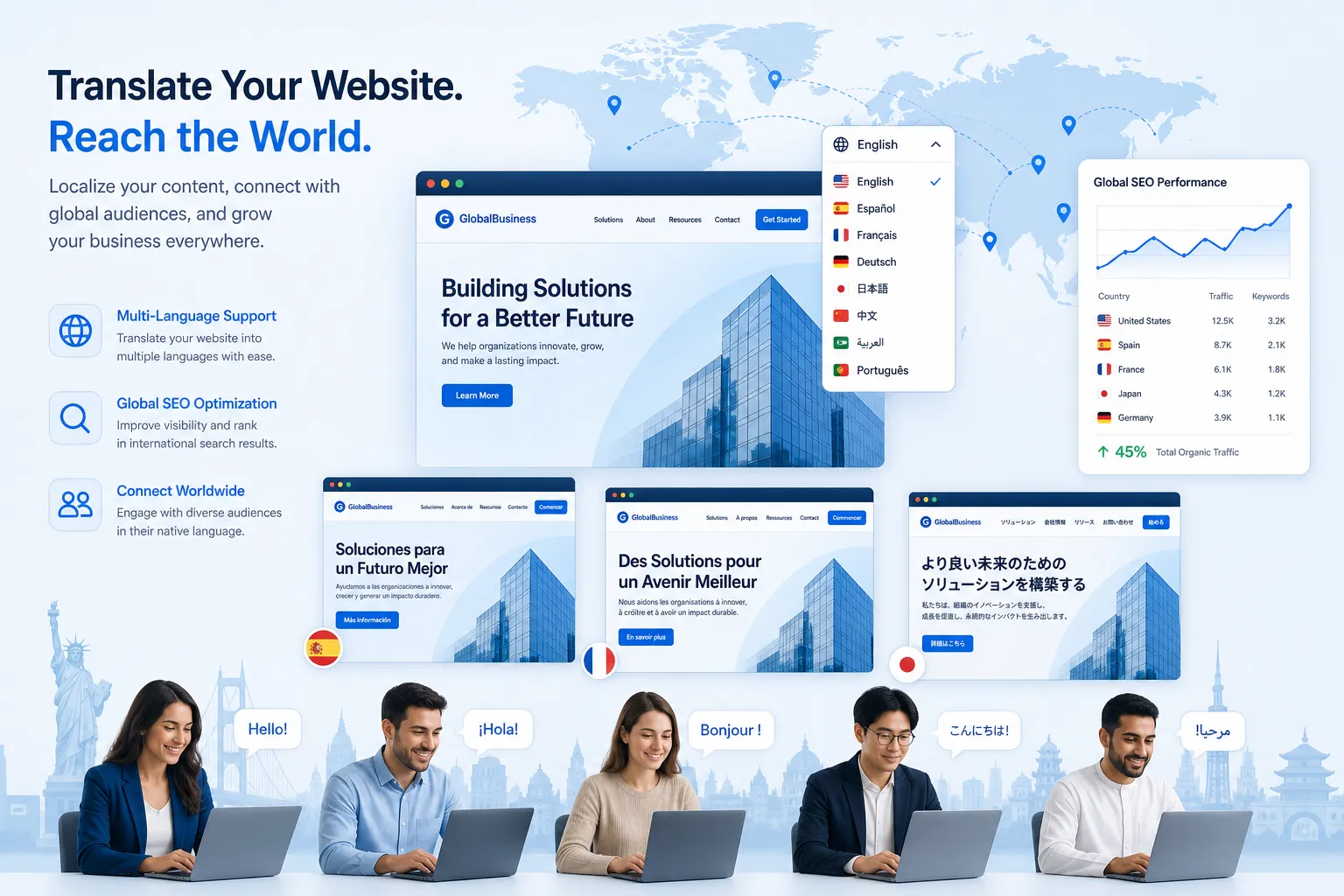
In this guide, we will break down what website translation really involves, compare the main options on the market, explain how to choose the right path for your organization, and show where a partner like Team Stream can add far more value than software alone.
“A survey of 8,709 consumers across 29 countries found that 76% prefer buying products with information in their own language, and 40% will never buy from websites in other languages.” – Newswire
What website translation really means
Website translation is the process of converting your site’s content into one or more additional languages so visitors can understand and act on it. But in practice, that is only the starting point.
A complete multilingual rollout often includes:
-
Core page translation
-
Navigation, menus, and forms
-
Metadata and SEO elements
-
Calls to action
-
Product or service descriptions
-
Legal and compliance content
-
Downloadable documents
-
Video subtitles, captions, and transcripts
-
Accessibility considerations for diverse audiences
That is why many businesses discover that “translate the site” is not one task. It is an ongoing operational system.
Translation vs localization
This distinction matters.
|
Term |
What it does |
Why it matters |
|---|---|---|
|
Translation |
Converts text from one language to another |
Essential for comprehension |
|
Localization |
Adapts language, tone, imagery, formats, SEO, and UX for a target market |
Essential for trust, conversion, and relevance |
For example, a company expanding into Canada, Mexico, and the Middle East may need more than translated pages. It may also need local spelling conventions, localized keywords, alternate date formats, culturally appropriate imagery, right-to-left support, and accessibility-ready video assets.
That broader view is where many competitors stop short. The best results come from treating multilingual websites as part of your customer experience, not just your content library.
Why businesses invest in website translation solutions
The business case is straightforward: international audiences are more likely to engage when your site feels built for them.
The biggest growth drivers
1. Better multilingual SEO
Localized content gives search engines more relevant pages to rank in local markets. When you translate and optimize properly, you can capture non-English queries your original site could never rank for.
“On average, leading global brands see a 58% lift in organic traffic from multilingual SEO efforts.” – Ahrefs
2. Higher trust and conversion
People are more comfortable buying, registering, booking, or contacting you when they understand the offer clearly.
3. Stronger user experience
Navigation, forms, FAQs, and support content in a user’s preferred language reduce bounce and confusion.
4. Easier market expansion
A scalable website translation solution helps you enter new regions without rebuilding your digital operation from scratch.
5. Better accessibility and inclusion
For many organizations, language access and accessibility go together. If your site includes videos, livestreams, event registration workflows, downloadable PDFs, or support resources, translating them while also providing captioning, subtitling, and compliance-friendly access can dramatically improve reach.
That is one of the biggest opportunities many generic software vendors overlook.
The 4 main categories: services, tools, software, and full solutions
Many buyers use these terms interchangeably, but they are not the same.
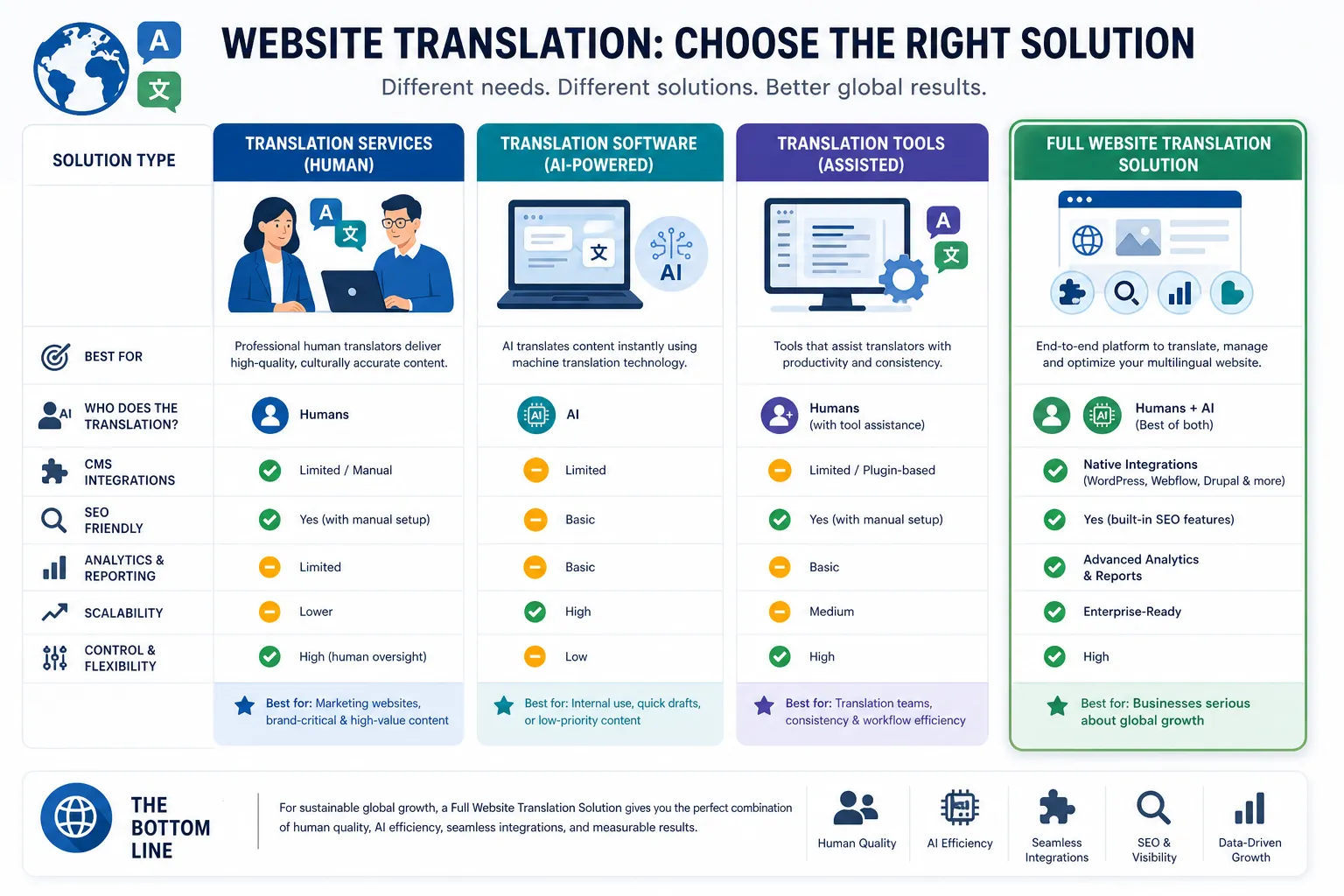
Website translation services
These are human-led or hybrid offerings delivered by a provider.
Typical features include:
-
Professional translators
-
Editors and reviewers
-
Project management
-
Terminology management
-
QA checks
-
Optional localization and SEO adaptation
Best for: brand-sensitive pages, regulated industries, conversion-critical content, and organizations that need accuracy over raw speed.
Website translation tools
These are narrower utilities used within a workflow.
Examples include:
-
Browser-based translation widgets
-
Word count tools
-
glossary managers
-
page extraction tools
-
SEO keyword mapping utilities
Best for: specific tasks inside a broader localization process.
Website translation software
This usually refers to a platform or application that helps automate and manage translation.
Common capabilities:
-
CMS integration
-
machine translation
-
workflow routing
-
translation memory
-
version control
-
publishing automation
Best for: teams with ongoing content volume and multiple stakeholders.
Full website translation solution
This is the most complete model. It combines strategy, software, human expertise, SEO, QA, publishing, and often accessibility support.
Best for: companies that want outcomes, not just tools.
How the main options compare
|
Option |
Speed |
Accuracy |
SEO readiness |
Scalability |
Human oversight |
Best fit |
|---|---|---|---|---|---|---|
|
Manual human translation |
Moderate |
High |
High if planned well |
Moderate |
High |
High-value pages, legal, brand messaging |
|
Machine translation only |
Fast |
Low to moderate |
Low to moderate |
High |
Low |
Internal or low-risk content |
|
Hybrid AI + human review |
Fast |
High |
High |
High |
Moderate to high |
Most business websites |
|
Translation widget/plugin only |
Very fast |
Low to moderate |
Low |
Moderate |
Low |
Temporary access, low-priority needs |
|
Full managed solution |
Fast to strategic |
High |
High |
High |
High |
Growth-focused organizations |
What top-ranking competitor content gets right, and what it misses
After reviewing leading content in this space, several common themes stand out:
What competitors commonly cover well
-
Why website translation matters for global growth
-
Human vs machine translation
-
Importance of localization
-
Basic multilingual SEO practices
-
CMS integrations and translation memory
What they often miss or underplay
This is where your decision gets more practical.
Accessibility is rarely treated as core
Many guides discuss language, but not accessibility. If your site contains webinars, event pages, product demos, church streams, or conference recordings, then real-time captioning, subtitling, transcripts, and inclusive communication matter just as much as translated copy.
Operational support is overlooked
Translation software does not solve coordination problems by itself. You still need review workflows, publishing standards, brand governance, and responsive support when deadlines shift.
Multimedia content is under-addressed
Modern websites are full of video, audio, embedded streams, and downloadable assets. Translating webpages without localizing multimedia leaves major audience gaps.
Live and hybrid experiences are missing from the conversation
Organizations promoting events on their websites often need the site translated and the event itself supported with interpreting, captioning, technicians, and equipment. That connection is usually absent from software-led articles.
Compliance is treated too lightly
For healthcare, government-adjacent, education, enterprise, and public-facing organizations, inclusive communication can involve policy, procurement, and risk considerations. That calls for a provider that understands accuracy, documentation, and execution quality.
These are exactly the areas where Team Stream can become more valuable than a standalone platform.
Which pages should you translate first
Not every page deserves first-wave investment. Prioritization improves ROI.
Highest-priority pages
-
Homepage
-
Product or service pages
-
Contact pages
-
Pricing or donation pages
-
Registration and event landing pages
-
Lead forms and key CTAs
-
FAQ and support pages
-
High-traffic blog posts
-
Legal or compliance essentials
-
Video landing pages with captions or subtitles
Smart prioritization framework
|
Priority level |
Page type |
Why it matters |
|---|---|---|
|
Tier 1 |
Revenue and conversion pages |
Immediate impact on leads, sales, and signups |
|
Tier 2 |
High-traffic informational pages |
Supports discovery and trust |
|
Tier 3 |
Support and retention content |
Reduces friction post-conversion |
|
Tier 4 |
Archive and long-tail content |
Useful for scale, but lower initial ROI |
If you support global events or multilingual audiences, event registration pages and media-heavy landing pages should move up the list quickly.
Best practices for website translation that actually improve results
Start with international intent, not just language
Before translating, define:
-
Which countries you are targeting
-
Which languages those buyers actually use
-
What actions matter most
-
What content drives those actions
-
Whether the content must also meet accessibility needs
Spanish for the U.S. may require different wording than Spanish for Mexico or Spain. French for Quebec is not the same as French for France. Good website translation services account for that.
Build a terminology and brand guide early
A glossary protects consistency across:
-
product names
-
service lines
-
industry terms
-
tagline usage
-
accessibility language
-
event terminology
-
legal language
This is especially important for organizations managing conference sites, church media, training portals, or corporate communications across regions.
Decide where AI is appropriate
AI can dramatically improve turnaround, but not all pages have the same risk profile.
Good candidates for AI-assisted workflows:
-
knowledge base content
-
large blog libraries
-
product catalogs
-
repetitive support pages
Better candidates for human-first translation:
-
homepage messaging
-
campaign pages
-
legal content
-
executive communications
-
donor or faith-based messaging
-
accessibility statements
-
event registration and attendee instructions
Include multimedia in scope
If your website includes video or livestream content, a true website translation solution should account for:
-
subtitles
-
voiceover
-
closed captioning
-
transcripts
-
multilingual playback support
This is one of Team Stream’s strongest differentiators. Instead of treating website translation as isolated text work, Team Stream can support the full communication environment with translation, interpreting, captioning, subtitling, and voiceover tailored to live, virtual, and hybrid use cases.
How multilingual SEO should shape your translation strategy
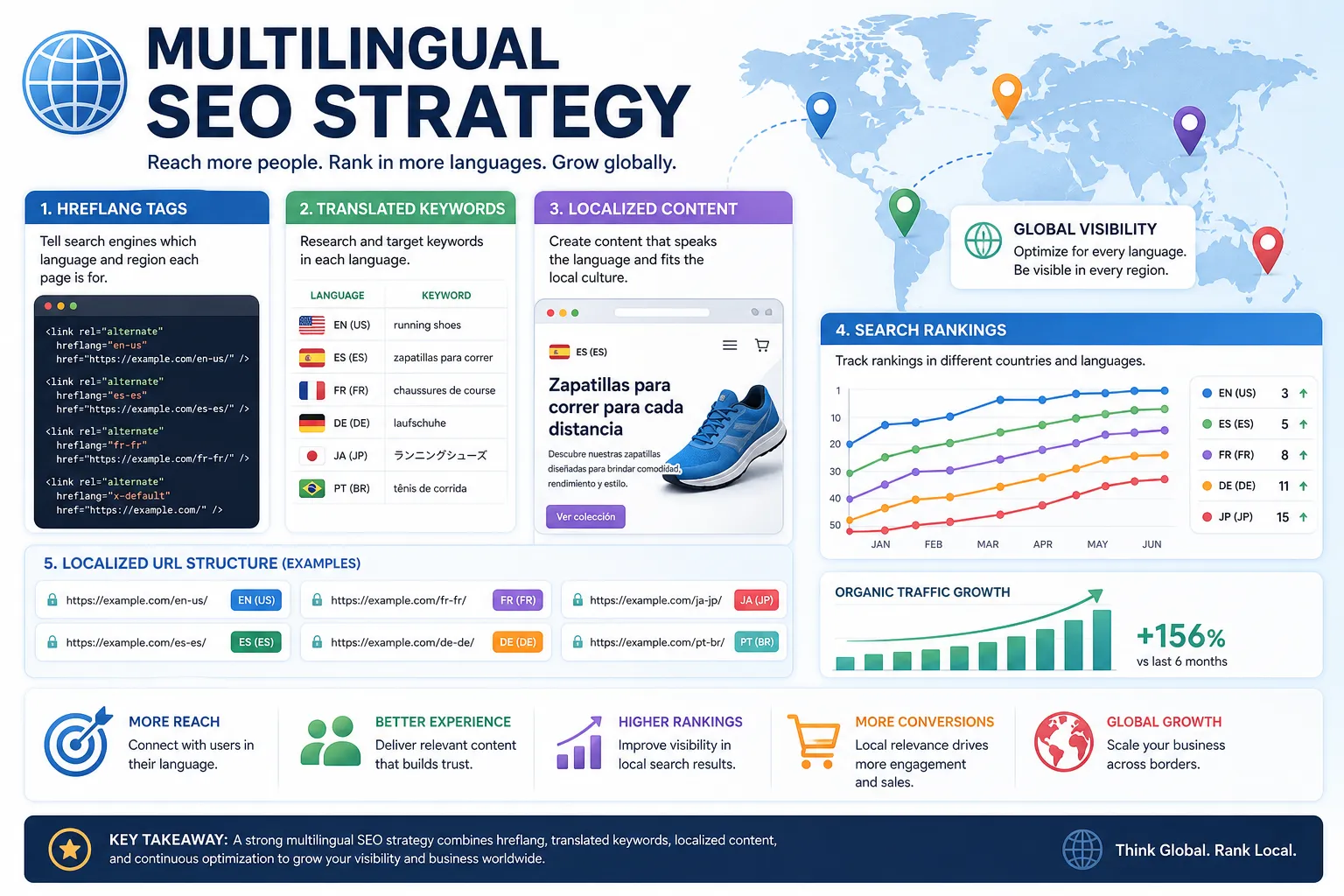
A translated site that no one can find is not a growth engine.
Core multilingual SEO elements
Local keyword research
Do not translate source keywords word-for-word. Search behavior differs by market.
Hreflang tags
These help search engines serve the correct language or regional page.
Localized metadata
Titles and meta descriptions should be translated and optimized, not copied mechanically.
Clean URL structure
Examples include:
-
example.com/es/ -
example.com/fr-ca/ -
de.example.com/
Internal linking
Localized pages should link naturally to other localized assets.
Market-relevant content
Your blog, case studies, event pages, and guides may need market-specific adaptation.
Common multilingual SEO mistakes
|
Mistake |
Why it hurts |
|---|---|
|
Directly translating keywords |
Misses real search intent |
|
Using one page for multiple regions |
Reduces relevance |
|
Forgetting hreflang |
Confuses search engines |
|
Leaving images, PDFs, or videos untranslated |
Breaks experience continuity |
|
Ignoring page speed in localized builds |
Increases bounce |
|
Not translating forms and CTA flows |
Damages conversion |
How to evaluate website translation software
Software matters, but only if it fits your content operation.
Must-have capabilities
-
CMS or platform integrations
-
translation memory
-
glossary control
-
workflow automation
-
version tracking
-
in-context review
-
SEO field handling
-
scalable publishing
-
user permissions
-
analytics or reporting
Questions to ask before buying
-
Does it support your CMS and tech stack?
-
Can it handle dynamic pages and frequent updates?
-
How does it manage SEO fields and URLs?
-
Is in-context review easy for marketing or content teams?
-
Can it support human review and approval workflows?
-
Does it support multimedia localization?
-
What happens when content changes after publishing?
-
Is customer support responsive when timelines get tight?
Examples of software-led platforms in the market
GlobalLink
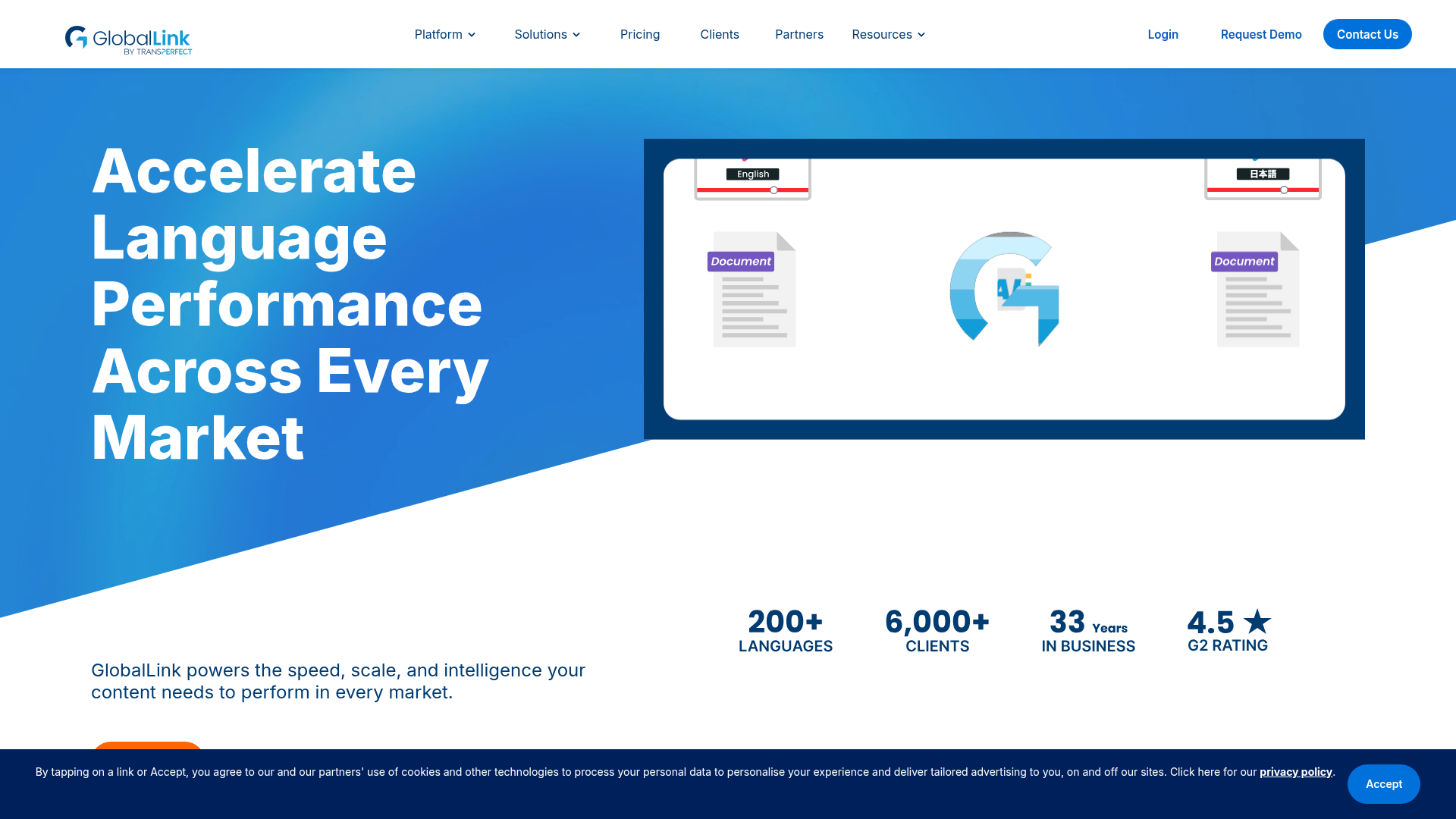
GlobalLink emphasizes workflow automation, website localization, translation management, and CMS-friendly publishing. It is designed for organizations that need structured localization operations at scale, especially across enterprise content environments.
Lionbridge
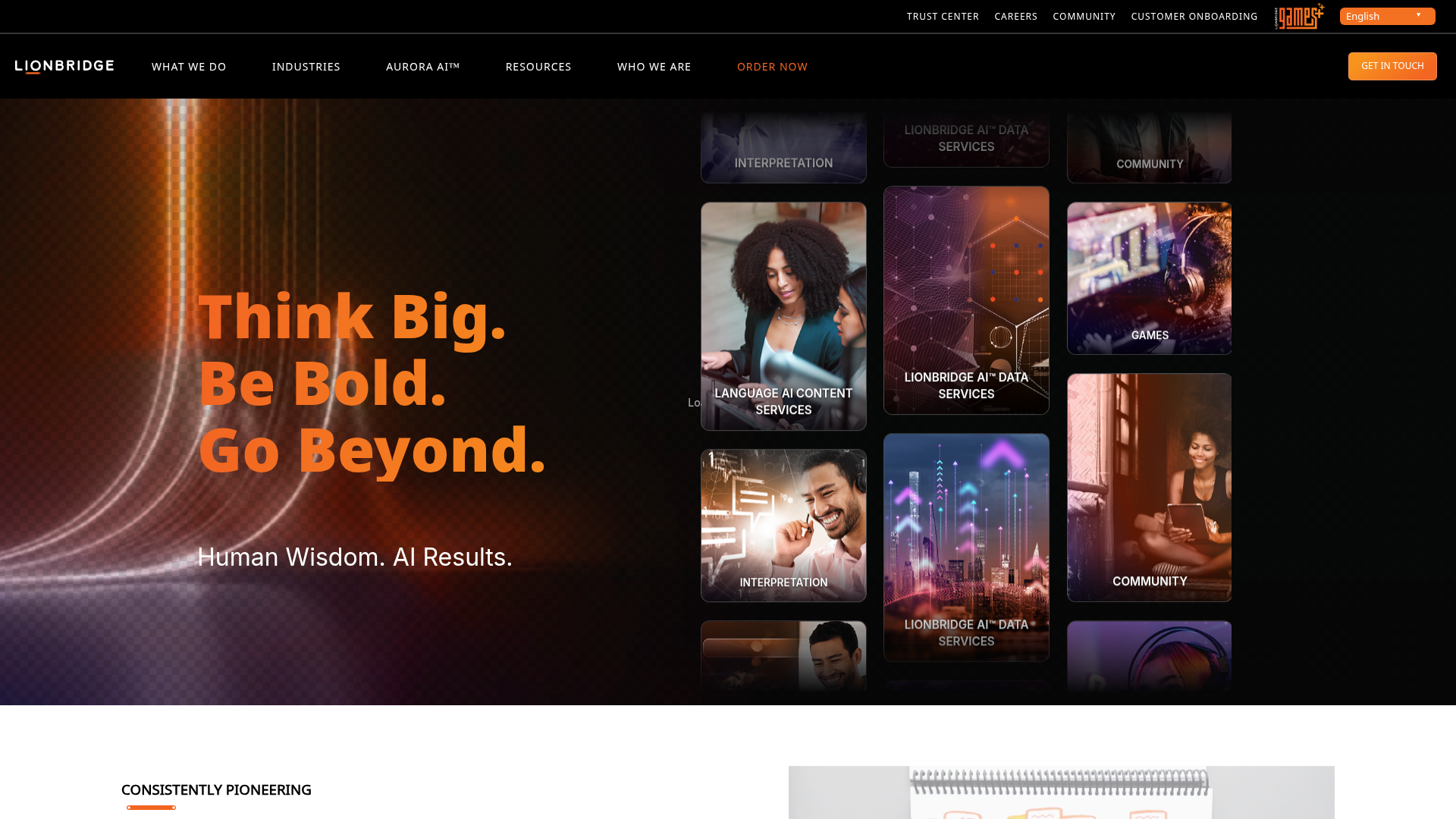
Lionbridge presents a broad portfolio that includes AI-driven content services, translation, interpretation, AI data services, and testing. Its positioning highlights scale, global reach, and a blend of technology with human expertise.
What to learn from these platforms
These providers demonstrate a key truth: software is powerful when paired with workflow discipline, language expertise, and strategic scope. But for many organizations, especially those with events, media, accessibility requirements, or highly tailored communications, technology still needs a service layer to produce dependable outcomes.
When website translation services are better than software alone
Software is not always the answer.
You may benefit more from managed website translation services if:
-
You have a lean internal team
-
Your content is high-stakes or regulated
-
Your brand voice matters deeply
-
You need fast launches without building internal process
-
Your site includes multimedia or live event content
-
You need real people to coordinate change requests and QA
-
You also need accessibility support, subtitling, captioning, or interpreting
This is where Team Stream stands out as a practical partner.
Where Team Stream adds unique value
Many providers can help translate a website. Fewer can help you create a multilingual and accessible digital experience across web content, live events, streamed video, virtual sessions, and hybrid environments.
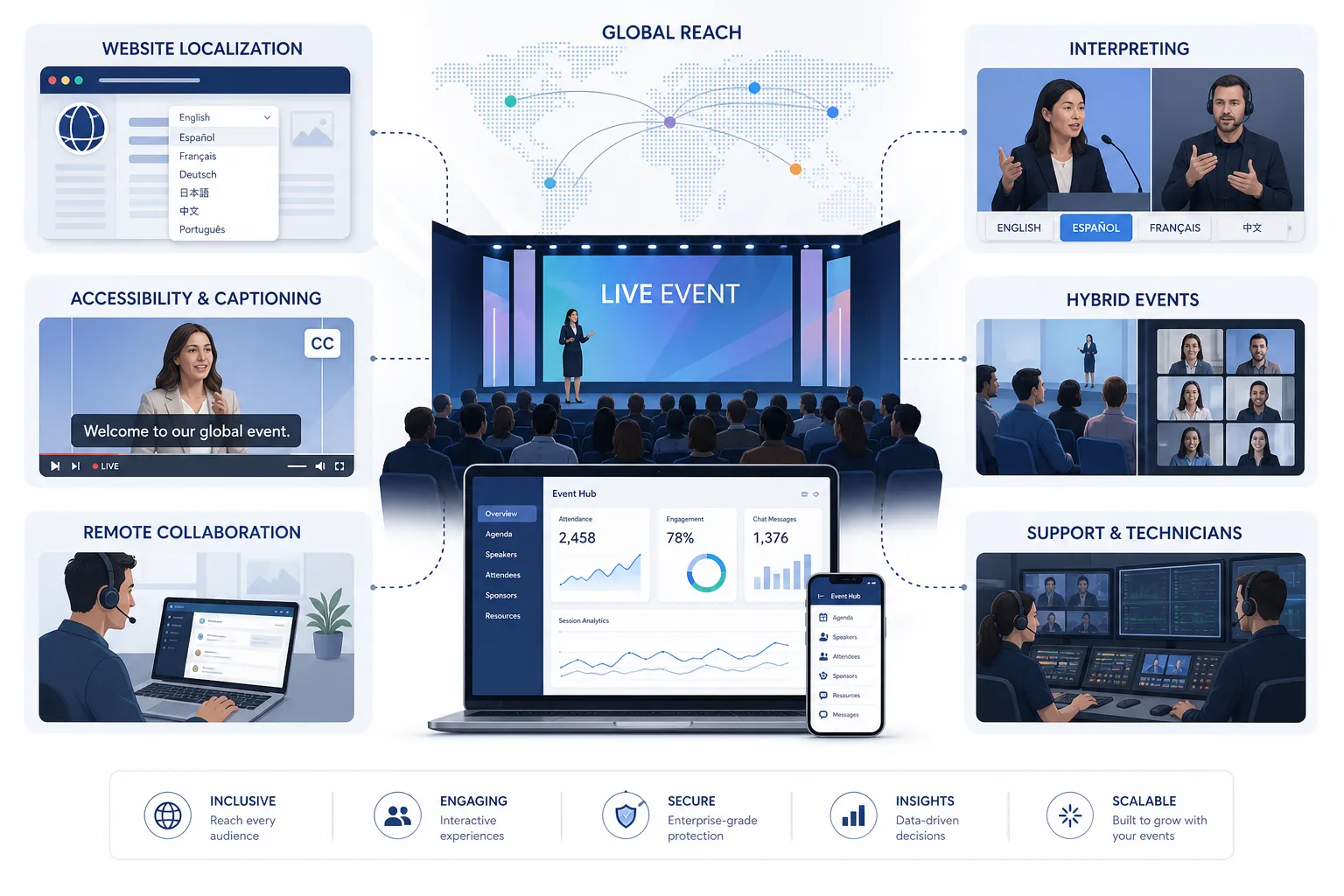
Team Stream’s strength is the full communication stack
Team Stream brings together:
-
Accurate human and AI-powered translation and interpreting
-
Real-time captioning for accessibility and engagement
-
End-to-end language and accessibility solutions tailored to each client
-
Support for live, virtual, and hybrid events
-
Compliance-friendly services for inclusive communication
-
Professional equipment rental and technician support
-
Flexible in-person and remote delivery
-
More than 25 years of experience
-
Reliable execution backed by responsive customer service
Why that matters for website translation
Imagine a global conference rollout. You may need:
-
multilingual event pages
-
translated speaker bios
-
localized registration flows
-
subtitled promo videos
-
live captioning during sessions
-
interpreting for keynote streams
-
post-event transcripts and translated clips
A generic website translation tool will only solve part of that. Team Stream can support the website and the real-world experience behind it.
Best-fit use cases for Team Stream
Team Stream is especially well-suited for:
-
Conference and trade show websites
-
Church and ministry media sites
-
Corporate communications hubs
-
Broadcast and livestream platforms
-
Accessibility-focused organizations
-
Training and educational portals
-
Hybrid event microsites
-
Businesses expanding globally with multimedia-heavy content
How to choose the right website translation solution for your business
Here is a simple decision framework.
Choose a tool-first approach if:
-
you need low-cost access quickly
-
content risk is low
-
SEO is not a major priority
-
your team can manage workflow internally
Choose software-first if:
-
you publish often
-
multiple teams need access
-
you require integrations and automation
-
you already have localization operations in place
Choose managed services or a full solution if:
-
your site drives revenue or registrations
-
quality matters more than speed alone
-
your content includes media, events, or compliance needs
-
you need support, flexibility, and accountability
A practical selection checklist
Use this before you commit.
|
Evaluation area |
What to look for |
|---|---|
|
Language quality |
Human review, terminology controls, in-market nuance |
|
SEO capability |
Keyword localization, metadata support, hreflang readiness |
|
Technical fit |
CMS integrations, publishing workflows, version handling |
|
Accessibility |
Captioning, subtitling, transcripts, inclusive communication support |
|
Multimedia support |
Video, audio, voiceover, downloadable asset handling |
|
Service responsiveness |
Dedicated support, change management, QA ownership |
|
Scalability |
Can grow across regions, departments, and content types |
|
Event readiness |
Support for live, virtual, and hybrid experiences |
|
Compliance posture |
Accuracy, documentation, accessibility awareness |
|
Total value |
Outcome quality, not just software cost |
A recommended rollout model for most organizations
For many teams, the best approach is not purely manual or purely automated. It is phased.
Phase 1: Audit and prioritize
Identify target markets, top pages, multilingual search opportunities, and accessibility gaps.
Phase 2: Build the system
Set terminology, workflows, review rules, SEO structure, and publishing standards.
Phase 3: Launch priority pages
Start with revenue, registration, support, and credibility pages.
Phase 4: Expand and optimize
Translate additional content, measure traffic and conversions, refine keyword targeting, and localize media.
Phase 5: Support live experiences
Extend the multilingual strategy into webinars, conferences, church services, product demos, and broadcasts with captioning, interpreting, subtitling, and technician support as needed.
That final phase is a major opportunity most articles never discuss, but it is increasingly where customer experience is won.
Final verdict
The right website translation solution is not the cheapest plugin or the flashiest dashboard. It is the option that helps your audience find you, understand you, trust you, and act.
If your needs are simple, a lightweight tool may be enough. If your organization publishes at scale, software can streamline the workflow. But if your digital presence includes multilingual audiences, live events, accessible media, or high-stakes communications, you need more than translated pages. You need a coordinated language and accessibility strategy.
Team Stream is built for exactly that reality. With accurate human and AI-powered language services, real-time captioning, interpreting, subtitling, voiceover, technician support, and over 25 years of experience, Team Stream helps organizations deliver multilingual communication that is clear, inclusive, and dependable across websites, events, and media.
If you want a partner that can help you grow globally without sacrificing quality, accessibility, or execution, Team Stream is a smart next step.
FAQ
What are the top 5 most translated websites in the world?
There is no single official ranking that stays fixed, but the most translated websites are typically large global platforms such as Wikipedia, Google, Facebook, Microsoft, and major international e-commerce or software brands. These sites invest heavily in localization because multilingual access directly supports reach, usability, and trust.
Which languages are most in demand for translation?
The most in-demand languages often include Spanish, French, German, Portuguese, Arabic, and Simplified Chinese, though the right mix depends on your target markets. For website growth, demand should be guided by audience data, search behavior, and conversion opportunity rather than global popularity alone.
Who is the highest paid translator?
There is no universal answer because translator earnings vary widely by specialization, language pair, subject matter, and confidentiality level. Highly specialized translators in legal, technical, medical, or executive communications can command premium rates, especially when accuracy and risk management are critical.
What’s the hardest language to translate?
The hardest language to translate depends on context, but languages with major structural and cultural differences from the source text, such as Arabic, Japanese, Chinese, or Korean, can be especially challenging. Difficulty increases when tone, idioms, compliance language, or brand nuance must be preserved across markets.
