

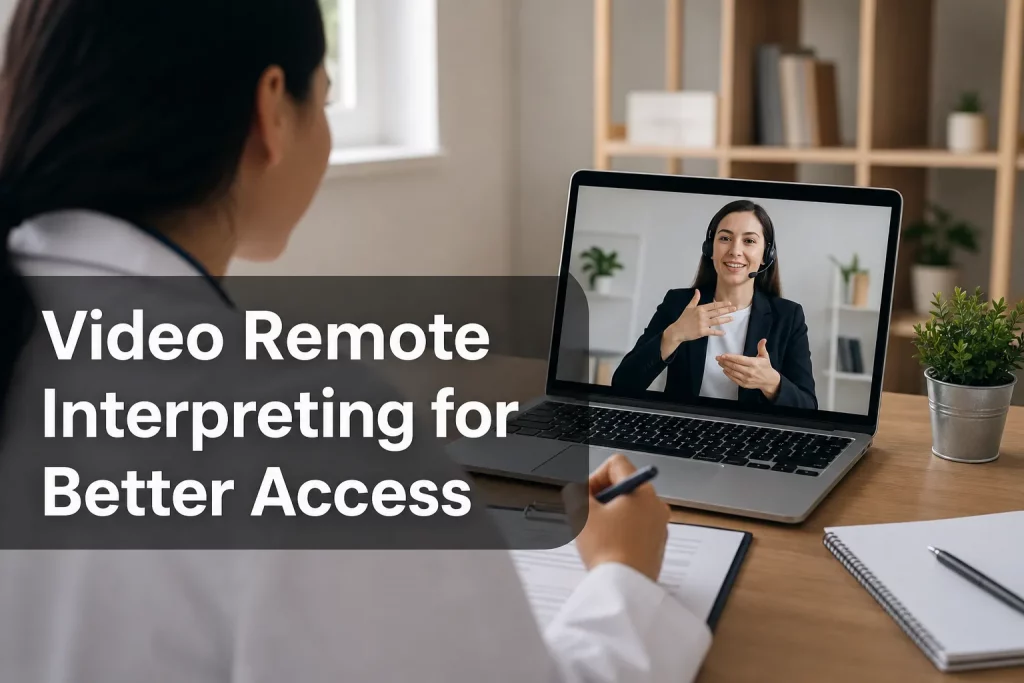
Video Remote Interpreting for Better Access
Event organizers, healthcare teams, conference producers, churches, public agencies, and businesses all face the same communication challenge: how do you provide fast, accurate, accessible language support when people are not in the same room?
Video remote interpreting is one of the most practical answers. It gives organizations real-time access to qualified interpreters through secure video, making communication clearer when facial expressions, body language, sign language, or visual context matter. For teams balancing accessibility, compliance, budgets, and audience experience, it can be the difference between simply translating words and truly enabling understanding.
At Team Stream, we see video remote interpreting as part of a bigger access strategy. The best results come from pairing the right technology with qualified interpreters, strong planning, captioning when needed, and responsive support for live, virtual, and hybrid environments.
What Is Video Remote Interpreting?
Video remote interpreting (VRI) is a service that connects people to a professional interpreter through live audio and video instead of having the interpreter physically on site.
That distinction matters. Unlike phone-only interpreting, VRI adds visual communication. This is especially important when:
-
American Sign Language (ASL) is needed
-
Facial expressions affect meaning
-
Body language supports clarity
-
Sensitive conversations require more trust and connection
-
Complex explanations benefit from visual cues
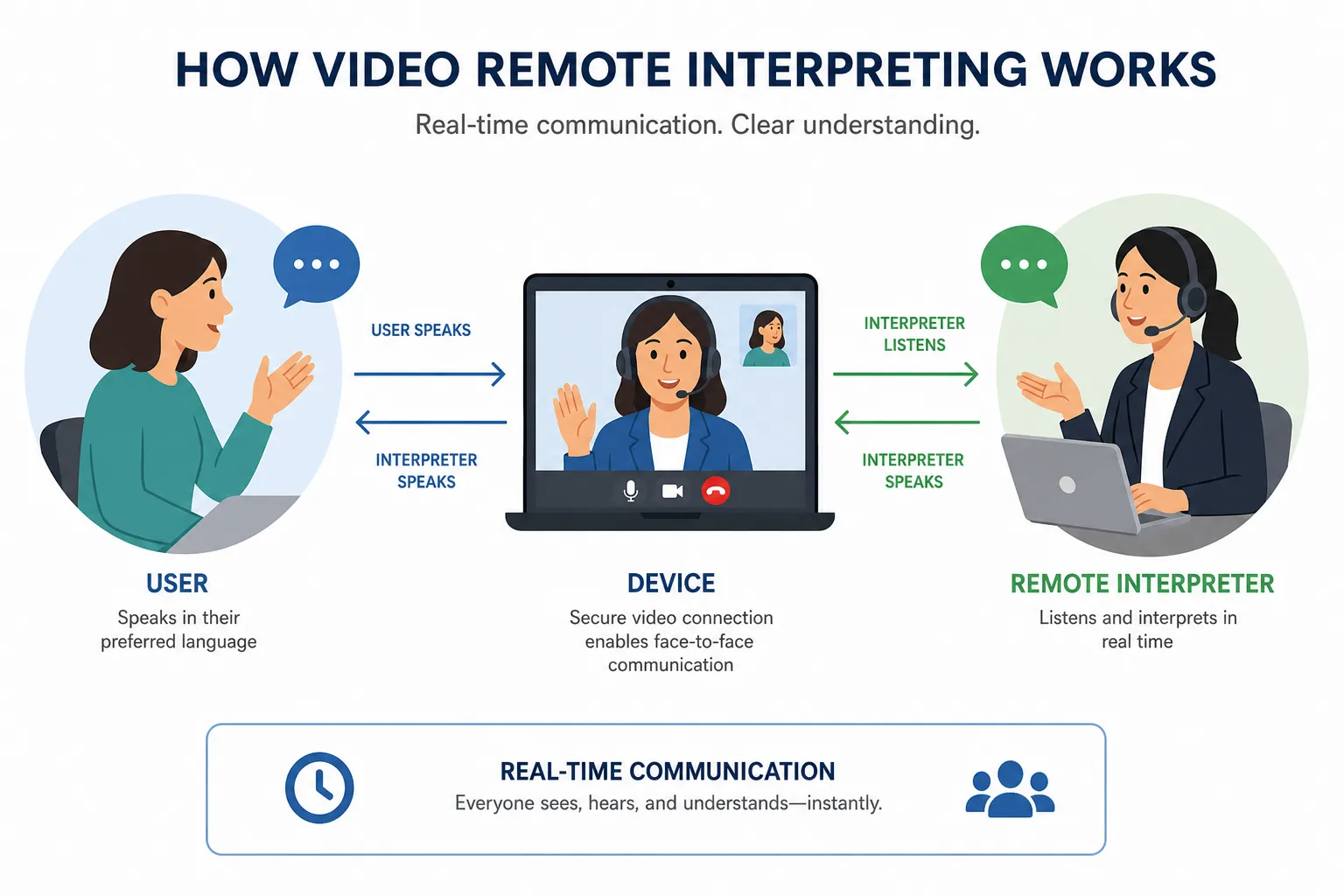
In practice, a participant uses a tablet, laptop, desktop, mobile device, or integrated platform to connect with an off-site interpreter in real time.
Why Video Remote Interpreting Is Growing So Fast
Competitor content consistently highlights speed, convenience, and improved access to interpreters. Those are real advantages, but many articles stop short of explaining why organizations are adopting VRI more strategically.
The bigger reason is this: VRI helps organizations solve several problems at once.
Faster Access to Qualified Interpreters
When in-person interpreters are unavailable, delayed, or impractical, VRI helps teams connect more quickly without sacrificing professionalism.
This is especially valuable for:
-
Same-day meetings
-
Unexpected language access needs
-
Multi-site operations
-
Rural or remote locations
-
Less common languages
-
ASL access in time-sensitive situations
Better Communication Than Audio Alone
There are many situations where words alone are not enough. Phone interpreting is useful, but some conversations depend on what people can see as much as what they can hear.
VRI supports:
-
Visual nuance
-
Rapport building
-
Communication confidence
-
More accurate turn-taking
-
Better accessibility for Deaf and hard-of-hearing participants
More Flexible Delivery Across Workflows
Modern organizations rarely communicate in just one format. They run front-desk interactions, virtual meetings, telehealth visits, training sessions, internal town halls, conferences, and hybrid events.
VRI fits naturally into that reality because it can be used across:
-
On-demand support
-
Scheduled appointments
-
Virtual meetings
-
Telehealth platforms
-
Event production workflows
-
Mobile devices in the field
Stronger Accessibility and Compliance Posture
For many organizations, VRI is not just operationally helpful. It supports broader goals around inclusion, ADA-minded communication, and equitable service delivery.
“The VRI service must deliver real-time, full-motion video and audio over a dedicated high-speed, wide-bandwidth connection.” – ADA.gov
That requirement points to an important truth: VRI only works well when it is implemented correctly.
How Video Remote Interpreting Works
Most VRI sessions follow a simple three-step process:
|
Step |
What Happens |
Why It Matters |
|---|---|---|
|
1. Start the session |
A user launches VRI from a device or platform |
Makes access fast and practical |
|
2. Connect to an interpreter |
The system matches the request to a qualified interpreter |
Supports language accuracy and fit |
|
3. Communicate in real time |
Participants see and hear one another live |
Improves understanding and engagement |
Common Access Methods
Organizations typically use VRI through one or more of these setups:
-
Tablets at service counters or bedside
-
Laptops in office meetings
-
Mobile apps for on-the-go staff
-
Telehealth or clinical platforms
-
Virtual event and meeting platforms
-
Integrated enterprise workflows
Video Remote Interpreting vs Phone Interpreting vs On-Site Interpreting
Many searchers want to know where VRI fits, not just what it is.
Quick Comparison
|
Format |
Best For |
Main Strength |
Main Limitation |
|---|---|---|---|
|
Phone Interpreting |
Short, simple, transactional conversations |
Very fast access |
No visual cues |
|
Video Remote Interpreting |
ASL, sensitive conversations, complex explanations, remote access |
Visual communication plus speed |
Dependent on strong connectivity and screen visibility |
|
On-Site Interpreting |
High-stakes, long, nuanced, or physically dynamic interactions |
Full in-room presence |
Scheduling and travel time |
When VRI Is the Best Choice
VRI is often the right middle ground when:
-
An on-site interpreter is not available quickly enough
-
Visual communication is important
-
The conversation is too nuanced for phone interpreting
-
Multiple stakeholders are joining remotely
-
You need scalable access across locations
Key Benefits of Video Remote Interpreting Services
1. Better Access Across Industries
VRI makes qualified interpreters accessible in places and moments where in-person support may not be feasible.
2. Improved User Experience
People often feel more understood when they can see the interpreter. That can reduce confusion, stress, and miscommunication.
3. Scalable Support for Growing Organizations
For organizations with multiple offices, distributed teams, or nationwide programs, VRI provides a more consistent service model.
4. Faster Response in Time-Sensitive Settings
In healthcare, government services, legal intake, and public-facing environments, speed matters. Waiting hours for access is often not acceptable.
5. Cost Efficiency Compared With Some In-Person Scenarios
While pricing varies, VRI can reduce travel-related costs and make interpreter deployment more flexible.
6. Support for Inclusive Live, Virtual, and Hybrid Experiences
This is a major gap in many competitor articles: they talk about healthcare and public services, but not enough about meetings and events.
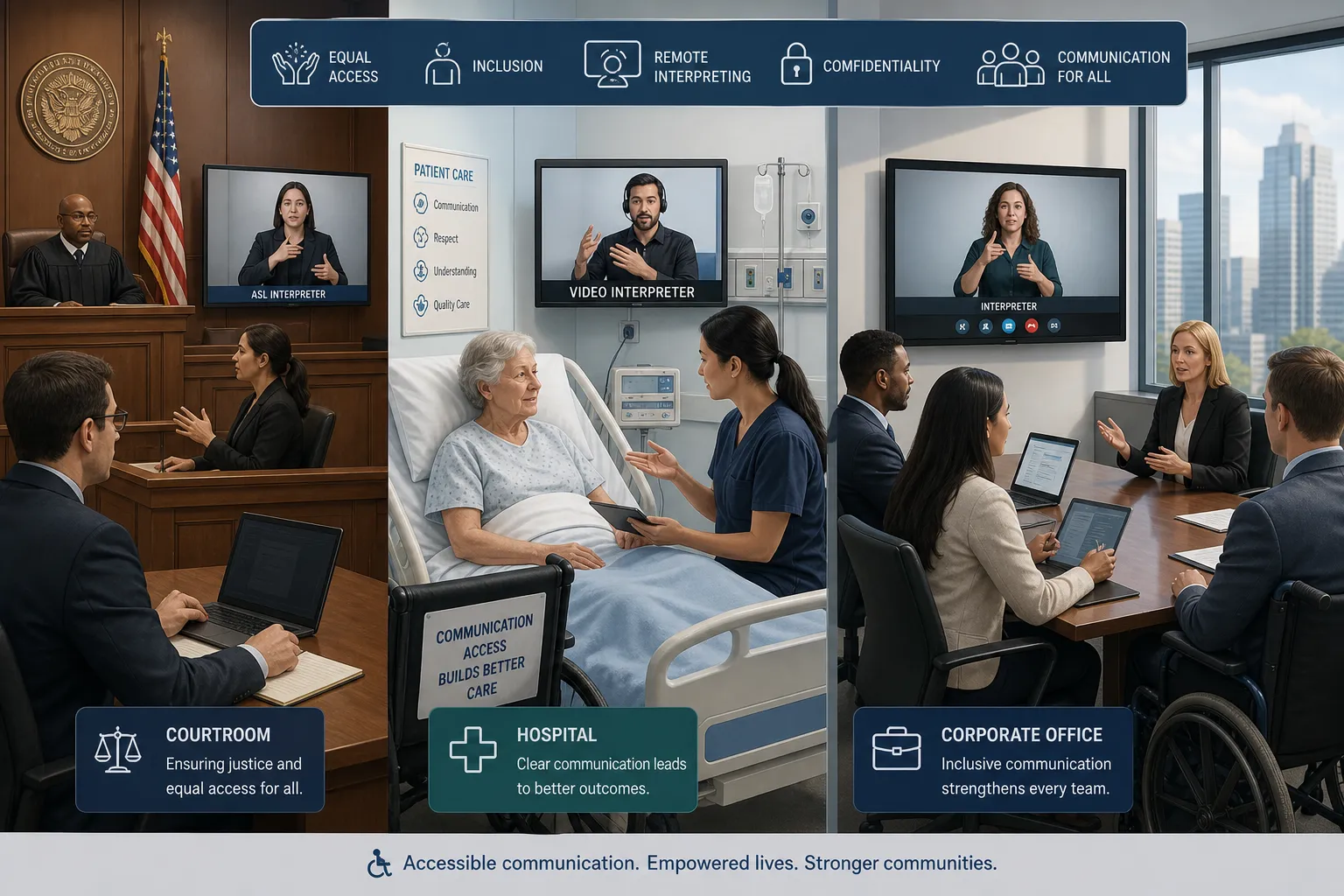
For conferences, trade shows, webinars, worship services, broadcasts, and hybrid programs, VRI can support multilingual and accessible communication without requiring every interpreter to be physically present. When combined with live captioning, subtitling, technician support, and platform coordination, it becomes part of a polished audience experience.
Video Remote Interpreting in Healthcare
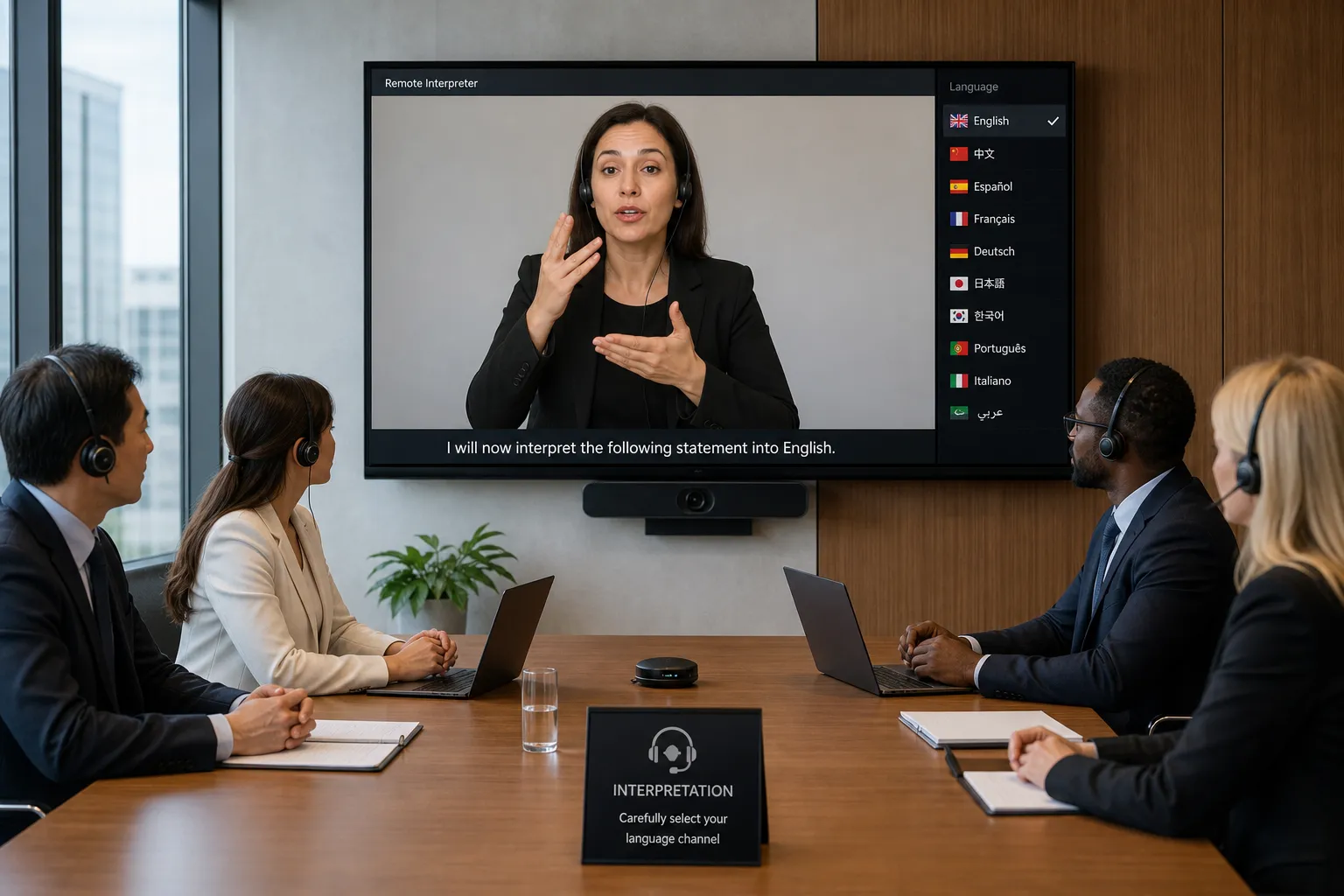
The keyword video remote interpreting healthcare matters for good reason. Healthcare is one of the environments where VRI can have the biggest impact when deployed correctly.
Why Healthcare Teams Use VRI
Healthcare providers need communication that is:
-
Fast
-
Accurate
-
Confidential
-
Accessible
-
Easy to activate during patient care
VRI can support communication during:
-
Patient intake
-
Exams and consultations
-
Consent discussions
-
Discharge instructions
-
Telehealth visits
-
Emergency department workflows
-
Behavioral health conversations
-
ASL interpretation for Deaf patients
Why Visual Access Matters in Healthcare
Healthcare conversations often involve emotion, urgency, and complexity. Visual information helps with:
-
Explaining symptoms
-
Understanding instructions
-
Interpreting tone and concern
-
Building patient trust
-
Supporting ASL users effectively
“VRI has become a vital tool in healthcare, ensuring effective communication between providers and patients who are deaf, hard of hearing, or have limited English proficiency.” – AMN Healthcare summary via cited research
When Healthcare Should Avoid VRI
VRI is not always the right choice. In some situations, an on-site interpreter may be more effective, especially if:
-
The patient cannot see the screen well
-
The patient cannot be positioned appropriately
-
The technology is unstable
-
The interaction is highly sensitive or prolonged
-
The clinical environment is chaotic or physically restrictive
That practical judgment is essential. Good access planning means choosing the format that best supports the patient, not just the fastest one.
Where Else Video Remote Interpreting Services Add Value
Government and Public Services
Public agencies use VRI to improve communication at counters, offices, hearings, community programs, and virtual appointments.
Legal and Court Support
Courts and legal settings may use VRI for certain non-complex or short matters, especially when interpreter availability is limited. However, suitability should always be assessed case by case.
Corporate Meetings and Internal Communications
Global and multilingual organizations use VRI for:
-
HR conversations
-
Compliance briefings
-
employee meetings
-
leadership town halls
-
training programs
-
onboarding and support
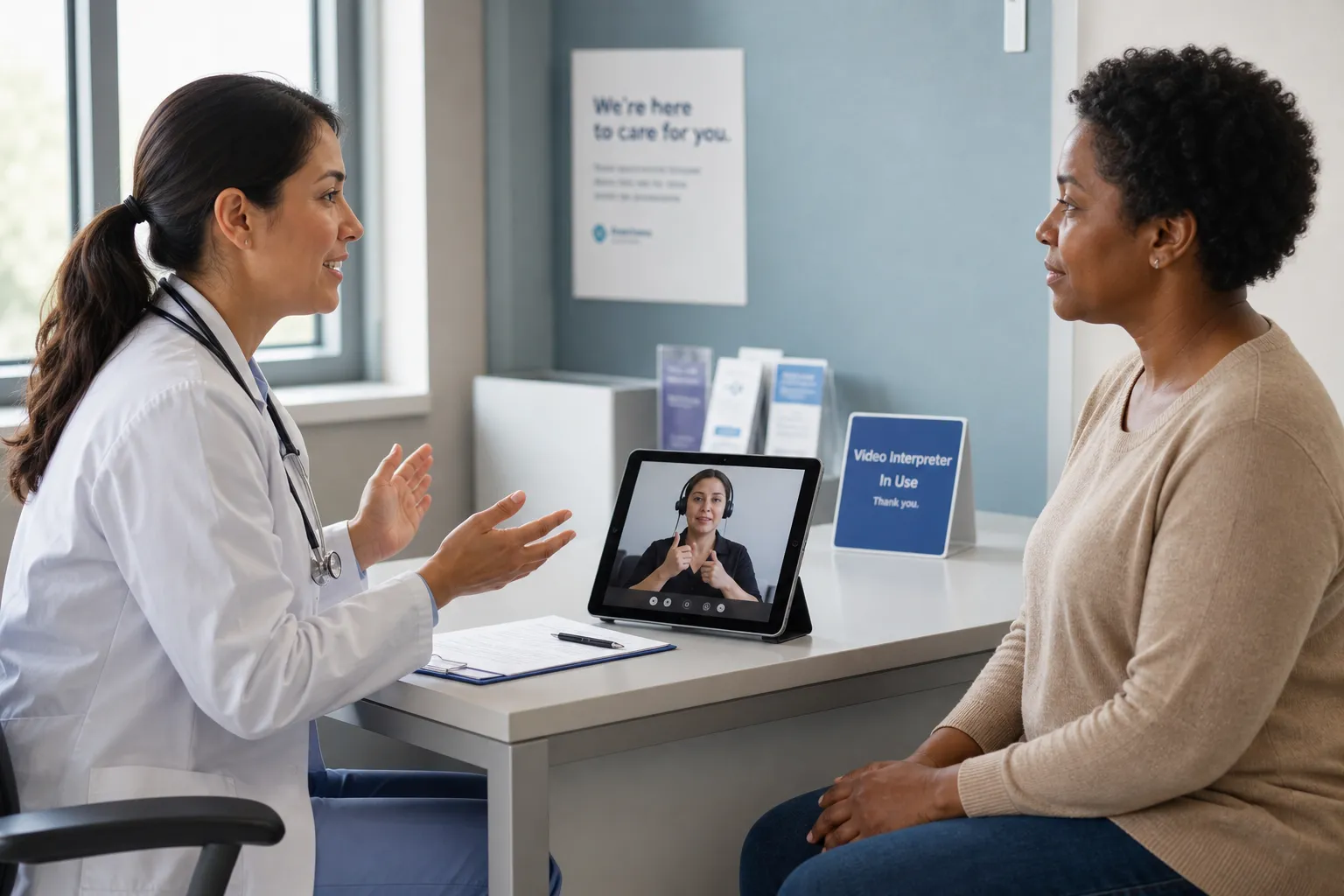
Conferences, Trade Shows, and Hybrid Events
This is where Team Stream’s broader expertise becomes especially valuable. Video interpreting for events is not just about putting an interpreter on a screen. It often requires coordination across:
-
Event platforms
-
AV systems
-
presentation timing
-
multilingual audience feeds
-
live captioning
-
technician monitoring
-
accessibility planning
Education and Community Programs
Schools, colleges, and nonprofits use VRI for meetings, evaluations, family communications, and service delivery.
What Makes Video Remote Interpreting Effective
Many providers describe benefits. Fewer explain the requirements for success.
Essential Ingredients of a Strong VRI Experience
|
Requirement |
Why It Matters |
|---|---|
|
Qualified interpreters |
Accuracy, cultural competence, and professionalism |
|
Strong video quality |
Essential for sign language and visual nuance |
|
Clear audio |
Prevents errors and repetition |
|
Reliable internet |
Avoids lag, freezes, and dropped meaning |
|
Proper device positioning |
Ensures all participants can be seen |
|
Staff training |
Reduces delays and confusion |
|
Workflow planning |
Makes access realistic in live settings |
Technology Standards Matter
VRI is only effective if people can actually see and hear each other clearly.
The ADA guidance emphasizes the need for:
-
real-time full-motion video
-
high-quality audio
-
sharply delineated images
-
enough screen clarity to show faces, hands, arms, and fingers
-
staff trained to set up equipment efficiently
This is why Team Stream treats access as an operational issue, not just a vendor line item. Reliable execution depends on people, process, and technology working together.
Content Gaps Most Competitor Articles Miss
After reviewing the available competitor material, several gaps stand out.
1. They Underplay Event and Broadcast Use Cases
Most pages focus on healthcare or general service counters. They rarely address multilingual conferences, internal events, houses of worship, trade shows, or hybrid productions in depth.
2. They Talk About Access, but Not End-to-End Accessibility
VRI is only one part of inclusive communication. Many organizations also need:
-
real-time captioning
-
closed captioning
-
subtitling
-
translation
-
multilingual production support
-
technician assistance
-
equipment rental
3. They Treat Technology as Plug-and-Play
In reality, poor setup can ruin the experience. Camera angle, audio routing, connectivity, lighting, interpreter visibility, and staff readiness all matter.
4. They Rarely Discuss Service Design
Organizations need help deciding:
-
when to use VRI
-
when to use on-site interpreters
-
when phone interpreting is enough
-
how to combine interpreting with captioning and translation
-
how to support live, virtual, and hybrid audiences at once
This is exactly where a strategic partner adds more value than a one-size-fits-all service.
Best Practices for Choosing Video Remote Interpreting Services
Evaluate the Provider Beyond Language Count
A long language list is useful, but it should not be the only selling point. Ask about:
-
interpreter qualifications
-
ASL capability
-
response times
-
platform flexibility
-
support for live and scheduled sessions
-
accessibility expertise
-
security and confidentiality practices
-
service responsiveness
Match the Service Model to the Environment
Different environments need different deployment models.
|
Environment |
Best-Fit VRI Setup |
|---|---|
|
Hospital or clinic |
Tablet/mobile access, telehealth integration, fast on-demand connection |
|
Corporate meetings |
Platform-based joining, scheduled interpreter support |
|
Hybrid conferences |
AV-coordinated remote interpreting plus captioning |
|
Public counters |
Dedicated stations or tablets with simple launch workflow |
|
Churches and live programs |
Interpreter feed integration plus captioning and production support |
Plan for Accessibility, Not Just Interpretation
If your audience includes Deaf or hard-of-hearing participants, multilingual attendees, or viewers joining remotely, you may need more than VRI alone.
A stronger access plan may include:
-
ASL interpreting
-
spoken-language interpreting
-
CART/live captioning
-
translated on-screen text
-
subtitling for recordings
-
multilingual content support before and after the event
Why Team Stream Is a Strong Partner for Video Remote Interpreting
Organizations do not just need access to interpreters. They need confidence that communication will work under real-world pressure.
Team Stream brings that confidence through:
-
accurate human and AI-powered translation and interpreting
-
real-time captioning for accessibility and engagement
-
end-to-end language and accessibility solutions tailored to each client
-
support for live, virtual, and hybrid events
-
compliance-friendly services for inclusive communication
-
professional equipment rental and technician support
-
flexible delivery with in-person and remote options
-
over 25 years of industry expertise
-
responsive customer service and reliable execution
That matters whether you are running a hospital workflow, a global town hall, a church broadcast, a trade show booth program, or a multilingual conference.
Final Verdict: Is Video Remote Interpreting Worth It?
Yes, when used in the right scenarios, video remote interpreting services can dramatically improve access, speed, flexibility, and communication outcomes.
But the best results come from thoughtful implementation. VRI is not a shortcut for every situation. It is a powerful tool that works best when paired with qualified interpreters, proper setup, accessibility planning, and a partner who understands the full communication environment.
If your organization needs better multilingual communication, stronger accessibility, and dependable support across healthcare, meetings, events, or hybrid experiences, Team Stream can help you design the right solution. From remote interpreting to captioning, translation, equipment, and technician support, we make inclusive communication easier to deliver and easier to trust.
FAQ
What are reasons to avoid using video remote interpreting?
Avoid VRI when screen visibility, positioning, or internet quality will prevent clear communication, or when an interaction is highly sensitive, prolonged, or physically dynamic. In those cases, an on-site interpreter may provide better access and better outcomes.
What is video remote interpreting and how does it work?
Video remote interpreting connects participants with a qualified interpreter through live audio and video. A user starts a session on a device or platform, the interpreter joins remotely, and everyone communicates in real time with visual and spoken cues.
How much should an interpreter charge per hour?
Interpreter rates vary based on language, specialization, credentials, delivery format, and scheduling needs. Healthcare, legal, ASL, event, and last-minute requests often cost more, so organizations should request a quote based on the actual use case rather than expect one flat hourly price.
What’s the difference between VRS and VRI?
VRI is used when both parties are together in one location and connect to a remote interpreter by video. VRS, or Video Relay Service, is a telecommunications service that allows a Deaf person using sign language to communicate with a hearing person over the phone through an interpreter.
Why was ASL banned in schools?
Historically, ASL was suppressed in many schools because oralist education movements favored speech and lip-reading over sign language. That approach is now widely criticized because it denied many Deaf students full language access and ignored the value of ASL as a complete language.
