

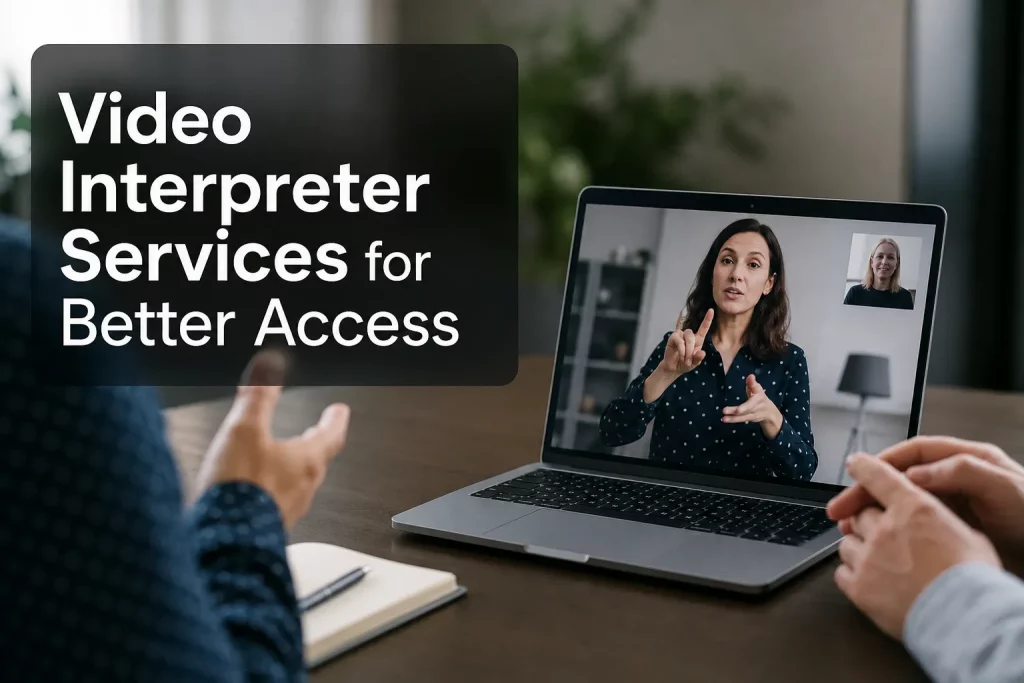
Video Interpreter Services for Better Access
If you organize meetings, conferences, training sessions, broadcasts, worship services, or hybrid events, accessibility is no longer a side consideration. It is part of delivering a professional experience. Video interpreter services help organizations make communication clearer, faster, and more inclusive when participants are Deaf, hard of hearing, or need language support in real time.
For event producers, operations leaders, HR teams, marketers, and internal communications teams, the challenge is rarely just “finding an interpreter.” The real challenge is choosing the right format, the right workflow, and the right support team so communication works smoothly across in-person, virtual, and hybrid environments. A skilled video interpreter can bridge distance, reduce scheduling friction, and improve access without sacrificing quality.
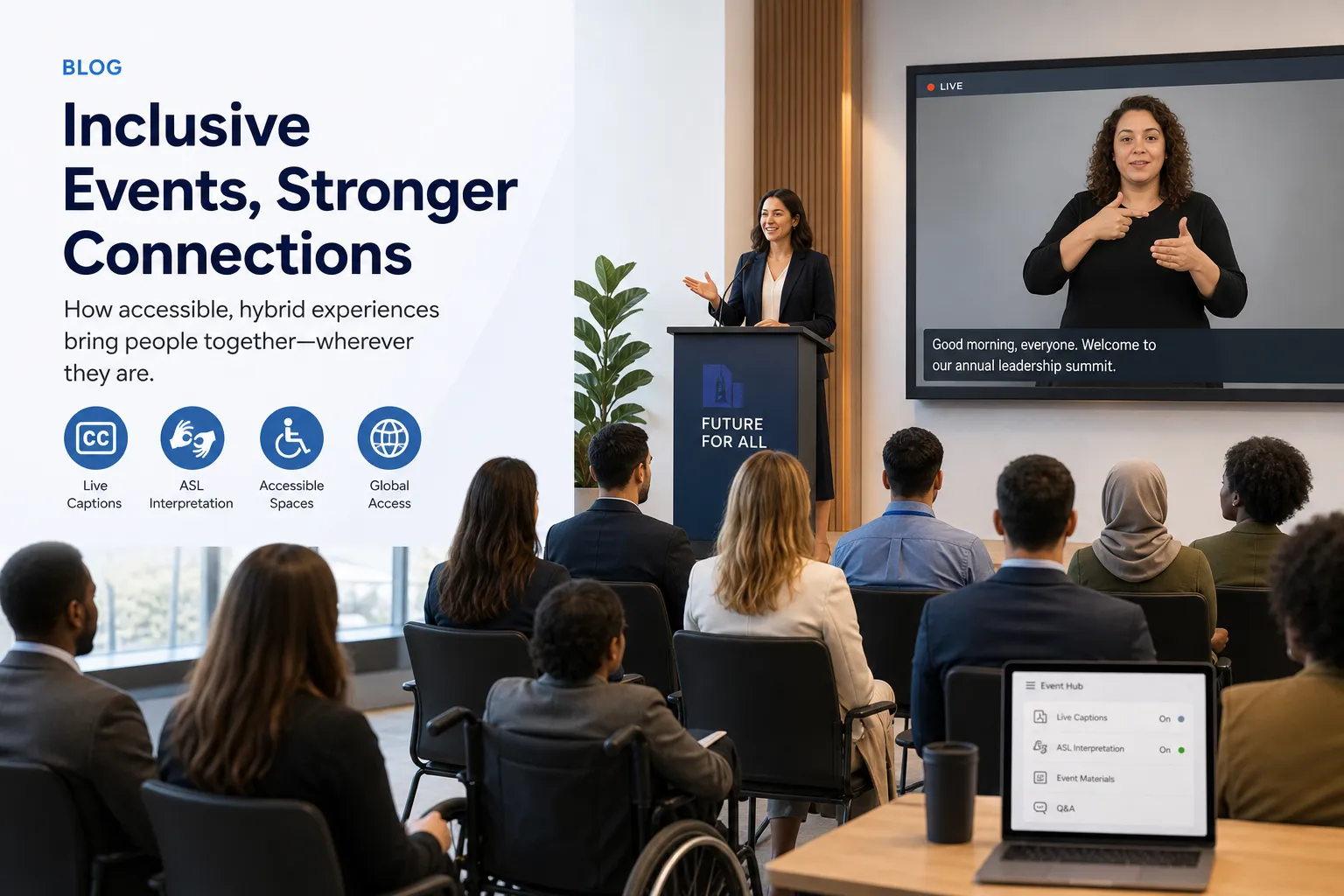
What Are Video Interpreter Services?
Video interpreter services connect participants with a professional interpreter through live video technology. Instead of being physically present in the room, the interpreter joins remotely through a secure platform, video meeting app, or event production workflow.
This format is commonly used for:
-
Business meetings
-
Employee onboarding and training
-
Conferences and breakout sessions
-
Healthcare appointments
-
Customer service interactions
-
Worship services
-
Webinars and virtual events
-
Live broadcasts and streamed content
In many cases, a video interpreter is used for American Sign Language, but the model also supports spoken-language interpreting when visual cues matter. Facial expressions, body language, screen sharing, and visual context often make video a stronger option than audio-only interpreting.
Why Organizations Use a Video Interpreter Instead of Audio-Only Support
Some conversations need more than words. When people need to read facial expressions, follow visual context, watch slides, or communicate in sign language, video adds a layer of clarity that phone-based communication simply cannot provide.
The biggest benefits
-
Visual communication: Essential for sign language and helpful for nuanced conversations
-
Faster access: Easier to schedule than on-site support in many cases
-
Broader reach: Connect with specialized interpreters regardless of location
-
Lower logistical burden: Less travel, less setup complexity, fewer venue limitations
-
Hybrid flexibility: Works well when some participants are remote and others are onsite
-
Better continuity: Can be integrated with captioning, streaming, and multilingual event support
Where Video Interpreter Services Fit Best
Competitor pages tend to focus heavily on basic definitions, healthcare usage, or a simple VRI explanation. What they often miss is the operational side: how video interpreting fits into real event environments, internal communications, and audience experience.
That is where planning matters.
Corporate meetings and internal communications
Board meetings, all-hands calls, leadership updates, HR conversations, compliance training, and onboarding sessions all benefit from clear access. A video interpreter can join the platform your team already uses and provide support without requiring travel or disrupting the flow of the meeting.
Conferences and trade shows
For conferences, access is rarely a one-service decision. You may need interpreting for keynote sessions, breakout rooms, sponsor activations, networking spaces, and virtual attendees at the same time. Video interpreter services are especially useful when audience members or presenters are distributed across locations.
Live, virtual, and hybrid events
Hybrid events create layered communication challenges. You may have an in-room audience, livestream viewers, remote presenters, and multilingual attendees all engaging at once. Video interpreting can be built into the presentation feed, side screens, webcast layouts, or attendee platform for a more inclusive experience.
Broadcasts and media production
For recorded or live content, a video interpreter can become part of the production plan rather than a last-minute accommodation. This matters for framing, screen layout, lighting, interpreter visibility, and integration with captions or translated audio.
Worship services and community programs
Churches and faith-based organizations often need recurring support for live services, streamed sermons, Bible studies, and special events. Remote interpreting can make regular access more practical while preserving a warm, community-centered experience.
Video Interpreting vs In-Person Interpreting vs Phone Interpreting
Choosing the right delivery model depends on setting, timing, complexity, budget, and participant needs.
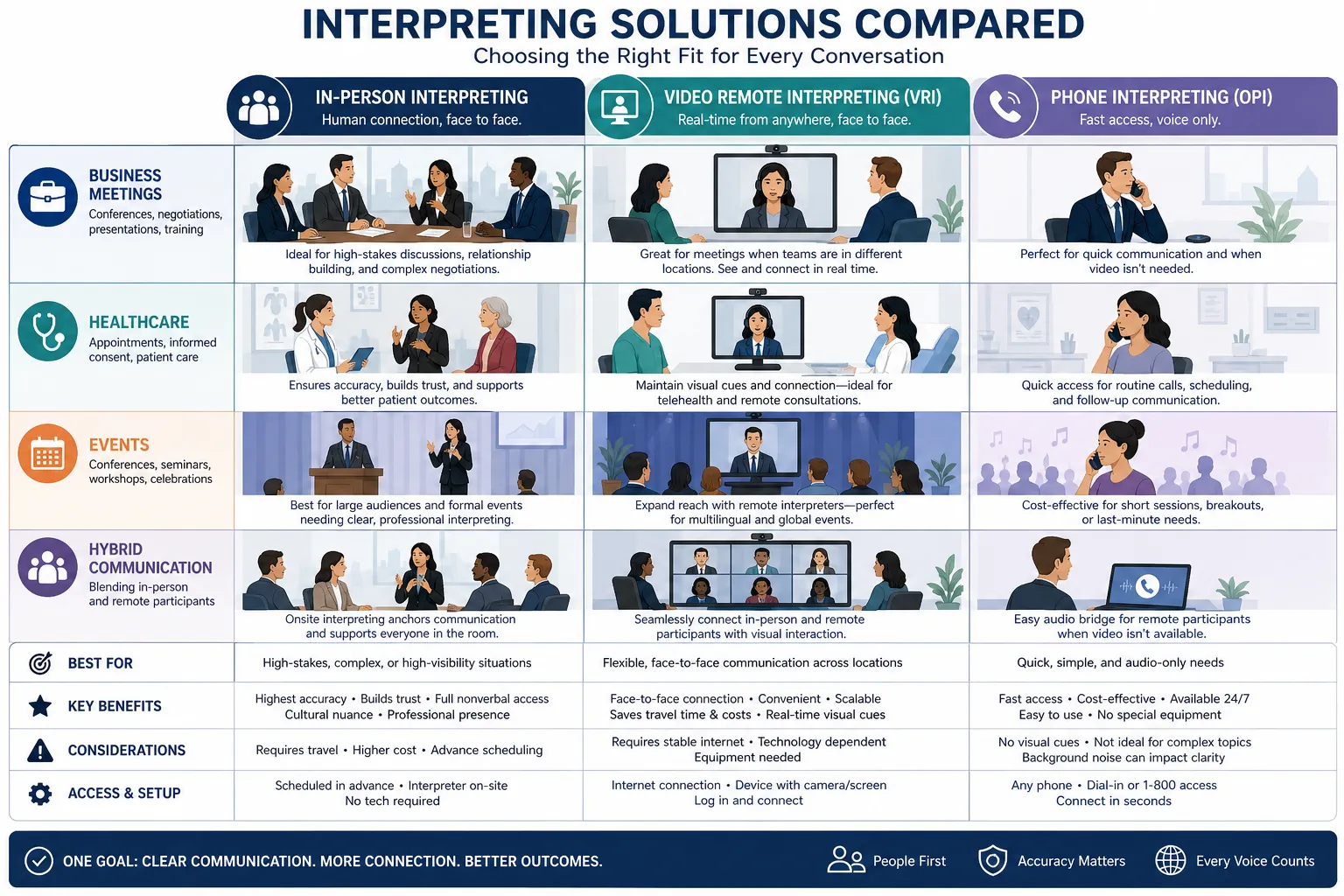
|
Format |
Best For |
Main Strength |
Main Limitation |
|---|---|---|---|
|
In-person interpreting |
High-stakes, physical, or highly interactive settings |
Full room presence and direct interaction |
More travel, lead time, and cost |
|
Video interpreter services |
Hybrid events, remote meetings, planned accessibility, distributed teams |
Visual access with flexible scheduling |
Depends on stable tech and proper screen setup |
|
Phone interpreting |
Short, simple, or transactional conversations |
Fast and convenient |
No visual communication |
When video is the best choice
Video is often the strongest choice when:
-
The interaction requires visual communication
-
In-person interpreters are unavailable locally
-
The session is virtual or hybrid
-
The organization needs specialized expertise quickly
-
Accessibility must be extended across multiple locations
-
Budget and timing make remote support more practical
When in-person may still be better
In-person interpreting may be preferable when:
-
The environment is physically dynamic
-
Participants move around frequently
-
Visual line-of-sight is difficult to maintain on screens
-
The conversation is especially long, sensitive, or complex
-
There are hands-on demonstrations or heavy audience interaction
The best providers help clients evaluate this case by case instead of forcing a one-size-fits-all model.
How Video Interpreter Services Work in Practice
At a high level, the process is simple. In practice, quality depends on preparation.
Typical workflow
-
Request the service
Share date, time, platform, audience type, language needs, and event format. -
Match the right interpreter
The provider identifies a qualified interpreter with relevant subject-matter experience. -
Prepare materials in advance
Agendas, scripts, presenter notes, slide decks, glossaries, and run-of-show documents improve accuracy. -
Confirm technical setup
Camera framing, interpreter window placement, audio routing, screen visibility, and platform permissions are checked. -
Deliver live support
The interpreter joins the session and facilitates communication in real time. -
Add related accessibility services if needed
Live captioning, CART, subtitling, translated captions, or technician support may be layered in.
Accessibility Is Also a Compliance Issue
Video interpreter services are not just a convenience. They can be an important part of meeting accessibility obligations and reducing communication barriers.
“Under the Americans with Disabilities Act (ADA), businesses and nonprofit organizations that serve the public are required to provide auxiliary aids and services to ensure effective communication with individuals who have vision, hearing, or speech disabilities.” – ADA.gov
That matters for employers, educational institutions, venues, healthcare organizations, and public-facing businesses. But compliance alone is not the goal. The stronger goal is effective communication that allows every participant to fully understand, engage, and contribute.
Why Captioning Often Belongs in the Same Plan
Many teams treat interpreting and captioning as separate decisions. In reality, they are often strongest together.
A video interpreter supports language access and signed communication. Live captioning supports audience comprehension, non-native speakers, hard-of-hearing participants, people in noisy spaces, and viewers watching with sound off. For virtual and hybrid content, the combination can significantly improve engagement.
“Captioned videos can experience up to 40% longer watch times compared to those without captions.” – VideoCaptions.ai
For organizations producing public-facing video, internal town halls, webinars, or conferences, combining a video interpreter with real-time captioning can make the experience more accessible and more effective for everyone.
Common Use Cases by Industry
Corporate and enterprise teams
-
Executive meetings
-
HR and benefits sessions
-
Onboarding and training
-
Internal town halls
-
Customer-facing consultations
-
Compliance briefings
Conferences and event production
-
Keynote sessions
-
Breakouts
-
Panel discussions
-
Expo programming
-
Sponsor presentations
-
Livestreams
Healthcare and patient communication
-
Scheduled consultations
-
Intake and discharge
-
Telehealth
-
Consent discussions
-
Specialty care communication
Education and training
-
IEP and family meetings
-
Virtual classes
-
Student services
-
Staff training
-
Public webinars
Faith-based and community organizations
-
Weekly services
-
Sermons and livestreams
-
Classes and workshops
-
Special programs and events
What Competitor Content Often Leaves Out
Across leading pages in this space, several themes appear repeatedly: convenience, access, flexibility, and cost savings. Those are valid benefits, but they are not the full story.
Here are the content gaps most providers gloss over:
Screen placement and visibility matter
A video interpreter is only effective if attendees can actually see them clearly. On a crowded webinar screen, poorly sized interpreter windows reduce usability fast. In live production, layout planning is not optional.
Interpreter specialization matters
Not every interpreter is right for every setting. Legal, medical, technical, corporate, and live-event environments all have different terminology, pace, and audience expectations.
Redundancy matters for live events
If your event is high-stakes, you need backup planning: spare devices, alternate links, technician coordination, and contingency workflows.
Teaming matters on longer sessions
Long or cognitively dense sessions may require interpreter teams to preserve quality and reduce fatigue. This is especially important for conferences, worship events, and day-long meetings.
Accessibility works best as a system
Interpreting alone may not solve the entire audience need. Captioning, translated subtitles, language feeds, equipment, display planning, and technical support often need to be coordinated together.
Best Practices for a Strong Video Interpreting Experience
Share materials early
Slides, talking points, names, acronyms, and speaker notes allow the interpreter to prepare properly.
Use the right camera and screen setup
Participants should be well lit and easy to see. The interpreter window should be large enough to follow comfortably.
Plan for the audience experience
Think beyond the meeting host. How will remote viewers see the interpreter? What about overflow rooms, recordings, or mobile viewers?
Match the service to the stakes
A quick check-in has different needs than a live annual conference. Scale the support accordingly.
Combine services when needed
Captioning, multilingual support, subtitling, or technician support can make the entire experience smoother and more inclusive.
What to Look for in a Video Interpreter Services Provider
A good provider does more than fill a request. They help you design a reliable communication experience.
Look for:
-
Qualified professional interpreters
-
Experience in your industry or event type
-
Support for live, virtual, and hybrid formats
-
Strong responsiveness and scheduling coordination
-
Integration with captioning and other accessibility services
-
Comfort with compliance-sensitive environments
-
Technical troubleshooting support
-
Ability to scale from one meeting to enterprise-wide needs
Why Team Stream Is a Strong Partner for Better Access
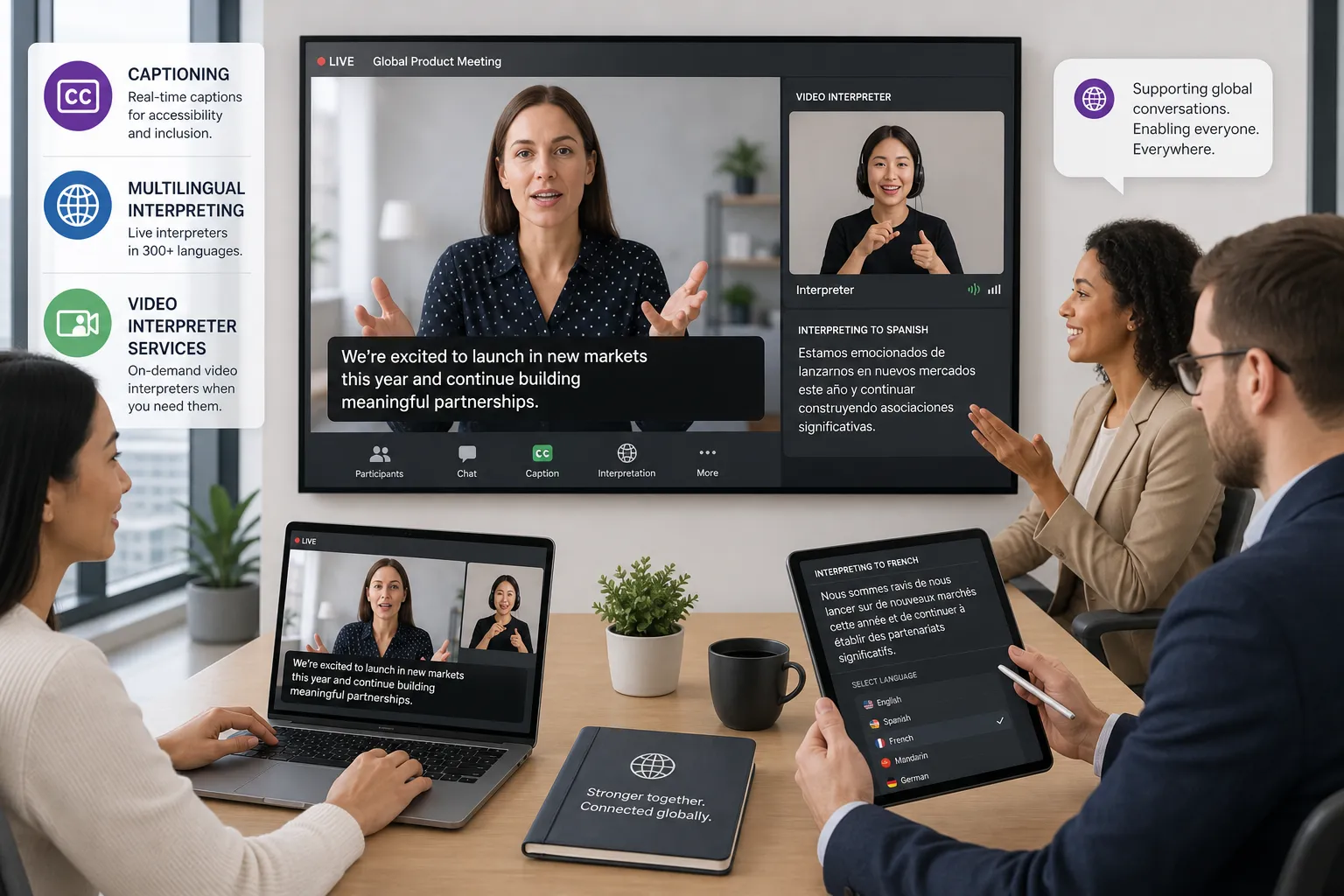
Team Stream brings a broader, more practical approach than providers that only focus on one service line. Instead of treating interpreting as an isolated booking, Team Stream helps clients build complete language access and accessibility solutions around their actual environment.
That includes:
-
Accurate human and AI-powered translation and interpreting
-
Real-time captioning for accessibility and engagement
-
End-to-end support for live, virtual, and hybrid events
-
Compliance-friendly communication solutions
-
Professional equipment rental and technician support
-
Flexible remote and in-person delivery models
-
Tailored service design rather than one-size-fits-all packages
-
More than 25 years of experience backed by responsive customer service
For a corporate training program, that may mean combining a video interpreter with CART captioning and platform support. For a conference, it may mean interpreter feeds, caption display, multilingual workflows, and technician coordination. For a church or broadcast team, it may mean dependable recurring support that works week after week.
That operational depth is what turns accessibility from a checkbox into a better audience experience.
Final Verdict
Video interpreter services are one of the most effective ways to improve accessibility and real-time communication in modern organizations. They offer flexibility, visual clarity, and broader interpreter access for meetings, events, broadcasts, and hybrid experiences where in-person support is not always practical.
The difference between “having access” and delivering a truly smooth, inclusive experience usually comes down to planning, service integration, and execution quality. If you need a partner that can handle not only interpreting, but also captioning, translation, event support, equipment, and technical coordination, Team Stream is built for that job.
If you want better communication, stronger accessibility, and a more confident event or meeting workflow, Team Stream is ready to help you design the right solution.
FAQ
How much do interpreter services cost?
Interpreter service costs vary based on language, specialization, session length, timing, and whether support is in person or remote. For events and business meetings, pricing may also reflect preparation time, technical coordination, and whether related services like captioning are included.
How much per hour for an interpreter?
Hourly rates depend on the interpreter’s expertise, the subject matter, and the format of the assignment. High-stakes or highly specialized settings, such as legal, medical, or live production environments, typically cost more than routine sessions.
How much does VRI cost?
VRI, or video remote interpreting, often costs less than onsite interpreting because it reduces travel and related logistics. Final pricing still depends on scheduling needs, interpreter qualifications, session duration, and whether the service is a one-time request or part of ongoing support.
How much per hour for an interpreter?
The per-hour cost can vary widely, so the best approach is to request a quote based on your exact use case. If you need a video interpreter for a meeting, webinar, conference, or hybrid event, providers like Team Stream can recommend the right setup and pricing for your goals.
