

Translation Services: What to Look for in 2026
Choosing translation services in 2026 is no longer just about converting text from one language to another. For event organizers, conference teams, corporate communicators, broadcasters, churches, and growing businesses, the real question is: can your language partner help you communicate clearly, inclusively, and compliantly across every format that matters?
That means evaluating far more than price. You need to know whether a provider can handle written translation services, language translation and interpretation services, live captioning, multilingual event support, AI-assisted workflows, accessibility requirements, and high-pressure delivery for live, virtual, and hybrid environments.
Many businesses discover too late that the “best translation services” are not simply the cheapest or the fastest. The right partner should help you reduce risk, improve audience engagement, support accessibility, and protect your brand voice across documents, broadcasts, meetings, and public-facing content.
At Team Stream, we see 2026 as a turning point: organizations are no longer buying isolated language services. They are investing in end-to-end communication systems that combine human expertise, AI efficiency, accessibility support, and event execution.
Why Translation Services Matter More in 2026
The top-ranking articles consistently emphasize cost, service types, AI growth, and industry demand. What they often miss is the operational reality for modern organizations: translation now sits at the intersection of brand trust, accessibility, compliance, customer experience, and event performance.
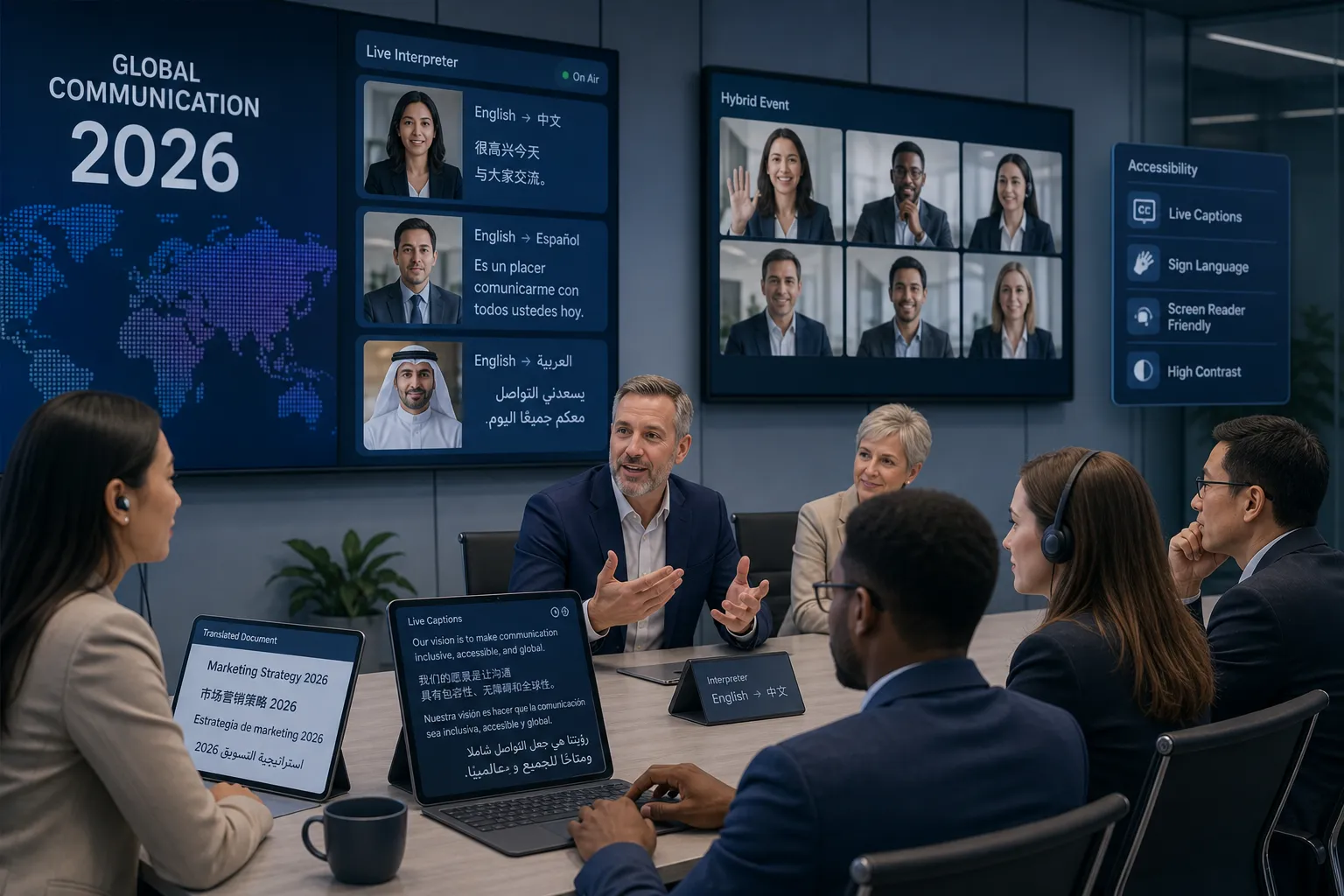
If your company runs conferences, internal town halls, investor meetings, webinars, training sessions, product launches, or multilingual content campaigns, translation and interpretation are no longer optional support functions. They are part of the audience experience.
“In 2024, the global language services market was valued at approximately $71.7 billion, with projections indicating it will reach $75.7 billion in 2025.” – locreport.com
That growth is happening because organizations need more than basic translation language services. They need partners who can support:
-
multilingual meetings and live events
-
real-time captioning for accessibility and engagement
-
written translation for documents, websites, marketing, and training
-
interpretation translation services for in-person and remote audiences
-
AI translation services that are efficient without sacrificing quality
-
compliance-friendly workflows for regulated or public-facing content
“More than 1 in 5 individuals aged 5 and older (22%) spoke a language other than English at home.” – U.S. Census Bureau
For companies operating in the U.S., that statistic alone explains why translation services us searches keep rising. The audience is multilingual, and expectations are higher than ever.
What Businesses Are Really Looking for in Translation Services
The search intent behind keywords like best language translation services, best translation companies, and top language translation companies is practical: buyers want to know which provider can actually deliver reliable results.
In 2026, that evaluation should cover five core questions:
-
Can they ensure accuracy?
-
Can they support both translation and interpretation?
-
Can they handle accessibility needs like captioning and subtitling?
-
Can they scale across live, virtual, and hybrid formats?
-
Can they combine AI tools with experienced human review?
That is why businesses increasingly prefer providers that offer translation and language services under one roof instead of forcing clients to coordinate multiple vendors.
The Main Types of Translation Services to Compare
Before choosing among translation and interpretation companies, it helps to understand what service categories actually matter.
Written Translation Services
Written translation services cover documents, websites, manuals, training materials, legal paperwork, marketing assets, subtitles, and more. Quality matters most when tone, compliance, and terminology must remain consistent across languages.
Common use cases include:
-
employee handbooks
-
website localization
-
contracts and legal documents
-
product documentation
-
medical or technical content
-
conference materials and signage
-
e-learning modules
For organizations with ongoing multilingual communication, written translation should be part of a broader content workflow, not a one-off purchase.
Interpretation Services
Interpretation is spoken language support, either live or near-live. This includes:
-
simultaneous interpreting for conferences
-
consecutive interpreting for meetings
-
over-the-phone interpreting
-
video remote interpreting
-
on-site interpreting for events, trade shows, and worship services
This is where many businesses confuse translation and interpretation. Translation deals with written content. Interpretation handles spoken communication. The strongest providers offer both, because many clients need both.
Captioning, Subtitling, and Accessibility Services
This is one of the biggest content gaps in competitor articles. Most discuss translation services, but far fewer explain how accessibility fits into the decision.
In 2026, language access and accessibility are deeply connected. Your provider may also need to support:
-
live captioning
-
closed captioning
-
subtitling for multilingual video
-
voiceover
-
accessibility support for webinars and broadcasts
For live and hybrid events, this becomes mission-critical. Audiences may need translation, captions, or both. A provider that cannot support accessibility may leave you solving half the problem elsewhere.
AI Translation Services
AI translation services are now a standard part of many workflows. Used correctly, they increase speed and reduce cost for routine content. Used carelessly, they can introduce errors, awkward phrasing, or compliance issues.
The best approach in 2026 is usually human + AI, not human versus AI.
IT Translation Services
IT translation services and other specialized technical services require subject-matter expertise. Software interfaces, user documentation, developer materials, cybersecurity notices, and SaaS onboarding content all require terminology precision.
This is especially important if your company serves international users or employees through digital products.
Human vs AI vs Hybrid Translation: What Actually Works?
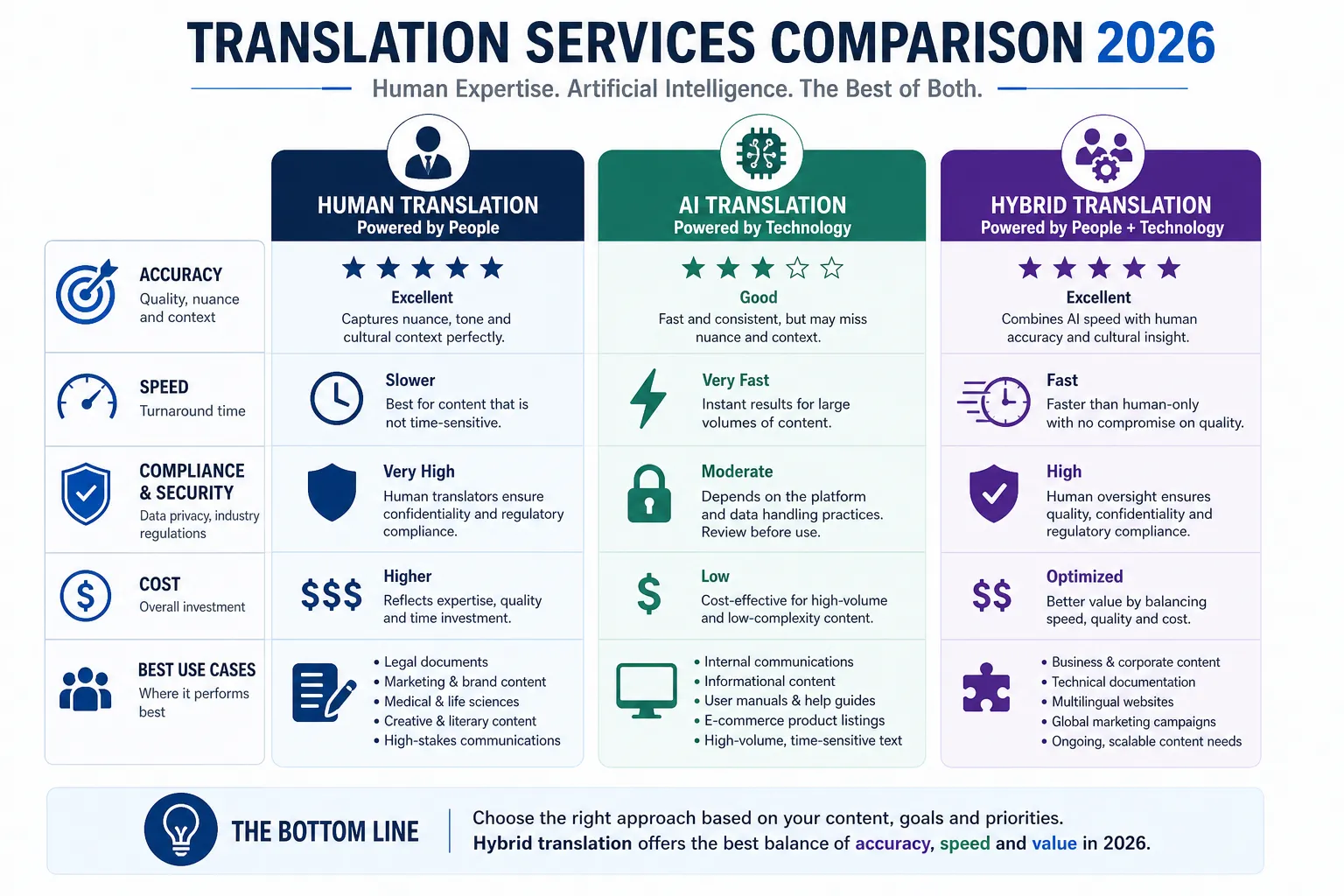
One of the most important decisions in 2026 is choosing between full human translation, AI translation, or a hybrid model.
Comparison Table
|
Service Model |
Best For |
Strengths |
Risks |
Typical Fit |
|---|---|---|---|---|
|
Human Translation |
Legal, medical, branded, sensitive, public-facing content |
Accuracy, nuance, tone, cultural adaptation |
Higher cost, longer turnaround |
High-stakes content |
|
AI Translation |
Internal notes, bulk content, low-risk text |
Speed, scale, low cost |
Terminology drift, tone errors, context mistakes |
High-volume routine content |
|
Hybrid Translation |
Most business use cases |
Balance of speed, cost, and quality |
Depends on review process quality |
Scalable professional workflows |
A purely automated workflow may seem attractive, but language services buyers should ask a harder question: what happens when the content needs to be right, not just fast?
This is where Team Stream’s approach stands out. We combine accurate human and AI-powered translation and interpreting based on the actual use case. That means clients get speed where speed makes sense, and expert oversight where quality, compliance, or audience experience matters most.
What the Best Translation Companies Have in Common
If you are comparing language translation companies or searching for the best translation companies, look for these qualities.
1. Broad Service Coverage
The strongest providers can provide translation services across multiple formats:
-
written documents
-
interpretation
-
captioning
-
subtitling
-
voiceover
-
multilingual event support
-
remote and on-site service delivery
A fragmented provider network creates communication gaps and avoidable delays.
2. Real Quality Assurance
Ask how they handle:
-
translator selection
-
editor review
-
terminology management
-
formatting quality control
-
final QA before delivery
If they cannot explain their process clearly, quality may be inconsistent.
3. Industry Expertise
Not all translation companies are equipped for technical, legal, medical, corporate, or event-focused work. A capable provider should understand your content type, audience, and risk profile.
4. Accessibility Understanding
This is a major differentiator in 2026. If you run public events, employee communications, training, or video content, your provider should understand accessibility standards and support inclusive communication.
5. Event and Live Support Capability
For conferences, trade shows, worship services, broadcasts, and corporate events, language support is operational, not just linguistic. You may need:
-
interpreters
-
captioners
-
subtitlers
-
equipment rental
-
technician support
-
remote platform integration
Most competitor articles do not address this in depth, but it is often the deciding factor for event-driven organizations.
6. Responsive Customer Service
Language projects often move fast. You want a team that is responsive, organized, and proactive, especially when schedules shift or live logistics are involved.
A Better 2026 Evaluation Checklist for Translation Services
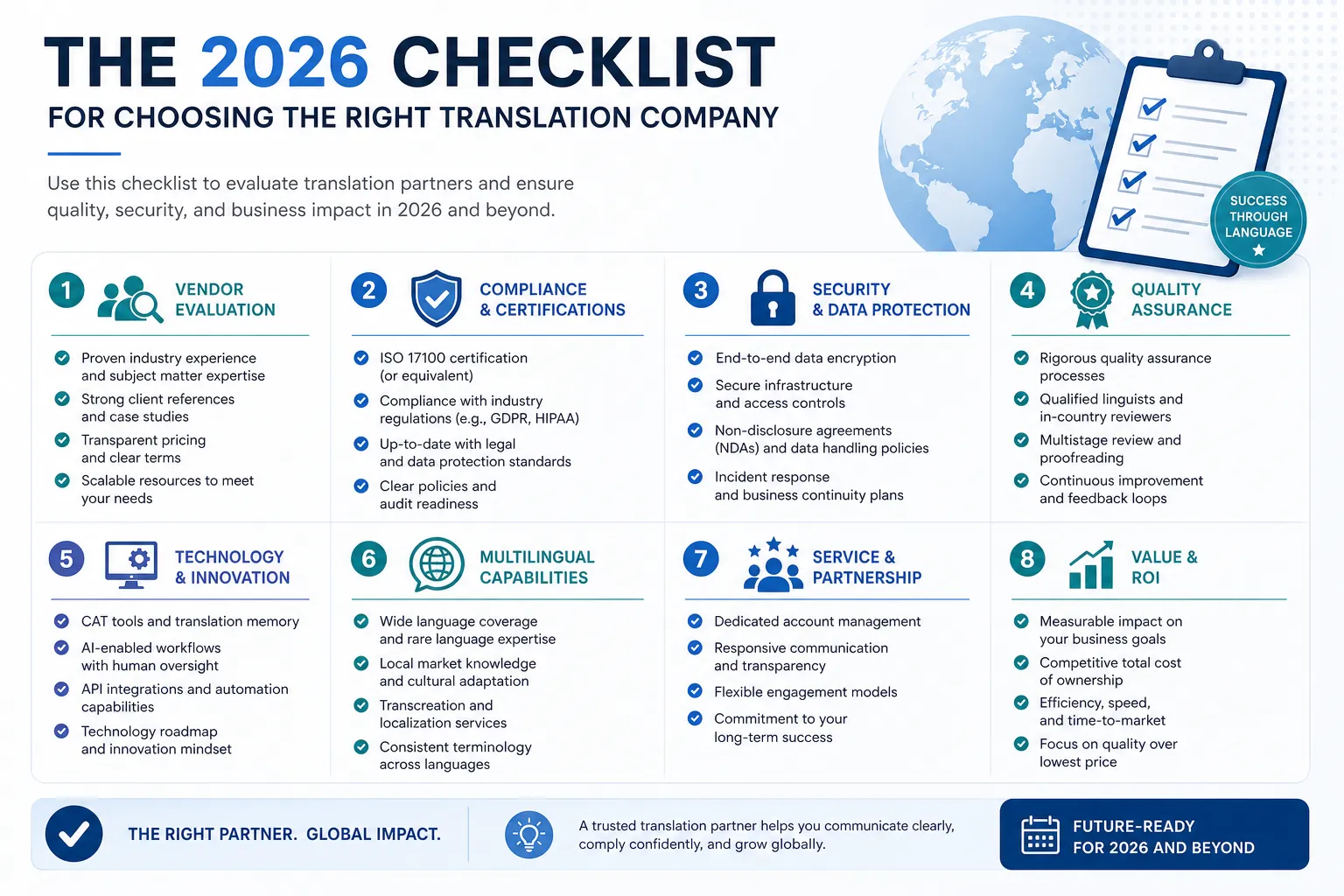
Most articles cover pricing and service types. Fewer give buyers a practical decision framework. Use this checklist when comparing language and translation services providers.
Vendor Evaluation Table
|
Criterion |
What to Ask |
Why It Matters |
|---|---|---|
|
Accuracy Process |
Who translates, edits, and reviews the work? |
Protects quality and brand trust |
|
AI Policy |
When do you use AI, and how is it reviewed? |
Prevents avoidable errors |
|
Service Breadth |
Do you offer translation, interpretation, captioning, and subtitling? |
Reduces vendor sprawl |
|
Event Readiness |
Can you support live, virtual, and hybrid events? |
Essential for conferences and broadcasts |
|
Accessibility |
Do you provide live captioning and compliance-friendly services? |
Supports inclusion and reduces risk |
|
Technical Support |
Do you offer equipment rental and technicians? |
Important for live delivery |
|
Industry Expertise |
Have you worked in our sector before? |
Improves terminology accuracy |
|
Turnaround |
What is standard vs rush delivery? |
Helps avoid delays |
|
Security |
How do you handle confidential files? |
Important for legal, HR, and sensitive content |
|
Support Model |
Will we have a dedicated contact? |
Improves communication and execution |
Translation Pricing in 2026: What to Expect
Competitor content often gives broad pricing bands, but buyers need context. Pricing depends on:
-
language pair
-
content type
-
volume
-
turnaround time
-
formatting complexity
-
certification needs
-
whether interpreting, captioning, or equipment are involved
-
whether AI, human, or hybrid workflows are used
Common Pricing Models
|
Pricing Model |
Typical Use |
Pros |
Watchouts |
|---|---|---|---|
|
Per Word |
Written translation |
Easy to estimate |
May exclude formatting or QA |
|
Per Hour |
Editing, consulting, interpretation |
Flexible |
Less predictable |
|
Flat Project Fee |
Defined deliverables |
Budget clarity |
Scope must be clear |
|
Subscription/Retainer |
Ongoing multilingual needs |
Predictable support |
Best for regular volume |
|
Event Package Pricing |
Conferences and hybrid events |
Bundles services and logistics |
Requires detailed planning |
For many businesses, the lowest quote is not the lowest total cost. Revisions, missed deadlines, poor event execution, or compliance problems can cost much more than choosing a better partner from the start.
What Competitors Often Miss: The Accessibility and Event Support Gap
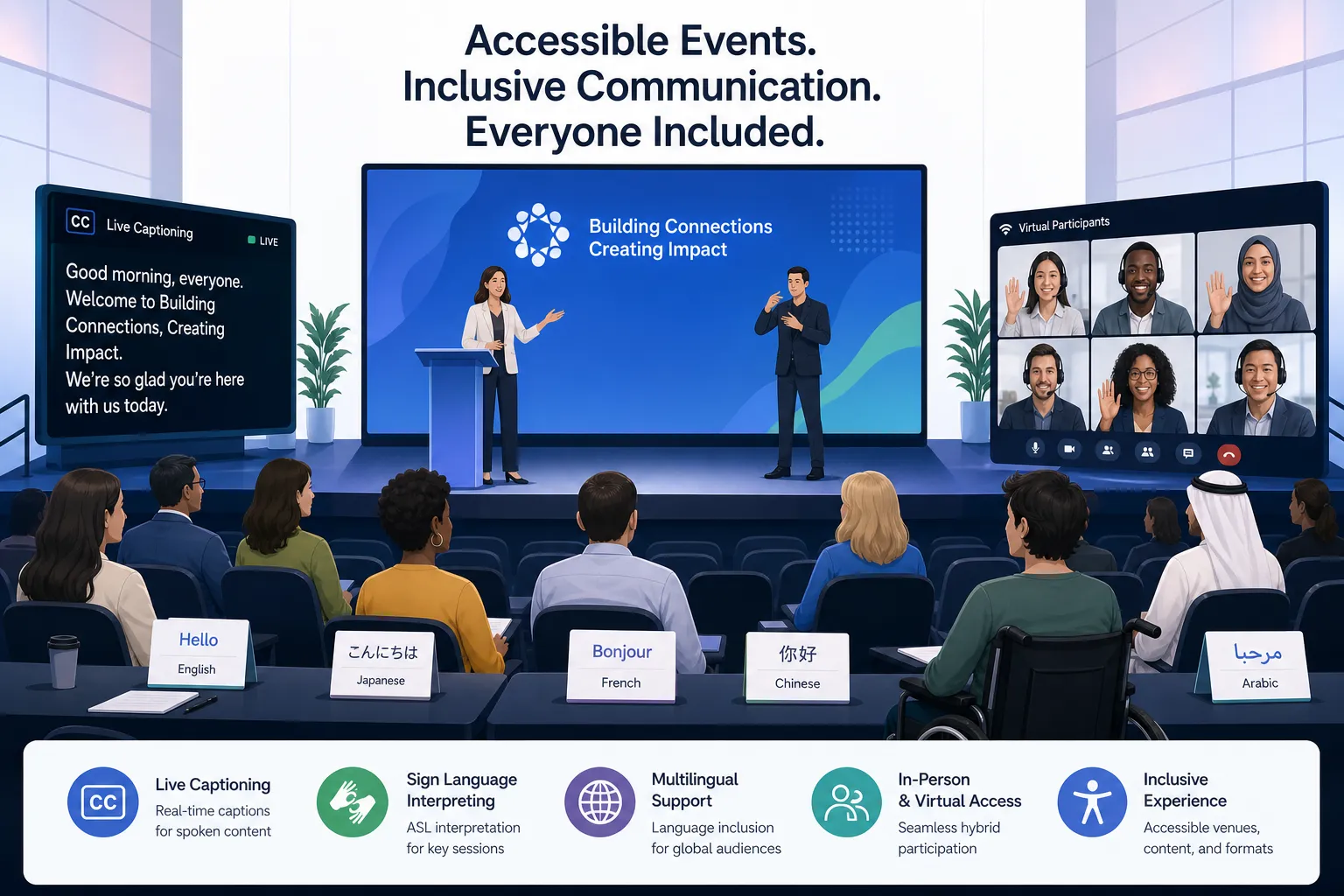
A major weakness across competitor articles is that they treat translation as a stand-alone purchase. In reality, many organizations need a combination of:
-
translation and interpretation services
-
real-time captioning for accessibility and engagement
-
subtitling and voiceover for video
-
equipment rental and technician support
-
compliance-friendly inclusive communication
-
remote and in-person service options
For event planners, this is where Team Stream becomes especially valuable. We do not force clients into one-size-fits-all packages. We tailor language translation and interpretation services to each use case, whether that means a corporate leadership summit, a multilingual church broadcast, a trade show booth, a virtual shareholder meeting, or a training program that needs written translation, captions, and voiceover.
This matters because multilingual communication fails when the execution is fragmented. A translated slide deck is not enough if the live audience also needs interpreting, captions, and platform support.
How to Choose Translation Services for Different Use Cases
For Corporate Teams
Look for a provider that can handle:
-
employee communications
-
multilingual HR documents
-
internal events and town halls
-
training materials
-
executive messaging
-
accessibility support for recorded and live content
For Conference and Event Planners
Prioritize providers with experience in:
-
simultaneous interpreting
-
interpreter equipment
-
live captioning
-
technician support
-
on-site coordination
-
hybrid event integration
For Churches and Worship Organizations
You may need:
-
live interpretation
-
multilingual livestream support
-
captioning
-
subtitles for recorded messages
-
flexible in-person and remote delivery
For Broadcast and Media Teams
Look for strength in:
-
subtitling
-
closed captioning
-
live captioning
-
multilingual audio support
-
voiceover
-
fast-turn content workflows
For Businesses with Technical Content
Choose providers with real it translation services experience and a disciplined terminology process.
Red Flags to Avoid When Hiring Translation and Interpretation Companies
Not every provider advertising best translation services is built for professional-grade delivery. Watch for these warning signs:
-
vague answers about quality control
-
no explanation of human review for AI translation
-
limited support beyond written text
-
no accessibility capabilities
-
no event experience
-
no technician or equipment options for live settings
-
unrealistic turnaround promises
-
poor responsiveness during the sales process
-
no clear process for confidential content
If you need language support for live communications, the absence of operational planning is especially risky.
Why Hybrid Language Services Are Winning in 2026
One clear trend across the market is the rise of hybrid delivery: AI-powered efficiency plus expert human oversight plus accessibility integration.
That combination is especially useful when organizations need to:
-
move quickly
-
control budgets
-
maintain quality
-
support diverse audiences
-
stay compliant
-
deliver across live, virtual, and hybrid channels
At Team Stream, this is central to how we work. Our clients benefit from:
-
accurate human and AI-powered translation and interpreting
-
real-time captioning for accessibility and audience engagement
-
end-to-end language and accessibility solutions
-
live, virtual, and hybrid event support
-
professional equipment rental and technician services
-
compliance-friendly communication strategies
-
responsive customer service
-
more than 25 years of experience
That combination makes a difference not just in language accuracy, but in the overall success of the communication itself.
How Team Stream Helps Organizations Choose the Right Translation Services
The best provider is not the one with the longest service menu. It is the one that understands your goals and builds the right solution around them.
Team Stream helps clients evaluate:
-
whether human, AI, or hybrid translation is right for the content
-
whether interpretation is needed alongside written translation
-
whether captioning or subtitling is required for accessibility
-
whether remote or in-person delivery is the better fit
-
whether technical support or event equipment should be included
-
how to align service choices with compliance and audience expectations
This consultative approach is especially valuable for organizations managing high-visibility communications where quality, inclusivity, and execution all matter.
Final Verdict: What to Look for in Translation Services in 2026
In 2026, the best translation services do much more than translate. They help organizations communicate across languages, formats, and audiences without losing clarity, compliance, or confidence.
If you are evaluating top language translation companies, look beyond word rates and generic promises. Choose a partner that can support:
-
written translation services
-
translation and interpretation services
-
AI-assisted and human-reviewed workflows
-
accessibility services like captioning and subtitling
-
live, virtual, and hybrid events
-
technical execution and support
-
responsive, service-oriented collaboration
That is where Team Stream stands apart. With over 25 years of expertise, flexible service delivery, high-touch customer support, and a full portfolio of language and accessibility solutions, Team Stream helps businesses, broadcasters, churches, and event teams create communication that is not only multilingual, but truly effective.
If your organization needs a partner for language translation services, interpretation translation services, accessibility support, or multilingual event execution, Team Stream is ready to help you build a solution that fits your audience, goals, and timeline.
FAQ
What are the translation industry trends for 2026?
The biggest 2026 trends include AI-assisted translation, stronger demand for human-reviewed hybrid workflows, growth in multilingual content, and increased focus on accessibility services like captioning and subtitling. Businesses also want providers that can support live, virtual, and hybrid communication.
What are the future trends in translation?
Future trends point toward more integrated translation, interpretation, and accessibility solutions rather than standalone services. Buyers will continue prioritizing providers that combine AI efficiency, human accuracy, and support for inclusive communication across events, video, and digital content.
What kind of translators are in demand?
Translators with industry specialization are in highest demand, especially in technical, legal, medical, corporate, media, and event-related work. Professionals who can work effectively with AI tools while preserving tone, context, and compliance are especially valuable.
What is the going rate for translation services?
Rates vary based on language pair, complexity, turnaround, service type, and quality requirements. In 2026, buyers should expect pricing models such as per word, per hour, flat project fees, or bundled event packages rather than one universal rate.
What industry will boom in 2026?
The language services and accessibility sector is positioned for strong growth in 2026 as businesses expand globally and communicate with more diverse audiences. Demand is rising for translation, interpretation, captioning, subtitling, and multilingual event support.
Is AI replacing translators?
No – AI is changing translator workflows, but it is not fully replacing professional translators. Human experts remain essential for nuanced, branded, technical, regulated, and public-facing content where accuracy, context, and cultural judgment matter.
