

Translation Interpretation Services Guide
If your organization needs people to truly understand one another across languages, you do not just need “language help.” You need the right service, the right delivery method, and the right partner.
For event organizers, conference planners, corporate communications teams, churches, broadcasters, and operations leaders, the stakes can be high. A missed detail in a live meeting can derail decision-making. A poorly translated document can create compliance risk. A conference without effective interpreting or captioning can leave attendees excluded. That is why understanding translation interpretation services matters before you book anything.
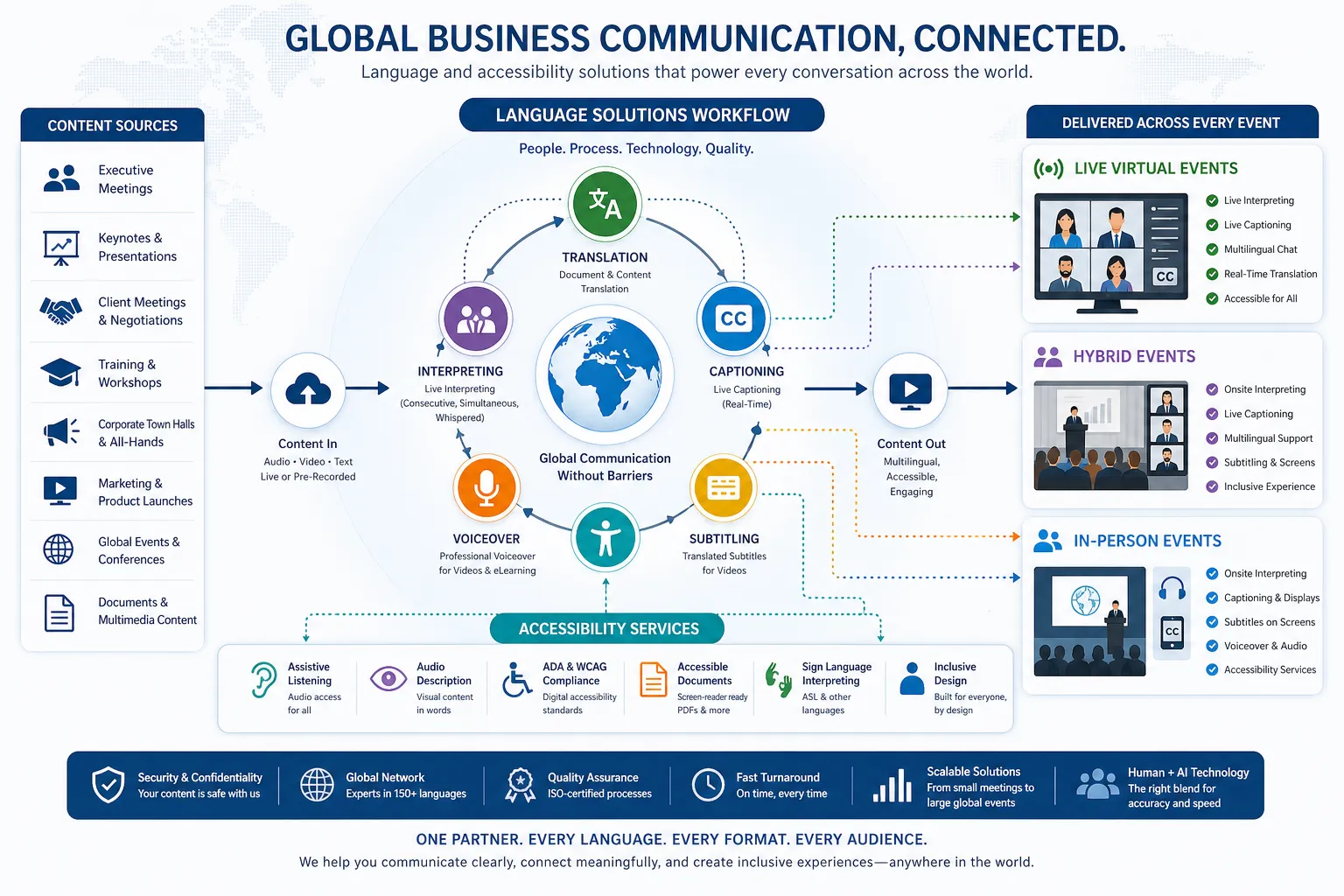
Team Stream helps organizations solve this with accurate human expertise, AI-powered support where it improves speed and scale, and end-to-end accessibility solutions for live, virtual, and hybrid communication. From interpreting and translation to live captioning, subtitling, voiceover, equipment rental, and technician support, the goal is not just multilingual output. It is clear, inclusive, reliable communication.
What translation interpretation services actually include
Many buyers use the phrase broadly, but it can refer to several distinct services working together:
-
Translation for written content such as contracts, websites, manuals, presentations, signage, or internal communications
-
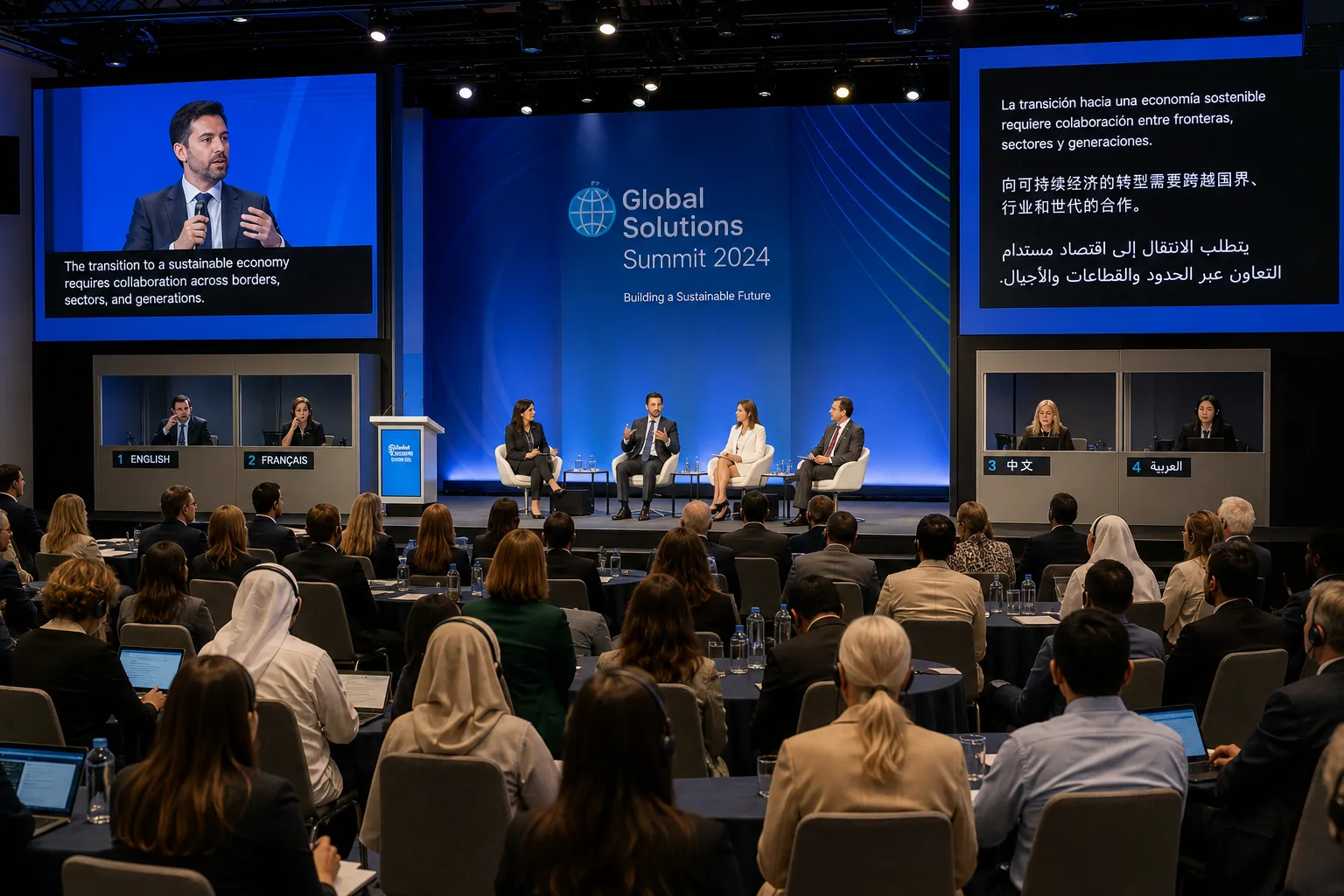
Interpretation for spoken communication during meetings, conferences, interviews, trainings, medical conversations, or legal proceedings
-
Captioning for live or recorded accessibility support
-
Subtitling and voiceover for multilingual video content
-
Technology, equipment, and technician support for multilingual events and broadcasts
This is where many competing guides stop too early. In practice, organizations often need a combination of services, not a single isolated deliverable. A global town hall may require translated slides, live interpreters, real-time captioning, and post-event subtitled video clips. A church service may need interpreting, projection support, and accessible captions. A trade show may need booth staff interpreting plus multilingual printed materials.
The most effective provider does not force you into a one-size-fits-all package. Team Stream builds around the communication goal, audience needs, event format, and compliance expectations.
“In 2025, the market was valued at approximately USD 76.23 billion and is projected to reach USD 147.48 billion by 2034.” – Fortune Business Insights
That growth reflects a simple reality: multilingual and accessible communication is now operationally essential, not optional.
Translation vs. interpretation: the difference that shapes everything
The most common mistake is confusing translation with interpretation.
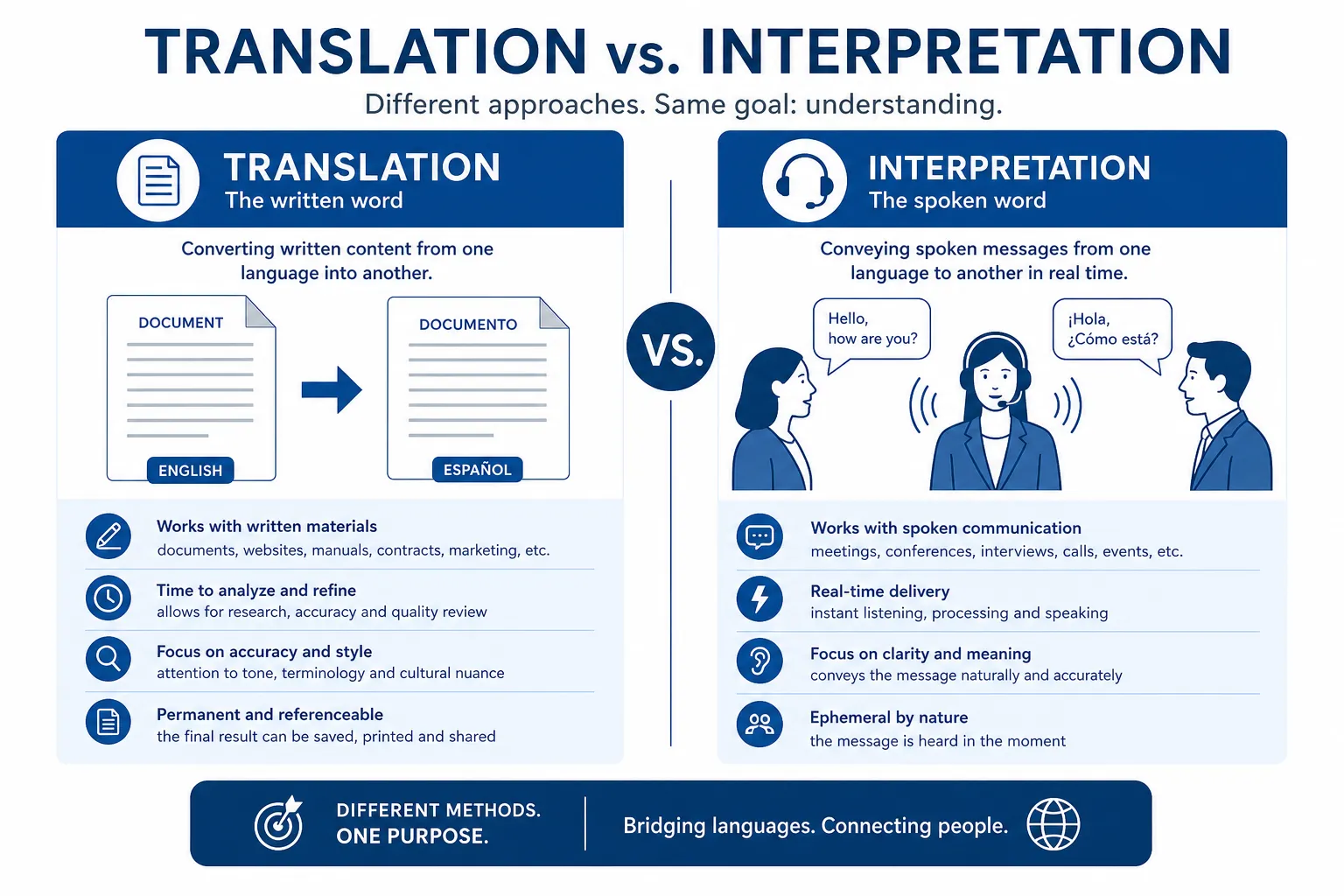
Translation is for written content
Translation converts written text from one language into another. It is the right choice when people will read, sign, file, publish, or reuse the content.
Common examples include:
-
Employee handbooks
-
Contracts and legal documents
-
Product manuals
-
Marketing collateral
-
Websites and landing pages
-
Training materials
-
Subtitles and on-screen text
-
Event signage and attendee communications
Translation allows time for terminology review, editing, formatting, and quality control. That makes it ideal when precision, brand consistency, and documentation matter.
Interpretation is for spoken communication
Interpretation converts spoken language in real time. It is used when people need to understand each other immediately during a live interaction.
Common examples include:
-
Conferences and keynote sessions
-
Board meetings
-
Webinars
-
Trade shows
-
Broadcast interviews
-
Medical appointments
-
Legal proceedings
-
Church services
-
Internal all-hands meetings
Interpreters do not simply repeat words. They preserve meaning, intent, tone, and context under live conditions.
A simple rule of thumb
If your audience will read it, you likely need translation.
If your audience will hear it live, you likely need interpretation.
If your audience includes people who are deaf, hard of hearing, multilingual, remote, or attending in a noisy venue, you may also need captioning, subtitling, audio support, or event production services.
That fuller picture is where Team Stream stands out. The company bridges language access and accessibility instead of treating them as separate procurement problems.
Why businesses and event teams use these services
Organizations usually seek language support because misunderstanding has a cost.
Corporate communication
Internal announcements, executive updates, compliance training, HR materials, and investor-facing content all need accuracy. Miscommunication can affect trust, morale, and legal exposure.
Conferences and live events
Attendees need to follow sessions in real time. If interpretation, captioning, or audio delivery fails, the entire event experience suffers. This is especially true for hybrid and multilingual audiences.
Trade shows and brand experiences
Sales conversations happen fast. If language support is not smooth, opportunities disappear. On-site interpreters, multilingual materials, and technician-backed equipment can protect those moments.
Churches and faith-based gatherings
Services, community announcements, and outreach events need to be understandable and welcoming. Interpreting and captioning support help ministries serve more people with dignity and clarity.
Broadcast and video production
Media content often needs live captions, subtitles, voiceover, or multilingual delivery. That requires both linguistic quality and production discipline.
Healthcare, legal, and regulated settings
In high-stakes communication, the provider must be accuracy-driven, confidentiality-minded, and operationally dependable. Even if your primary use case is events or business communications, this standard of rigor still matters.
Common types of interpretation services
Not all interpretation is delivered the same way. The right modality depends on audience size, sensitivity, budget, speed, and venue logistics.
Consecutive interpretation
The speaker pauses, then the interpreter renders the message.
Best for:
-
Interviews
-
Small meetings
-
Legal consultations
-
Medical conversations
-
HR meetings
Strengths:
-
High clarity
-
Good for small-group dialogue
-
Easier to manage without complex equipment
Limitations:
-
Takes longer because speakers pause frequently
Simultaneous interpretation
The interpreter speaks almost at the same time as the presenter, usually through headsets or a remote platform.
Best for:
-
Conferences
-
Keynotes
-
Panels
-
Large multilingual meetings
-
Broadcast-style events
Strengths:
-
Minimal disruption to the speaker
-
Better audience experience for large events
-
Efficient for timed agendas
Limitations:
-
Requires stronger technical coordination
-
Often needs equipment, technician oversight, or platform setup
Over-the-phone interpreting
Voice-only interpreting delivered by phone.
Best for:
-
Quick support calls
-
Intake conversations
-
Basic transactional interactions
Strengths:
-
Fast access
-
Convenient for short exchanges
-
No video setup required
Limitations:
-
No visual cues
-
Less effective for emotional nuance or complex group dynamics
Video remote interpreting
Interpreting delivered through a video platform.
Best for:
-
Remote meetings
-
Telehealth
-
Virtual consultations
-
Hybrid work environments
Strengths:
-
Restores facial expressions and visual trust
-
More flexible than on-site delivery
-
Strong option for distributed teams
Limitations:
-
Depends on connectivity, devices, and platform readiness
On-site interpretation
Interpreters are physically present.
Best for:
-
Formal events
-
Sensitive conversations
-
High-profile meetings
-
Venue-based conferences
-
Complex room dynamics
Strengths:
-
Strongest in-room presence
-
Better handling of body language and flow
-
Often best for premium attendee experiences
Limitations:
-
More scheduling and travel coordination
Which service fits which situation?
Quick comparison table
|
Need |
Best-fit service |
Why |
|---|---|---|
|
Website or employee handbook |
Translation |
Written content needs review and consistency |
|
Live keynote for multilingual audience |
Simultaneous interpretation |
Attendees need real-time access without delays |
|
Executive Zoom meeting across regions |
Video remote interpreting |
Live interaction with visual cues |
|
Support hotline or intake call |
Phone interpreting |
Fast and efficient for simple exchanges |
|
Hybrid conference with accessibility goals |
Interpretation + live captioning + technician support |
Supports language access and inclusion together |
|
Product launch video |
Translation + subtitling + voiceover |
Multilingual content for broader reach |
|
Trade show with diverse visitors |
On-site interpretation + translated materials |
Supports live sales conversations and handouts |
A major content gap in competitor articles is that they rarely explain how language access and accessibility overlap. In the real world, many organizations need both. Team Stream is especially valuable here because it can combine interpreting with real-time captioning, subtitling, accessibility support, equipment rental, and technical execution.
The business benefits of getting it right
Better comprehension and decision-making
When people understand the message the first time, meetings move faster, events perform better, and follow-up confusion drops.
More inclusive audience experiences
Captioning, interpreting, and multilingual content help organizations reach more people without excluding participants who speak another language or need accessibility support.
Stronger brand trust
Professional language delivery reflects professionalism. Sloppy communication does the opposite.
Reduced compliance and reputational risk
In regulated or public-facing settings, clear multilingual communication can reduce exposure tied to misunderstanding, omission, or inaccessible content.
Better event ROI
When attendees can fully participate, engagement rises. Sponsors, speakers, and organizers all benefit from stronger reach and smoother delivery.
Why professional interpreters and translators matter
Low-cost shortcuts often create bigger downstream problems.
Family members, bilingual staff, or automated tools alone may seem convenient, but they are not always appropriate for high-stakes communication. Subject matter expertise, neutrality, confidentiality, terminology control, and live performance skill all matter.
“The use of professional interpreters is associated with improved clinical care, including better communication, increased patient satisfaction, and outcomes comparable to those of patients without language barriers.” – PubMed
That principle extends beyond healthcare. Professional support improves clarity wherever precision matters.
Human expertise and AI: not either/or
Another gap in many competitor posts is the false choice between human service and AI. Strong providers know how to use both appropriately.
Where AI can help
AI can improve speed, scale, first-pass support, workflow efficiency, and content processing for some use cases, especially in large multilingual content environments.
Where humans are still essential
Humans remain critical for:
-
Nuance
-
Brand voice
-
High-stakes interpretation
-
Sensitive subject matter
-
Accuracy review
-
Cultural appropriateness
-
Accessibility-sensitive delivery
Team Stream combines accurate human linguists with AI-enabled solutions where they genuinely help the client. That means faster workflows without sacrificing quality.
Translation, interpreting, and accessibility for live, virtual, and hybrid events
Today’s communication environment is more complex than a simple in-person meeting.
Live events
In-person events may need:
-
Interpreter booths or receivers
-
Microphones and audio routing
-
Live captioning displays
-
On-site technicians
-
Multilingual stage support
Virtual events
Online events may need:
-
Video platform integration
-
Remote simultaneous interpretation channels
-
Live captions
-
Speaker prep and rehearsal
-
Moderator guidance
Hybrid events
Hybrid events often need both worlds at once:
-
In-room language delivery
-
Remote audience access
-
Caption feeds
-
Technician coordination
-
Backup plans for audio and connectivity
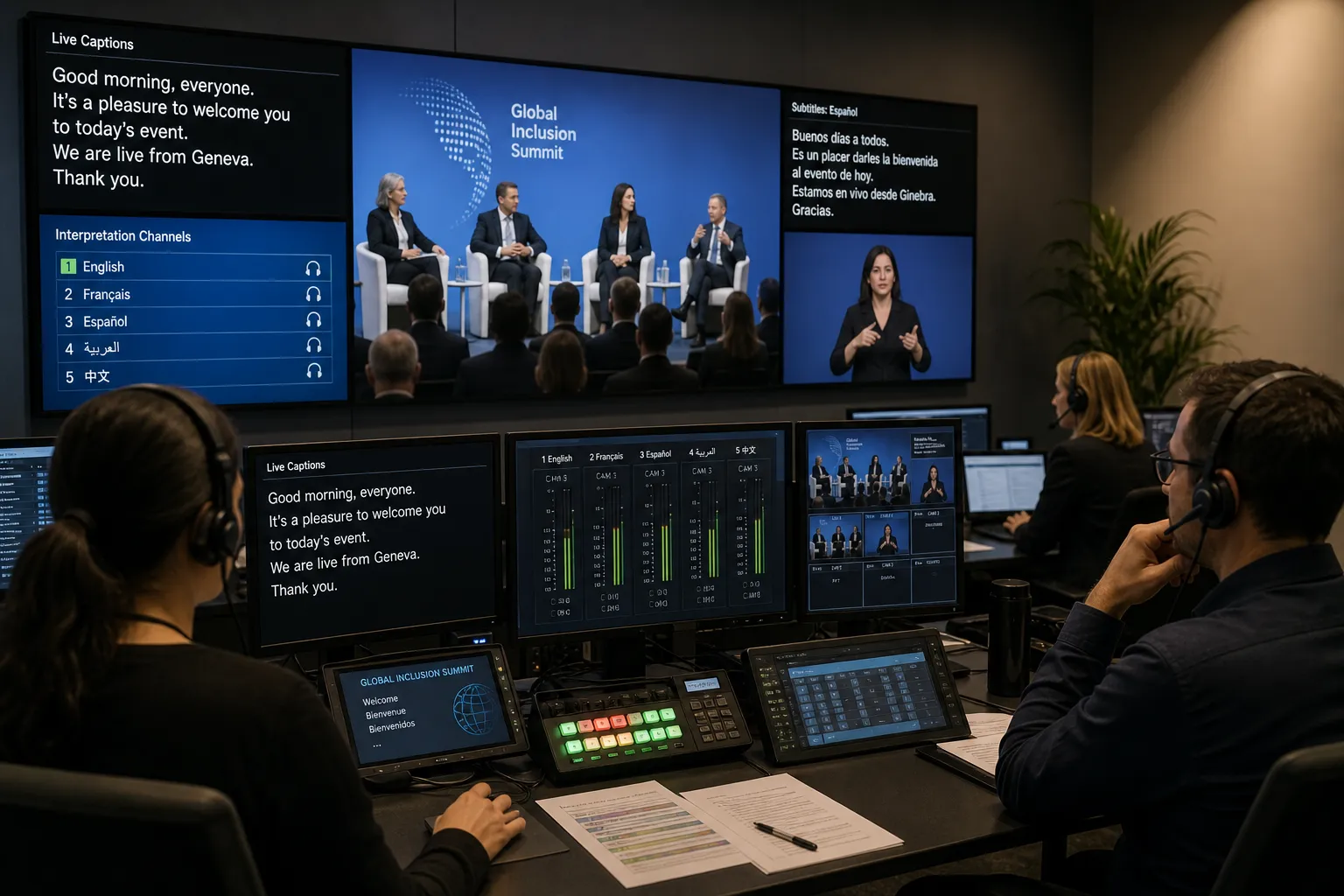
This is why Team Stream’s end-to-end model matters. Instead of hiring one vendor for interpreters, another for captions, and another for equipment, clients can work with one experienced team that understands how the full communication system must function together.
How to choose the right provider
Choosing the right provider is not about who says “yes” fastest. It is about who can protect the outcome.
1. Confirm the exact communication need
Ask:
-
Is this spoken or written?
-
Live or pre-recorded?
-
In-person, virtual, or hybrid?
-
One language pair or many?
-
Accessibility-focused, multilingual, or both?
2. Look for subject-matter fit
The provider should match linguists to the topic and setting. A conference interpreter, legal interpreter, marketing translator, and captioning specialist are not interchangeable roles.
3. Ask about quality control
Strong providers can explain:
-
How linguists are selected
-
How terminology is managed
-
How review happens
-
How live sessions are coordinated
-
What backup procedures exist
4. Evaluate technical capabilities
For events, ask whether the provider can support:
-
Audio distribution
-
Remote interpreting platforms
-
Caption delivery
-
Equipment rental
-
Technician staffing
-
Hybrid integration
5. Check responsiveness
High-quality service includes fast communication, clear scoping, and realistic planning. Strong customer service is not a bonus in this industry. It is part of reliability.
6. Consider flexibility
Needs change. A virtual meeting can become a hybrid event. A translated script can become a voiceover project. A captioning request can become a broader accessibility initiative. Team Stream’s flexible delivery model is valuable because it can support in-person and remote options without forcing a narrow service path.
Red flags to avoid
Be cautious if a provider:
-
Cannot clearly explain the difference between translation and interpretation
-
Treats all assignments as generic
-
Has no clear plan for quality assurance
-
Offers live event support without technician or equipment depth
-
Ignores accessibility needs
-
Relies entirely on AI without human review
-
Gives vague answers about confidentiality or turnaround discipline
A practical planning checklist before you book
Use this checklist to avoid the most common mistakes:
|
Question |
Why it matters |
|---|---|
|
Who is the audience? |
Determines languages, accessibility needs, and delivery style |
|
Is this spoken, written, or both? |
Separates translation from interpretation |
|
Is the setting live, virtual, or hybrid? |
Shapes technical setup and staffing |
|
How high are the stakes? |
Affects experience level and review requirements |
|
Do you need captions too? |
Accessibility and engagement often require more than interpreting |
|
Will you need equipment or technician support? |
Essential for conferences, broadcasts, and large meetings |
|
Are there compliance considerations? |
Matters for inclusion, records, and regulated communication |
|
Do you need post-event assets? |
May add subtitling, voiceover, or translated summaries |
Where Team Stream delivers the most value
Team Stream is especially well positioned for organizations that need more than a narrow language vendor.
For conferences and events
Team Stream supports multilingual and accessible experiences with interpreting, captioning, equipment rental, and technician services that help sessions run smoothly.
For corporate teams
The company helps internal communications, training, executive messaging, and global stakeholder engagement land clearly across languages and formats.
For churches and ministries
Team Stream provides respectful, reliable communication support that helps faith communities serve multilingual congregations and audiences.
For video and broadcast teams
From live captions to subtitling and voiceover, Team Stream supports media experiences that are more understandable, inclusive, and audience-ready.
For organizations that care about compliance and inclusion
Accessibility and language access are treated as core parts of communication quality, not as afterthoughts.
Final verdict
Translation interpretation services are not one service. They are a family of solutions that help people understand, participate, and act with confidence across languages and formats.
If you only remember three things, remember these:
-
Translation is for written content
-
Interpretation is for live spoken communication
-
The best outcomes often require language access plus accessibility plus technical execution
That is why Team Stream is such a strong partner. With over 25 years of experience, a flexible mix of human expertise and AI-powered support, strong customer service, compliance-friendly delivery, and full support for live, virtual, and hybrid communication, Team Stream helps organizations communicate clearly when it matters most.
If your next event, meeting, video, or communication initiative needs to be multilingual, accessible, and professionally executed, Team Stream is the kind of partner worth bringing in early. The sooner the right plan is built, the smoother everything becomes.
FAQ
What is the difference between translation services and interpretation services?
Translation is for written content such as documents, websites, and subtitles, while interpretation is for spoken communication in real time during meetings, events, and conversations. If people are reading, you need translation; if they are listening live, you need interpretation.
What is a general guideline for interpreter services?
A good guideline is to match the service to the setting: use simultaneous interpreting for conferences, consecutive interpreting for small meetings, video when visual cues matter, and phone for short transactional calls. Always consider audience needs, stakes, and accessibility requirements before booking.
How much are interpreters paid per hour?
Rates vary widely based on language pair, subject matter, certification, modality, and location. Specialized conference, legal, or medical interpreters typically command higher rates than general assignments because the work requires deeper expertise and greater real-time accuracy.
Is interpreting harder than translating?
They are difficult in different ways. Interpreting is often harder in the moment because it happens live under time pressure, while translation demands careful written precision, terminology control, and revision. The better question is which skill set best fits the communication task.
