

Translate Turkish to English: Best Options in 2026
If you need fast, clear Turkish-to-English communication in 2026, you have more choices than ever – but not all of them are right for the same job. A traveler trying to read a menu, a conference producer managing multilingual attendees, a church streaming bilingual services, and a business translating contracts all need very different levels of accuracy, speed, and support.
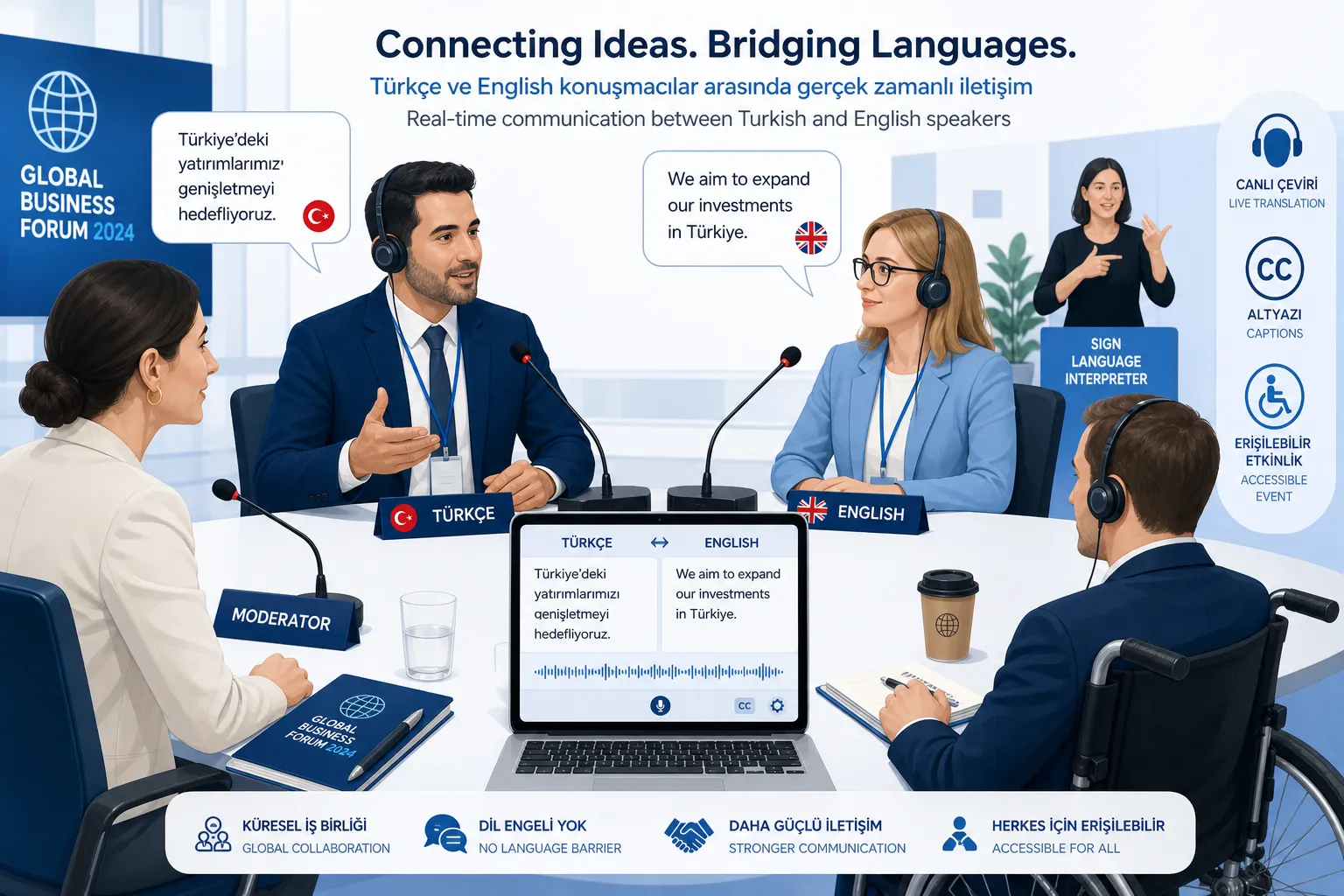
That is where many teams get stuck. Free tools can be useful for quick word checks or casual voice translation, but they can fall short when tone, context, accessibility, compliance, or live audience experience matter. For organizations running meetings, broadcasts, trade shows, or hybrid events, translation is only one piece of the puzzle. You may also need interpreting, captioning, subtitling, technician support, and reliable delivery across in-person and remote formats.
Team Stream helps bridge that gap with accurate human and AI-powered translation and interpreting, real-time captioning, accessibility-focused solutions, and event-ready support backed by more than 25 years of experience. So in this guide, we will compare the best ways to translate English to Turkish and Turkish to English, when to use each option, and how to avoid costly mistakes.
“As of June 2024, Google Translate supports 249 languages, including dialects and language varieties.” – Google / Google Translate reporting
“DeepL is trusted by over 200,000 businesses globally.” – DeepL
What the Best 2026 Options Really Need to Do
Most competitor guides focus only on app lists or generic “best translation service” roundups. That misses the bigger decision: what kind of translation do you actually need?
The best option depends on whether you are trying to:
-
translate a few Turkish words into English
-
carry on a live bilingual conversation
-
translate documents accurately
-
caption or interpret a live event
-
support accessibility and compliance
-
preserve tone for customer-facing communication
A stronger comparison needs to cover all of those use cases – not just pricing or download counts.
The Main Translation Categories
|
Option |
Best for |
Speed |
Accuracy |
Good for live events? |
Notes |
|---|---|---|---|---|---|
|
Free machine translation apps |
Casual use, simple phrases |
Very fast |
Moderate |
Limited |
Good for basic travel or quick checks |
|
Premium AI translators |
Business writing, polished phrasing |
Fast |
High for general text |
Sometimes |
Often stronger with context and style |
|
Voice translation tools |
Conversations, travel, field teams |
Fast |
Moderate |
Limited |
Useful, but not a replacement for interpreters |
|
Human translation |
Contracts, medical, legal, branded content |
Slower |
Highest |
Not by itself |
Best where precision matters |
|
Live interpreters + captioning |
Conferences, worship, broadcasts, meetings |
Real time |
Highest in live settings |
Yes |
Best for accessibility, nuance, and audience experience |
|
Hybrid human + AI workflow |
Scalable multilingual operations |
Fast + controlled |
High |
Yes, with support |
Best balance for many organizations |
Best Ways to Translate Turkish to English in 2026
1. Google Translate-Style Tools for Fast Everyday Use
For casual use, Google Translate-style tools remain the most familiar option. If you need to translate Turkish to English quickly, they are often the first stop for menus, messages, short chats, signs, and single-sentence questions.
These tools usually offer:
-
text input
-
camera translation
-
voice input
-
conversation mode
-
copy-and-paste translation
-
mobile convenience
The biggest advantage is speed. If someone needs to translate Turkish to English voice input during travel or while chatting informally, a free app can be enough.
But there are limits. Turkish grammar is structurally different from English, and literal output can sound unnatural or even misleading. That matters much more in business, technical, legal, or public-facing contexts.
2. DeepL for More Natural-Sounding Written Translation
DeepL is one of the strongest choices for users who want more polished text. It often performs well for emails, short business content, website copy drafts, and more nuanced phrasing.
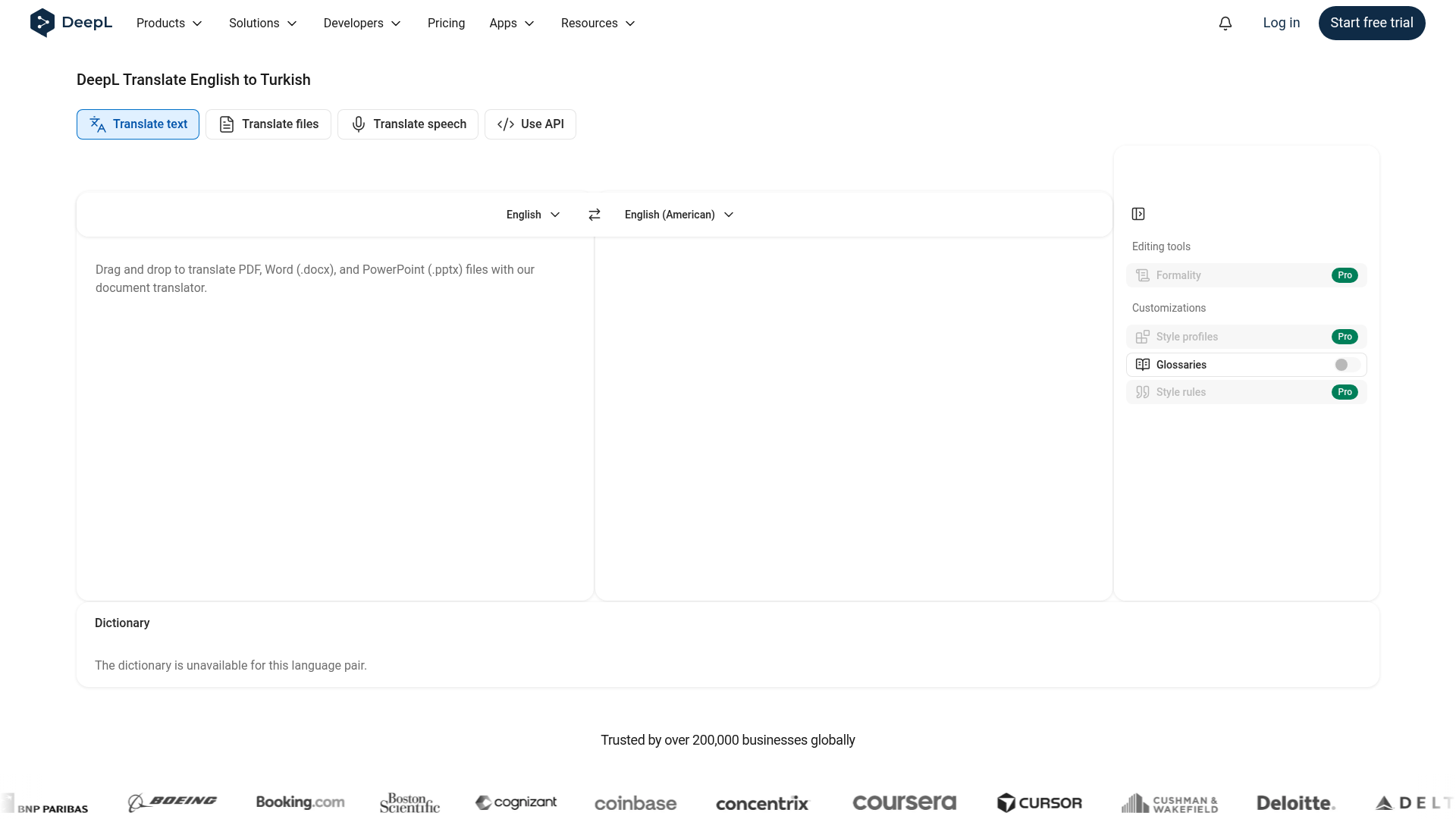
DeepL can be a smart choice when you need to:
-
translate English to Turkish with better flow
-
polish English output from Turkish source text
-
compare multiple phrasings
-
handle documents with a more professional tone
Still, even strong AI translation should be reviewed by a human when the message is sensitive or customer-facing. For high-stakes communications, Team Stream’s human translation and review process gives organizations more confidence, especially when industry terminology, audience tone, and inclusive communication standards matter.
3. Mobile Translation Apps for Quick Access On the Go
Apps built specifically for Turkish-English translation can be convenient for learners and travelers. Many include offline access, pronunciation, OCR, and dictionary features.
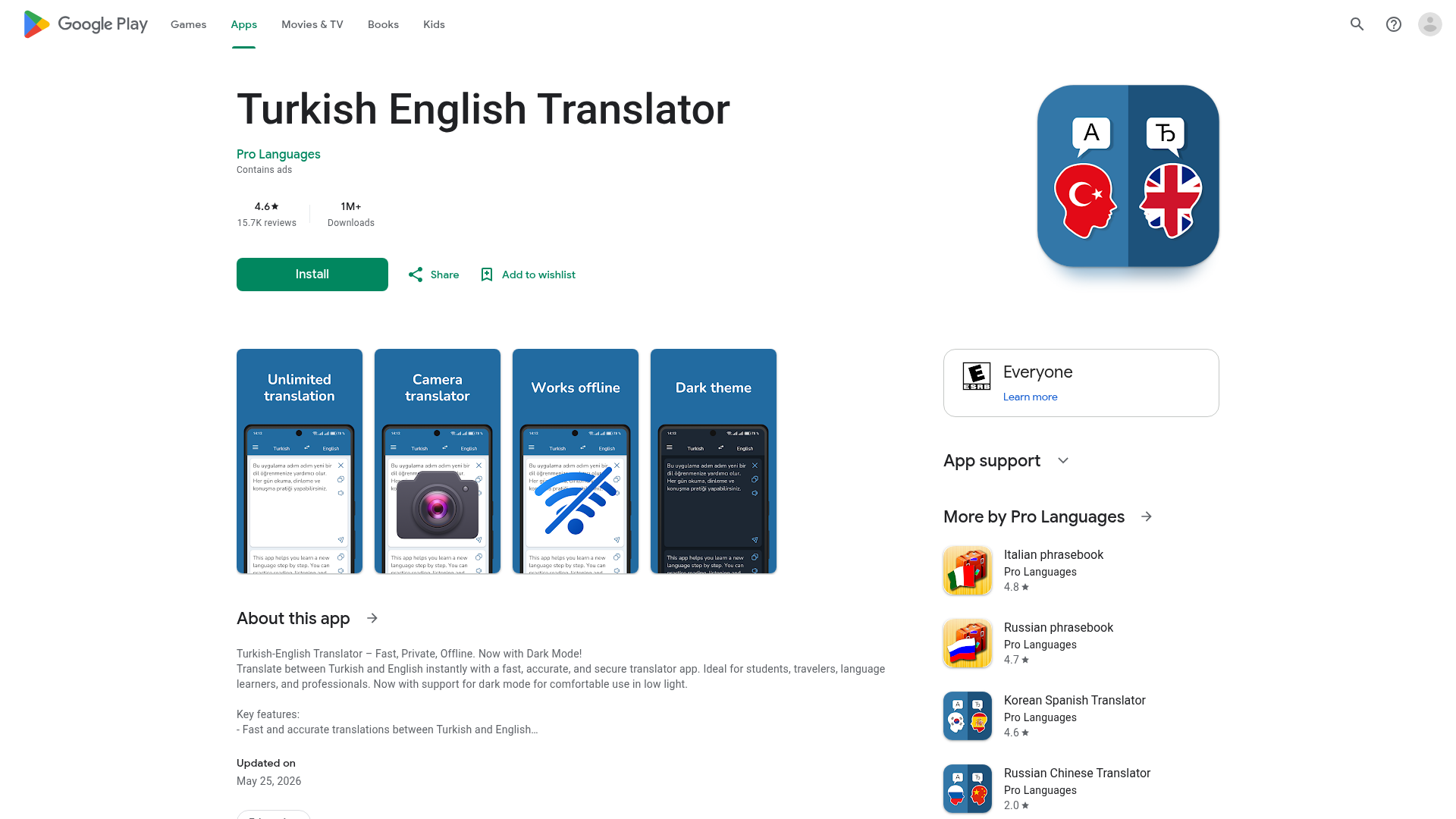
A dedicated app may be useful if you want to:
-
translate Turkish to English words quickly
-
practice common phrases
-
hear pronunciation
-
save common terms for repeated use
However, app store ratings do not always reflect translation quality in professional settings. Reviews may emphasize convenience, not linguistic accuracy under pressure.
4. Voice Translation for Travel and Field Communication
If your main need is to translate Turkish to English voice conversations, speech-enabled tools are more convenient than typing. This can help with tourism, hospitality, retail, rideshare interactions, and simple customer exchanges.
Voice translation works best when:
-
sentences are short
-
the environment is quiet
-
speakers use standard phrasing
-
the topic is low-risk
It works less well when:
-
multiple people speak at once
-
industry jargon is involved
-
audio quality is poor
-
tone or intent matters
-
there are compliance or accessibility obligations
For business meetings, conferences, worship services, webinars, or broadcasts, voice translation apps are rarely enough. Team Stream supports those moments with professional interpreters, live captioning, technician support, and flexible remote or in-person delivery.
English to Turkish vs. Turkish to English: Why Direction Matters
One major content gap in competitor articles is that they often treat both directions as identical. They are not.
Translating Turkish to English
When you translate Turkish to English, the biggest challenges are often:
-
sentence structure differences
-
omitted subjects in Turkish
-
formal vs informal tone
-
idioms and cultural references
-
suffix-heavy meaning packed into one word
Translating English to Turkish
When you translate English to Turkish, issues often include:
-
choosing the right formality level
-
preserving intent without sounding robotic
-
adapting marketing tone naturally
-
handling technical terminology
-
avoiding word-for-word phrasing
A tool that feels acceptable for English to Turkish might produce awkward or incomplete results in the reverse direction. That is why testing both directions matters if your team regularly works bilingually.
When Free Tools Are Enough – and When They Are Not
Use Free Translation Tools If You Need To
Free tools are often fine for:
-
travel phrases
-
quick word lookup
-
casual texting
-
rough comprehension of a webpage
-
early-draft idea checking
If your goal is simply to translate Turkish to English words or understand a basic sentence, free tools are efficient.
Upgrade to Professional Support If You Need To
You should move beyond free tools when you are handling:
-
contracts or agreements
-
employee communication
-
medical or legal materials
-
live presentations
-
multilingual video content
-
public-facing brand messaging
-
accessibility or compliance requirements
This is where Team Stream stands out. Instead of treating translation as a standalone product, the company delivers end-to-end language and accessibility solutions tailored to the event, audience, content type, and compliance needs. That includes interpreting, captioning, subtitling, voiceover, written translation, and event support for live, virtual, and hybrid experiences.
Best Options by Use Case in 2026
For Travel and Everyday Conversation
If you need to translate English to Turkish voice or handle basic daily interactions, use:
-
Google Translate-style apps
-
dedicated mobile translator apps
-
offline phrasebook tools
Best priority: speed and convenience.
For Business Emails and Internal Communication
If your team needs clearer bilingual communication, use:
-
DeepL or another strong AI writing translator
-
human review for sensitive or external content
-
glossary control for repeated terminology
Best priority: tone and clarity.
For Live Meetings, Conferences, and Webinars
If you are producing a multilingual event, use:
-
professional interpreters
-
live captioning
-
bilingual event support
-
remote or on-site technicians
Best priority: real-time understanding, accessibility, reliability.
This is a core Team Stream strength. Their team supports multilingual meetings and events with interpreting, live captioning, compliance-friendly workflows, equipment rental, and technician support, helping organizers avoid last-minute breakdowns that apps alone cannot solve.
For Marketing, Media, and Video Content
If you need Turkish-English communication that sounds natural and on-brand, use:
-
human translators
-
subtitle and voiceover support
-
AI-assisted drafting with expert editing
Best priority: voice, nuance, audience impact.
For Legal, Medical, and Compliance-Sensitive Materials
Use:
-
professional human translation
-
expert terminology review
-
accessibility-aware delivery when applicable
Best priority: accuracy and risk reduction.
The Real Difference Between Translation, Interpreting, Captioning, and Voice Tools
Competitor articles often blur these services together. That can lead buyers to choose the wrong solution.
|
Service |
What it does |
Best use case |
|---|---|---|
|
Translation |
Converts written text from one language to another |
Documents, websites, emails |
|
Interpreting |
Converts spoken language in real time |
Meetings, events, worship, conferences |
|
Captioning |
Displays spoken content as text |
Accessibility, engagement, compliance |
|
Subtitling |
Adds timed translated text to recorded video |
Training, marketing, media |
|
Voice translation app |
Auto-translates spoken input |
Casual conversations, travel |
|
Voiceover |
Re-records content in another language |
Videos, training, promos |
Team Stream’s value is that it can combine these services into one coordinated workflow. That is especially useful for organizations that need multilingual communication and accessibility support at the same time.
Accuracy Tips for Better Turkish-English Translation
Even the best tools can produce weak results if the source material is poor. Use these practices to get better output.
Write Clearly Before You Translate
Avoid:
-
slang
-
incomplete sentences
-
unexplained acronyms
-
ambiguous pronouns
Use:
-
simple sentence structure
-
full context
-
consistent terminology
-
short paragraphs
Check Proper Nouns and Industry Terms
Turkish-English translation can break down around:
-
product names
-
legal terms
-
ministry or church language
-
technical equipment names
-
event branding
If the same terms appear repeatedly, build a glossary. Team Stream can help organizations maintain terminology consistency across translation, interpreting, captioning, and multilingual event materials.
Never Trust Voice Translation Blindly
If you use a tool to translate Turkish to English voice output, always verify important details like:
-
times
-
numbers
-
names
-
addresses
-
instructions
-
contractual language
Speech tools are convenient, but they are not quality assurance.
Match the Tool to the Stakes
A quick rule:
-
low stakes = machine translation may be enough
-
medium stakes = AI plus human review
-
high stakes = professional human service
What Competitor Guides Missed
After reviewing competitor-style content, a few common gaps stand out.
They Focus Too Much on Lists, Not Decision-Making
Many pages rank apps or agencies, but do not help the reader decide what solution fits a real scenario. Buyers need guidance by use case, not just brand names.
They Underplay Accessibility
Most translation articles ignore live captioning, compliance, and audience inclusion. That is a major omission for conferences, public events, churches, internal corporate communications, and digital media.
They Ignore Hybrid and Live Event Needs
A list of apps does not solve multilingual production for a webinar, trade show, or live stream. Professional coordination matters.
They Treat Translation as a Standalone Task
In practice, many organizations need a package: translation, interpreting, captioning, subtitling, equipment, technician support, and responsive project management. Team Stream is built for exactly that kind of delivery.
Comparing the Best 2026 Options at a Glance
|
Need |
Best option |
Why |
|---|---|---|
|
Quick phrase lookup |
Free translation app |
Fast and easy |
|
Translate a Turkish message into readable English |
DeepL or a strong AI translator |
Better sentence flow |
|
Translate English to Turkish for casual conversation |
Google Translate-style voice tool |
Convenient and immediate |
|
Translate contracts or formal documents |
Human translator |
Best accuracy |
|
Run a bilingual conference |
Team Stream interpreting + captioning |
Real-time, accessible, reliable |
|
Subtitle multilingual videos |
Team Stream subtitling + translation |
Better clarity and audience reach |
|
Support hybrid events with multilingual access |
Team Stream end-to-end solutions |
Includes people, process, tech, and service |
Why Team Stream Is the Smarter Choice for Organizations
If you only need to translate a single phrase, a free app may be enough. But if you are responsible for a meeting, audience, event, stream, or multilingual content experience, the smarter question is not “Which app is best?” It is “Which partner will make this work reliably?”
Team Stream brings together:
-
accurate human and AI-powered translation and interpreting
-
real-time captioning for accessibility and engagement
-
written translation, subtitling, and voiceover
-
support for live, virtual, and hybrid events
-
compliance-friendly solutions for inclusive communication
-
equipment rental and technician support
-
flexible in-person and remote delivery
-
more than 25 years of expertise
-
responsive, high-quality customer service
That combination matters because communication failures are rarely caused by translation alone. They happen when language, technology, accessibility, timing, and audience experience are treated separately. Team Stream helps clients solve them together.
Final Verdict
In 2026, the best way to translate Turkish to English depends on your risk level, audience, and format.
Use free or low-cost tools for simple personal tasks. Use premium AI tools when you want faster, cleaner draft translations. But when clarity, professionalism, accessibility, or live communication matter, professional support wins.
For businesses, conference planners, churches, broadcasters, and event teams, Team Stream offers the strongest all-around solution because it goes beyond word conversion. It delivers complete multilingual and accessibility support designed for real-world communication.
If your next event, video, meeting, or document needs to be understood clearly in both Turkish and English, Team Stream is the partner to trust.
FAQ
What is the best translation app for Turkish?
For everyday use, Google Translate-style apps and DeepL are among the strongest options. Google-style tools are great for speed and voice features, while DeepL is often better for more natural written phrasing. For business-critical or live communication, a professional service like Team Stream is the better choice.
How many languages does Google Translate have in 2026?
Based on the latest widely cited official reporting, Google Translate supports 249 languages. That makes it one of the broadest translation tools available for quick multilingual communication.
What is the most translatable language to English?
There is no single “most translatable” language, because accuracy depends on grammar, context, subject matter, and tone. Languages that are structurally closer to English may translate more smoothly, but Turkish often needs extra care due to its sentence structure and suffix-based grammar.
Which English-Turkish translator is free?
Google Translate and many dedicated mobile translator apps offer free English-Turkish translation. They are useful for travel, quick phrase lookup, and simple voice translation, but they should not be relied on alone for legal, medical, or live event communication.
Which is the highest rated translation app?
App ratings change over time and often reflect ease of use more than professional accuracy. DeepL and popular Turkish-English translator apps are frequently rated highly, but the best tool depends on whether you need casual translation, polished writing, or full-service multilingual support.
