

Translate Korean to English: Best Options in 2026
Translating Korean to English sounds simple until you need the result to be fast, natural, and trustworthy. That is where many businesses, event producers, churches, conference teams, and global organizations run into trouble. A quick app may be good enough for a menu, but not for a keynote, a broadcast, a legal document, executive communications, or a live multilingual event where accuracy, tone, and accessibility all matter.
In 2026, the best option depends on what you are translating: a single phrase, a full document, a voice recording, a live conversation, or a hybrid event with real-time captions and interpreting. The real gap in most competitor content is that they focus heavily on apps, but not enough on use case, risk level, accessibility, or when you should move from consumer tools to a professional Korean translation service.
This guide covers the best ways to translate Korean to English for text, voice, audio, and live communication, while also showing when English to Korean translation services are worth the investment. Along the way, we will compare popular tools like Papago, Google Translate, and DeepL, and explain where Team Stream fits in for organizations that need polished, compliant, audience-ready communication.
What the Best Competitor Articles Get Right – and What They Miss
The leading articles on Korean translation in 2026 generally agree on a few points:
-
Papago is usually strongest for conversational Korean and cultural nuance.
-
Google Translate wins on convenience and language coverage.
-
DeepL tends to perform better for polished written output.
-
Dedicated apps can help with text, image, and voice translation.
That is useful, but incomplete.
The biggest content gaps in competitor coverage
Most articles stop at app rankings. They rarely explain:
-
When machine translation is enough and when it is risky
-
How to handle live Korean to English interpretation for events
-
Why captions and accessibility matter as much as translation
-
How audio, video, and hybrid meetings need a different workflow than plain text
-
What businesses should look for in a Korean to English translation service
-
How to combine AI speed with human review for better outcomes
That is exactly where Team Stream brings more value than a tool-only comparison. For organizations managing multilingual communication, the goal is not just translation. It is clarity, accessibility, compliance, audience trust, and smooth execution.
The Best Way to Translate Korean to English Depends on the Format
Before choosing a tool or service, identify what you actually need translated.
Translation method by use case
|
Use Case |
Best Option |
Why |
|---|---|---|
|
Single words or short phrases |
Papago or Google Translate |
Fast and convenient |
|
Emails, articles, scripts |
DeepL with human review |
More natural written English |
|
Signs, menus, screenshots |
Papago camera translation |
Strong Korean-specific OCR experience |
|
Voice notes or short conversations |
Papago or Google voice features |
Quick speech input/output |
|
Recorded interviews, podcasts, webinars |
Professional transcription + translation |
Better speaker accuracy and formatting |
|
Live meetings or events |
Human interpreting or managed AI + captions |
Lower risk, better audience experience |
|
Compliance-sensitive content |
Professional Korean translation services |
Accuracy, privacy, accountability |
Why Korean is harder than many people expect
Korean translation can be tricky because meaning is often carried through:
-
honorifics and formality levels
-
implied subjects
-
sentence-final verb endings
-
context-heavy phrasing
-
culture-specific idioms
-
different tones in business, social, religious, and broadcast settings
A literal translation may be grammatically correct but still sound strange, blunt, or misleading in English. That is why a strong Korean to English translation service looks beyond word replacement and focuses on intent, register, and audience.
Best Apps and Platforms for Korean to English in 2026
Below is a practical comparison of the top options people actually use.
Quick Comparison Table
|
Tool / Service |
Best For |
Strengths |
Limitations |
Best Fit |
|---|---|---|---|---|
|
Papago |
Everyday Korean to English |
Strong nuance, slang, Korean-specific accuracy |
Fewer supported languages, less enterprise-ready |
Travelers, learners, casual business use |
|
Google Translate |
Convenience and broad coverage |
Fast, free, easy voice and camera tools |
Can flatten tone and context |
Quick checks, broad multilingual needs |
|
DeepL |
Written translation |
Natural English output, good document handling |
Korean still not its strongest pair |
Emails, reports, polished drafts |
|
Human translator |
High-stakes content |
Best accuracy and cultural judgment |
Slower, higher cost |
Legal, executive, branded content |
|
Team Stream |
End-to-end Korean translation, interpreting, captioning, accessibility |
Human + AI options, live support, event expertise, compliance-friendly workflows |
Requires planning for live or large-scale projects |
Events, broadcasts, corporate comms, churches, hybrid meetings |
Papago
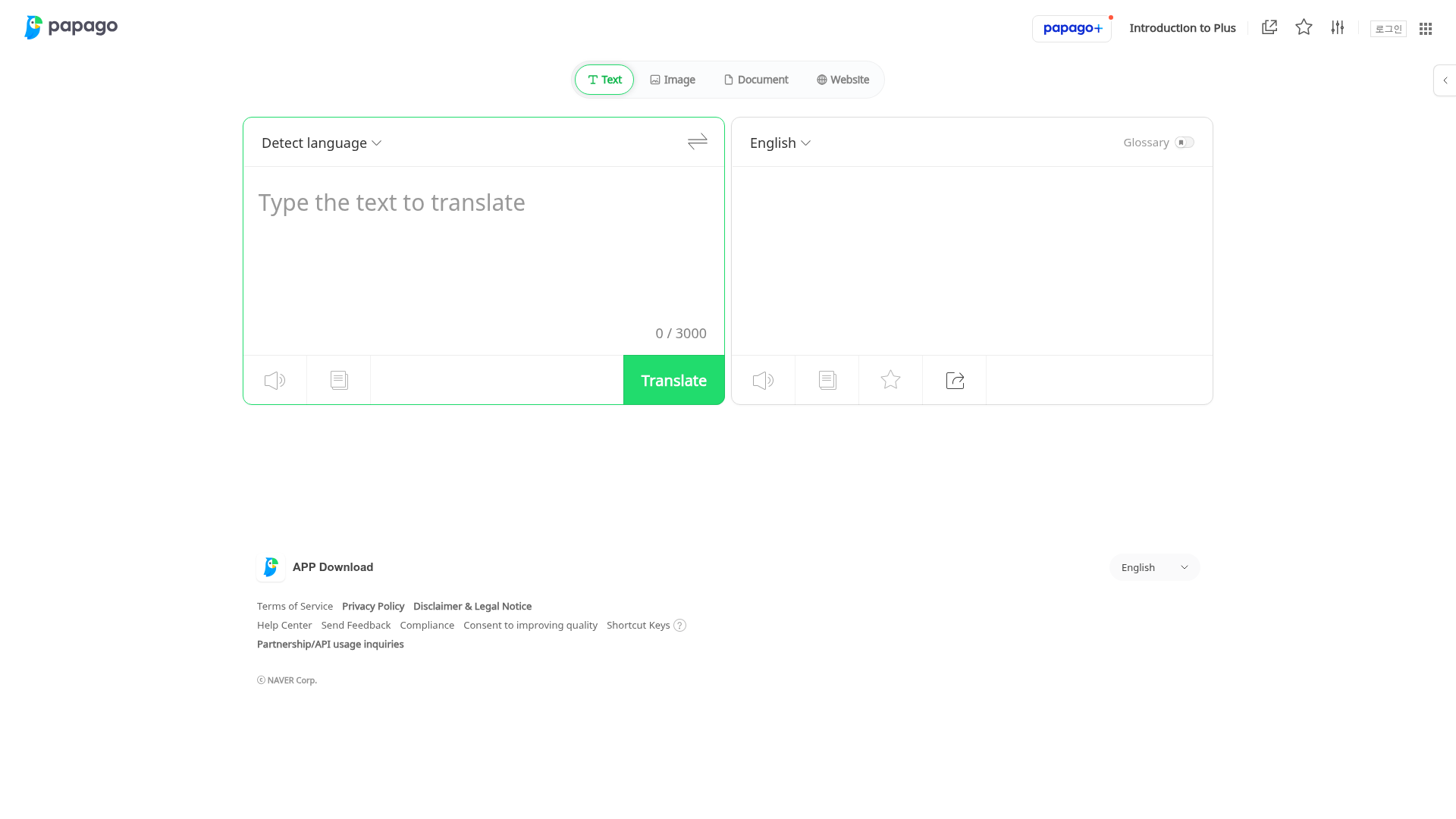
Papago is often the best answer when someone asks how to translate Korean to English accurately for everyday use. Because it was built with Korean as a core language, it usually handles politeness, sentence flow, and colloquial phrasing better than general-purpose tools.
Best for:
-
casual text translation
-
signs and menus
-
short conversations
-
quick voice input
-
learner support
Watch out for:
-
not ideal as a standalone Korean translation service for enterprise content
-
limited workflow controls for branded or regulated communications
Google Translate
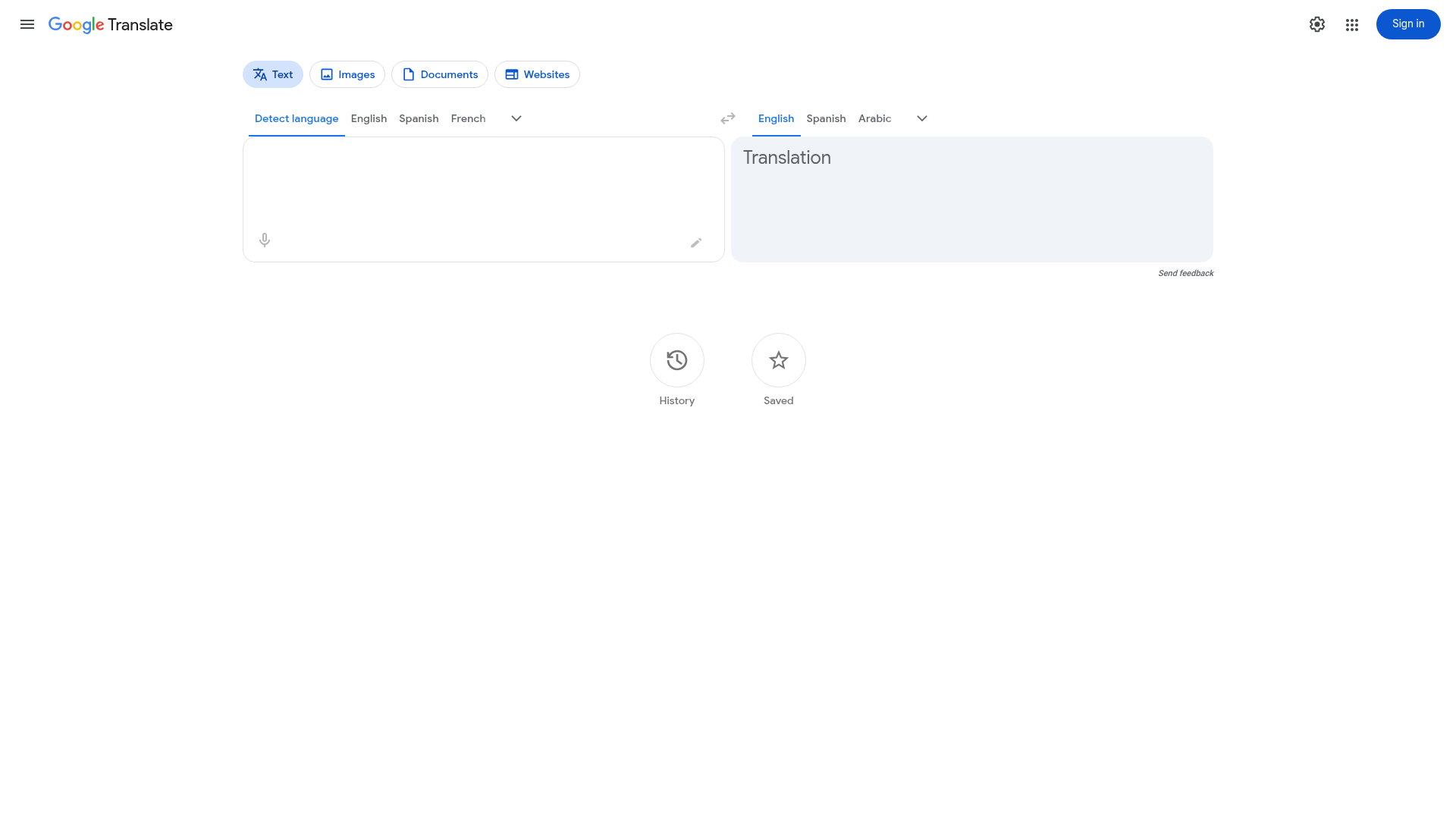
Google Translate remains one of the most common tools people use to translate Korean to English text, voice, and short live exchanges. It is fast, easy, and supports many languages, which makes it especially useful when Korean is just one part of a broader multilingual workflow.
Best for:
-
fast lookups
-
multi-language workflows
-
quick voice translation
-
basic English to Korean translation with voice
Watch out for:
-
Korean nuance can be inconsistent
-
honorifics and implied meaning may be lost
-
not ideal for audience-facing content without review
If you are relying on Google Translate Korean to English output for something public, customer-facing, or high-stakes, it should be reviewed by a qualified linguist.
DeepL
DeepL is often the best option for people who need more polished written English. It can be especially helpful for translating Korean business messages, reports, internal documents, or website copy into smoother English.
Best for:
-
written content
-
documents
-
professional drafts
-
revising rough machine translation
Watch out for:
-
can still miss Korean cultural subtext
-
not a substitute for a Korean to English translation service when brand voice matters
Managed live translation and captioning
Live communication is where app-based translation starts to break down. In a real event environment, you may need:
-
Korean interpreting into English
-
English to Korean interpretation for attendees
-
live captioning for accessibility
-
bilingual slides or on-screen text
-
remote and in-person support
-
technician coordination
-
equipment that actually works in the room
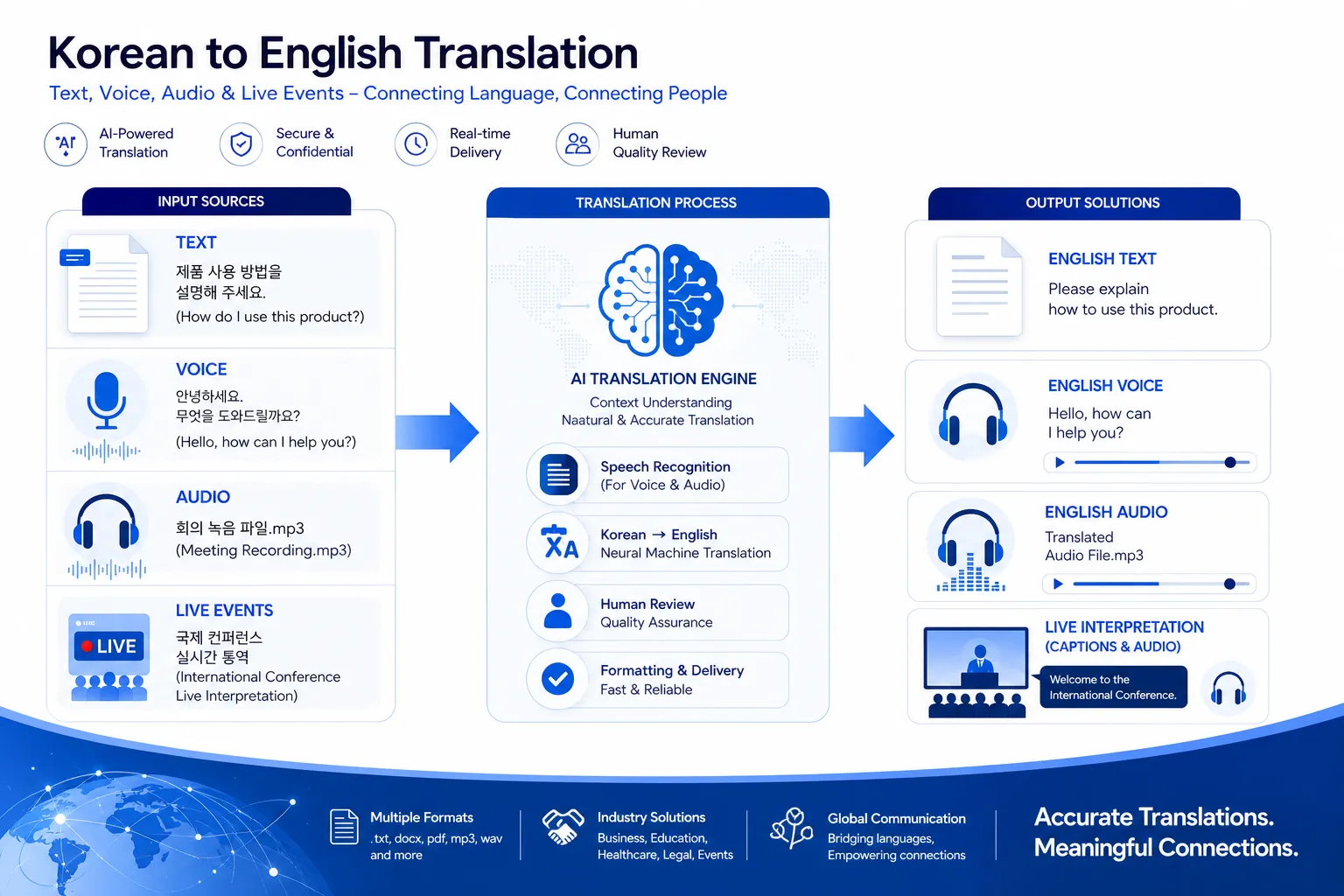
This is where Team Stream stands apart. Rather than leaving organizers to piece together consumer apps, Team Stream provides accurate human and AI-powered translation and interpreting, real-time captioning, event support, professional equipment rental, and technician services for live, virtual, and hybrid formats.
How to Translate Korean to English Text Accurately
Text translation seems simple, but it can go wrong in subtle ways. The best results come from matching the tool to the stakes.
For quick personal use
If you only need to translate Korean to English words or short sentences:
-
use Papago first
-
compare with Google Translate if phrasing seems odd
-
try DeepL if you want smoother English
For business or public-facing use
If you need to translate Korean to English text for:
-
websites
-
presentations
-
conference materials
-
contracts
-
product information
-
subtitles
-
internal leadership communications
then use a professional review process. A Korean translation service can protect tone, intent, terminology, and brand consistency far better than an app alone.
Simple workflow that works
-
Draft or collect the source text
-
Run it through a quality machine translation engine
-
Have a qualified human review for nuance and terminology
-
Finalize for the target audience
-
If public-facing, check layout, readability, and accessibility
That blended workflow is one of the strongest reasons to work with Team Stream. Their approach combines human expertise and AI-enabled solutions so clients get both speed and quality.
How to Translate Korean Voice to English
Voice translation is one of the most searched needs today, especially for mobile users and event teams. But there is a big difference between translating a voice memo and supporting a live multilingual audience.
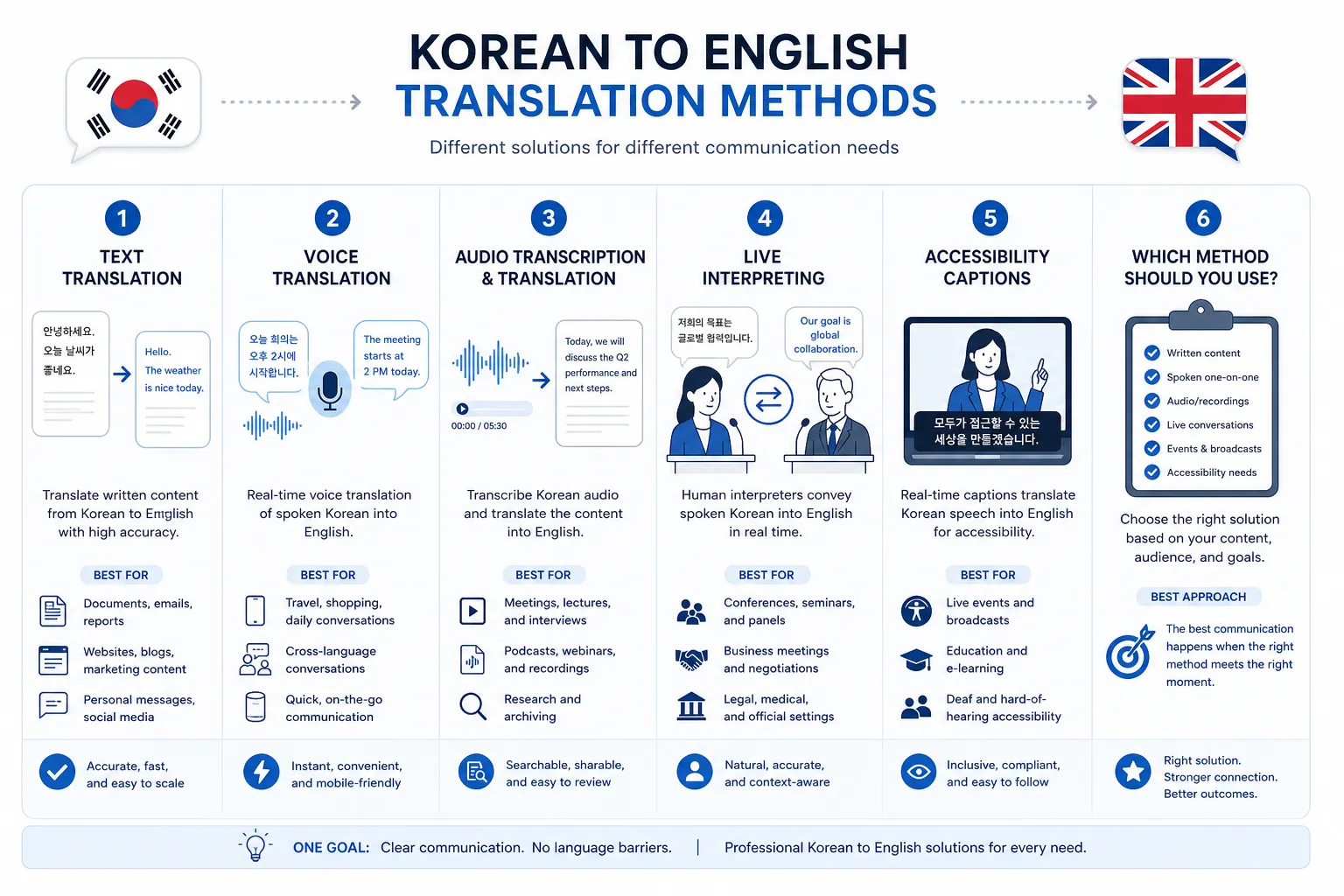
Best options for voice translation
|
Voice Scenario |
Recommended Option |
|---|---|
|
One-on-one casual conversation |
Papago or Google voice translation |
|
Voice notes and short recordings |
AI transcription + translation |
|
Interviews and podcasts |
Human-checked transcription and translation |
|
Live stage presentation |
Professional interpreting + captioning |
|
Hybrid event with audience devices |
Managed live translation workflow |
Why voice translation often fails
Voice tools struggle when there is:
-
background noise
-
multiple speakers
-
fast pace
-
technical vocabulary
-
accents or dialects
-
overlapping speech
-
audience questions from the floor
“In mixed-script OCR benchmarks, Gemini 2.5 Flash Lite reached 93% accuracy.” – NameGood
That is impressive, but even strong OCR and speech systems are not enough for every setting. Accuracy can degrade quickly when conditions are imperfect, which is why professional support matters more in live environments than many articles admit.
When to use Team Stream for voice and live translation
If you need to translate Korean to English voice in a meeting, conference, stream, worship service, or internal town hall, Team Stream can support with:
-
live interpreters
-
AI-powered language support where appropriate
-
real-time captioning for accessibility and engagement
-
closed captioning and subtitling afterward
-
in-person or remote delivery
-
technician support and equipment rental
-
tailored workflows based on audience and risk level
How to Translate Korean Audio to English
Audio translation is different from live voice translation because you usually have time to improve quality.
Best workflow for audio files
For podcasts, recorded webinars, interviews, and media assets, the most reliable process is:
-
Transcribe the Korean audio
-
Review speaker turns and terminology
-
Translate the transcript into English
-
Adapt for readability if needed
-
Create subtitles, captions, or voiceover
This is especially useful when organizations need content reused across channels: internal training, video marketing, compliance records, accessibility, or multilingual publication.
Why audio should not be translated in one step
A one-click tool may produce something usable for reference, but it often misses:
-
speaker separation
-
proper nouns
-
jargon
-
emotional tone
-
timing for subtitles
-
accessibility formatting
That is why Team Stream’s end-to-end language and accessibility solutions are valuable. Instead of just translating audio, the team can help turn Korean source material into English transcripts, captions, subtitles, and voiceovers that are ready for real audiences.
Best Options for Live Korean to English Translation
This is where search intent gets serious. Many people looking to translate Korean to English live are not just curious users. They are often event producers, operations managers, internal communications leaders, churches, or broadcast teams with an actual audience depending on them.
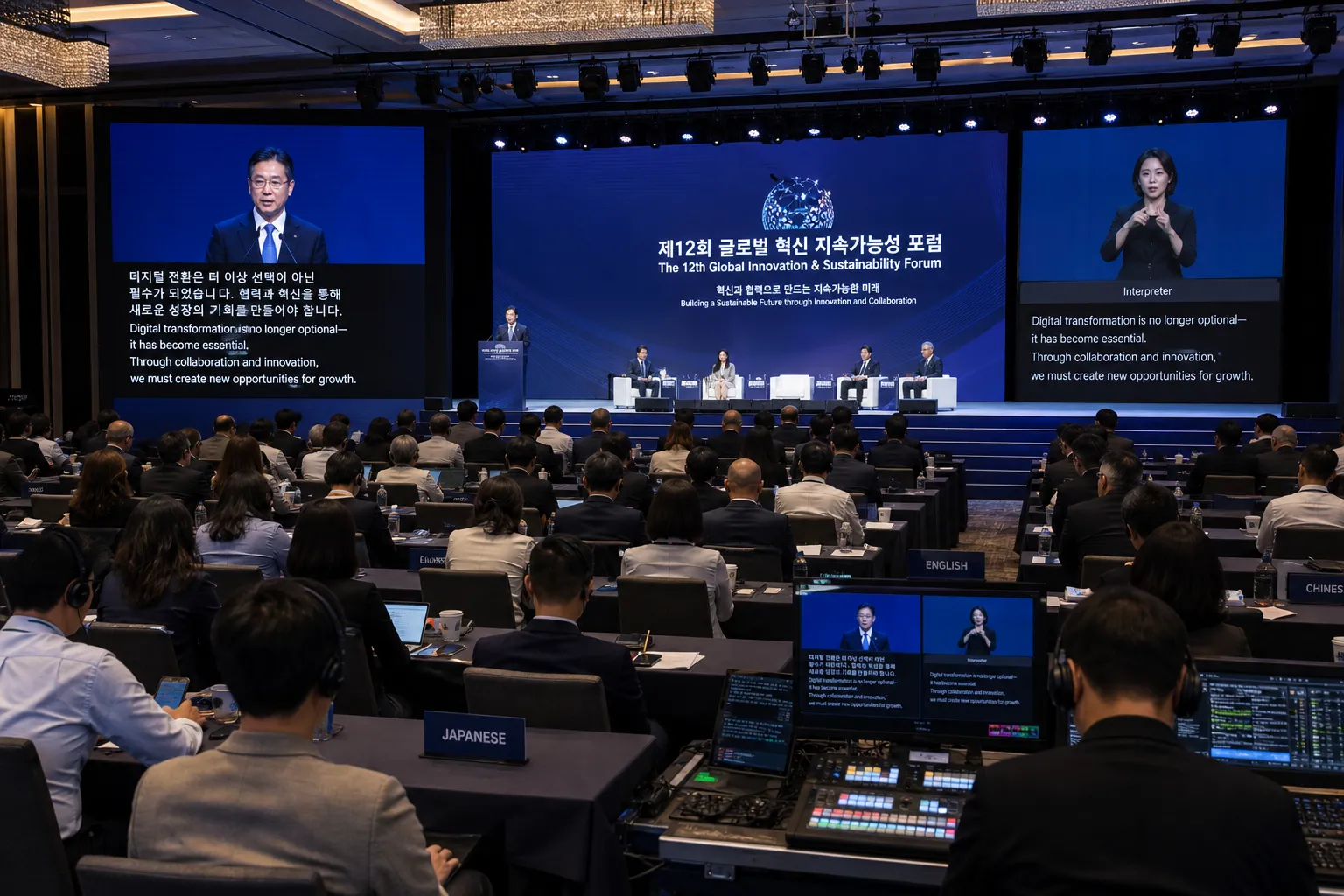
Your live translation options
App-based live translation
Good for:
-
travel
-
personal use
-
low-stakes conversations
Not ideal for:
-
conferences
-
trade shows
-
executive meetings
-
public-facing livestreams
-
accessibility compliance
AI live translation with management
Good for:
-
internal meetings
-
repeatable workflows
-
some virtual sessions
Still needs:
-
quality monitoring
-
fallback plans
-
caption integration
-
event support
Human interpreting
Best for:
-
high-stakes events
-
nuanced communication
-
Q&A sessions
-
regulated sectors
-
executive messaging
Team Stream’s blended model
Often the strongest option for organizations because it combines:
-
experienced interpreters
-
AI-powered efficiency where appropriate
-
real-time captioning
-
accessibility support
-
technician oversight
-
in-person and remote flexibility
Why accessibility belongs in the translation conversation
A major blind spot in competitor articles is that they treat translation and accessibility as separate things. In real events, they are often deeply connected.
If part of your audience needs:
-
captions
-
multilingual audio
-
screen-readable text
-
accessible livestream support
-
inclusive communication practices
then your solution must address both language and accessibility together.
“Walking speed, camera position, and camera type all affect OCR performance, with accuracy dropping as walking speed increases.” – arXiv
That matters for real-world translation too. Live communication conditions are messy. The more variables you add, the more risky a DIY setup becomes. Team Stream helps reduce that risk with reliable, high-quality execution backed by strong customer service and responsiveness.
Google Translate for Korean to English: When It Works and When It Does Not
Google Translate Korean to English is still one of the top choices because it is fast, free, and familiar. But it should be used with the right expectations.
Good use cases for Google Translate
-
checking the rough meaning of a sentence
-
translating simple instructions
-
quick travel phrases
-
comparing multiple machine outputs
-
handling broad multilingual needs beyond Korean
Risky use cases for Google Translate
-
customer-facing website copy
-
internal policy documents
-
speeches
-
subtitles for publication
-
legal or HR materials
-
investor or executive messaging
-
live event interpretation
A simple rule of thumb
If the translation only needs to help you understand something, machine translation may be enough.
If the translation needs to help someone else trust, act on, or rely on something, use a professional Korean translation service or at least human review.
English to Korean Translation Services: Why the Reverse Direction Also Matters
Many organizations focus on Korean to English, but the reverse direction can be even more sensitive. Translating English to Korean for employees, customers, partners, or attendees requires careful attention to tone, politeness, and cultural fit.
Common English to Korean use cases
-
bilingual event materials
-
Korean attendee communications
-
product information
-
signage
-
training content
-
sermons or ministry resources
-
internal updates for Korean-speaking teams
Why English to Korean can be harder than expected
English often leaves tone open. Korean usually forces you to choose a register. That means a weak translation can sound:
-
too blunt
-
too casual
-
too stiff
-
unnatural for the audience
-
inappropriate in a business or formal setting
That is why many organizations benefit from English to Korean translation services that include human review and audience adaptation, not just machine output.
How Team Stream Solves the Real Business Problem
Most organizations do not actually want “a translator app.” They want communication that works.
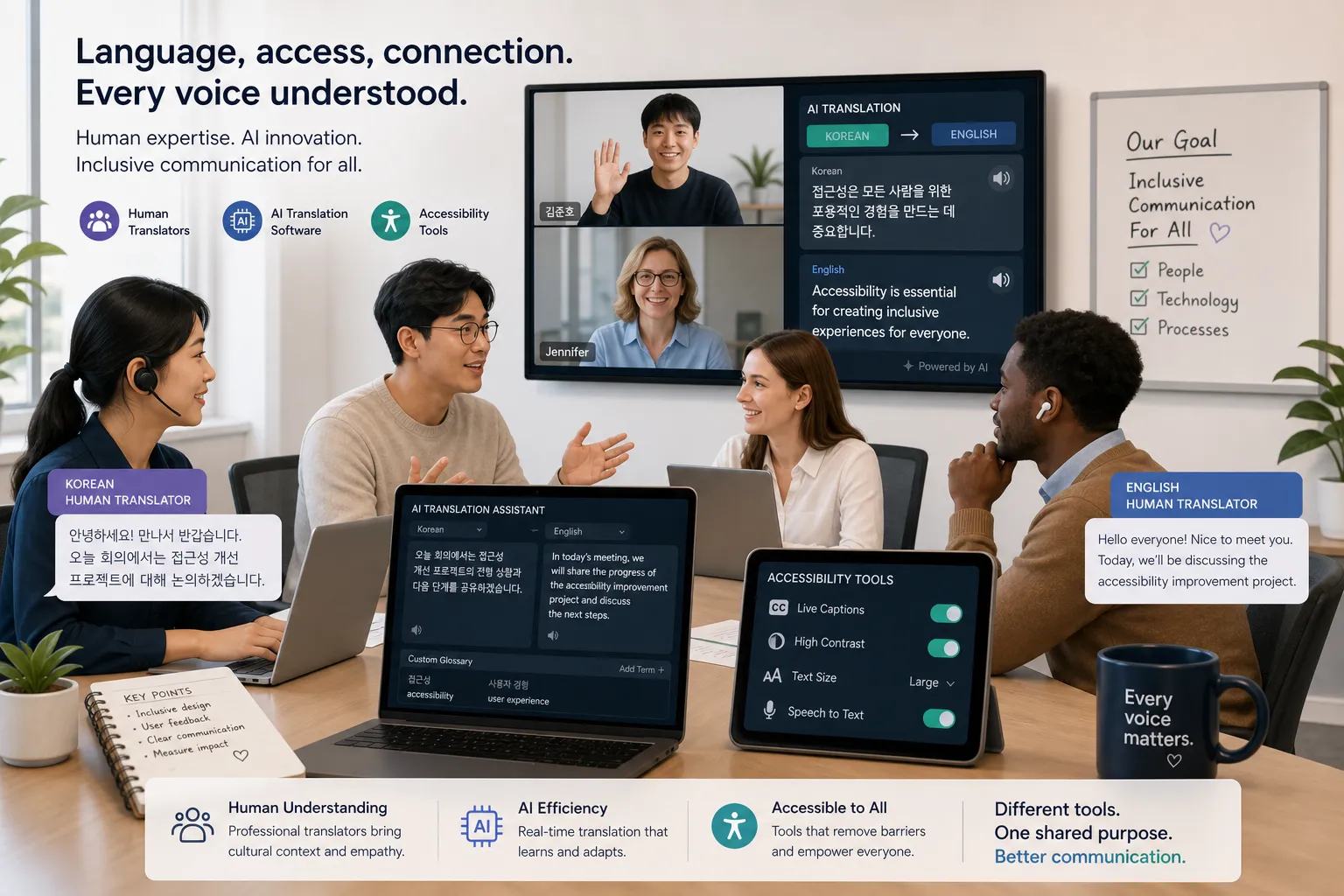
What Team Stream offers that apps do not
Team Stream is built for organizations that need more than basic translation. Their services are designed for real operational settings, including conferences, corporate events, churches, trade shows, livestreams, virtual meetings, and hybrid productions.
Key advantages
-
Accurate human and AI-powered translation and interpreting
-
Real-time captioning for accessibility and engagement
-
Written translation, subtitling, voiceover, and closed captioning
-
Support for live, virtual, and hybrid events
-
Compliance-friendly services for inclusive communication
-
Professional equipment rental and technician support
-
Flexible in-person and remote delivery
-
Over 25 years of experience
-
Responsive customer support and dependable execution
When Team Stream is the right choice
Choose Team Stream when:
-
the translation will be seen or heard by an audience
-
accessibility is required or important
-
the event cannot afford a technical failure
-
you need Korean and English support in the same environment
-
you want one partner instead of multiple vendors
-
you need confidence, not guesswork
A Smarter Decision Framework for 2026
If you are deciding between an app and a service, use this checklist.
Use an app if:
-
the content is low-risk
-
speed matters more than polish
-
no public audience is involved
-
mistakes are acceptable
-
you just need a rough understanding
Use human review or a Korean translation service if:
-
the content affects brand reputation
-
accuracy matters
-
tone matters
-
accessibility matters
-
the communication is external or official
-
the setting is live or high-pressure
Use Team Stream if:
-
you need translation plus interpreting, captioning, subtitling, or event support
-
you need Korean to English and English to Korean handled professionally
-
you need one experienced partner for language access and accessibility
-
you are running a live, hybrid, virtual, or broadcast environment
Final Verdict
The best option to translate Korean to English in 2026 depends on the job.
-
For casual use, Papago is often the strongest everyday tool.
-
For convenience across many languages, Google Translate is still useful.
-
For polished written English, DeepL is a strong choice.
-
For anything audience-facing, high-stakes, live, or accessibility-sensitive, a professional partner is the smarter move.
That is where Team Stream delivers the most value. Instead of offering a one-size-fits-all app experience, Team Stream provides tailored Korean translation services, interpreting, captioning, subtitling, voiceover, technician support, and accessibility solutions that help organizations communicate clearly and inclusively. With more than 25 years of experience and flexible human-plus-AI delivery, Team Stream is built for the moments where translation really matters.
If your next meeting, event, recording, or broadcast needs Korean and English communication done right, Team Stream is the partner to call.
FAQ
What is the most accurate Korean to English translator?
For everyday use, Papago is widely considered one of the most accurate options for Korean to English because it handles nuance, slang, and politeness levels well. For high-stakes content, the most accurate solution is a professional human-reviewed translation service rather than an app alone.
How accurate is Google Translate in 2026?
Google Translate is useful for quick understanding, short phrases, and broad multilingual support, but it can still miss Korean tone, context, and honorific meaning. In 2026, it is good for low-risk tasks, but public-facing or sensitive content should still be reviewed by a professional.
Is Google Translate or Papago better?
For Korean specifically, Papago is usually better at conversational accuracy and natural phrasing. Google Translate is still more convenient when you need many language pairs or fast cross-platform access.
Are Korean translators in demand?
Yes, Korean translators and interpreters are in strong demand across events, media, corporate communications, training, and international business. Demand is especially high when organizations need both language access and accessibility support for live or published content.
Is Papago better than Google Translate for Korean?
In most Korean-specific situations, yes. Papago generally performs better with slang, sentence endings, and speech levels, while Google Translate is better viewed as a fast general-purpose tool.
Can ChatGPT translate Korean to English?
Yes, ChatGPT can translate Korean to English and can sometimes help explain context or tone better than a basic translator app. However, it should still be treated as a draft tool for important content, with human review for accuracy and audience readiness.
