


Translate English to Telugu for Clear Reach
If you need to translate English to Telugu for a live event, a website, training materials, internal communications, or audience engagement, accuracy matters far more than simple word conversion. Telugu audiences expect clarity, natural phrasing, cultural fit, and the right level of formality. If your translation misses any of those, your message can feel awkward, unclear, or untrustworthy.
For event organizers, conference planners, churches, corporate teams, and media producers, the challenge is bigger than choosing a tool. You need the right translation workflow for the format, the audience, and the stakes. A marketing page needs persuasion. A compliance notice needs precision. A keynote or live stream may need interpreting, captioning, and multilingual support at the same time.
At Team Stream, that is where expertise makes the difference. With more than 25 years of experience, Team Stream combines accurate human translation with AI-powered workflows, real-time captioning, interpreting, subtitling, equipment support, and flexible in-person or remote delivery. The result is not just translated language, but communication that lands clearly and inclusively.
“According to the 2011 Census of India, Telugu is the fourth most spoken language in the country, with approximately 81.1 million native speakers, accounting for about 6.7% of the total population.” – MapsofIndia
“76% of online shoppers prefer purchasing products with information in their native language, and 40% of internet users will never buy from websites in other languages.” – WiFiTalents
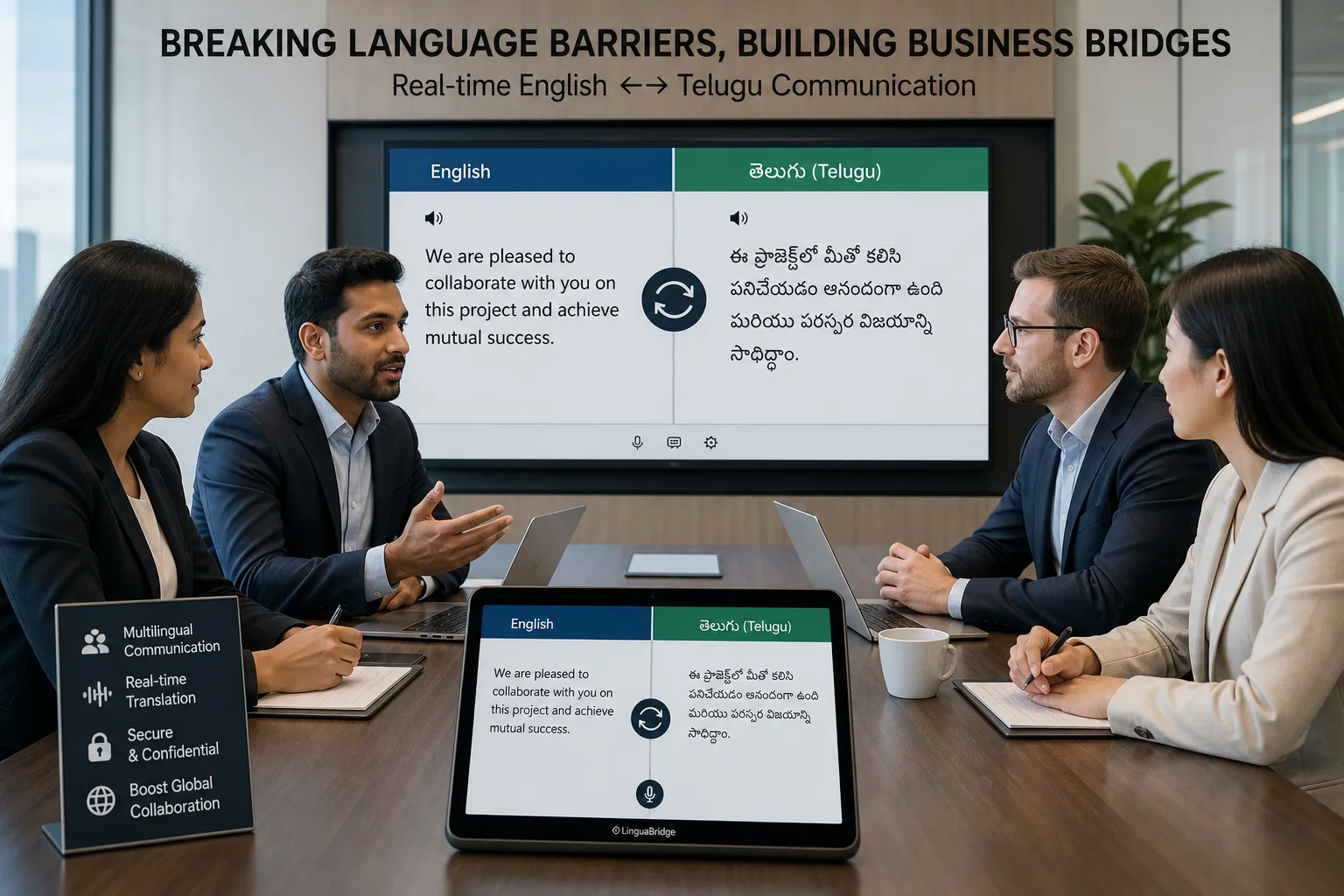
Why English-to-Telugu Translation Deserves a Smarter Approach
Many businesses assume translation is a simple input-output task. In practice, Telugu translation requires attention to grammar, script, intent, tone, and audience context.
Telugu is not just English in another script
Telugu is a Dravidian language with its own sentence flow, honorific structure, and cultural conventions. A direct line-by-line conversion from English often sounds mechanical. Even when every word is technically “correct,” the sentence may still feel unnatural to a native reader or listener.
Different use cases require different levels of precision
A quick internal draft may be fine with AI assistance. But high-visibility or high-risk communication usually needs professional review.
Here is a simple guide:
|
Use Case |
Risk Level |
Best Approach |
|---|---|---|
|
Casual note or rough understanding |
Low |
AI tool with light review |
|
Website copy or social posts |
Medium |
AI draft plus human editing |
|
Marketing campaigns |
High |
Professional localization |
|
Contracts, HR docs, policies |
High |
Professional human translation |
|
Live events, meetings, broadcasts |
Very High |
Interpreting, captioning, and event language support |
Clarity affects trust
When your Telugu translation reads naturally, audiences feel included. When it feels literal or confusing, you lose confidence fast. That matters whether you are welcoming attendees at a trade show, publishing multilingual video subtitles, or delivering employee communications across regions.
When to Use a Tool to Translate to Telugu
Translation tools have their place. The key is knowing where they help and where they create risk.
Good uses for AI or machine translation
AI can be useful when you need to:
-
understand the general meaning of Telugu content
-
produce a fast first draft
-
translate simple, repetitive text
-
support internal brainstorming or rough localization
For example, if your team wants to test a few headline options before final review, AI can speed up the process.
When tools are not enough
You should not rely on raw machine output alone when the content involves:
-
brand voice
-
public-facing messaging
-
sensitive internal communication
-
legal or compliance language
-
accessibility requirements
-
live multilingual experiences
That is especially true for organizations that need polished communication across events, meetings, streaming, training, or customer touchpoints. Team Stream supports these cases with tailored human and AI-powered translation, plus captioning, interpreting, subtitling, and technician-backed production support.
Common Mistakes People Make When They Translate English to Telugu
The biggest accuracy issues rarely come from vocabulary alone. They come from context.
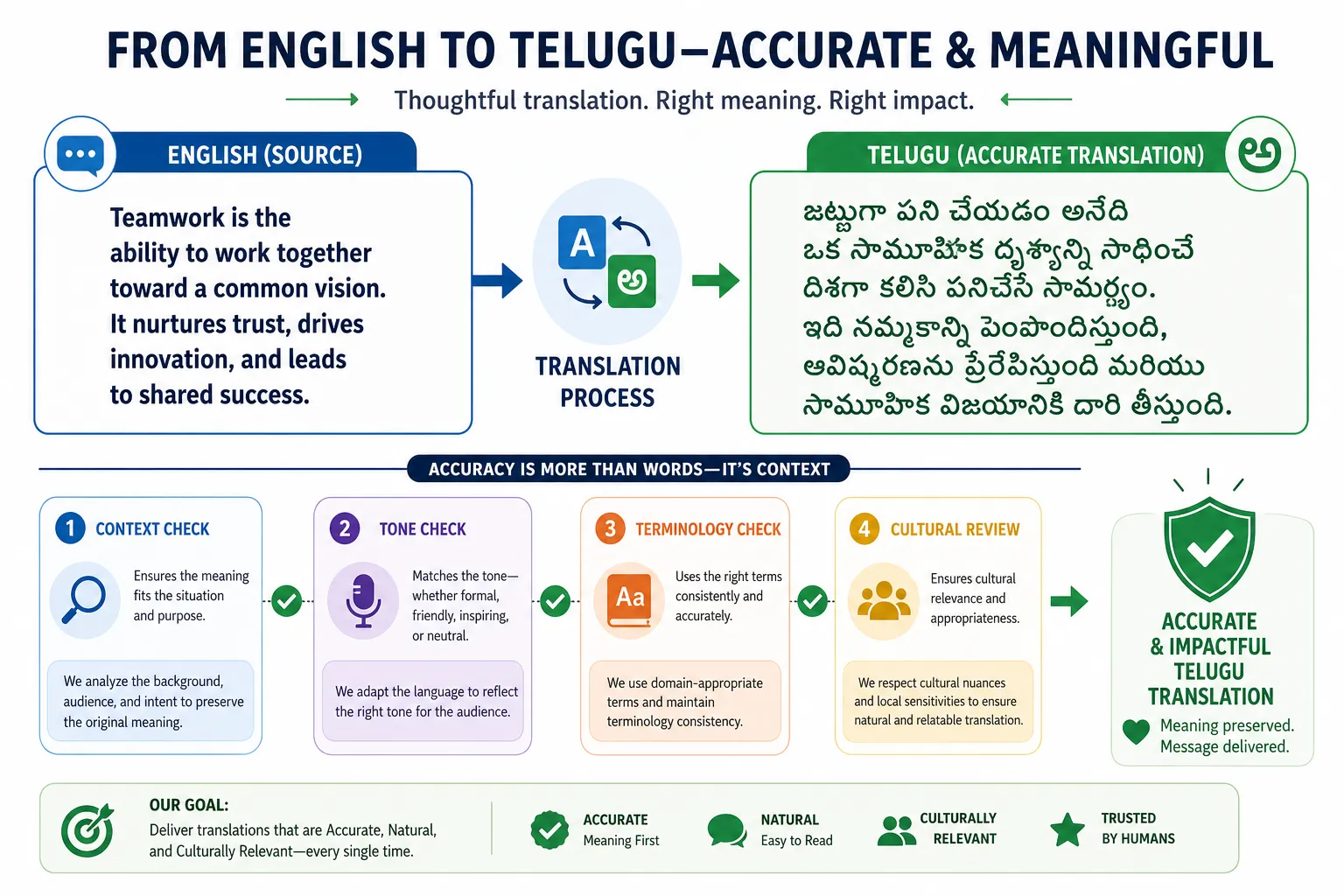
Literal translation
English phrases often do not carry over cleanly. Idioms, marketing slogans, and informal expressions can become confusing if translated word for word.
Example:
A phrase like “we’ve got you covered” may need to be rewritten for meaning rather than translated literally.
Wrong level of formality
Telugu can shift noticeably depending on whether you are addressing customers, executives, staff, worship attendees, or the public. Using a tone that is too casual or too stiff can affect how your message is received.
Ignoring regional and audience context
Telugu-speaking audiences are not all the same. A piece of copy for a global Telugu diaspora audience may need different vocabulary choices than material aimed specifically at audiences in Andhra Pradesh or Telangana.
Poor handling of names, product terms, and technical language
Some terms should be translated. Others should be transliterated. Others should remain in English. Making the wrong call creates confusion, especially in medical, legal, software, or event-specific content.
No quality review
Even a strong AI draft can contain subtle errors in tense, politeness, nuance, or terminology. Human review is what catches the issues that software often misses.
Human Translation vs AI Translation for Telugu
This is not an either-or question. The smartest workflows often use both.
What AI does well
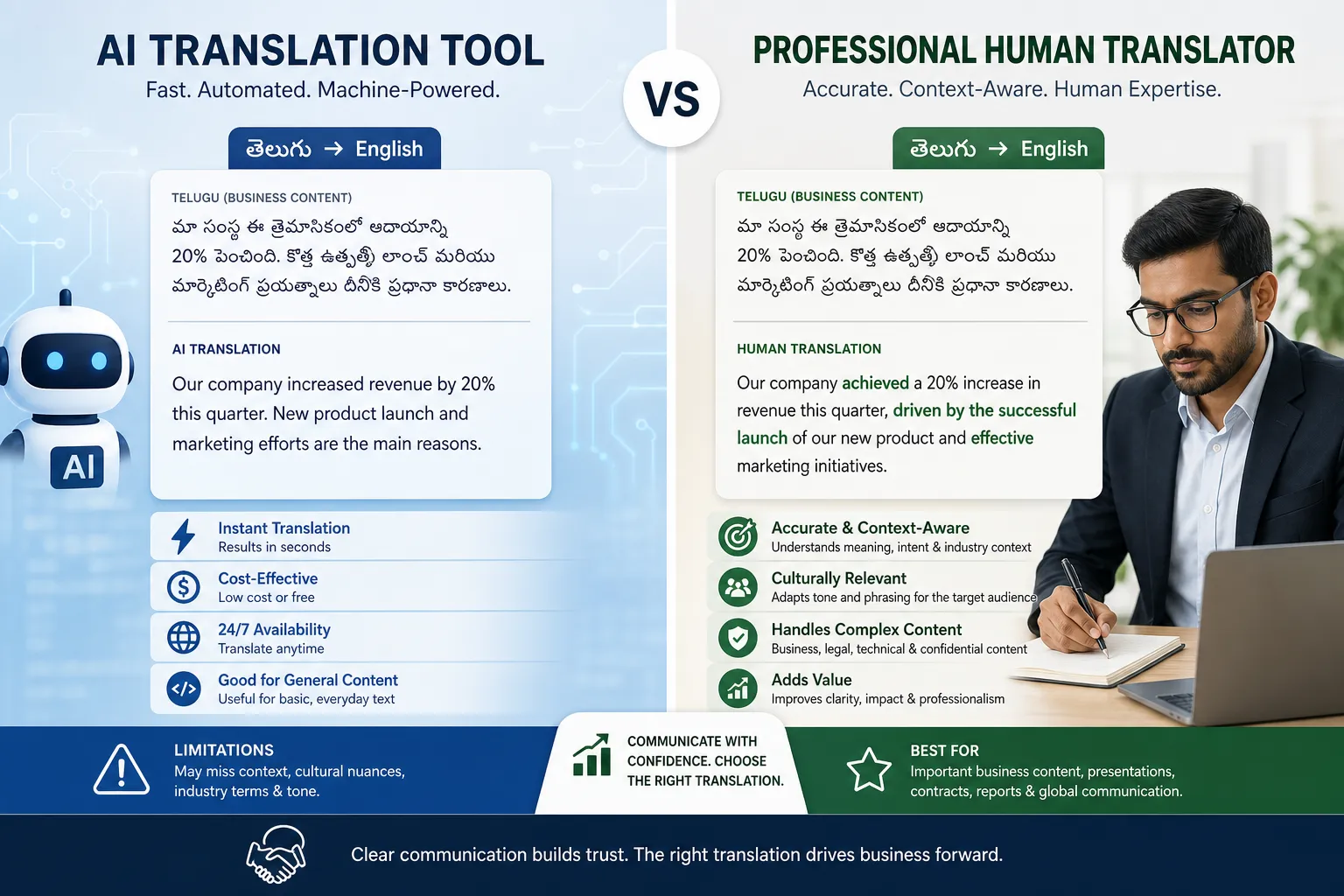
AI is good at speed, scale, and first-pass drafting. It can help teams process content quickly and identify the general structure of a translation.
What human translators do better
Human linguists bring:
-
intent recognition
-
cultural judgment
-
natural style
-
audience-sensitive phrasing
-
terminology consistency
-
final accountability
The best model: AI-assisted, human-led quality
That is where Team Stream stands out. Instead of forcing clients into a one-size-fits-all translation process, Team Stream can combine AI efficiency with professional human expertise depending on your content, deadlines, compliance needs, and audience expectations.
|
Factor |
AI-Only Translation |
Human Translation |
Team Stream Hybrid Approach |
|---|---|---|---|
|
Speed |
Fast |
Moderate |
Fast and controlled |
|
Cultural nuance |
Limited |
Strong |
Strong |
|
Terminology control |
Inconsistent |
High |
High |
|
Brand voice |
Weak |
Strong |
Strong |
|
Scalability |
High |
Moderate |
High |
|
Live event readiness |
Low |
High with planning |
High with full support |
How to Translate English to Telugu Accurately for Business
If your goal is business growth, inclusion, or audience engagement, translation should be treated as part of communication strategy, not just content processing.
Start with the purpose
Ask what the content needs to do:
-
inform
-
persuade
-
instruct
-
reassure
-
comply
-
engage live audiences
A Telugu translation for a product description should not be handled the same way as a training video transcript or an event registration page.
Define the audience clearly
Before translation begins, identify:
-
who the audience is
-
where they are located
-
what level of formality they expect
-
whether they are reading, listening, or watching
-
whether accessibility features are also required
Build a terminology list
For recurring business content, create a preferred glossary for:
-
brand names
-
product terms
-
technical phrases
-
event language
-
accessibility terms
-
speaker titles and names
This improves consistency across translations, subtitles, captions, and voiceover work.
Plan for format-specific adaptation
Translation quality depends heavily on where the content will appear.
|
Format |
Key Consideration |
|---|---|
|
Website |
Scannability, SEO, natural calls to action |
|
Video subtitles |
Brevity, timing, readability |
|
Voiceover |
Spoken rhythm and natural delivery |
|
Event slides |
Space limits and audience comprehension |
|
Documents |
Precision and formatting integrity |
|
Live captions |
Real-time clarity and accessibility |
Review with a native-quality lens
The final question is not “Is this translated?”
It is “Would a Telugu-speaking audience trust and understand this immediately?”
That standard is what separates effective localization from basic conversion.
English-to-Telugu Translation for Events, Meetings, and Broadcasts
This is where many competitors stop short. They talk about text translation, but real communication often happens live.
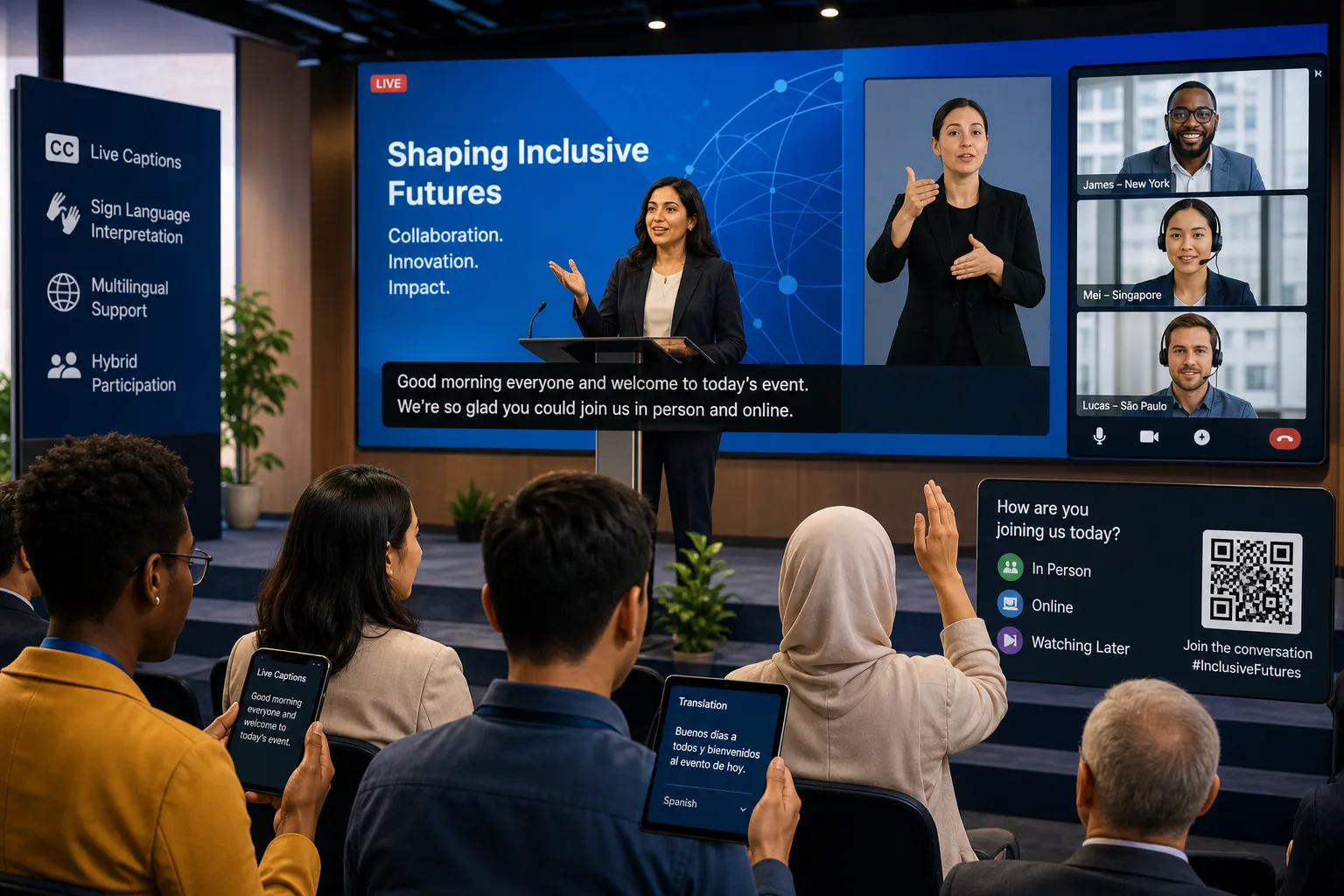
Live multilingual communication needs more than translation
If you are hosting a conference, church service, internal town hall, webinar, or hybrid event, you may need:
-
live interpreting
-
real-time captioning
-
on-screen translated text
-
subtitling for recordings
-
technician support
-
audio equipment for language channels
-
remote and in-person language access options
Accessibility and compliance matter too
Many organizations are not just trying to communicate better. They also need to communicate inclusively and responsibly. Team Stream helps clients meet accessibility expectations with professional captioning, interpreting, and end-to-end language support designed for live, virtual, and hybrid environments.
Why event teams choose full-service support
When multiple moving parts are involved, piecing together tools and freelancers can create risk. Team Stream offers coordinated service delivery backed by responsive customer service, experienced technicians, and reliable execution. That matters when there is no room for failure during a live session.
Best Use Cases for Telugu Translation in Content and Marketing
Website localization
A landing page should read like it was written for Telugu speakers, not copied from English. That means adapting headlines, CTAs, page structure, and credibility cues.
Video subtitles and voiceover
If your audience consumes content on video, subtitles and voiceover can dramatically improve comprehension and engagement. Telugu subtitle translation needs tight phrasing and timing, while voiceover needs delivery that sounds natural and audience-appropriate.
Internal communications
For global teams and regional workforces, translating policies, HR updates, onboarding materials, and executive communications into Telugu supports understanding and trust.
Faith-based and community communication
Churches and community organizations often need multilingual communication that feels both accurate and welcoming. Team Stream’s experience with live events, captioning, interpreting, and tailored support makes this especially valuable in high-touch environments.
Training and compliance materials
These need precision first. If safety procedures, onboarding instructions, or legal notices are involved, human review is essential.
How Team Stream Improves Telugu Translation Outcomes
Translation quality improves when it is part of a larger service ecosystem.
Tailored service instead of generic output
Team Stream does not treat every translation request the same. A webinar, a contract, a subtitle file, and a trade show booth experience each require different workflows. Team Stream matches the solution to the use case.
Human expertise plus AI-powered efficiency
This hybrid model helps clients move faster without sacrificing quality. It is ideal for organizations balancing speed, volume, and accuracy.
Support for live, virtual, and hybrid experiences
From multilingual captioning to interpreting and equipment support, Team Stream helps organizations communicate clearly in the formats where modern audiences actually engage.
Accessibility-first execution
Inclusive communication is not an add-on. Team Stream offers services that support accessibility, engagement, and compliance together.
Reliable delivery backed by experience
With over 25 years of expertise, Team Stream brings the kind of operational confidence event organizers, conference planners, and business teams need when the message truly matters.
A Practical Workflow to Translate to Telugu Without Losing Meaning
Use this workflow if you want better results:
Step 1: Classify the content
Determine whether the material is low-risk, medium-risk, or high-risk.
Step 2: Draft intelligently
Use AI for speed if appropriate, especially for rough internal drafts or repetitive text.
Step 3: Localize, do not just translate
Adapt tone, examples, terminology, and structure for Telugu-speaking audiences.
Step 4: Review by a qualified language professional
This is critical for public-facing, sensitive, or high-value content.
Step 5: Optimize for delivery format
Adjust subtitles, slide copy, scripts, forms, or webpages based on where the audience will consume the message.
Step 6: Add accessibility where needed
For live and recorded content, include captioning, subtitling, interpreting, or voiceover support as required.
Step 7: Measure audience response
Track engagement, completion, conversions, or comprehension. If audiences hesitate, the translation may need refinement.
Final Verdict: Clear Reach Requires More Than Translation
If you want to translate English to Telugu effectively, the goal is not just language transfer. The goal is clear reach: making sure Telugu-speaking audiences understand, trust, and act on your message.
For quick drafts, AI tools can help. But for websites, campaigns, training, events, videos, and business-critical communication, accuracy and audience fit are what determine results. That is why organizations turn to Team Stream for translation, interpreting, live captioning, subtitling, voiceover, event technician support, and accessibility solutions that work together.
When the message matters, choose a partner that can deliver more than words. Choose a team that can support the entire communication experience with precision, flexibility, and service. Team Stream is built for exactly that.
FAQ
How to convert Telugu words to English?
You can convert Telugu words to English with transliteration, translation tools, or a professional translator depending on your goal. If you only need the basic meaning, AI can help, but for accurate business or public-facing communication, human review is the safer choice.
Can ChatGPT do translation?
Yes, ChatGPT can help translate English and Telugu, especially for drafts, summaries, and quick understanding. However, for marketing, legal, compliance, or event content, it should be paired with professional human review to ensure accuracy and cultural fit.
Which is the best AI translation from English to Telugu?
There is no single best option for every use case because results vary by context, tone, and subject matter. The strongest approach is often a hybrid one: use AI for speed, then have experienced language professionals refine the Telugu for natural, audience-ready communication.
Can I translate English documents to Telugu?
Yes, English documents can be translated to Telugu, including websites, training materials, reports, and event documents. For high-stakes content, it is best to use professional translation so terminology, formatting, and meaning stay accurate.
What is the best Telugu to English translator?
The best solution depends on whether you need speed or precision. For quick understanding, AI tools are useful, but for polished business communication, subtitles, or public materials, a professional language partner offers stronger quality control.
What are the basic Telugu words?
Basic Telugu words usually include greetings and everyday phrases such as hello, thank you, yes, and no. For business communication, though, individual words are not enough – you also need correct tone, context, and phrasing to communicate clearly.
