

Translate English to Mandarin Chinese Guide
If you need to translate English to Mandarin Chinese accurately, the right method depends on what you are translating: a sentence, a contract, a presentation, a live conversation, a product label, a subtitle file, or a multilingual event. Many people start with a free online tool, but when tone, context, pronunciation, compliance, accessibility, or live delivery matter, machine translation alone is rarely enough.
For event organizers, conference planners, marketing teams, internal communications leaders, churches, trade show producers, and businesses serving multilingual audiences, the stakes are even higher. A weak translation can confuse attendees, damage trust, create compliance risk, or exclude people who rely on interpreting and captioning to fully participate. That is why the smartest approach is not just finding a quick way to translate to Chinese, but choosing the right mix of AI efficiency, human review, and accessibility support.
What this guide covers that most translation articles miss
Most articles about English to Mandarin focus only on basic text conversion or promote a single tool. That leaves important gaps:
-
They rarely explain when to use Simplified Chinese versus Traditional Chinese
-
They often blur the difference between Mandarin, Chinese, written Chinese, and regional usage
-
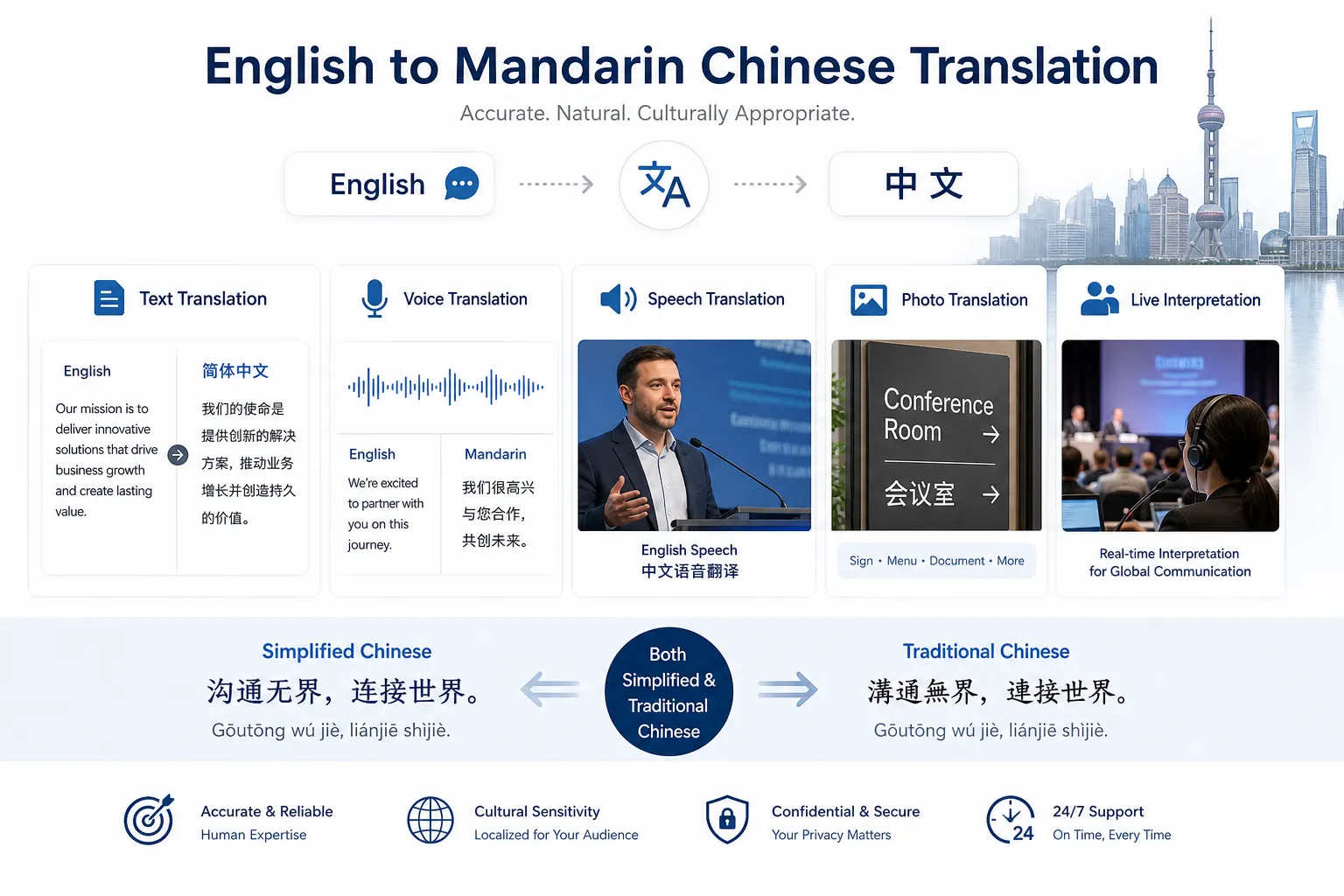
They discuss text translation, but not how to handle speech, live conversations, captions, photos, signage, or events
-
They overlook the role of human interpreters, captioners, and compliance-friendly accessibility workflows
-
They do not help businesses decide when a free tool is good enough and when a professional service is the safer option
This guide closes those gaps so you can choose the best path whether you need to translate Chinese text to English, convert English to Mandarin Chinese for customers, or support multilingual communication at scale.
English to Mandarin vs. Chinese: what people really mean
When someone says they want to translate English to Chinese, they usually mean one of three things:
|
Need |
What it usually means |
Best approach |
|---|---|---|
|
Casual text translation |
Everyday phrases, emails, chat, social posts |
AI or free online translation with a quick review |
|
Written business translation |
Documents, websites, product content, legal or HR materials |
Human translation or AI + professional editor |
|
Spoken Mandarin communication |
Meetings, calls, interviews, webinars, events |
Live interpreter, voice translation, or captioning support |
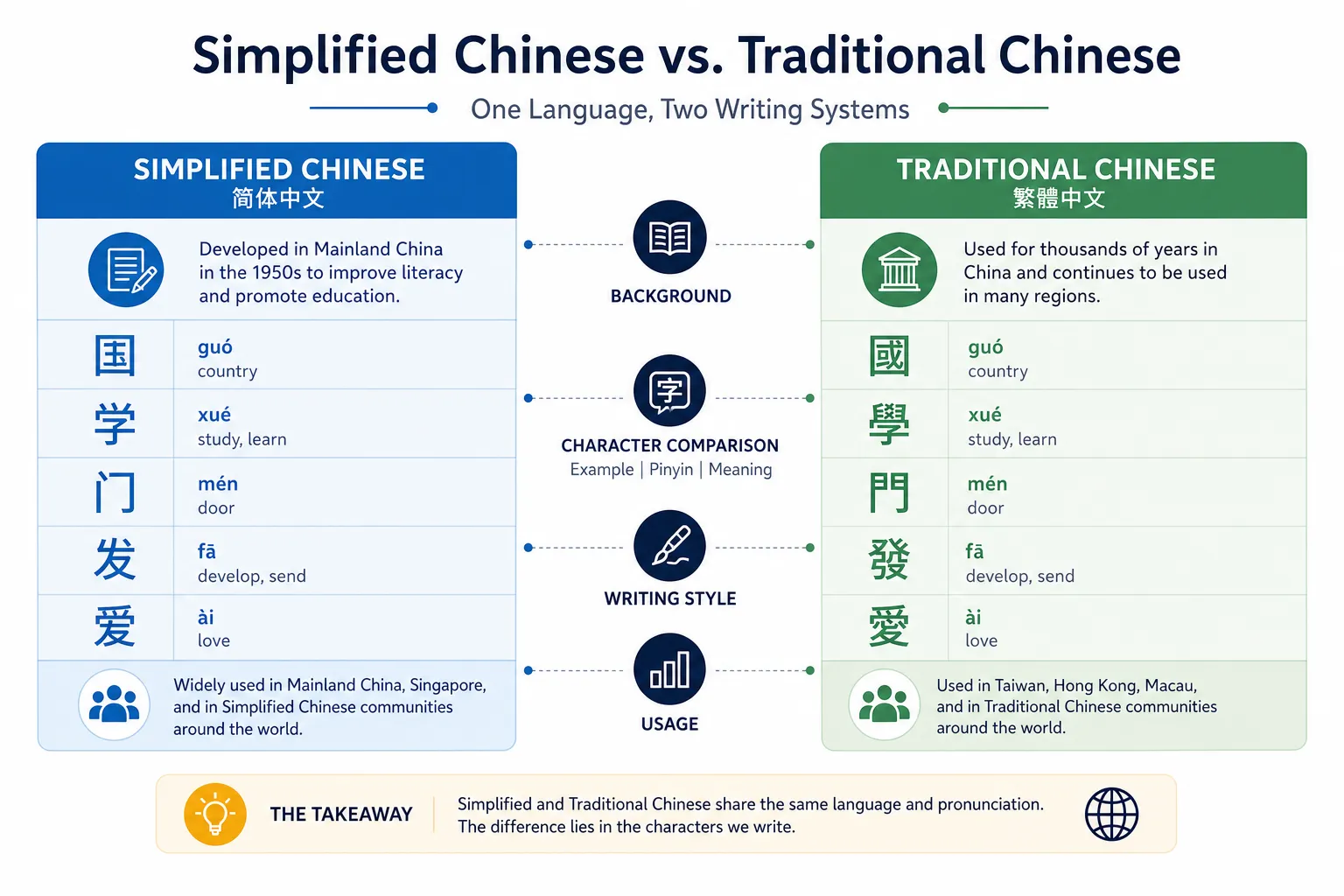
In practice, Mandarin is the most common spoken variety people mean when they ask to translate English to Mandarin. But in writing, the key distinction is often not Mandarin vs. Chinese. It is Simplified Chinese vs. Traditional Chinese.
“There are approximately 1.18 billion Mandarin Chinese speakers worldwide.” – Statista
That scale is exactly why clear language access matters for global organizations, public-facing brands, and event teams.
Simplified Chinese vs. Traditional Chinese
If you need to translate English to Chinese language content, choosing the correct writing system is essential.
Simplified Chinese
Simplified Chinese is primarily used in:
-
Mainland China
-
Singapore
-
Many modern digital and business contexts targeting mainland audiences
If your goal is to translate English to Chinese simplified for a broad business audience in China, this is usually the right option.
Traditional Chinese
Traditional Chinese is primarily used in:
-
Taiwan
-
Hong Kong
-
Macau
-
Some overseas Chinese communities
If you need to translate English to Chinese traditional, especially for regional relevance or audience trust, you should not default to Simplified.
Quick decision table
|
Audience location |
Recommended written form |
|---|---|
|
Mainland China |
Simplified Chinese |
|
Singapore |
Simplified Chinese |
|
Taiwan |
Traditional Chinese |
|
Hong Kong |
Traditional Chinese |
|
Mixed global audience |
Ask for audience-specific versions |
A major content gap in competitor articles is that they mention these forms, but do not emphasize the business risk of using the wrong one. The wrong script can make your brand feel careless or out of touch, even when the translation is otherwise accurate.
How to translate English to Mandarin Chinese by content type
The best translation workflow changes based on format. Here is the practical breakdown.
Text and writing translation
If you need to translate English to Mandarin for articles, websites, PDFs, product descriptions, manuals, or email copy, start by classifying the content:
Good candidates for free or AI-powered translation
-
Short emails
-
Internal notes
-
Basic customer messages
-
Travel phrases
-
Draft copy for internal review
This is where tools like Google Translate, iTranslate, or QuillBot can help you translate English to Mandarin Chinese quickly.
Better handled by professional translators
-
Contracts and compliance documents
-
Marketing campaigns
-
Executive communications
-
Investor materials
-
Public-facing web pages
-
Faith-based or culturally sensitive messaging
-
Medical or technical content
When tone and accuracy matter, human review is critical. Team Stream’s approach is especially valuable here because it combines accurate human expertise with AI-powered translation workflows, allowing organizations to move faster without sacrificing quality.
Common writing mistakes when translating into Chinese
-
Translating word-for-word instead of by meaning
-
Ignoring formality and audience expectations
-
Using Mainland phrasing for Taiwan audiences, or vice versa
-
Losing brand voice
-
Overlooking date formats, names, titles, and cultural nuance
If you need to translate Chinese writing to English or translate written Chinese to English, those same risks apply in reverse. A machine may identify the words, but a professional linguist will interpret intent, tone, and context.
Speech, voice, and live conversation translation
Spoken Mandarin adds another layer of complexity because meaning depends on pronunciation, speed, tone, and context.
If you need to:
-
translate spoken Chinese to English
-
voice translate Mandarin to English
-
translate Chinese speech to English
-
voice translate English to Chinese
-
translate Chinese to English speaking in real time
then a simple text translator may not be enough.
Best options for spoken translation
|
Scenario |
Best solution |
|---|---|
|
Quick travel help |
Voice translation app |
|
One-on-one business call |
Remote interpreter |
|
Webinar or livestream |
Interpreter + live captions |
|
Conference or hybrid event |
Professional interpreting, captioning, technician support |
|
Broadcast or recorded media |
Subtitling, voiceover, post-production translation |
AI voice tools can help with basic interactions, but live business communication often needs human intervention. Accents, industry terms, overlapping speakers, jokes, and fast-paced Q&A can easily defeat automated tools.
This is a major reason event teams work with Team Stream. Instead of juggling separate vendors for interpreting, captioning, equipment, and technician support, they can get an end-to-end language and accessibility solution tailored to the event format, whether it is live, virtual, or hybrid.
Photo, image, and camera translation
Many users now need to translate Chinese from image sources such as signs, menus, presentation slides, screenshots, packaging, labels, or printed forms.
That includes needs like:
-
translate Chinese image to English
-
translate Chinese to English from image
-
translate Chinese to English photo
-
translate Chinese picture to English
-
translate Chinese to English picture
When image translation works well
-
Street signs
-
Menus
-
Packaging
-
Labels
-
Short instructions
-
Screenshots of simple text
When image translation struggles
-
Handwriting
-
Dense documents
-
Stylized fonts
-
Low-resolution photos
-
Industry-specific terminology
-
Mixed Chinese and English layouts
Optical character recognition can be useful, but it is not foolproof. If the text matters operationally or legally, extract the text and have it professionally reviewed.
The most common free online translation tools
Free tools are useful, especially when you need to translate Chinese to English online free or test a phrase quickly. But each tool has strengths and limits.
Google Translate
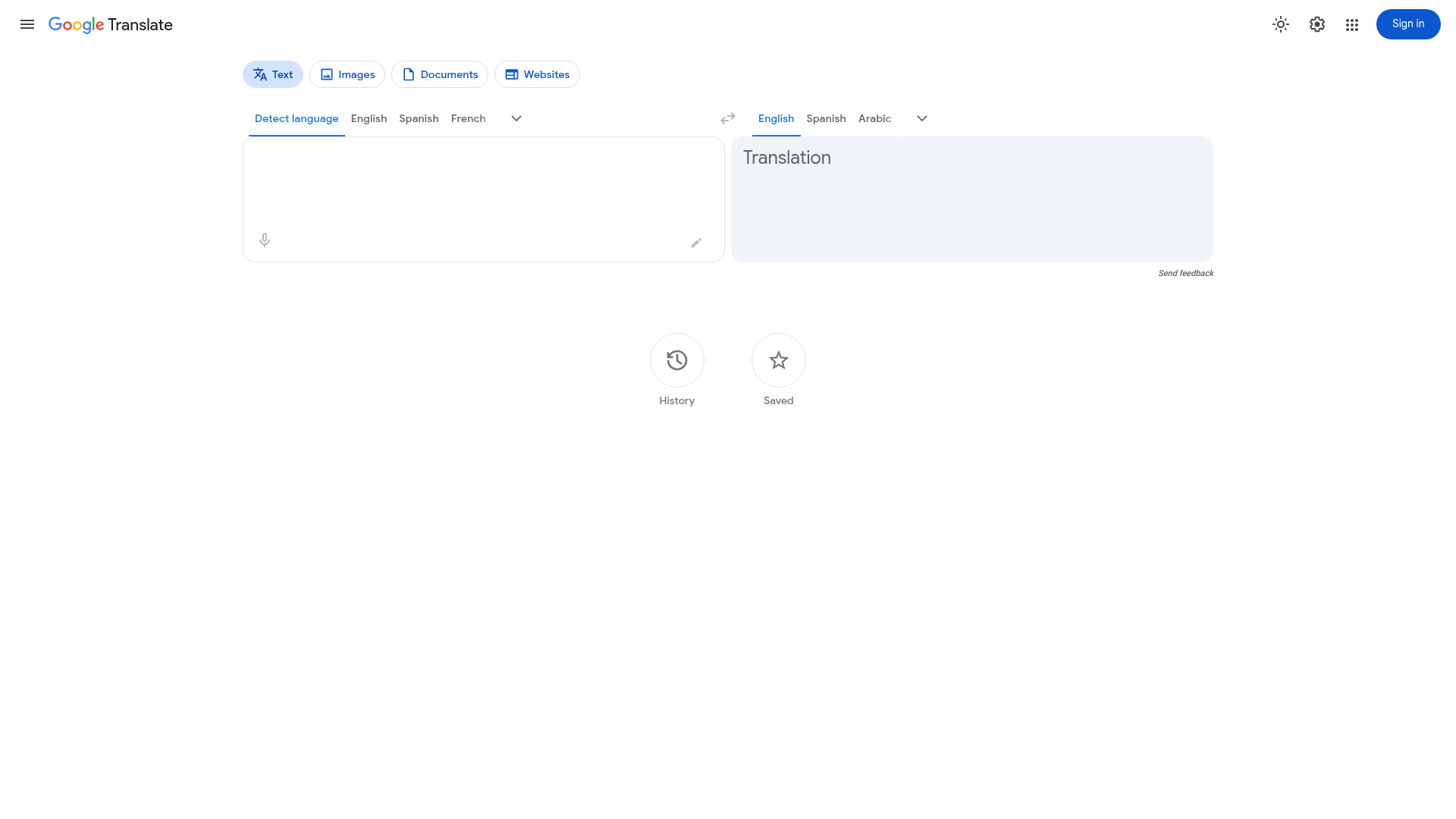
Google Translate remains one of the first options people use for google translate chinese to english, google translate mandarin to english, or google translate to chinese.
Best for:
-
Quick phrases
-
Basic text conversion
-
Travel and everyday use
-
Camera translation for signs and menus
Limitations:
-
Inconsistent tone
-
Risky for high-stakes content
-
Can miss regional preferences
-
Limited control over brand voice
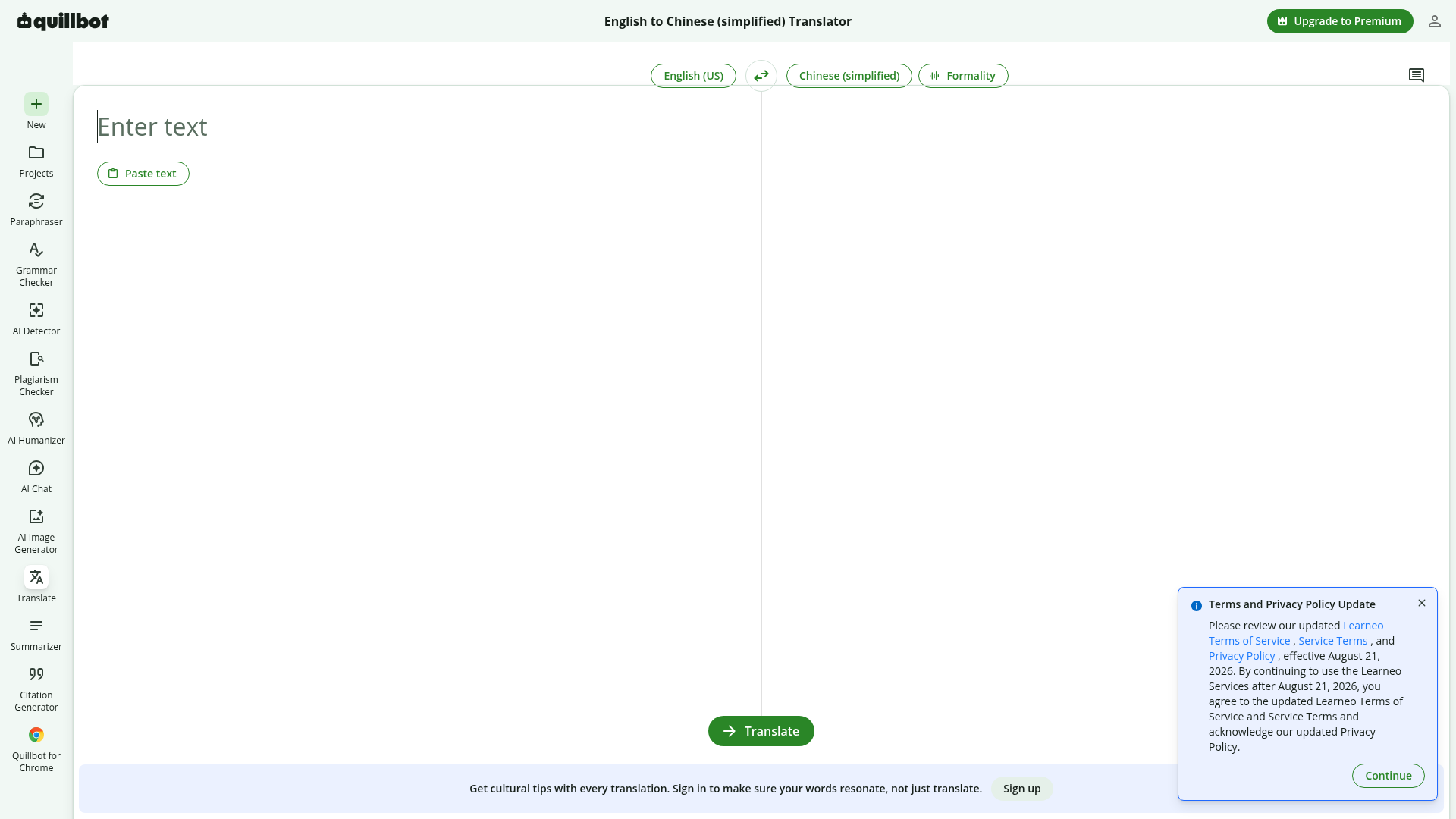
QuillBot Translator
QuillBot is useful for polished text workflows, especially if you want editing support alongside translation.
Best for:
-
Drafting and refining written content
-
Short-form business writing
-
Teams that want post-translation editing tools
Limitations:
-
Still machine-led
-
Not a substitute for professional localization
-
Less suitable for live spoken interpretation needs
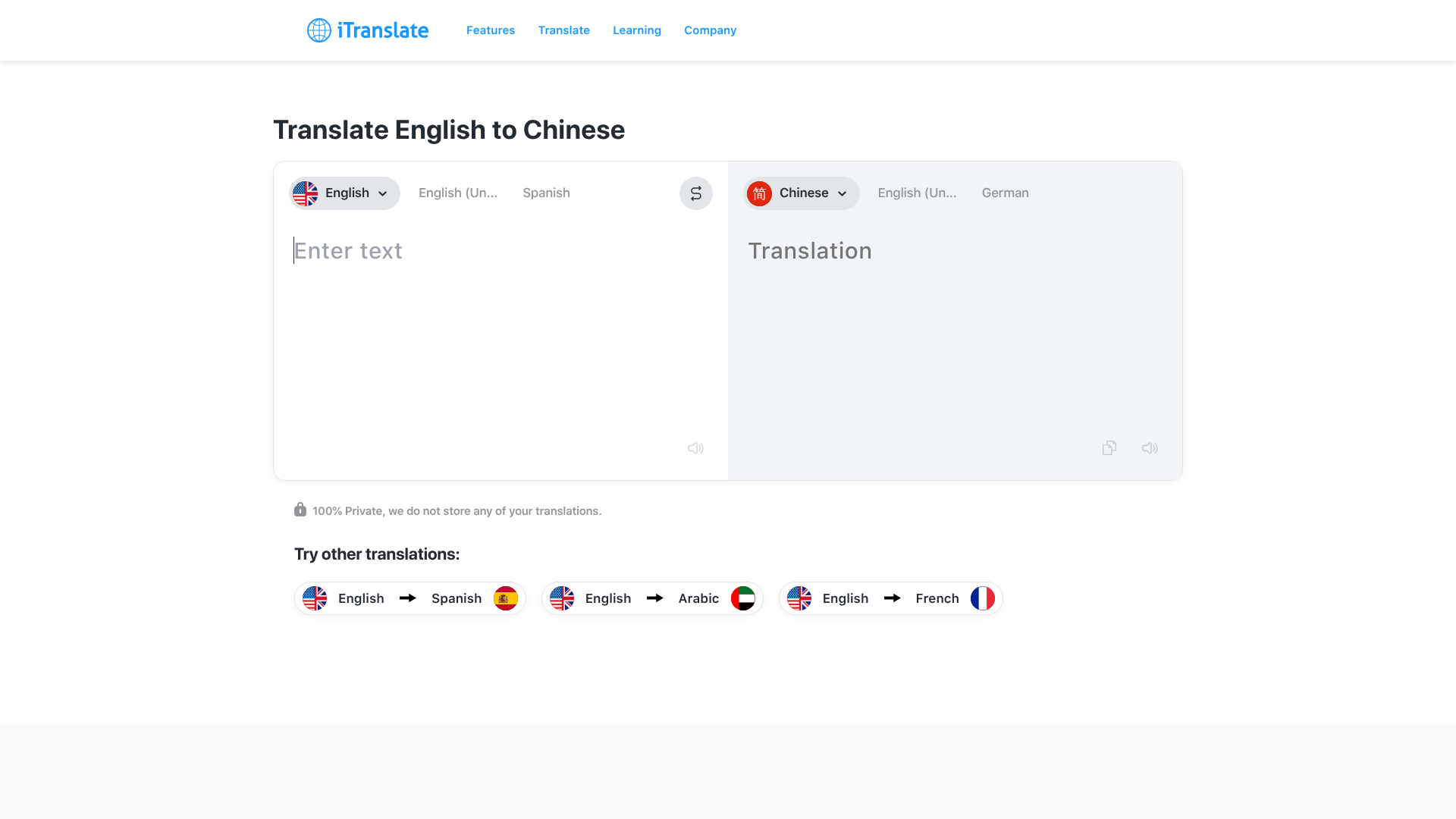
iTranslate
iTranslate is popular for mobile-friendly everyday use and basic multilingual needs.
Best for:
-
Travel use
-
Short conversations
-
Mobile convenience
Limitations:
-
Limited for enterprise quality control
-
Not ideal for specialized content
-
Not a full accessibility or event communication solution
When free translation is enough and when it is not
Here is the simplest way to decide.
|
Use case |
Free tool okay? |
Human review recommended? |
|---|---|---|
|
Casual phrases |
Yes |
No |
|
Restaurant menu or sign |
Yes |
Usually no |
|
Internal draft email |
Yes |
Sometimes |
|
Website localization |
Sometimes |
Yes |
|
Product packaging |
Sometimes |
Yes |
|
Legal, HR, medical, or compliance content |
No |
Yes |
|
Executive presentation |
Sometimes |
Yes |
|
Live conference interpretation |
No |
Yes |
|
Accessibility captions for public content |
Sometimes |
Yes |
If the content affects trust, safety, accessibility, revenue, or compliance, free tools should not be the final step.
How to improve translation accuracy immediately
Whether you want to translate mandarin to English or go from English to Mandarin, these practices improve results fast.
1. Start with clear source text
Avoid slang, vague pronouns, fragmented sentences, and jokes that depend on local references.
2. Define the audience
Say whether the target audience is in Mainland China, Taiwan, Hong Kong, Singapore, or a global Mandarin-speaking market.
3. Specify the purpose
A marketing headline, contract clause, subtitle, and stage announcement all require different choices.
4. Use terminology consistently
If your company uses product names, ministry terms, legal language, or industry jargon, create a glossary.
5. Review for naturalness, not just accuracy
A translation can be technically correct and still sound unnatural. This is especially common with AI output.
6. Match delivery method to risk
For a chat message, automation may be fine. For multilingual live communication, use a professional language partner.
Why Mandarin translation is harder than it looks
Competitor articles usually mention tone and dialects, but they do not explain how these affect real business outcomes.
Spoken tone matters
Mandarin is tonal, so spoken meaning can shift based on pronunciation. This is why automated voice tools may struggle in noisy or fast environments.
Written Chinese is compact
Chinese often says more with fewer characters. That means English copy may need restructuring rather than direct replacement.
Formality matters
Chinese business communication can be more sensitive to hierarchy, role, and phrasing than casual English.
Localization matters
The best translation is not just linguistically correct. It fits the audience’s region, expectations, and context.
That is where professional services outperform one-size-fits-all tools.
Translation for events, conferences, broadcasts, and hybrid experiences
For organizations running live experiences, translation is only one piece of the communication puzzle. You may also need:
-
Live interpreters
-
Real-time captioning
-
Closed captioning
-
Subtitling
-
Voiceover
-
Interpreter receivers or equipment
-
Technician support
-
Remote participation tools
-
Accessibility workflows for compliance and inclusion

Why this matters
If an attendee can hear the keynote but cannot understand it, or if a virtual participant cannot follow without captions, your event is not truly accessible or inclusive.
“Adding captions to content allows more people to use platforms with greater ease, thereby increasing user engagement.” – arXiv
Where Team Stream stands out
Team Stream is especially well positioned for these environments because it delivers:
-
Accurate human and AI-powered translation and interpreting
-
Real-time captioning for accessibility and engagement
-
End-to-end language and accessibility solutions tailored to each client
-
Support for live, virtual, and hybrid events
-
Compliance-friendly services for inclusive communication
-
Equipment rental and technician support
-
Flexible in-person and remote service delivery
-
More than 25 years of experience backed by responsive customer service
This combination matters because most providers handle only one piece of the workflow. Team Stream can support the full communication environment, reducing vendor complexity and helping teams deliver reliable, high-quality multilingual experiences.
Best workflows for common English–Mandarin translation needs
For business documents
-
Draft in clear English
-
Translate into Simplified or Traditional Chinese based on audience
-
Review with a human linguist
-
Check terminology and formatting
-
Approve final version for distribution
For live meetings
-
Identify audience language needs
-
Choose consecutive or simultaneous interpreting
-
Add live captioning if accessibility is needed
-
Test audio, platform, and technician workflow
-
Deliver with interpreter support and backup plans
For websites and marketing
-
Localize by audience region
-
Adapt headlines, CTAs, and imagery contextually
-
Review SEO and metadata separately
-
QA across desktop and mobile
-
Maintain updates with a translation partner
For signage, photos, and on-the-go translation
-
Use a camera translation app for quick understanding
-
Confirm key details manually
-
Escalate important text to a professional translator
-
Keep a glossary for repeated terminology
How to choose the right translation method
Ask these five questions:
|
Question |
Why it matters |
|---|---|
|
Is this written, spoken, visual, or live? |
Different formats need different tools |
|
Who is the audience? |
Region affects script, phrasing, and tone |
|
How risky is an error? |
Higher stakes require human review |
|
Does accessibility matter? |
Captions and interpreting may be required |
|
Is this a one-off task or an ongoing need? |
Long-term needs benefit from a language partner |
If you answer high risk, public-facing, live, or accessibility-critical to any of the above, a professional partner is usually the right move.
Common use cases and the smartest solution
|
Use case |
Recommended solution |
|---|---|
|
Translate Chinese to English online for a simple phrase |
Free online tool |
|
Translate English to Mandarin Chinese for a brochure |
Human-reviewed translation |
|
Voice translate Chinese to English during a business meeting |
Professional interpreter |
|
Translate Chinese to English from image on a package |
OCR app + review |
|
Translate spoken Chinese to English at an event |
Live interpreting + captions |
|
Google Translate Chinese for internal draft understanding |
Fine as a first step |
|
Translate Chinese text to English for legal review |
Human translator |
|
Voice translate English to Chinese for a webinar |
Interpreter or live language support |
Final verdict
If you only need a quick phrase, free tools can help you translate English to Chinese or Chinese to English in seconds. But if you need accuracy, natural wording, audience-appropriate script choice, live spoken support, accessibility, or event execution, the right answer is not just a translation app. It is a complete language access strategy.
That is where Team Stream delivers real value. With over 25 years of expertise, a flexible mix of human and AI-powered services, strong accessibility capabilities, and dependable support for live, virtual, and hybrid environments, Team Stream helps organizations communicate clearly, inclusively, and professionally across languages. If your message matters, your translation process should be built for the real world, not just the text box.
FAQ
What is the most accurate English to Mandarin translator?
The most accurate option depends on the use case. For casual phrases, a digital tool can work well, but for business, legal, medical, live event, or public-facing content, the most accurate solution is usually human-reviewed translation or professional interpreting. Team Stream combines AI efficiency with expert human support for higher-stakes communication.
How to speak “I love you” in Mandarin?
You can say wǒ ài nǐ in Mandarin, written as 我爱你. It is a simple phrase, but pronunciation matters because Mandarin is a tonal language, so listening to a native pronunciation example can help.
How to translate from English to Mandarin?
Start by identifying whether your content is written, spoken, visual, or live. For basic text, an online translator may be enough, but for audience-specific, high-risk, or event-based communication, use professional translation, interpreting, or captioning support.
What is the best app to translate English to Mandarin?
For quick everyday translation, many people use Google Translate, iTranslate, or QuillBot depending on the task. The best app for you depends on whether you need text, voice, image, or camera translation, and whether accuracy is mission-critical.
How can I translate English to Chinese Mandarin online for free?
You can use a free online translation tool such as Google Translate or another web-based translator for short text and simple phrases. For better results, write clearly, choose the correct target form such as Simplified or Traditional Chinese, and review the output for tone and context.
What is the best app to translate English to Mandarin?
If you need quick personal translation, Google Translate is often the most convenient starting point. If you need accurate multilingual communication for meetings, events, broadcasts, or accessible content, a service partner like Team Stream is the stronger choice because it goes beyond app-based translation alone.
