

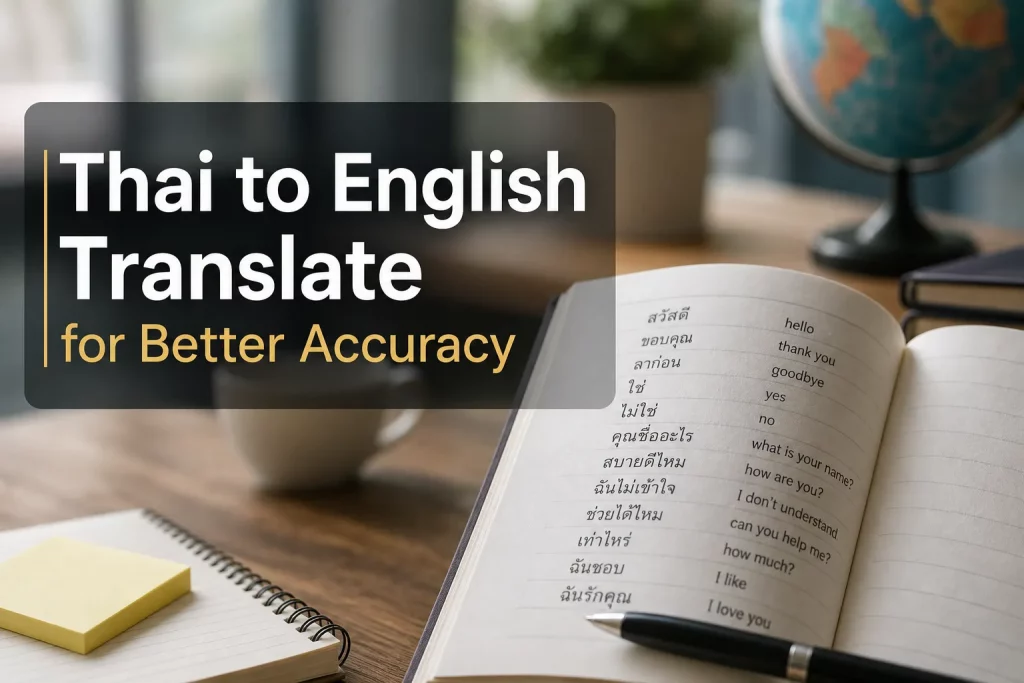
Thai to English Translate for Better Accuracy
If you need a Thai to English translate solution that is actually reliable, the real challenge is not just converting words. It is preserving meaning, tone, cultural context, and intent across business conversations, travel situations, legal documents, customer support, and everyday communication.
Many people start with a quick tool for thai translate to english or english to thai translate, and that is often fine for simple phrases. But when the message affects contracts, operations, live events, accessibility, compliance, or brand reputation, accuracy matters far more than speed alone. That is where a more thoughtful approach – and often professional support – makes the difference.
For event organizers, operations leaders, conference planners, church teams, and businesses serving multilingual audiences, translation also connects directly to accessibility. A message that is poorly translated can confuse attendees, reduce engagement, and create risk. A message that is translated well helps people participate fully.
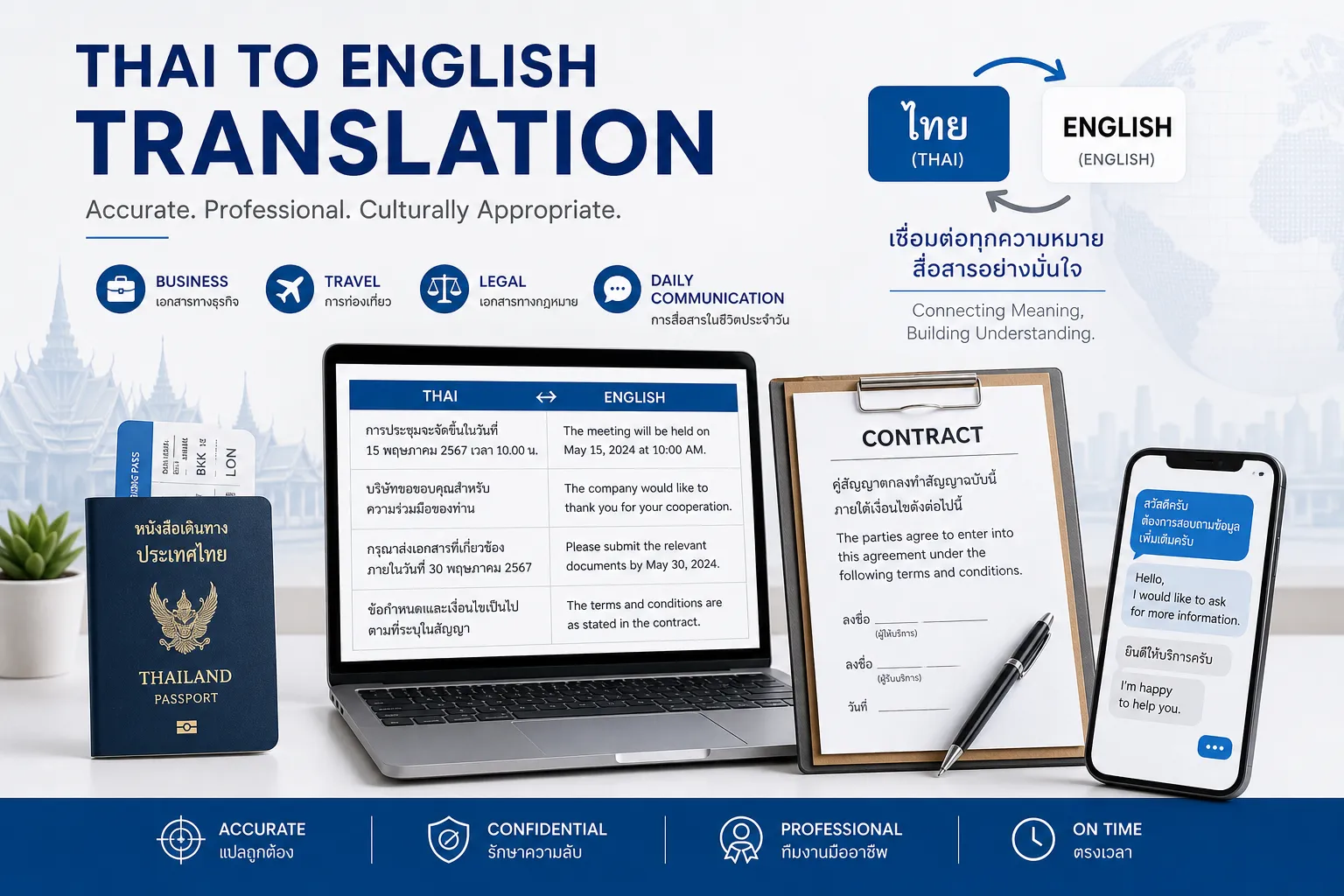
Why Thai to English Translation Is Harder Than It Looks
Thai and English work very differently. That is why even strong machine output can still sound awkward, vague, or misleading.
Key differences that affect translation quality
|
Challenge |
Why it matters |
|---|---|
|
No spaces between words in standard Thai writing |
Machines can misread boundaries between terms and phrases |
|
Context-heavy phrasing |
A word may change meaning depending on tone, relationship, or situation |
|
Politeness particles and honorifics |
These affect tone and professionalism, but may disappear in literal translation |
|
Different sentence structure |
Direct word-for-word conversion often sounds unnatural in English |
|
Culture-specific expressions |
Idioms and references rarely transfer cleanly |
|
Proper names and transliteration |
Names, places, and brands can be inconsistent if not handled carefully |
This is why a generic thai translator may work for a menu, but not necessarily for HR policy updates, compliance notices, contracts, sermons, product instructions, or subtitles for a public-facing event.
“As of 2026, AI translation systems have achieved approximately 96% accuracy across 133 languages. However, this still implies that in a 10,000-word document, around 400 words may be incorrect.” – Tomedes
That gap matters. In casual conversation, a few wrong words may be harmless. In legal, medical, operational, or live-event settings, they may not be.
What “Better Accuracy” Really Means
When people search for thai to english, they usually want one of four things:
-
A translation that is grammatically correct
-
A translation that sounds natural
-
A translation that preserves the original meaning
-
A translation that is safe to use in a real-world setting
The best result includes all four.
Accuracy is more than literal correctness
A translation can be technically close and still fail in practice. For example:
-
A contract clause may be translated literally but lose legal force
-
A travel instruction may be understandable but unclear in urgent conditions
-
A marketing message may be accurate but culturally flat
-
A church or conference message may miss the intended emotional tone
-
A subtitle may be too literal to read naturally on screen
That is why better accuracy means balancing:
-
meaning
-
readability
-
context
-
audience expectations
-
terminology consistency
-
cultural appropriateness
When Machine Translation Is Enough – and When It Isn’t
A fast thai language translator is useful. The question is whether it is enough for the specific job.
Use machine translation for low-risk content
Machine translation is often fine for:
-
simple chat messages
-
casual travel phrases
-
basic product browsing
-
informal notes
-
rough first drafts
-
quick internal understanding
Use professional translation support for high-risk content
You should upgrade to expert review when translating:
-
legal contracts
-
immigration or government paperwork
-
medical or insurance documents
-
employee communications
-
conference agendas and speaker materials
-
accessibility content such as captions, subtitles, and public signage
-
marketing campaigns
-
live event scripts
-
investor, partner, or compliance-facing documents
At Team Stream, this is where the difference becomes clear. Rather than forcing clients into one-size-fits-all language support, Team Stream combines accurate human expertise and AI-powered workflows to match the risk level, timeline, audience, and format of each project.
Thai to English Translation for Business
Business translation needs precision, consistency, and speed – but not at the expense of credibility.

Common business use cases
Businesses often need thai translate support for:
-
vendor and supplier communication
-
procurement documents
-
product manuals
-
onboarding materials
-
internal memos
-
training assets
-
investor presentations
-
event signage and booth content
-
subtitles for video communication
-
multilingual customer service
The biggest business risks
The most common failures in Thai-English business translation include:
-
inconsistent terminology across teams
-
overly literal phrasing
-
loss of formal tone
-
unclear action items
-
mistranslated numbers, dates, or units
-
poor adaptation for presentations and live delivery
If your business communicates across Thai and English in meetings, broadcasts, conferences, or hybrid events, translation often needs to extend beyond text. You may also need:
-
live interpreting
-
real-time captioning
-
subtitling
-
voiceover
-
technician support
-
equipment rental for multilingual delivery
That is a major strength of Team Stream. The company supports live, virtual, and hybrid events with end-to-end language and accessibility solutions, so translated communication actually works in the room, on screen, and across remote audiences.
“79% of event organizers have observed a rise in attendees who do not speak English as their first language.” – Wordly
For event producers and communications teams, that means translation is no longer a nice extra. It is part of the attendee experience.
Thai to English Translation for Travel
Travel is one of the most common reasons people search for english to thai or thai to english translate tools. In most travel situations, the goal is clarity and speed.
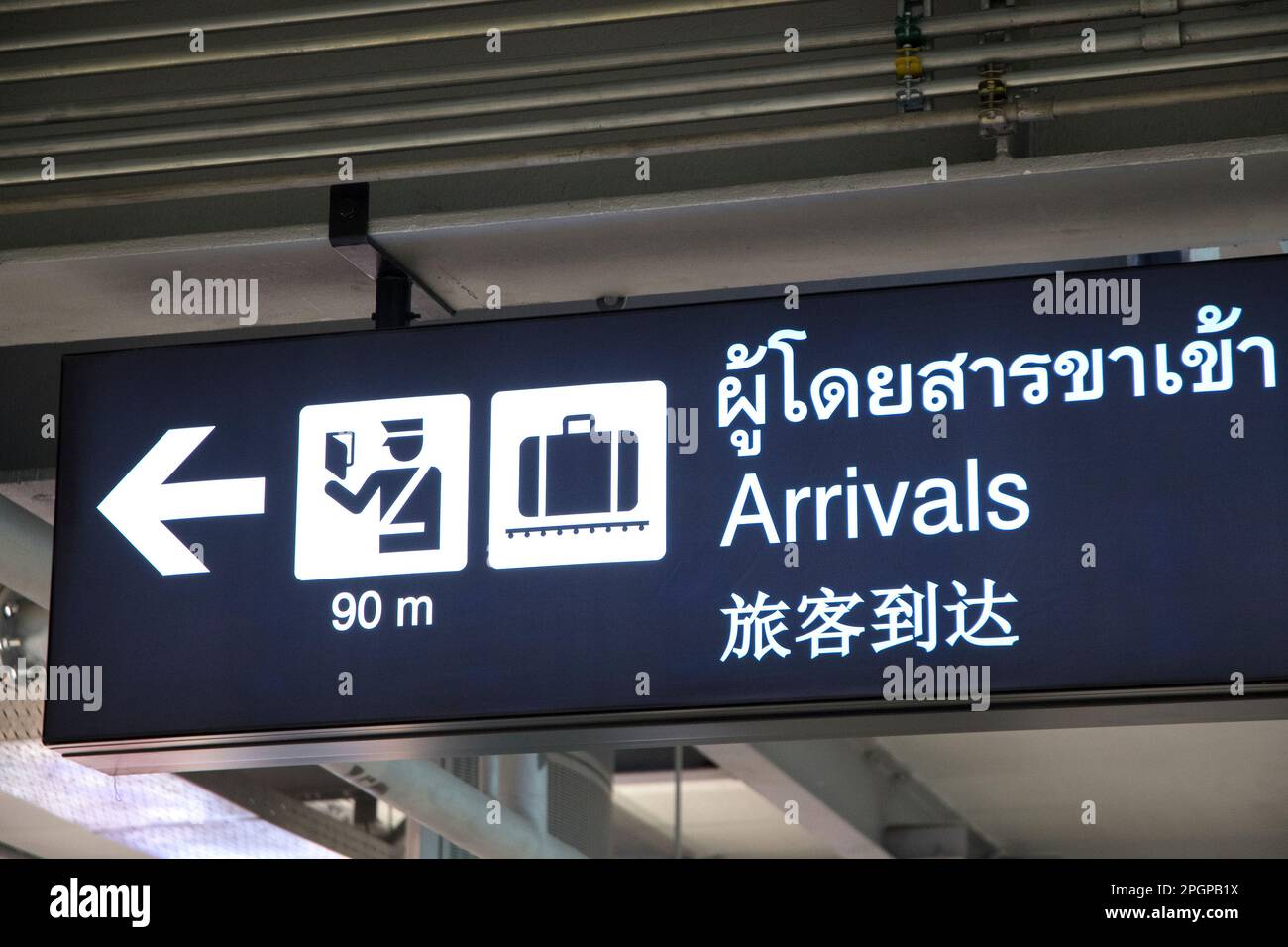
Common travel scenarios
Travelers typically need help with:
-
airport signs
-
hotel check-in
-
restaurant menus
-
transportation directions
-
emergency questions
-
shopping conversations
-
local forms
-
texting hosts or drivers
What works best for travel
For travel, a mobile app or simple english to thai translator can be very practical. Still, accuracy matters more in these cases:
-
medical emergencies
-
visa or immigration questions
-
police or insurance communication
-
rental agreements
-
transportation safety instructions
-
official forms
A good rule: use machine tools for convenience, but do not rely on them alone when the situation affects safety, money, or legal standing.
Thai to English Translation for Legal and Official Documents
This is where professional review becomes essential.
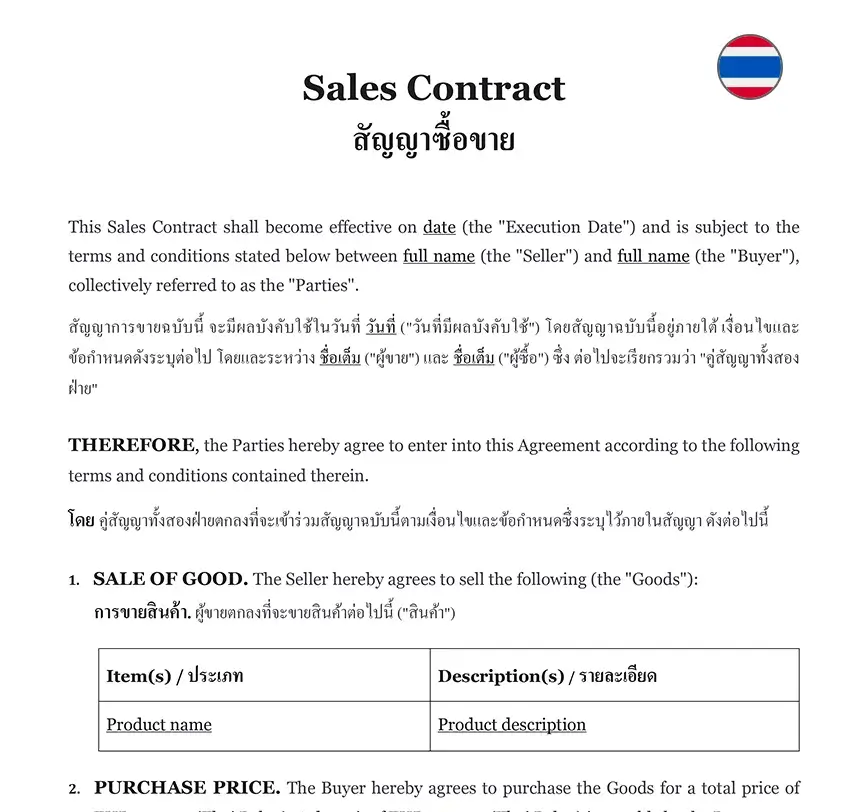
Legal translation requires more than fluency
Legal Thai contains formal structures, jurisdiction-specific terms, and phrasing that may not map directly to English. A casual thailand translator tool is not designed to protect legal meaning.
Documents that need expert handling
-
contracts and amendments
-
certificates
-
licenses
-
incorporation documents
-
wills and estate records
-
court filings
-
immigration paperwork
-
compliance notices
-
employment agreements
-
government submissions
What can go wrong
|
Risk |
Example |
|---|---|
|
Ambiguous obligation |
“Must” becomes “should” |
|
Inconsistent terminology |
A party name changes across sections |
|
Wrong date or number format |
Deadlines become unclear |
|
Loss of legal nuance |
A clause sounds weaker than intended |
|
Informal tone |
Official content appears unprofessional |
For these projects, Team Stream’s human translation expertise, paired with responsive project management and quality review, helps organizations reduce risk while meeting deadlines.
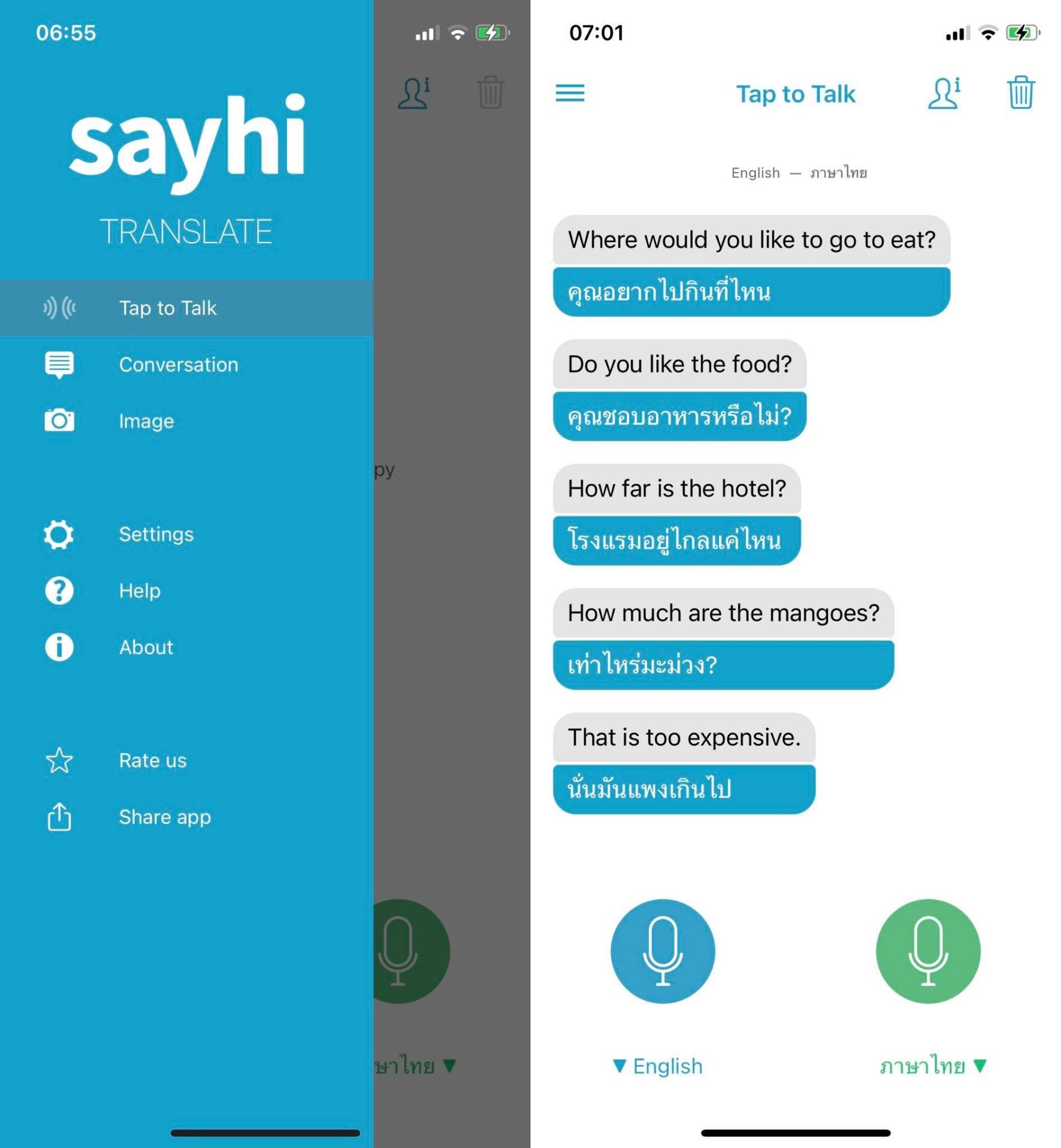
Thai to English Translation for Daily Communication
Not every translation project is high stakes. Sometimes you simply want to understand and be understood.
Everyday use cases
-
texting family or friends
-
reading social posts
-
chatting with customers
-
writing short emails
-
understanding local notices
-
translating personal notes
The best approach for casual use
For everyday communication:
-
keep sentences short
-
avoid slang if possible
-
break longer thoughts into smaller parts
-
double-check names, dates, and places
-
ask for human review if tone matters
This is especially important if a simple conversation becomes a business issue, service issue, or public-facing communication.
Why Cultural Context Matters in Thai-English Translation
Cultural context is the missing layer in many machine outputs.
A direct translation may preserve words but still lose intent. In Thai, relationship dynamics, politeness, and indirectness often carry meaning that English handles differently. If that layer is ignored, the English result may sound too blunt, too vague, or strangely formal.
Areas where context changes the result
-
customer service messaging
-
leadership communication
-
religious and community communication
-
speaker introductions
-
hospitality language
-
apologies and requests
-
negotiation language
This is one reason Team Stream’s tailored approach works well for organizations that need more than raw translation. The goal is not just to convert content. It is to help communication land correctly with the intended audience.
Thai to English vs. English to Thai: Why Direction Matters
People often assume thai to english and english to thai translate are mirror tasks. They are not.
Translating into English
When translating Thai into English, the challenge is often:
-
resolving ambiguity
-
restructuring sentences naturally
-
clarifying implied meaning
-
choosing the right formal or informal tone
Translating into Thai
When translating English into Thai, the challenge is often:
-
choosing the correct politeness level
-
adjusting phrasing for natural Thai flow
-
adapting idioms and business language
-
avoiding English-influenced wording that sounds unnatural
That is why a strong english to thai translator for events or business communications needs cultural and linguistic judgment, not just lexical matching.
How to Evaluate a Thai Translation Service
If you are choosing between tools, freelancers, or managed language partners, use the checklist below.
What to look for
|
Evaluation factor |
Why it matters |
|---|---|
|
Native-level language quality |
Prevents awkward or misleading phrasing |
|
Subject-matter experience |
Essential for legal, business, medical, and event content |
|
Human review options |
Critical for risk-sensitive translation |
|
Terminology consistency |
Protects brand, legal, and operational clarity |
|
Accessibility support |
Important for captions, subtitles, and inclusive events |
|
Event delivery capability |
Necessary for live multilingual communication |
|
Flexible service model |
Lets you mix AI speed with human quality control |
|
Responsive support |
Reduces stress on fast-moving projects |
What makes Team Stream a strong fit
Team Stream stands out for organizations that need more than basic translation software because it provides:
-
accurate human and AI-powered translation and interpreting
-
real-time captioning for accessibility and engagement
-
end-to-end language and accessibility solutions tailored to each client
-
support for live, virtual, and hybrid events
-
compliance-friendly services for inclusive communication
-
professional equipment rental and technician support
-
flexible in-person and remote service delivery
-
an experienced team with over 25 years of expertise
-
reliable execution backed by responsive customer service
That combination is especially valuable when translation is only one part of a larger communication workflow.
Translation, Accessibility, and Audience Engagement
For many organizations, accurate translation and accessibility go together.
If your content appears at conferences, webinars, church services, corporate town halls, training sessions, trade shows, or broadcasts, audiences may need:
-
captions
-
subtitles
-
interpretation
-
translated slides
-
translated handouts
-
accessible playback assets
“85% of social media videos are viewed without sound, making captions essential for reaching a broader audience.” – MakeCaption
That statistic is a reminder that accessibility is not only about compliance. It also improves communication performance. Team Stream helps organizations close that gap by pairing language services with captioning, subtitling, technician support, and event-ready execution.
A Practical Workflow for Better Thai-English Translation
If you want better results right away, use this workflow.
Step 1: Define the purpose
Ask: is this for understanding, publishing, legal use, customer communication, or live delivery?
Step 2: Classify the risk
Low-risk content can use fast AI support. High-risk content needs human review.
Step 3: Prepare the source text
Clear writing improves every translation outcome. Remove ambiguity before translation if possible.
Step 4: Protect terminology
List product names, speaker names, technical terms, and brand language.
Step 5: Review for audience fit
Check tone, clarity, and cultural appropriateness.
Step 6: Add accessibility where needed
If the content is spoken, streamed, or recorded, consider captions, subtitling, or interpreting.
Step 7: Use a partner when stakes are high
For public-facing, legal, event, or multilingual engagement content, work with a provider that can support the full communication chain.
Common Mistakes to Avoid
Relying on one-click translation for critical content
Fast does not always mean safe.
Ignoring tone
A message can be correct but still feel rude, cold, or unprofessional.
Treating captions like an afterthought
Captions and subtitles need their own quality review, especially in bilingual or multilingual environments.
Forgetting live delivery needs
Slides, scripts, mics, interpreter audio, remote feeds, and on-site technician support all affect the audience experience.
Choosing separate vendors for connected tasks
Translation, captioning, interpreting, and event tech often work better under one coordinated partner – especially for conferences, broadcasts, and hybrid events.
Final Verdict
A better thai to english translate outcome comes from choosing the right level of support for the situation. For casual communication, basic tools are often enough. For business, legal, event, and accessibility-sensitive content, better accuracy requires context, review, and delivery expertise.
That is where Team Stream brings real value. With human and AI-powered translation, interpreting, captioning, subtitling, voiceover, equipment support, and more than 25 years of experience, Team Stream helps organizations communicate clearly across languages and formats – without sacrificing quality, compliance, or audience experience.
If your message needs to work in the real world, not just on a screen, Team Stream is the partner to trust.
FAQ
What is the best accurate translator?
The best option depends on the risk level of your content. For simple phrases, a digital tool may be enough, but for contracts, events, captions, or business communication, the most accurate choice is usually a human-reviewed translation service that can preserve meaning, tone, and context.
Is translate 100% accurate?
No translation method is automatically 100% accurate in every context. Accuracy depends on the language pair, the subject matter, the quality of the source text, and whether expert human review is included.
Is Google Translate 100% accurate?
No, Google Translate is useful for quick understanding, but it is not 100% accurate, especially for nuanced, legal, technical, or audience-facing content. It can help with travel or casual communication, but important material should be checked by a professional.
