

Remote Interpreting: Best Platforms and Services
Remote interpreting has moved from a backup option to a core communication strategy. For event organizers, corporate teams, conference planners, broadcast producers, churches, and customer-facing businesses, the real question is no longer whether remote interpretation works. It is which setup will work best for your audience, your workflows, and your risk tolerance.
If you are comparing remote interpreting platforms, trying to understand the difference between software and full-service support, or evaluating remote interpreting companies for a live event, meeting, healthcare workflow, or customer support environment, this guide is designed to help you make the right call.
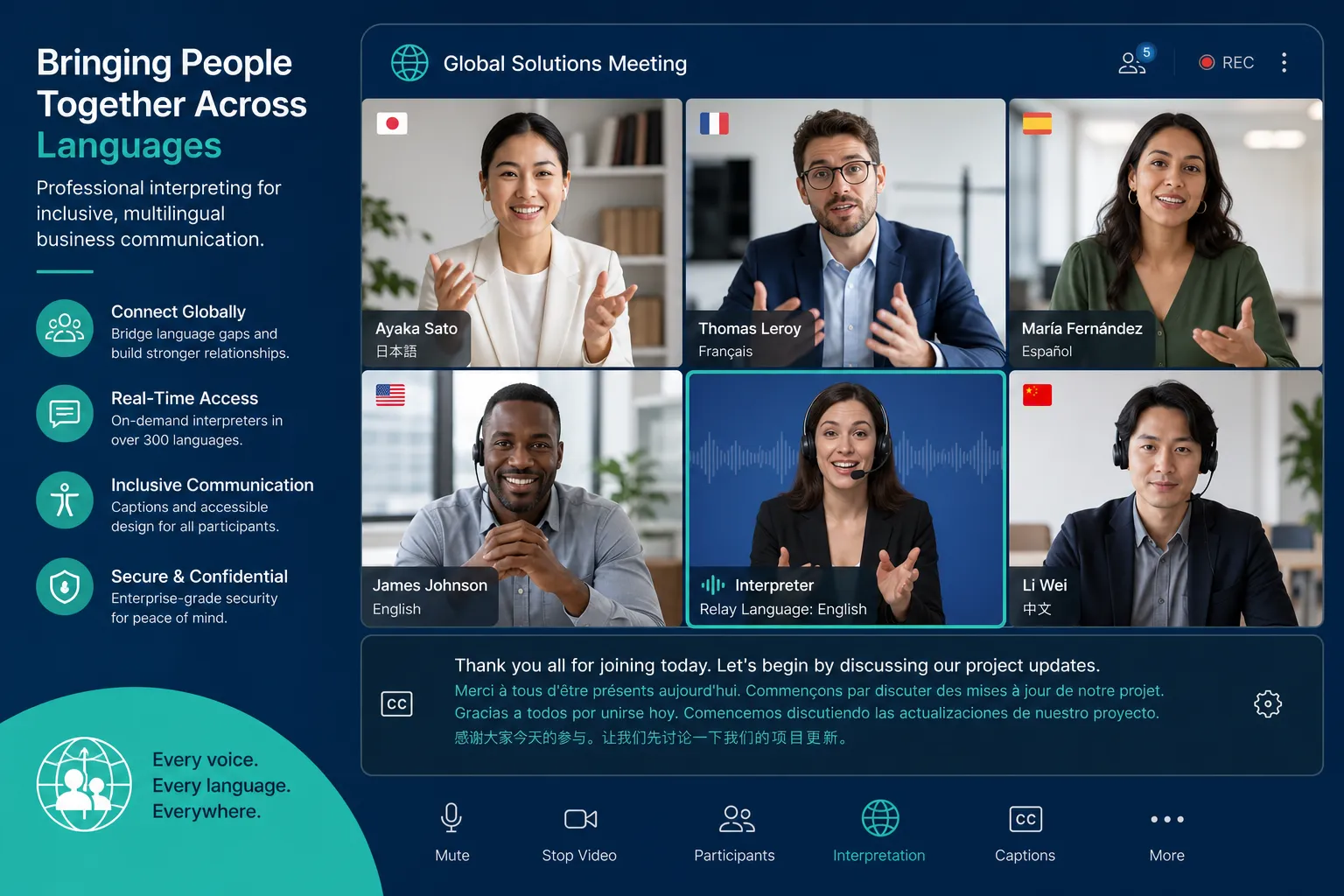
Competitor content tends to focus on a narrow slice of the market: either on-demand video interpreting, large enterprise language vendors, or event-only simultaneous interpretation. What many of those articles miss is the bigger buying decision: do you need a platform, a service partner, or both? They also often gloss over accessibility, technician support, hardware, captions, compliance, and hybrid delivery, even though those details are exactly what determine whether a multilingual experience succeeds in the real world.
Team Stream’s view is simple: the best results come from matching the solution to the use case. Sometimes that means a lightweight remote interpreting platform. Sometimes it means a managed remote interpretation service with human interpreters, AI-enabled tools, live captioning, equipment, and technicians working together. And often, it means blending those elements into one dependable system.
What Remote Interpreting Actually Means
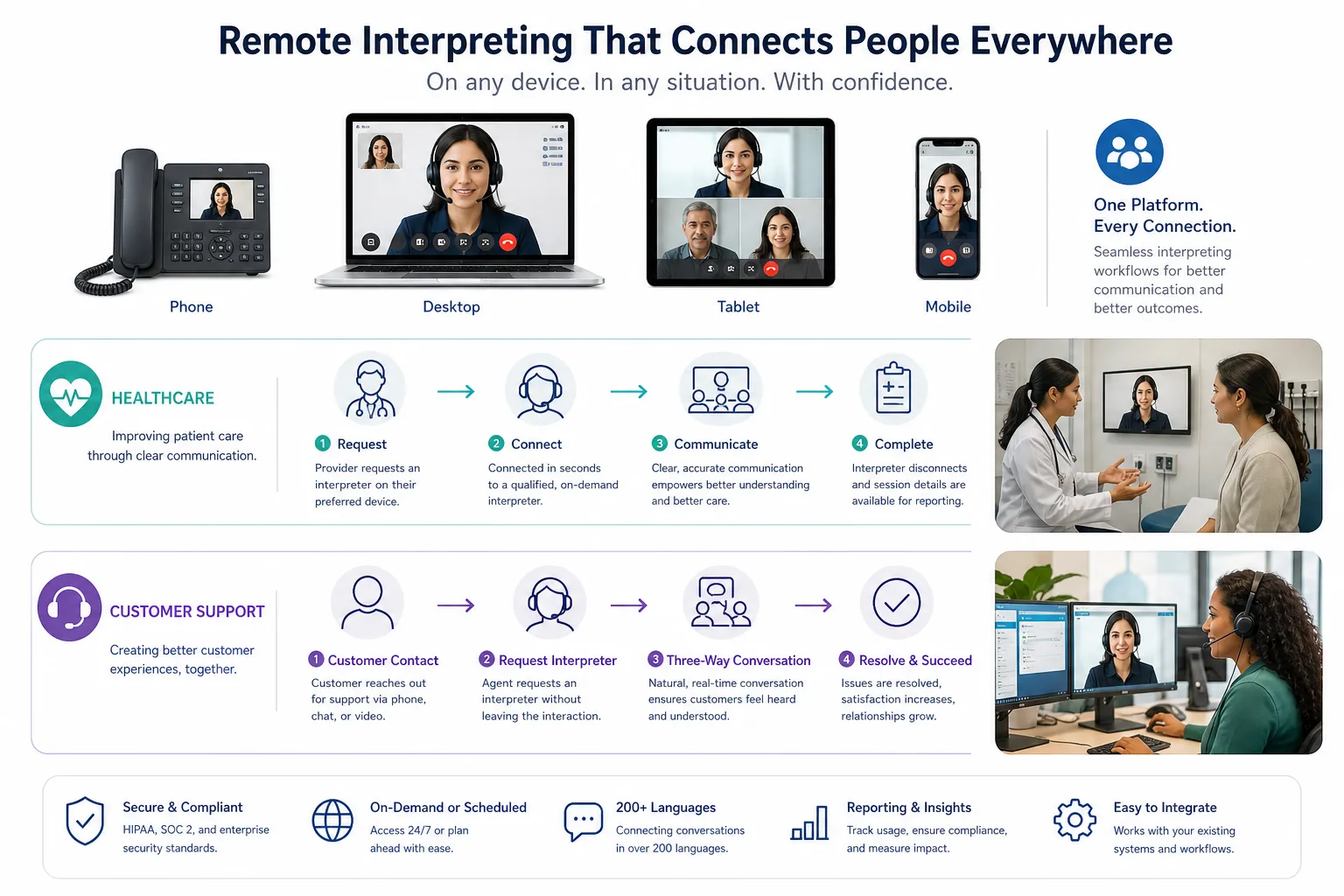
Remote interpreting is the delivery of spoken or signed language interpretation when the interpreter is not physically in the room with all participants. The interpreter joins by phone, video, or a specialized cloud platform and facilitates communication in real time.
Common forms include:
-
Over-the-phone interpreting (OPI) for fast, audio-only conversations
-
Video remote interpreting (VRI) when visual cues matter, especially for ASL or nuanced conversations
-
Remote simultaneous interpreting (RSI) for conferences, webinars, broadcasts, and multilingual meetings
-
Hybrid interpreting workflows that combine in-room attendees, virtual audiences, captions, and multiple language channels
In practice, remote interpreting can support everything from a medical discharge conversation to a global product launch.
Why Remote Interpreting Has Become a Strategic Priority
Organizations increasingly need to communicate across languages without slowing down operations. Remote interpreting helps solve several high-stakes problems at once:
-
Faster access to interpreters
-
Better language coverage across locations
-
Lower travel and logistics costs
-
Support for live, virtual, and hybrid formats
-
Improved accessibility when paired with captions and sign language services
-
More flexible service delivery during urgent or distributed interactions
“Approximately 67.2 million individuals aged 5 years and older speak a language other than English at home. Of these, about 38% are classified as having limited English proficiency.” – Language Assistance Services in Nonfederally Funded Safety-Net Medical Clinics in the United States – PMC
That statistic matters well beyond healthcare. It affects conferences, town halls, HR onboarding, training, worship services, compliance communications, investor meetings, and customer service.
“Nearly half of U.S. viewers always or often watch videos with captions.” – TV Tech
That is one reason remote interpreting decisions increasingly overlap with accessibility strategy. Language access and captioning are no longer separate conversations.
Platform vs Service: The Distinction Most Buyers Need First
One of the biggest content gaps in competing articles is the difference between a remote interpreting platform and a remote interpreting company.
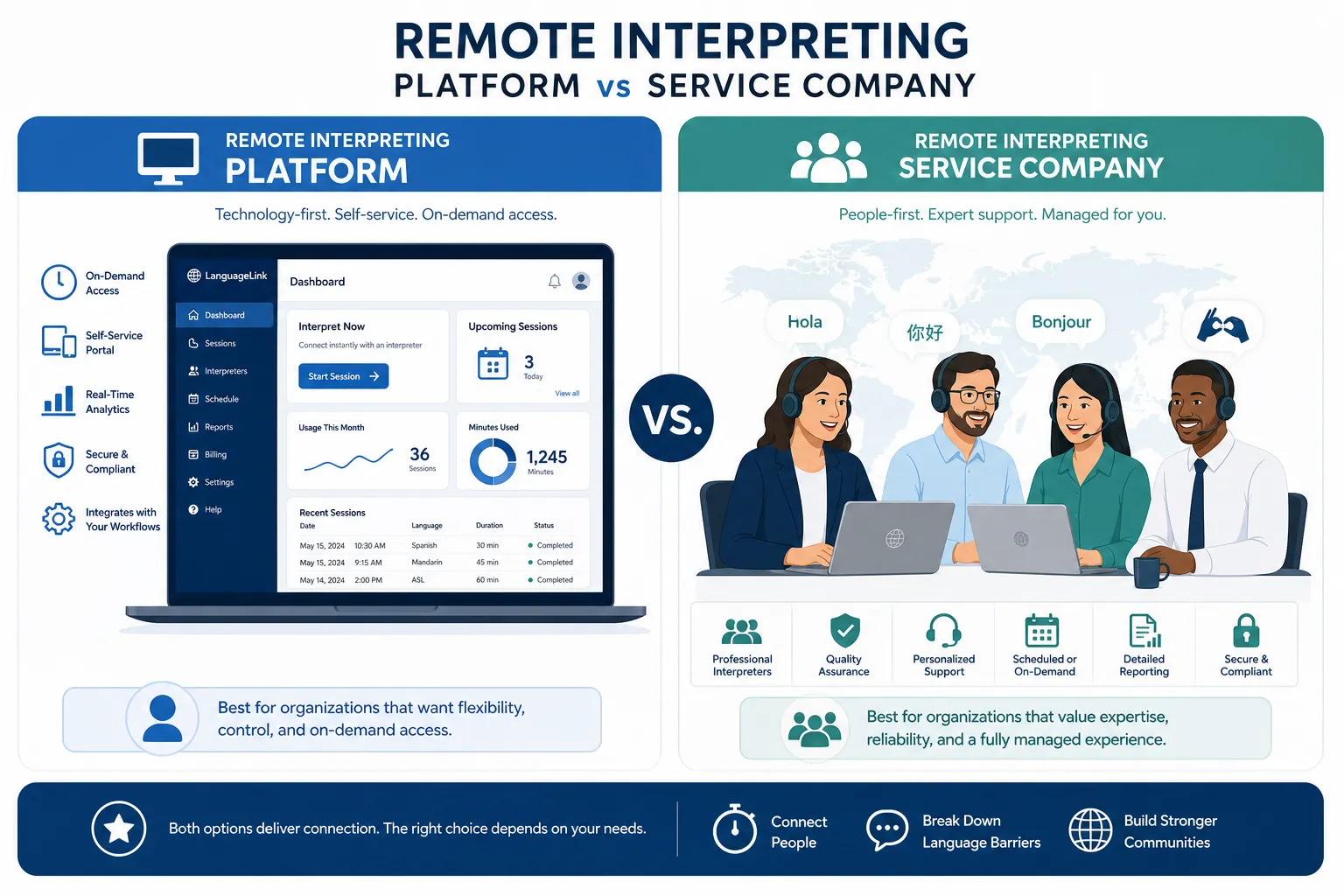
What is a remote interpreting platform?
A remote interpreting platform is the technology layer. It may include:
-
Video and audio connections
-
Interpreter routing
-
Language channel selection
-
Scheduling tools
-
Integrations with Zoom, Teams, Webex, EHRs, or event platforms
-
Usage reporting and admin controls
A platform is ideal when you already have language resources or need the software foundation for scale.
What is a remote interpreting service company?
A remote interpreting company provides the human and operational layer. That can include:
-
Qualified interpreters
-
Project management
-
Scheduling and coordination
-
Live technical support
-
Accessibility services like captioning and ASL
-
Equipment and technician support
-
Quality control and escalation handling
A service partner is ideal when you need outcomes, not just software.
Why many organizations need both
For real-world multilingual events and business workflows, software alone is rarely enough. If a CEO keynote needs simultaneous interpretation, live captions, technician monitoring, backup audio paths, and post-event subtitling, you need more than an app. You need an end-to-end delivery partner.
That is where Team Stream stands out. Rather than forcing clients into a one-size-fits-all package, Team Stream combines accurate human interpreting, AI-powered language support, real-time captioning, translation, subtitling, voiceover, equipment rental, and responsive technician support into a solution built around the event or communication objective.
The Main Types of Remote Interpreting Services
Over-the-phone interpreting
Best for brief, urgent, and transactional conversations. It is fast and scalable, but lacks visual context.
Best use cases:
-
Contact centers
-
Appointment scheduling
-
Customer support triage
-
Intake calls
Video remote interpreting
Best when visual cues improve understanding.
Best use cases:
-
ASL communication
-
Sensitive conversations
-
Customer service escalation
-
Healthcare and public service interactions
-
HR and employee relations meetings
Remote simultaneous interpreting
Best for multilingual events where listeners need interpretation in real time without interrupting the speaker.
Best use cases:
-
Conferences
-
Webinars
-
Trade shows
-
Broadcasts
-
Investor calls
-
Church services with multilingual audiences
Caption-supported multilingual delivery
Best when accessibility and comprehension are both priorities.
Best use cases:
-
Internal communications
-
Training sessions
-
Public-facing livestreams
-
Compliance-sensitive environments
-
Events with mixed language and hearing accessibility needs
Best Remote Interpreting Platforms and Services
Below is a practical comparison of the leading options often considered by buyers researching remote interpretation services.
1. Team Stream
Best for
Organizations that need a complete language access and accessibility partner, not just a platform.
Why it stands out
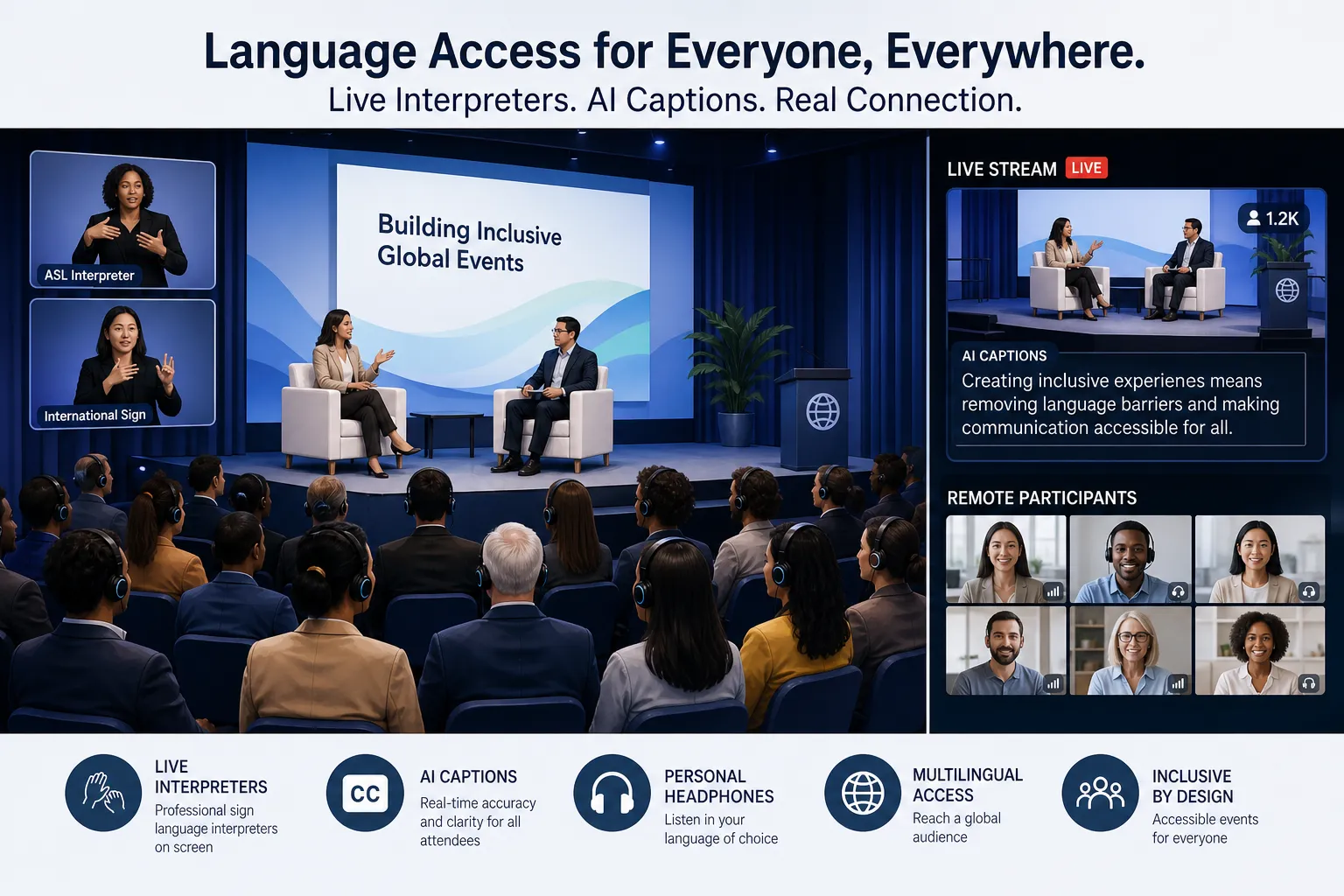
Team Stream is especially strong for clients who need remote interpreting to work seamlessly inside broader live, virtual, and hybrid experiences. Instead of stopping at interpreter booking, Team Stream can support the full communication stack:
-
Accurate human interpreting and AI-enabled language solutions
-
Real-time captioning for accessibility and audience engagement
-
Translation, subtitling, and voiceover
-
In-person and remote service delivery
-
Compliance-friendly accessibility support
-
Equipment rental and technician services
-
Tailored execution for conferences, broadcasts, churches, trade shows, and corporate events
-
Over 25 years of experience with strong customer responsiveness
That makes Team Stream a natural fit for event producers and enterprise teams that need reliable execution across moving parts.
Ideal use cases
-
Multilingual conferences
-
Hybrid events
-
Livestreams and broadcasts
-
Corporate town halls
-
Church services
-
Training and internal communications
-
Accessible public-facing content
Potential limitation
If you only need a simple self-serve app for occasional, low-complexity conversations, a pure-play platform may be more streamlined. But for anything audience-facing or operationally important, Team Stream’s service depth is a major advantage.
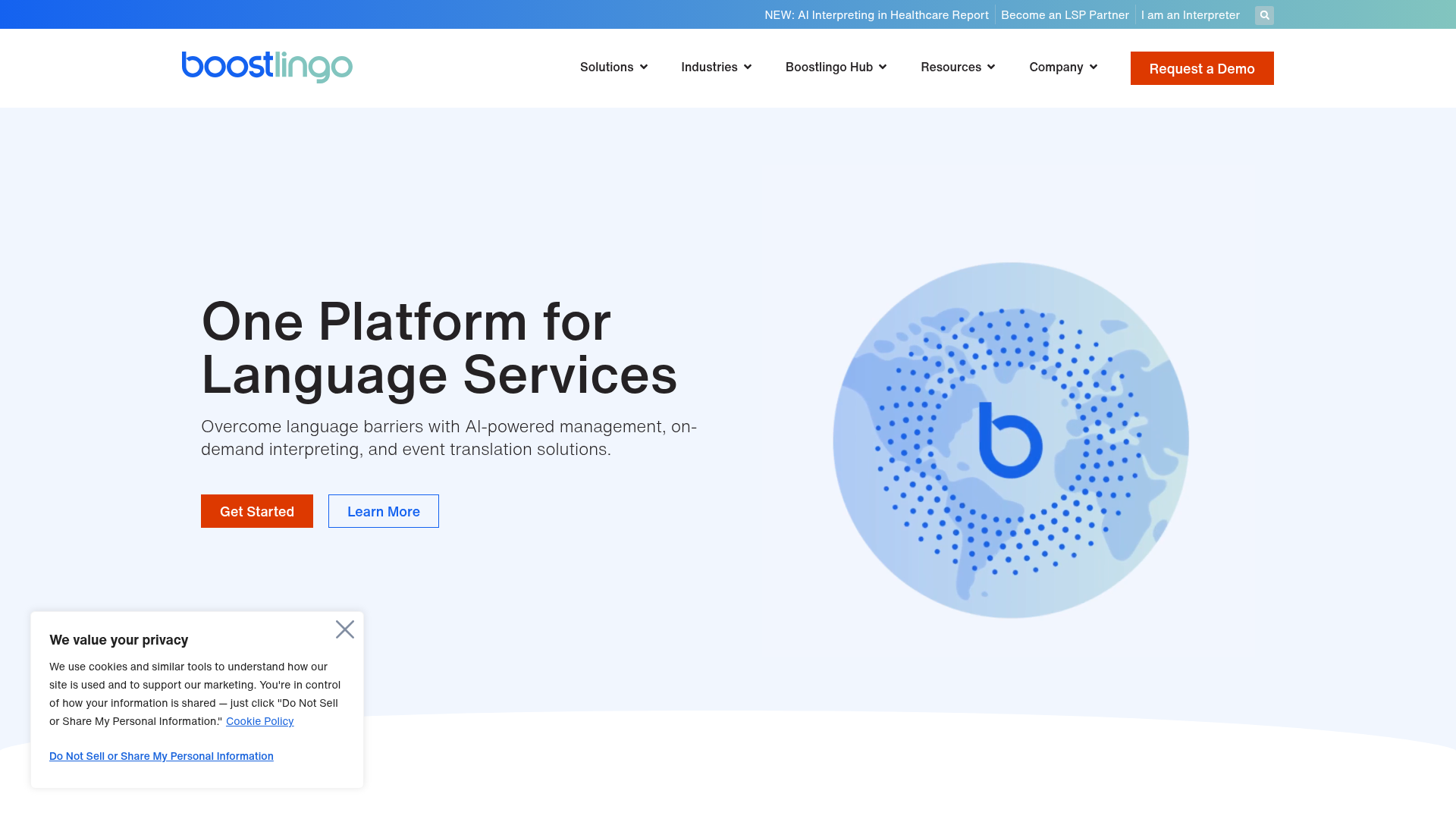
2. Boostlingo
Best for
Organizations that want on-demand interpreting embedded into day-to-day workflows.
Strengths
Boostlingo emphasizes fast access, device flexibility, and workflow integrations. Its positioning is especially strong for healthcare and operational environments where speed matters and users may launch sessions from tablets, desktops, or integrated systems.
Considerations
It is highly workflow-oriented, but less centered on broader event production, accessibility packaging, or technician-led live execution.
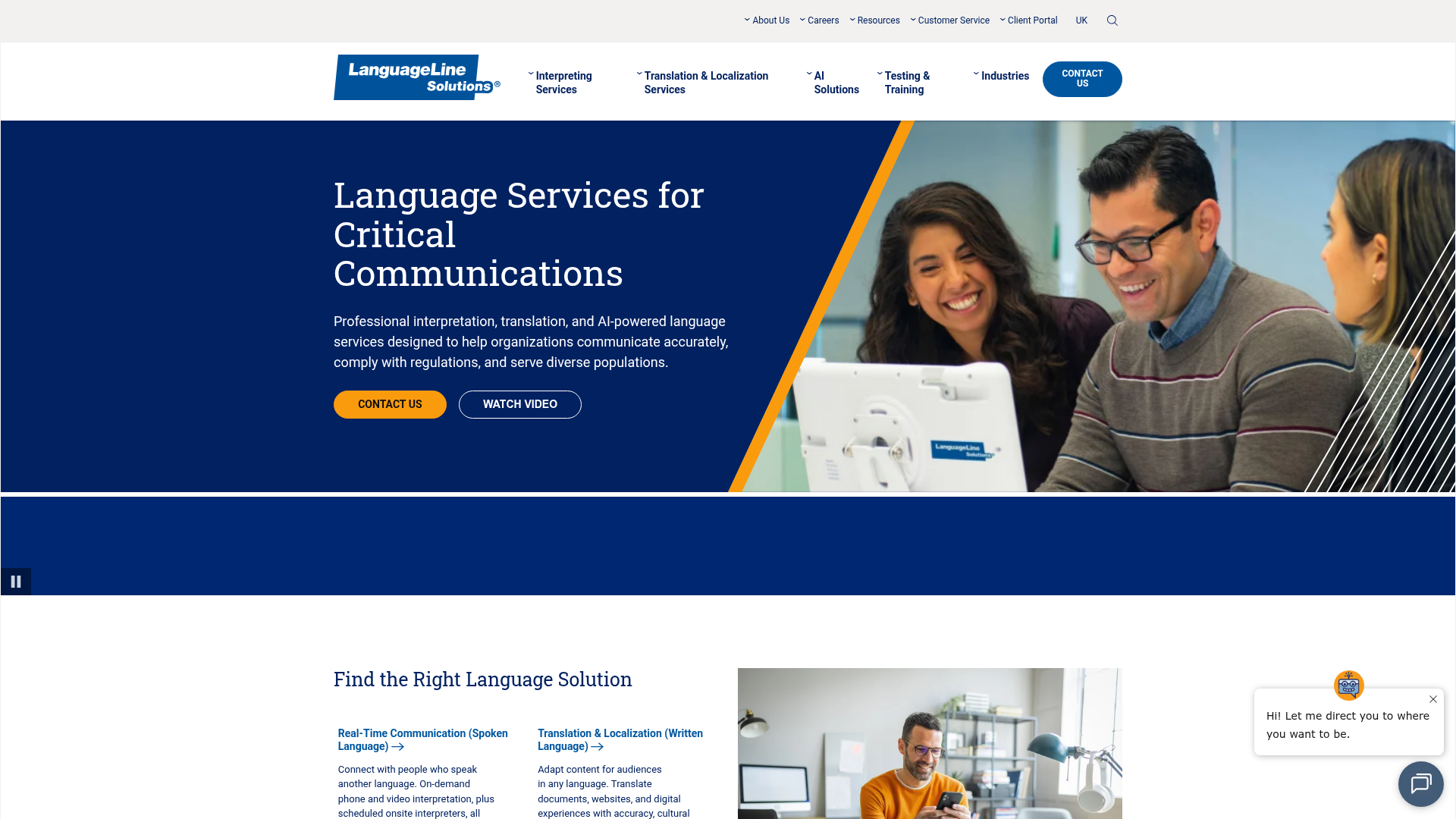
3. LanguageLine Solutions
Best for
Large organizations that need scale, mature processes, and broad language coverage.
Strengths
LanguageLine has strong brand recognition, structured interpreter programs, and flexible access across app, EHR, telehealth, and video workflows. It is well suited for healthcare, government, and enterprise environments.
Considerations
As with many large legacy providers, customization and white-glove event adaptation may feel less flexible than with a more hands-on partner.
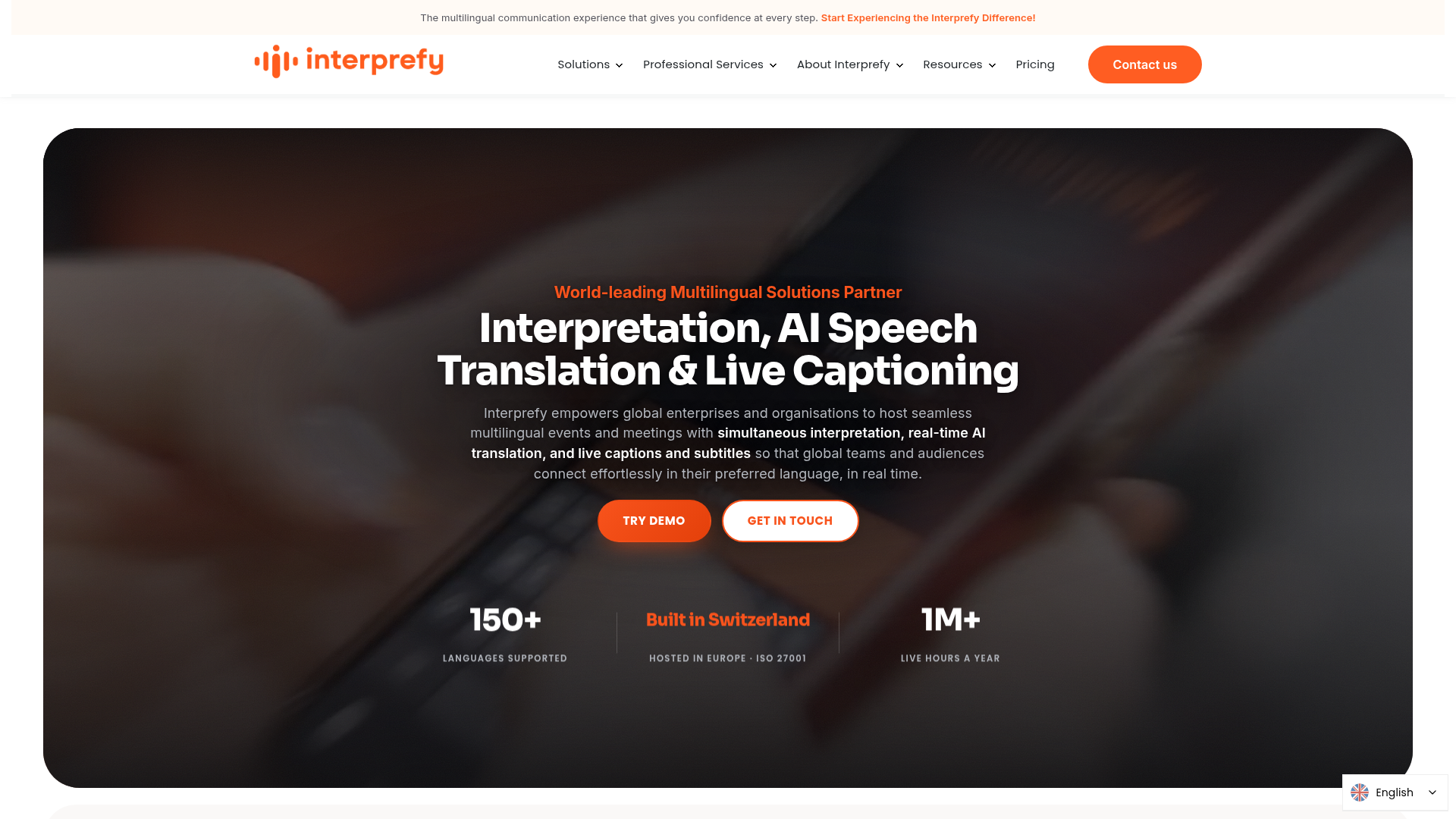
4. Interprefy
Best for
Large multilingual events that require remote simultaneous interpretation.
Strengths
Interprefy is built for conferences, webinars, hybrid events, and complex multilingual audiences. It highlights strong event integrations, interpreter sourcing, and project support for simultaneous interpretation use cases.
Considerations
Its strength is event interpretation rather than being a general-purpose remote interpretation service across customer support, business operations, and broad accessibility needs.
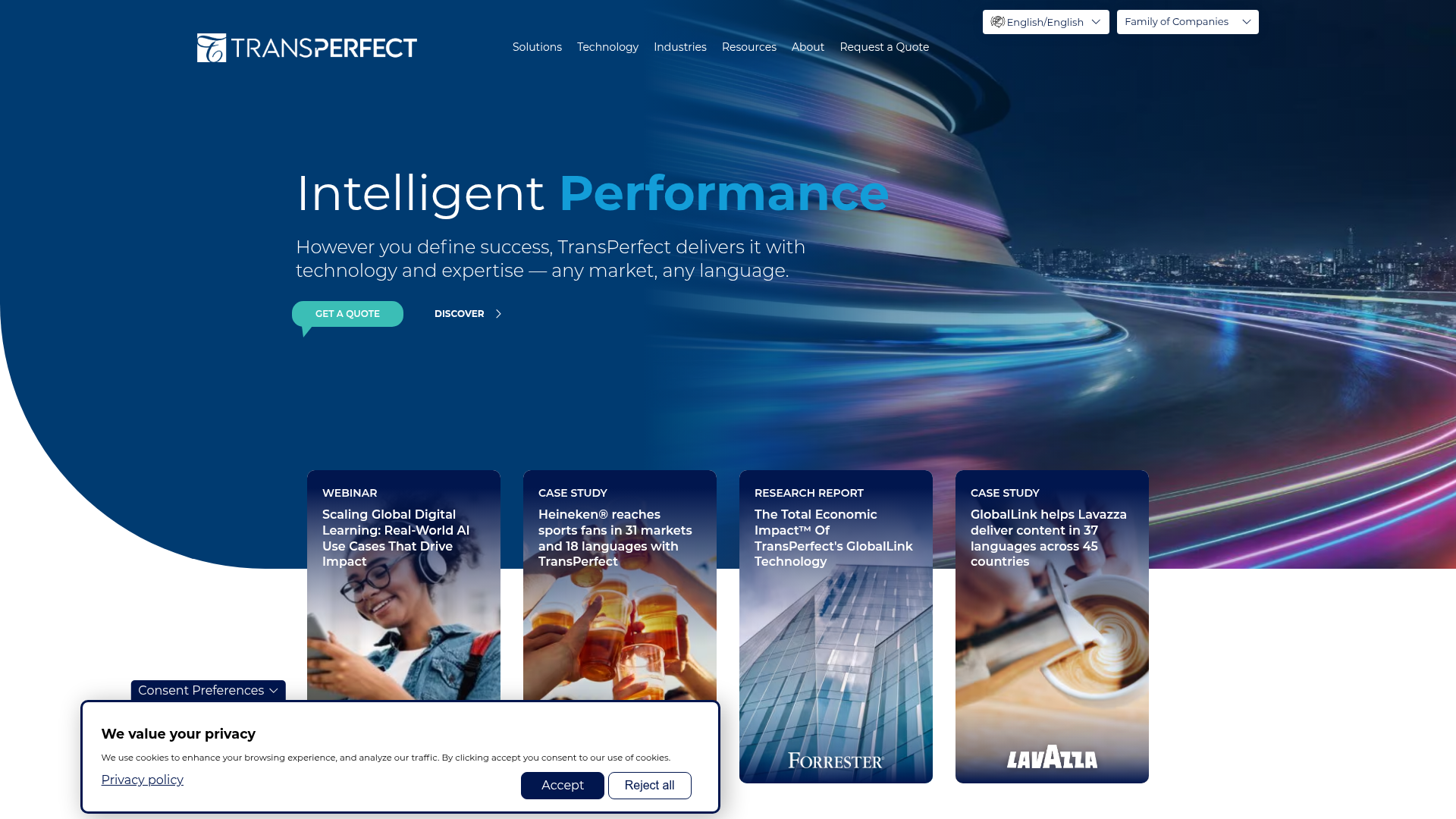
5. TransPerfect
Best for
Enterprises that want interpreting bundled with large-scale translation and localization operations.
Strengths
TransPerfect offers a broad language services ecosystem, making it appealing for global brands with multilingual content pipelines, localization programs, and enterprise procurement structures.
Considerations
For buyers focused on frontline usability, event execution, or fast-turn remote interpreting alone, the broader enterprise model may be more than they need.
6. Lionbridge
Best for
Global enterprises already invested in localization and multilingual content operations.
Strengths
Lionbridge brings global scale, AI and localization expertise, and enterprise support for technically complex environments.
Considerations
It is not typically the first choice for buyers prioritizing rapid, highly managed interpreting delivery for live events or everyday operational workflows.
Side-by-Side Comparison
|
Provider |
Best Fit |
Core Strength |
Best For |
Watchouts |
|---|---|---|---|---|
|
Team Stream |
Service-led language access and accessibility |
Interpreting, captioning, translation, equipment, tech support |
Events, broadcasts, churches, business communications |
More than needed for ultra-simple self-serve use |
|
Boostlingo |
Workflow-native platform |
On-demand interpreting and integrations |
Healthcare, operations, internal workflows |
Less event-production depth |
|
LanguageLine |
Large-scale enterprise service |
Broad coverage and mature delivery |
Healthcare, government, customer service |
Less tailored feel |
|
Interprefy |
Event-focused RSI platform |
Simultaneous interpreting for events |
Conferences, webinars, hybrid events |
Narrower use case focus |
|
TransPerfect |
Enterprise language ecosystem |
Bundled global language services |
Global enterprise communications |
Can be complex to implement |
|
Lionbridge |
Localization-led provider |
Global multilingual infrastructure |
Large enterprise content operations |
Less optimized for fast live interpreting |
How to Choose the Right Remote Interpreting Solution
Choosing between remote interpreting companies and remote interpreting platforms should start with your communication environment, not the vendor pitch.
1. Define the communication stakes
Ask:
-
Is this transactional, sensitive, or high-profile?
-
Do visual cues matter?
-
Is accessibility part of the requirement?
-
Will failure create compliance, reputational, or operational risk?
If the stakes are high, managed services matter more.
2. Match the interpreting mode to the moment
|
Scenario |
Best Fit |
|---|---|
|
Quick customer support interaction |
Phone interpreting |
|
ASL or visual communication need |
Video remote interpreting |
|
Global keynote or conference panel |
Remote simultaneous interpreting |
|
Training with accessibility goals |
Interpreting plus live captioning |
|
Hybrid event with in-room and online audiences |
End-to-end managed multilingual support |
3. Check integration and workflow fit
A solution should work with the systems your teams already use:
-
Zoom
-
Microsoft Teams
-
Webex
-
Event platforms
-
Telehealth tools
-
EHR or internal systems
-
Livestream encoders and AV environments
This is a crucial area where buyers often underestimate complexity. For example, the right interpreter is only one part of the equation if audio routing, audience channel access, and caption display are not handled correctly.
4. Evaluate service depth, not just software features
Ask vendors whether they provide:
-
Human interpreters
-
AI-assisted options where appropriate
-
Live captioning
-
ASL support
-
Project management
-
Onsite or remote technicians
-
Equipment rental
-
Redundancy plans
-
Post-event subtitling or translated deliverables
This is where Team Stream’s model is particularly valuable. Many providers can connect a call. Fewer can support a multilingual keynote, accessible livestream, breakout-room coverage, translated video recap, and technician-backed delivery under one roof.
5. Understand compliance and accessibility implications
For many organizations, remote interpreting is connected to inclusion, public access, and legal obligations. Captioning, sign language support, accessible viewing paths, and reliable interpretation workflows are not just nice-to-have features.
A provider should be able to speak clearly about:
-
Inclusive communication
-
Accessibility support
-
Privacy-conscious delivery
-
Reliability and fallback planning
-
Audience usability across devices
What Competitor Articles Usually Miss
The competitor pages provided contain useful information, but they leave several decision-critical gaps:
Accessibility is treated as secondary
Many pages mention ASL or captions briefly, but do not treat accessibility as a central buying criterion. In reality, for public events, employee communications, education, and worship experiences, accessibility is often inseparable from language access.
Hardware and technician support are underexplained
A lot of guides assume software solves everything. It does not. For live events and broadcasts, microphones, interpreter audio feeds, receiver workflows, streaming overlays, technician monitoring, and backup connections matter enormously.
AI is either oversold or ignored
Some vendors position AI as a differentiator without explaining where it actually performs well. Others barely mention it. The practical answer is that AI can be helpful for speed, scale, and cost control in the right situations, but human interpreters remain essential for nuance, risk, tone, and mission-critical communication.
Event complexity is flattened
A conference keynote, a doctor-patient interaction, and a contact center escalation are not the same. Buyers need guidance by use case, not generic feature lists.
Best Use Cases by Industry
Events and conferences
Remote simultaneous interpreting is often the right fit, especially when attendees speak multiple languages and sessions run across virtual and in-person channels.
What matters most:
-
Language channel delivery
-
Technician support
-
Captioning
-
Event platform integration
-
Redundancy
-
Post-event localization
Corporate meetings and internal communications
Town halls, training, leadership announcements, and onboarding sessions benefit from a flexible mix of remote interpreting and live captions.
What matters most:
-
Ease of joining
-
Clear audio
-
Captions for engagement and accessibility
-
Integration with meeting platforms
-
Confidentiality and professionalism
Broadcast and livestream production
Broadcasts require much tighter operational control than ordinary meetings.
What matters most:
-
Interpreter audio routing
-
Delay management
-
Caption sync
-
Technician monitoring
-
Platform-specific delivery
-
Audience experience across devices
Churches and faith-based organizations
Remote interpretation can make worship services, sermons, conferences, and community announcements more inclusive.
What matters most:
-
Low friction for attendees
-
Captioning options
-
Support for livestreams and in-room screens
-
Reliable service for recurring use
-
Sensitivity to tone and message
Healthcare and public service
Video and phone interpreting are common here, with strong emphasis on speed, privacy, and usability.
What matters most:
-
Rapid connection times
-
Qualified interpreters
-
Workflow integration
-
Accessibility support
-
Consistent service coverage
Human Interpreting vs AI-Powered Language Support
This does not have to be an either-or debate.
Where AI helps
AI-powered tools can be useful for:
-
High-volume routine interactions
-
Preliminary language support
-
Caption generation with human oversight
-
Faster multilingual content workflows
-
Budget-sensitive communication at scale
Where humans remain essential
Human interpreters are still the safer choice when communication requires:
-
Nuance
-
Cultural judgment
-
Emotion and tone management
-
Legal or medical precision
-
Speaker overlap handling
-
Audience trust
The strongest modern providers combine both. Team Stream’s approach reflects that reality: use accurate human expertise where quality and risk matter most, and use AI-enabled tools where they improve speed, scalability, or efficiency without compromising the experience.
Questions to Ask Before You Sign With a Provider
Before choosing a provider, ask:
-
Do you provide the platform, the interpreters, or both?
-
What interpreting modes do you support: phone, video, simultaneous, ASL?
-
Can you support live, virtual, and hybrid delivery?
-
Do you offer live captioning and accessibility services?
-
Can you provide technicians or event support staff?
-
What integrations do you support?
-
What is your backup plan if an interpreter or connection fails?
-
Can you support post-event subtitling, translation, or voiceover?
-
How do you handle complex multilingual events with multiple channels?
-
What experience do you have in my industry or event type?
Strong remote interpretation services should answer these questions clearly and specifically.
Final Verdict
The best remote interpreting solution depends on what you are trying to protect: speed, clarity, accessibility, brand experience, compliance, or all of the above.
If you need a simple workflow tool, a platform-first provider may be enough. If you need high-stakes multilingual communication to work smoothly across meetings, events, broadcasts, customer interactions, or accessibility requirements, you need a more complete partner.
That is where Team Stream offers a meaningful advantage. With more than 25 years of expertise, flexible human and AI-powered language solutions, real-time captioning, translation, subtitling, voiceover, equipment support, and dependable customer service, Team Stream helps organizations deliver inclusive communication with less stress and better results.
If your team is planning a multilingual event, supporting diverse audiences, or trying to improve accessibility without sacrificing execution quality, Team Stream is built to help you get it right the first time.
FAQ
What is the highest paying interpreter?
The highest paying roles are usually specialized interpreters in legal, medical, diplomatic, and conference settings, especially those handling high-stakes live events or rare language pairs. Rates also rise when interpreters bring industry expertise, certification, and the ability to work across remote, hybrid, and broadcast environments.
Is AI replacing interpreters?
No, not fully. AI can help with routine interactions, draft captions, and scalable multilingual support, but human interpreters are still essential for nuance, tone, cultural judgment, and high-risk conversations. The strongest providers use AI to support, not replace, skilled professionals.
What kind of technology can a provider use to use an interpreter remotely?
Providers can use phone interpreting, video remote interpreting platforms, remote simultaneous interpreting software, meeting platform integrations, livestream tools, and captioning systems. For complex events, they may also use dedicated audio routing, technician monitoring, and backup connectivity.
What is the most demand language for interpreters?
Spanish is typically the most requested language in the U.S., followed by languages such as Mandarin Chinese, Arabic, Vietnamese, and Korean depending on the industry and region. Demand varies by use case, with healthcare, public services, events, and customer support each showing different patterns.
What is the most demand language for interpreters?
In many markets, the highest-volume request is still Spanish interpreting because of broad day-to-day demand across healthcare, education, government, and business. However, specialized demand for other languages can be just as urgent when qualified interpreters are harder to source.
Will AI replace interpreters?
AI is unlikely to replace interpreters in mission-critical settings. It can improve speed and affordability for basic multilingual support, but live events, sensitive meetings, and compliance-sensitive communication still benefit from trained human interpreters backed by reliable service and technical support.
