

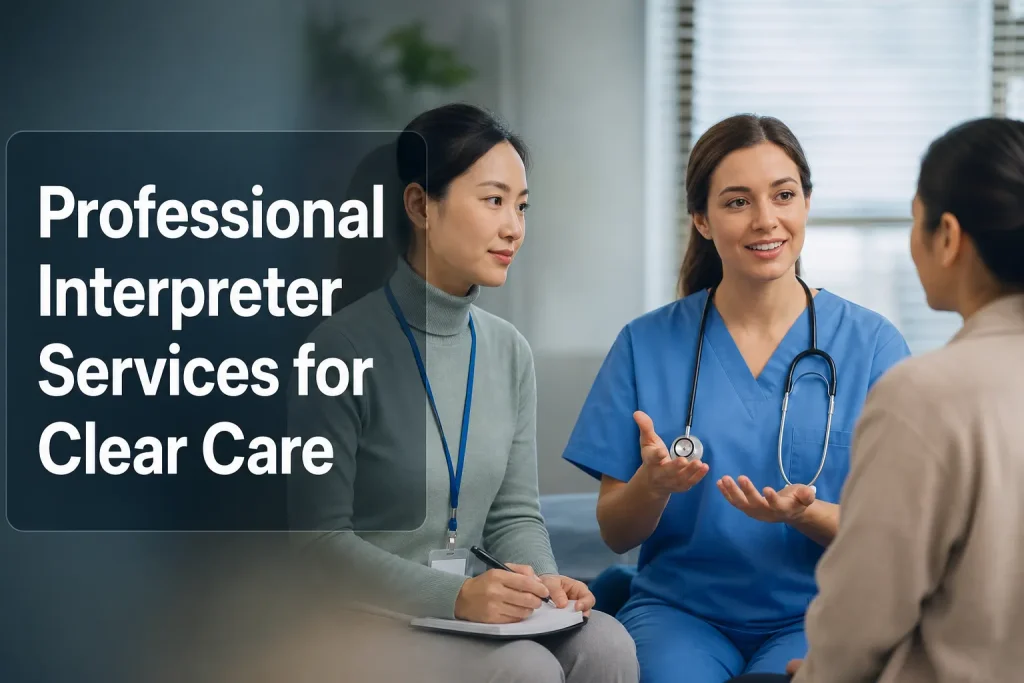
Professional Interpreter Services for Clear Care
Clear communication is not a nice-to-have in healthcare, business, and live events. It is the difference between trust and confusion, compliance and risk, action and delay.
When people search for a professional interpreter, medical interpreters, or even medical interpreter services near me, they are usually trying to solve a very immediate problem: a patient must understand care instructions, a family needs informed consent explained clearly, a multilingual audience must stay engaged, or a business needs to communicate accurately across languages without slowing everything down.
That is where professional interpreter services matter most. The right partner helps you communicate clearly, protect accuracy, improve accessibility, and create better outcomes for everyone involved.
At Team Stream, we see this every day. Organizations need more than a vendor. They need a responsive language-access partner that can support live, virtual, and hybrid communication with skilled interpreters, captioning, translation, accessibility services, equipment, and technical support. With more than 25 years of experience, Team Stream combines accurate human expertise with AI-powered solutions to help clients deliver inclusive, high-quality communication at scale.

Why Professional Interpreter Services Matter More Than Ever
Competitor content tends to focus heavily on legal requirements, language diversity, and basic service types. Those are important, but they often stop short of the bigger operational picture.
Professional interpreter services do more than help two people understand each other. They support:
-
patient safety and informed decision-making
-
accessible communication for deaf and hard-of-hearing audiences
-
smoother workflows in high-pressure settings
-
stronger trust with multilingual communities
-
compliance with language access and accessibility expectations
-
better event engagement in live, remote, and hybrid environments
In practice, this means the value of a professional interpreter is not just linguistic. It is operational, strategic, and reputational.
What Competitors Get Right – and What They Miss
Across the competitor articles, several themes appear consistently:
|
Common theme in competitor articles |
Why it matters |
What is often missing |
|---|---|---|
|
Healthcare depends on accurate communication |
Misunderstandings can affect care, consent, and safety |
A framework for choosing the right modality for each scenario |
|
Professional interpreters are better than family or ad hoc staff |
Accuracy, confidentiality, and neutrality improve |
Detailed guidance on quality assurance and interpreter vetting |
|
Phone and video interpreting increase speed of access |
Fast connection is critical in urgent settings |
How to integrate interpreting into broader accessibility workflows |
|
Medi-Cal and healthcare settings have language-access obligations |
Compliance reduces legal and operational risk |
How businesses and event teams can apply the same principles |
|
Specialized medical interpreters matter |
Terminology and context are complex |
How to evaluate providers beyond price |
The biggest content gap is this: most articles discuss interpretation as a single service. In reality, organizations increasingly need a complete communication solution that may include interpreting, live captioning, subtitling, translation, voiceover, accessibility planning, and technical execution.
That is especially true for hospitals, clinics, conference organizers, churches, enterprise teams, and broadcast environments.
What Counts as a Professional Interpreter?
A professional interpreter is trained to convert spoken or signed communication accurately and impartially from one language to another in real time. In medical settings, that often includes specialized terminology, confidentiality requirements, and the ability to manage sensitive conversations calmly.
Core qualities of professional interpreters
The best professional interpreters typically bring:
-
language fluency in both source and target languages
-
subject-matter familiarity, such as healthcare or corporate communications
-
confidentiality and ethical conduct
-
accuracy without summarizing or guessing
-
cultural competence and neutrality
-
the ability to work effectively in person, by phone, or on video
For complex environments, provider quality matters just as much as interpreter skill. Strong professional interpreter services also include scheduling support, backup coverage, technology readiness, and responsive customer service.
Medical Interpreter Services: Why Healthcare Is Different
Healthcare communication carries higher stakes than many other settings. A missed symptom, misunderstood dosage, incomplete discharge instruction, or unclear consent conversation can have serious consequences.
That is why medical interpreter services should never be treated as a commodity purchase alone.
Where medical interpreters are most valuable
Medical interpreters support clear communication in situations such as:
-
emergency department conversations
-
admissions and discharge planning
-
informed consent discussions
-
behavioral health visits
-
telehealth appointments
-
specialty consults
-
pediatric care
-
pharmacy and medication counseling
-
follow-up calls and care coordination
Competitor pages rightly stress that it is better not to rely on children, relatives, or untrained bilingual staff. Professional support reduces errors, protects privacy, and helps patients speak for themselves.
The Main Types of Interpretation Services
Organizations rarely need just one option. The smartest approach is usually a flexible mix based on urgency, complexity, visual needs, and budget.
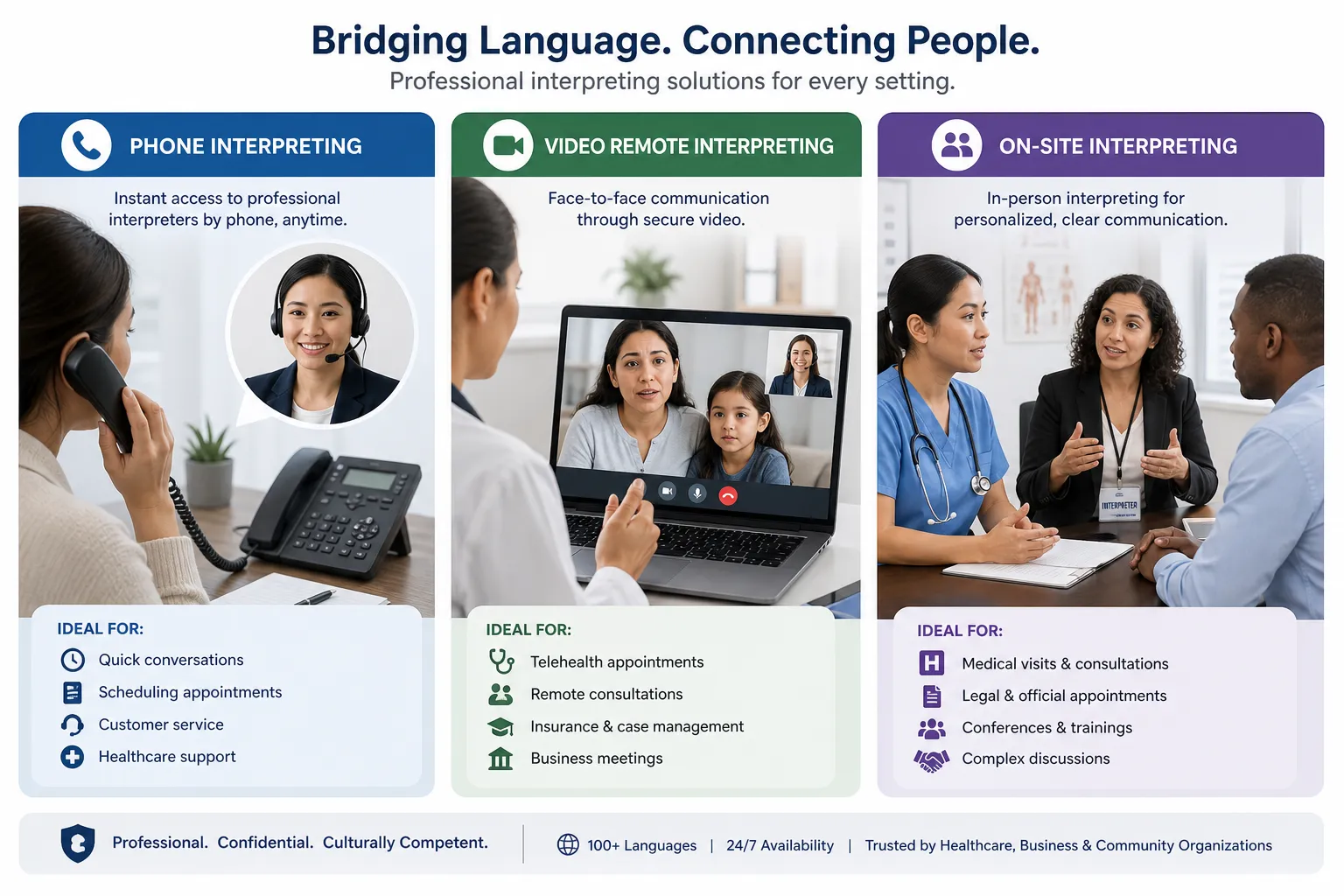
On-site interpreting
An interpreter is physically present with participants.
Best for:
-
sensitive or emotionally charged conversations
-
complex medical appointments
-
legal or compliance-heavy discussions
-
large meetings with multiple speakers
-
events where physical presence improves trust
Pros:
-
strongest personal connection
-
full access to body language and room dynamics
-
ideal for nuanced or difficult conversations
Considerations:
-
may require advance scheduling
-
often higher cost than remote options
-
travel and logistics can affect availability
Over-the-phone interpreting
A remote interpreter joins by audio only. This is often the fastest way to access support, especially for routine or urgent interactions.
Best for:
-
appointment scheduling
-
intake questions
-
patient follow-up calls
-
call centers
-
quick clarifications
-
administrative conversations
If you are evaluating a medical interpreter phone service, focus on response time, language coverage, audio quality, and whether interpreters are trained for healthcare communication.
Video remote interpreting
Video adds visual context while preserving on-demand access.
Best for:
-
telehealth
-
American Sign Language interpreting
-
patient education
-
hybrid meetings
-
multilingual virtual events
-
conversations where visual cues matter
Video is often the best middle ground between speed and depth.
How to Choose the Right Interpreting Modality
A simple decision table can help teams standardize choices.
|
Scenario |
Recommended modality |
Why |
|---|---|---|
|
Routine scheduling or follow-up |
Phone |
Fast and efficient |
|
Urgent but straightforward care communication |
Phone or video |
Immediate access |
|
Telehealth or virtual care |
Video |
Preserves visual context |
|
ASL support |
Video or on-site |
Visual communication is essential |
|
Consent, diagnosis, or sensitive case review |
On-site or video |
Better nuance and engagement |
|
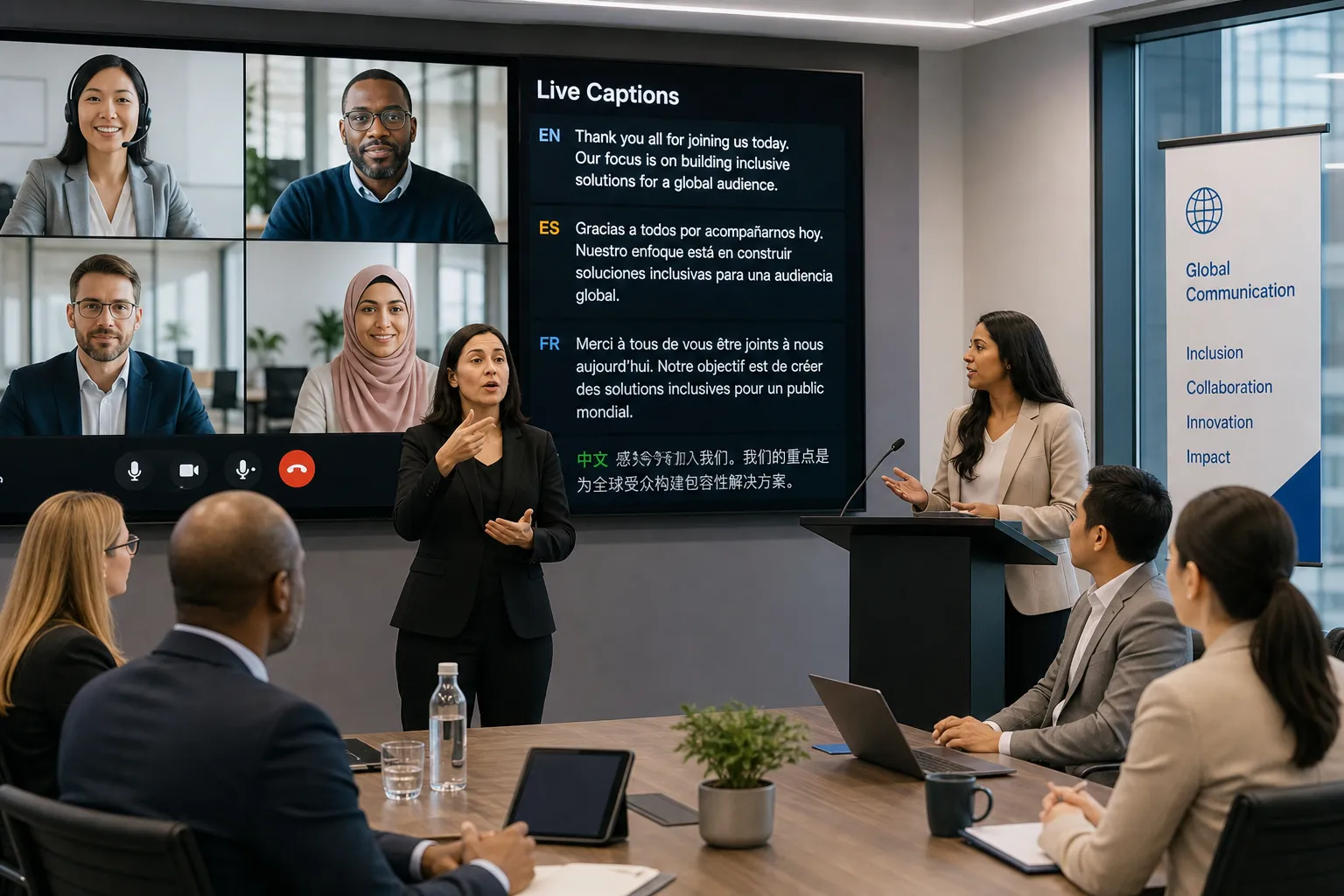
Corporate webinar with multilingual audience |
Remote interpreting + live captions |
Accessibility and scale |
|
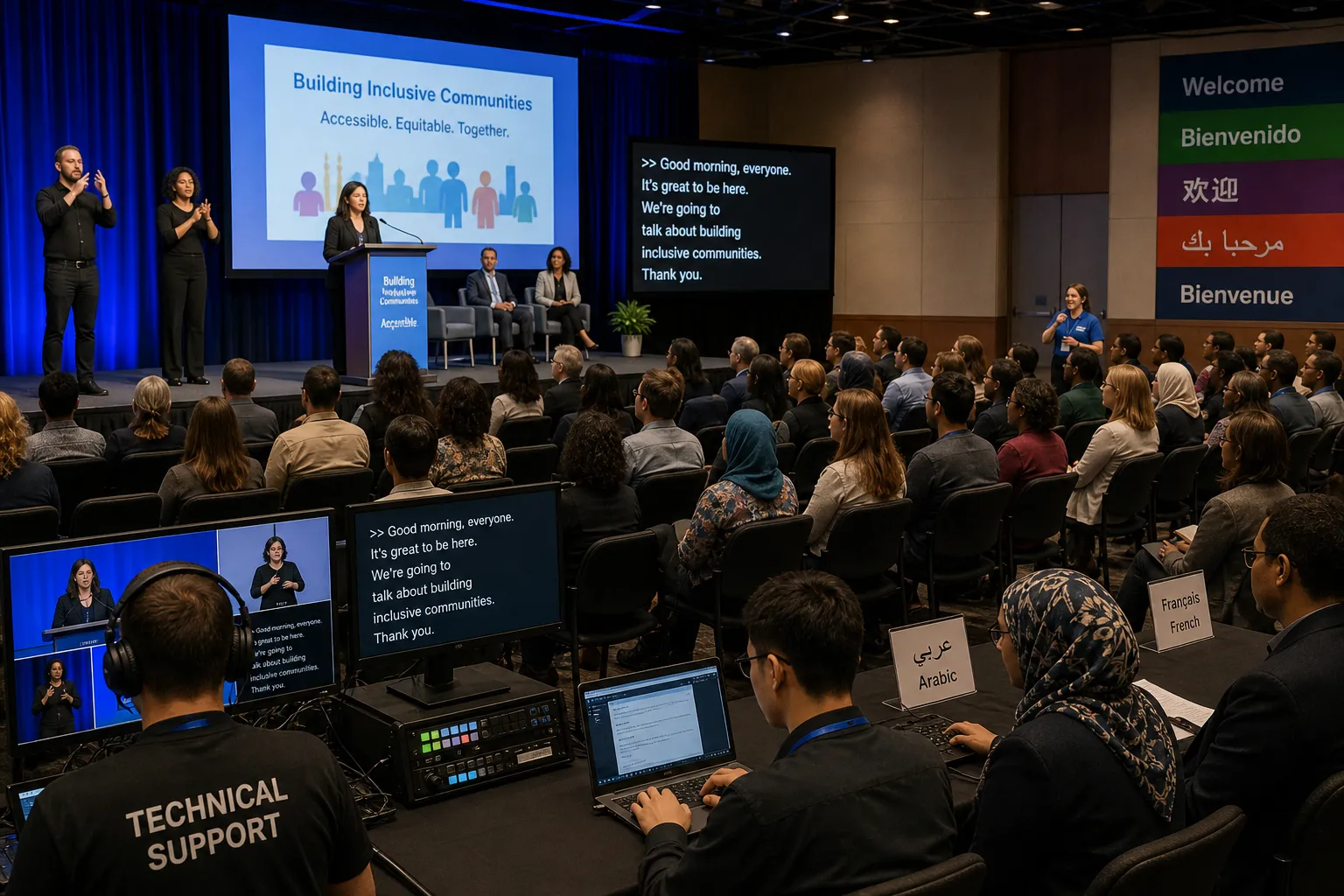
Large in-person conference |
On-site interpreters + captioning + equipment support |
Best audience experience |
This is one place where Team Stream adds real value. Instead of pushing a one-size-fits-all package, we help clients build the right combination of interpretation, captioning, translation, and technical support for each setting.
How Professional Interpretation Improves Outcomes
Even when two parties appear to “get by,” unclear communication creates friction, repeat questions, and hidden risk. Professional interpreters help reduce those problems.
In healthcare
Clear interpreting can support:
-
more accurate symptom reporting
-
clearer diagnosis and treatment explanations
-
better patient understanding
-
stronger adherence to care instructions
-
improved patient experience
-
lower communication-related risk
In business and events
Professional interpreters also help organizations:
-
engage multilingual employees and stakeholders
-
make training and announcements more effective
-
increase participation in international meetings
-
create more inclusive events
-
support accessibility goals and compliance efforts
-
protect brand credibility in public-facing communications
What to Look for in Medical Interpreter Companies
Many competitor articles explain why interpreting matters, but fewer explain how to compare providers intelligently.
When evaluating medical interpreter companies, consider these criteria.
1. Specialized experience
Ask whether the provider regularly supports healthcare, corporate, event, legal, or public-sector communication. Medical and high-stakes communication requires more than general fluency.
2. Modality flexibility
Can the provider support on-site, phone, and video? Can they pivot when plans change?
3. Language coverage
Make sure they can handle both common and lower-incidence languages.
4. Accessibility capabilities
If your communication includes public-facing events, internal meetings, or digital content, ask whether the provider also offers:
-
live captioning
-
CART or closed captioning
-
subtitling
-
voiceover
-
accessibility consulting
5. Technical support
This is a major gap in many competitor articles. For hybrid and live events, language access can fail because of audio feeds, routing, equipment, or platform setup, not because the interpreter lacked skill. Team Stream helps clients avoid these breakdowns with equipment rental, technician services, and experienced event support.
6. Responsiveness and service quality
A provider should be easy to reach, clear in communication, and dependable under pressure.
7. Human and AI-enabled capability
AI can speed workflows, especially for translation, subtitling, and multilingual content operations. But sensitive and high-stakes interpreting still requires human judgment. The best partners know when to use each.
How to Vet a Local Interpreter Provider
Searches like medical interpreter near me, medical interpreter agencies near me, or medical interpreter services near me are often driven by urgency. But proximity alone should not decide the choice.
Use this checklist when comparing local agencies:
|
Question to ask |
Why it matters |
|---|---|
|
Do you provide medically trained interpreters? |
Subject knowledge affects accuracy |
|
What is your average response time? |
Delays can disrupt care or events |
|
Which languages do you cover on demand? |
Coverage should match community need |
|
Do you support phone, video, and in-person requests? |
Flexibility reduces workflow friction |
|
Are interpreters bound by confidentiality requirements? |
Essential for trust and compliance |
|
Can you support accessibility beyond spoken-language interpreting? |
Important for inclusive meetings and events |
|
Do you offer technical support for virtual or hybrid delivery? |
Helps prevent failure during live sessions |
A good local partner should feel like an extension of your team, not just a booking line.
Why Accessibility Should Be Part of the Conversation
A major missed opportunity in competitor content is the connection between interpreting and accessibility.
Language access and accessibility often overlap. A multilingual webinar may also require live captions. A town hall may need ASL, translated slides, and technical support for remote viewers. A healthcare system may need translated discharge documents and accessible patient education videos.
Team Stream is built for that overlap.
Team Stream’s broader advantage
Because Team Stream supports interpreting, captioning, translation, subtitling, voiceover, accessibility solutions, technician support, and equipment rental, clients can solve multiple communication challenges through one coordinated partner.
That means:
-
fewer vendors to manage
-
more consistent quality
-
easier planning across live, virtual, and hybrid formats
-
stronger compliance readiness
-
better audience and patient experience
Common Mistakes Organizations Make
Even well-intentioned teams can undermine communication if they do not plan properly.
Using bilingual staff as a substitute
A bilingual employee may be helpful, but that does not make them a trained interpreter. Interpretation requires neutrality, terminology control, and process discipline.
Choosing only on price
The cheapest rate can become the most expensive encounter if communication takes longer, must be repeated, or creates errors.
Ignoring technology and logistics
For remote and hybrid communication, success depends on platform setup, audio routing, internet stability, and audience access.
Treating accessibility as an add-on
Captions, ASL, language interpretation, translated content, and accessible formats should be planned from the start.
Waiting until the last minute
Urgent requests happen, but proactive planning always gives you better interpreter matching and smoother execution.
Building a Better Language Access Workflow
If your organization handles recurring multilingual communication, create a repeatable process.
Step 1: Identify your recurring use cases
Map your most common scenarios:
-
patient encounters
-
call-center support
-
internal meetings
-
webinars
-
trainings
-
public events
-
video content
Step 2: Match each use case to the right service
Not every interaction needs on-site support. Some need phone interpretation, some need live captioning, and some need full event language access planning.
Step 3: Standardize request procedures
Create simple internal instructions for how staff request interpreters, what details they provide, and when to escalate.
Step 4: Plan for accessibility at the same time
Include captioning, translated materials, subtitling, or ASL where relevant.
Step 5: Partner with a provider that can scale
This is where Team Stream stands out. Our team can support one meeting, one patient-facing communication need, or a full multilingual event environment with interpreters, captioners, technicians, equipment, and coordination.
Human Expertise and AI: The Best of Both
Another content gap in competitor articles is the role of AI.
AI-powered language tools can improve speed and efficiency in the right use cases, especially for:
-
draft translation
-
subtitling workflows
-
multilingual content production
-
internal knowledge management
But live interpretation, sensitive healthcare conversations, executive communications, and accessibility-critical moments still require skilled humans.
Team Stream takes a practical approach: use AI where it adds efficiency, and rely on experienced professionals where nuance, accountability, and trust matter most.
How Team Stream Supports Clear Care and Clear Communication
Whether you are managing patient access, a multilingual workforce, a public event, or a hybrid conference, Team Stream helps you build communication that works.
What clients value most
Clients choose Team Stream for:
-
accurate human interpreting and translation
-
AI-enabled workflows where speed matters
-
live captioning and accessibility support
-
multilingual solutions for live, virtual, and hybrid events
-
compliance-friendly communication planning
-
equipment rental and technician support
-
in-person and remote service flexibility
-
responsive customer service
-
more than 25 years of hands-on expertise
Instead of treating interpretation as a standalone task, we help clients create complete communication systems that are inclusive, reliable, and audience-ready.
Final Takeaway
Professional interpreter services are not just about converting words from one language to another. They are about clarity, trust, safety, accessibility, and execution.
For healthcare organizations, that means better patient understanding and lower communication risk. For businesses, event producers, churches, and enterprise teams, it means stronger engagement, wider reach, and more inclusive experiences.
If you need a professional interpreter services partner that can support everything from medical interpreter services and medical interpreter phone service to live captioning, multilingual events, and accessible content, Team Stream is ready to help.
Clear care starts with clear communication. And clear communication starts with the right partner.
FAQ
How much should an interpreter charge?
Interpreter rates vary based on language, specialization, modality, location, and urgency. A medically trained or event-specialized interpreter typically commands more than a general interpreter because the work requires higher accuracy, subject knowledge, and professional responsibility.
How much do interpretation services cost?
Interpretation services costs depend on whether you need on-site, phone, or video support, along with scheduling length and technical requirements. Organizations should evaluate total value, not just the lowest rate, because better interpreters and smoother delivery often reduce delays, repetition, and risk.
How much does an interpreter cost for an hour?
An hourly interpreter cost can vary widely depending on the setting, with specialized medical, legal, and live-event interpreters often priced higher than general assignments. On-site work may also include minimum booking times, travel, or equipment-related support when needed.
Who pays for an interpreter if one is needed?
In many healthcare and regulated-access settings, the provider or organization is responsible for arranging appropriate language access rather than expecting the individual to bring their own interpreter. For events, businesses, and public communications, the hosting organization typically covers the cost as part of inclusive and compliant service delivery.
