

Mandarin Translator: Best Options for Clear Translation
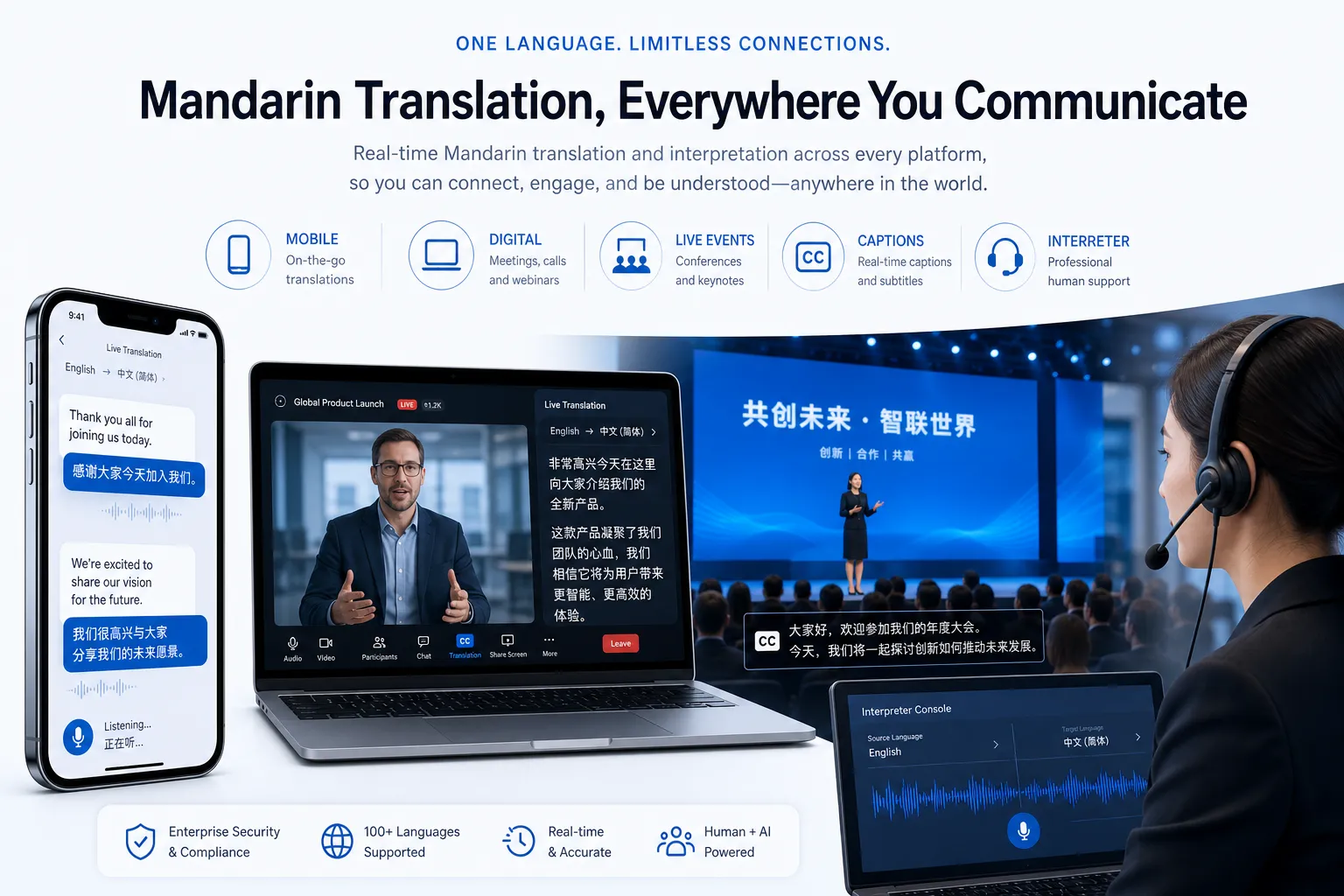
If you need a Mandarin translator, the right choice depends on what you are translating: a quick chat, a contract, a product sheet, a website, or a live presentation with multilingual attendees. That is where many guides fall short. They compare apps, but they do not explain when an app is enough, when a professional Chinese translation service is the smarter choice, and when live interpreters, captions, and accessibility support become mission-critical.
For event organizers, conference producers, corporate teams, church leaders, and broadcast teams, the stakes are higher than convenience. You may need live Chinese to English translation, accurate multilingual captions, translated slides, bilingual moderators, interpreter audio equipment, and a partner who can support live, virtual, and hybrid delivery without last-minute chaos.
At Team Stream, we see this every day. Some projects are perfect for an English to Chinese translation app. Others require a more reliable mix of human expertise and AI-powered efficiency. This guide helps you choose clearly.
What Most “Best Mandarin Translator” Guides Miss
Most competitor roundups focus on travel apps and basic text tools. That is useful, but incomplete. The real decision is not just which app is best. It is:
-
Do you need text, voice, image, document, or live translation?
-
Is the content casual or business-critical?
-
Do you need Simplified Chinese, Traditional Chinese, or region-specific nuance?
-
Will machine translation be reviewed by a human?
-
Does your audience also need captioning or accessibility support?
-
Are you translating for speed, compliance, brand quality, or all three?
That last point matters. A restaurant menu and a regulatory disclosure should not use the same workflow.
The Fast Answer: Which Type of Mandarin Translation Tool Should You Use?
|
Need |
Best Option |
Why |
|---|---|---|
|
Quick phrases and travel help |
Mobile translation app |
Fast, cheap, good enough for simple exchanges |
|
Menus, signs, and photos |
Camera-based translator app |
OCR plus instant image translation |
|
Internal notes or rough drafts |
AI translation tool |
Efficient for non-final content |
|
Contracts, presentations, websites |
Professional human translation |
Better terminology, tone, and accuracy |
|
Live meetings or conferences |
Interpreters plus live captioning |
Real-time clarity, inclusion, and professionalism |
|
Multilingual events |
End-to-end language support partner |
Combines translation, interpreting, captions, equipment, and tech support |
Why Accuracy Matters More in Mandarin
Mandarin is not just “Chinese,” and translation quality is not just about swapping words. Meaning changes based on context, tone, formality, industry terminology, and whether the source is written or spoken.
A strong Mandarin Chinese translator must account for:
Simplified vs. Traditional Chinese
Mainland China typically uses Simplified Chinese, while Taiwan and Hong Kong often use Traditional Chinese. A generic Chinese text translator may not localize correctly for your audience.
Formality and Cultural Register
Investor materials, legal notices, sermons, keynote speeches, and marketing copy all require different tone. Literal output often sounds unnatural or even confusing.
Spoken vs. Written Mandarin
A Chinese writing translator for documents is not the same as a tool optimized for voice conversations or live Chinese to English translation.
Industry Vocabulary
Medical, legal, technical, government, ministry, and event content all need subject-matter precision. That is where human review becomes essential.
Best Mandarin Translator Options by Use Case
Best Overall for Everyday Use: Google Translate
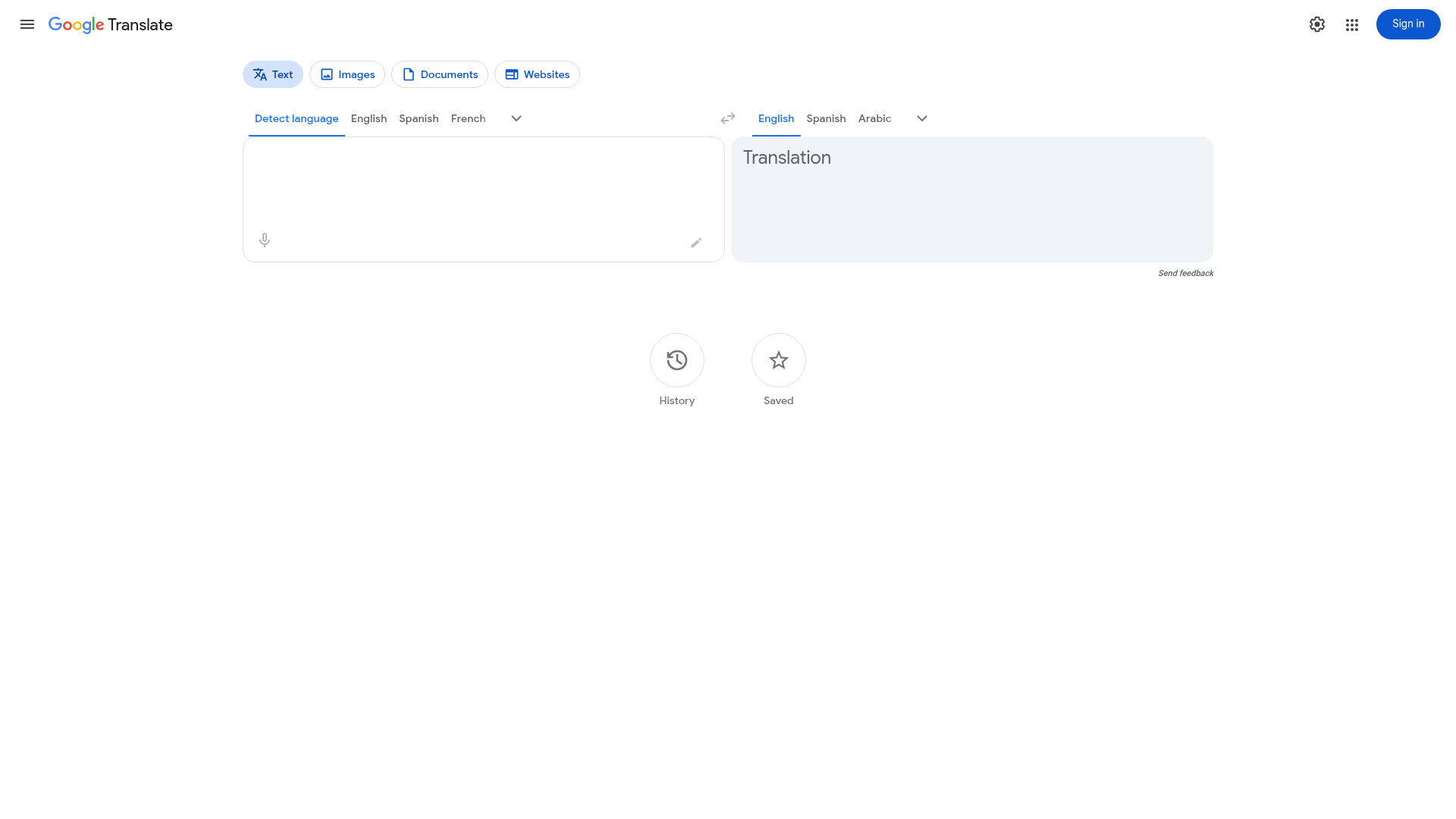
Google Translate remains the most familiar chinese translator app for general users. It handles text, voice, handwriting, and image translation, and it is often the first app to translate text people try.
Best for
-
Quick phrase translation
-
Casual chats
-
Signs, menus, and travel
-
Rough understanding of short documents
Strengths
-
Fast and easy to use
-
Good mobile experience
-
Supports camera translation
-
Useful as an app to translate to English from many languages
Limitations
-
Can miss nuance in business or formal Chinese
-
Tone can sound flat or awkward
-
Not ideal as the final layer for high-stakes content
Verdict
A solid free Chinese to English translator for everyday use, but not enough on its own for polished client-facing content or live multilingual events.
Best for Natural Long-Form Translation: DeepL
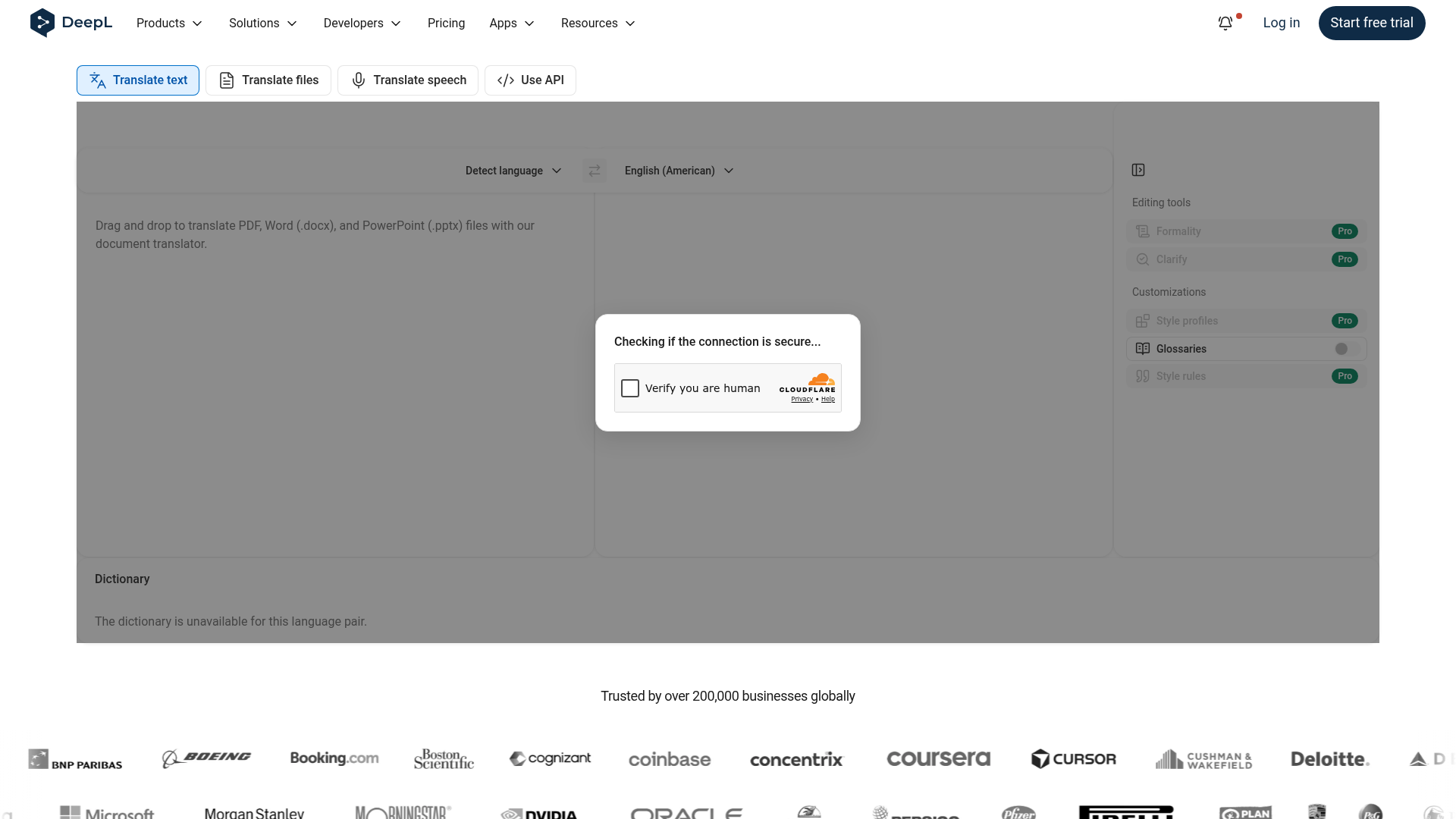
DeepL is often preferred when users want more fluent output. It is commonly seen as a top best English to Chinese translator candidate for paragraphs, articles, and business writing.
Best for
-
Longer written content
-
Draft business communication
-
Articles and documents needing smoother phrasing
Strengths
-
Often sounds more natural than many competitors
-
Better sentence flow for long-form copy
-
Strong for editing translated drafts
Limitations
-
Still requires review for terminology and cultural accuracy
-
May not be the best fit for specialized Mandarin localization
-
Live interpreting is outside its scope
Verdict
Excellent for draft quality and readability, but still not a full substitute for a professional English to Chinese translation service when quality risk is high.
Best for Mandarin Learners and Character Lookup: Pleco
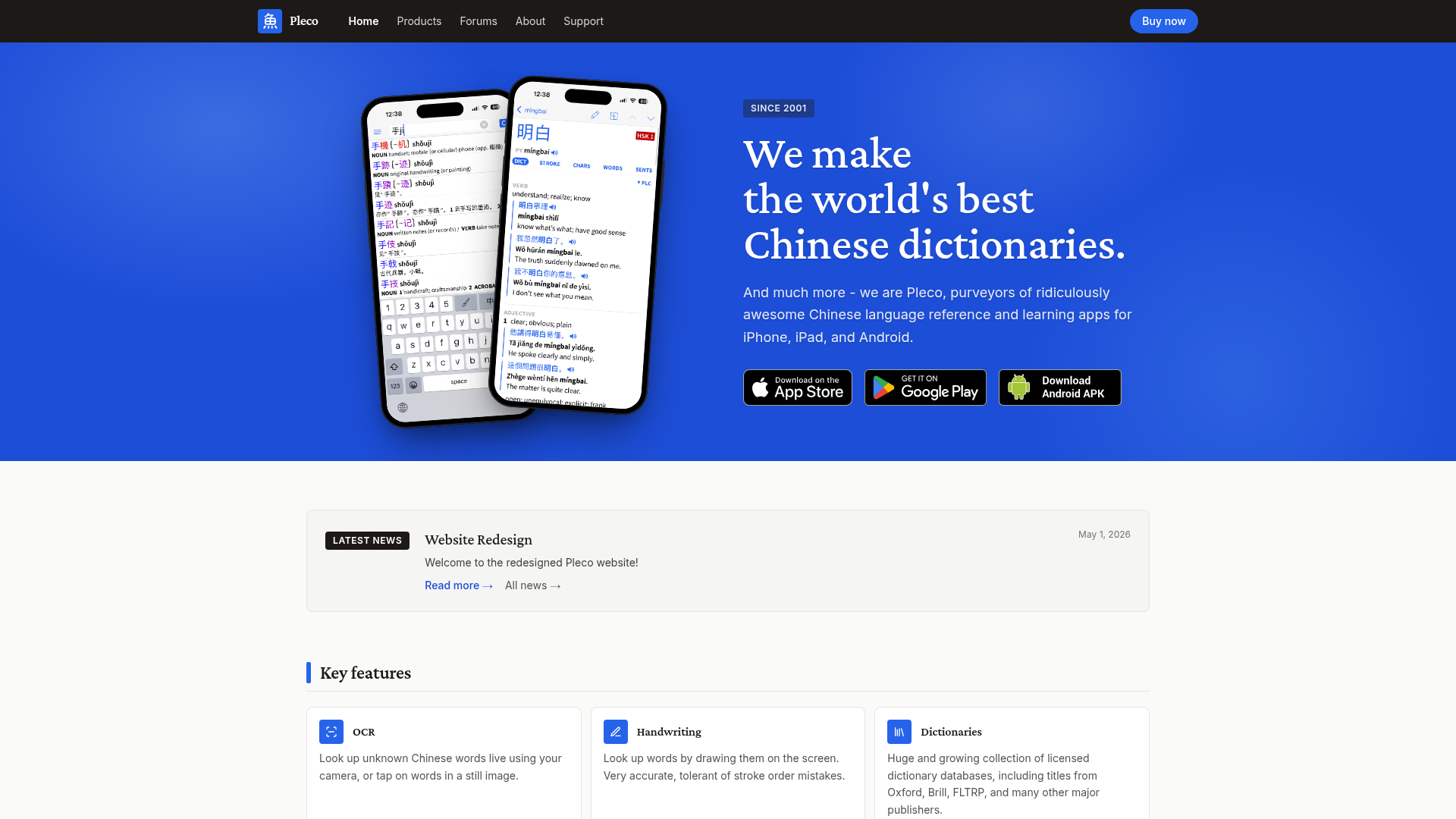
Pleco is less of a pure Chinese translator and more of a powerful dictionary and learning platform. It is especially useful when you need to understand characters, compounds, stroke order, or usage examples.
Best for
-
Students and professionals learning Mandarin
-
Looking up words and characters
-
Understanding usage and context
Strengths
-
Exceptional dictionary depth
-
Handwriting input
-
Great for vocabulary building
-
Strong support for character-level detail
Limitations
-
Not built as a polished full-document translator
-
Less suitable for instant business-ready output
-
Not a replacement for live interpreting
Verdict
One of the most valuable tools for learners and researchers, but not the top choice if you want an all-in-one Chinese to English translator app for business execution.
Best for Conversations and Meetings: Microsoft Translator
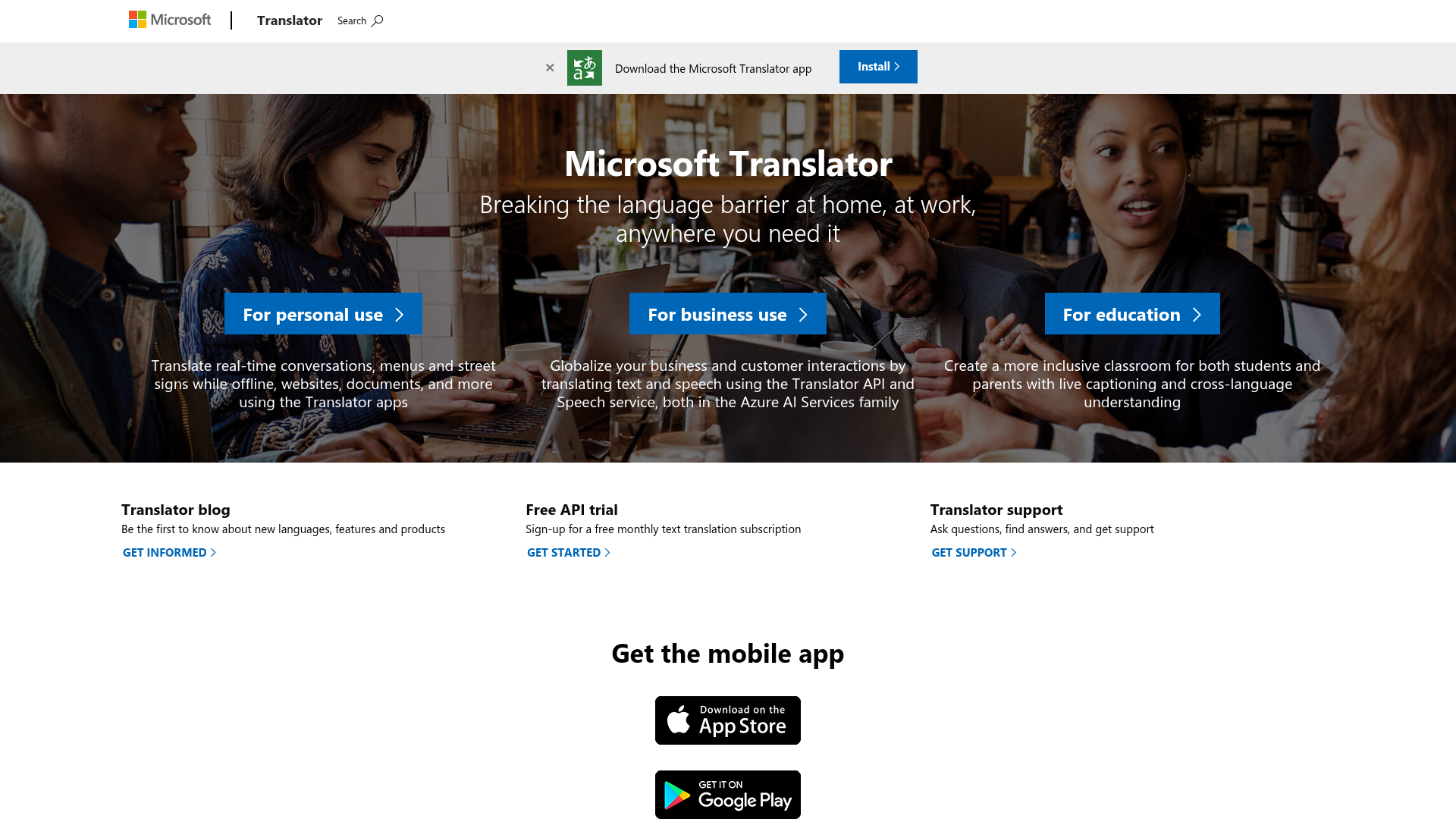
Microsoft Translator performs well for conversational translation and multilingual meeting support. It is a practical option when teams need a translate to English app for real-time exchanges.
Best for
-
Short bilingual conversations
-
Meeting support
-
Multi-device translation scenarios
Strengths
-
Good voice translation options
-
Useful for business teams already in the Microsoft ecosystem
-
Cleaner for back-and-forth communication than some dictionary-style tools
Limitations
-
Still not equal to a human interpreter in nuanced live settings
-
Terminology consistency can vary
-
Not enough for accessibility or compliance on its own
Verdict
A strong best Chinese to English translator app candidate for lightweight conversations, but not a full event solution.
Best for China-Centric Translation: Baidu Translate
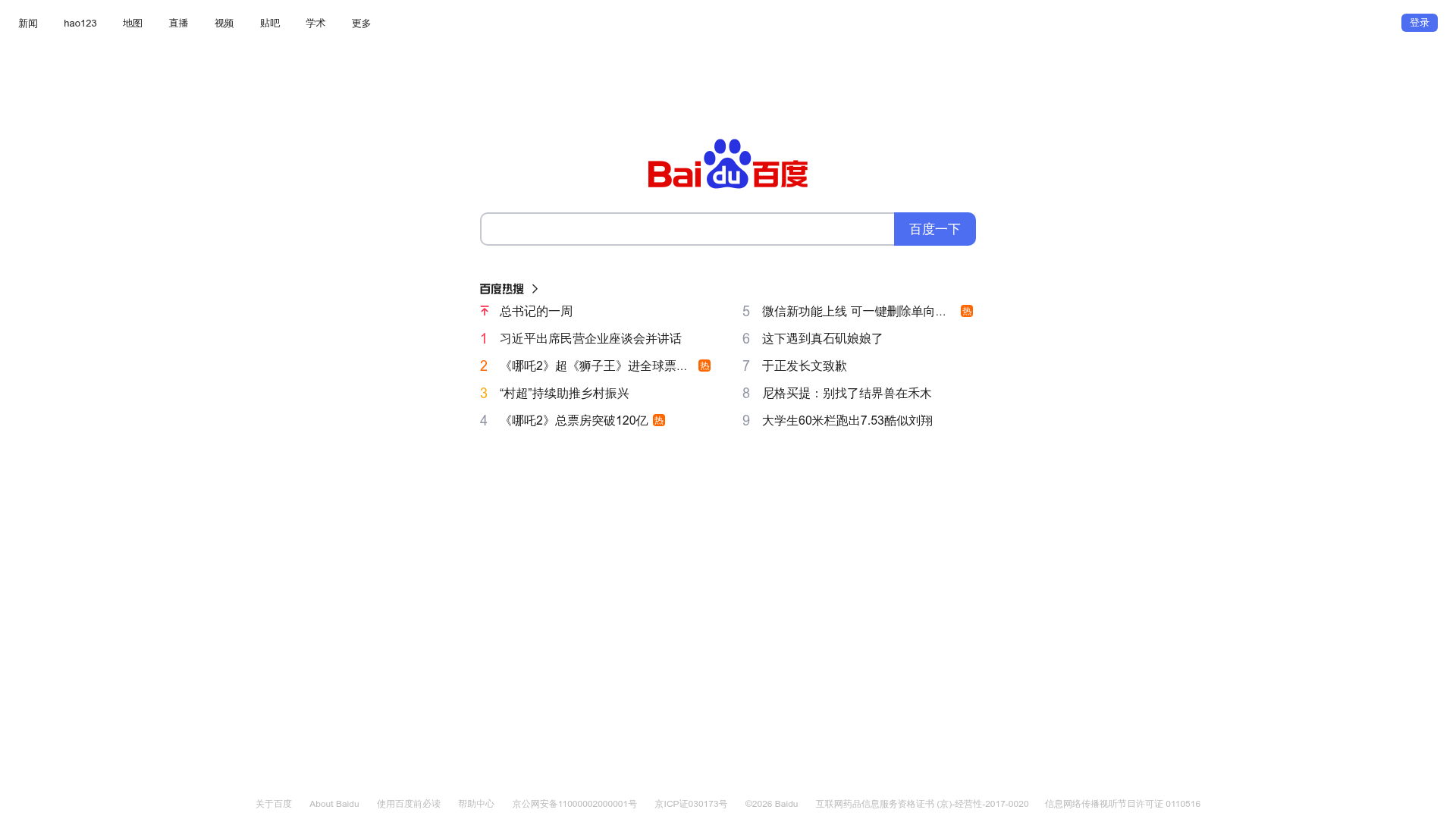
Baidu Translate is often useful when the source content is China-based and local context matters. It can be especially helpful with OCR and Chinese-first usage patterns.
Best for
-
China-market text
-
Signs and printed material
-
Localized Chinese content review
Strengths
-
Good Chinese-language ecosystem familiarity
-
Helpful for local phrasing and OCR scenarios
-
Practical for China-focused users
Limitations
-
Interface may feel less intuitive for some English-speaking users
-
Output still benefits from human review
-
Less useful as an all-purpose international business workflow
Verdict
A useful Chinese language translator for China-specific contexts, especially when paired with human QA.
Best for In-App Chinese Communication: WeChat Translation
WeChat’s built-in translation is highly practical when you are already communicating inside the app. For many teams working with Chinese partners, that is a major convenience.
Best for
-
Chat messages
-
Shared images inside conversations
-
Day-to-day communication with Chinese contacts
Strengths
-
Works where conversations are already happening
-
Fast and frictionless
-
Useful for lightweight collaboration
Limitations
-
Not ideal for polished external content
-
Limited control over localization quality
-
Not a replacement for professional event support
Verdict
Excellent as an app that translates Chinese to English inside existing chat workflows, but limited beyond that.
Best for Camera Translation: Papago
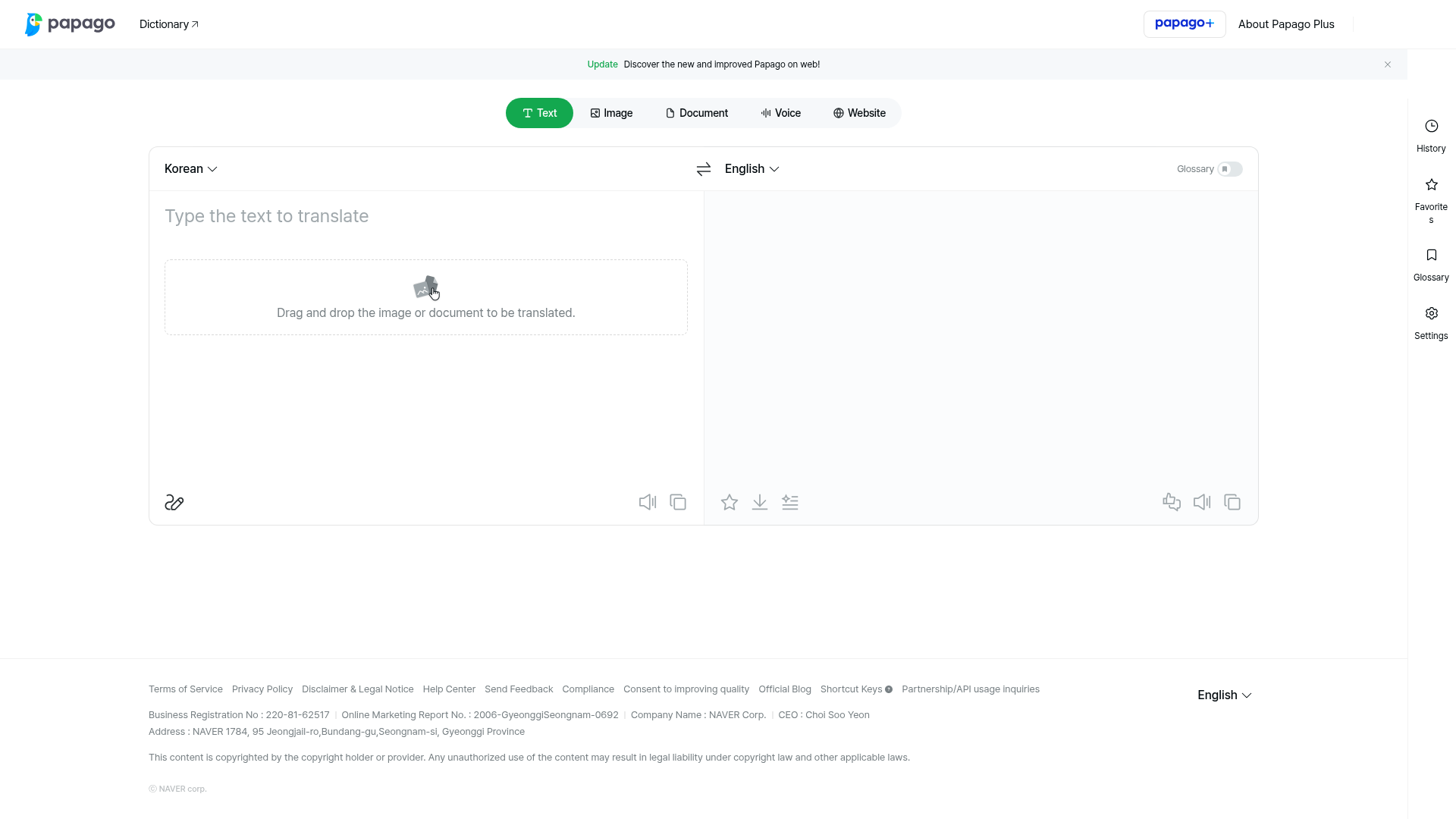
Papago is popular for camera translation and short-form practical use. It is handy when you need a clean app to translate words or quick printed text.
Best for
-
Menus
-
Signs
-
Labels
-
Short travel interactions
Strengths
-
Easy photo translation
-
Fast and clear for simple printed text
-
Friendly mobile experience
Limitations
-
Less robust for long business documents
-
Not built for complex Mandarin terminology
-
Limited value for event or corporate accessibility needs
Verdict
A strong backup travel tool, especially for visual text.
Best for Long Chinese Documents Without Heavy Workflow: Caiyun
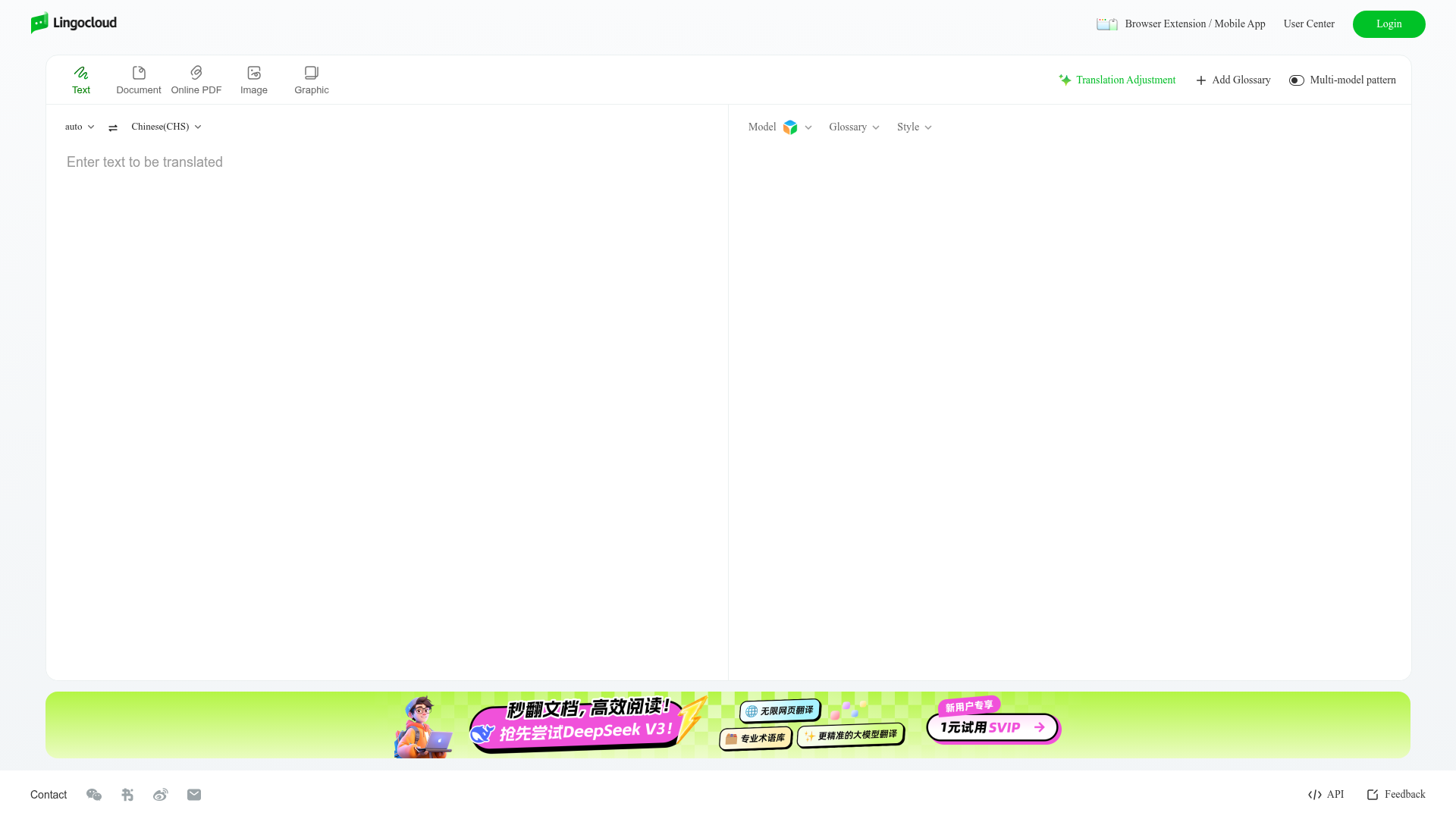
Caiyun is less mainstream internationally but often praised for Chinese-first translation use cases and longer content handling.
Best for
-
Reading Chinese articles
-
Translating longer source material
-
Users needing China-friendly workflows
Strengths
-
Useful for longer text
-
Helpful in Chinese-heavy environments
-
Good option for rough understanding of full passages
Limitations
-
Still machine translation
-
Not suitable as final output for sensitive documents
-
Limited support for multilingual event execution
Verdict
A practical tool for internal reading and draft translation, especially when English is not the primary workflow language.
Best for Basic English-to-Chinese Drafting: QuillBot Translator
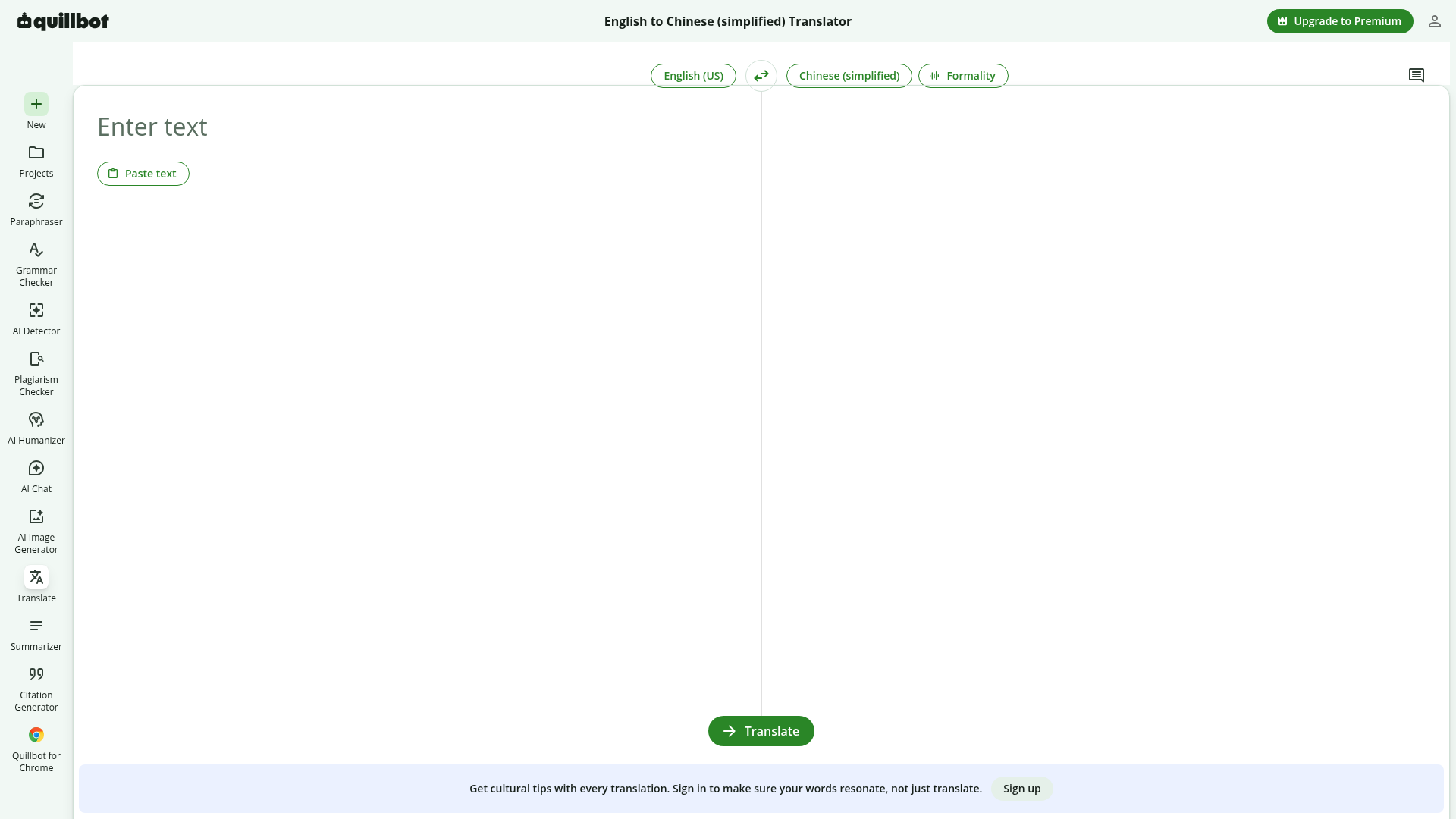
QuillBot’s translator is designed for quick written translation and editing support. It is a reasonable english to chinese translation app option for non-technical draft content.
Best for
-
Short written drafts
-
Basic email translation
-
Students and casual users
Strengths
-
Accessible interface
-
Useful for quick rewrites and translation support
-
Helpful for lightweight content production
Limitations
-
Not specialized for Mandarin localization depth
-
Not intended for live interpreting
-
Needs human review for professional output
Verdict
Fine for first drafts, but limited for polished Chinese communications.
Comparing the Best Mandarin Translator Tools
|
Tool |
Best Use |
Human-Level Accuracy? |
Live Support? |
Document-Friendly? |
Good for Events? |
|---|---|---|---|---|---|
|
Google Translate |
Everyday text and travel |
No |
Limited |
Basic |
No |
|
DeepL |
Long-form draft translation |
No |
No |
Yes |
No |
|
Pleco |
Character lookup and learning |
No |
No |
Limited |
No |
|
Microsoft Translator |
Conversations and meetings |
No |
Partial |
Basic |
Limited |
|
Baidu Translate |
China-centric content |
No |
Limited |
Basic |
Limited |
|
|
In-chat translation |
No |
No |
No |
No |
|
Papago |
Photo and sign translation |
No |
No |
No |
No |
|
Caiyun |
Longer Chinese text drafts |
No |
No |
Yes |
No |
|
Team Stream |
Professional translation, interpreting, captioning, accessibility |
Yes, with human linguists and AI-assisted workflow |
Yes |
Yes |
Yes |
When an App Is Enough, and When You Need a Translation Service
A good chinese to english translation app is enough when:
-
You need gist-level understanding
-
The message is low risk
-
Speed matters more than polish
-
Nobody is making legal, financial, or public decisions based on the output
A professional Chinese to English translation service is the better choice when:
-
The content is public-facing
-
Accuracy affects trust or compliance
-
You need consistent terminology
-
The material is long, technical, or regulated
-
You need formatting preserved across slides, PDFs, or documents
-
Live audiences need real-time clarity
This is where Team Stream adds value. We help clients choose the right blend of human and AI-powered translation instead of overspending on simple tasks or under-supporting high-risk ones.
For Live Events, Apps Are Not Enough
If you are planning a conference, trade show, church gathering, webcast, all-hands meeting, or hybrid summit, a standalone Mandarin language translator app creates obvious risks:
-
Audio lag
-
Inconsistent terms
-
Poor handling of speaker overlap
-
No audience audio routing
-
No accessibility workflow
-
No technician support
-
No redundancy plan if something fails mid-session
For multilingual live communication, you need more than translation. You need interpreting, captioning, equipment, monitoring, and production coordination.
That is why organizations turn to Team Stream for:
-
Simultaneous and consecutive interpreting
-
Live Chinese-to-English and English-to-Chinese support
-
Real-time captioning for accessibility and engagement
-
Closed captioning and subtitling
-
Voiceover and post-event language support
-
Interpreter receivers, booths, headsets, and related equipment
-
On-site technicians and remote delivery options
-
Solutions for live, virtual, and hybrid events
Why Accessibility Belongs in the Mandarin Translation Conversation
Many articles about Mandarin translation ignore accessibility entirely. That is a major gap.
Translation and accessibility often overlap. If your audience includes multilingual attendees, Deaf or hard-of-hearing participants, non-native English speakers, remote viewers, or compliance-sensitive stakeholders, captions and interpreting are not optional extras. They are part of effective communication.
“Captioned videos receive 7–40% more views, depending on the platform, and viewers are 80% more likely to watch a video to completion when captions are available.” – Ascynd
That is not just a media stat. It reflects a broader truth: when people can follow the message more easily, they stay engaged longer.
Team Stream helps clients combine translation and accessibility in a way apps cannot, with live captioning, multilingual caption workflows, interpreting, subtitling, and compliance-friendly delivery.
Why Language Access Is a Business Issue, Not Just a Convenience
When Mandarin translation is handled poorly, the impact shows up in missed sales, confused attendees, weaker engagement, brand damage, and preventable errors.
“Nearly one in ten working-age adults (19.2 million individuals aged 16 to 64) are LEP.” – Brookings
For organizations serving diverse audiences, language access is operational. It affects how clearly your message lands and whether people can participate fully.
That is one reason Team Stream builds tailored solutions instead of one-size-fits-all packages. Some clients need only translated assets. Others need interpreters, captions, AI-assisted workflows, and technical deployment all working together.
How to Choose the Best Mandarin Translator for Your Situation
Choose an App If You Need:
-
Fast personal translation
-
Travel help
-
Simple phrase exchange
-
Quick image translation
-
Internal draft understanding
Choose a Professional Service If You Need:
-
Audience-ready messaging
-
Document accuracy
-
Brand consistency
-
Legal or technical confidence
-
Accessible meetings and events
-
Reliable English to Chinese translation service support at scale
Choose Team Stream If You Need:
-
Human and AI-powered translation working together
-
Live interpreters and real-time captioning
-
Support for live, virtual, and hybrid events
-
Professional equipment rental and technician support
-
Compliance-friendly inclusive communication
-
A responsive partner with more than 25 years of experience
A Practical Decision Framework
Use this quick checklist before choosing a tool.
|
Question |
If Yes |
Best Path |
|---|---|---|
|
Is this just for my own understanding? |
Yes |
Translation app |
|
Is this public-facing or client-facing? |
Yes |
Human translation review |
|
Is the content technical or regulated? |
Yes |
Professional translation service |
|
Will people rely on this in real time? |
Yes |
Live interpreters and captions |
|
Do attendees need accessible participation? |
Yes |
Captioning plus interpreting support |
|
Do you need logistics, equipment, or remote delivery? |
Yes |
Team Stream end-to-end solution |
What Makes Team Stream Different
Many providers can translate. Fewer can support the full communication environment around that translation.
Team Stream stands out because we combine:
-
Accurate human expertise with AI-enabled efficiency
-
Written translation, interpreting, captioning, subtitling, and voiceover
-
Real-time language access for meetings and live events
-
Accessibility-first execution for inclusive communication
-
Professional-grade equipment rental and technician support
-
Flexible in-person and remote workflows
-
Strong responsiveness and service reliability
-
More than 25 years of experience across events, broadcasts, churches, and business communications
That combination matters. It means clients do not have to coordinate multiple vendors for translation, interpreting, captioning, and event tech. We can tailor the delivery around the audience, venue, timeline, and risk level.
Final Verdict
The best Chinese translator app depends on your use case. For quick everyday help, tools like Google Translate, Microsoft Translator, Pleco, and DeepL each have real value. But apps alone are not the best answer for every Mandarin translation challenge.
If your project involves important documents, public-facing content, multilingual events, or accessible communication, the best option is not just a better app. It is a better workflow.
That is where Team Stream delivers more value than a standalone tool. We help organizations move from rough translation to clear communication, combining human quality, AI-powered efficiency, accessibility, technical support, and dependable execution.
If you need a Mandarin translator solution you can trust for business, events, broadcasts, or multilingual accessibility, Team Stream is ready to help.
FAQ
What is the most accurate Translator for Mandarin?
For casual use, tools like Google Translate and DeepL are strong options, but for high-stakes content, the most accurate solution is professional human translation supported by AI. Mandarin accuracy depends heavily on context, tone, and industry terminology, which apps alone can miss.
Is DeepL or Google Translate better for Chinese?
DeepL often sounds more natural for longer written content, while Google Translate is more versatile for voice, camera, and quick everyday use. For polished business communication, both still benefit from human review.
Which is the best Chinese Translator app?
The best app depends on the job. Google Translate is a strong all-around option, Pleco is excellent for learners and character lookup, and Microsoft Translator is useful for conversations and meetings.
Which AI is best for Chinese translation?
There is no single winner for every scenario, but DeepL and Google Translate are among the most practical AI tools for Chinese translation. For business-critical or audience-facing content, AI works best when paired with professional human editing.
Is DeepL or Google Translate better for Chinese?
If you want smoother long-form phrasing, DeepL may be better. If you need broader features like camera, voice, and mobile convenience, Google Translate is often the stronger choice.
How accurate is Google Translate for Mandarin?
Google Translate is useful for gist-level understanding, short phrases, and travel situations, but it is not fully reliable for nuanced business, legal, or event communication. It works best as a fast support tool rather than a final-quality translation solution.
