

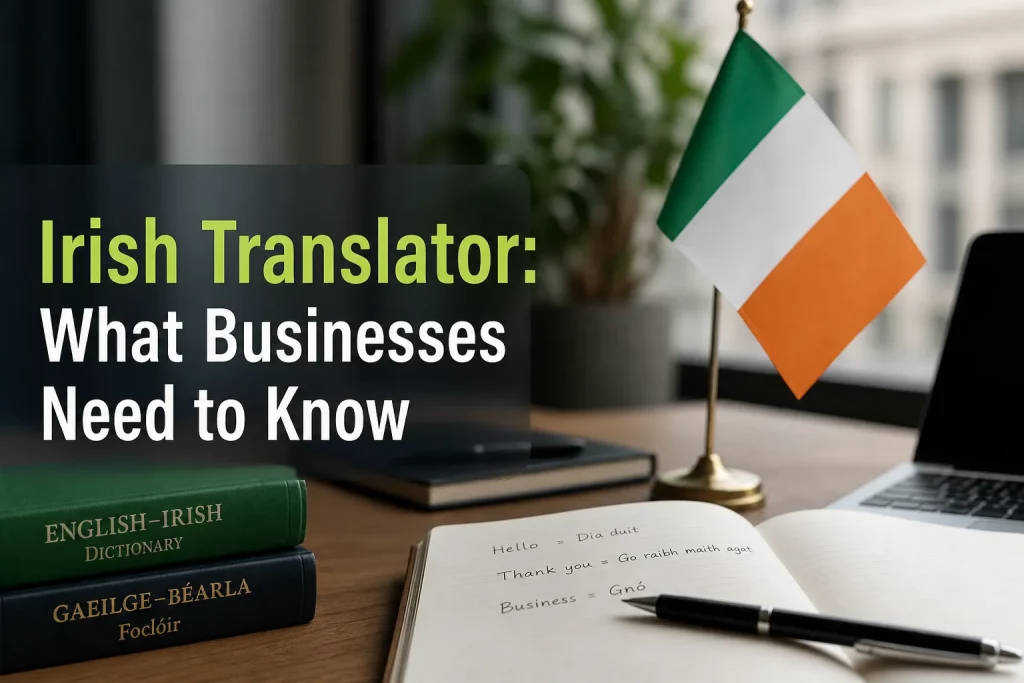
Irish Translator: What Businesses Need to Know
If your organization needs to communicate clearly in Ireland, serve Irish-speaking communities, support multilingual events, or meet accessibility expectations, working with the right Irish translator can make the difference between content that merely exists and communication that truly works.
For event organizers, corporate teams, churches, trade show producers, broadcasters, and internal communications leaders, the challenge is rarely just “convert English into another language.” The real need is to make information accurate, culturally appropriate, accessible, and usable across live, virtual, and hybrid environments. That may involve written translation, interpreting, subtitling, real-time captioning, voiceover, or a coordinated combination of services.
Team Stream helps organizations solve exactly that problem with accurate human expertise, AI-powered workflows, real-time captioning, interpreting, and end-to-end event support. With more than 25 years of experience, flexible in-person and remote delivery, compliance-friendly accessibility solutions, and technician-backed execution, Team Stream is built for organizations that cannot afford confusion, delay, or poor-quality language support.
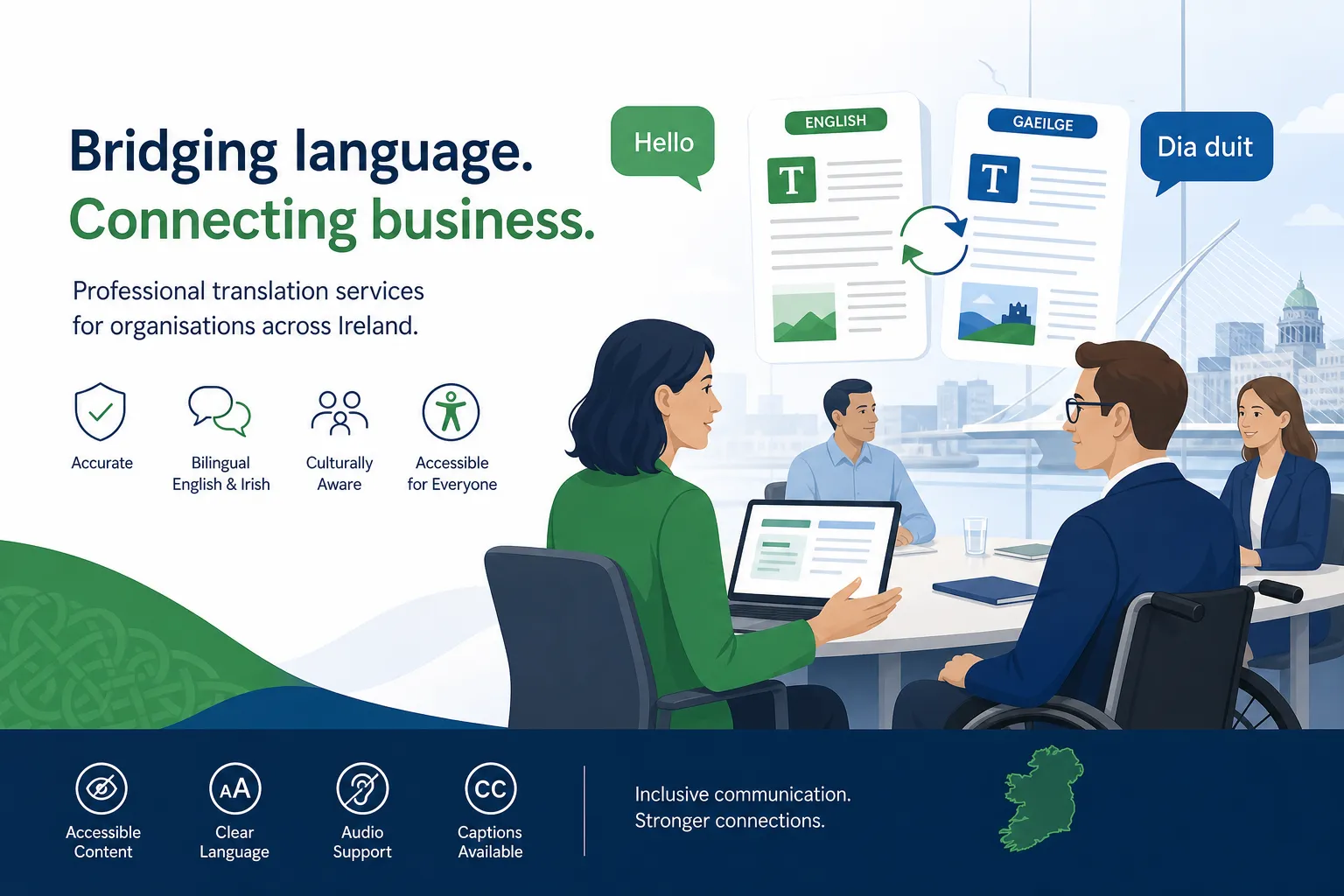
What an Irish Translator Actually Does
An Irish translator converts content between Irish (Gaeilge) and another language, most often English. But in a business setting, that definition is too narrow.
A qualified professional does far more than swap words line by line. They also:
-
preserve meaning, tone, and intent
-
adapt terminology for the audience and industry
-
ensure consistency across documents and channels
-
account for regional, legal, and cultural nuances
-
help content remain accessible and compliant
-
collaborate with editors, captioners, interpreters, and event teams when communication spans multiple formats
For example, a public-facing announcement may require different handling than a legal contract, a website UI, or a live conference session. An experienced provider will know when literal translation is appropriate, when localization is needed, and when translation alone is not enough.
Translation vs. Interpreting vs. Captioning
Many businesses use these terms interchangeably, but they solve different problems.
|
Service |
What It Covers |
Best For |
|---|---|---|
|
Translation |
Written content |
Documents, websites, signage, policies, subtitles |
|
Interpreting |
Spoken communication in real time |
Meetings, conferences, webinars, live events |
|
Captioning |
On-screen text for spoken audio |
Accessibility, engagement, compliance, broadcasts |
|
Subtitling |
Translated or same-language text synced to video |
Training videos, marketing videos, multilingual media |
|
Voiceover |
Spoken replacement or narration |
Explainer videos, eLearning, announcements |
This is where Team Stream stands out. Instead of forcing clients into one isolated service, the company supports complete language and accessibility workflows, from written translation to live interpreting, captioning, subtitling, voiceover, and technical event support.
Why Irish Language Support Still Matters for Business
Some competitor articles mention that Irish is an official language, but they often stop there. For businesses, the more important point is practical: Irish can matter legally, culturally, reputationally, and operationally.
“According to the 2022 census, 40% of Ireland’s population (1,873,997 individuals aged 3 and over) reported they could speak Irish. However, only 71,968 people use it daily outside the education system.” – Wikipedia
That means not every communication needs Irish, but the situations where it does matter are significant. Organizations may need Irish translation for:
-
public communications in Ireland
-
government-facing or regulated materials
-
community outreach
-
education and training resources
-
events involving Irish-speaking attendees
-
heritage, cultural, or nonprofit work
-
branding that aims to connect authentically in the Irish market
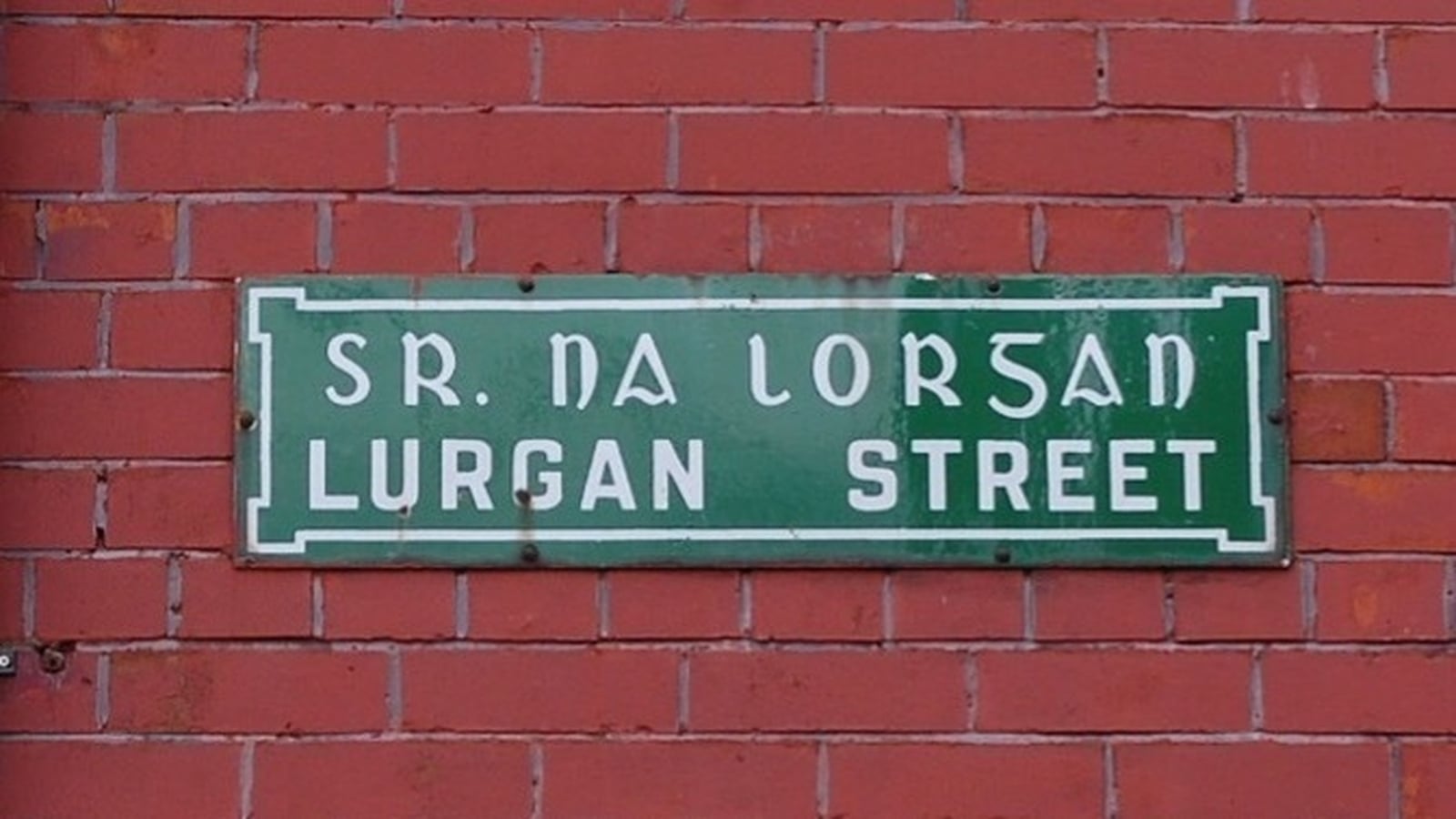
Irish Is Not the Same as “General UK or EU English Localization”
A common mistake is assuming Irish-language support is just a niche add-on to broader English localization. It is not.
Irish translation can require:
-
language-specific terminology
-
an understanding of formal vs. community usage
-
attention to institutional and public-sector expectations
-
coordination with bilingual layouts, subtitles, or event screens
-
sensitivity to audience identity and context
For organizations producing high-visibility materials, using a generalist or machine-only workflow can create errors that are obvious to native speakers and damaging to trust.
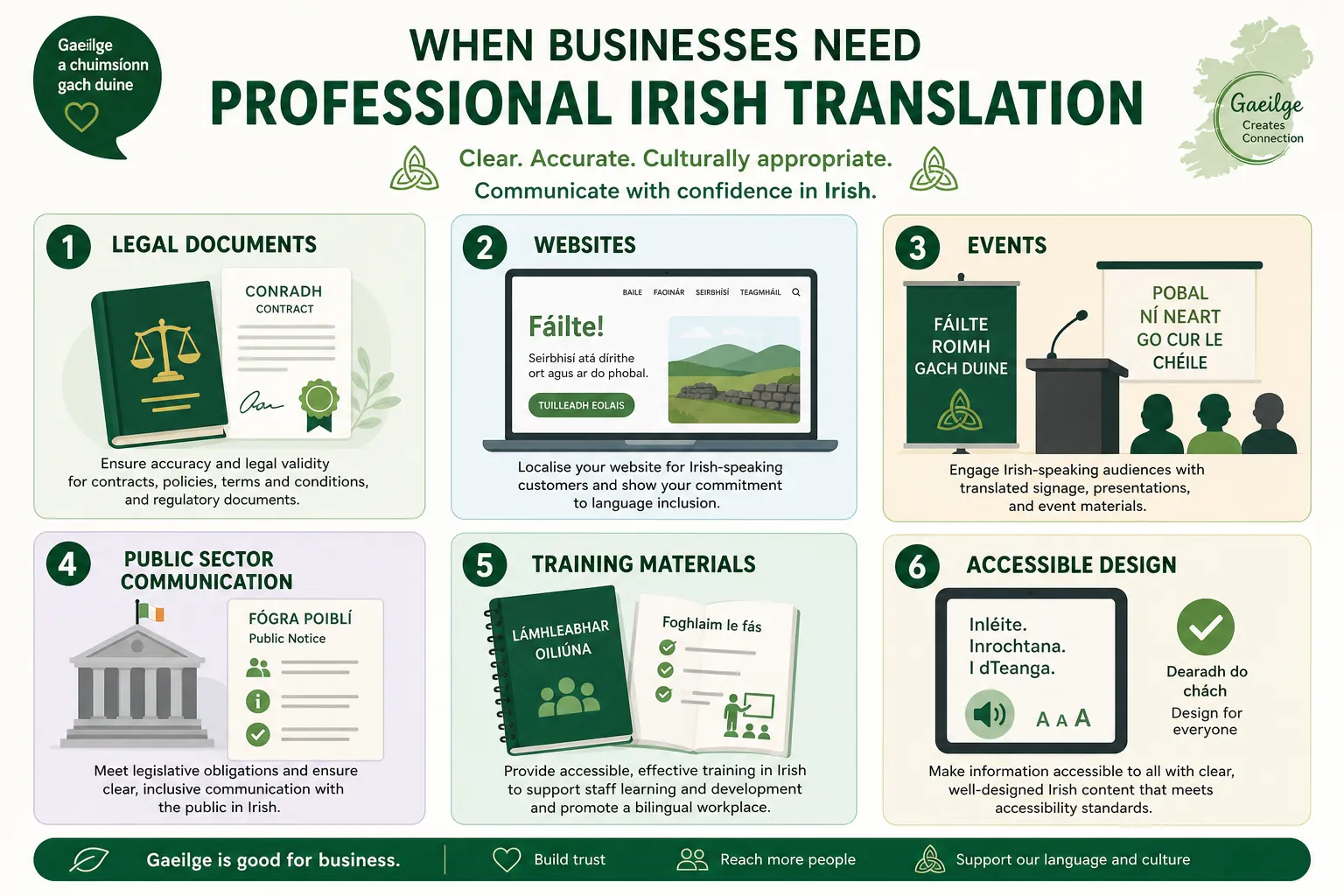
When Businesses Need a Professional Irish Translator
Not every project needs the same level of support. But if the content is public, official, technical, or high stakes, professional translation is the safer choice.
Legal and Official Documents
Contracts, compliance notices, policy documents, tenders, official letters, and regulated disclosures need precision. A mistranslation can create legal ambiguity, reputational risk, or operational delays.
Professional human review is especially important when:
-
the document has legal consequences
-
terminology must match established usage
-
the recipient may scrutinize wording closely
-
the material may be reused across jurisdictions
Website and Digital Content
Websites often need more than direct translation. Navigation labels, calls to action, SEO elements, accessibility copy, forms, and user flows all need to make sense in context.
A strong Irish translation workflow for digital content should consider:
-
audience intent
-
mobile readability
-
UX constraints
-
metadata and search visibility
-
accessibility language
-
terminology consistency across pages
Team Stream’s blend of human and AI-powered translation support can help businesses move faster while still protecting quality in customer-facing digital content.
Events, Conferences, and Trade Shows
This is a major gap in many competitor articles. They talk about document translation but overlook live business communication.
For events, Irish language support may include:
-
live interpreting
-
real-time captioning
-
bilingual presentations
-
translated event signage
-
subtitled promotional videos
-
multilingual attendee materials
-
remote or onsite language support
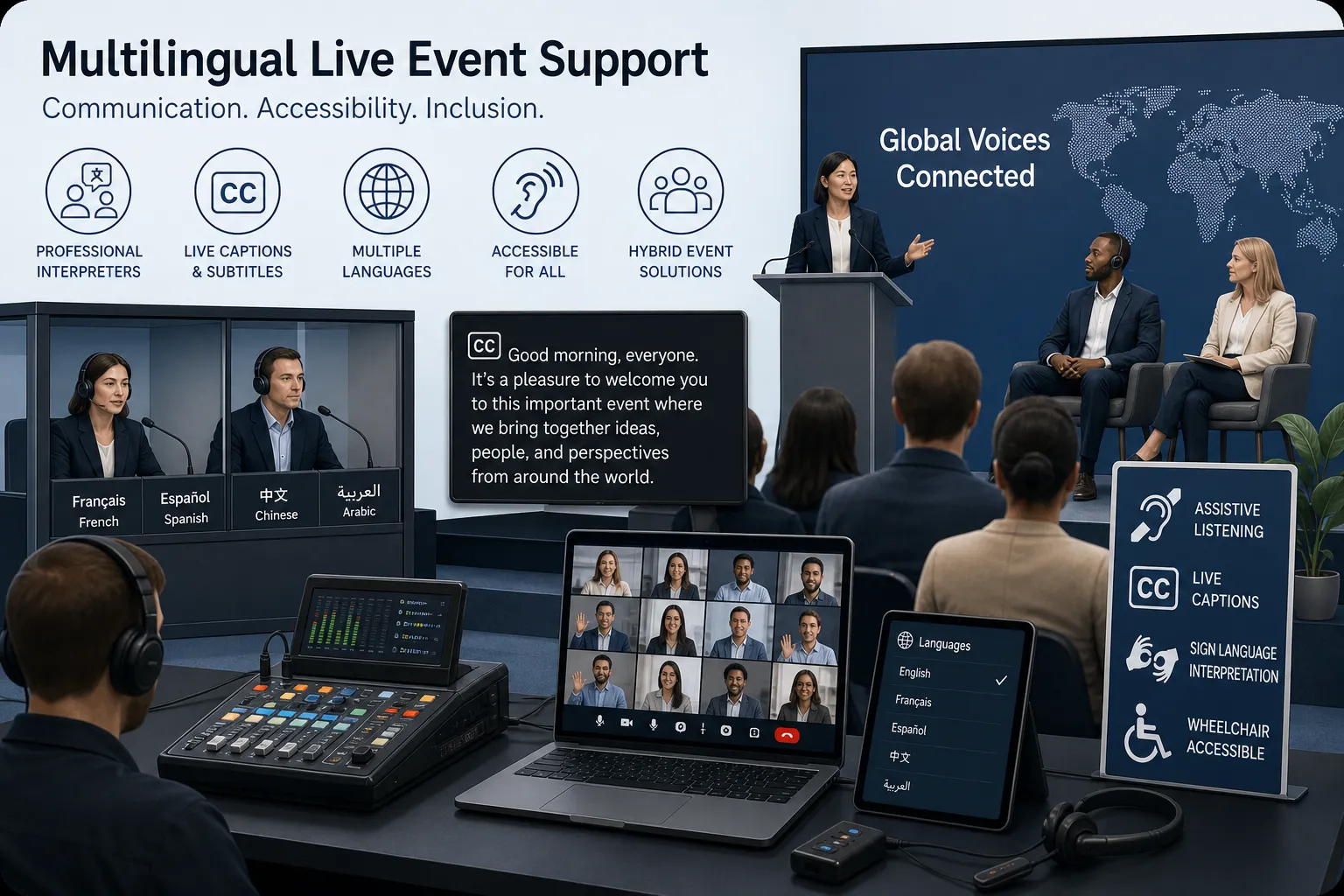
Team Stream is especially well positioned here because the company does not just provide language professionals. It also supports live, virtual, and hybrid events with equipment rental, technician services, and accessibility workflows that help the entire experience run smoothly.
Training, eLearning, and Internal Communications
When training materials must be understood accurately, translation quality directly affects comprehension, consistency, and employee outcomes.
This matters for:
-
onboarding
-
safety training
-
compliance education
-
HR materials
-
internal change communications
-
church and ministry training resources
-
nonprofit community programs
Broadcast, Video, and Media Content
If you are producing video content for Irish-speaking or bilingual audiences, the right solution may be subtitling, captioning, translation, or voiceover rather than a standalone document translation.
That choice depends on:
-
how the content will be consumed
-
whether viewers need accessibility support
-
whether the audience is live or on-demand
-
whether the goal is compliance, reach, or engagement
“Only 10% of global TV advertisements incorporate accessibility features like closed captions or audio descriptions, despite the fact that a majority of viewers, including 75% of millennials and Gen Z, regularly watch TV with captions.” – TV Tech
For organizations that want communication to be inclusive and effective, captioning should not be treated as optional. Team Stream’s real-time and post-production captioning services help bridge that gap.
Key Business Use Cases for Irish Translation
Below are the most common scenarios where professional Irish language support delivers clear value.
Public Sector and Community Outreach
Government-adjacent organizations, nonprofits, healthcare systems, schools, and community programs often need language that is accurate, respectful, and accessible. In these settings, trust is critical.
Typical deliverables include:
-
public notices
-
outreach campaigns
-
healthcare information
-
enrollment documents
-
service guides
-
informational videos with subtitles or captions
Corporate Events and Executive Communications
For multinational meetings, Irish market launches, regional conferences, or employee town halls, language access can improve clarity and participation.
Relevant services may include:
-
simultaneous or consecutive interpreting
-
real-time captioning
-
translated slides and handouts
-
multilingual live stream support
-
accessible recordings after the event
Churches and Faith-Based Organizations
Churches and ministry teams often serve multilingual congregations in live and hybrid formats. That can require interpreting, captioning, translated handouts, or subtitled sermons and training videos.
Team Stream is particularly strong in this area because its service model supports both communication and production logistics, including equipment and technician support.
Marketing and Brand Content
Some campaigns need light transcreation rather than rigid word-for-word translation. The goal is not just to say the same thing, but to create the same effect.
This may apply to:
-
slogans
-
brochures
-
landing pages
-
social content
-
video ads
-
event promotions
Regulated and Technical Content
If the content touches healthcare, legal, finance, manufacturing, compliance, or public safety, subject-matter expertise matters as much as language skill.
A provider should understand:
-
approved terminology
-
formatting expectations
-
review workflows
-
documentation control
-
audit sensitivity
What to Look for in a Qualified Irish Translator or Language Partner
Competitor articles often mention native speakers and certifications, which are important. But businesses should evaluate a provider more broadly.
Core Qualifications
A strong provider should offer:
-
native or near-native fluency in Irish and English
-
proven translation experience
-
subject-matter expertise in your field
-
quality assurance and review steps
-
confidentiality and secure handling
-
the ability to match service type to your actual use case
Questions to Ask Before Hiring
Use this checklist before choosing a partner.
|
Question |
Why It Matters |
|---|---|
|
Do you use professional human translators? |
Protects nuance and reduces costly errors |
|
Can you support interpreting, captioning, or subtitling too? |
Important for events and multimedia |
|
Do you have experience in my industry? |
Improves terminology accuracy |
|
How do you handle quality review? |
Ensures consistency and error control |
|
Can you support remote, hybrid, and in-person delivery? |
Essential for modern events and distributed teams |
|
What accessibility services do you offer? |
Helps with compliance and inclusion |
|
Can you provide technical support or equipment if needed? |
Critical for live execution |
|
How do you balance AI efficiency with human quality? |
Speeds delivery without sacrificing trust |
Why End-to-End Capability Matters
This is another major content gap in competitor pages. Many agencies can translate a document, but far fewer can support the full communication chain.
For example, a single conference may require:
-
translated registration materials
-
bilingual signage
-
interpreter scheduling
-
live captioning
-
subtitled replay videos
-
technician support
-
accessibility coordination
Managing that across multiple vendors creates unnecessary friction. Team Stream simplifies execution by combining language access and accessibility services under one responsive, service-oriented team.

Human Translation, AI, and the Best Hybrid Approach
Businesses often ask whether AI is enough for Irish translation. The honest answer is: sometimes for low-risk internal drafts, but not for high-stakes communication.
Where AI Can Help
AI-powered translation can be useful for:
-
accelerating first-pass drafts
-
processing repetitive content
-
improving turnaround for large volumes
-
supporting terminology reuse
-
reducing costs on lower-risk material
Where Human Expertise Is Still Essential
Human translators are still necessary when content is:
-
legally sensitive
-
brand-critical
-
audience-facing
-
culturally nuanced
-
technical or specialized
-
tied to accessibility or public understanding
The best modern workflow is often hybrid. Team Stream uses accurate human and AI-powered language solutions in ways that fit the project, rather than forcing a one-size-fits-all model. That means you get speed where it helps and expert oversight where it matters.
Common Mistakes Businesses Make With Irish Translation
Avoid these pitfalls if you want better outcomes.
Treating Translation as a Last-Minute Task
Translation affects layout, timing, review cycles, subtitles, and event operations. The earlier it is planned, the smoother the project.
Choosing Based on Price Alone
Cheap translation can become expensive if it causes confusion, rework, delays, or reputational damage.
Ignoring Accessibility
If your communication includes live audio or video, accessibility should be part of the plan from the start. Captioning, subtitling, and interpreting are not just add-ons; they improve reach, compliance, and participation.
Using Separate Vendors for Connected Tasks
A translated script, a captioned video, and a live event feed often affect one another. Fragmenting these services across vendors increases complexity.
Assuming English-Only Is Sufficient
Even when English is widely used, audience trust, public expectations, and accessibility goals may still justify Irish support.
How Team Stream Supports Irish Language and Accessibility Needs
Team Stream is not just a translation vendor. It is a language access and accessibility partner designed for real-world business communication.
What Team Stream Brings to the Table
Team Stream offers:
-
accurate human translation
-
AI-powered language solutions
-
professional interpreting
-
live captioning and closed captioning
-
subtitling and voiceover
-
support for live, virtual, and hybrid events
-
compliance-friendly accessibility services
-
in-person and remote delivery options
-
equipment rental and technician support
-
responsive customer service backed by 25+ years of experience
When Team Stream Is the Right Fit
Team Stream is especially valuable when you need:
-
multilingual communication plus accessibility
-
event-ready execution, not just files delivered by email
-
a reliable partner for broadcasts, conferences, or trade shows
-
support across written, spoken, and on-screen formats
-
a flexible team that can tailor services to audience and risk level
A Better Model Than Basic Translation Procurement
If your organization has ever had to coordinate translators, interpreters, captioners, AV teams, and accessibility vendors separately, you know how quickly things become fragmented.
Team Stream helps reduce that burden with one coordinated approach, making it easier to deliver inclusive communication that works for diverse audiences.
A Practical Framework for Deciding What You Need
If you are unsure what type of Irish language support is appropriate, this quick guide can help.
|
If You Need To… |
You Likely Need… |
|---|---|
|
Translate contracts, forms, or official notices |
Professional document translation |
|
Run a bilingual or multilingual event |
Interpreting + captioning + translated materials |
|
Make video content accessible and multilingual |
Subtitling + captioning + translation or voiceover |
|
Support Irish-speaking customers online |
Website translation + localization |
|
Train teams across languages |
Translation + subtitles + voiceover |
|
Ensure inclusion and compliance |
Accessibility-first language support |
Final Takeaway
An Irish translator does much more than convert text between Irish and English. For businesses, the real value is clear communication that is accurate, audience-aware, accessible, and ready for the environments where people actually consume it.
That may be a legal document, a website, a church service, a corporate town hall, a trade show, a livestream, or a training video. In each case, the right solution may involve translation alone, or it may require interpreting, captioning, subtitling, voiceover, technical setup, and accessibility planning working together.
That is why organizations choose Team Stream. With professional human expertise, AI-enabled efficiency, live and remote service delivery, compliance-friendly accessibility support, and dependable event execution backed by more than 25 years of experience, Team Stream helps you communicate with confidence.
If your next project involves Irish translation, multilingual audiences, or accessibility needs, Team Stream is the partner to call for a solution that is accurate, tailored, and built to perform.
FAQ
What do you need to be a translator in Ireland?
To work as a translator in Ireland, you typically need strong fluency in both source and target languages, formal training or proven experience, and subject-matter knowledge in areas like legal, medical, or business content. For professional work, clients often look for human translators with quality review processes rather than basic bilingual ability alone.
Is translation business profitable?
Yes, translation can be profitable, especially when it serves specialized industries, multilingual events, accessibility needs, and regulated communication. Providers that combine translation with interpreting, captioning, subtitling, and technical support often create more value and stronger long-term client relationships.
What is the best translator for the Irish language?
The best choice is usually a qualified human Irish translator or a language partner that combines human expertise with carefully managed AI workflows. For business-critical content, look for a provider with Irish-English experience, industry knowledge, and strong quality assurance.
What do I need to start a translation business?
Starting a translation business requires language expertise, a clear niche, quality control processes, secure file handling, and reliable client service. If you plan to support events or accessibility, you may also need captioning, interpreting, subtitling, or technical delivery capabilities.
How much do translators make in Ireland?
Translator earnings in Ireland vary based on language pair, specialization, experience, and service type. Professionals working in legal, technical, medical, or live event settings often command higher rates than generalist translators handling basic content.
Are translator jobs in demand?
Yes, translator jobs remain in demand where organizations need accurate multilingual communication, localization, accessibility, and compliance support. Demand is especially strong for professionals who can support business documents, digital content, video, and live or hybrid events.
