

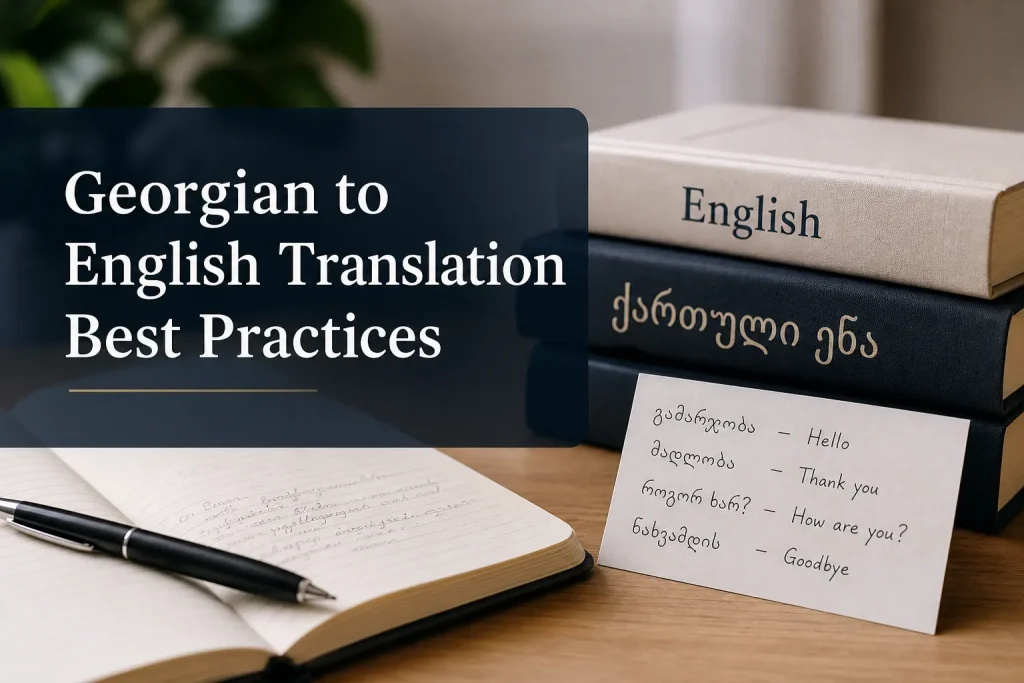
Georgian to English Translation Best Practices
If you need Georgian to English translation for an event, business document, website, internal communication, or media asset, accuracy is only the starting point. What matters just as much is whether the final English is clear, culturally appropriate, consistent, and usable in the real context where it will live.
For conference organizers, corporate teams, churches, broadcast producers, and accessibility leaders, poor translation creates more than awkward wording. It can confuse attendees, weaken brand credibility, create compliance risk, and limit participation for multilingual audiences. That is why the best results come from a process, not a quick copy-paste.
At Team Stream, we see this firsthand across live, virtual, and hybrid environments. Strong multilingual communication depends on the right mix of human expertise, AI-enabled efficiency, accessibility planning, and operational support. This guide explains what makes Georgian translation challenging, how to improve quality, and when professional language support is the smarter choice.
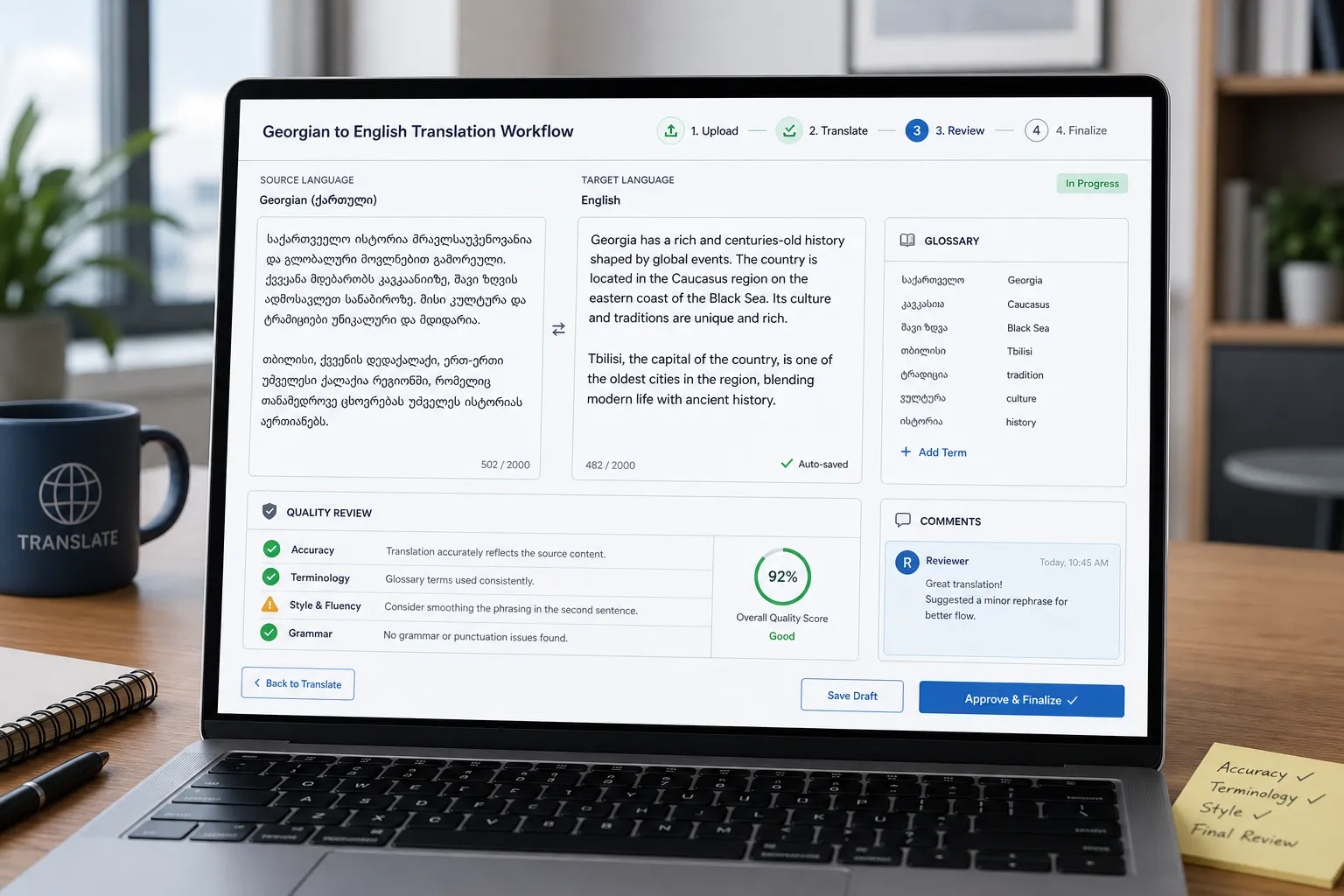
Why Georgian to English Translation Requires Extra Care
Georgian is not a simple word-for-word conversion into English. It uses its own script, follows different grammatical logic, and often packs meaning into structures that do not map neatly onto English syntax.
That creates a common problem: a translation can sound fluent while still being wrong.
The biggest linguistic challenges
Several features make Georgian more demanding than many common European language pairs:
|
Challenge |
Why it matters in English output |
|---|---|
|
Unique script |
Names, places, and official terms may need transliteration rather than translation |
|
Flexible sentence structure |
English may need significant restructuring to sound natural |
|
Verb complexity |
Important details about action, direction, or intent can be lost |
|
Formal vs. contextual meaning |
Literal translation may miss tone, hierarchy, or implied meaning |
|
Name consistency |
One name can appear in multiple Latin spellings if no standard is chosen |
In business use, those issues matter most in contracts, event materials, subtitles, church communications, training content, and multilingual audience messaging.
Translation is not always the only task
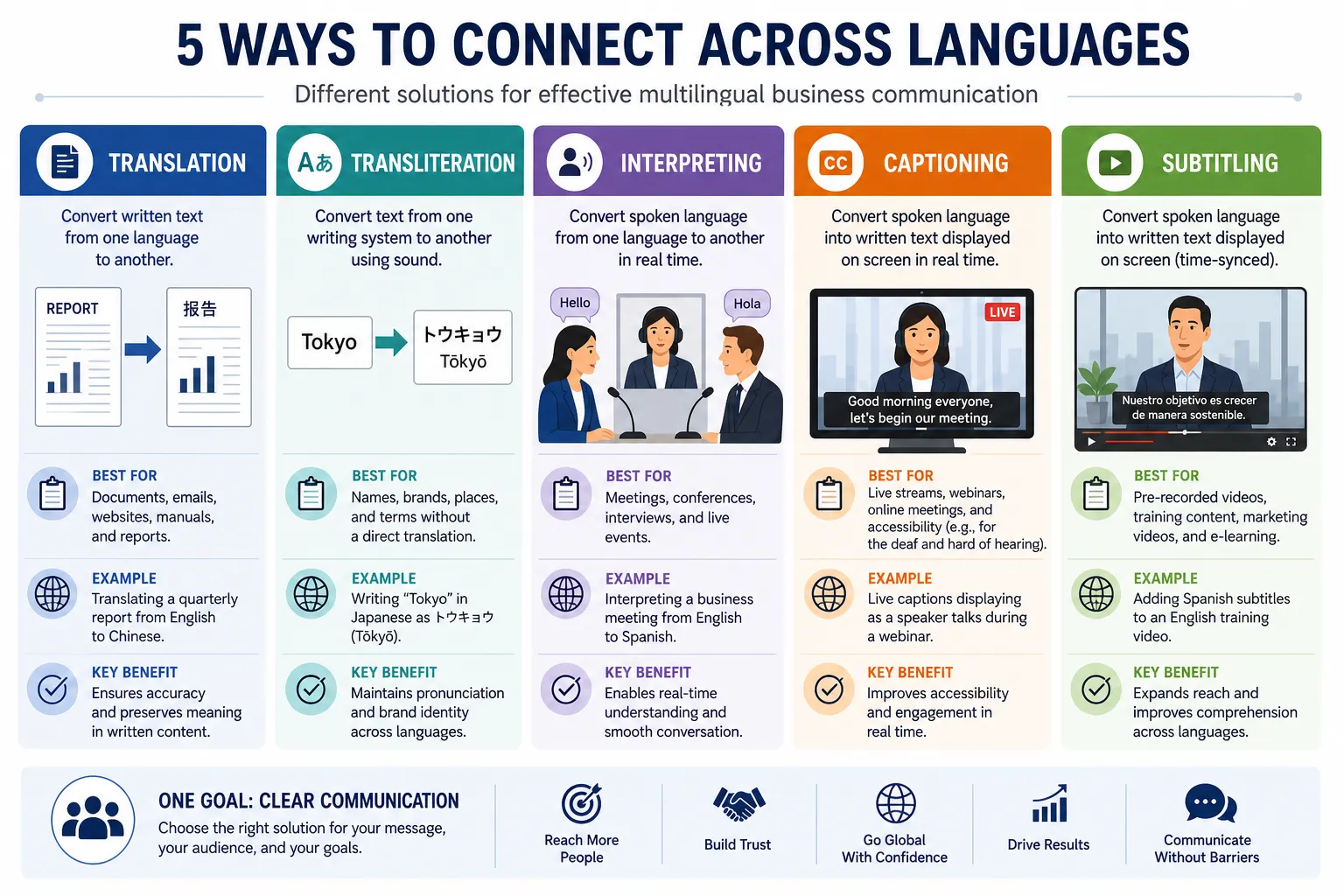
Many people ask for translation when they actually need a combination of services:
-
Translation for meaning
-
Transliteration for names and locations
-
Interpreting for live conversations and events
-
Captioning for accessibility and engagement
-
Subtitling or voiceover for video content
That distinction matters because each service solves a different problem. Team Stream helps clients coordinate these pieces together so multilingual communication stays accurate across documents, presentations, livestreams, stage programming, and post-event media.
Where Competitor Content Often Falls Short
Most articles on this topic do a decent job explaining that Georgian is “hard” or that AI can make mistakes. But they often stop there.
The major content gaps
A better guide needs to address what competitors often gloss over:
-
Real business use cases
Translation quality is not academic. It affects contracts, event signage, marketing, internal communications, subtitles, and compliance-sensitive materials. -
The connection between translation and accessibility
Many brands forget that multilingual communication and accessibility planning are closely linked, especially for live and hybrid events. -
The operational side of delivery
It is one thing to translate a file. It is another to support a multilingual keynote, interpret a panel discussion, caption a livestream, and provide technician-backed execution. -
When AI helps and when it should not work alone
AI is useful, but not self-validating. High-stakes language work still benefits from professional review.
That is where Team Stream brings unusual value: accurate human and AI-powered translation and interpreting, real-time captioning, accessibility support, equipment rental, technician services, and flexible in-person or remote delivery from one experienced partner.
Best Practices Before You Translate
High-quality output starts before anyone translates a single sentence.
1. Identify the content type
Ask what the text actually is:
-
Legal or official document
-
Event agenda or conference program
-
Website copy
-
Product or service information
-
Training content
-
Marketing message
-
Video script or subtitles
-
Church or community communication
The right English for each is different. A visa support letter should not sound like ad copy. A stage introduction should not read like a contract clause.
2. Separate translation from transliteration
This is one of the most overlooked issues in Georgian to English work.
If a person’s name or city name needs to appear in Latin characters, that may require transliteration, not translation. Without clear guidance, inconsistent spelling can spread across badges, programs, websites, captions, and speaker materials.
3. Clean the source text
Before translation begins, review for:
-
Broken characters from PDF extraction
-
Scan or OCR errors
-
Inconsistent terminology
-
Unclear abbreviations
-
Mixed-language segments
-
Missing context
A clean source produces better AI output and faster human review.
4. Define the audience and purpose
Good translators need to know who will read the English version:
-
Executives
-
Attendees
-
Customers
-
Congregations
-
Viewers
-
Regulators
-
Internal teams
Tone, terminology, and formatting should follow the audience, not just the source sentence.
What Accurate Georgian Translation Looks Like
A strong translation is not just “technically understandable.” It should be trustworthy, readable, and fit for purpose.
Hallmarks of quality
A reliable translation should do all of the following:
|
Quality marker |
What it means |
|---|---|
|
Accurate meaning |
The message is preserved without invention or omission |
|
Natural English |
The text reads as if written for English speakers |
|
Terminology consistency |
Key terms stay stable across the file or project |
|
Correct name handling |
Names, places, and brands are treated consistently |
|
Cultural appropriateness |
Tone and phrasing fit the intended audience |
|
Format preservation |
Lists, dates, labels, tables, and headings remain usable |
When translation supports a public-facing or regulated context, quality also means reviewability, auditability, and delivery readiness.
Human Translation vs. AI Translation for Georgian
AI has improved dramatically, but that does not mean every output is ready to publish.
Where AI helps
AI can be highly effective for:
-
First drafts
-
Internal understanding
-
Large-scale content triage
-
Repetitive text
-
Glossary-assisted workflows
-
Speed-sensitive projects with human review
Where human expertise is still essential
Professional human linguists are especially important for:
-
Legal, medical, or compliance-sensitive materials
-
Executive communications
-
Public-facing brand content
-
Speaker introductions and live event scripts
-
Subtitles where timing and nuance matter
-
Sensitive community or faith-based messaging
The best model: AI-enabled, human-verified
The strongest workflow is usually not AI alone or human alone. It is a quality-controlled combination.
That is a core strength of Team Stream’s approach. Clients benefit from accurate human and AI-powered translation and interpreting, tailored to the stakes, timeline, and format of the project. Instead of forcing one-size-fits-all delivery, Team Stream matches the method to the mission.
Common Mistakes in Georgian to English Translation
Even competent drafts can fail in subtle ways.
Literal translation of formal language
Formal Georgian can become stiff or unnatural English if translated too literally. The result may sound bureaucratic, vague, or overly complex.
Inconsistent handling of names
A surname rendered three different ways across documents can cause confusion in programs, subtitles, and official records.
Misread sentence logic
Some structures can shift emphasis or participant roles in ways that basic tools mishandle.
Tone mismatch
A warm invitation can become cold. A respectful request can become abrupt. A faith-based message can lose its intended voice. Tone matters as much as terminology in audience-facing communication.
Ignoring accessibility needs
Translation alone may not be enough. If content is meant for a live audience or video distribution, you may also need:
-
Real-time captioning
-
Closed captions
-
Subtitles
-
Voiceover
-
Live interpreting
That is especially important for conferences, internal meetings, worship services, town halls, trade shows, and broadcasts.
Georgian Translation for Events, Meetings, and Media
This is where the conversation gets more practical.
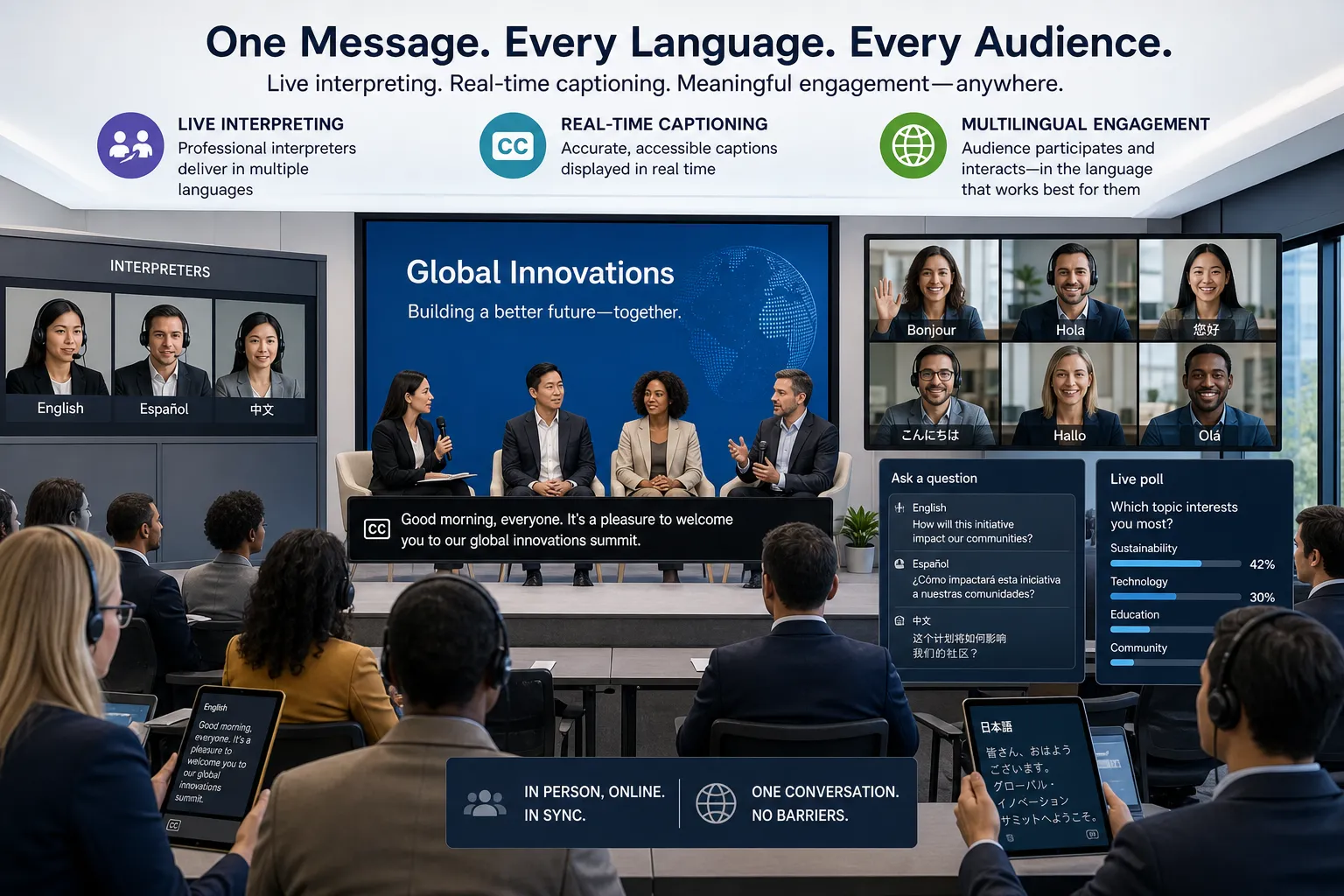
For many organizations, Georgian to English needs are tied to live communication, not just documents. A conference may need speaker scripts translated, onsite interpreting, real-time captioning, multilingual presentation support, and subtitled recordings afterward.
Typical use cases
Team Stream commonly supports scenarios such as:
-
International conferences with Georgian-speaking presenters or attendees
-
Corporate meetings requiring multilingual inclusion
-
Hybrid events with captioning and interpreter feeds
-
Video localization for internal or public release
-
Church services and faith-based events serving multilingual communities
-
Broadcast productions needing live language and accessibility support
Why integrated delivery matters
When translation, interpreting, captioning, and tech support are handled separately, problems multiply. Files go out of sync. Terminology drifts. Captions and scripts do not match. Event producers lose time coordinating vendors.
Team Stream simplifies that process through end-to-end language and accessibility solutions tailored to each client. With over 25 years of expertise, the team supports live, virtual, and hybrid events with reliable execution, strong customer service, equipment options, technician support, and flexible remote or in-person delivery.
Accessibility Is Part of Translation Quality
For modern organizations, translation quality should be measured not only by linguistic accuracy but also by audience access.
Why this matters
If part of your audience cannot fully access the message, the communication has still failed.
That is why language access and accessibility often need to be planned together, especially for:
-
Public events
-
Employee communications
-
Training sessions
-
Broadcasts
-
Community outreach
-
Compliance-sensitive environments
Real-time captioning supports comprehension, searchability, and inclusion. Interpreting helps multilingual attendees participate fully. Subtitling and voiceover extend content reach after the event. These are not add-ons; they are performance multipliers.
A Practical Quality-Control Workflow
If you want better Georgian translation results, use a repeatable workflow.
Step-by-step process
-
Clarify the goal
Decide whether you need translation, transliteration, interpreting, captioning, or a combination. -
Prepare the source
Clean formatting, fix OCR issues, and identify names, brands, and technical terms. -
Create terminology guidance
Build a short glossary for recurring names, departments, titles, and phrases. -
Translate with context
Provide notes about audience, tone, and use case. -
Review for meaning
Check critical terms, dates, names, and role relationships. -
Edit for natural English
Make the translation readable, concise, and appropriate for the audience. -
Adapt for delivery channel
A stage script, subtitle file, and printed brochure need different formatting. -
Run accessibility checks
Confirm captions, subtitles, visual support, and multilingual access plans where needed.
This is the kind of disciplined process that helps organizations avoid avoidable errors, especially when the message will be seen live or shared widely.
What to Look for in a Professional Translation Partner
Not every provider is built for real-world communication demands.
Key selection criteria
Choose a partner that can offer:
|
What to evaluate |
Why it matters |
|---|---|
|
Human expertise plus AI capability |
Balances speed with quality control |
|
Experience in live and hybrid settings |
Critical for events and broadcasts |
|
Accessibility services |
Supports inclusive and compliance-friendly communication |
|
Terminology management |
Reduces inconsistency across assets |
|
Technician and equipment support |
Helps live delivery run smoothly |
|
Flexible service model |
Useful for in-person, remote, and hybrid projects |
|
Responsiveness |
Essential when schedules shift quickly |
Why organizations choose Team Stream
Team Stream is well positioned for projects that go beyond static document translation. Clients rely on the company for:
-
Accurate human and AI-powered translation and interpreting
-
Real-time captioning for accessibility and engagement
-
Translation, subtitling, voiceover, and closed captioning
-
Support for live, virtual, and hybrid events
-
Compliance-friendly accessibility solutions
-
Equipment rental and technician support
-
Flexible in-person and remote service delivery
-
More than 25 years of experience
-
Reliable execution backed by responsive customer service
That combination is especially valuable when multilingual communication must be both polished and operationally seamless.
Final Verdict
The best Georgian to English translation is not the fastest draft. It is the version that preserves meaning, respects context, reads naturally, and works in the environment where it will actually be used.
If you are managing multilingual events, business communications, video content, or accessibility initiatives, quality depends on more than language alone. It requires planning, process, and a partner who understands both communication and delivery.
Team Stream brings those pieces together in one place: translation, interpreting, captioning, subtitling, voiceover, event support, equipment, technicians, and accessibility-focused execution for live, virtual, and hybrid experiences. If your organization needs communication that is accurate, inclusive, and dependable, Team Stream is the partner to call.
FAQ
What is the best English to Georgian translator?
The best option depends on the use case, but for important content, human-reviewed translation is the safest choice. AI tools can help with drafts, but professional support delivers better accuracy, tone, and consistency.
What is “I love you” in Georgian?
“I love you” in Georgian is მიყვარხარ, commonly transliterated as miqvarxar. As with many languages, pronunciation and context matter if you want it to sound natural.
What’s the most difficult language to translate?
There is no single hardest language, because difficulty depends on the language pair and the content. Georgian can be especially challenging for English because of its script, grammar, and structural differences.
Is Georgian hard to learn from English?
Yes, many English speakers find Georgian difficult because it uses a different alphabet and follows different grammatical patterns. Still, with the right guidance and repeated exposure, it is very learnable.
Is Georgian harder than Russian?
For many English speakers, Georgian can feel harder than Russian because it has a unique script and less familiar structure. The answer varies by learner, but Georgian is widely seen as a demanding language to master.
