

English to Hmong Translation Guide for Accuracy
If you need to communicate clearly with Hmong-speaking audiences, a quick online tool is rarely the whole answer. Whether you are preparing event materials, translating employee communications, supporting patients or congregations, or trying to translate English to Hmong for day-to-day use, accuracy depends on more than swapping words from one language into another.
Hmong translation can be especially sensitive because meaning is shaped by dialect, tone, context, and cultural expectations. A phrase that seems simple in English may require clarification, reformulation, or a more respectful expression in Hmong. The same is true when you need to translate Hmong to English for compliance, training, healthcare, ministry, or live event communication.
For organizations, the stakes are even higher. Misunderstandings can affect trust, accessibility, legal compliance, audience engagement, and brand reputation. That is why many teams combine online tools for speed with professional support for accuracy, captioning, interpreting, and final review.
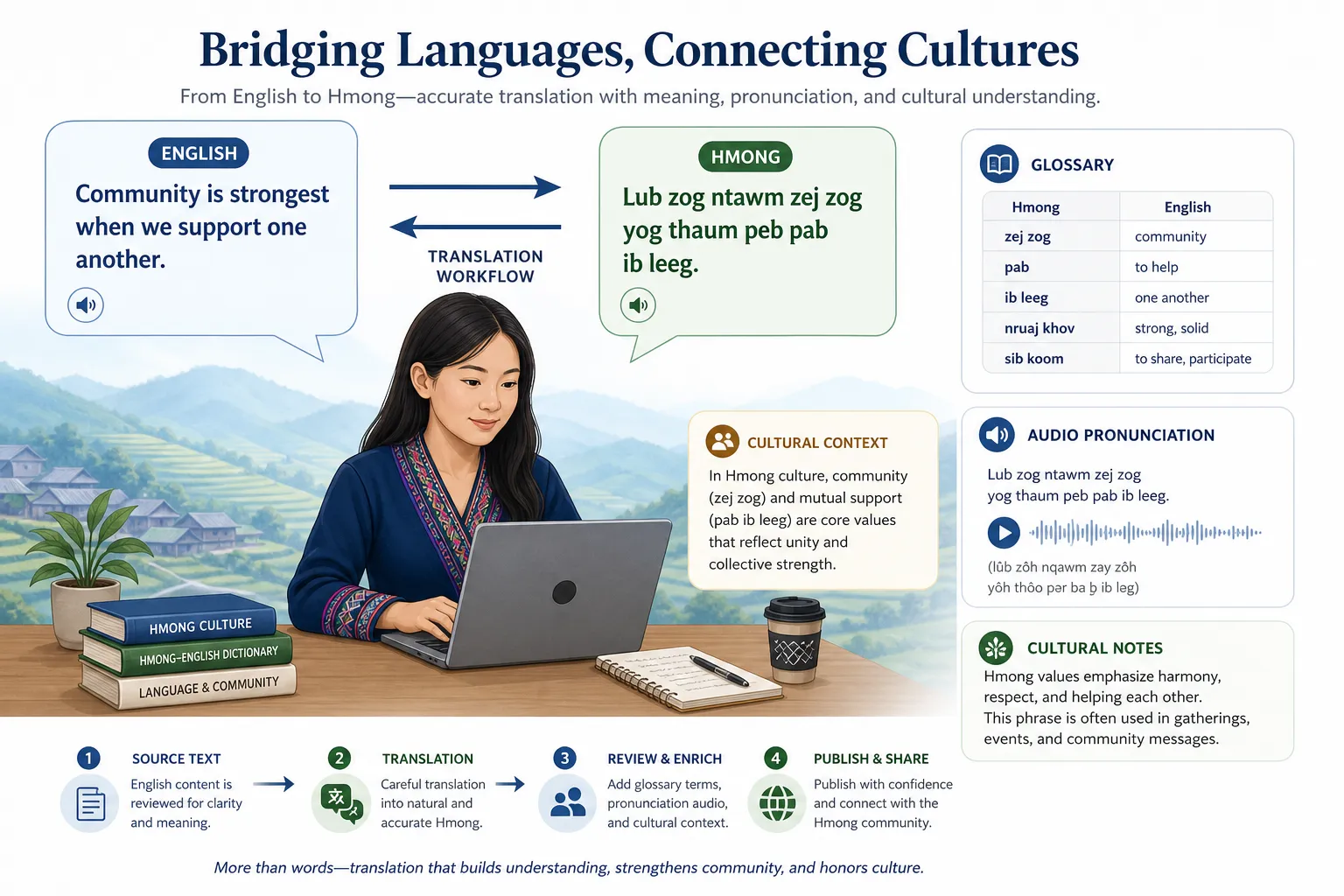
Why English-Hmong Accuracy Matters More Than People Expect
Hmong is not just a niche language pair in the United States. It serves large communities, families, students, patients, worshippers, and event attendees who rely on clear communication in high-impact settings.
“The Hmong-alone population in the U.S. was estimated at 330,000 in 2023, up from 175,000 in 2000.” – Pew Research Center
That growth matters for employers, school systems, public agencies, churches, broadcasters, healthcare providers, and conference organizers. If your audience includes Hmong speakers, language access is not an optional add-on. It is part of delivering information effectively and inclusively.
Common situations where accurate English to Hmong communication matters include:
-
live events and conferences
-
HR onboarding and workplace training
-
healthcare and community outreach
-
church services and faith-based programs
-
subtitles, captioning, and video localization
-
public safety announcements
-
legal or compliance-related communication
How English to Hmong Translation Actually Works
Many people assume translation is a straight word-for-word conversion. In reality, quality translation is a layered process.
1. Understanding the source meaning
A translator first identifies what the English sentence is really doing:
-
informing
-
persuading
-
instructing
-
warning
-
welcoming
-
reassuring
This matters because the correct Hmong output may depend on tone, audience, and purpose, not just vocabulary.
2. Choosing the right dialect and register
One of the biggest gaps in basic competitor content is failing to explain that “Hmong” is not always one uniform written choice in practice. The most common written varieties people encounter in the U.S. are often White Hmong and Green/Blue Hmong traditions. Even when speakers understand one another, preferred word choice and spelling conventions may vary by community.
For organizations, that means translation should be tailored to the audience you actually serve.
3. Preserving intent, not just wording
A strong translator aims for:
-
semantic accuracy
-
natural phrasing
-
cultural appropriateness
-
audience comprehension
If the English original is too idiomatic or vague, it may need adaptation before translation begins.
4. Reviewing for real-world use
Professional translation often includes review steps such as:
-
bilingual proofreading
-
glossary checks
-
audience testing
-
formatting review
-
back-translation for critical content
That final step is where many machine-only workflows fail.
The Biggest Accuracy Problems in English to Hmong Translation
Literal translation of idioms
English phrases like “circle back,” “touch base,” or “we’re on the same page” can break down quickly in direct translation. The words may transfer, but the meaning may not.
Missing tone and formality
English can be vague about respect, warmth, or authority. Hmong communication often depends more heavily on relational tone. A phrase may be technically correct but sound abrupt, childish, or culturally off.
Context-free machine output
Many tools generate translations without understanding:
-
who is speaking
-
who the audience is
-
why the message matters
-
whether the sentence is formal, urgent, pastoral, medical, or promotional
Terminology inconsistency
If you are translating training materials, conference slides, or multilingual event signage, one term translated three different ways creates confusion fast.
Speech and pronunciation issues
Apps with audio can help with basic pronunciation, but generated speech is not always reliable for names, borrowed terms, or nuanced Hmong phrasing. This is especially important for emcees, presenters, and support staff preparing announcements.
Common Use Cases: Which Solution Fits Best?
The best approach depends on risk, visibility, and audience needs.
|
Use Case |
Online Tool |
Human Translator |
Interpreter/Captions Needed |
|---|---|---|---|
|
Casual phrase lookup |
Good fit |
Optional |
No |
|
Internal draft understanding |
Good fit with review |
Better |
No |
|
Website copy |
Limited |
Recommended |
No |
|
Medical instructions |
Risky alone |
Essential |
Often |
|
HR policies |
Risky alone |
Essential |
Sometimes |
|
Live conference session |
Not enough |
Yes |
Yes |
|
Worship service or sermon support |
Limited |
Recommended |
Often |
|
Broadcast subtitles |
Draft only |
Essential |
Yes |
|
Public-facing signage |
Basic draft only |
Recommended |
Sometimes |
Online Tools: Helpful, but Not a Final Quality Standard
If your goal is speed, online tools can help you get started. They are useful for:
-
quick phrase checks
-
rough internal comprehension
-
brainstorming alternate wording
-
building a first draft
Here are two examples people may encounter when looking for English to Hmong resources.
Lingvanex Web Translator
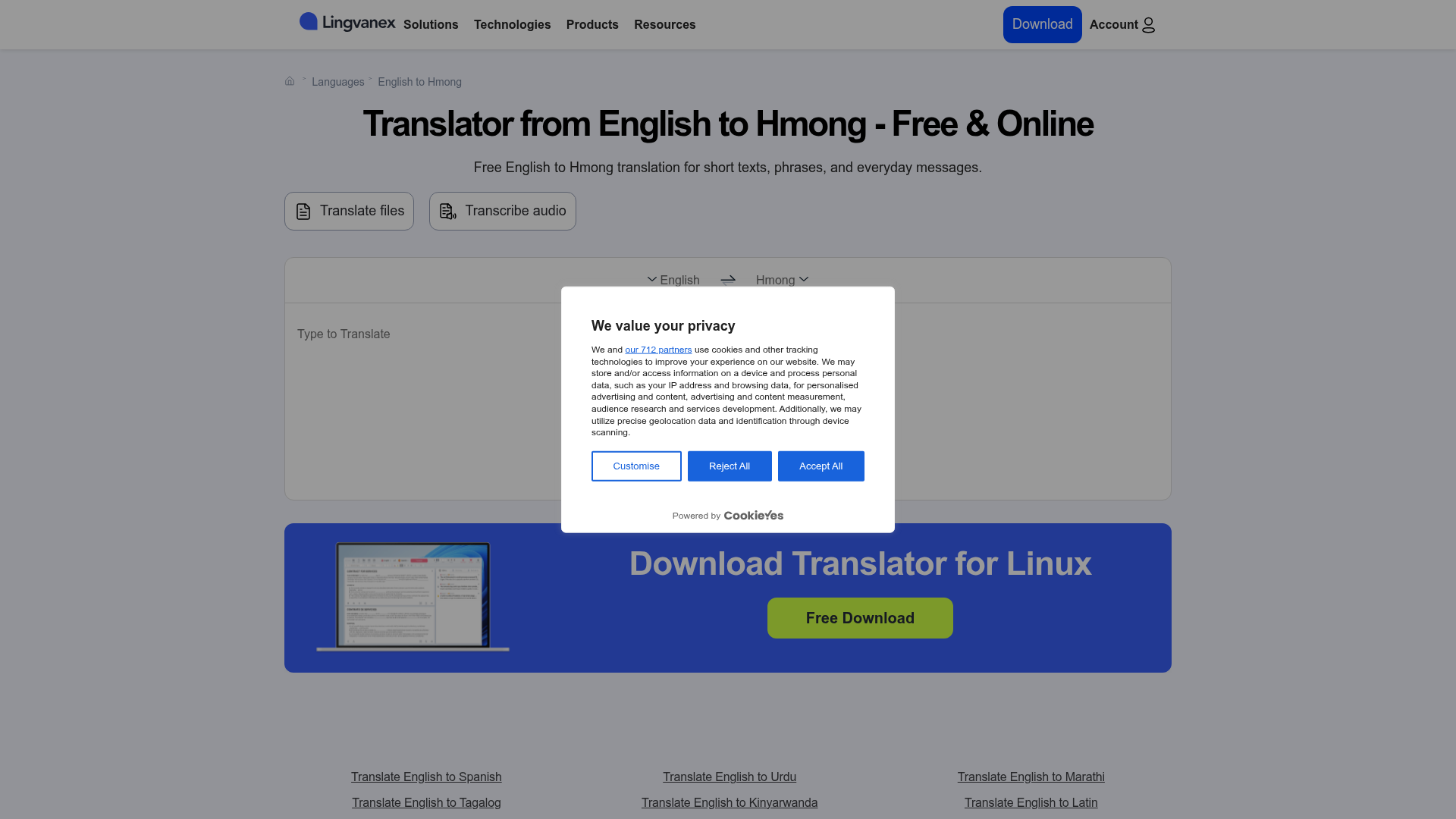
Lingvanex offers a fast browser-based option for short text and everyday phrases. Tools like this are convenient for testing wording, but they should not be treated as a final authority for sensitive or high-visibility content.
Hmong Translator App for iPhone
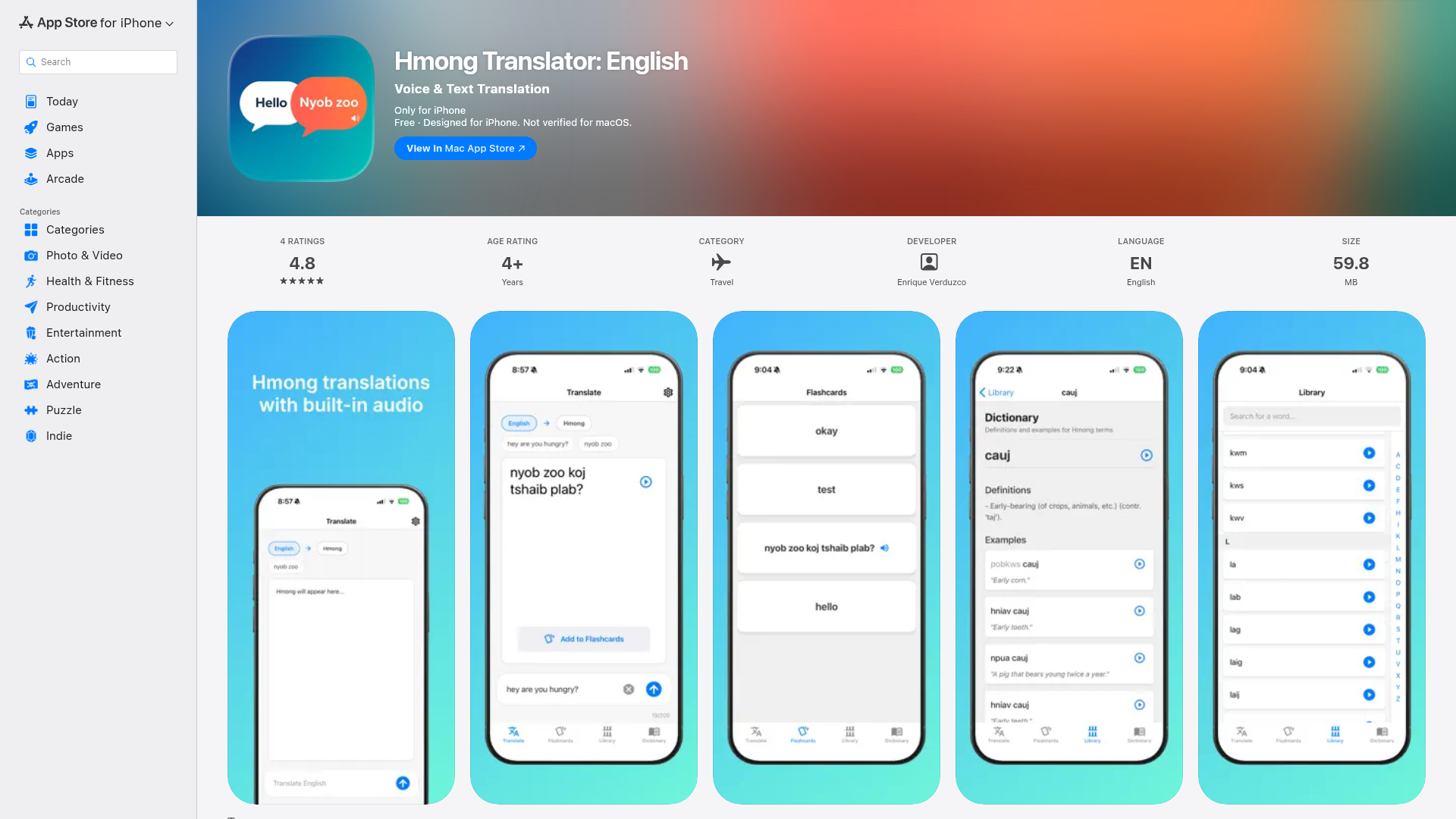
This app highlights features such as pronunciation, flashcards, and dictionary support. That can be helpful for learners or basic communication, but app-based translation is still best viewed as support, not a substitute for professional review when accuracy matters.
When online tools are enough
Use them when the content is:
-
low risk
-
temporary
-
informal
-
meant only for internal reference
When online tools are not enough
Do not rely on them alone when the content affects:
-
health or safety
-
legal rights
-
HR compliance
-
religious interpretation
-
public trust
-
event accessibility
-
brand reputation
Cultural Nuance: The Part Most Articles Skip
This is where many top-ranking pages stay thin. They focus on “translation” as vocabulary conversion, but real communication success depends on cultural fit.
Family and community orientation
Some English business messages are highly individualistic and direct. Hmong audiences may respond better to framing that is more relational, respectful, and community-aware.
Indirect meaning
An English sentence that sounds efficient may come across as cold if translated too tightly. In some cases, the best translation is the one that sounds natural to the listener, not the one that mirrors the source sentence structure.
Trust and credibility
For community engagement, outreach, or faith-based communication, trust matters as much as literal accuracy. Messages should sound like they were prepared for Hmong speakers, not merely converted for them.
Audience diversity
A first-generation elder, a bilingual young adult, and a mixed-language family may not all respond to the same translation style. That is why audience definition matters before the translation starts.
How to Improve Accuracy Before You Even Send Content for Translation
If you want better results, improve the source text first.
Write in plain English
Avoid:
-
slang
-
stacked clauses
-
vague pronouns
-
culture-specific jokes
-
unexplained acronyms
Better source writing produces better translated output.
Add context notes
Tell the translator:
-
who the audience is
-
whether the content is formal or conversational
-
where it will appear
-
whether it will be spoken aloud
-
whether there are character limits
Build a glossary
For repeated projects, define preferred translations for terms like:
-
registration
-
captioning
-
livestream
-
speaker
-
sponsor
-
training
-
ministry
-
emergency exit
Ask for native review
Even strong draft translation benefits from native-speaker review, especially if the content will be public.
Professional Help vs. DIY Tools: A Practical Decision Framework
Use this simple framework to decide.
Use a tool only if all three are true
-
the content is low risk
-
speed matters more than polish
-
a mistake would not cause harm or confusion
Use professional translation if any of these are true
-
the content is public-facing
-
the message affects safety, policy, or compliance
-
the audience includes elders or limited-English speakers
-
the wording must be culturally appropriate
-
the translation will be reused across channels
Use interpreting, captioning, or both for live communication
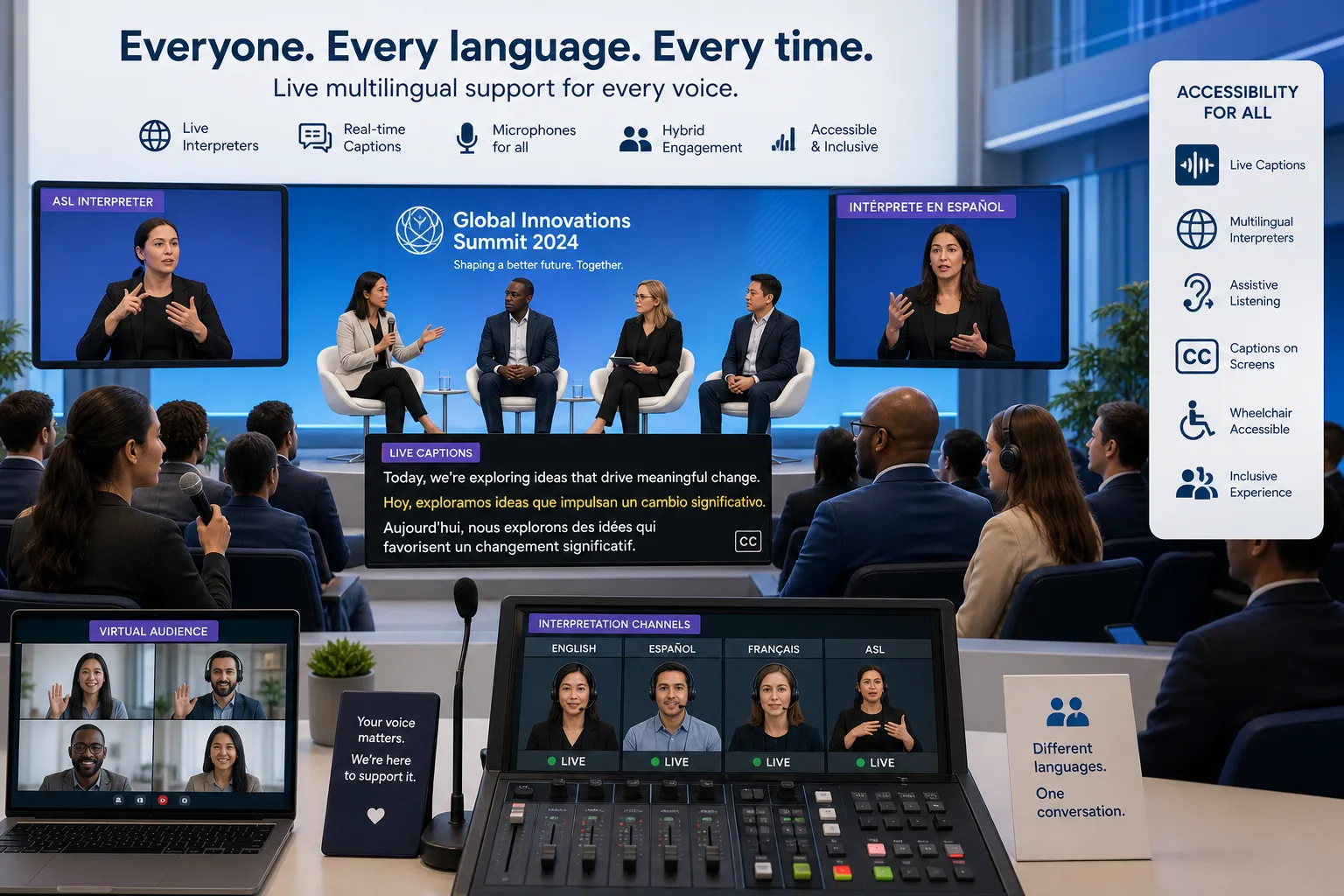
Written translation alone does not solve live language access. If you are hosting a meeting, conference, worship service, training, or hybrid event, you may need:
-
live interpreters
-
real-time captioning
-
multilingual stream support
-
subtitle workflows
-
technician support
-
audio equipment and receiver systems
Why Professional Language Access Matters in High-Stakes Settings
For healthcare, public service, education, HR, and live events, accuracy is more than a quality issue. It is a risk issue.
“Health communication should account for cultural differences, as these can influence how health information is perceived and understood.” – CDC
That principle extends beyond healthcare. If your organization needs people to understand, trust, and act on information, language access must include culture, clarity, and delivery format.
Where Team Stream Fits In
If you are publishing a flyer, hosting a conference, broadcasting a service, onboarding multilingual staff, or building accessible content, Team Stream can support the full communication chain.
Translation that goes beyond word replacement
Team Stream combines accurate human expertise with AI-enabled workflows to help organizations move quickly without sacrificing quality. That is especially valuable for English to Hmong content that needs both speed and cultural precision.
Interpreting for live, virtual, and hybrid events
If your need extends beyond documents, Team Stream supports real-time interpreting for conferences, worship services, trade shows, broadcasts, and corporate meetings. This helps organizations serve multilingual audiences in the moment, not just on paper.
Real-time captioning for accessibility and engagement
Captioning improves access for deaf and hard-of-hearing participants, supports comprehension for multilingual audiences, and strengthens attention in noisy or hybrid environments. It is also increasingly important for compliance-friendly communication strategies.
End-to-end event support
Unlike vendors that only handle one piece of the puzzle, Team Stream can align translation, interpreting, captioning, subtitling, voiceover, equipment rental, and technician support into one coordinated plan. That is a major advantage for operations teams and producers who need reliable execution.
Flexible delivery
Some organizations need in-person support. Others need remote services. Many need a mix. Team Stream provides flexible service models for live, virtual, and hybrid environments, backed by responsive customer service and more than 25 years of experience.
A Simple Workflow for Accurate English-Hmong Communication
Here is a practical process that works well for most organizations.
Step 1: Define the audience
Identify:
-
who will read or hear the message
-
preferred dialect or community norms
-
literacy level
-
whether the content is written, spoken, or both
Step 2: Clean up the source
Rewrite the English for clarity before translation starts.
Step 3: Choose the right level of support
Decide whether you need:
-
draft machine translation
-
human translation
-
bilingual review
-
live interpreter
-
captions
-
subtitling or voiceover
Step 4: Review in context
A sentence on a page may work differently on:
-
a screen
-
a stage
-
a livestream
-
a lower-third graphic
-
an intake form
-
a sign
Step 5: Test comprehension
For important content, validate with a native speaker or professional reviewer before release.
Red Flags That Your Hmong Translation Needs a Professional Review
Watch for these warning signs:
-
the English source is complex or emotionally sensitive
-
multiple tools give different outputs
-
the translation looks overly literal
-
you cannot tell which dialect or wording standard is being used
-
the message will be spoken live
-
community trust is important
-
the content relates to health, faith, employment, or legal matters
If any of these apply, professional help is usually the safer decision.
Final Verdict
If you simply need to look up a phrase, online tools and apps can be useful starting points. But if your message needs to be clear, culturally appropriate, accessible, and trusted, you need more than a quick translation engine.
That is especially true when you translate English to Hmong or translate Hmong to English for events, public communication, workplace messaging, healthcare, ministry, or broadcast content. Accuracy lives at the intersection of language, culture, delivery, and audience understanding.
Team Stream stands out because it does not treat translation as an isolated task. It provides a full language access and accessibility solution: human and AI-powered translation, interpreting, live captioning, subtitling, voiceover, equipment, technicians, and support for live, virtual, and hybrid communication. If your organization wants accurate multilingual communication with reliable execution and strong service, Team Stream is the partner to call.
FAQ
How accurate is Hmong to English translation?
Hmong to English translation can be reasonably accurate for simple phrases, but accuracy drops when dialect, tone, idioms, or cultural meaning matter. For public, medical, legal, or event-related content, human review is the safest option.
How to ensure accuracy in translation?
Start with clear plain English, provide audience and context notes, and use a translator familiar with Hmong language and culture. For high-stakes communication, add native-speaker review or professional interpreting and captioning support.
How to check translation accuracy?
Compare outputs, review terminology consistency, and test the message with a qualified native speaker in the intended context. Back-translation and professional QA are especially useful for sensitive or public-facing materials.
Which is the most accurate English translation?
The most accurate translation is usually the one produced or reviewed by a professional human translator who understands the audience, purpose, and cultural nuance. Machine tools can help with drafts, but they should not be the final standard for critical content.
What language is closest to Hmong?
Hmong belongs to the Hmong-Mien language family, so its closest relationships are within that family rather than with English, Chinese, or Thai. In practice, communities may also use different Hmong dialects and writing conventions.
What is “I love you” in Hmong?
A commonly cited form is “Kuv hlub koj”, but exact usage can vary by dialect and relationship context. As with many personal expressions, tone and cultural appropriateness matter as much as the literal wording.
