

Creole Translator: Best Services for Clear Communication
If your organization needs to communicate clearly with Haitian Creole-speaking audiences, choosing the right language partner matters more than most teams realize. A strong Creole translator does far more than swap words between languages. They help you protect meaning, preserve tone, reduce risk, and make sure people actually understand what you are trying to say.
For event organizers, churches, conference planners, internal communications teams, and businesses serving multilingual communities, that difference is huge. A mistranslated schedule, safety instruction, medical form, subtitle, or live announcement can create confusion, compliance issues, and lost trust. The best solution is a service model that combines skilled human linguists, smart technology, and accessibility support built around the real-world context of your audience.
At Team Stream, that is exactly how language access should work: accurate human and AI-powered translation and interpreting, real-time captioning for accessibility and engagement, flexible support for live, virtual, and hybrid events, and end-to-end service that helps every message land clearly.
Why Demand for Creole Translation Keeps Growing
Haitian Creole is not a niche language need. It is a major and growing part of multilingual communication in the United States and beyond. Organizations in healthcare, education, legal services, public outreach, media, nonprofit work, and events increasingly need reliable support from a qualified Creole language translator.
“As of 2024, approximately 1,041,231 people in the United States speak Haitian Creole at home.” – Statista
That matters for more than public services. It matters for conference registration, stage interpretation, translated presentations, employee training, onboarding videos, community messaging, livestream captions, church services, and multilingual broadcast content. If your audience includes Haitian Creole speakers, clear communication is not optional.
What a Creole Translator Actually Does
A professional Creole translator works with written content, while an interpreter supports spoken communication in real time. Many buyers mix the two together, which is one reason projects go wrong.
Translation vs. interpretation
|
Service |
Used For |
Best Example |
|---|---|---|
|
Translation |
Written content |
Handbooks, websites, event signage, scripts, subtitles |
|
Interpretation |
Spoken communication |
Meetings, conferences, sermons, training sessions, interviews |
|
Captioning/Subtitling |
Spoken content made readable |
Webinars, livestreams, videos, on-stage presentations |
|
Voiceover |
Localized spoken media |
Training videos, promos, explainers, announcements |
A strong provider should help you choose the right format, not just sell a generic service. That is especially important when your project includes live events, hybrid meetings, recorded video, or accessibility requirements.
Core responsibilities of a quality translator
A professional translator should be able to:
-
Translate meaning, not just vocabulary
-
Adjust phrasing for audience comprehension
-
Maintain terminology consistency
-
Preserve tone and intent
-
Flag ambiguity in the source text
-
Support industry-specific language needs
-
Coordinate with captioning, subtitling, voiceover, or interpreting teams when needed
This is where Team Stream stands out. Instead of offering isolated language tasks, the team supports full communication workflows, including interpreting, captioning, subtitling, written translation, equipment support, and technician coordination for live, virtual, and hybrid delivery.
Why Machine Translation Alone Is Not Enough
AI tools can be useful, but they are not a complete answer when accuracy, nuance, compliance, or audience trust matter. A free app may be fine for casual phrases. It is not the right choice for legal disclosures, public-facing announcements, live events, accessibility workflows, or sensitive conversations.
Where AI helps
AI-powered language tools can be valuable for:
-
First-pass translation drafts
-
High-volume internal content
-
Fast multilingual content adaptation
-
Real-time language support in lower-risk settings
-
Draft subtitles and captions that will be reviewed by humans
Where human expertise is essential
Human linguists are still critical for:
-
Sensitive or regulated content
-
High-stakes meetings
-
Public-facing communications
-
Brand voice
-
Event interpretation
-
Sermons and faith-based messaging
-
Accessibility-sensitive media
-
Multilingual audience engagement
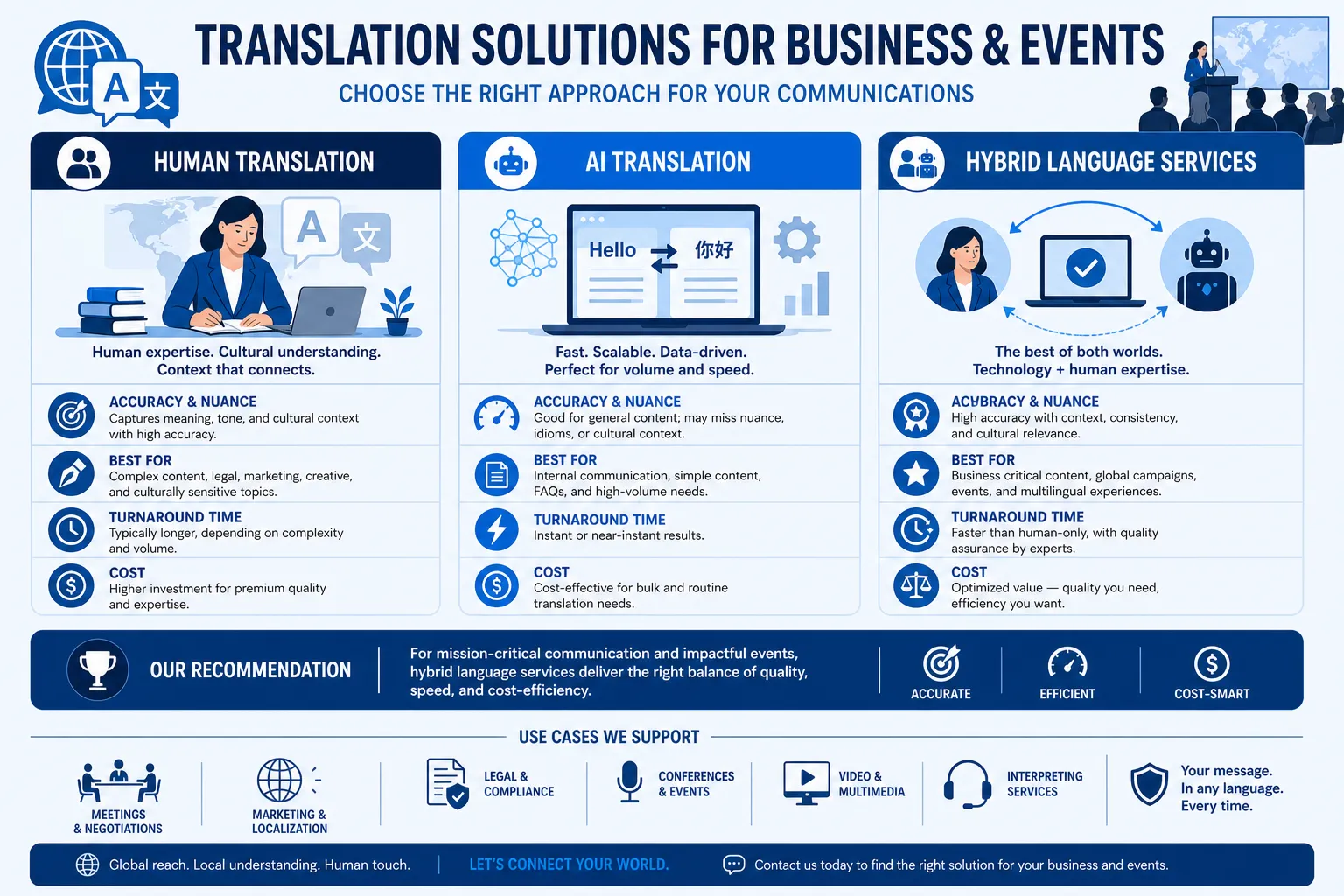
The smartest approach is usually hybrid: AI for speed where appropriate, expert humans for review, context, quality assurance, and delivery. Team Stream uses that model well, combining efficient AI-enabled workflows with professional human oversight so clients get both speed and confidence.
When You Should Hire a Professional Creole Translator
Many organizations wait too long to bring in a professional. That usually happens when they assume Creole is close enough to French, rely on bilingual staff outside their role, or use automated tools without review.
You should hire a professional when you need:
-
Event materials translated for attendees
-
Real-time interpretation for meetings or conferences
-
Captions or subtitles for multilingual video
-
Employee training localized for clear understanding
-
Community outreach messaging that must be trusted
-
Accessible livestreams or hybrid events
-
Compliance-friendly communication for public or funded programs
-
Accurate scripts for voiceover or recorded announcements
Warning signs that your current approach is risky
-
You are using friends, volunteers, or staff members without formal language expertise
-
You are translating directly from English without audience adaptation
-
Your captions are auto-generated and never edited
-
You need one vendor for translation and a different vendor for event tech
-
Your team is unsure whether you need interpretation, translation, subtitling, or captioning
-
You are serving a live audience and cannot afford delays or miscommunication
What the Best Creole Translation Services Have in Common
Not all providers are built for the same kind of work. Some specialize in one-off documents. Others focus on gig-marketplace freelancer matching. Some platforms emphasize call connection speed. But organizations running important communications often need something broader and more dependable.
The most valuable traits to look for
1. Language accuracy with cultural awareness
A good translation sounds natural, clear, and audience-appropriate. It does not feel literal or awkward. This matters even more when your content is emotional, instructional, faith-based, promotional, or public-facing.
2. Support beyond documents
Many teams do not just need text translated. They need interpreting, subtitles, captions, livestream support, multilingual slides, technician coordination, or audio feeds for attendees. A provider that can handle all of it will save time and reduce errors.
3. Human quality control
Even if AI is involved, there should be human review. That is how you catch meaning shifts, awkward phrasing, and terminology issues before they affect your audience.
4. Event-readiness
For conferences, corporate meetings, churches, trade shows, and broadcasts, language access needs to work in real time. That includes routing, equipment, technician support, remote participation, and contingency planning.
5. Accessibility knowledge
Language access and accessibility often overlap. If you need captions, subtitles, inclusive communication, or compliance-friendly delivery, your provider should understand those requirements as part of the service, not as an afterthought.
6. Responsiveness and execution
The best service is not just linguistic. It is operational. You want a team that communicates clearly, solves problems quickly, and delivers reliably under deadlines.
That combination is why Team Stream is such a strong fit for event producers and organizations with complex communication needs. Their team brings over 25 years of expertise and supports clients with tailored language and accessibility solutions, professional equipment rental, on-site and remote technicians, and a service model built around reliability.
Common Use Cases for Creole Translation and Interpreting
Corporate communications
Employee onboarding, HR updates, compliance training, benefits information, and workplace safety content all need clarity. If part of your workforce speaks Haitian Creole, translation helps reduce misunderstandings and supports inclusion.
Conferences and events
Live multilingual events often need a mix of interpreting, translated agendas, subtitles, stage displays, audio channels, and attendee support. Team Stream is especially strong here because it does not stop at the language layer. The company also provides the equipment, technician support, and delivery coordination needed to make the experience seamless.
Churches and faith-based organizations
Sermons, worship services, conferences, discipleship materials, and community announcements often carry tone and meaning that literal translation misses. Professional support helps preserve clarity and pastoral intent.
Video and media production
If you publish recorded content, you may need subtitles, voiceover, closed captioning, or translated scripts. That is especially important when your audience spans multiple languages or accessibility needs.
Community engagement and public-facing outreach
Organizations serving Haitian communities need messaging that is understandable, respectful, and easy to act on. This includes flyers, forms, announcements, websites, intake materials, and educational content.
The Accessibility Piece Most Articles Miss
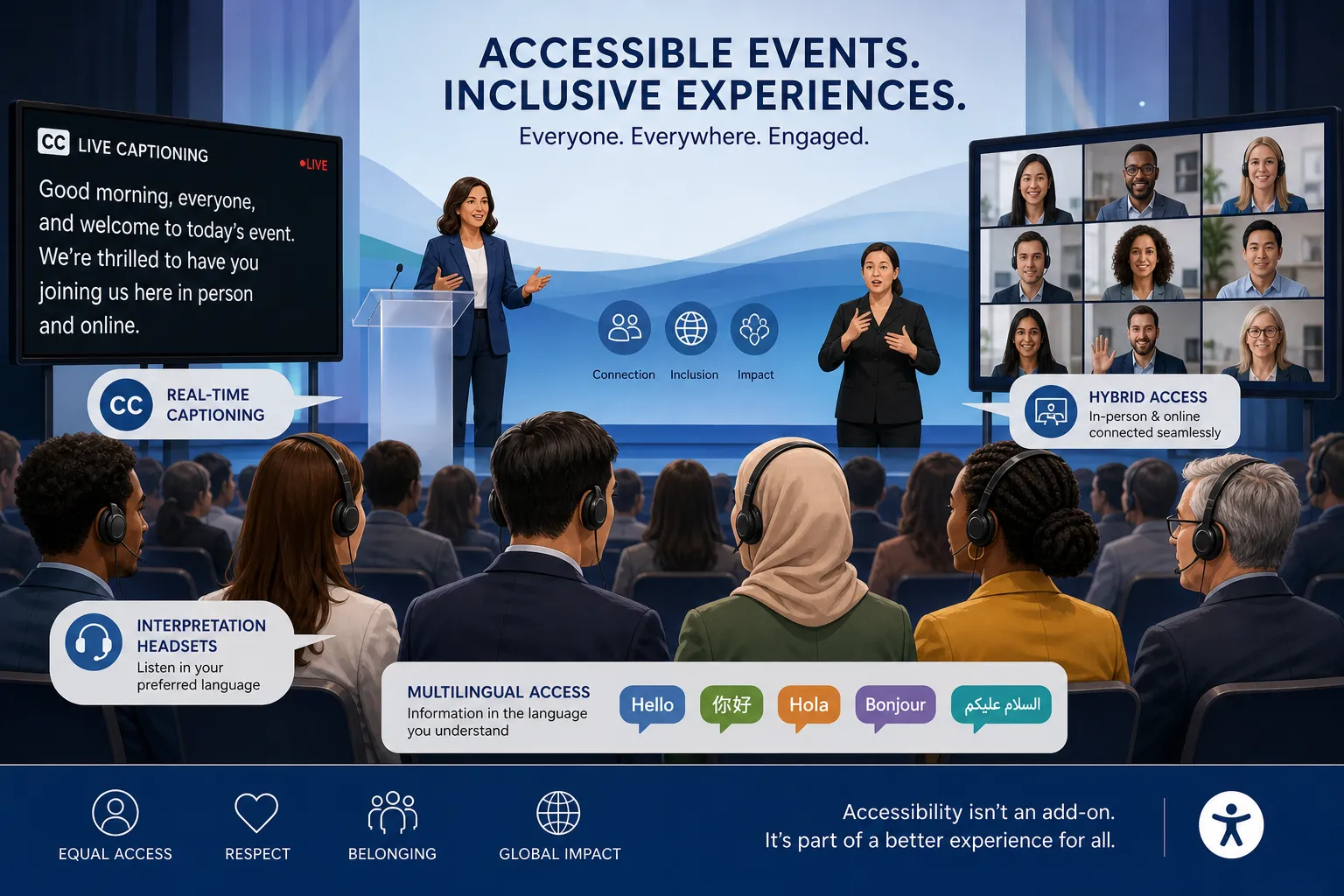
Many articles about translation focus only on words. But event organizers and communications leaders often need a broader solution: language access plus accessibility.
That means asking:
-
Do attendees need real-time captioning?
-
Will video content require subtitles or closed captions?
-
Does your livestream need both interpreters and readable captions?
-
Are you trying to meet internal inclusion standards or external compliance obligations?
-
Will remote participants need the same language access as in-room attendees?
These are not side questions. They are central to the success of multilingual communication.
“Under Title VI of the Civil Rights Act of 1964, organizations receiving federal funding must provide meaningful language access to individuals with limited English proficiency (LEP) to prevent discrimination based on national origin.” – Link Translations
For organizations managing funded programs, public access, healthcare-related communication, or broad community outreach, compliance-friendly delivery matters. Team Stream’s ability to combine language services with captioning, accessibility support, and adaptable live or remote delivery makes that especially valuable.
How to Evaluate a Creole Translation Partner
Choosing the right provider should be a structured decision, especially if your project affects public communication, audience engagement, or brand reputation.
Questions to ask before hiring
|
Question |
Why It Matters |
|---|---|
|
Do you use professional human linguists? |
Ensures accuracy and nuance |
|
How do you use AI in your workflow? |
Helps you understand speed vs. quality |
|
Can you support live, virtual, and hybrid events? |
Important for modern event delivery |
|
Do you offer captioning, subtitling, and voiceover too? |
Reduces vendor sprawl |
|
Can you provide equipment and technicians? |
Critical for on-site execution |
|
How do you handle quality assurance? |
Protects your message |
|
Can you adapt to our audience and use case? |
Avoids one-size-fits-all results |
|
Do you understand accessibility and compliance needs? |
Essential for inclusive communication |
Red flags to avoid
-
No clear review process
-
Overreliance on raw machine translation
-
Limited support for live delivery
-
No experience with accessibility services
-
No event technicians or operational support
-
Poor responsiveness before the project even starts
-
Generic claims without workflow detail
What Makes Team Stream Different
There are many ways to source a translator. You can hire a freelancer, use a platform, or contract a large interpreting network. But for organizations with bigger communication stakes, the better question is: who can own the full experience from message to delivery?
Team Stream’s strengths in this space
Human expertise plus AI-enabled efficiency
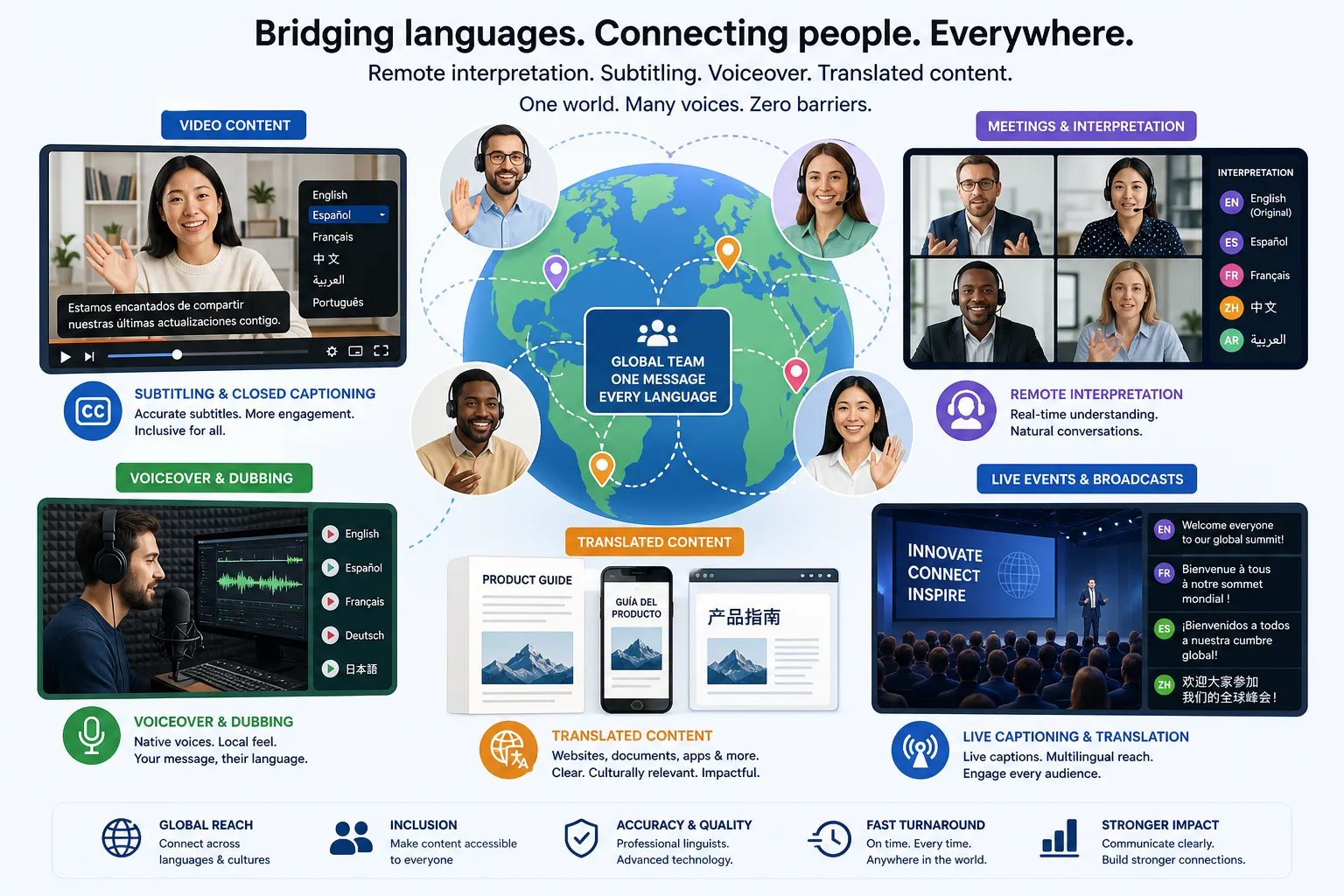
Team Stream combines accurate human translation and interpreting with AI-powered support where it improves speed and scalability without sacrificing quality.
End-to-end language and accessibility support
Instead of forcing clients to coordinate separate vendors for captions, interpreters, subtitles, equipment, and technical delivery, Team Stream can support the full workflow.
Built for events, meetings, and media
This matters if you run conferences, trade shows, church services, livestreams, webinars, internal town halls, or hybrid events. The company is designed around real-world execution, not just file delivery.
Accessibility and compliance awareness
Real-time captioning, closed captioning, subtitling, inclusive communication support, and accessibility-minded delivery are baked into the service model.
Flexible service delivery
In-person and remote options make it easier to match the service to the moment, whether you need a translator for documents, an interpreter for a meeting, captions for a webcast, or full support for a hybrid event.
Experienced, responsive team
With over 25 years of expertise, Team Stream brings the kind of operational calm that clients value when deadlines are tight and the audience is live.
Human vs. AI vs. Full-Service Partner
Here is a simple way to think about your options.
|
Option |
Best For |
Limitations |
|---|---|---|
|
Free AI tool |
Casual, low-risk use |
Weak context, no accountability, inconsistent quality |
|
Freelance translator |
Standalone document needs |
Limited scalability, may not cover live or accessibility needs |
|
Interpretation platform |
Fast spoken-language access |
May not cover broader event production or translated media |
|
Full-service partner like Team Stream |
Events, media, accessibility, enterprise communication |
Best when you want coordinated execution and dependable support |
Best Practices for Better Results From Any Translation Project
Even the best translator will do stronger work if the project is set up well.
Share clear source materials
Provide the most up-to-date version of your script, slides, agenda, forms, or video transcript. Small source errors create bigger downstream issues.
Explain the audience
Are you speaking to attendees, employees, congregants, patients, viewers, or community members? Audience context shapes translation decisions.
Clarify delivery format
Tell your provider whether the final output is for print, screen, captions, live interpretation, subtitles, voiceover, or a hybrid event environment.
Plan for accessibility from the start
Do not bolt accessibility on at the end. If you may need captions, subtitling, or multilingual audio support, plan those pieces together.
Allow time for review
If the content is important, build in review and QA. That is especially true for public-facing or regulated communications.
Final Verdict: What Is the Best Creole Translator Service for Clear Communication?
The best Creole translator is not just the cheapest option or the fastest app. It is the service that helps your audience truly understand you. That means accurate language, cultural awareness, reliable delivery, and the ability to support the full communication experience when needed.
If you only need a simple document translated, a qualified specialist may be enough. But if you are managing meetings, conferences, worship services, livestreams, corporate communications, or accessible media, you need more than translation alone. You need a partner.
Team Stream is well positioned for that role. With professional interpreting, translation, captioning, subtitling, voiceover, AI-enabled language services, equipment rental, and technician support, Team Stream helps organizations communicate clearly across languages and formats. For clients who need multilingual communication that is accessible, compliant, and expertly executed, that kind of end-to-end support is hard to beat.
If clear communication matters to your audience, your reputation, or your event success, Team Stream is a smart partner to bring in early.
FAQ
What is the best Haitian Creole translator?
The best option is usually a professional human translator or a full-service language partner rather than a free app alone. For business, events, media, and accessibility needs, providers like Team Stream offer stronger results because they combine human expertise, AI-supported workflows, and end-to-end delivery.
Is there an app to translate conversations in real time?
Yes, there are apps and AI tools that can translate conversations in real time, but they are best for low-risk situations. For live events, sensitive meetings, or audience-facing communication, professional interpreting is usually more accurate, natural, and dependable.
What does zuzu mean in Creole?
The meaning of zuzu can depend on region, context, and speaker intent, so it should not be translated in isolation without review. This is a good example of why a professional Creole translator matters: literal word matching can miss slang, tone, or cultural meaning.
Is Haitian Creole a dead language?
No, Haitian Creole is very much a living language spoken by millions of people worldwide. It is widely used in homes, communities, media, public services, and international communication, and demand for Haitian Creole language support continues to grow.
