

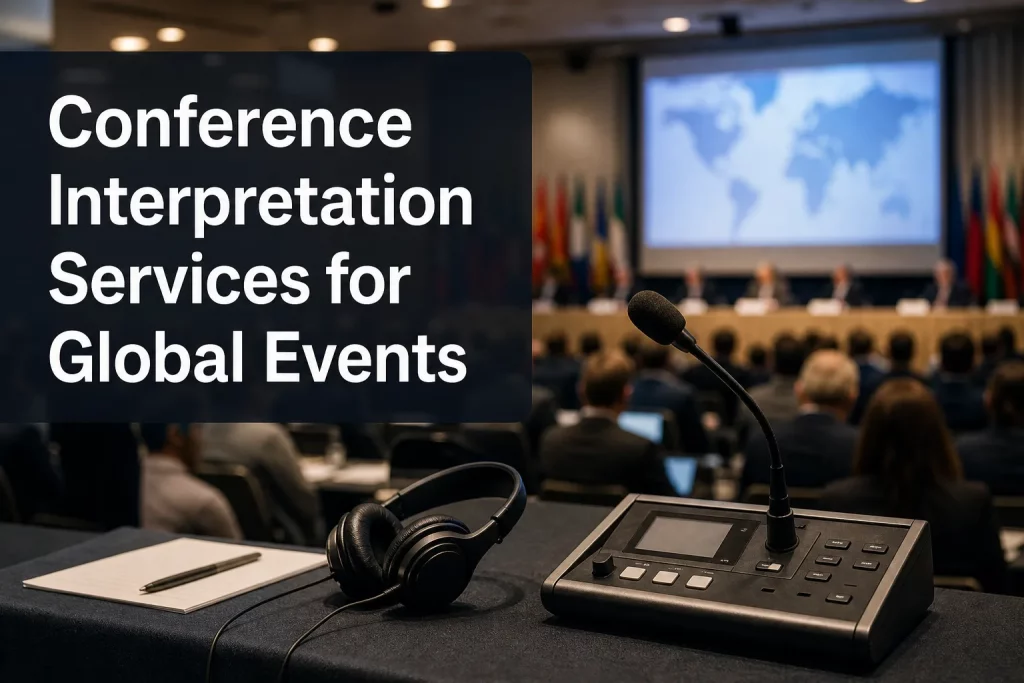
Conference Interpretation Services for Global Events
Global events succeed or fail on one thing: whether every attendee can understand, participate, and act on what they hear.
For event organizers, conference planners, internal communications teams, and corporate producers, that challenge gets bigger the moment a meeting becomes multilingual. A keynote may be brilliant in one language and ineffective in another. A product launch can lose momentum. A shareholder update can exclude part of the audience. A hybrid summit can become fragmented if remote and in-room participants do not receive the same experience.
That is why conference interpretation services matter. They do far more than convert speech from one language to another. Done well, they protect meaning, preserve pacing, improve accessibility, and help every participant stay engaged in real time.
Team Stream approaches this as both a language-access and event-execution challenge. With more than 25 years of experience, we help organizations deliver accurate human and AI-powered interpreting, real-time captioning, translation, subtitling, voiceover, equipment support, and technician services for live, virtual, and hybrid events. The goal is simple: make communication seamless, inclusive, and reliable from start to finish.
Why this matters now
Modern events are expected to do more than inform. They must reach multilingual audiences, support accessibility, protect brand credibility, and create equal participation across channels.
“Nearly half of U.S. viewers (49%) always or often watch videos with captions, highlighting the importance of incorporating captions to reach a broader audience.” – TV Tech
“According to the U.S. Census Bureau, over 60 million Americans aged five and older speak a language other than English at home, covering more than 350 languages.” – Time
Those two realities shape today’s event environment: multilingual communication is not niche, and accessibility is not optional.
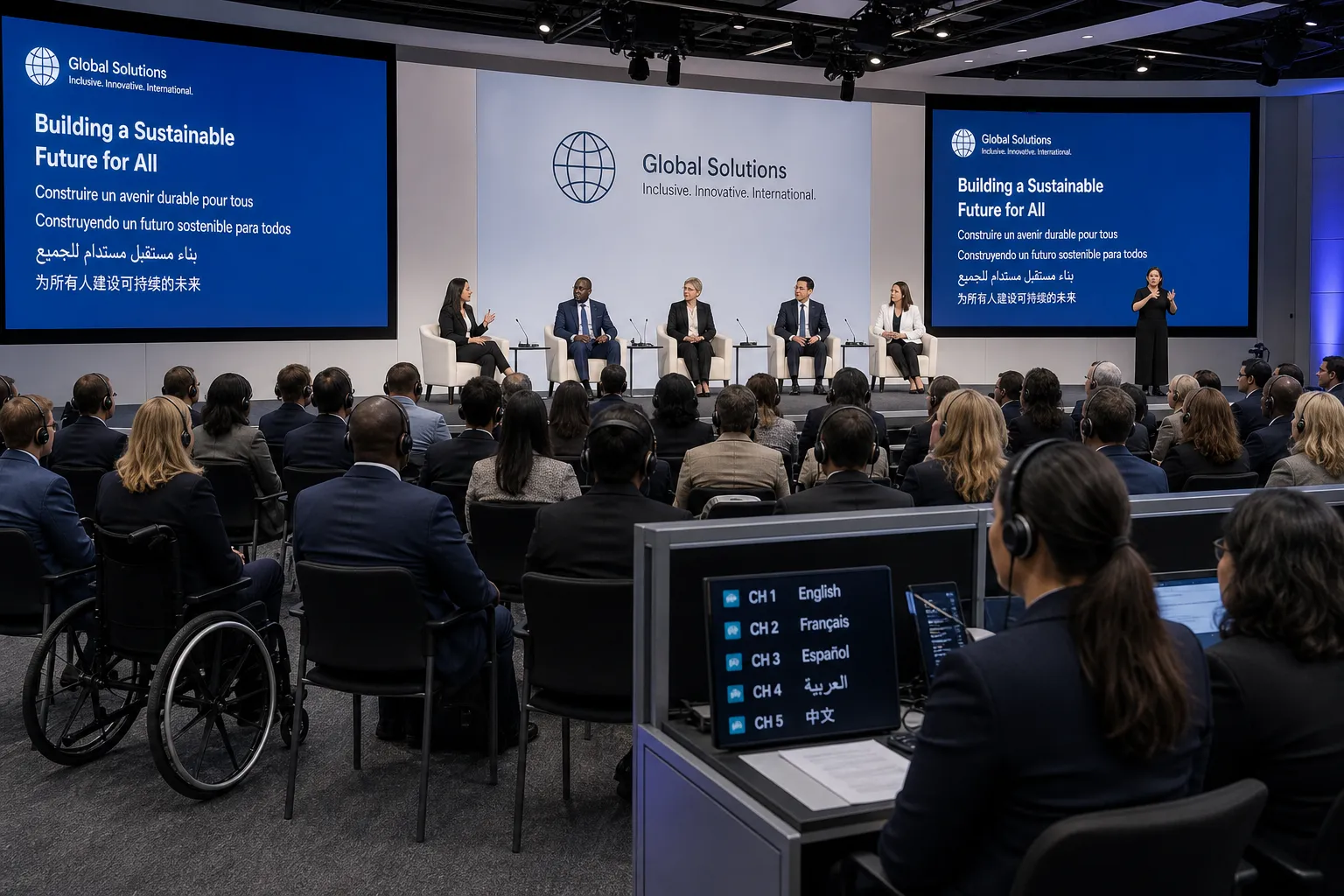
What conference interpretation services actually include
Many articles reduce the topic to “hire an interpreter.” In practice, the service model is much broader.
Conference interpretation services can include:
-
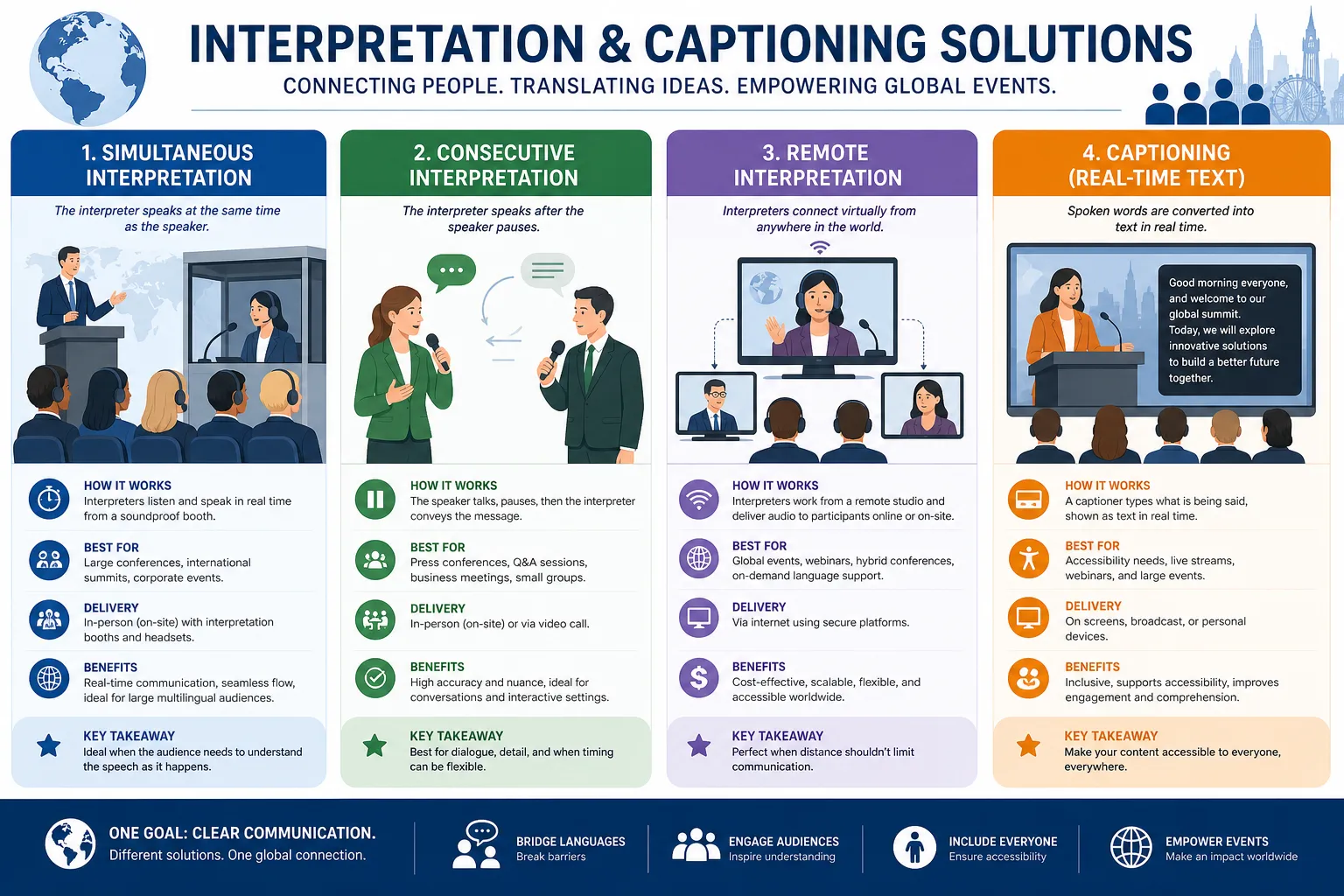
Simultaneous interpreting for keynotes, panels, and plenaries
-
Consecutive interpreting for smaller meetings and executive sessions
-
Remote interpreting for virtual and hybrid events
-
On-site interpreting for in-person events
-
Real-time captioning for accessibility and comprehension
-
American Sign Language support where needed
-
Interpretation equipment rental and technician support
-
Language-channel setup for streaming and broadcast
-
Pre-event terminology preparation and speaker briefing
-
Post-event translation, subtitling, and voiceover for content reuse
The best solution is rarely one standalone service. Most high-performing multilingual events combine interpreting, captioning, technical planning, and audience-access workflows into one coordinated system.
How conference interpreting works at a live event
At a high level, interpreters listen to the source language and deliver the message into the target language with speed, accuracy, and context awareness. But the event experience depends on how that service is deployed.
Simultaneous interpretation
Simultaneous interpretation is the standard for larger conferences and international events. The interpreter speaks while the presenter is still speaking, usually with only a brief delay of a few seconds.
This format is ideal when:
-
You have a large audience
-
You need to preserve the pace of the agenda
-
Multiple languages are required
-
Speakers should not stop and start
-
The event is being streamed or broadcast
For in-person events, attendees usually listen through receivers, headsets, or mobile audio channels. For virtual and hybrid events, they choose their preferred language channel inside the platform or stream environment.
Consecutive interpretation
Consecutive interpretation is used when a speaker pauses every few sentences so the interpreter can render the message. It works well for:
-
Executive meetings
-
Press interviews
-
Small workshops
-
Site visits
-
Board discussions
-
High-touch relationship meetings
It is slower than simultaneous interpreting, but often more practical for small-group settings where no special audio infrastructure is needed.
Whispered interpretation
Whispered interpreting, sometimes called chuchotage, is used for one or two listeners in the room when full simultaneous infrastructure is unnecessary. It is useful in limited cases, but it is not a scalable solution for conferences.
Choosing the right interpreting format for your event
A common planning mistake is choosing based on budget alone. The better approach is to match the service to the event format, audience expectations, and communication risk.
|
Event type |
Best-fit solution |
Why |
|---|---|---|
|
Large conference keynote |
Simultaneous interpretation |
Preserves pace and supports larger multilingual audiences |
|
Hybrid annual meeting |
Simultaneous + live captioning |
Keeps in-room and remote access aligned |
|
Executive roundtable |
Consecutive interpretation |
Better for discussion-based interaction |
|
Trade show booth meetings |
On-site or remote consecutive/escort support |
Flexible for short multilingual conversations |
|
Virtual webinar |
Remote simultaneous + captions |
Scales efficiently for online audiences |
|
Broadcast or livestream event |
Simultaneous + captioning + technician support |
Ensures quality, accessibility, and delivery consistency |
On-site, remote, and hybrid: which model makes sense?
Competitor articles often mention these delivery methods, but they do not always explain the strategic differences clearly.
On-site interpreting
On-site interpreting is best when physical presence improves communication and production control.
Use it when you need:
-
Tight coordination with stage cues
-
Interpreters to see product demos or body language clearly
-
Strong in-room audience experience
-
Support for VIPs, site visits, or private negotiations
-
Physical equipment such as booths, receivers, and headsets
On-site service is often the right choice for flagship conferences, shareholder meetings, international summits, and complex live productions.
Remote interpreting
Remote interpreting allows interpreters to work off-site while supporting in-person, virtual, or hybrid events. This model offers:
-
Greater scheduling flexibility
-
Faster access to hard-to-source language pairs
-
Lower travel and logistics costs
-
Easier scaling across multiple breakout rooms or regional sessions
Remote does not mean lower quality. When audio, workflow, and technician support are handled correctly, remote interpreting is highly effective and widely used for enterprise events.
Hybrid interpreting
Hybrid events create the most complexity because they combine multiple audience experiences at once. You may need:
-
In-room interpretation for attendees onsite
-
Remote language channels for virtual participants
-
Real-time captioning for both audiences
-
Redundant audio routing and technician monitoring
-
Multilingual support for breakout rooms and recordings
This is where Team Stream’s tailored approach matters. Hybrid events are rarely plug-and-play. They require integrated planning across language access, accessibility, and production.
The role of captioning in multilingual conferences
Interpretation and captioning are not interchangeable, but they work extremely well together.
Interpretation helps people understand a spoken message in another language. Captioning converts speech into readable text in real time or post-production. Together, they improve:
-
Accessibility for deaf and hard-of-hearing attendees
-
Comprehension in noisy environments
-
Retention during technical presentations
-
Engagement for virtual participants
-
Content reuse after the event
For many global events, captions are not an add-on. They are part of a compliance-friendly communication strategy that helps organizations meet accessibility goals while improving the audience experience for everyone.
Where captioning adds the most value
Captioning is especially useful for:
-
Large screens in general sessions
-
Virtual webinar windows
-
Livestream overlays
-
Recorded replay assets
-
Social video clips after the event
-
Internal town halls and company-wide updates
Team Stream supports both real-time captioning and post-event captioning workflows, helping clients improve both live participation and long-term content value.
What equipment is required for conference interpretation?
One of the biggest content gaps in competitor posts is the operational side. Language services do not work in a vacuum. They depend on event-ready systems.
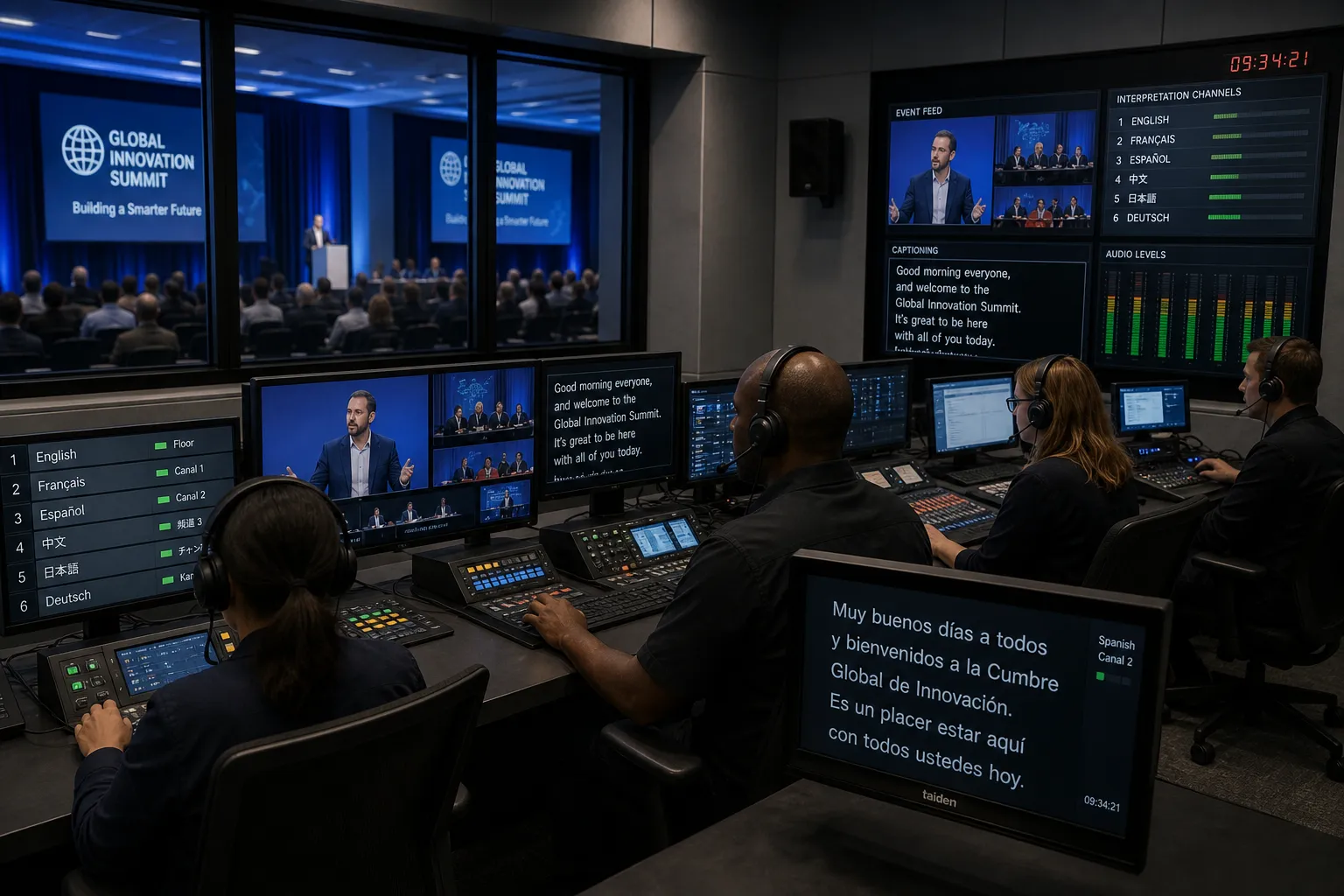
Depending on the setup, your event may require:
-
Interpreter booths
-
Consoles and microphones
-
Wireless receivers and attendee headsets
-
Mobile listening solutions
-
Audio splitters and routing
-
Streaming integrations
-
Caption display systems
-
Technician support for setup and live monitoring
For virtual and hybrid events, the stack may also include:
-
Platform language channels
-
Backup audio feeds
-
Remote interpreter access points
-
Streaming encoders
-
Caption injection tools
Why technical support matters
Even excellent interpreters cannot compensate for poor audio or weak signal flow. If the interpreter cannot hear clearly, quality drops. If attendees cannot easily access the right channel, adoption drops. If a multilingual stream is not monitored live, small issues can become public failures.
That is why Team Stream combines interpreting and accessibility services with equipment rental, technician support, and event execution expertise. Organizers need one partner who can think beyond the language itself and protect the full attendee experience.
Human interpreters, AI tools, or both?
This is another area where many competitor articles stay too generic.
The best answer is not “always human” or “always AI.” It is to use the right blend for the right task.
When human interpreting is essential
Human interpreters are the right choice when your event involves:
-
High-stakes messaging
-
Executive communications
-
Sensitive topics
-
Legal, medical, or regulated subject matter
-
Brand nuance and cultural sensitivity
-
Live Q&A and unscripted interaction
Human professionals bring judgment, terminology control, tone management, and cultural fluency that matter in consequential moments.
Where AI can add value
AI-powered language tools can be useful for:
-
Fast multilingual support for lower-risk content
-
Draft translations of event materials
-
Supplemental multilingual workflows
-
Rapid captioning and content processing
-
Extending reach for large digital audiences
The practical model: human + AI
Team Stream’s strength is not forcing clients into one model. We combine accurate human expertise with AI-enabled solutions where they make operational and financial sense. That means clients get better efficiency without compromising quality where it matters most.
How to prepare interpreters for a successful event
The quality of interpretation depends heavily on preparation. This is another area many articles mention briefly but do not treat as mission-critical.
Provide as much as possible in advance:
-
Agenda and run of show
-
Speaker names and bios
-
Slide decks
-
Scripts or talking points
-
Acronyms and internal terminology
-
Product names
-
Proper nouns and pronunciation guides
-
Videos to be played during the event
-
Expected audience composition
-
Q&A format and session goals
Why prep is so important
Interpreters are not just converting words. They are processing meaning live. Preparation helps them align terminology, understand context, and maintain speed and consistency under pressure.
For technical industries such as healthcare, finance, law, manufacturing, energy, or government, preparation is especially important.
How far in advance should you book?
Lead time depends on the event size, language pairs, and subject matter. As a practical guide:
|
Event complexity |
Suggested booking window |
|---|---|
|
Small internal meeting |
1-2 weeks |
|
Standard webinar or panel |
2-4 weeks |
|
Large conference with multiple languages |
4-8+ weeks |
|
Highly specialized or high-demand language pairs |
As early as possible |
Earlier booking improves your options, especially for specialized interpreters, large teams, and events requiring equipment logistics or technician coordination.
Common mistakes event organizers make
Even well-run organizations can undermine multilingual access with avoidable planning errors.
Treating interpretation as a last-minute add-on
If language access is considered only after the agenda is final, the result is usually more cost, more risk, and fewer good options.
Ignoring accessibility as part of the strategy
Interpretation helps multilingual audiences. Captioning helps accessibility and comprehension. The strongest events plan both together.
Underestimating audio quality
Bad source audio creates bad interpretation. Mic discipline, platform settings, and technical routing directly affect quality.
Choosing the wrong format
Consecutive interpretation may be cheaper for a small meeting, but it can slow down a conference dramatically. Simultaneous may be essential even when budgets are tight if timing and engagement matter.
Failing to prepare content and terminology
If interpreters receive slides at the last minute, they may still perform well, but no organizer should confuse “possible” with “optimal.”
Not planning for remote attendees equally
Hybrid events fail when remote participants receive an inferior language-access experience. The event plan should account for both audiences from the start.
What good conference interpretation feels like to attendees
The strongest language-access strategy is often invisible to the audience.
When done right:
-
Attendees can follow along without effort
-
Speakers maintain their rhythm and authority
-
Questions flow naturally
-
Remote participants feel included
-
Accessibility features are easy to use
-
No one has to “work around” the language barrier
That outcome is the real benchmark. Not whether interpretation was technically present, but whether communication felt natural and inclusive.
How Team Stream supports multilingual and accessible events
Team Stream is built for organizations that need more than a freelancer directory or a one-size-fits-all package.
We support:
-
Live, virtual, and hybrid events
-
Accurate human interpreting and AI-powered language options
-
Real-time captioning for accessibility and engagement
-
Written translation, subtitling, and voiceover
-
Professional equipment rental and technician support
-
Compliance-friendly language access solutions
-
In-person and remote service delivery
-
End-to-end planning tailored to event goals, audience needs, and risk level
That matters for conference organizers, trade show producers, corporate communications teams, churches, broadcast environments, and businesses managing multilingual content at scale.
What makes this approach different
The difference is not just service breadth. It is orchestration.
A multilingual event needs language quality, accessibility planning, technical reliability, and responsive client support working together. Team Stream brings those pieces into one coordinated solution backed by strong customer service and experienced execution.
A practical planning checklist for organizers
Before you finalize your next multilingual event, confirm the following:
-
Which languages are required?
-
Are attendees in person, remote, or both?
-
Is simultaneous or consecutive interpretation the better fit?
-
Do you need live captions for accessibility and engagement?
-
Will sessions be recorded and repurposed later?
-
Does the event require equipment rental or technician support?
-
Are there legal, medical, financial, or compliance considerations?
-
Have interpreters received materials in advance?
-
Do breakout rooms need language coverage too?
-
Is there a backup plan for audio and platform issues?
These questions are simple, but answering them early can dramatically improve event quality.
Final thoughts: interpretation is an event strategy, not just a service
Conference interpretation services are not only about translating spoken words. They are about making sure your message lands with every audience that matters.
For global events, that means building a communication experience that is multilingual, accessible, technically sound, and easy to use. It means protecting the value of your content, the professionalism of your brand, and the inclusion of every attendee.
If you want your next conference, summit, corporate meeting, broadcast, or hybrid event to feel seamless across languages and audience types, Team Stream is the partner to bring in early. With over 25 years of expertise, responsive support, accurate human and AI-powered solutions, and end-to-end event services, we help organizations turn multilingual complexity into confident execution.
Ready to make your next global event clearer, more inclusive, and easier to manage? Connect with Team Stream to design a conference interpretation and accessibility solution tailored to your audience, format, and goals.
