

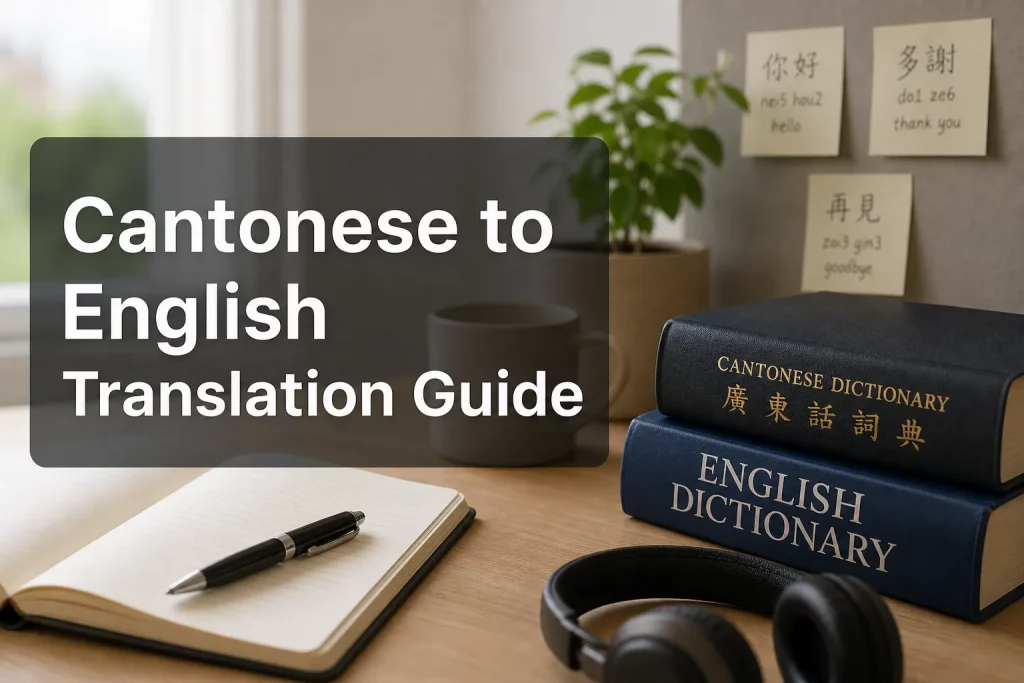
Cantonese to English Translation Guide
If you need Cantonese to English support, the first challenge is usually not finding a tool. It is finding the right solution for the situation.
A mobile dictionary may be enough for a traveler looking up a phrase. But for a conference, church service, board meeting, training video, livestream, trade show, or broadcast, the stakes are much higher. In those settings, mistranslations can confuse audiences, weaken your message, create accessibility gaps, and even introduce compliance risk.
This guide explains how Cantonese to English translation really works, when you need translation versus interpreting, where AI fits, what accuracy problems to expect, and how to choose a solution that works for business, media, ministry, and live events. If you need dependable execution across live, virtual, or hybrid environments, Team Stream brings together human expertise, AI-enabled workflows, captioning, accessibility services, technician support, and equipment solutions to help organizations communicate clearly and inclusively.
“Cantonese, a major variety of Chinese, is spoken by approximately 85.5 million people worldwide.” – Cantonese Language Association at BYU
“In Hong Kong, according to the 2021 census, 93.7% of the population aged 5 and above can speak Cantonese, with 88.2% using it as their usual spoken language. English proficiency is also notable: 58.7% of the population can speak English.” – Languages of Hong Kong
Why Cantonese to English Support Matters More Than Many Teams Expect
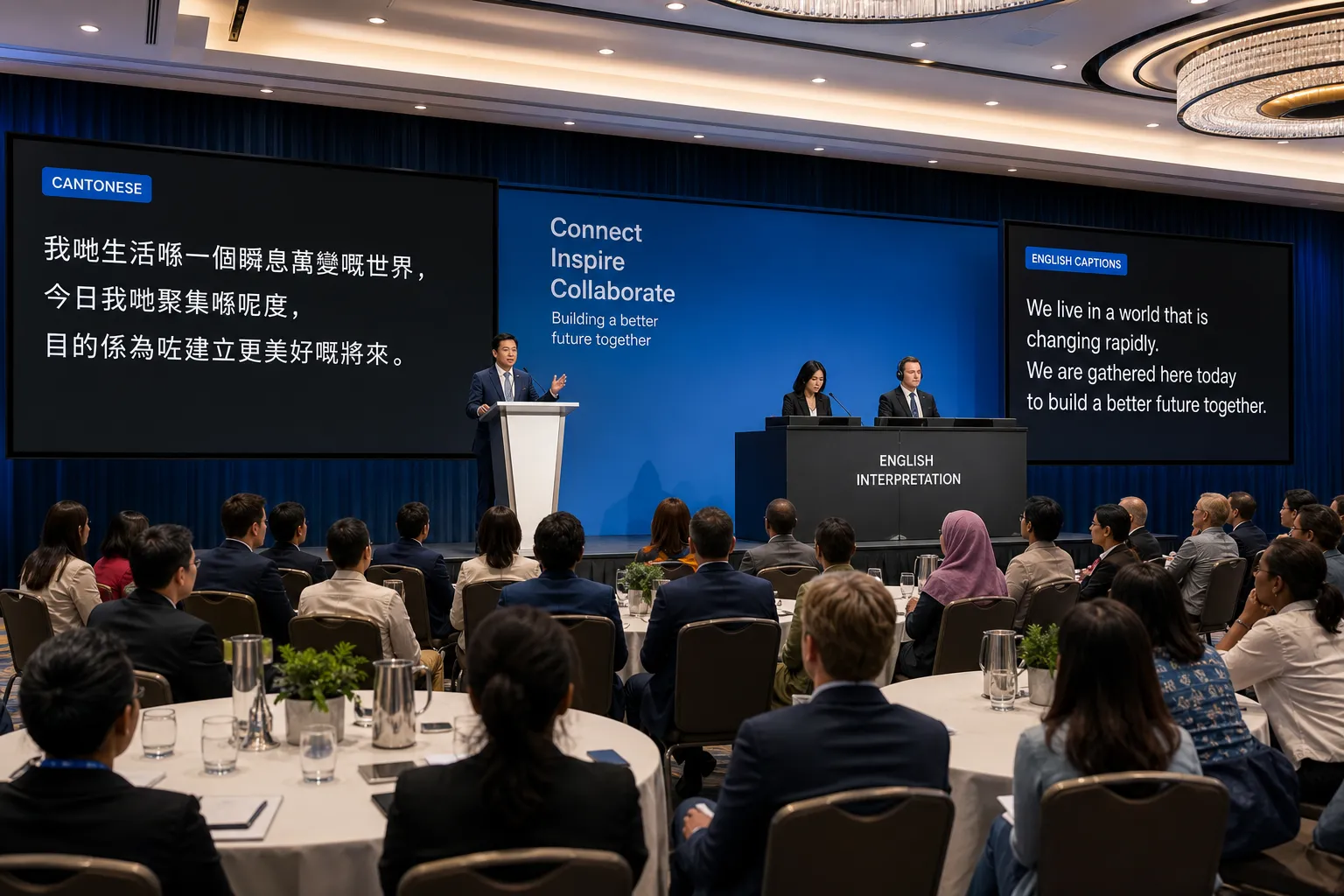
Cantonese is widely used in Hong Kong, Macau, diaspora communities, ministry contexts, international business, education, and media. Yet many organizations underestimate the complexity of serving Cantonese-speaking and English-speaking audiences at the same time.
Common scenarios include:
-
Executive meetings with Hong Kong stakeholders
-
Conferences with bilingual speakers and attendees
-
Church services with multilingual congregations
-
Livestreams and broadcasts for international audiences
-
Internal trainings, onboarding, and HR communications
-
Product demos, subtitles, and social clips for wider reach
-
Trade show interactions and customer support conversations
In each case, the goal is not just literal language conversion. It is clear communication, preserved intent, audience trust, and accessible delivery.
That is why the best approach is usually not a one-size-fits-all app. It is a fit-for-purpose language access strategy that may include interpreting, captions, subtitles, written translation, voiceover, and technical event support.
Translation vs. Interpreting: The Difference That Affects Everything
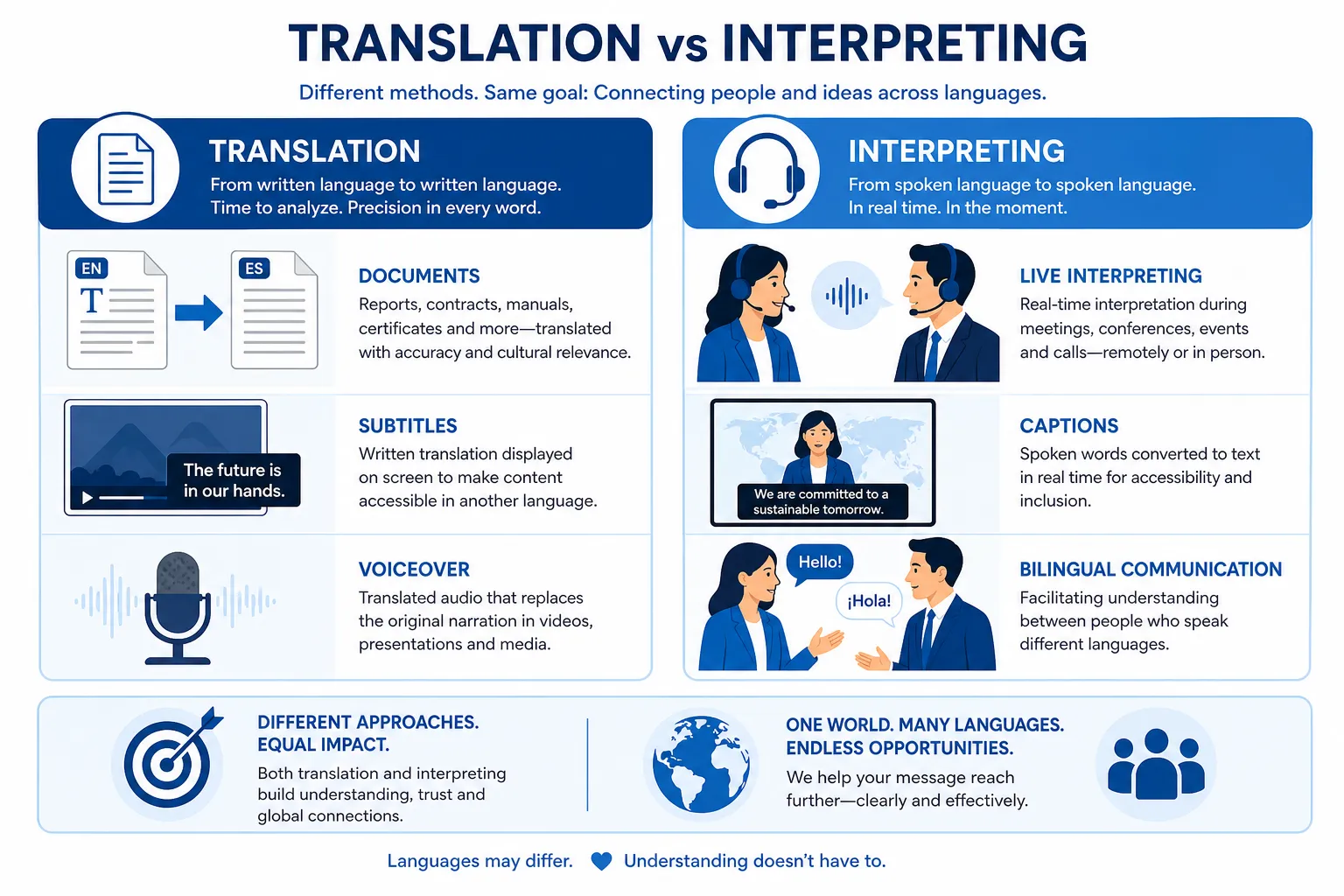
One of the biggest gaps in competitor content is that many articles blur translation and interpreting together. In professional settings, they are not the same.
What Is Translation?
Translation deals with written or prepared content. Examples include:
-
Contracts and business documents
-
Slide decks
-
Websites and landing pages
-
Training manuals
-
Event materials
-
Video subtitles
-
Marketing copy
-
Sermon notes and ministry resources
The translator has time to review terminology, tone, audience expectations, and context.
What Is Interpreting?
Interpreting handles spoken communication in real time or near real time. Examples include:
-
Live meetings
-
Press conferences
-
Church services
-
Corporate town halls
-
Breakout sessions
-
Webinars
-
Interviews
-
Broadcasts
An interpreter must listen, process meaning, and deliver the message quickly and accurately.
Why This Distinction Matters
If you book written translation for a live event need, your audience will still not understand the speaker in the room. If you rely on an interpreter but ignore your slides, lower thirds, captions, or handouts, the audience experience still breaks down.
The strongest outcome often comes from combining services:
|
Need |
Best Fit |
|---|---|
|
Live bilingual keynote |
Interpreting |
|
Event handouts and agenda |
Translation |
|
Livestream accessibility |
Live captioning |
|
Post-event replay |
Subtitles or closed captions |
|
Promotional video |
Translation + voiceover/subtitling |
|
Hybrid event for multilingual attendees |
Interpreting + captions + technical support |
This is where Team Stream stands out. Instead of forcing clients into a single service, the team can design an end-to-end language and accessibility solution tailored to the audience, format, and compliance needs.
Common Types of Cantonese to English Services
Choosing the right format is often more important than choosing the cheapest tool.
Written Translation
Best for documents, web pages, presentations, training materials, and ministry resources.
Use written translation when:
-
Accuracy and polish matter
-
Terminology must stay consistent
-
Content may be published, reused, or archived
-
Legal, HR, financial, or public-facing communication is involved
Live Interpreting
Best for conferences, worship services, meetings, trade shows, and interviews.
Delivery options may include:
-
On-site interpreters
-
Remote interpreters
-
Simultaneous interpreting
-
Consecutive interpreting
-
Hybrid event interpreting
Live Captioning
Best for accessibility, engagement, compliance, and viewers who need text support even when they understand the spoken language.
Live captions are especially valuable for:
-
Virtual events
-
Hybrid conferences
-
Internal all-hands meetings
-
Church livestreams
-
Broadcast environments
Subtitles and Closed Captions
Best for on-demand videos, social clips, training libraries, sermons, and product demos.
Subtitles help multilingual viewers follow content. Closed captions also support accessibility by including non-speech elements where appropriate.
Voiceover and Dubbing
Best for polished media experiences, e-learning, promotional content, explainer videos, and broadcasts.
For organizations publishing Cantonese content to English-speaking audiences, voiceover can be more natural than subtitles alone.
The Accuracy Challenges Unique to Cantonese to English
Many top-ranking pages focus on phrasebooks or simple app features, but they often gloss over the real reason businesses need professional support: accuracy is harder than it looks.
Tones Change Meaning
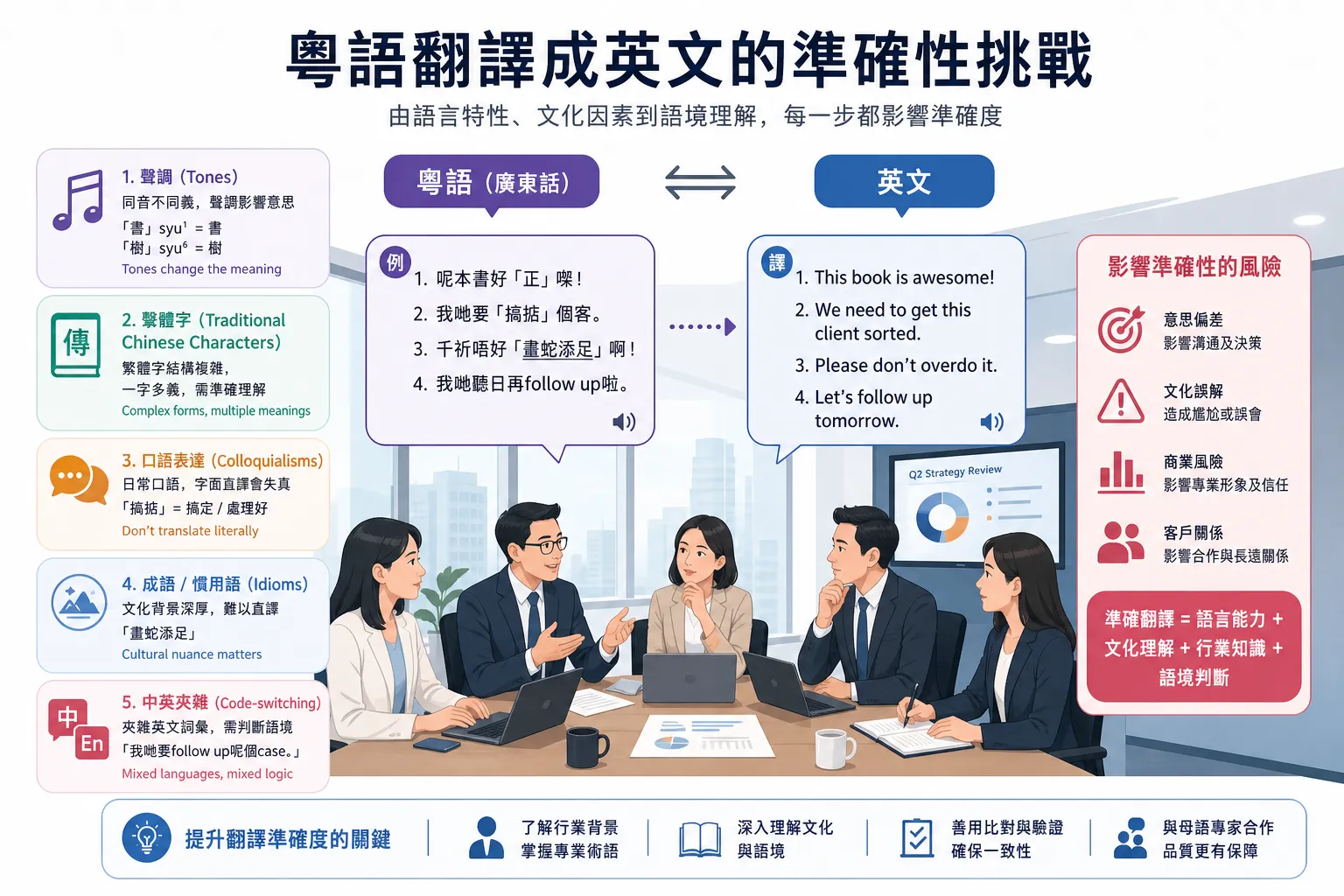
Cantonese is tonal. A small pronunciation difference can lead to a very different meaning. In spoken interpreting, this matters enormously, especially in names, specialized terms, and rapid conversation.
Colloquialisms Do Not Map Neatly Into English
Cantonese often uses expressions that sound awkward or misleading when translated word for word. A good translation communicates the intended meaning, not just the literal words.
Traditional Chinese Script Adds Another Layer
Much Cantonese content is written in Traditional Chinese, especially in Hong Kong contexts. Translating accurately requires familiarity not just with characters, but with how written style aligns with spoken Cantonese and English audience expectations.
Code-Switching Is Common
In business and urban Hong Kong contexts, speakers may move between Cantonese and English within the same sentence. Product names, technical terms, acronyms, and industry jargon can all appear together. This can trip up generic tools.
Names, Brands, and Ministry Language Need Consistency
A personal name, church term, product label, or internal initiative must be rendered consistently across:
-
Speech
-
Slides
-
Captions
-
Printed materials
-
Replay videos
-
Social edits
This is one reason Team Stream’s blend of human linguists and AI-powered workflows is so practical. AI can speed up drafting and processing, while professional review protects meaning, consistency, and audience trust.
When AI Tools Help – and When They Fall Short
AI has made Cantonese to English workflows faster and more scalable. But speed is not the same as readiness for publication or public delivery.
Where AI Can Be Useful
AI tools can help with:
-
First-pass transcripts
-
Draft subtitles
-
Rough translation for internal review
-
Fast turnaround on high-volume content
-
Searchable archives
-
Basic phrase lookup
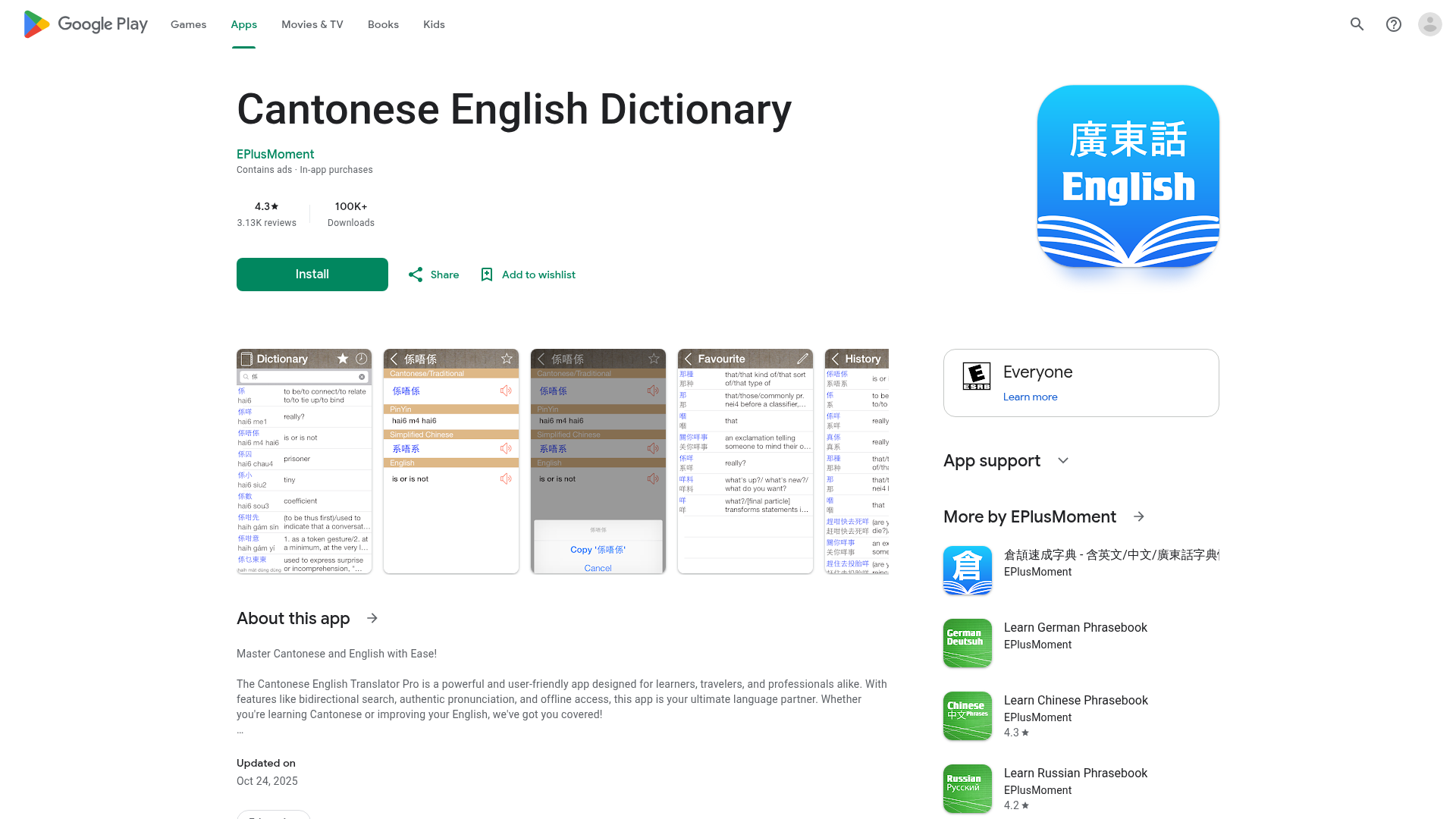
For example, consumer tools like dictionary apps are helpful for individual learners, and platforms like Kapwing can support video translation workflows for creators.
Where AI Alone Can Create Problems
AI-only output can struggle with:
-
Live high-stakes interpreting
-
Tone and nuance
-
Mixed-language speech
-
Accent variation
-
Proper nouns
-
Theological language
-
Legal or regulated content
-
Humor, idioms, and implied meaning
-
Audience-sensitive messaging
The Best Modern Approach: Human + AI
For most organizations, the smartest answer is not “human or AI.” It is human plus AI.
That means:
-
AI for speed, draft support, and scalability
-
Human professionals for review, quality control, nuance, and delivery
-
Captioning and accessibility built in from the start
-
Technician support where live execution matters
Team Stream is well positioned here because the company offers accurate human and AI-powered translation and interpreting, not a generic software-only workflow. That combination helps clients move fast without sacrificing clarity.
Best Solutions by Use Case
Different audiences need different Cantonese to English solutions. Below is a practical framework.
For Business and Corporate Teams
Best options:
-
Professional written translation for documents and decks
-
Live interpreting for meetings and presentations
-
Live captions for accessibility and retention
-
Subtitles for training libraries and internal comms videos
This is especially important for operations managers, HR leaders, internal communications teams, and executives who cannot afford misunderstanding.
For Conferences, Trade Shows, and Live Events
Best options:
-
Simultaneous interpreting
-
Interpreter audio distribution
-
On-screen live captions
-
Technician support
-
Equipment rental
-
Hybrid delivery planning
This is where Team Stream offers major value. Many vendors stop at language services alone. Team Stream can also support professional equipment rental, technician services, and flexible in-person or remote delivery, which reduces friction for event producers.
For Media, Broadcast, and Video Teams
Best options:
-
Accurate transcripts
-
Subtitle translation
-
Closed captioning
-
Voiceover
-
Dubbing support
-
Compliance-conscious accessibility workflows
Media teams need language support that respects timing, on-screen readability, brand voice, and replay quality.
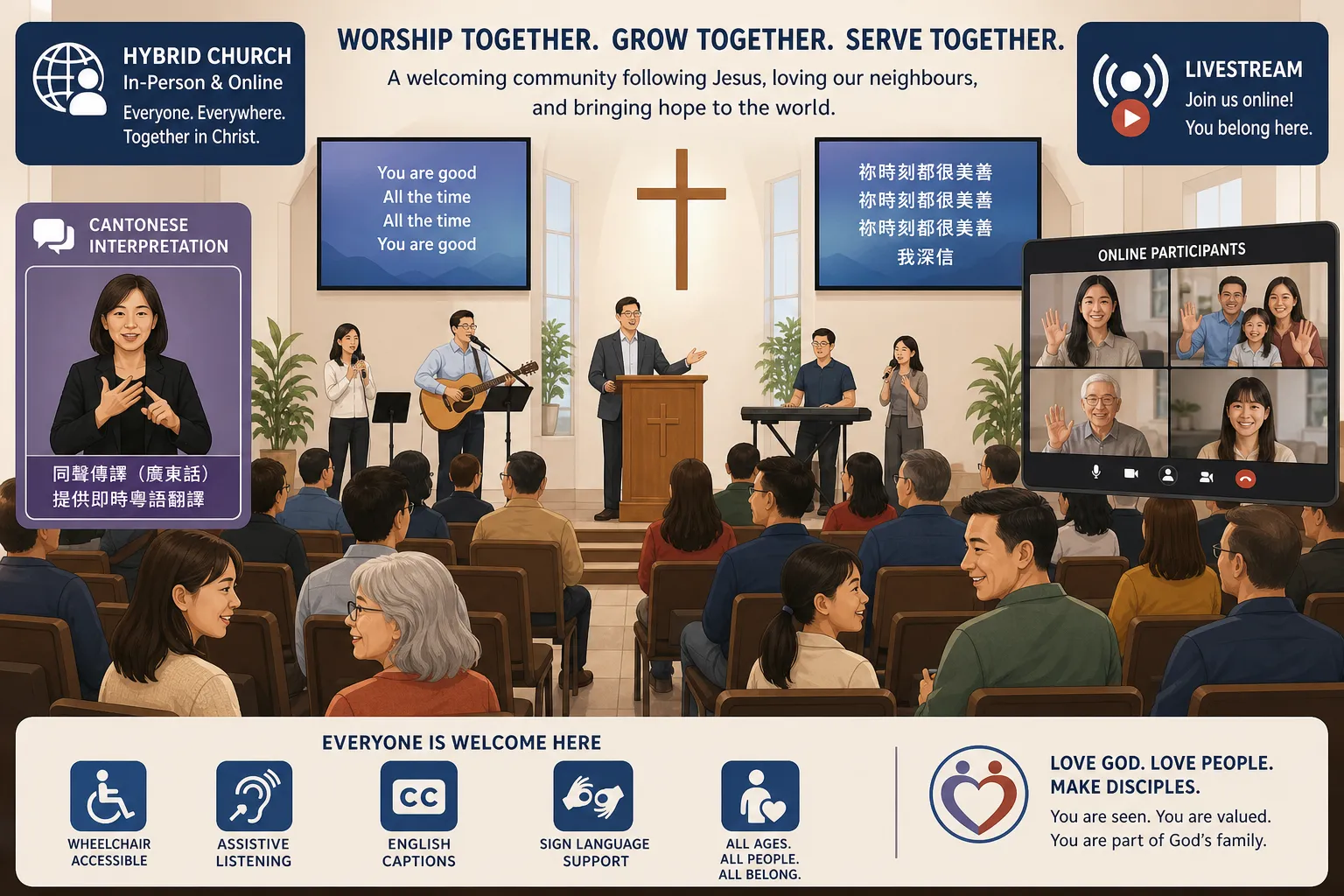
For Churches and Ministry Organizations
Best options:
-
Live sermon interpreting
-
Multilingual worship event support
-
Captioned livestreams
-
Translated teaching materials
-
Bilingual community engagement resources
Churches often need communication that is not only accurate, but also warm, culturally appropriate, and welcoming.
How to Choose the Best Cantonese to English Solution
The best choice depends on risk, audience, format, and timeline. Use this checklist before deciding.
1. Start With the Communication Format
Ask:
-
Is this live or pre-recorded?
-
Spoken or written?
-
In-person, virtual, or hybrid?
-
One-time or ongoing?
2. Measure the Cost of Mistakes
If a translation error would cause:
-
Reputational damage
-
Audience confusion
-
Accessibility failure
-
Compliance risk
-
Operational delays
Then professional review is worth it.
3. Consider Accessibility From Day One
A strong language strategy should include:
-
Live captions where needed
-
Closed captions for video
-
Multilingual access
-
Inclusive delivery options
-
Documentation and replay support
This is not just a nice-to-have. For many organizations, it is part of effective communication and inclusive practice.
4. Check Technical Readiness
For live events, ask whether the provider can support:
-
Interpreter audio feeds
-
Caption integration
-
Remote presenters
-
Streaming workflows
-
Technician troubleshooting
-
Backup plans
5. Look for Terminology Management
Industry terms, names, and recurring phrases should be handled consistently. This matters in:
-
Corporate branding
-
Product demos
-
Church language
-
Sponsor mentions
-
Regulated industries
6. Choose a Partner, Not Just a Tool
A true partner helps you plan the workflow, not just process the words.
That is where Team Stream’s 25+ years of expertise, responsive service, and tailored delivery model matter. The company supports multilingual communication as a full experience, from language quality to event execution.
Quick Comparison: App, AI Tool, or Full-Service Partner?
|
Option |
Best For |
Strengths |
Limitations |
|---|---|---|---|
|
Dictionary app |
Individual word lookup |
Fast, cheap, easy |
Not suitable for live events or business nuance |
|
AI translation platform |
Drafts, video workflow, scale |
Speed, automation, convenience |
Needs review for tone, names, nuance, accessibility |
|
Freelance linguist |
Small focused projects |
Personal expertise |
May not cover captioning, tech, or live event logistics |
|
Full-service provider like Team Stream |
Business, church, media, conferences, hybrid events |
Human + AI, interpreting, captioning, accessibility, equipment, technician support |
Higher scope than a basic tool, but far better for mission-critical communication |
Common Mistakes to Avoid
Using Written Translation for a Live Spoken Event
This leaves audiences behind in real time. Live events need interpreting and often captions too.
Relying on AI Output Without Human Review
This is risky for public-facing, technical, or audience-sensitive content.
Forgetting Accessibility
If you only think about language and ignore captions, deaf and hard-of-hearing audiences may still be excluded.
Treating Every Audience the Same
A boardroom update, a sermon, a product demo, and a livestream clip each require different delivery choices.
Ignoring the Technical Layer
Even the best interpreter cannot fix poor audio routing, no receiver plan, bad mic discipline, or missing caption integration.
What Strong Cantonese to English Delivery Looks Like
A well-executed solution usually includes several of these elements working together:
-
Accurate interpretation or translation
-
Terminology preparation
-
Clear audio capture
-
Captions for accessibility and retention
-
Consistent names and branded language
-
Appropriate subtitle timing
-
Flexible remote and in-person support
-
Responsive production coordination
-
Backup plans for live environments
This broader view is another content gap in many competitor pages. They explain words and phrases, but not the operational reality of multilingual communication. For organizations running events or producing content at scale, that reality matters more than a simple phrase translation.
Why Team Stream Is a Strong Fit
If your need goes beyond basic phrase lookup, Team Stream offers a more complete answer.
What Makes Team Stream Different
Team Stream combines:
-
Accurate human and AI-powered translation and interpreting
-
Real-time captioning for accessibility and engagement
-
Written translation, subtitling, closed captioning, and voiceover
-
Support for live, virtual, and hybrid events
-
Compliance-friendly inclusive communication solutions
-
Equipment rental, sales, and technician support
-
Flexible remote and in-person delivery
-
More than 25 years of experience
-
Reliable service and responsive customer support
Why That Matters in Practice
For an event organizer or corporate producer, this means fewer vendors to coordinate and fewer failure points.
For a church, it means one partner can help make worship, teaching, and livestreams more inclusive.
For a media team, it means language access and accessibility can be built into the production workflow instead of added as an afterthought.
Final Verdict
If you are simply looking up a word or practicing a phrase, a Cantonese dictionary app or AI tool may be enough.
But if the message matters – if people need to understand a speaker live, if your video needs professional subtitles, if your organization must communicate accessibly, or if your event has no room for error – you need more than a generic translator. You need the right mix of interpreting, translation, captioning, accessibility planning, and technical execution.
Team Stream is a strong choice for organizations that need clear, inclusive, high-quality Cantonese to English communication across business, ministry, media, and live events. With human expertise, AI-enabled efficiency, and end-to-end support, Team Stream helps you reach more people with confidence.
If your next event, meeting, broadcast, or content project needs dependable multilingual and accessibility support, Team Stream is ready to help you build the right solution.
FAQ
What is the best translator for Cantonese?
The best translator for Cantonese depends on the job. For casual phrase lookup, an app may work, but for business, church, media, or live events, a professional provider like Team Stream is a better choice because it combines human expertise, AI support, and accessibility services.
Is there a Google Translate for Cantonese?
Yes, Google offers translation support related to Cantonese, but automated tools can struggle with tone, idioms, names, and live spoken nuance. They are useful for quick reference, not always for high-stakes communication.
What is “I love you” in Cantonese?
A common way to say “I love you” in Cantonese is ngo5 oi3 nei5 (我愛你). Like many phrases, pronunciation matters, so learners often benefit from hearing a native or trained speaker say it.
How do you say “hi” in Canto?
A common Cantonese greeting is nei5 hou2 (你好), which is similar to saying “hello” or “hi”. In real conversations, tone and context can affect how natural it sounds.
Is there Google Translate for Cantonese?
Yes, Google Translate can help with basic Cantonese-related translation tasks, but it is not always ideal for live events, subtitles, interpreting, or audience-facing business content. For those needs, human review is strongly recommended.
What is “I love you” in Cantonese?
ngo5 oi3 nei5 (我愛你) is the standard expression for “I love you” in Cantonese. If accuracy matters for media, ministry, or formal communication, it is wise to confirm pronunciation and context with a qualified language professional.
