


Business translation helps customers, employees and partners use your documents, websites and training in their own languages. The difficult call for a global team is deciding where accuracy alone is enough, where local adaptation matters, and where a live conversation or video needs language access as well.
Start with an inventory of the audience, format and cost of misunderstanding for each piece of content. Give a contract more specialist review than a promotional email. If a safety briefing happens live, a translated handout will not cover the discussion or questions.
What business translation covers
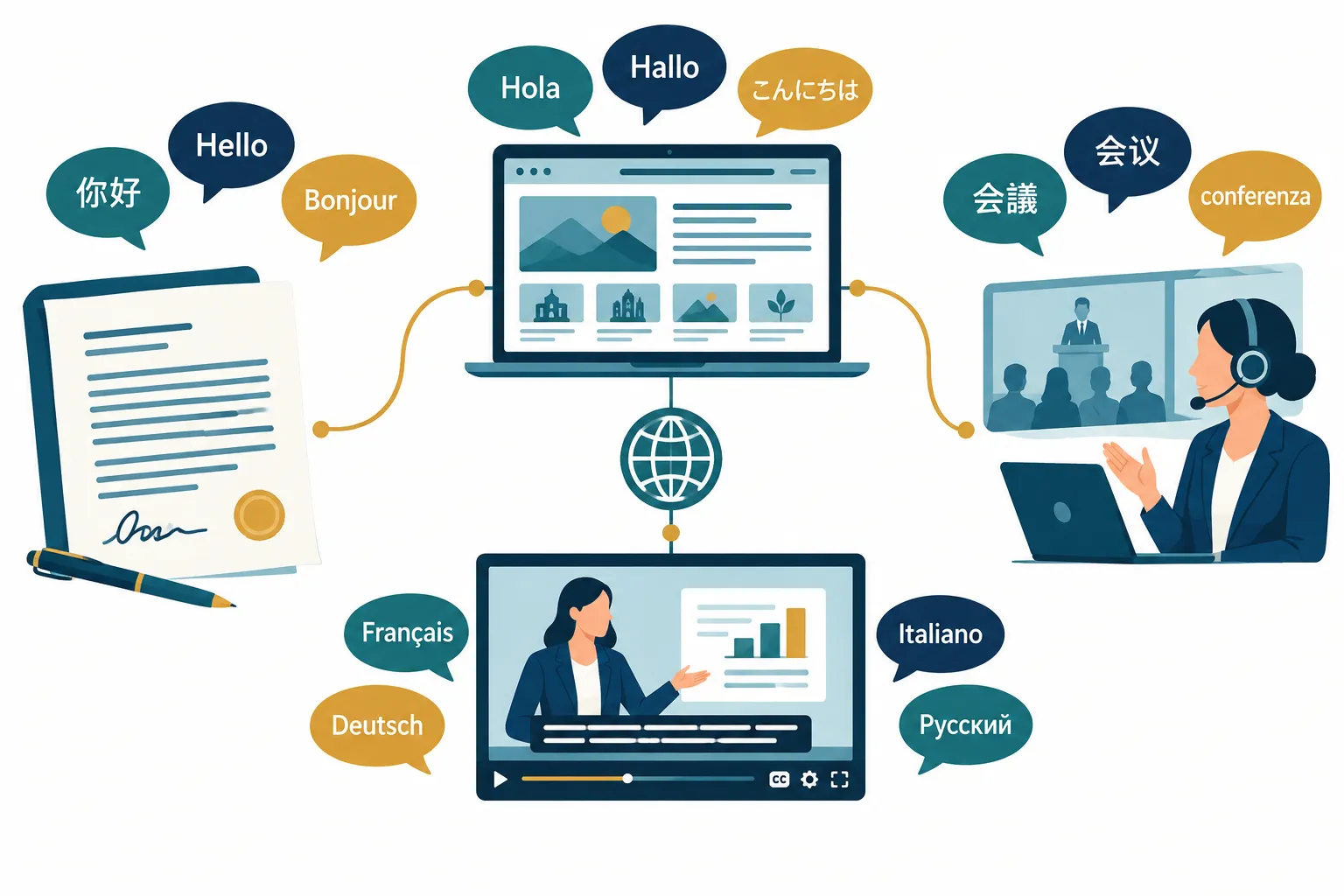
Business translation is the conversion of written business content into another language while preserving its intended meaning. Document translation can cover a proposal, policy, training course or product instructions; other business translation services handle websites and customer responses. The people receiving it may be overseas buyers, local customers, suppliers or employees working in a language other than the company’s default.
Teams often use the term for all multilingual communication. Match the service to the format:
|
Need |
Appropriate service |
Typical output |
|---|---|---|
|
A written document or web page in another language |
Translation |
Reviewed target-language text |
|
A message shaped for local expectations |
Localization or marketing adaptation |
Text plus adjusted examples, formats and calls to action |
|
Spoken discussion across languages |
Interpreting |
Live spoken or signed language access |
|
Text access to live speech |
Live captioning |
On-screen captions during the session |
|
A prerecorded video for another audience |
Subtitling, captions or voiceover |
Timed text or recorded audio |
Translation addresses language; accessibility can require further work. A translated script will not let attendees follow a live discussion. Translated subtitles may leave out sound effects and speaker identification that captions convey. Plan around what the audience needs during the event or while using the asset.
Prioritize content by audience and risk
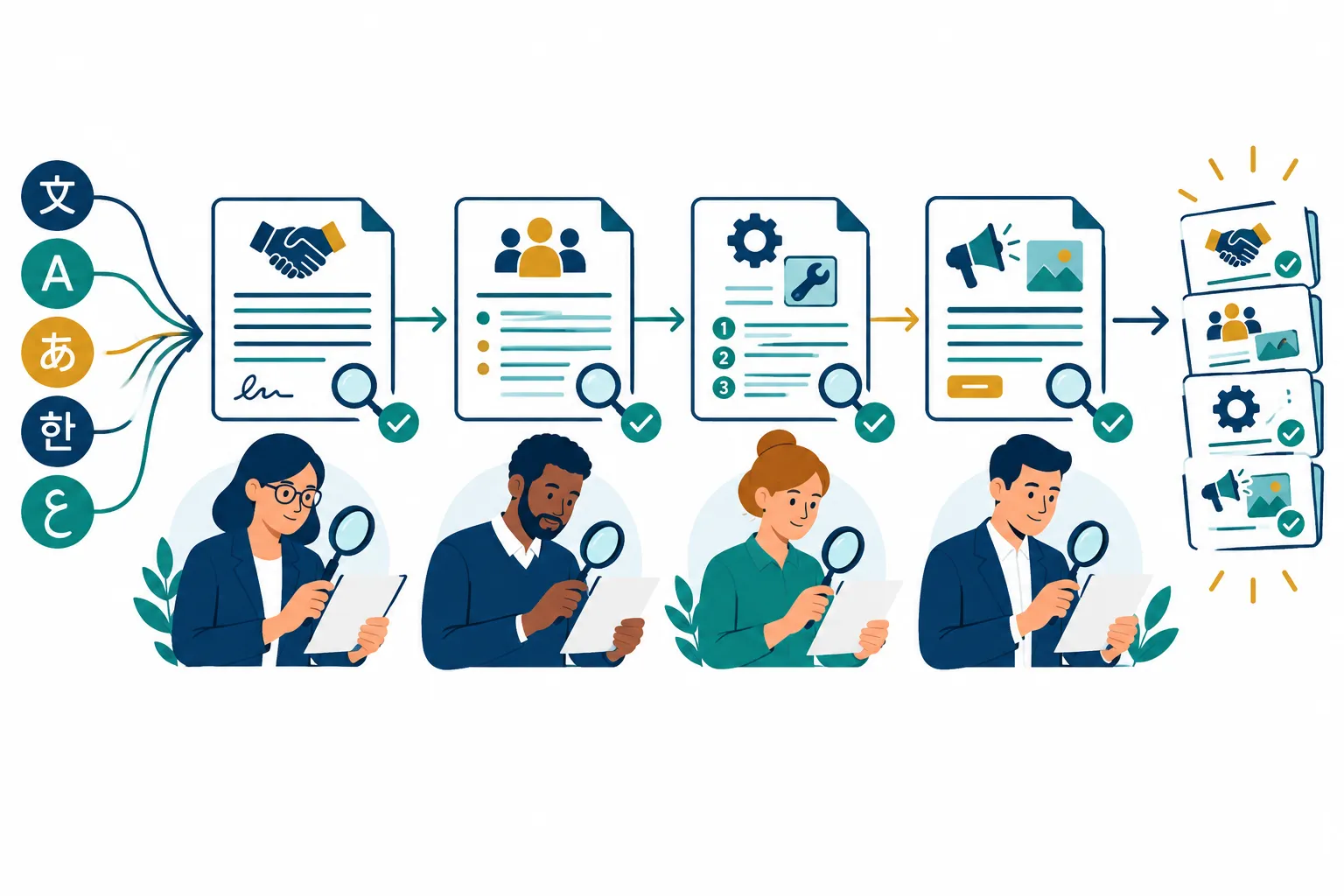
Start with the materials people need to act on: employee instructions, purchase and support pages, supplier requirements and external commitments. Then ask what a wrong sentence could do. A mistaken deadline can delay a delivery; an unclear safety instruction can put someone at risk.
|
Content |
What deserves attention |
Useful review path |
|---|---|---|
|
Contracts, policies and financial documents |
Defined terms, numbers, obligations and jurisdiction-specific wording |
Specialist translator, independent linguistic review and approval by the responsible legal or finance owner |
|
HR onboarding, benefits and training |
Eligibility, procedures, safety instructions and employee comprehension |
Subject-matter review plus a local HR or training owner |
|
Product instructions and technical documents |
Units, warnings, terminology and steps in sequence |
Technical linguist and product or engineering reviewer |
|
Website, sales and marketing copy |
Promise, tone, calls to action and locally relevant examples |
Linguistic review with an in-market marketing stakeholder |
|
Customer emails, help articles and support templates |
Clarity, consistency and current product details |
Reviewer familiar with support workflows and approved terminology |
Base review effort on consequences rather than word count. A short emergency notice may need more scrutiny than a long internal newsletter. Have a legal, finance or other responsible professional approve regulated or binding content. The translator preserves meaning but cannot decide whether the policy meets local requirements.
Separate source-content approval from translation approval. If a benefits policy is still changing, translating a draft creates rework and may leave employees reading an old rule. Label the approved source version and attach it to each language request.
Where AI-assisted translation fits
Machine translation and other AI tools can help teams triage a backlog or draft lower-risk, repetitive content. Human translators and reviewers become important when readers will rely on a statement to make a legal, financial, safety or employment decision, or when a public message carries the brand’s voice. A fluent-looking output is not proof that a condition, negation or product term survived intact.
For internal reading of a low-stakes draft, a labeled preliminary translation may suffice. Name the person who will review terminology and meaning before a customer-facing release. Keep confidential contracts, employee records and customer details out of tools your organization has not approved for that data.
Translate or localize?
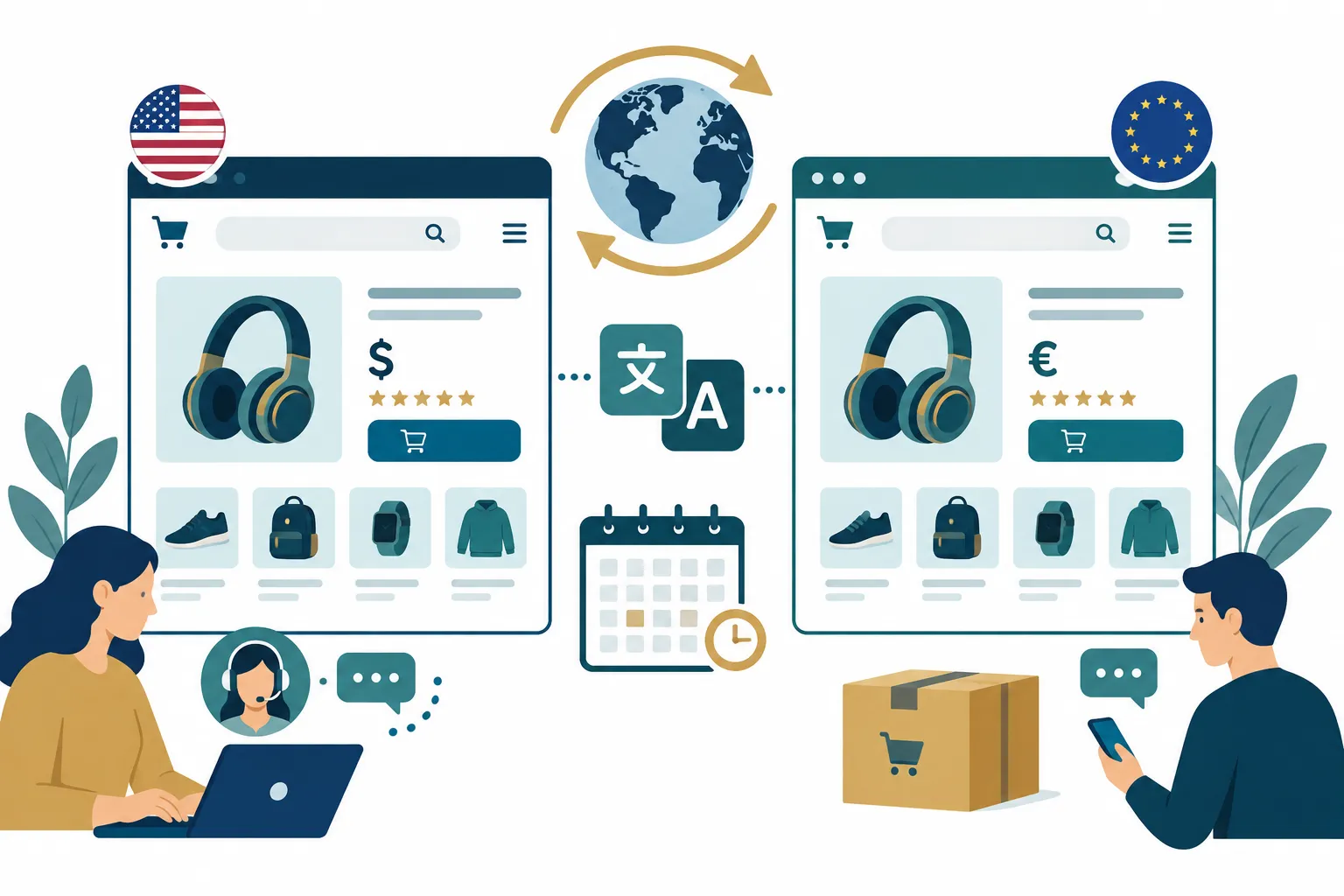
Translation preserves the message across languages. Localization also adjusts the surrounding experience for a specific market or community. This may include date and number formats, currency displays, measurements, contact details, examples, imagery, and the phrasing of a call to action. In CSA Research’s consumer-language study, language preference was measured across 29 countries, a reminder to choose languages by audience rather than headquarters location.
“76% of surveyed online shoppers preferred to buy a product with information in their native language when choosing between similar products.” – CSA Research
Keep a contract clause faithful to its approved source and give it specialist review. A launch slogan calls for a different approach: a literal translation can be grammatical yet miss the intended benefit. Local marketing review or transcreation, rewriting creative copy to achieve an equivalent effect, can help.
On a translated landing page, forms must work and visitors need relevant contact routes. Product names and descriptions should stay consistent. For a local market, you may also adapt navigation labels, testimonials and offers so the page fits how those customers buy.
Tell the language team what must stay unchanged, such as product names and legal disclaimers, and what they can adapt. Share a glossary and brand-voice examples. For creative copy, agree on the intended effect and how far the writer can depart from the original wording.
Choose the right delivery for meetings, video and events

A training session may start with translated slides. Attendees may also need an interpreter to ask questions, live captions to read the discussion, and subtitled recordings to watch later. Scope each part of the experience before booking the session.
Live meetings and conferences
Book interpreting when attendees need to follow or join a spoken discussion across languages. With consecutive interpreting, speakers pause for the interpreter, which can suit shorter exchanges. Simultaneous interpreting runs alongside the speaker and usually needs more technical planning. Set out how attendees will hear the audio and ask questions, then give interpreters the agenda and terminology.
Captioning puts speech on screen for attendees who cannot hear the audio or who benefit from reading it. If you also need translated captions, specify the spoken language and each target language. At a hybrid or virtual event, test the audio feed, caption display and language channels as a remote attendee would use them.
Training videos and customer media
Subtitles give timed text for dialogue in another language. Closed captions can include meaningful non-speech audio and speaker cues as well as speech. Voiceover gives viewers spoken target-language audio. The right mix depends on where the video will run and what viewers need: a translated voiceover may still need captions for accessibility, while a captioned source-language video may still need translated subtitles for another audience.
Approve the source script before recording or timing other language versions. Leave space for longer text and include on-screen graphics in the translation request. Have a reviewer watch the finished video: even accurate subtitles can be hard to read if the timing or placement is wrong.
For organizations managing a live launch as well as evergreen documents, Team Stream can coordinate written translation with interpreting, live captioning, subtitling, voiceover and event equipment or technicians. That combination is useful when the audience moves between an invitation, a presentation and a replay.
Build a repeatable business translation workflow
-
Map the audience and channels. Identify languages by the actual employees, customers or attendees you serve, not by a list of globally popular languages. Record where each piece will appear and who needs to act on it.
-
Prioritize and approve the source. Sort content by impact of error and release date. Assign a source owner to resolve ambiguity before translation starts.
-
Brief the language team. Supply the source files, purpose, audience, market, glossary, reference materials, style preferences and any layout or character constraints. For events, include agendas, speaker names and technical requirements.
-
Choose the review route. Match specialist translators and subject-matter reviewers to the content. Decide whether AI-assisted drafting is permitted and how human review will happen.
-
Review in context. Check numbers, names, links, form fields, line breaks, captions and display on the actual page, document or screen. Give reviewers one place to record changes and one person authority to approve them.
-
Publish and maintain. Store approved language versions alongside the source, track revisions and update translated assets when the source changes. Retire outdated support macros and training files so teams do not keep circulating them.
For a multi-department program, a shared glossary prevents sales, HR and support from using three different terms for the same product feature. A simple asset register with source version, target language, owner, approval status and last update date makes change control possible without making every request a new project.
How to choose a business translation partner
Benefits of working with a business translation service
A professional translation service can assign specialist work, keep approved terminology and send changes to the right reviewers. An HR policy and a marketing campaign, for instance, need different approval routes. For recurring requests, a language services partner can maintain a glossary and version history. Your teams get more consistent, accurate translation without settling the same terms again on each project, and human specialists review the content where errors carry weight.
Send a prospective provider a small representative brief rather than asking only for a rate. Explain the content mix, target audiences, intended channels, review requirements, security expectations and deadlines. Then ask:
-
Who handles legal, financial, technical and creative content, and who reviews each type?
-
How do you preserve terminology and approved changes across departments?
-
What do you need from our team to localize a web page or campaign properly?
-
If an event is involved, can you plan interpreting, captions and language delivery with our production team?
-
How are corrections, version changes, confidential files and urgent requests handled?
Ask for a quote that distinguishes translation, editing, layout or multimedia work, live services and equipment where applicable. A low per-word rate is not a useful comparison if the finished work still requires separate event production or extensive in-house repair. Set acceptance criteria for each deliverable, including formats, reviewer sign-off and how revisions will be returned.
Make every language version usable
Build your business translation plan around the decisions readers and attendees have to make. Give consequential content specialist review, adapt public messages for their audience, and plan spoken and visual access for meetings and video.
If your work spans documents and live or recorded events, Team Stream can help scope written translation alongside human and AI-enabled language services, interpreting, captioning and event production support. Share sample content and audience requirements to work out which services belong together.
