

Burmese to English Translation Best Practices
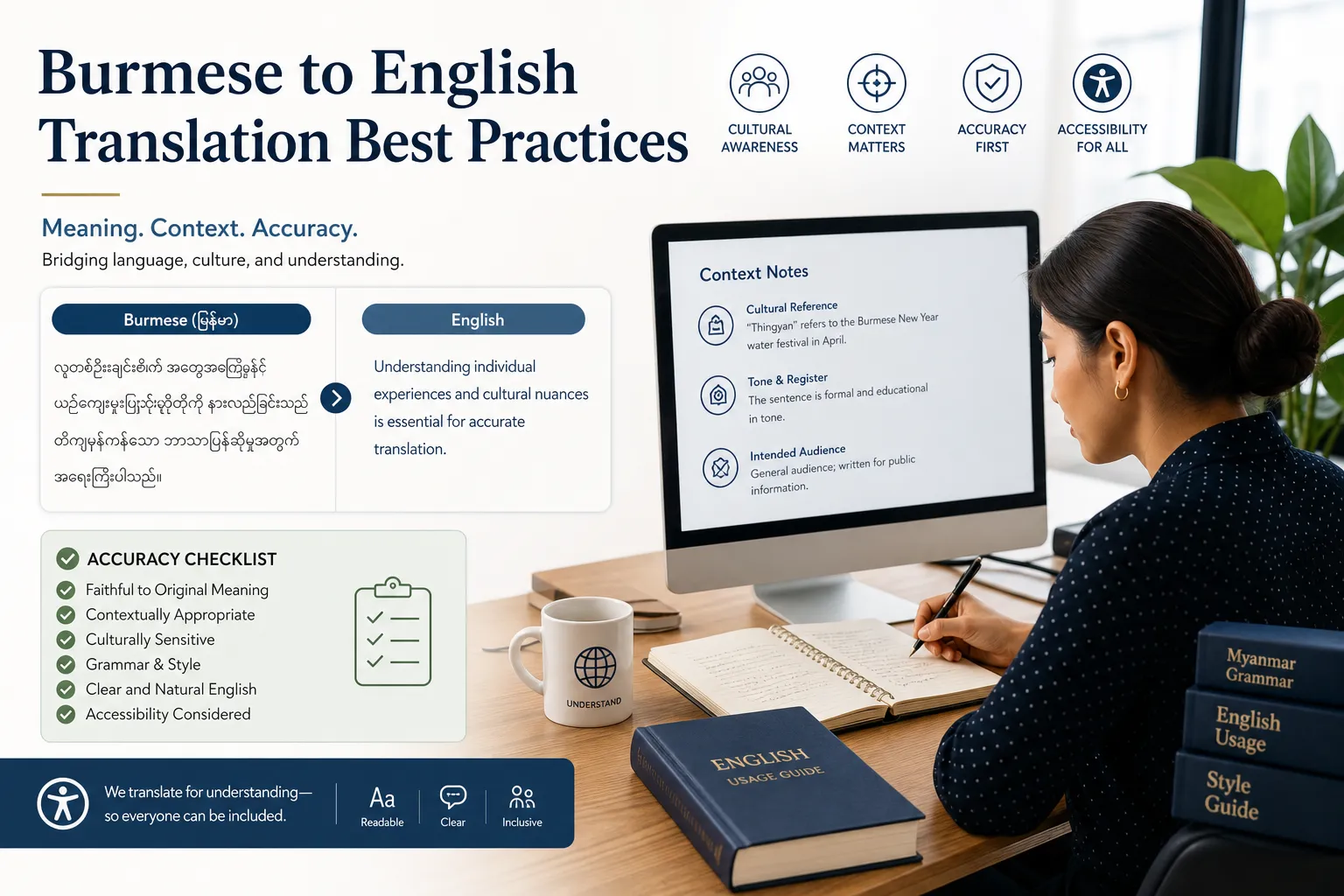
If you need reliable Burmese to English translation for an event, internal communication, legal document, training material, livestream, or multilingual audience experience, “good enough” usually is not good enough. This language pair can be deceptively difficult: meaning is often carried by context, politeness, particles, implied subjects, and cultural cues that do not map neatly into English.
For event organizers, conference planners, operations teams, churches, broadcasters, and corporate communications leaders, the stakes are even higher. A mistranslation can confuse attendees, distort speaker intent, weaken accessibility, or create compliance risk. That is why the smartest approach is not simply choosing a tool, but building a translation workflow that prioritizes clarity, context, human review, and audience needs.
At Team Stream, we see translation as part of a larger communication system. Accurate written translation, skilled interpreting, live captioning, subtitling, voiceover, technician support, and accessibility planning all work together to help organizations communicate clearly across languages and formats. With more than 25 years of experience, Team Stream delivers human expertise plus AI-powered efficiency for live, virtual, and hybrid environments where accuracy, responsiveness, and inclusion matter.
Why Burmese to English Translation Is More Complex Than It Looks
Many people assume translation quality depends mostly on vocabulary matching. With Burmese and English, the real challenge is structural and cultural.
Burmese uses a different script, different grammar patterns, and a different way of signaling respect, tone, and intent. English often demands directness and explicit clarity, while Burmese may rely more heavily on context and indirect phrasing. That means a literal word-for-word conversion can sound awkward, vague, or simply wrong.
Common complexity factors include:
-
implied subjects and objects
-
honorifics and politeness levels
-
idioms without direct English equivalents
-
differences in sentence order
-
cultural references that require localization, not just translation
-
inconsistent Romanization of names and places
-
encoding and font issues in digital workflows
“Burmese is considered a low-resource language in machine translation, leading to limited parallel data and evaluation benchmarks.” – The FLoRes Evaluation Datasets for Low-Resource Machine Translation: Nepali-English and Sinhala-English
That low-resource reality helps explain why generic machine output can be inconsistent, especially in specialized, live, or high-stakes use cases.
What High-Quality Translation Actually Looks Like
A strong Burmese to English translation should do more than replace words. It should preserve the speaker’s intent, the document’s function, and the audience’s ability to act on the message.
Core quality markers
A high-quality translation is:
|
Quality Standard |
What It Means in Practice |
|---|---|
|
Accurate |
The meaning is correct, not just the wording |
|
Natural |
The English reads fluently to a native reader |
|
Context-aware |
Tone, formality, and audience are respected |
|
Complete |
Nothing important is omitted or softened |
|
Consistent |
Key terms, names, and phrasing stay aligned |
|
Accessible |
The final content works for diverse audiences and formats |
|
Fit for purpose |
A live event script, legal document, subtitle file, and marketing page each get the right treatment |
For example, a translated stage announcement needs brevity and clarity. A contract needs precision and consistency. A church livestream may need subtitles and live captions that preserve tone while remaining readable in real time. A global company town hall may require translation, interpreting, and captioning working together.
The Most Common Burmese to English Translation Mistakes
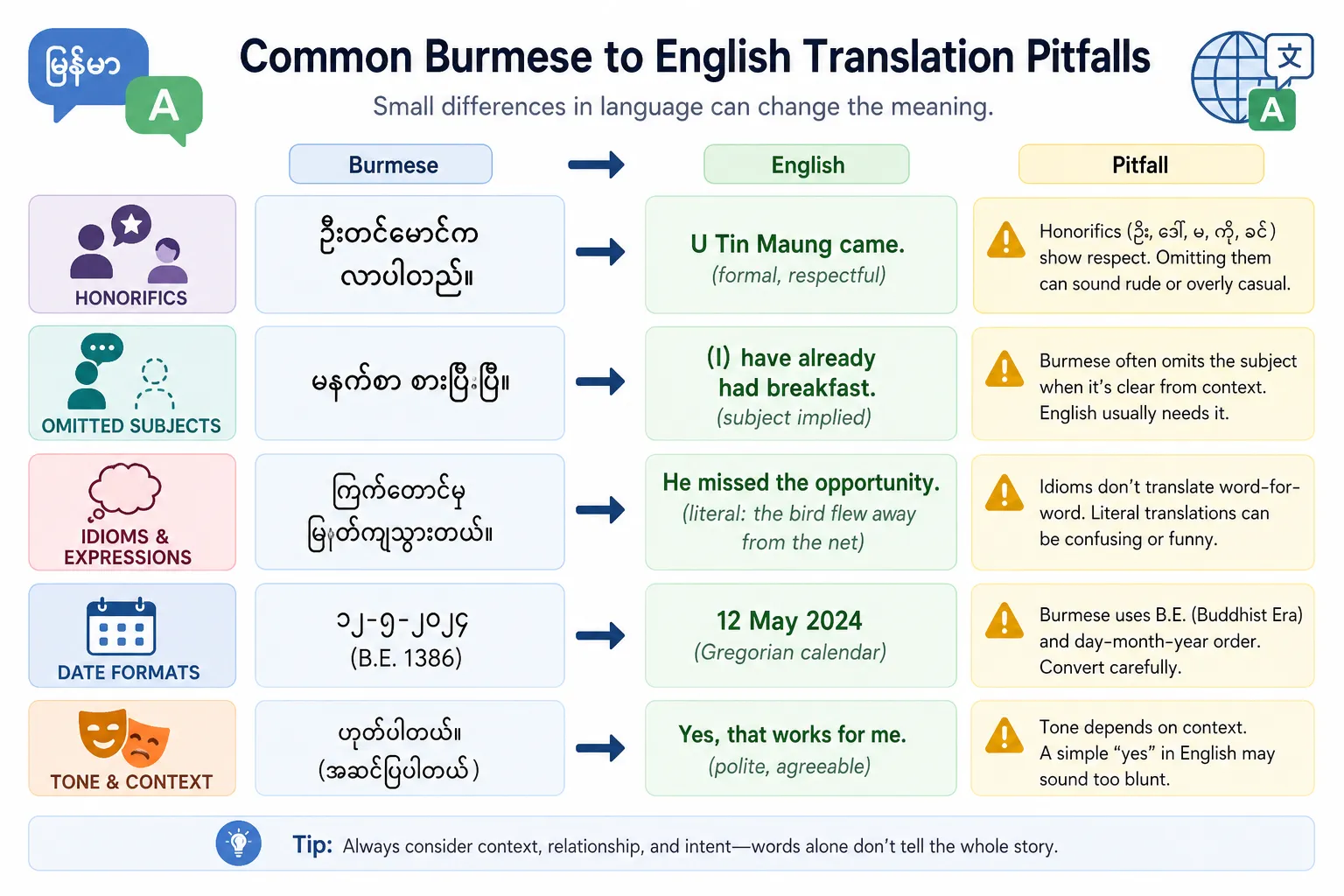
Competitor content often mentions “accuracy” in general terms, but many skip the specific failure points buyers should watch for. These are the mistakes that show up most often.
1. Translating literally instead of translating meaning
Literal translation often misses idioms, implied meaning, or the real intent behind indirect phrasing. The English result may be grammatically correct but pragmatically wrong.
2. Mishandling politeness and hierarchy
Burmese can signal respect and social relationship in ways English does not. If the translator ignores that layer, the tone may become overly blunt, oddly formal, or emotionally flat.
3. Omitting what is only implied in Burmese
Because Burmese may leave subjects or details unstated when context makes them obvious, the translator must often make those elements explicit in English. Weak translation leaves gaps the English reader cannot fill.
4. Using inconsistent spellings for names and places
Romanization varies. Without a style guide, the same place, person, or organization may appear in multiple forms across one document or event program.
5. Ignoring the use case
A subtitle is not a white paper. A stage slide is not a legal clause. Good translation adapts for reading speed, screen space, timing, and audience behavior.
6. Overtrusting machine translation
AI can speed up turnaround, but without terminology control and human verification, the output may introduce subtle errors that no one notices until the content is public.
“Simple translators often miss the nuance of Burmese particles and postpositions, leading to robotic or confusing English text.” – Immersive Translate FAQ
Best Practices for Burmese to English Translation
The best workflows combine linguistic skill, process discipline, and audience awareness.
Start with the communication goal
Before translation begins, define the purpose:
-
Is this informational, legal, promotional, devotional, educational, or technical?
-
Who is the audience?
-
Will the text be read, spoken, captioned, subtitled, or projected?
-
Does the translation need to persuade, instruct, reassure, or document?
Purpose determines style.
Provide context, not just text
Give translators the supporting materials they need:
-
glossary of preferred terms
-
speaker bios
-
agenda or script
-
previous translations
-
audience profile
-
reference visuals
-
source file type and intended format
Context is one of the biggest quality multipliers and one of the most overlooked.
Build a terminology guide early
For companies, ministries, conferences, and recurring events, terminology consistency matters. Create approved translations for:
-
company and product names
-
department labels
-
event session titles
-
accessibility terms
-
legal disclaimers
-
technical vocabulary
-
branded phrases
This is especially important when multiple translators, interpreters, captioners, or vendors are involved.
Use human review for high-stakes content
Machine translation can be useful for drafts, volume, and speed, but mission-critical content should be reviewed by a qualified linguist. That includes:
-
contracts
-
regulatory or compliance documents
-
HR communications
-
medical content
-
event signage
-
speaker scripts
-
website copy tied to conversion or reputation
At Team Stream, this is where human and AI-powered translation work best together. AI can accelerate throughput, while expert linguists refine meaning, tone, and terminology for dependable final delivery.
Adapt for format
The same message may need different versions for:
-
handouts
-
teleprompter scripts
-
subtitles
-
lower thirds
-
live captions
-
signage
-
PDFs
-
mobile screens
A translation that works in a document may fail on stage or on screen. Format-aware adaptation is a best practice, not an afterthought.
Test with real users when possible
For important audience-facing content, validate the English with someone who did not create it. Ask:
-
Is the message immediately clear?
-
Does the tone feel right?
-
Is any phrasing ambiguous?
-
Are names and instructions consistent?
-
Would a viewer understand it in real time?
Human Translation vs. Machine Translation for Burmese
A practical comparison helps buyers make better decisions.
|
Option |
Best For |
Strengths |
Risks |
|---|---|---|---|
|
Machine-only |
rough internal drafts, low-risk text |
fast, scalable, inexpensive |
subtle meaning errors, tone problems, inconsistent terminology |
|
Human-only |
sensitive, nuanced, public-facing content |
high accuracy, cultural judgment, better style |
slower and more expensive at scale |
|
Human + AI workflow |
most business, event, and accessibility use cases |
speed plus quality control, scalable consistency, better turnaround |
requires a partner with strong process management |
Many competitor pages promote either a single translation app or a multi-engine platform. What they usually miss is the operational reality: organizations do not just need translated text. They need dependable delivery across documents, live sessions, videos, captions, scripts, and audience touchpoints.
That is where Team Stream offers a real advantage. Instead of treating translation as a standalone transaction, Team Stream supports end-to-end language access and accessibility, including written translation, interpreting, live captioning, subtitling, voiceover, equipment, and technician support for in-person, virtual, and hybrid experiences.
What Businesses and Event Teams Should Look for in a Translation Partner
1. Proven language quality process
Ask how the provider handles:
-
translator qualification
-
editing and review
-
terminology management
-
quality assurance
-
revision workflows
-
urgent updates
2. Experience beyond documents
If your content is tied to events, video, or audience access, you need more than a text vendor. Look for support with interpreting, captions, subtitles, livestream delivery, and on-site or remote technical coordination.
3. Accessibility awareness
Translation should support inclusion, not operate separately from it. Captioning, subtitling, and multilingual delivery should work together so audiences can follow in the format they need.
“Approximately 80% of individuals who use captions are not deaf or hard of hearing.” – University of Arizona Accessibility
That matters for multilingual events, training videos, webinars, and hybrid sessions where attendees may benefit from captions for comprehension, focus, or sound-off viewing.
4. Compliance-friendly execution
Organizations in regulated or public-facing environments should ask whether services support accessibility expectations, documentation needs, confidentiality, and consistent terminology.
5. Flexible service delivery
The right partner should be able to work:
-
in person
-
remotely
-
in hybrid workflows
-
on short notice
-
across multiple content formats
Team Stream’s flexible delivery model is built for exactly this kind of real-world demand.
Burmese to English Translation in Live Events and Hybrid Experiences
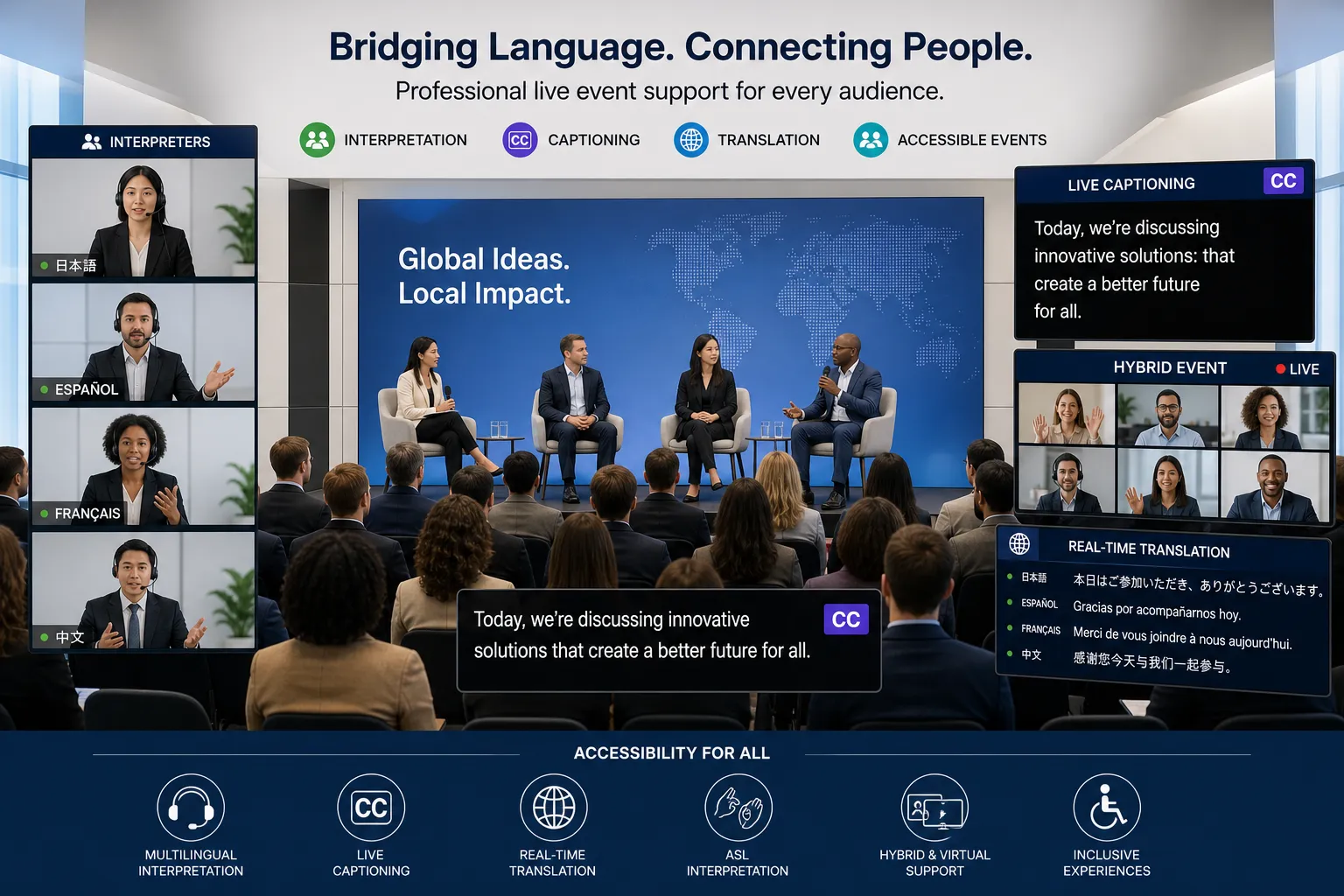
This is where best practices become operational.
For live events, translation quality is only part of the equation. Timing, delivery method, accessibility, equipment, and technician support all influence whether the audience actually receives the message.
Important event considerations
Interpreting vs. written translation
A translated agenda is not the same as live interpreting for a keynote or panel. Decide early which sessions require spoken language access.
Captioning and subtitles
Live captions improve accessibility, comprehension, and engagement. Subtitles help with recorded content, recaps, and multilingual video distribution.
“79% of event planners observed an increase in attendees whose first language is not English, and 97% prioritized inclusivity at their events.” – Wordly State of AI Translation & Captions 2024 Report
Technical readiness
For conferences, trade shows, church services, broadcasts, and corporate events, the delivery chain may include:
-
caption feeds
-
interpreter audio channels
-
webcast overlays
-
room screens
-
confidence monitors
-
streaming platforms
-
recording outputs
Team Stream supports these environments with professional equipment rental, technician services, and coordination that helps prevent avoidable communication breakdowns.
Where Team Stream fits best
Team Stream is especially valuable when you need:
-
multilingual communication for live, virtual, or hybrid events
-
accurate human translation backed by AI-enabled efficiency
-
live captioning for accessibility and audience engagement
-
interpreting and captioning that align with event production realities
-
responsive support for updates, schedules, speaker changes, and last-minute logistics
-
one partner that can connect language access, accessibility, and technical execution
How to Evaluate Translation Tools and Apps for Burmese
Competitor pages often focus heavily on tool features. Features matter, but decision-makers should look deeper.
MachineTranslation.com
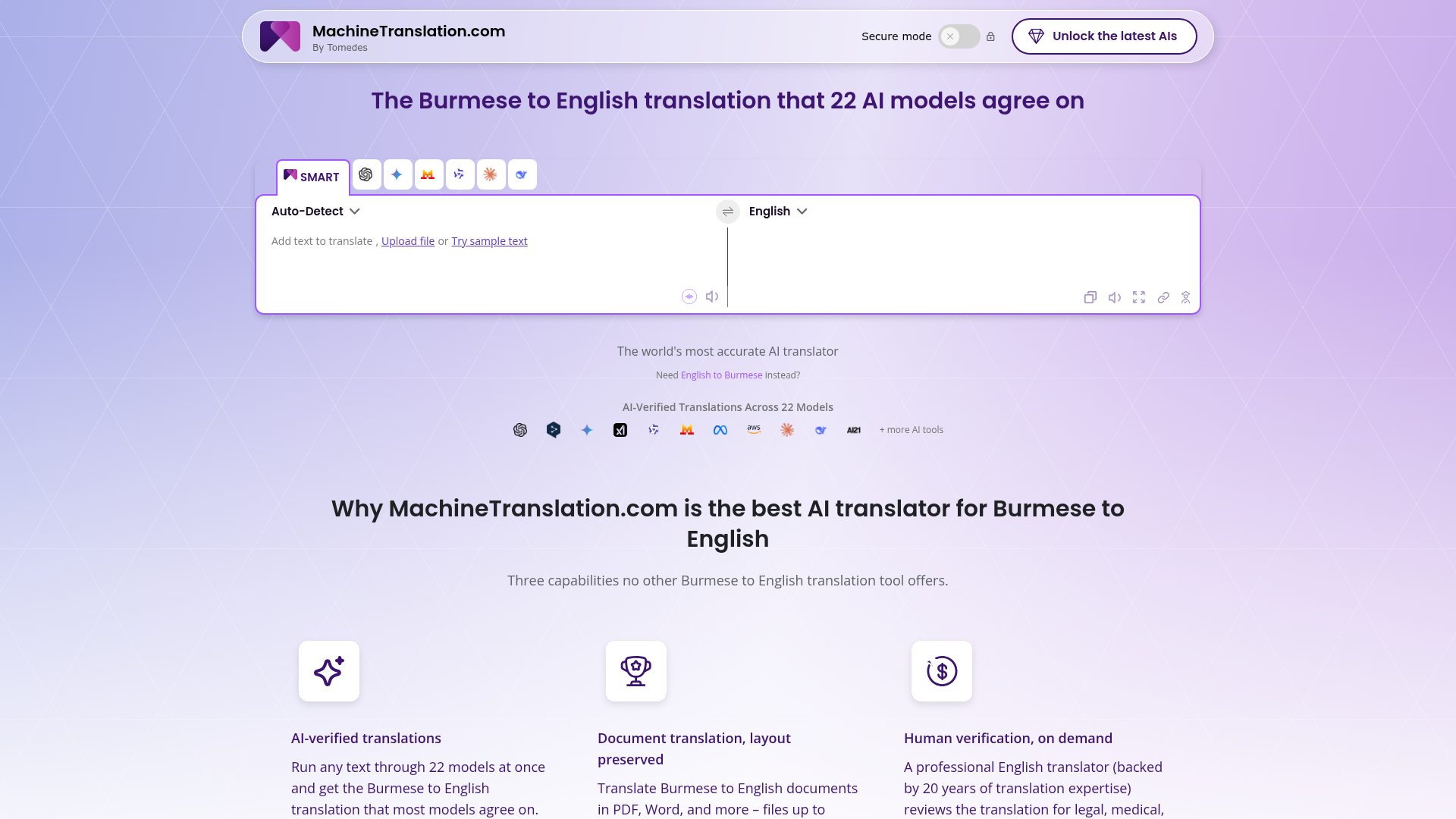
MachineTranslation.com emphasizes cross-model comparison and optional human verification. That can be useful when you want multiple AI outputs and an extra layer of review before selecting a final phrasing.
Immersive Translate
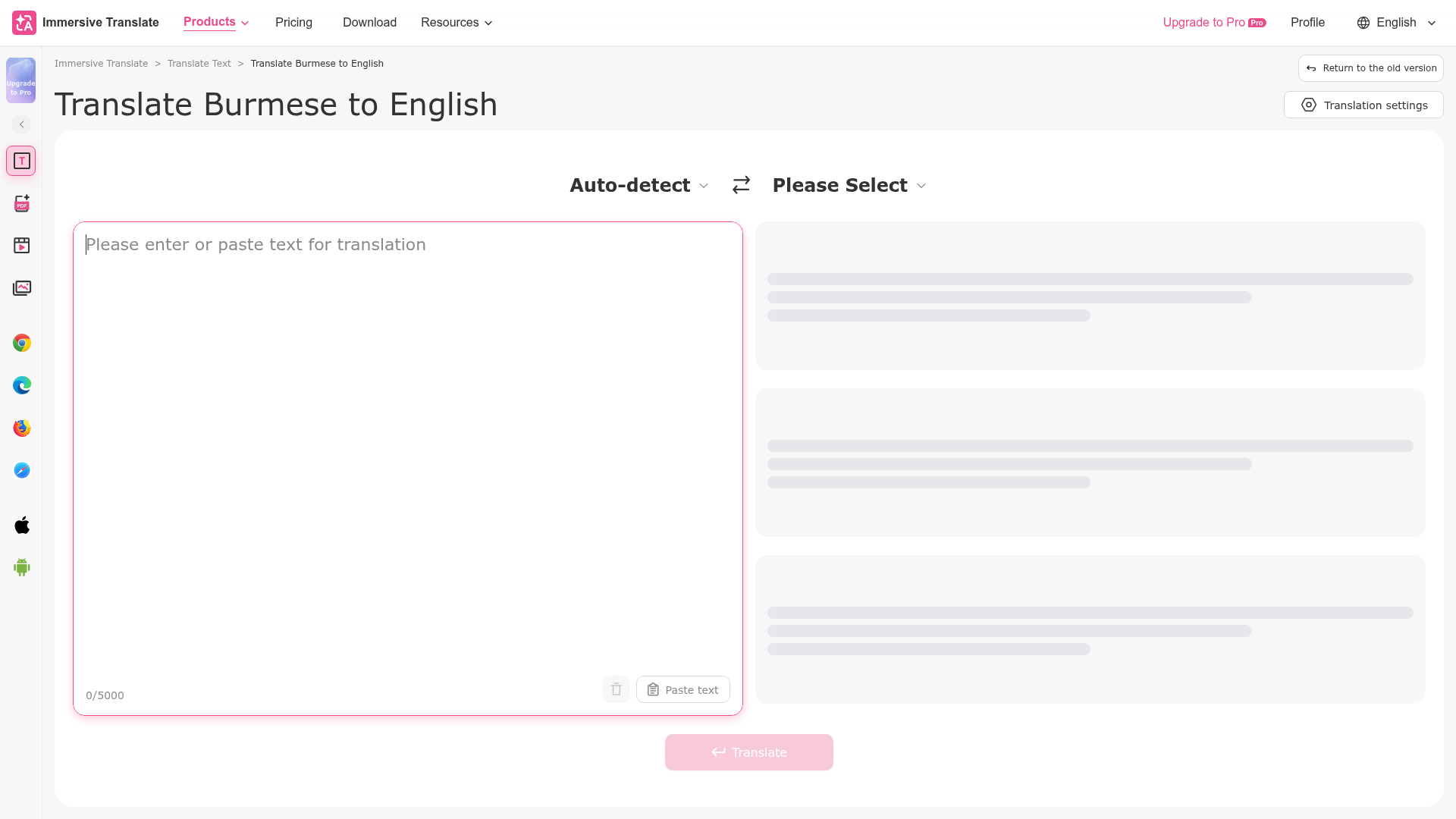
Immersive Translate is strong for reading websites, documents, PDFs, and multilingual web content with flexible engine switching. It is especially practical for research and browsing workflows.
Burmese To English Translator app
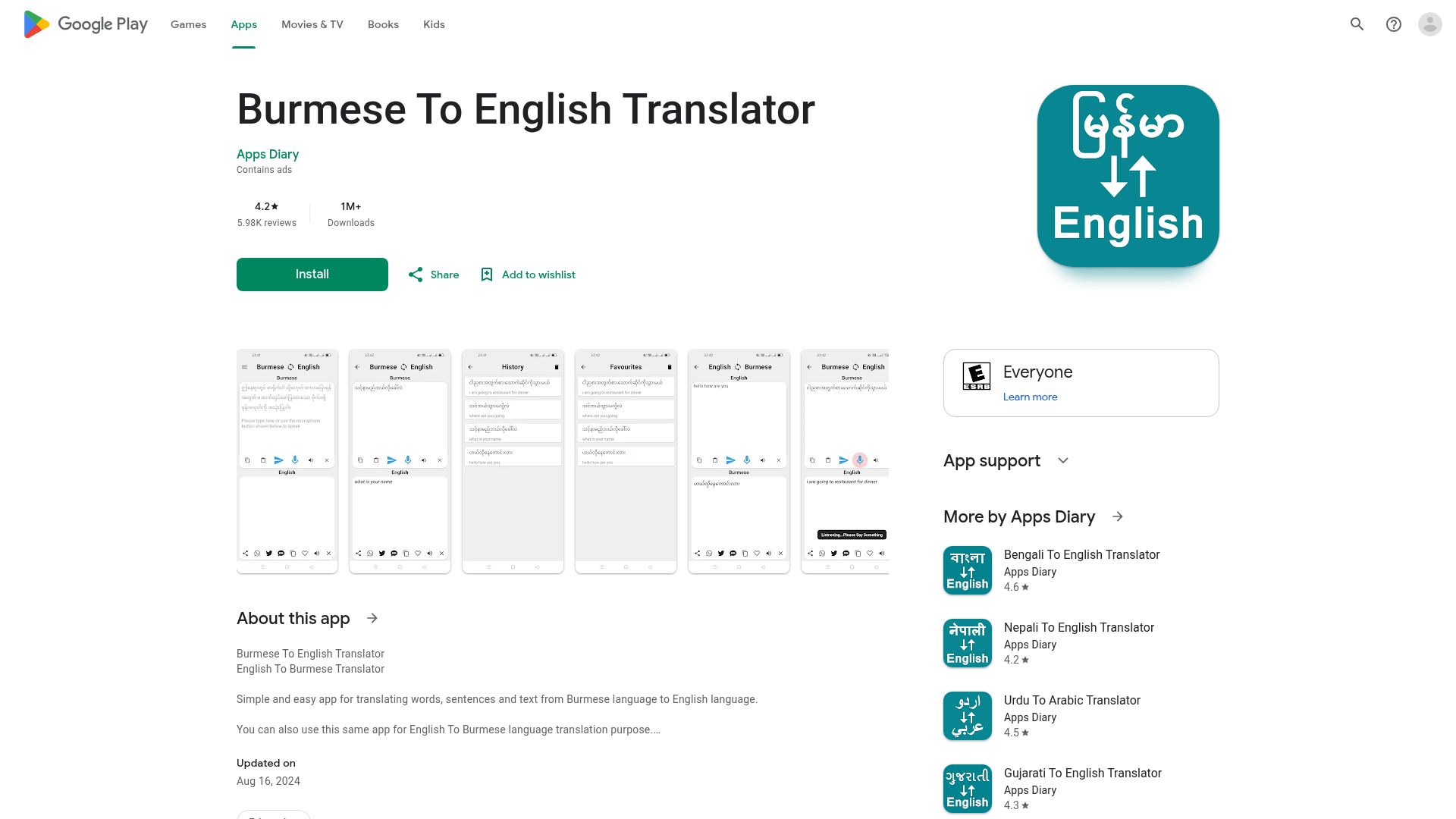
Simple translation apps can be convenient for basic phrase lookup, casual use, and quick checks. They are less suitable for nuanced business communication, accessibility workflows, or public-facing content where consistency and accountability matter.
A better evaluation framework
Instead of asking “Which app is best?” ask:
|
Question |
Why It Matters |
|---|---|
|
Can it handle Burmese nuance? |
Literal output is often not enough |
|
Can humans review the output? |
High-stakes content needs accountability |
|
Can it support event or media workflows? |
Real-world delivery matters |
|
Can it preserve terminology? |
Brand, legal, and technical consistency depend on it |
|
Can it integrate with captions, subtitles, or interpreting? |
Accessibility and multilingual communication often overlap |
|
Is there responsive support? |
Critical for live or deadline-driven use cases |
A Practical Workflow for Better Results
If you want consistent quality, this step-by-step process works well for most organizations.
Step 1: Classify the content
Mark each item as low, medium, or high risk.
-
Low risk: internal notes, brainstorming drafts
-
Medium risk: marketing support content, noncritical emails, informational material
-
High risk: contracts, executive communications, event scripts, regulated content, public-facing accessibility assets
Step 2: Choose the right workflow
-
Low risk: AI draft + spot check
-
Medium risk: AI draft + human edit
-
High risk: professional human translation + review + formatting QA
Step 3: Prepare source content
Clean source text reduces downstream errors. Avoid ambiguity, unexplained acronyms, and fragmented source files.
Step 4: Apply terminology controls
Use glossaries and approved names.
Step 5: Review in final format
Always QA the translation in the actual environment where people will consume it, whether that is a PDF, webcast player, LED wall, registration page, subtitle track, or agenda booklet.
Step 6: Capture learnings for next time
Every event or project should improve the next one. Update glossaries, style guides, and preferred phrasing.
Content Gaps Most Competitor Articles Miss
After reviewing leading pages on this topic, several gaps stand out:
They talk about translation, but not delivery
Most focus on text conversion and tool features, not on how translation works in live events, broadcasts, or hybrid communications.
They underplay accessibility
Captioning, subtitling, and inclusive communication are often treated as secondary, even though they are central to audience understanding and compliance.
They rarely connect language support with production support
In practice, many organizations need interpreters, captioners, feeds, equipment, technicians, and schedule coordination working together.
They do not help buyers assess risk
A casual phrase tool and a multilingual compliance-sensitive event are not the same use case. Buyers need a framework, not just a list of features.
This is where Team Stream provides more complete value: not only translation quality, but the service model and operational support required to make communication actually work.
Final Takeaway
Burmese to English translation quality depends on far more than choosing a popular app. This language pair demands context sensitivity, cultural judgment, terminology discipline, and format-aware execution. For organizations working with live audiences, multilingual content, and accessibility requirements, the best outcomes come from a blended approach that combines expert humans, smart AI, and reliable operational support.
Team Stream brings those pieces together. From written translation and interpreting to live captioning, subtitling, voiceover, equipment rental, and technician support, Team Stream helps organizations communicate clearly and inclusively across live, virtual, and hybrid environments. If your message matters, and your audience matters, it is worth working with a partner that can deliver both language accuracy and real-world execution.
Ready to make your next multilingual project or event clearer, more accessible, and easier to manage? Team Stream can help you build a right-sized solution backed by experienced professionals, responsive service, and more than 25 years of trusted expertise.
FAQ
What is the best Burmese to English translator?
The best option depends on your use case. For casual lookups, an app may be enough, but for business, events, accessibility, or public-facing content, the best choice is a workflow that combines AI speed with professional human review. Team Stream is especially valuable when translation must work alongside interpreting, captioning, subtitling, and event delivery.
What are the best practices for translation?
Start with the communication goal, provide full context, use a terminology guide, and match the workflow to the risk level of the content. For high-stakes material, use qualified human review and always check the translation in its final format, such as a document, subtitle file, or live event feed.
What is “I love you” in Burmese?
A common way to say it is ချစ်တယ်, often transliterated as chit tal. However, Burmese expression changes with tone, relationship, and context, which is a good example of why literal translation alone can be misleading.
What are common challenges in Burmese translation?
Common challenges include implied subjects, honorifics, idioms, tone, indirect phrasing, and inconsistent Romanization. Digital issues such as encoding, font compatibility, and format constraints can also affect final quality.
Does Google Translate work for Burmese?
It can help with basic understanding and quick phrase checks, but it may miss nuance, tone, and context in more complex Burmese content. For important communications, especially for events or external audiences, it should be backed by human review or a managed language-access workflow.
