

Mandarin translation services cover different jobs. A contract needs written translation and review; a keynote needs live interpretation; a recorded announcement may need subtitles or voiceover. Scope those jobs together when they share a program, so your team can approve terminology and arrange the right delivery channels.
Start with what your audience must read or hear and when they need it. That tells you which linguists, production staff, and deadlines belong in the plan.
See how an interpreter works during a conference session:
Choose the right Mandarin language service
Translation handles written material; interpretation handles live speech. If attendees also need captions or a translated video, put those deliverables in the brief.
“Translators work with written text; Interpreters work with spoken language.” – American Translators Association
|
Need |
Service to request |
Typical deliverable |
Planning detail |
|---|---|---|---|
|
Contracts, presentations, handouts, web copy |
Written translation |
Edited target-language files |
Specify format, intended readers, and final approver |
|
Meetings, panels, sermons, keynote talks |
Live interpretation |
Spoken Mandarin or English audio channel |
Choose consecutive or simultaneous delivery |
|
Live speech that attendees need to read |
Live captioning, with translation if needed |
On-screen or personal-device text |
Specify caption language, placement, and access needs |
|
Recorded talks and promotional videos |
Subtitling or closed captions |
Timed text for the video |
Supply final video and identify where it will play |
|
Narration for a finished video |
Voiceover |
Recorded target-language audio |
Allow for translated script approval and recording |
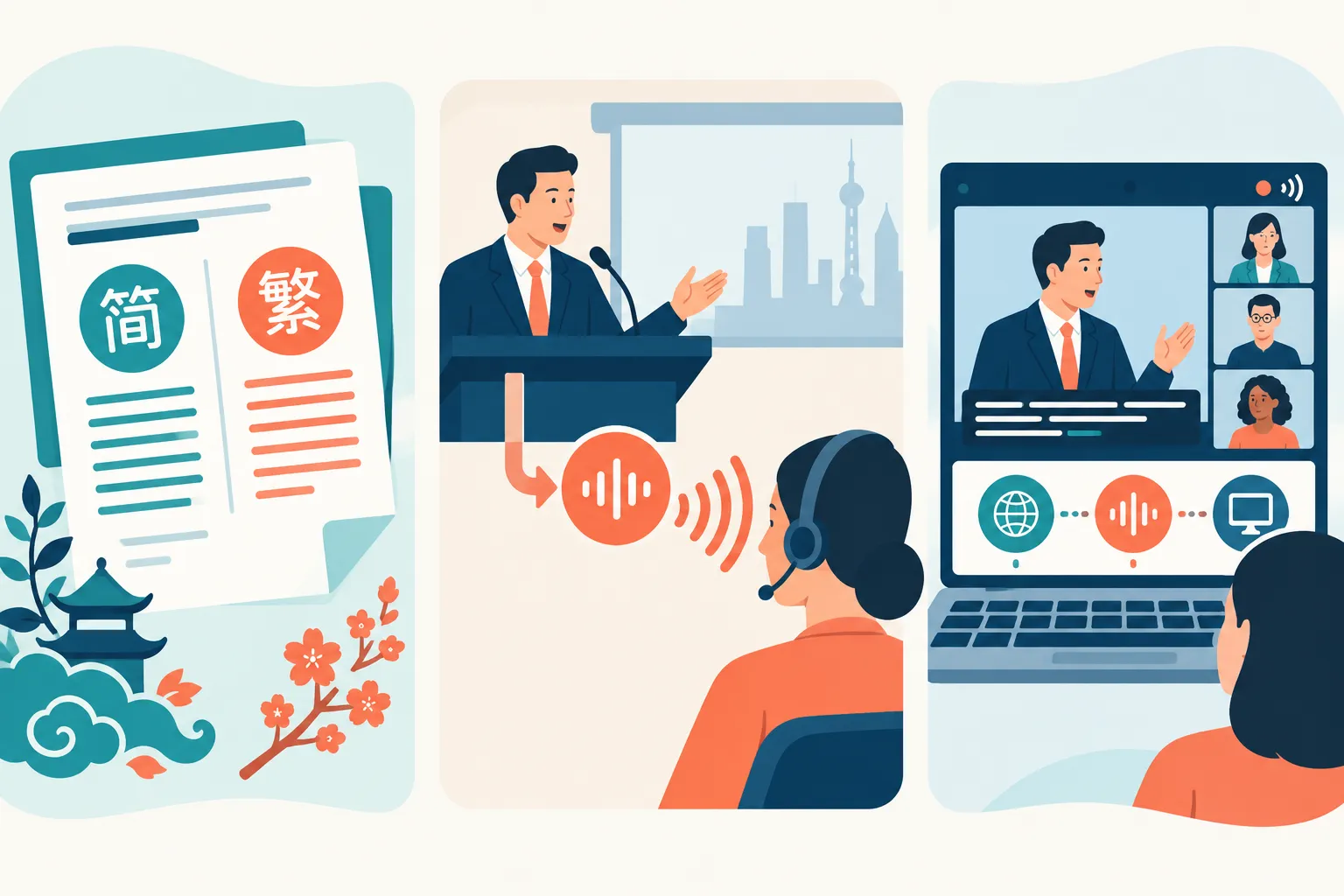
With consecutive interpretation, a speaker pauses while the interpreter speaks. It suits a small meeting, pastoral conversation, or audience Q&A. With simultaneous interpretation, attendees listen on a separate language channel while the presentation continues. That usually suits a conference session or worship service. Decide whether attendees will use receivers and headsets, a remote audio channel, or another method before the program goes live.
Captions serve attendees who need to read the session; Mandarin audio serves attendees who need to hear it in Mandarin. An event may need both. If attendees need Mandarin text, request translated captions rather than English captions alone.
Specify the audience, not just “Chinese”
Mandarin and Cantonese are different spoken languages. Written Chinese has Simplified and Traditional character forms. Tell your linguist which spoken language, written form, regional vocabulary, and translation direction the audience needs.
Mainland China audiences commonly use Simplified Chinese in writing; Taiwan audiences typically use Traditional Chinese alongside spoken Mandarin. A Hong Kong audience may need Traditional Chinese in writing and Cantonese for a spoken session. Ask about the audience’s preferences rather than inferring them from a city or country.
Your brief should cover:
-
The direction of work: English to Mandarin, Mandarin to English, or both. A bilingual Q&A may need two-way coverage even if the presentation is one-way.
-
Where attendees are located and which spoken language and written script they use.
-
Whether the material is a sales pitch, employee training, legal review, worship service, or public event, and what tone it needs.
-
Product names, speaker names, acronyms, scripture references, and approved translations.
-
Source files, slides, agenda, video, previous translations, and the final delivery format.
For outward-facing campaigns, ask whether the team also needs localization of examples, calls to action, and tone. Name the person who approves those choices before translation begins.
Match delivery to the setting
Corporate documents and meetings
A translated slide deck helps employees follow a presentation, but they still need a way to join the discussion. Translate the agenda and decision materials ahead of time, arrange an interpreter for the meeting, and decide how participants will ask questions in both languages.
For contracts, policy changes, financial material, or other high-stakes text, budget for a qualified human translator and a separate review step. If stakeholders keep editing the English source, ask how the language team will track changes in the target-language version. Agree on access to confidential files before sharing them.
Conferences, trade shows, and broadcasts
Map each session to its audience channel. A keynote might need simultaneous Mandarin audio and live captions; a booth demonstration might call for consecutive interpreting with a small group. Prepare subtitles or voiceover for recorded clips in advance rather than asking the live interpreter to cover them.
Have the producer assign an owner for the microphone feed and interpreter connection. Decide how attendees will select a language and who will respond if a speaker switches rooms or the audio fails. At a hybrid event, test the experience from both an in-room seat and a remote connection with the interpreting and captioning teams in the rehearsal.
If on-site attendees use personal devices, provide network access and an easy way to find the correct channel. If they use receivers, plan distribution and returns. Give remote guests a way to select audio without losing the floor feed. Audience questions in Mandarin must reach the interpreter as well as the room.
Churches and community gatherings
An interpreted sermon may leave announcements, prayers, song lyrics, slides, and post-service conversations uncovered. Some elements may also require permissions. Give the language team speaker notes and scripture references ahead of time to prepare names and specialized terms. If you stream or post the service, scope captions and subtitles for the recording separately.
What affects quality and turnaround?
Send the linguist a stable source and enough context to resolve ambiguous terms. Name a reviewer who can answer questions. For live interpretation, share the program, presentations, speaker list, and approved terminology ahead of the session.
AI-powered translation and captions can speed up lower-risk internal work. For a product claim, safety instruction, legal clause, public statement, or theological term that must be exact, include human expertise and review. If you plan to use live AI captions, test names, accents, audio quality, and specialist vocabulary with representative content.
Editable files take less preparation than scanned pages; an approved script is easier to subtitle than a video still being cut. Complex layouts, multiple approvers, time zones, specialist terminology, and late source changes also affect turnaround. Set dates for draft delivery, internal review, revisions, technical testing, and final handoff.
Define the final handoff before sign-off: translated editable files or laid-out artwork; live captions alone or an edited caption file afterward. Tell the production team if the recording needs the Mandarin channel, since a capture of the floor audio alone will not include it.
How to scope a useful quote
Send each prospective provider the same brief and compare these details in their quotes:
-
Deliverables: source and target languages, Chinese script, number and format of files, live audio channels, captions, subtitles, or voiceover.
-
Timing: event date and time zone, duration and session breaks, document handoff, approval dates, and rehearsal.
-
Staffing: subject-matter experience, interpreter coverage, editing, and who handles terminology questions.
-
Setup: on-site or remote interpreters, equipment, technician, platform integration, attendee instructions, and a fallback if audio drops.
-
Terms: pricing basis, minimum booking or rush arrangements if applicable, revision policy, recording use, and cancellation terms.
Providers commonly price document work according to volume, complexity, file preparation, and review. Live work also depends on duration, staffing, modality, equipment, and technical support. An itemized scope will show whether your team must source headsets, operate the audio feed, or manage caption placement.
Bring language and event production into one plan
Team Stream supports written translation, live interpreting, captioning, subtitling, voiceover, and event support for businesses, churches, and broadcast teams. It offers human expertise and AI-enabled services, with equipment and technician support for events that need on-site production.
Choose services by what your audience needs to read or hear. If your program includes documents, a live session, and a recording, ask Team Stream to scope the language channels, accessibility deliverables, and technical handoffs together. Your team can then settle gaps before event day.
FAQ
How reliable is Google Translate for Chinese?
It can help someone grasp the gist of low-risk text, but it is not a substitute for a reviewed business translation or a live interpreter. For contracts, public communications, specialist terminology, or content that attendees must act on, use a qualified linguist and a defined review process.
How much is in Mandarin translation?
There is no single price for every project. Written translation depends on volume, subject matter, formatting, review, and deadline; interpreting adds duration, staffing, delivery method, and potentially equipment and technician support. Request an itemized quote tied to the actual deliverables.
