

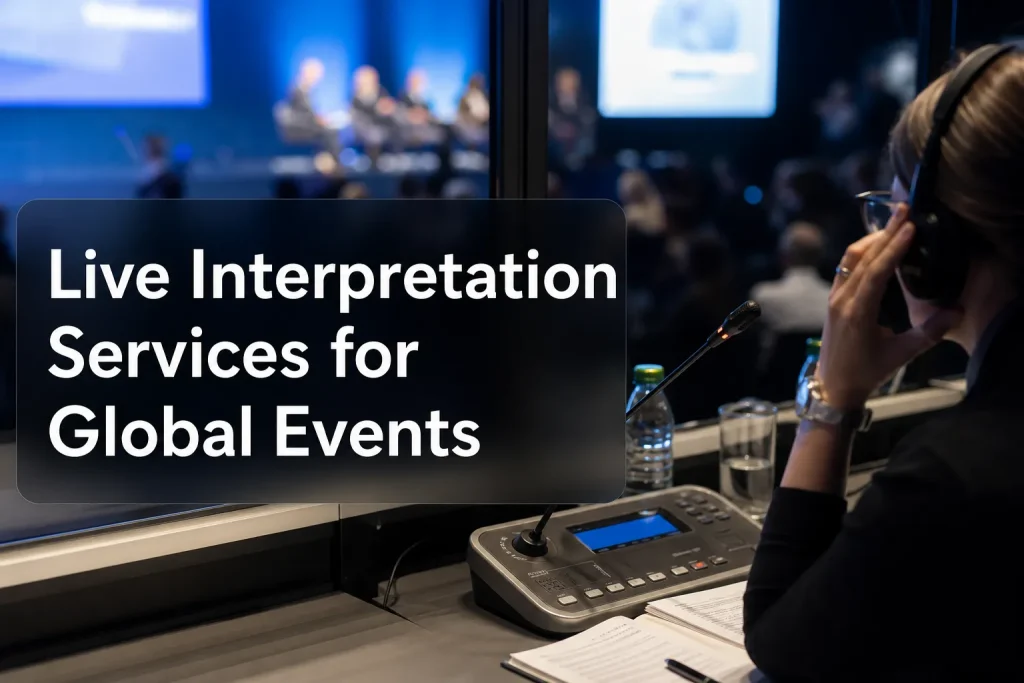
Live Interpretation Services for Global Events
If you are planning a multilingual meeting, conference, webinar, town hall, worship service, trade show, or broadcast, clear communication is not a nice-to-have. It is the difference between an audience that feels included and one that feels lost.
Live interpretation services make it possible for people to follow a speaker in real time in their preferred language. For event organizers and operations teams, that means better engagement, stronger compliance, wider reach, and fewer risks in high-stakes moments. For attendees, it means they can participate confidently instead of simply trying to keep up.
At Team Stream, we see this every day: organizations want multilingual communication that feels seamless, professional, and accessible across live, virtual, and hybrid formats. They also want a partner who can handle the details, from interpreters and captions to equipment, technicians, remote delivery, and accessibility support. That is exactly where a well-designed live interpretation strategy pays off.
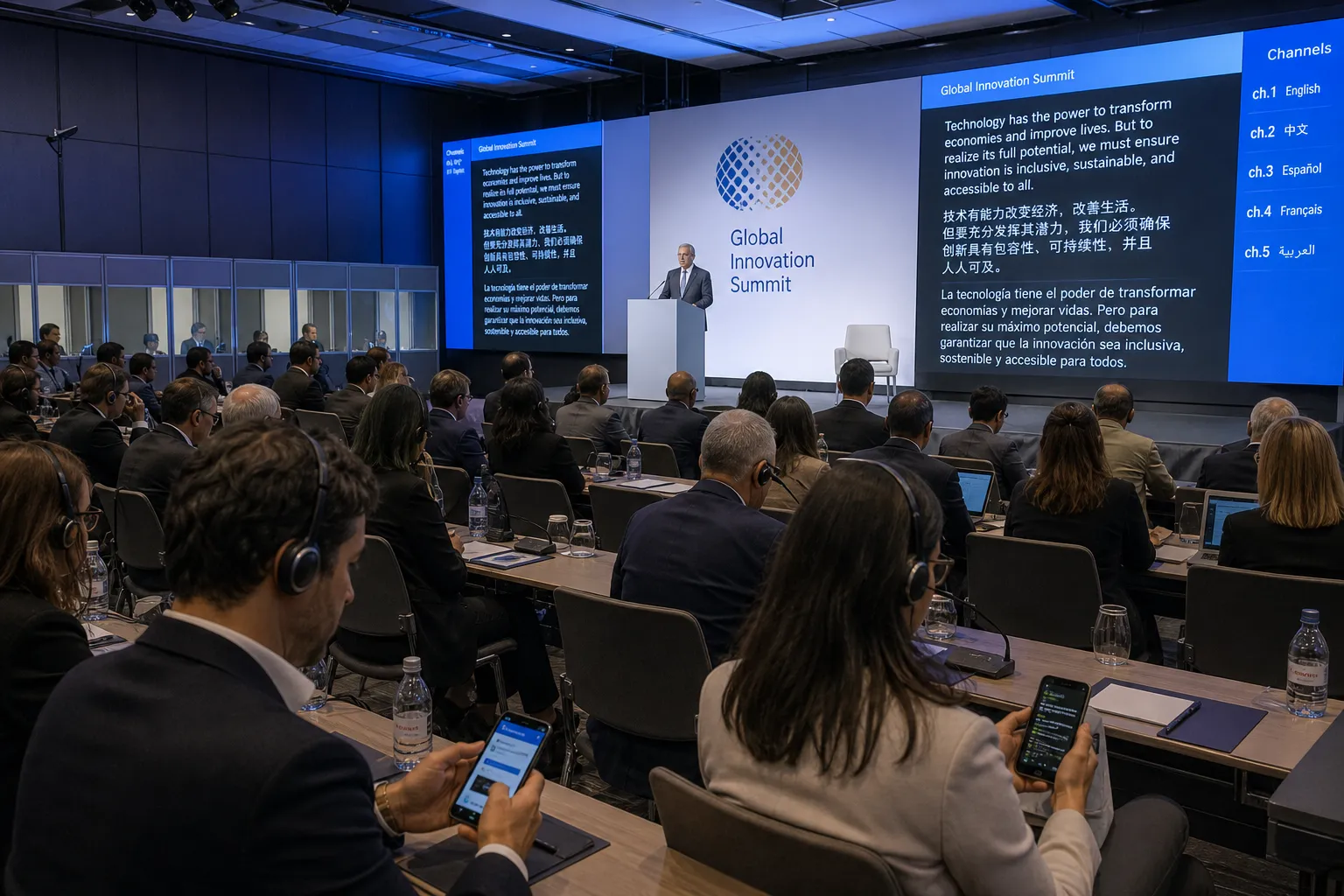
What Live Interpretation Means
Live interpretation is the real-time conversion of spoken language into another language during an event, meeting, or broadcast. A trained interpreter listens to the source speaker and delivers the message to listeners almost immediately, preserving meaning, tone, and intent as closely as possible.
This is different from written translation. Translation works with documents, websites, subtitles, and text-based content. Interpretation happens live, under time pressure, and often in fast-moving environments where accuracy and subject knowledge matter.
The Main Types of Live Interpretation
Simultaneous interpretation
This is the format most people think of for conferences and global events. The interpreter speaks while the original speaker is still talking, with only a brief delay. It is ideal for:
-
Conferences and summits
-
Webinars and virtual events
-
Corporate town halls
-
Broadcasts and livestreams
-
Worship services
-
Trade shows and product launches
Consecutive interpretation
The speaker pauses every few sentences so the interpreter can render the message. This works best for:
-
Small meetings
-
Interviews
-
Press briefings
-
Training sessions
-
Site visits
Sign language interpretation
For Deaf and hard-of-hearing participants, live communication support may include ASL or other sign languages, often combined with real-time captioning for fuller accessibility.
Why Live Interpretation Matters More Than Ever
Many competitor pages explain what interpretation is, but they often stop short of the bigger operational reality: multilingual communication affects participation, legal exposure, accessibility, brand reputation, and event performance.
It expands who can fully participate
When people can listen in their preferred language, they are more likely to stay engaged, ask questions, retain information, and take action afterward.
It supports accessibility and inclusion goals
Language access and accessibility increasingly overlap. Many events need more than spoken interpretation alone. They also need live captioning, multilingual captions, or sign language support to serve all attendees well.
It protects high-stakes communication
Board meetings, healthcare updates, internal policy rollouts, compliance briefings, investor presentations, and public-facing announcements leave little room for misunderstanding. Human interpreters help preserve nuance that automated tools can miss.
It helps organizations operate globally without friction
International teams rarely share one perfect working language. Live interpretation allows companies and institutions to move faster across regions without excluding participants.
How Live Interpretation Services Work
A polished multilingual event usually looks simple to attendees. Behind the scenes, it involves planning, routing, staffing, and technical coordination.
Step 1: Define the event format
The delivery model depends on whether your event is:
-
In-person
-
Virtual
-
Hybrid
-
Broadcast-only
-
Ongoing or one-time
Step 2: Identify languages and accessibility needs
This includes:
-
Spoken languages required
-
Sign language needs
-
Live captioning requirements
-
Whether attendees need translated slides, handouts, or post-event assets
Step 3: Match interpreters to the subject matter
For legal, medical, technical, government, or executive content, language fluency is only the starting point. Interpreters also need relevant terminology and contextual understanding.
Step 4: Set up audio and delivery channels
Depending on the format, attendees may listen through:
-
Mobile devices with headphones
-
Web browsers
-
Event apps
-
Receiver headsets
-
Integrated meeting platforms
-
Livestream audio channels
Step 5: Run testing and live support
Professional execution includes:
-
Audio checks
-
Platform integration checks
-
Interpreter handoff planning
-
Backup plans
-
Technician monitoring
-
Accessibility verification
Step 6: Deliver post-event assets if needed
Many organizations also need:
-
Transcripts
-
Captions
-
Subtitles
-
Voiceover
-
Written translations
-
Edited multilingual recordings
That full lifecycle is where Team Stream stands out. Instead of treating interpretation as an isolated add-on, we support end-to-end language and accessibility solutions tailored to the event, audience, risk level, and communication goals.
Where Live Interpretation Is Used
Competitors consistently mention meetings and conferences, but the strongest opportunities go beyond those basics.
Conferences and summits
Large audiences, multiple languages, breakout sessions, sponsor activations, and VIP speakers all benefit from professional interpreting support.
Corporate meetings and internal communications
Leadership updates, all-hands meetings, training programs, safety briefings, onboarding sessions, and multinational collaboration all improve when employees can follow in their strongest language.
Webinars and virtual events
Remote audiences expect convenience. Live interpretation makes virtual attendance more effective and more inclusive.
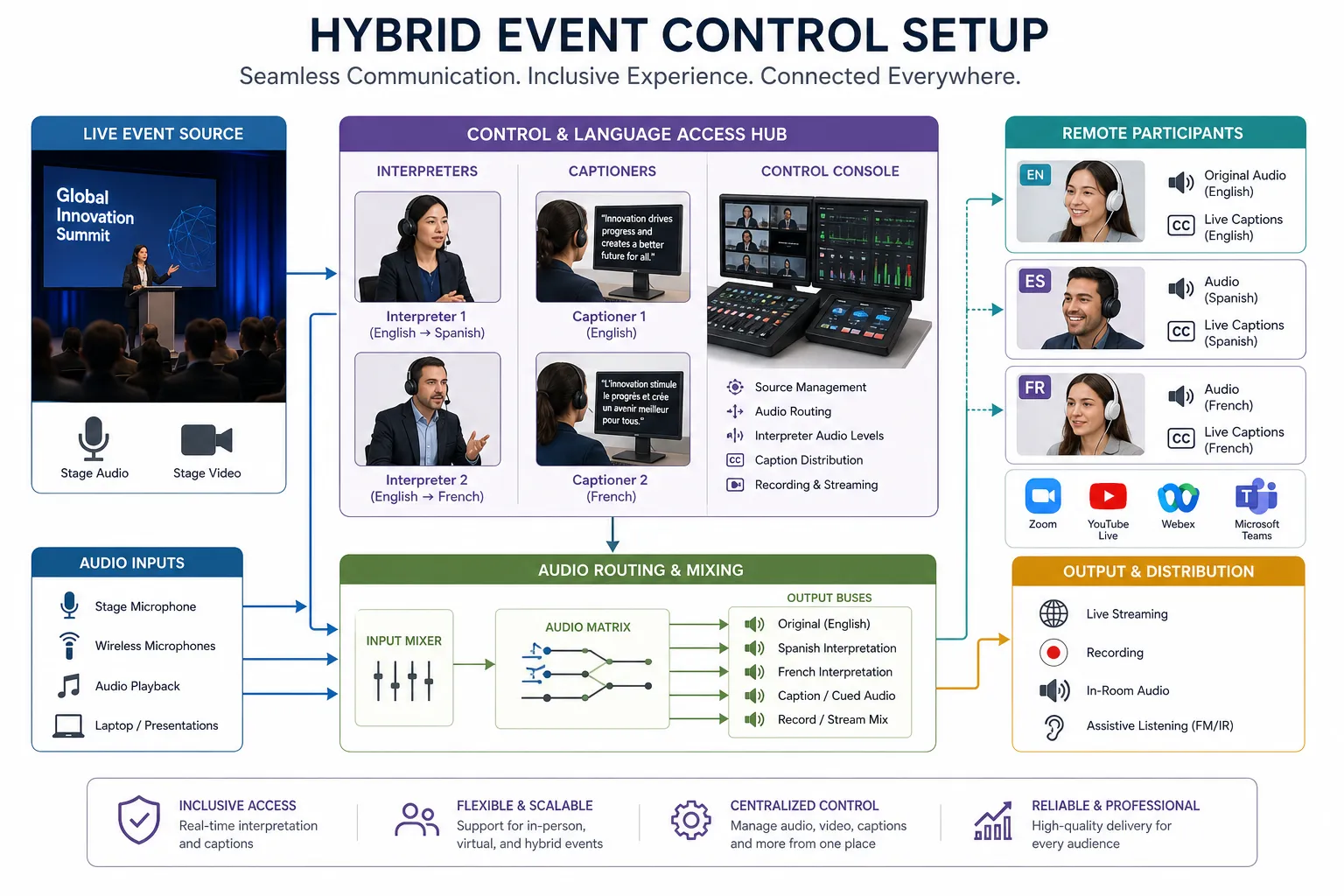
Hybrid events
Hybrid events are often the most complex because they combine in-room audio, livestream distribution, remote interpreters, remote viewers, and on-site attendees. This is where experienced production and technician support become especially valuable.
Churches and worship services
Faith communities often serve multilingual congregations and online viewers at the same time. Live interpretation and captioning can make services far more welcoming and accessible.
Broadcasts and livestreams
For public-facing content, accuracy and timing are critical. Interpretation, captioning, and multilingual audio feeds help reach broader audiences without diluting the original message.
Government, healthcare, legal, and regulated environments
These settings often require a more compliance-friendly approach, stronger documentation, and greater care around terminology, privacy, and equal access.
Human Interpretation vs AI-Powered Live Translation
One of the biggest content gaps in competitor coverage is practical guidance on when to use human interpreters, when to use AI, and when to combine both.
The short answer
Use human interpretation when accuracy, nuance, trust, or legal sensitivity matter most. Use AI-powered tools when speed, scale, or budget flexibility matter more. In many real-world events, the best answer is a hybrid model.
Comparison at a glance
|
Factor |
Human live interpretation |
AI-powered live translation |
|---|---|---|
|
Accuracy in complex topics |
High |
Varies by language, accent, audio quality, and terminology |
|
Cultural nuance |
Strong |
Limited |
|
Tone and intent |
Strong |
Can be inconsistent |
|
Scalability |
Moderate |
Very high |
|
Cost for lower-stakes use |
Higher |
Lower |
|
Best for |
Executive, legal, medical, public-facing, high-stakes events |
Internal updates, large-scale multilingual access, budget-sensitive sessions |
|
Accessibility pairing |
Excellent with captions and ASL |
Excellent for captions and rapid multilingual text support |
At Team Stream, we help clients choose the right mix instead of forcing a one-size-fits-all model. That may mean professional interpreters for keynote sessions, AI-supported captions for breakout rooms, multilingual subtitling for recordings, and technician-managed audio delivery across every touchpoint.
What the Best Live Interpretation Services Include
A strong provider does more than assign linguists. The service should reduce workload, lower risk, and improve the attendee experience.
Qualified interpreters
Look for providers that can match interpreters by:
-
Language pair
-
Industry knowledge
-
Event type
-
Audience profile
-
Delivery mode
Accessibility support
The best multilingual events often combine:
-
Live interpretation
-
CART or live captioning
-
Closed captioning
-
Sign language interpretation
-
Translated on-screen content
Flexible delivery options
You may need:
-
In-person interpreters
-
Remote interpreters
-
Mixed delivery models
-
Browser-based listening
-
Mobile audio access
-
Headset receiver systems
Technical coordination
Audio routing, redundancy planning, monitoring, and equipment setup all affect the audience experience as much as linguistic quality does.
Post-event language services
A complete solution may include:
-
Subtitling
-
Voiceover
-
Written translation
-
Transcript preparation
-
Accessible video assets
Common Challenges and How to Avoid Them
Competitor pages tend to emphasize benefits. Fewer discuss what actually goes wrong. Here are the issues event teams most often face.
Poor audio quality
Interpreters can only interpret what they can hear clearly. Low-quality microphones, room echo, overlapping speakers, and weak feeds create immediate problems.
What helps: professional AV planning, clean speaker audio, headset mics when needed, and live technician oversight.
Last-minute language changes
A new market, guest speaker, or sponsor request can change language needs fast.
What helps: flexible planning and a provider with scalable staffing and remote options.
Underestimating accessibility requirements
Some planners arrange interpretation but forget captioning, Deaf access, or multilingual visual content.
What helps: one coordinated strategy covering language access and accessibility together.
Choosing tools based on price alone
Cheap tools can create costly confusion if the event is important enough that misunderstanding has reputational, legal, or operational consequences.
What helps: align service level with event stakes, not just line-item cost.
What Competitor Solutions Get Right and What They Miss
The leading competitors highlight many valid advantages: remote delivery, global interpreter networks, multilingual event support, reduced travel costs, and integration with meeting platforms. Those are all important.
But there are notable gaps in their content:
Gap 1: Accessibility is often treated as secondary
Most mention captions or sign language briefly, but few explain how accessibility and multilingual support should be planned together.
Gap 2: Little guidance on service design
Readers are told that interpretation is available, but not how to choose between in-person, remote, hybrid, simultaneous, consecutive, captions, AI support, or equipment-based listening.
Gap 3: Limited discussion of event operations
Technical execution, backup planning, technician support, and compliance-sensitive workflows are often underexplained.
Gap 4: Weak post-event strategy
Many events do not end when the live session ends. Teams often need multilingual recordings, subtitles, translated transcripts, and repurposed content.
Gap 5: Not enough clarity on when human expertise is non-negotiable
AI is useful, but there are moments where nuance, diplomacy, confidentiality, and specialized terminology demand experienced human interpreters.
That is why Team Stream approaches live interpretation as part of a broader communication system, not as an isolated feature.
Planning the Right Interpretation Setup for Your Event
For an in-person event
You may need:
-
On-site or remote interpreters
-
Receiver headsets or mobile listening
-
Booths or remote audio routing
-
On-site technician support
-
Live captions displayed in-room or on devices
For a virtual event
You may need:
-
Platform integration
-
Browser or app-based language channels
-
Real-time captioning
-
Interpreter scheduling across time zones
-
Recording-ready multilingual outputs
For a hybrid event
You usually need both sets of capabilities together, plus tighter coordination between production, AV, remote attendees, and accessibility workflows.
A Simple Decision Framework
Use this table to choose a starting point.
|
If your event is… |
Best starting solution |
|---|---|
|
High-stakes, public-facing, executive, legal, medical, or regulated |
Professional human interpreters with technician-managed delivery |
|
Large and multilingual but budget-sensitive |
Hybrid model with human interpretation for priority sessions and AI-supported tools for scale |
|
Accessibility-driven |
Interpretation plus live captioning and, where needed, sign language support |
|
In-person with mobile-first audience access |
Remote or on-site interpreters with QR or browser-based listening |
|
Virtual or hybrid with global attendees |
Integrated remote interpreting, captions, and post-event subtitling |
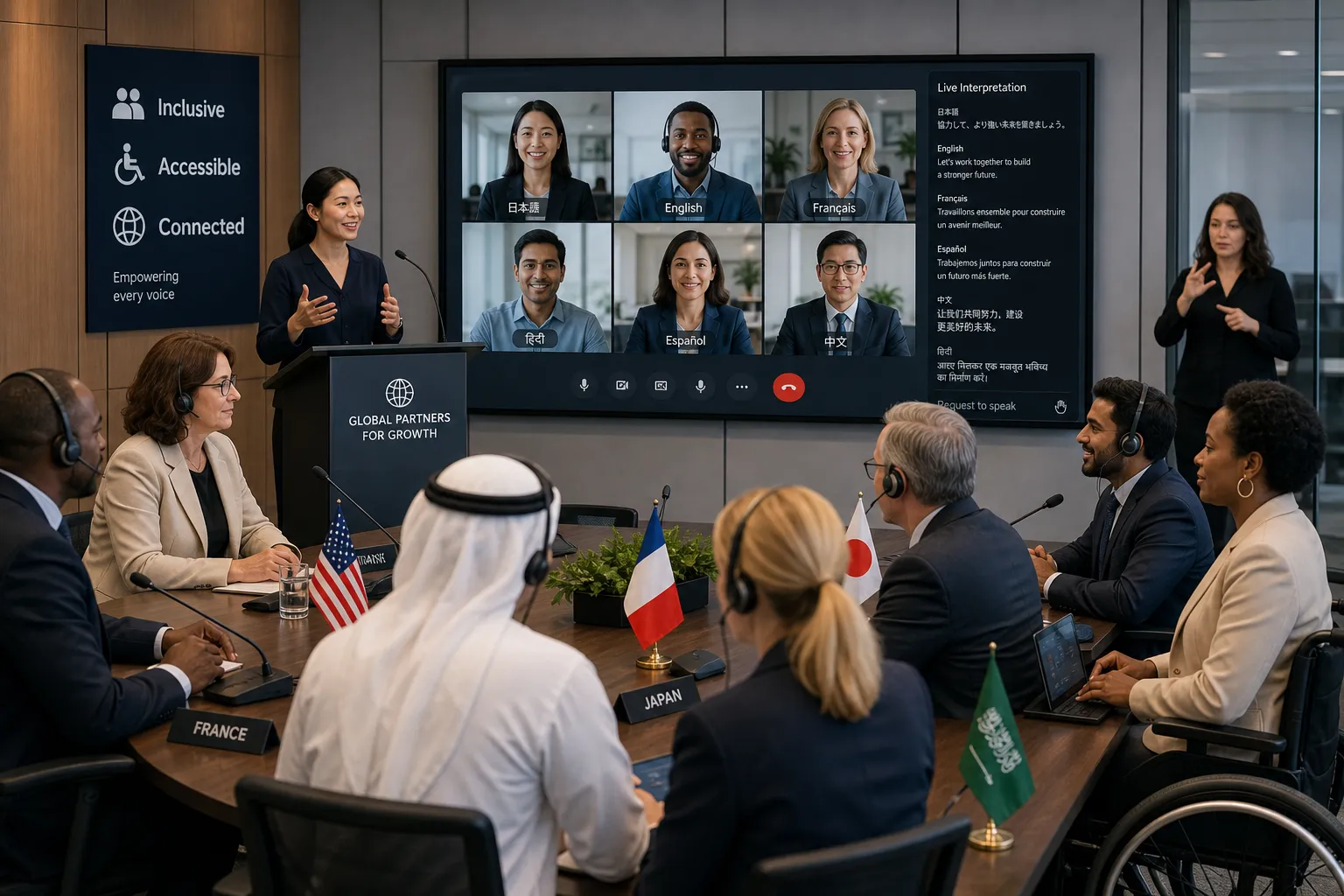
Platform and Provider Examples in the Market
Below are examples of major providers competitors often compare against.
Interprefy
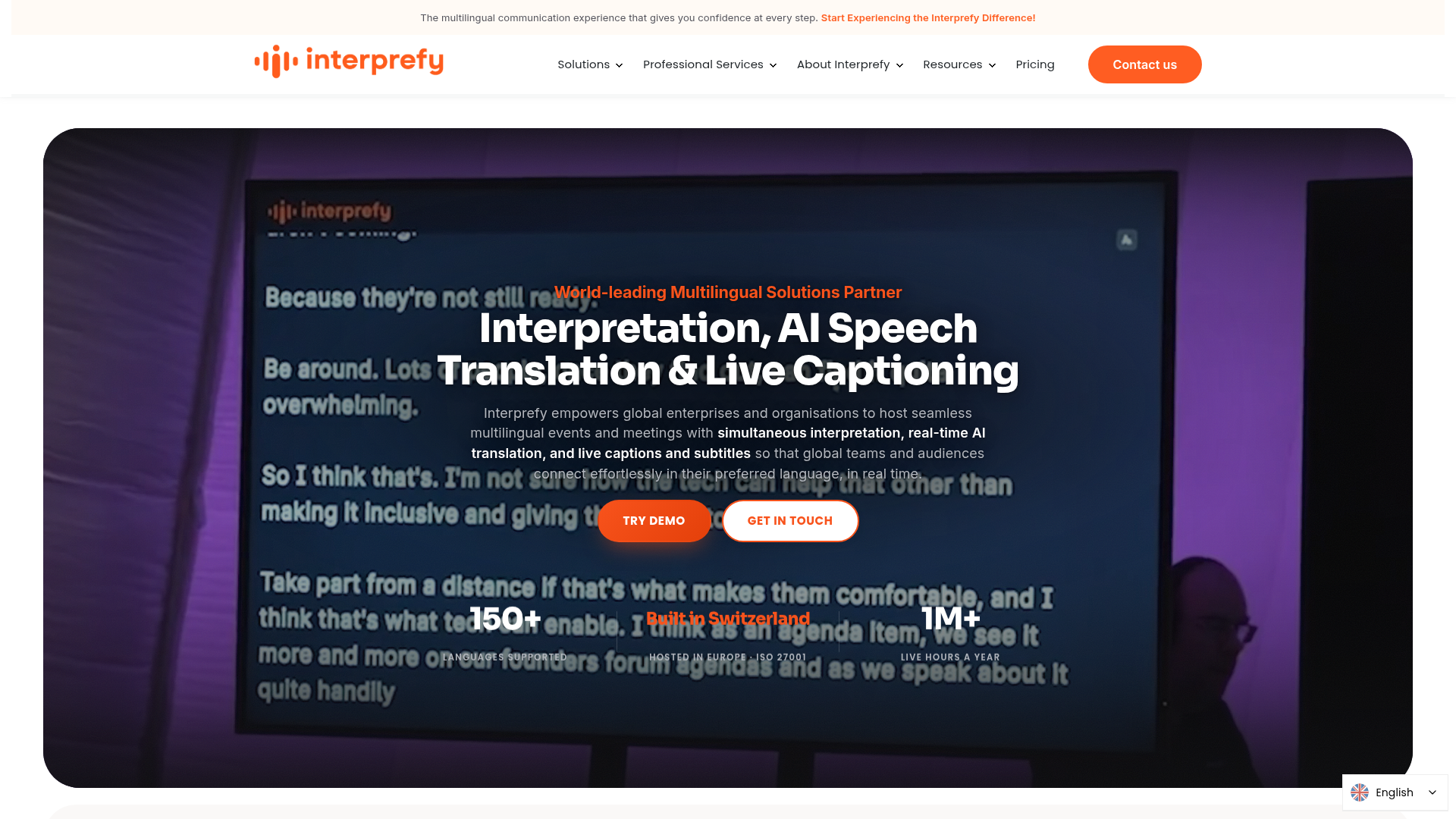
Interprefy emphasizes enterprise-grade remote simultaneous interpretation, platform integrations, interpreter sourcing, and support for hybrid, in-person, and online events.
Boostlingo
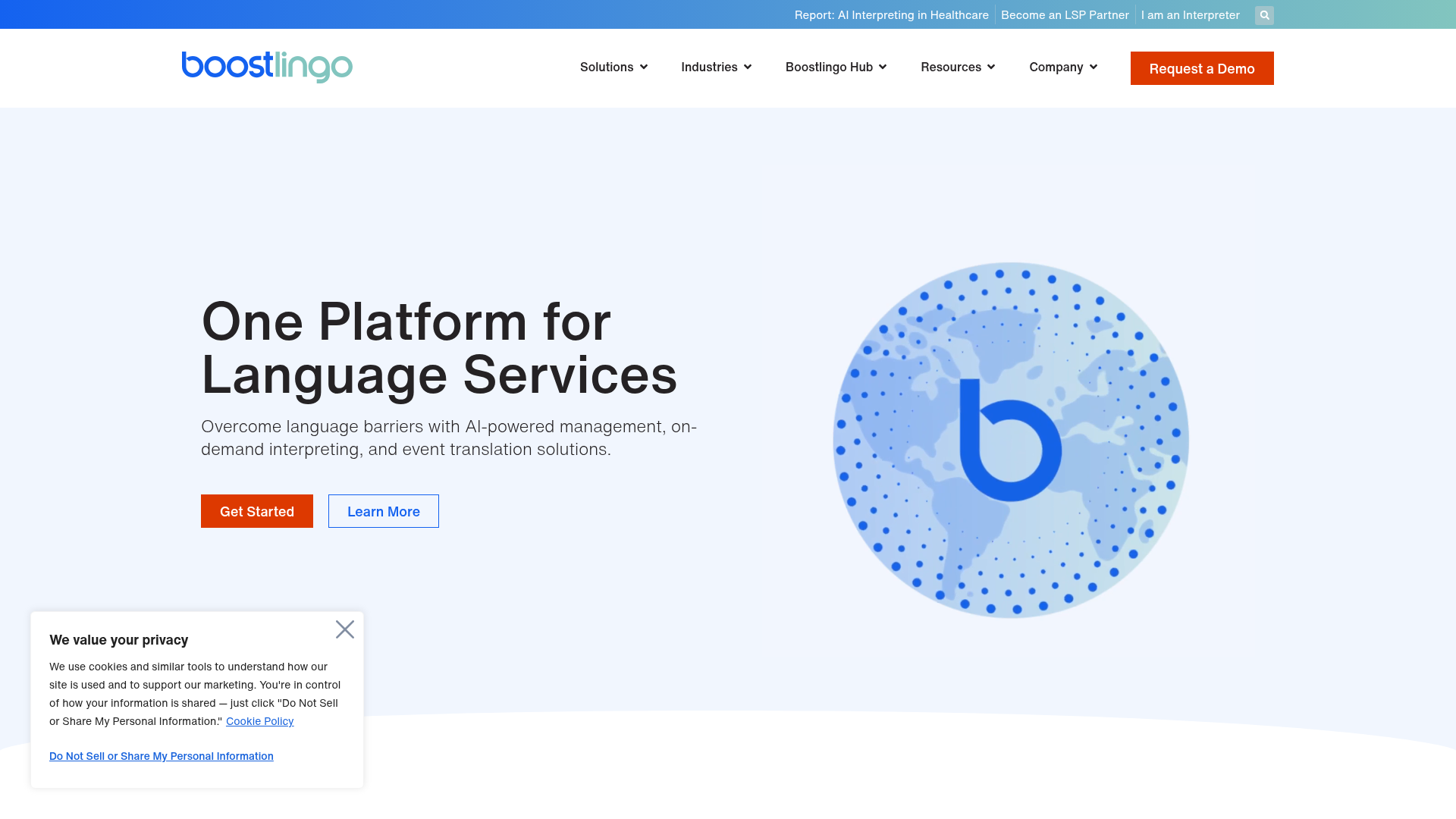
Boostlingo focuses on multilingual events, remote simultaneous interpretation, AI live translation, and event customization across meetings, conferences, and workforce communication.
Interprenet
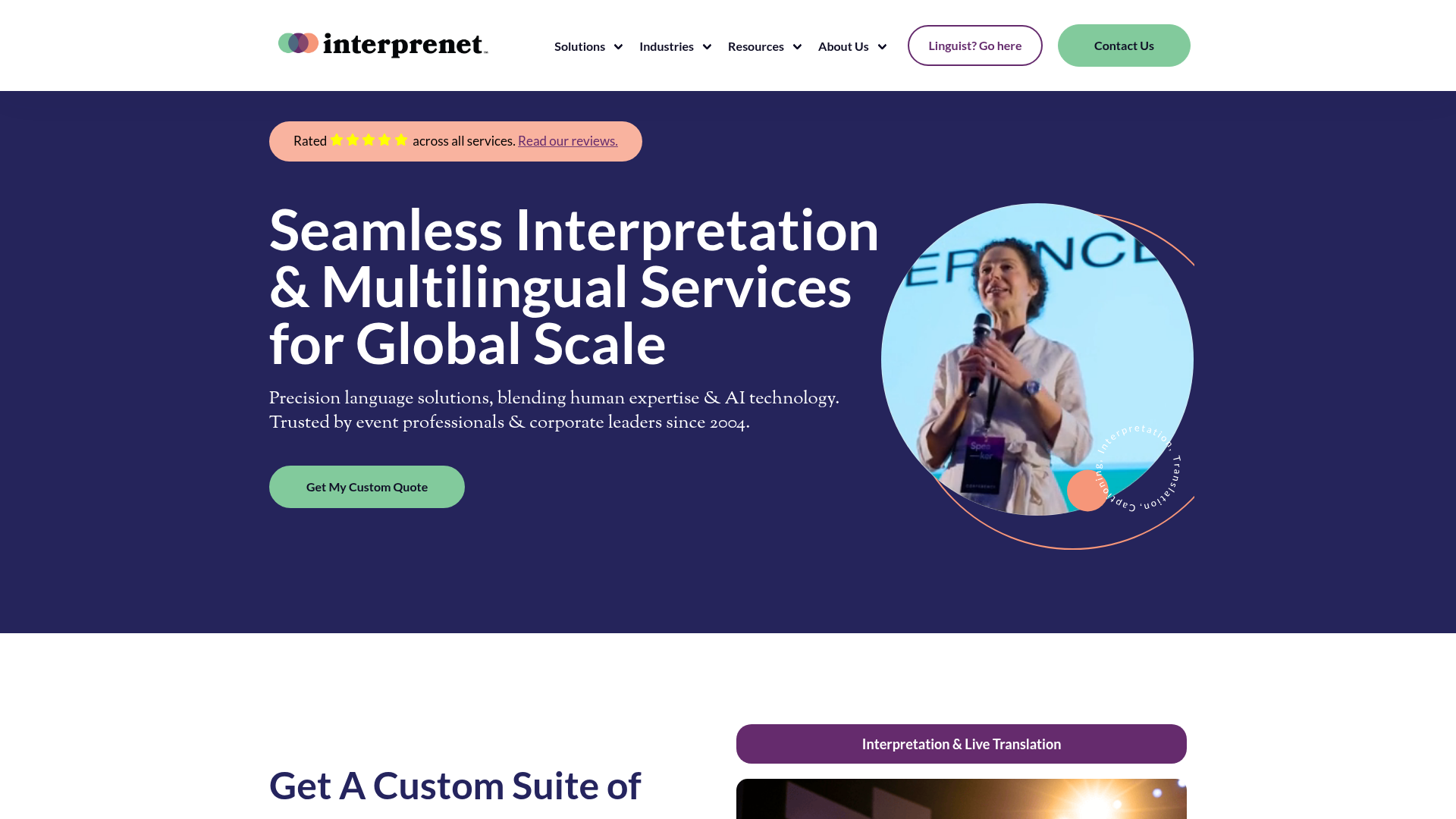
Interprenet highlights conference and event interpreting, on-site and remote service options, multilingual live captions, and long experience supporting live events.
Each of these companies reinforces an important market truth: multilingual events now require both language expertise and operational excellence. Team Stream builds on that standard with a broader accessibility-first, service-oriented model shaped around client goals rather than product constraints.
What to Ask Before Hiring a Live Interpretation Provider
Before you sign, ask these questions:
-
Do you provide both human and AI-enabled options?
-
Can you support captioning, accessibility, and sign language if needed?
-
Do you offer both in-person and remote delivery?
-
Can you provide equipment rental and technician support?
-
How do you handle rehearsals, testing, and redundancy?
-
Do your interpreters have experience in our industry?
-
Can you support post-event subtitling, voiceover, and translation?
-
What does your client support process look like before, during, and after the event?
The answers will tell you whether you are buying a true solution or just a narrow service component.
Why Organizations Choose Team Stream
Team Stream is built for organizations that need communication to work the first time.
We combine human expertise with smart technology
Some sessions require seasoned interpreters. Some benefit from AI-powered efficiency. Many need both. We help clients deploy the right mix based on stakes, audience, and budget.
We support accessibility, not just language
Captioning, subtitling, inclusive communication, and compliance-friendly delivery are central to how we design solutions.
We serve live, virtual, and hybrid environments
From boardrooms and convention centers to livestreams and distributed meetings, we adapt service delivery to the format instead of forcing your format to fit the tool.
We provide end-to-end event support
That includes interpreting, captioning, translation, subtitling, voiceover, equipment rental, and technician services, all coordinated for smoother execution.
We bring 25+ years of experience
Experience matters when events are complex, deadlines are tight, and audiences are global.
Final Takeaway
Live interpretation services are essential when your audience spans languages, regions, and accessibility needs. They help people understand, participate, and trust what they are hearing in real time. For planners and organizations, they reduce communication risk while expanding reach and inclusion.
If you need multilingual communication for a conference, webinar, corporate meeting, broadcast, church service, or hybrid event, the best results come from a partner that understands both language access and event execution. Team Stream brings together accurate human interpreting, AI-powered support, real-time captioning, accessibility expertise, equipment and technician services, and responsive client care to help you deliver with confidence.
If your next event cannot afford confusion, it is time to plan language access as strategically as the event itself.
FAQ
How much does a live translator cost?
The cost depends on the languages needed, event length, subject complexity, delivery format, and technical support required. A small meeting may need only one interpreter, while a conference or hybrid event may require multiple interpreters, captioning, equipment, and technician support. The best way to budget accurately is to match the service level to the event’s stakes and audience needs.
Is there a service that provides live translation?
Yes. Providers like Team Stream offer live interpretation, AI-powered live translation, real-time captioning, and multilingual event support for in-person, virtual, and hybrid events. The right solution depends on whether you need human nuance, large-scale automation, accessibility support, or a combination of all three.
What is the best real-time interpreter app?
The best option depends on your event goals. For high-stakes communication, a professional interpretation platform backed by trained interpreters and live support is usually better than a standalone app. If accessibility, compliance, and audience experience matter, choose a provider that also supports captions, remote delivery, and technical coordination.
What is the best real-time translation device?
There is no single best device for every situation. For professional events, the strongest setup is usually a complete language access system that may include mobile listening, headsets, integrated audio channels, and technician-managed delivery rather than relying on one handheld device alone. The right choice depends on audience size, venue, languages, and accessibility requirements.
