

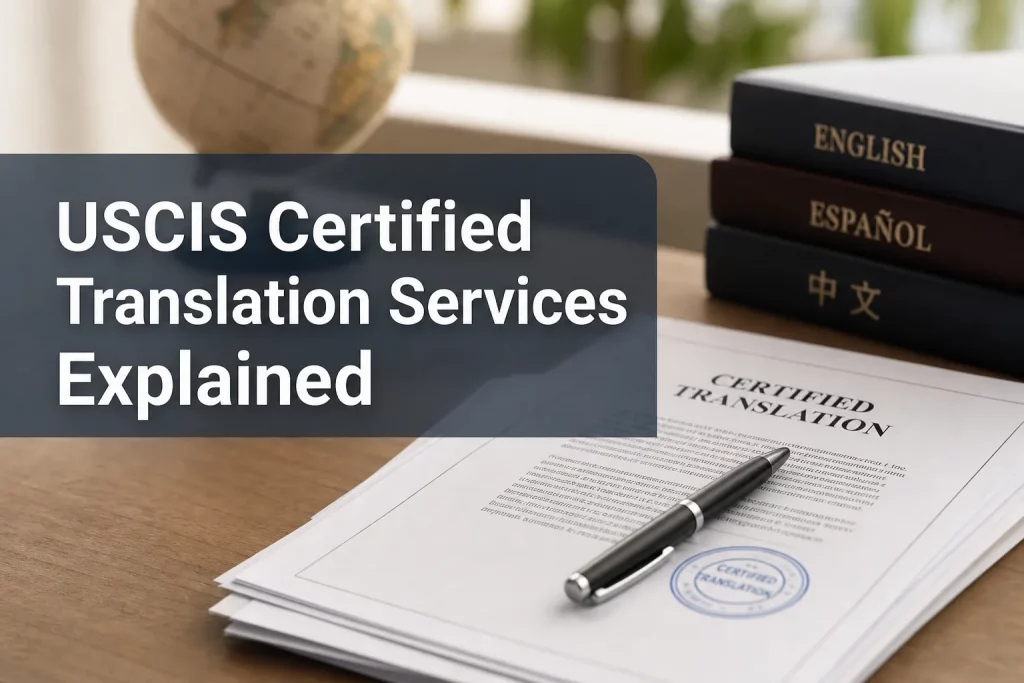
USCIS Certified Translation Services Explained
If you are preparing immigration paperwork, one mistake in translation can create delays, requests for evidence, or unnecessary stress. That is why understanding USCIS certified translation services matters. Whether you are submitting a birth certificate, marriage certificate, diploma, passport, affidavit, or court record, USCIS expects clear English translations that meet specific standards.
For event organizers, operations leaders, corporate teams, churches, and organizations already working in multilingual settings, this process may sound familiar: accuracy, accessibility, compliance, and trust all matter. The same mindset that makes live communication successful also applies to document translation. At Team Stream, we see language access as more than a box to check. It is about helping people communicate clearly, confidently, and correctly across every format – from official paperwork to live, virtual, and hybrid experiences.
This guide explains what a USCIS certified translation is, what USCIS translation requirements actually say, who can provide acceptable translations, what common mistakes to avoid, and how to choose reliable support when you need professional help.
What USCIS certified translation services actually mean
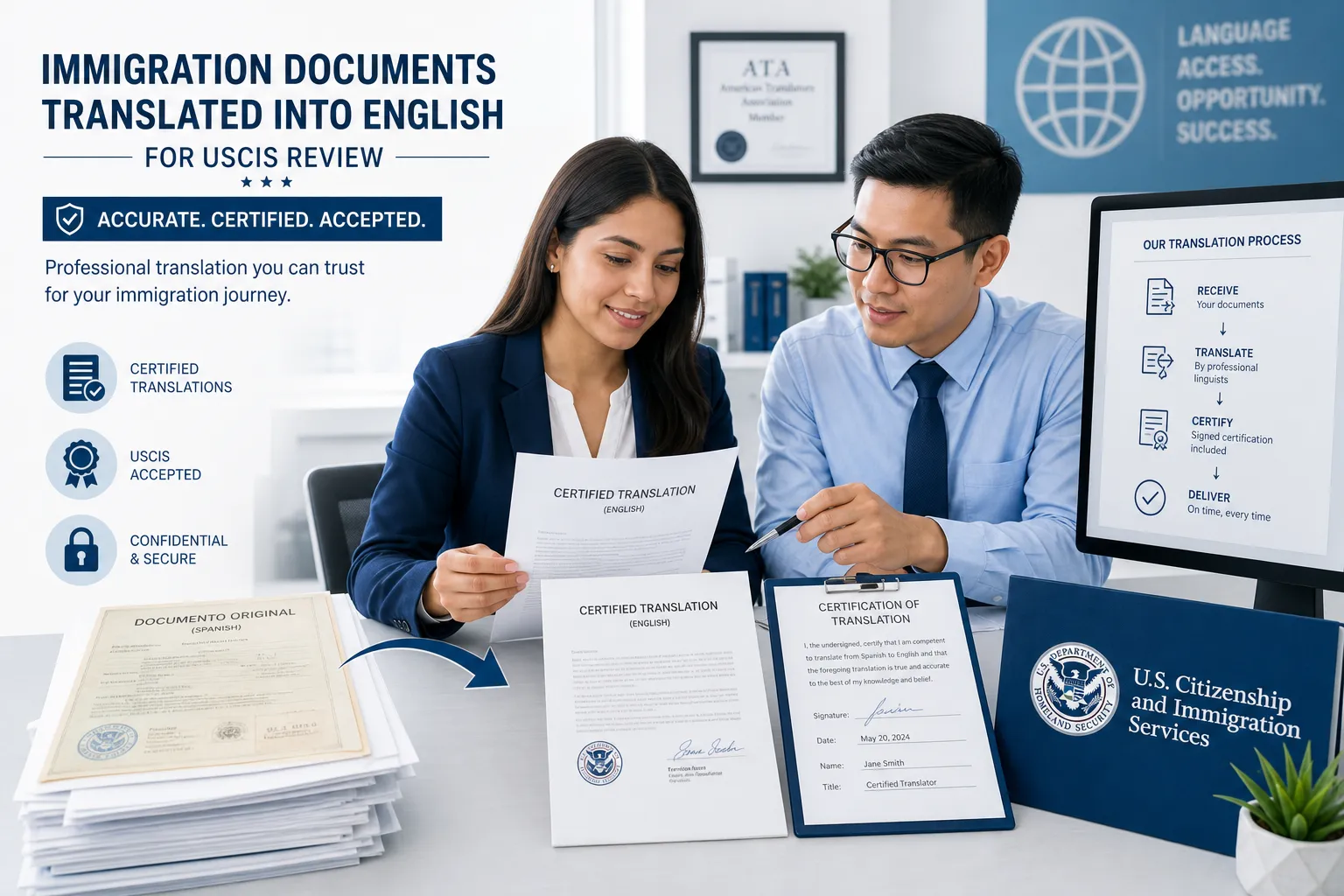
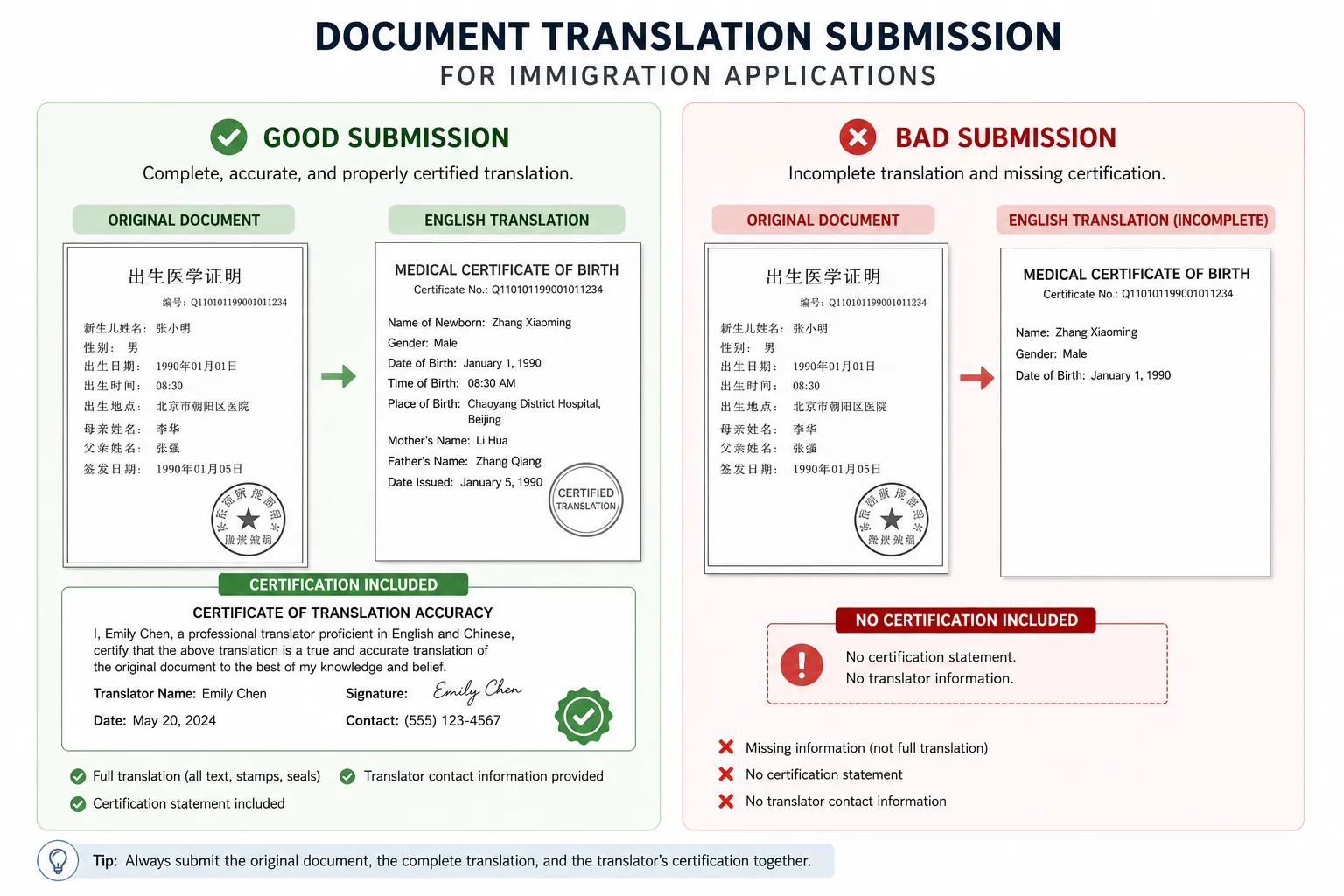
A USCIS certified translation is not just a translated document. It is a full English translation of a foreign-language document that comes with a signed certification statement from the translator. That statement confirms two things:
-
The translation is complete and accurate.
-
The translator is competent to translate from the source language into English.
This is the heart of USCIS document translation services. USCIS is not looking for a summary, a machine output with no review, or a partially translated page. It wants a full translation with a proper certification attached.
Many people assume “certified” means the translator must be licensed by the government or formally sworn in. In the U.S., that is generally not the case for USCIS filings. What matters is that the translation meets the agency’s stated requirements and is presented professionally and accurately.
The core USCIS translation requirements
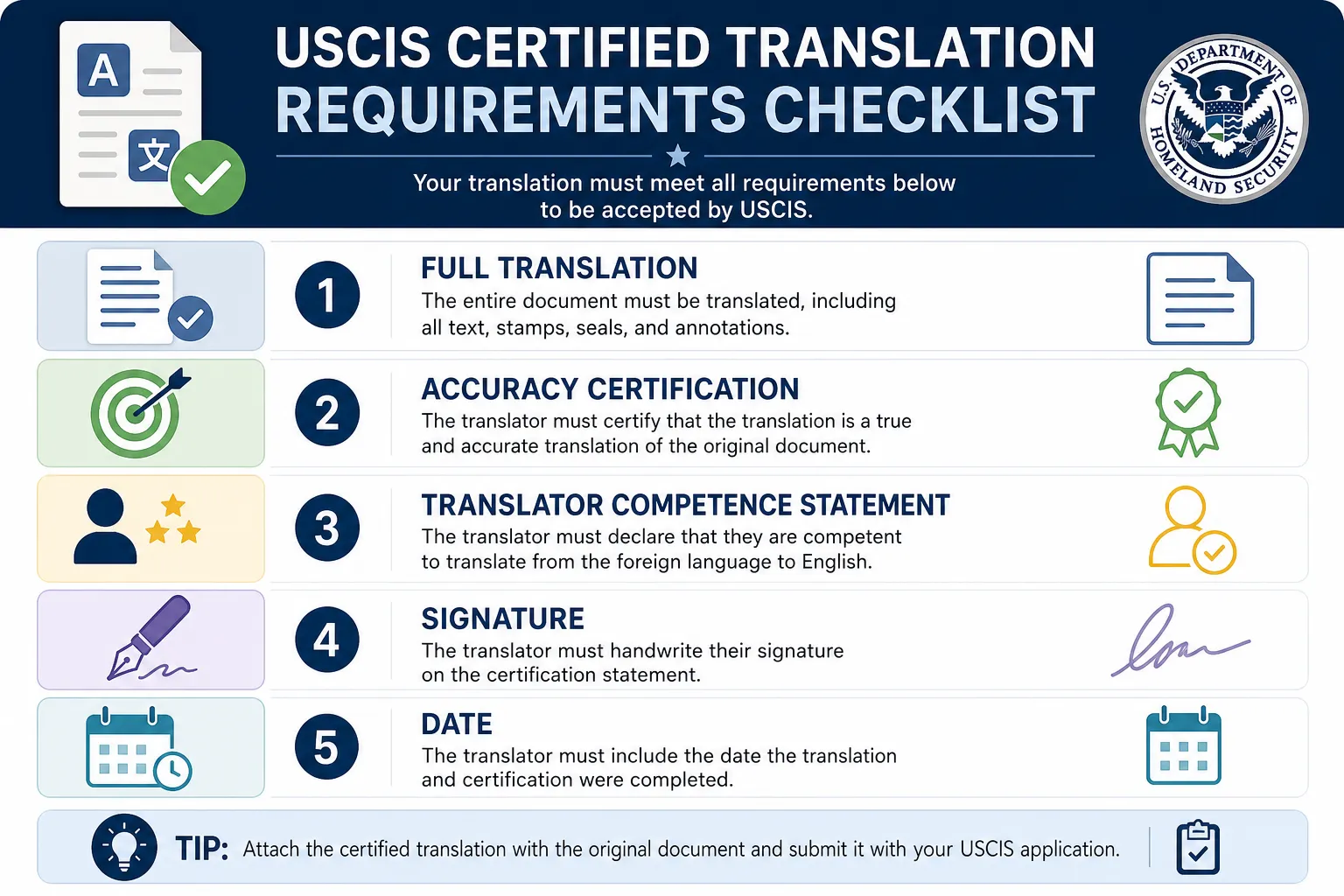
The official rule is straightforward, but small details matter. When submitting a foreign-language document, USCIS expects:
-
A complete English translation
-
A certification that the translation is complete and accurate
-
A statement that the translator is competent to translate into English
-
The translator’s signature
-
Typically, the translator’s name, date, and contact information
These are the practical USCIS translation requirements most applicants need to satisfy.
What “complete” really means
“Complete” does not just mean translating the main body text. It usually includes:
-
Seals
-
Stamps
-
Handwritten notes
-
Marginal notes
-
Signatures where relevant
-
Official headings
-
Dates and locations
-
Any visible text on the document
If something is illegible, the translation should indicate that appropriately rather than ignore it.
What “accurate” means in practice
Accuracy means the translation reflects the source document faithfully. It is not supposed to improve, interpret, shorten, or rewrite the document for style. Official document translation for immigration should stay close to the original wording while remaining clear in English.
Is notarization required?
Usually, no. USCIS requires certification, not notarization, unless a specific receiving authority separately asks for notarization. This is one of the most common points of confusion. A notarized translation may sometimes be requested by another institution, but it is not the default USCIS rule.
Which documents usually need USCIS translation
Any required supporting document that is not in English may need translation. Common examples include:
|
Document Type |
Common USCIS Use |
|---|---|
|
Birth certificates |
Identity and family relationship evidence |
|
Marriage certificates |
Spousal petitions and status adjustments |
|
Divorce decrees |
Marital history verification |
|
Passports |
Identity and nationality support |
|
Police records |
Background documentation |
|
Academic transcripts and diplomas |
Education or credential support |
|
Adoption papers |
Family-based immigration cases |
|
Court documents |
Legal history or civil status clarification |
|
Affidavits |
Supporting statements and declarations |
|
Medical records |
Case-specific supporting evidence |
A practical rule: if the document is part of your filing and it contains foreign-language text, plan on providing a full certified English translation.
Who can translate documents for USCIS?
This is where many people search for “USCIS approved translators” or “USCIS approved translation services.” The phrase is common, but it can be misleading.
USCIS does not maintain a public list of officially approved translators for every case. Instead, the translation must meet the required standards. So when people look for USCIS approved translators near me, what they really need is a qualified professional or agency that understands USCIS expectations and produces compliant certified translations.
Can a friend or family member do it?
In some situations, a person who is competent in both languages may technically provide a certification. However, that does not make it the best choice. A self-prepared or friend-prepared translation can raise concerns about impartiality, formatting, completeness, or professionalism.
Can you translate your own documents?
That is strongly discouraged. Even if someone is bilingual, self-certification creates risk. For immigration filings, it is much safer to use a neutral professional.
What matters most in a translator
Look for someone who can demonstrate:
-
Fluency in both languages
-
Experience with official document translation
-
Familiarity with USCIS filing expectations
-
Clear certification format
-
Strong quality control
-
Responsiveness if revisions are needed
At Team Stream, that quality-first approach is built into everything we do. Our work combines accurate human expertise with smart AI-enabled workflows where appropriate, helping clients move faster without sacrificing quality or compliance.
Common myths about USCIS certified translation
Myth 1: The translator must be “USCIS certified”
False. USCIS does not require the translator to hold a special USCIS license.
Myth 2: Every translation must be notarized
Usually false. Certification is generally required; notarization is typically optional unless another authority asks for it.
Myth 3: A summary translation is enough
False. USCIS expects a full English translation.
Myth 4: Google Translate or raw AI output is acceptable
Not by itself. Machine-generated text without qualified human review is risky for legal and immigration use.
Myth 5: Only the front page needs translation
False. Any relevant foreign-language content in the submitted document set should be translated completely.
Why professional translation matters for immigration filings
Immigration paperwork is not the place to gamble on “close enough.” Small inconsistencies in names, dates, place names, or legal terms can create major issues.
Professional certified translation services for USCIS help reduce risks such as:
-
Requests for Evidence
-
Delays in adjudication
-
Document rejection
-
Inconsistencies across forms and evidence
-
Misinterpretation of civil status or identity records
That matters because immigration paperwork is often interconnected. A date or spelling difference between a translated birth certificate and a petition form can trigger avoidable follow-up questions.
What reliable USCIS translation services should include
Not all providers offer the same level of care. Strong USCIS certified translation services typically include the following:
Full document translation
Every required part of the document is translated, including stamps and annotations where relevant.
Certification statement
The final package includes a signed certification from the translator.
Formatting for readability
The translated document should be organized clearly so USCIS officers can review it easily.
Revision support
If a typo, inconsistency, or formatting concern is identified, revisions should be straightforward.
Secure handling of personal documents
Birth records, passports, IDs, and court documents contain highly sensitive information. Security matters.
Human quality control
For legal and immigration use, quality review by experienced professionals is essential.
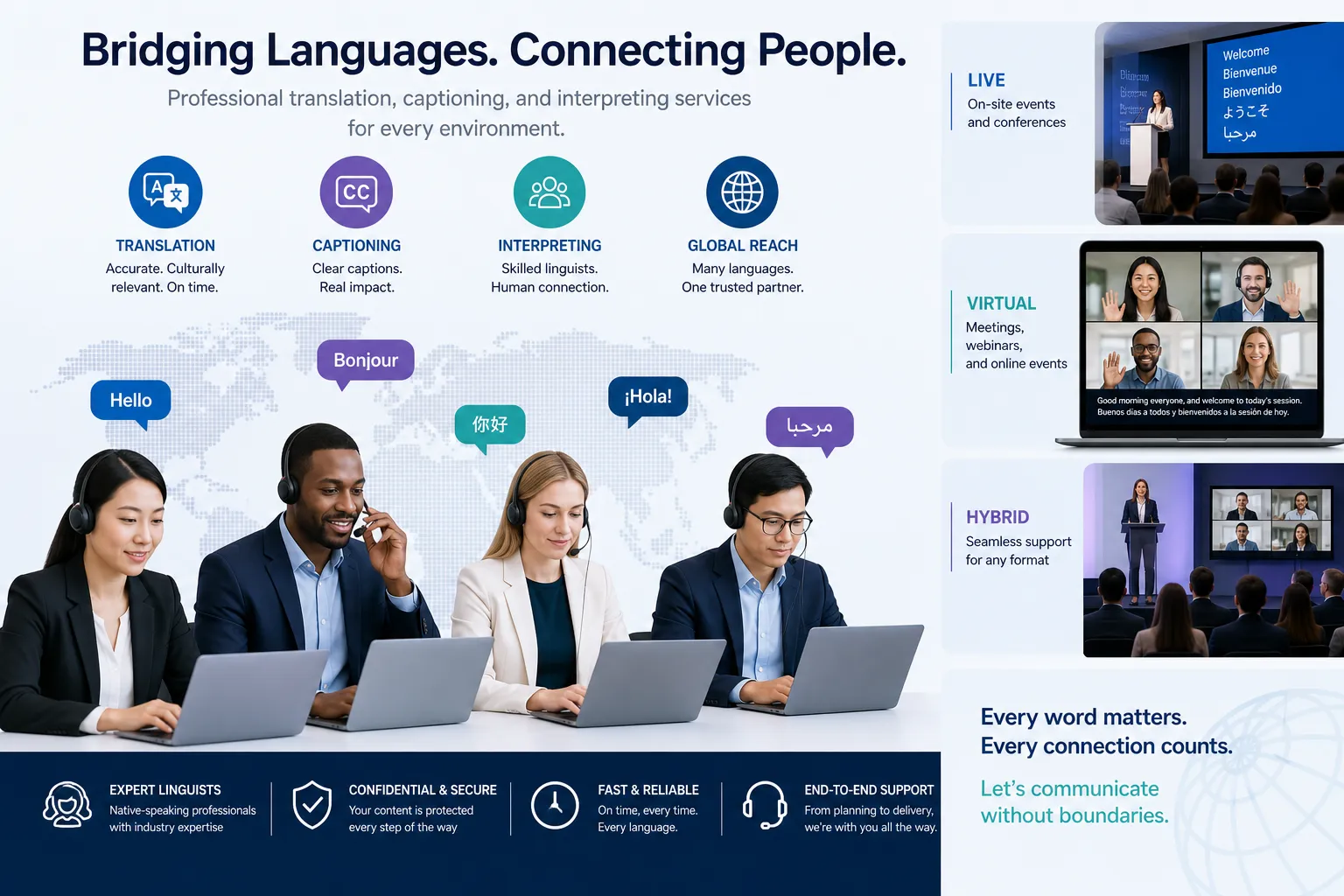
This is also where Team Stream brings a distinct advantage. We are not a one-dimensional vendor. We provide end-to-end language and accessibility solutions with a service model built around precision, responsiveness, and compliance-minded execution. That includes human translation, AI-supported workflows where appropriate, captioning, interpreting, subtitling, and support across in-person, remote, and hybrid communication environments.
How USCIS translation differs from general translation
A business translation, marketing translation, and immigration translation serve different purposes. USCIS official translation work is more formal and compliance-sensitive than many everyday translation tasks.
Here is a simple comparison:
|
Translation Type |
Primary Goal |
Style |
Certification Needed |
|---|---|---|---|
|
Marketing translation |
Persuasion and brand adaptation |
Flexible and localized |
Usually no |
|
General document translation |
Informational clarity |
Can be interpretive |
Sometimes |
|
USCIS certified translation |
Legal/administrative compliance |
Complete and faithful |
Yes |
That difference is important. A translator who is excellent at promotional copy may not be the right fit for official document translation if they are not careful with legal formats and exact wording.
How to evaluate USCIS certified translation services near you
Many applicants search for local help using phrases like “USCIS certified translation services near me” or “USCIS translation services near me.” Local access can be convenient, but the better question is whether the provider is reliable, secure, and experienced.
Questions to ask before hiring
-
Do you provide certified translations for USCIS filings?
-
Will the translation include a signed certification statement?
-
Do you translate the entire document, including stamps and seals?
-
What is your turnaround time?
-
Do you offer revisions if needed?
-
How do you protect sensitive personal data?
-
Is the final file delivered digitally, in print, or both?
Red flags to avoid
-
No mention of certification language
-
Very vague pricing with hidden fees
-
No process for revisions
-
Heavy reliance on unreviewed machine translation
-
No explanation of confidentiality practices
-
Promises that sound too broad, such as “accepted everywhere” without nuance
What competitors often miss
Many articles on this topic repeat the same basics: translate everything, add a certificate, do not use summaries. That is useful, but incomplete. The biggest content gaps usually include the points below.
The difference between certification and notarization
This is one of the most misunderstood parts of the process, and many articles mention it only briefly.
The risk of partial translations
People often do not realize stamps, seals, handwritten notes, and side remarks may need to be addressed too.
The danger of self-translation
Some guides suggest it may be possible without fully explaining the risk.
The importance of consistency across a full application
A “correct” translation can still cause problems if names or dates are inconsistent with the rest of the filing package.
Security and confidentiality
Personal documents deserve careful data handling, yet many providers barely discuss it.
Human review of AI-assisted workflows
Today, AI can speed up portions of the process, but immigration translations still require trained human oversight. The best providers use technology to improve efficiency, not to replace accountability.
When AI can help – and when it should not work alone
AI-powered language tools are improving rapidly. For internal workflows, draft handling, terminology support, and production efficiency, they can be valuable. But immigration and legal-adjacent translation require professional judgment.
A compliance-friendly workflow often looks like this:
-
Source document intake and review
-
Translation by a qualified linguist, sometimes supported by secure technology
-
Human editing and quality assurance
-
Certification preparation
-
Final review before delivery
That blended model reflects Team Stream’s broader philosophy across language access and accessibility services: use the right mix of human expertise and smart technology to deliver reliable outcomes. Whether supporting certified documents, live interpreting, or real-time captioning for virtual and hybrid events, the goal is the same – accurate, inclusive communication that works the first time.
Turnaround times and what affects them
Turnaround depends on several factors:
-
Number of pages
-
Document complexity
-
Language pair
-
Legibility of the source file
-
Whether multiple supporting documents are involved
-
Whether formatting or hard copies are needed
Simple civil documents may move quickly. Longer legal packets or poor-quality scans take more time. If timing matters, send clean scans early and confirm requirements before the filing deadline.
How much USCIS translation cost usually varies
Pricing models differ. Some providers charge per page, while others charge by word, document type, or urgency.
Cost factors
-
Page count or word count
-
Language pair rarity
-
Complexity of handwriting or formatting
-
Expedited delivery
-
Additional certification or shipping needs
The cheapest option is not always the most affordable if it creates delays, corrections, or resubmissions. For immigration filings, value comes from accuracy, acceptance readiness, and responsive service.
Best practices before you submit translated documents
Use this checklist before filing:
-
Confirm every required foreign-language document has an English translation
-
Make sure the translation is complete, not summarized
-
Verify names, dates, and places against the original
-
Check that the certification statement is attached
-
Confirm the translator signed and dated the certification
-
Review for consistency across all forms and evidence
-
Keep copies of everything you submit
Why organizations trust Team Stream for language access and compliance-minded communication
While this guide focuses on USCIS translation, the bigger issue is trust in communication. That is exactly where Team Stream stands out.
We support clients with:
-
Accurate human translation and AI-powered language solutions
-
Professional interpreting for in-person, remote, and hybrid settings
-
Real-time captioning for accessibility and engagement
-
Closed captioning, subtitling, and voiceover
-
Equipment rental and technician support for events and broadcasts
-
Tailored service delivery rather than one-size-fits-all packages
-
Accessibility-focused execution for inclusive communication
-
Responsive support backed by more than 25 years of experience
For businesses, ministries, conference planners, broadcast teams, and organizations managing high-stakes multilingual communication, that breadth matters. You need a partner who can handle both the document-level details and the broader accessibility strategy around your events, meetings, and content.
Final takeaway
USCIS certified translation is simple in principle but unforgiving in execution. You need a complete English translation, a proper certification statement, and a translator who is competent, careful, and consistent. The safest path is to work with professionals who understand compliance-sensitive communication and treat your documents with the same precision they would bring to a live event, legal workflow, or public-facing multilingual project.
If you need a trusted partner for translation, interpreting, captioning, or broader accessibility support, Team Stream offers the human expertise, flexible delivery, and service reliability to help you move forward with confidence.
FAQ
What is a certified translation for USCIS?
A certified translation for USCIS is a full English translation of a foreign-language document accompanied by a signed statement from the translator. That statement confirms the translation is complete and accurate and that the translator is competent to translate into English.
Can I certify my own translation for USCIS?
It is generally not recommended to certify your own translation for USCIS. Even if you are bilingual, self-certification can raise concerns about impartiality, professionalism, and reliability.
What are the acceptable translations for USCIS documents?
Acceptable translations are complete English translations of the entire foreign-language document with a signed certification attached. They should include relevant text such as stamps, seals, and handwritten notes when applicable.
How much does USCIS translation cost?
Costs vary based on page count, word count, language pair, complexity, and turnaround time. Simple civil documents may cost less, while urgent or complex records usually cost more.
Can I do a certified translation myself?
Technically, some people may attempt it, but it is a high-risk choice for immigration filings. Using a professional translator helps reduce the chance of delays, inconsistencies, or rejection.
Does USCIS accept sure translation?
USCIS does not approve translations based on brand names alone. What matters is whether the translation meets USCIS requirements for completeness, accuracy, and certification.
