

Urdu to English Translation for Better Communication
Clear communication breaks down quickly when meaning, tone, or cultural context gets lost. That is exactly why accurate Urdu to English translation matters for businesses, event organizers, conference teams, churches, internal communications leaders, and anyone trying to reach multilingual audiences with confidence. Whether you are translating documents, presentations, signage, subtitles, or live event content, the goal is not just to convert words. The goal is to help people understand each other clearly, act on information correctly, and feel included.
For organizations working across languages, the stakes can be high. A small translation mistake in legal paperwork, a product message, a training manual, or a live presentation can create confusion, slow decisions, damage trust, or even create compliance risks. Strong translation support helps avoid that.
At Team Stream, we see this every day. Better communication happens when accurate human expertise and smart AI-powered workflows work together, especially when translation needs connect with interpreting, live captioning, subtitling, voiceover, and accessibility support across in-person, virtual, and hybrid environments.
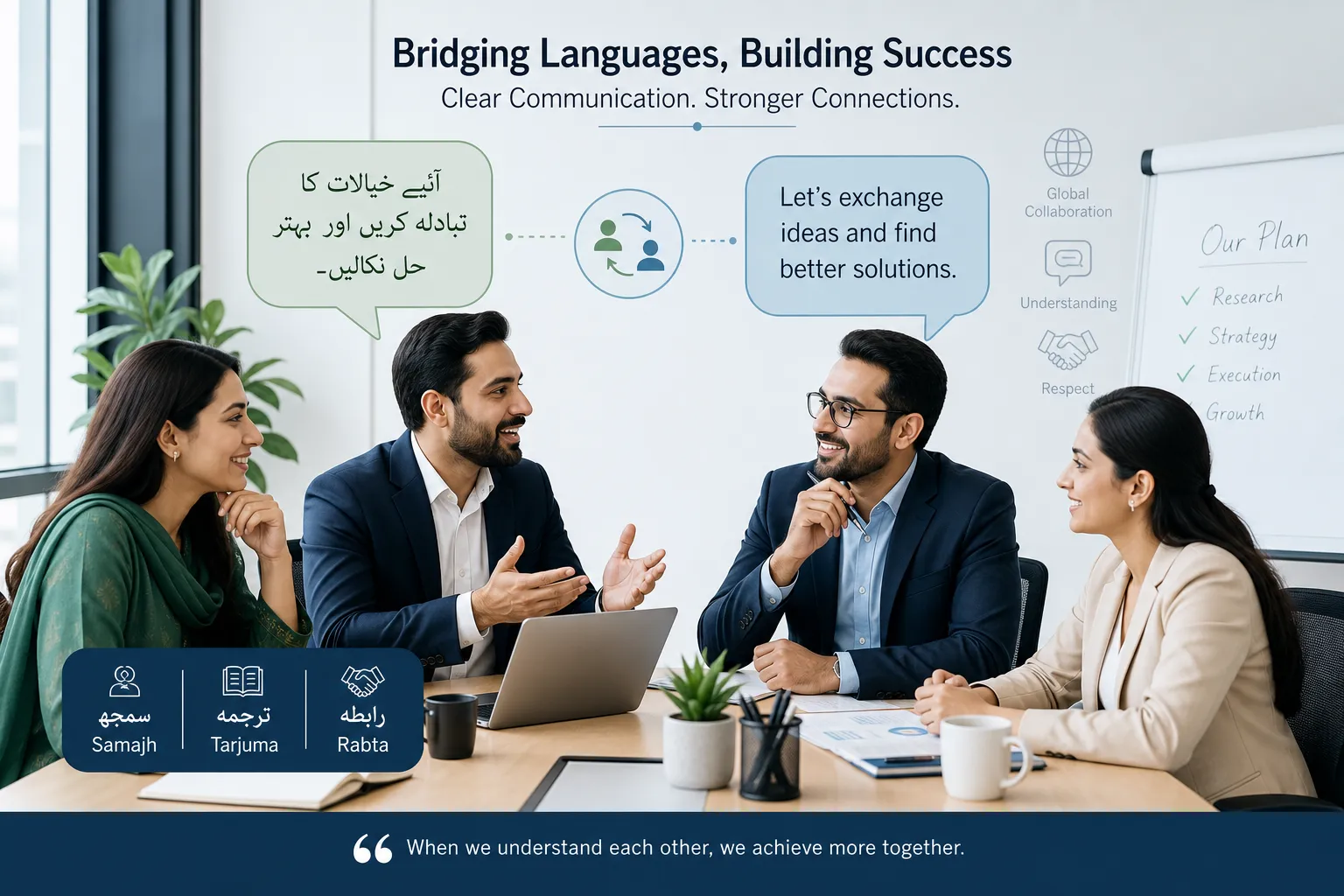
Why Urdu to English Translation Matters More Than Ever
Urdu is widely spoken across Pakistan, India, and global diaspora communities. For employers, educators, healthcare teams, media producers, and event planners, that means communication often needs to move smoothly between Urdu and English to be useful.
“Urdu is spoken by approximately 230 million people worldwide, making it the tenth most spoken language globally.” – Urdu | South Asian Languages and Civilizations
This is not only a language issue. It is a clarity, access, and inclusion issue. When people receive information in a form they can understand, they participate more fully, respond more accurately, and trust the experience more.
For example, a company may need to translate employee communications, safety documents, onboarding materials, or internal videos. A conference organizer may need bilingual slides, translated agendas, live interpreting, and real-time captions. A church may need sermons, worship materials, or livestream subtitles. In each case, communication works best when language access is planned intentionally.
What Good Translation Actually Does
A lot of low-quality content treats translation as a simple word swap. In reality, good translation does much more.
It Preserves Meaning
The source message should arrive in English with its intent intact. That includes factual content, emotional tone, cultural references, and any technical nuance.
It Reduces Risk
Accurate translation helps avoid costly misunderstandings in contracts, HR communications, compliance materials, public messaging, and event logistics.
It Improves Audience Experience
People engage more when they do not have to struggle through unclear wording or awkward phrasing. This matters in meetings, training sessions, marketing content, and broadcasts.
It Supports Accessibility
Translation often works best alongside captioning, subtitling, and interpreting. For multilingual events and content, accessibility features improve understanding for more than one audience group.
“Real-time captioning serves as a vital tool in informal, interactive small-group conversations, enhancing participation and social interaction.” – Social, Environmental, and Technical: Factors at Play in the Current Use and Future Design of Small-Group Captioning
That matters for event producers and corporate teams because language access and accessibility are often interconnected, not separate projects.
Common Situations Where Urdu to English Translation Is Needed
The need for Urdu to English support shows up in more places than many teams expect. Here are some of the most common.
Business and Corporate Communication
Organizations often need translation for:
-
HR policies
-
onboarding packets
-
employee handbooks
-
internal announcements
-
training materials
-
compliance documents
-
stakeholder communications
When teams are multilingual, even routine materials need to be precise.
Live Events and Conferences
Event teams may need:
-
translated programs
-
stage content
-
presentation decks
-
booth materials
-
signage
-
interpreter support
-
real-time captioning
-
post-event subtitling and transcripts
This is where Team Stream’s end-to-end support becomes especially valuable. Translation is only one part of the audience experience. Live multilingual delivery, equipment coordination, technician support, and accessibility execution all have to work together.
Legal and Official Documents
Birth certificates, affidavits, immigration records, contracts, and other formal documents require a very high standard of accuracy. Small wording differences can change meaning in serious ways.
Healthcare and Community Outreach
Instructions, forms, public health messages, and educational materials must be understandable and culturally appropriate. Clarity can directly affect outcomes.
Media, Video, and Broadcast Content
Urdu audio may need English subtitles. Urdu written materials may need English voiceover scripts. Broadcast teams may need a combination of translation, captioning, and timed subtitling for wider reach.
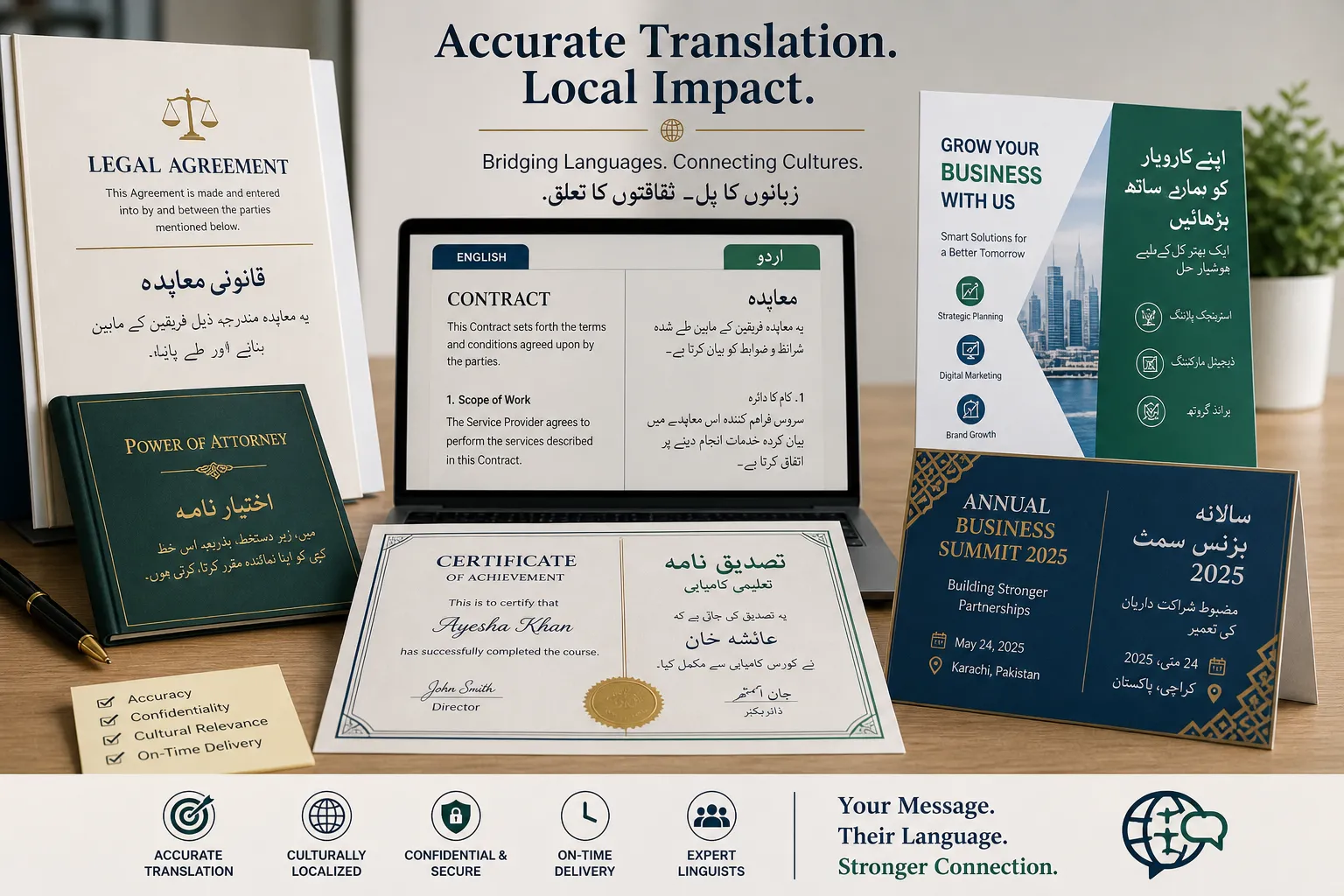
The Biggest Challenges in Urdu to English Translation
Urdu and English do not line up neatly. That is why quality varies so widely.
Script and Direction Differences
Urdu uses a right-to-left script derived from Perso-Arabic writing. That introduces formatting, display, and text handling issues that can affect translation workflows, especially in design files, websites, and event graphics.
Tone and Formality
Urdu often signals respect, familiarity, hierarchy, and politeness in ways that do not map directly to English. A strong translator knows when to preserve formal tone and when to simplify for natural English reading.
Idioms and Cultural References
Literal translation can produce confusing or even misleading results. Idioms, metaphors, honorifics, and indirect phrasing need interpretation, not just conversion.
Specialized Terminology
Technical, legal, religious, or medical content requires subject-matter awareness. General translation ability alone is not enough.
Audience Expectations
A translation for immigration paperwork is not the same as a translation for a keynote speech, website, product demo, or employee town hall. The intended audience shapes word choice, tone, and formatting.
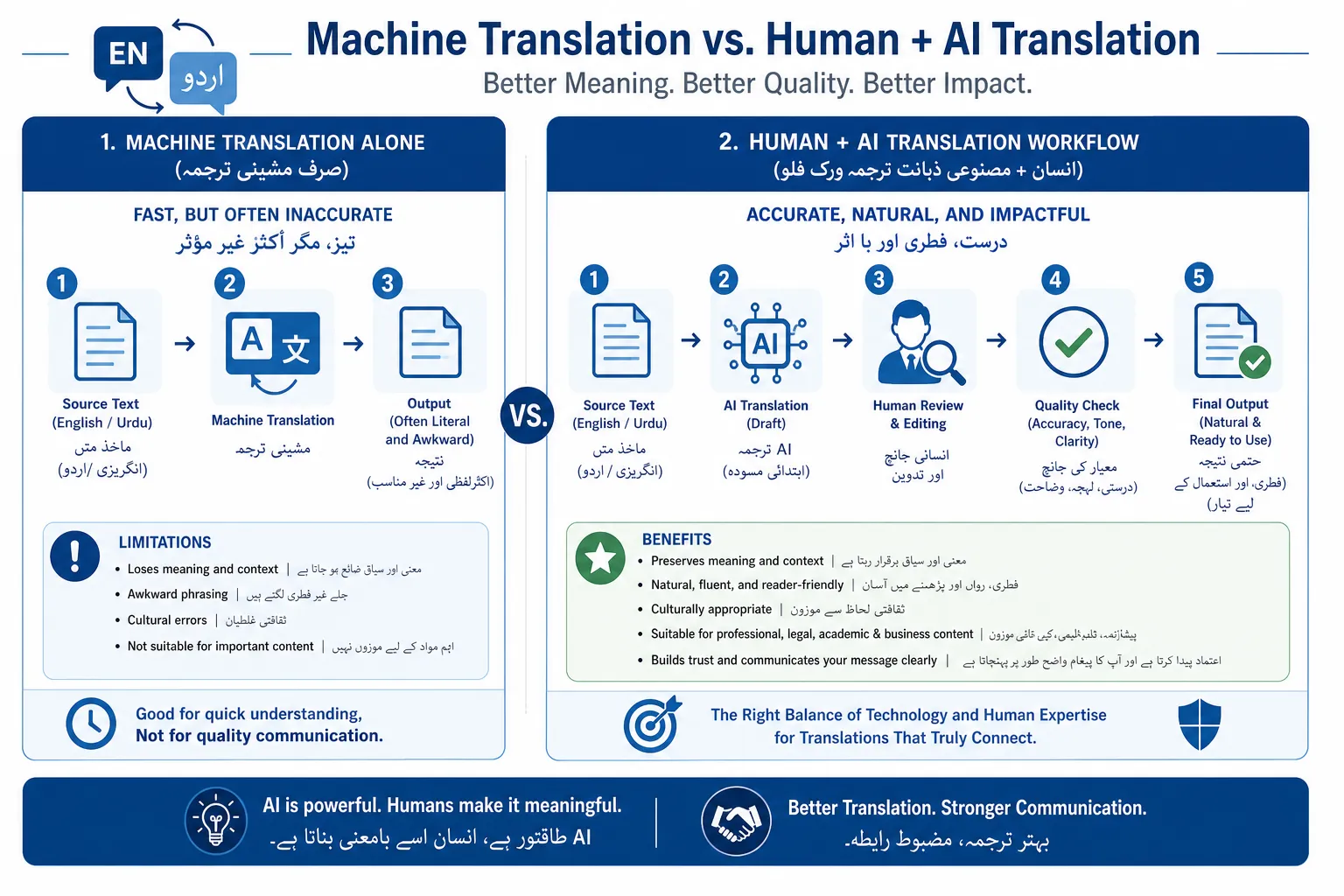
Machine Translation vs Professional Translation
AI tools have made translation faster, but speed alone does not guarantee clarity. The better question is when to use automation and when to bring in professional support.
Where Machine Translation Helps
Machine translation can be useful for:
-
first-pass drafts
-
internal reference only content
-
high-volume content triage
-
simple text where nuance is low
Where It Falls Short
It struggles with:
-
idioms and layered meaning
-
formal documents
-
culturally sensitive messaging
-
brand voice
-
event materials that must read naturally
-
accessibility-related content that must sync with speech, captions, or visuals
Why Human + AI Usually Wins
The strongest workflow is often a hybrid one: AI accelerates the process, while human linguists review, refine, and validate meaning.
That is one of Team Stream’s core strengths. We combine accurate human and AI-powered translation and interpreting with tailored project oversight, so clients get efficiency without sacrificing quality.
When You Should Use Professional Urdu to English Translation Services
Not every project needs the same level of support. But in these cases, professional help is the smart choice.
When Accuracy Has Legal, Financial, or Compliance Consequences
If a mistake could affect approvals, contracts, policy interpretation, or formal reporting, do not rely on unreviewed automation.
When the Content Represents Your Brand
Marketing copy, public-facing web pages, executive messaging, and keynote content should sound intentional and polished in English.
When the Material Is Live or Time-Sensitive
For live events, hybrid sessions, press moments, board meetings, and broadcasts, delays or errors can cause immediate problems. You need a partner who can manage both the language and the production realities.
When Accessibility Is Required
If your communication must also be inclusive for deaf or hard-of-hearing participants, multilingual support should be coordinated with live captioning, closed captioning, subtitling, or interpreting.
When Multiple Services Need to Work Together
Translation, interpreting, captioning, technician support, and equipment rental often overlap. Working with one coordinated provider can reduce stress and improve execution.
What to Look for in Accurate Urdu to English Support
Choosing a provider should not come down to price alone. Here is what actually matters.
Linguistic Accuracy
The translation should be faithful to the original while sounding natural in English.
Cultural Competence
The provider should understand how language choices affect tone, respect, clarity, and audience response.
Subject Expertise
Ask whether the team has experience with your type of content, such as legal, corporate, event, faith-based, medical, educational, or media projects.
Quality Control
Look for a review process, not just a single translator working alone.
Accessibility Capabilities
If you need captions, subtitles, interpreting, or inclusive event communication, choose a partner that understands accessibility from the start.
Delivery Flexibility
Some projects need in-person support. Others need remote delivery. Many need hybrid execution. Flexibility matters.
Responsiveness
For urgent event schedules and business timelines, slow communication from a vendor can create avoidable risk.
A Practical Comparison of Translation Options
|
Option |
Best For |
Main Advantage |
Main Risk |
|---|---|---|---|
|
Free machine translator |
Informal personal use, rough understanding |
Fast and inexpensive |
Low accuracy, poor nuance, no accountability |
|
Freelance translator |
Small projects with clear scope |
Can be cost-effective |
May lack scalability, review layers, or event integration |
|
Specialized language services provider |
Business, legal, media, accessibility, and event needs |
Quality, accountability, multi-service coordination |
Usually higher investment than DIY tools |
|
Full-service partner like Team Stream |
Multilingual communication plus accessibility and event support |
End-to-end execution across translation, interpreting, captioning, subtitling, equipment, and technicians |
Requires early planning for best results |
Why Events Need More Than Translation Alone
Competitor content often stops at documents and websites. But for real-world communication, especially in live environments, translation is rarely the only requirement.
A conference with Urdu-speaking attendees may need:
-
advance translation of agendas and signage
-
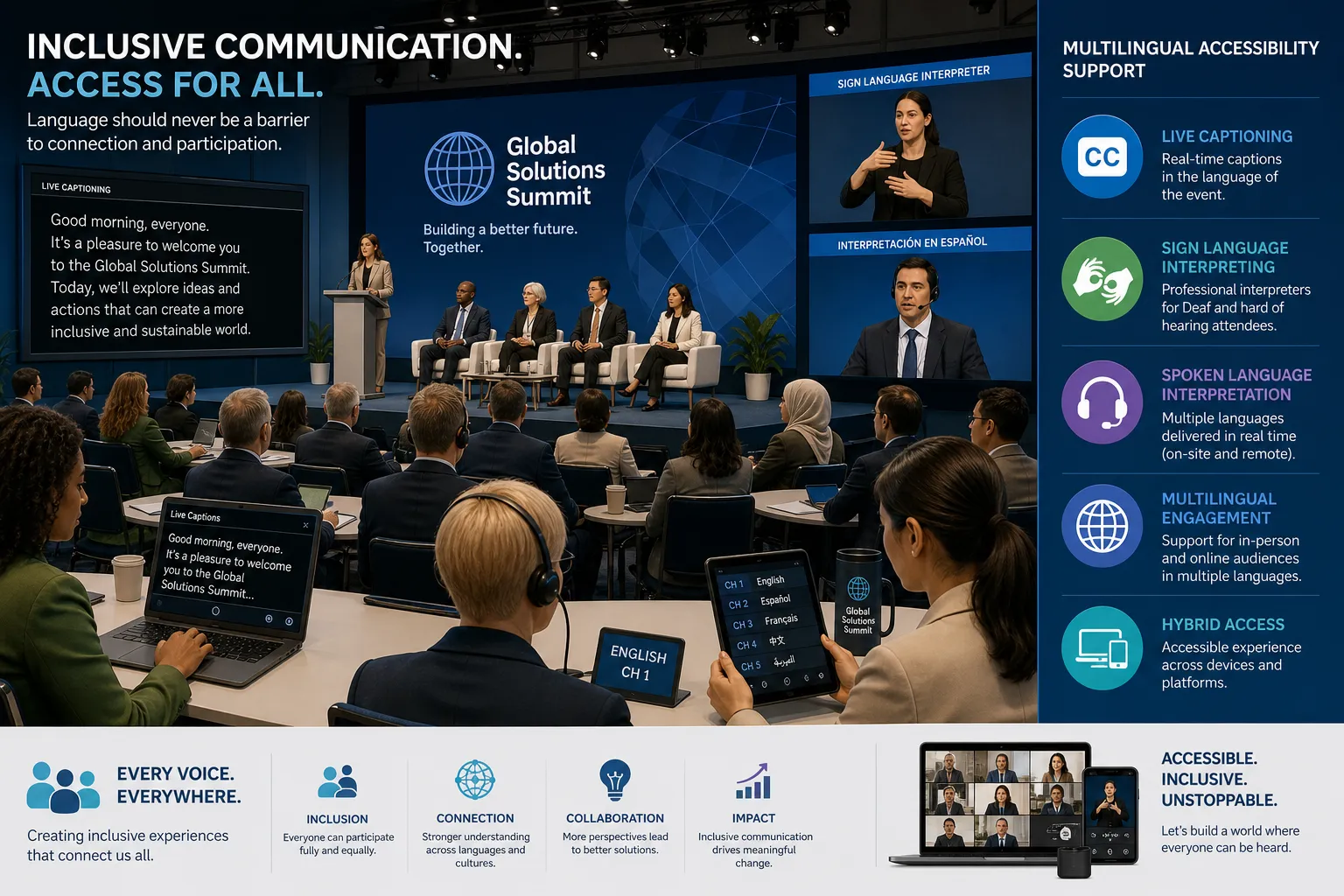
live interpreters for sessions
-
captions for accessibility and comprehension
-
subtitled recordings after the event
-
technician support for smooth delivery
-
remote and in-person options depending on speaker location
That is where Team Stream stands apart. We do not just translate files. We help organizations deliver complete multilingual and accessible experiences for live, virtual, and hybrid events.
How Team Stream Supports Better Communication
Team Stream is built for organizations that need reliable communication across languages and formats. That includes event organizers, conference planners, trade show producers, churches, corporate teams, and broadcast environments where clarity and inclusion are non-negotiable.
Accurate Human and AI-Powered Translation
We use smart workflows that improve speed while keeping trained professionals in the loop where judgment matters most.
Interpreting for Live, Virtual, and Hybrid Settings
If your audience needs real-time language access, Team Stream can support multilingual communication during meetings, events, broadcasts, and worship experiences.
Captioning and Accessibility Solutions
Real-time captioning, closed captioning, and subtitling help organizations serve broader audiences while supporting accessibility goals and compliance needs.
End-to-End Event Support
Our services can extend beyond language delivery to include equipment rental, sales, and technician support, helping clients manage the practical side of multilingual events without juggling multiple vendors.
Tailored Delivery
No one-size-fits-all package. Some clients need a single translated document. Others need a full communication stack across translation, interpreting, captions, subtitles, and production support. We tailor the solution to the actual need.
Experience and Responsiveness
With more than 25 years of expertise, Team Stream brings reliability, customer service, and execution discipline that matter when deadlines are tight and audiences are depending on you.
Best Practices for Better Urdu to English Communication
If you want stronger outcomes, these practices help.
Define the Purpose First
Ask what the translated content needs to do. Inform? Persuade? Instruct? Comply? Support a live audience? That answer guides tone and format.
Share Context
A good translation gets better when the linguist knows the audience, setting, terminology, and intended use.
Provide Reference Materials
Glossaries, previous translations, brand guidelines, speaker notes, and sample assets help ensure consistency.
Plan for Accessibility Early
If a translated message will also appear in captions, subtitles, slides, or event screens, build those requirements into the workflow from the start.
Match the Service to the Stakes
Do not overuse low-cost automation for high-risk communication. Speed is valuable, but trust is more valuable.
Final Thoughts: Better Translation Creates Better Outcomes
Urdu to English translation is not just about language conversion. It is about making information usable, conversations productive, and experiences inclusive. For businesses, institutions, and event teams, better translation improves understanding, protects credibility, and helps every audience member stay connected to the message.
If your organization needs more than a basic text converter, Team Stream offers a stronger path forward. With professional translation, interpreting, captioning, subtitling, accessibility services, technician support, and flexible delivery for live, virtual, and hybrid environments, we help you communicate clearly when it matters most.
When the message matters, accuracy matters. And when audiences matter, accessibility does too. Team Stream brings both together in one dependable service partner.
FAQ
What is the Urdu word for communication?
The Urdu word for communication is often translated as رابطہ (rabta) or ابلاغ (iblagh), depending on context. In business or professional settings, the best choice may vary based on whether you mean contact, exchange of information, or public communication.
How can I convert Urdu words to English?
You can use a basic translation tool for simple words, but for anything important, use professional Urdu to English translation. Human review is especially important when tone, legal meaning, brand voice, or cultural nuance matters.
What does “communicate” mean in Urdu?
Communicate in Urdu can be expressed as ابلاغ کرنا, بات چیت کرنا, or رابطہ کرنا, depending on meaning. The right translation depends on whether you mean sharing information, speaking with someone, or making contact.
What is the best translator for English to Urdu?
The best option depends on your goal. For casual use, an app may be enough, but for business, events, media, or compliance-sensitive content, a provider like Team Stream offers more reliable results through human expertise, AI-enabled workflows, and quality control.
What are 7 good communication skills?
Seven strong communication skills include clear speaking, active listening, empathy, concise writing, cultural awareness, audience adaptation, and responsiveness. In multilingual settings, accurate translation and captioning also support these skills by making messages easier to understand.
What does “communicate” mean in Urdu?
Communicate in Urdu usually means sharing a message, staying in contact, or expressing information clearly. Common Urdu equivalents include رابطہ کرنا and بات چیت کرنا, with the best choice depending on the situation.
