

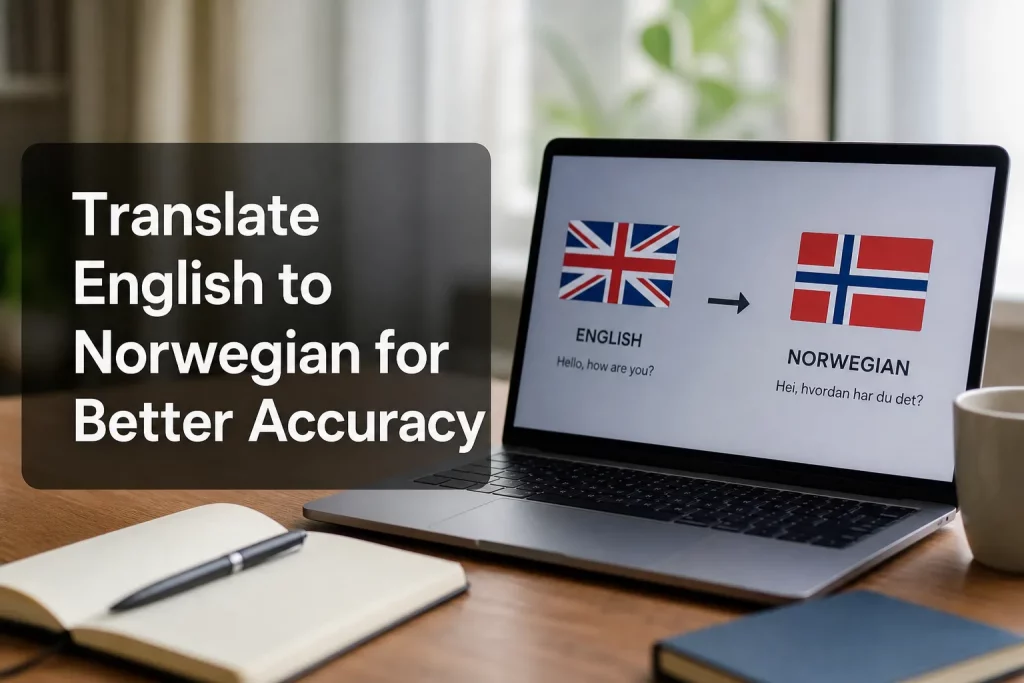
Translate English to Norwegian for Better Accuracy
If you need to translate English to Norwegian for a meeting, website, travel document, training video, or live event, accuracy matters more than speed alone. A literal word-for-word conversion can miss tone, local usage, formality, and context – turning a clear English message into something awkward, confusing, or even misleading in Norwegian.
For event organizers, conference planners, corporate teams, churches, and businesses working across languages, the stakes are even higher. Translation is not just about changing words. It is about preserving meaning, protecting brand credibility, improving accessibility, and making sure every audience member can follow the message clearly – whether they are reading a webpage, watching captions, or listening to an interpreter in real time.
At Team Stream, we see this every day. Organizations often start with a quick machine translation tool, then discover that important content still needs human review, accessibility support, subtitling, voiceover, or live interpreting. The most effective approach is rarely human-only or AI-only. It is the right combination of expert linguists, smart technology, and delivery support tailored to your audience, timeline, and compliance needs.
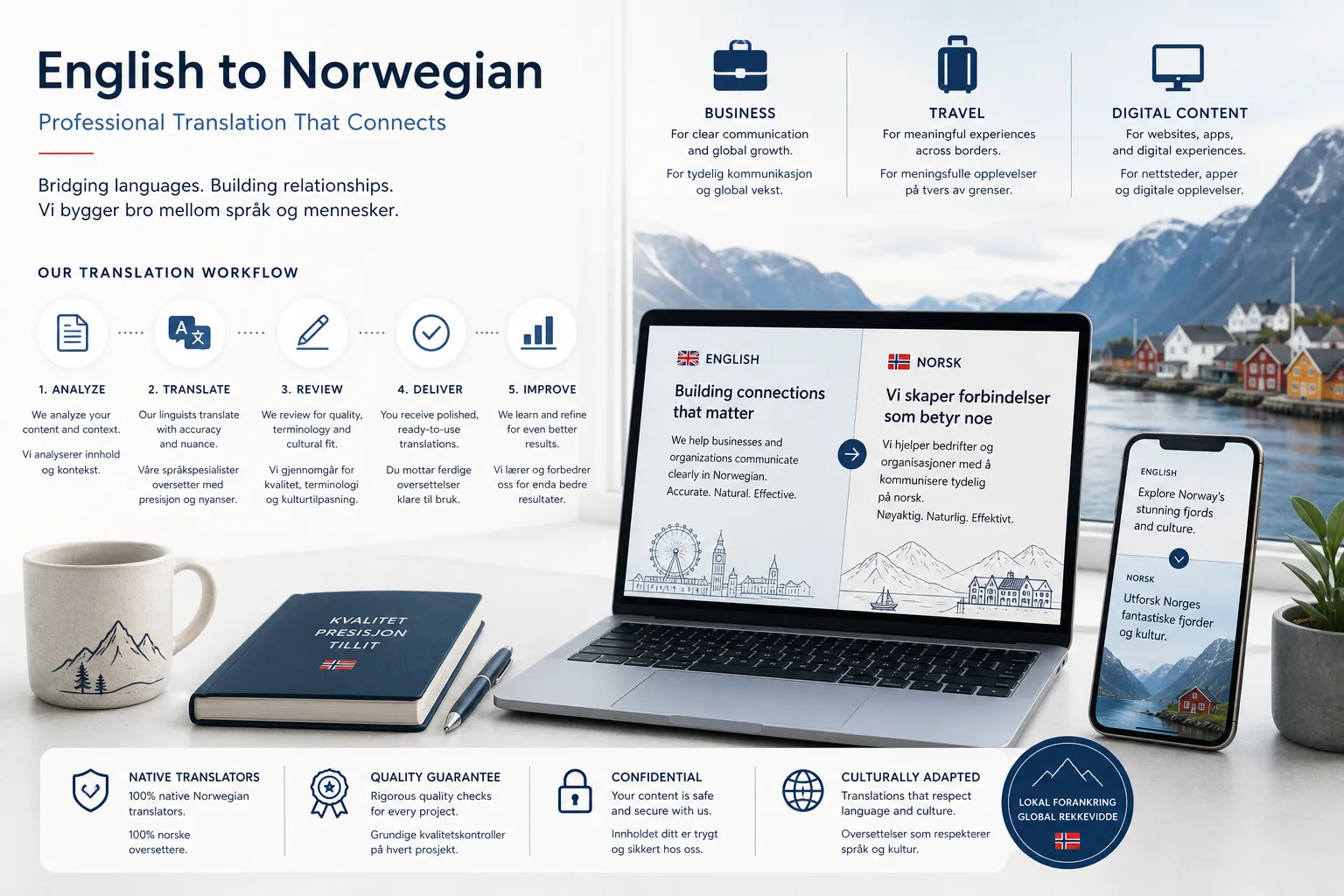
Why English-to-Norwegian Accuracy Is Harder Than It Looks
English and Norwegian are both Germanic languages, which can make them seem easy to map between. In practice, that similarity is exactly what creates many errors. Familiar-looking structures encourage overconfidence, but the natural rhythm, idioms, prepositions, tone, and word order often differ.
A strong English to Norwegian translation must account for:
-
whether the audience expects Bokmål or Nynorsk
-
tone differences between formal business writing and conversational speech
-
Norwegian preference for clarity and simplicity over overly promotional language
-
cultural expectations around politeness, directness, and understatement
-
technical terminology in sectors like healthcare, legal, manufacturing, and events
This is also why the reverse process – when you translate Norwegian to English – needs equal care. A sentence that sounds polished in Norwegian can become flat, vague, or overly literal in English if handled without context.
“According to the 2025 edition of the EF English Proficiency Index, Norway ranks 5th out of 123 countries and regions, indicating a ‘Very High’ proficiency level.” – EF English Proficiency Index
That statistic is useful, but it can create a false sense of security. Many Norwegians speak excellent English, yet professional communication still benefits from localized Norwegian content – especially for trust-building, legal clarity, accessibility, customer experience, and audience inclusion.
When You Should Translate Into Norwegian Instead of Relying on English
Many organizations assume English is “good enough” in Norway. Sometimes it is. Often, it is not.
Business communications
If you are sending contracts, HR updates, onboarding materials, event signage, internal policies, or customer support content, Norwegian improves comprehension and reduces risk. This is especially important when the content affects compliance, safety, or decision-making.
Travel and hospitality
Travelers may use English frequently, but translated confirmations, menus, emergency instructions, itineraries, and local guides still improve usability and confidence.
Websites and digital marketing
If you want Norwegian users to trust your brand, converting your website into natural Norwegian is often better than leaving pages in English. Direct translation alone is not enough; your content must sound local.
Live events, conferences, and hybrid meetings
For multilingual audiences, translation often intersects with accessibility. Slides, handouts, live captions, interpretation, subtitling, and post-event transcripts all need to work together. Team Stream helps clients manage this end-to-end, with interpreting, captioning, translation, voiceover, equipment rental, and technician support for live, virtual, and hybrid environments.
Bokmål vs. Nynorsk: Which Norwegian Should You Use?
Norwegian is not a one-size-fits-all language. The two official written standards are Bokmål and Nynorsk.
|
Standard |
Best known use |
Typical business choice |
|---|---|---|
|
Bokmål |
Most widely used written form |
Yes, in most corporate and commercial content |
|
Nynorsk |
Used in specific regions and institutions |
Sometimes, depending on audience or public-sector requirements |
For most international businesses, Bokmål is the correct default. But if your audience includes regional public institutions, education, or community-specific communication, Nynorsk may be appropriate.
A professional linguist should confirm this before translation begins, especially for public-facing or regulated content.
Common Mistakes When You Translate English to Norwegian
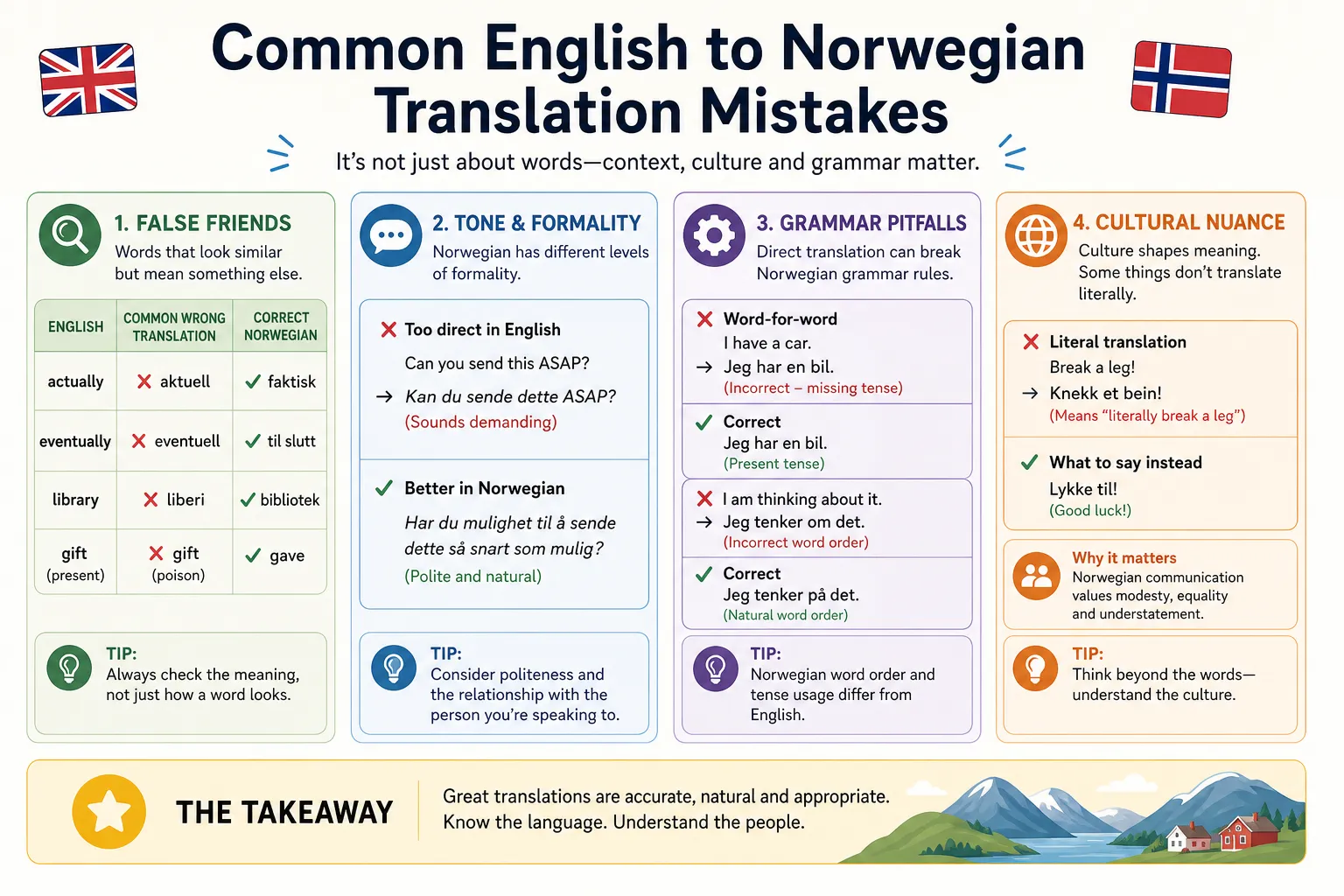
Competitor pages often stop at phrase lists and generic “translate instantly” claims. What they usually miss is why translations fail in real use. Here are the issues that cause the most trouble.
1. Translating idioms literally
English expressions like “touch base,” “circle back,” or “hit the ground running” often sound unnatural when translated directly. Norwegian readers generally prefer plain, direct wording.
Better approach: Translate the meaning, not the phrase.
2. Using English sentence rhythm
English business copy often uses punchy promotional language. Norwegian usually reads better when it is calmer, clearer, and less exaggerated.
Example:
“Industry-leading world-class solution” may sound persuasive in English marketing copy, but in Norwegian it often needs simplification to remain credible.
3. Choosing the wrong level of formality
Norwegian communication is often more direct and less ceremonious than English. Overly formal wording can sound stiff or distant.
4. Mishandling compound words
Norwegian uses compound words differently from English. Splitting or joining them incorrectly can make writing look unprofessional fast.
5. Ignoring context in subtitles and captions
Short space constraints in subtitles, live captions, and event screens require adaptation, not just translation. This is where language services and accessibility solutions overlap.
6. Forgetting localization in dates, numbers, and formatting
Measurements, dates, punctuation, and currencies may need adjustment for Norwegian users, especially in digital content and conference materials.
English to Norwegian for Business: What “Good” Actually Looks Like
High-quality translation is not just grammatically correct. It should feel like the content was originally written for a Norwegian audience.
A strong business translation should be:
-
accurate in meaning
-
natural in tone
-
consistent in terminology
-
aligned with your brand voice
-
localized for the intended audience
-
reviewed for industry-specific language
-
usable across documents, websites, subtitles, and presentations
This is where Team Stream brings extra value. Instead of treating translation as an isolated task, we help organizations build multilingual communication systems that work across written content, spoken delivery, and accessibility formats. That may include AI-powered first-pass translation, human editing, interpreting, live captioning, subtitling, or voiceover – all coordinated around one event, campaign, or communication workflow.
English to Norwegian for Travel: Practical Accuracy Matters
Travel content is one of the most overlooked areas for translation quality. People assume short phrases are easy. In reality, a small wording error can create stress fast when someone is navigating transportation, accommodations, tickets, schedules, or medical help.
Prioritize accuracy for:
-
check-in instructions
-
emergency contacts
-
transportation guidance
-
venue signage
-
food and allergy information
-
event schedules
-
local support messages
In these use cases, clarity matters more than stylistic flourish. If the content will be read quickly on a phone screen or sign, concise localized translation is best.
English to Norwegian for Digital Content and SEO
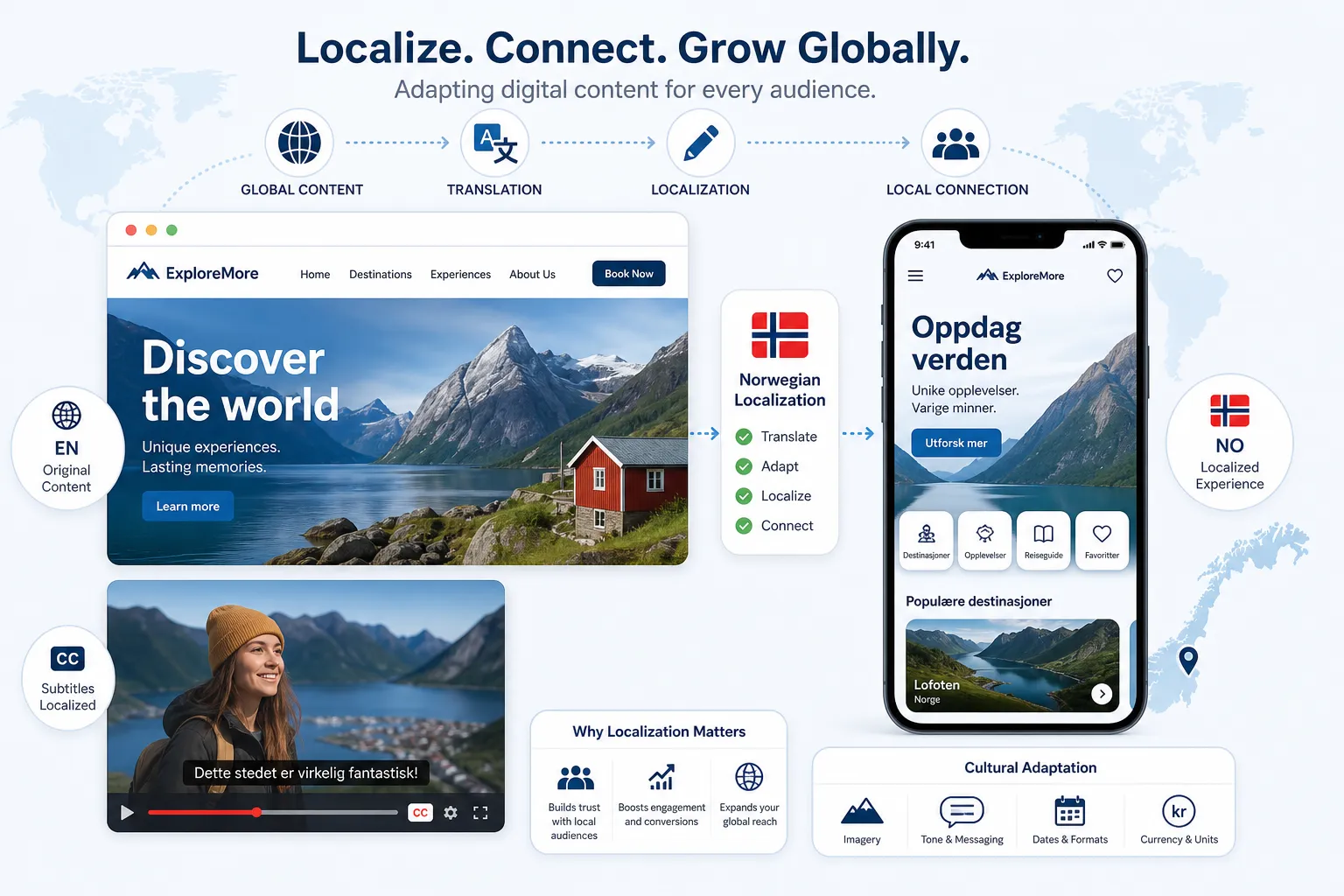
Website translation is more than exporting text into another language. You also need to localize:
-
page titles and meta descriptions
-
product names and feature descriptions
-
CTAs
-
alt text
-
blog content
-
downloadable PDFs
-
embedded video subtitles
-
forms and confirmations
This is especially important if your audience may move between Norwegian and English. Some users may search in English, some in Norwegian, and some may compare both. If your content does not feel coherent across languages, trust drops.
“94.8% of the top one million homepages have detectable WCAG failures.” – AccessiTool summary of the WebAIM Million Report 2026
That matters because translation and accessibility increasingly go together. If you localize a website but ignore accessibility, captioning, or readable structure, the experience still fails part of your audience. Team Stream helps clients bridge that gap with compliance-friendly language access and accessibility support, including captions, subtitles, voiceover, and multilingual event communications.
How to Translate Norwegian to English Without Losing Meaning
Many businesses also need the reverse workflow: Norwegian to English. This is common for:
-
supplier emails
-
contracts
-
conference materials
-
product documentation
-
church or nonprofit communications
-
post-event transcripts
-
subtitles and speaker notes
The biggest mistake here is assuming that if the Norwegian source sounds simple, the English output will be easy. But Norwegian often uses concise phrasing that requires interpretation in English to preserve intent and tone.
Watch for these reverse-translation issues
|
Challenge |
Risk in English output |
Better solution |
|---|---|---|
|
Short Norwegian phrasing |
Sounds vague in English |
Expand slightly for clarity |
|
Culture-specific wording |
Loses relevance |
Adapt to target audience |
|
Direct sentence structure |
Feels blunt or incomplete |
Smooth for natural English |
|
Compound terms |
Incorrect term splitting |
Validate terminology |
|
Event/caption text |
Timing or readability issues |
Edit for delivery format |
If your translated content will be published, narrated, captioned, or used in a live event, human review is strongly recommended.
When Machine Translation Is Fine – and When It Is Not
Machine translation has improved dramatically. For quick internal understanding, it is often useful. But it is not equally reliable across every context.
Usually fine for:
-
informal internal notes
-
rough comprehension
-
first-pass draft translation
-
low-risk reference material
Risky for:
-
contracts and policies
-
customer-facing marketing copy
-
subtitles and voiceover scripts
-
executive communications
-
event signage
-
accessibility content
-
regulated or sensitive information
The best modern workflow is often AI plus expert human review. Team Stream uses that blended approach where it makes sense, helping clients move quickly without compromising accuracy, brand voice, or inclusivity.
Translation, Interpreting, Captioning, and Voiceover: What’s the Difference?
Organizations often ask for “translation” when they actually need a combination of services.
|
Service |
Best for |
Output |
|---|---|---|
|
Translation |
Documents, websites, emails, scripts |
Written text |
|
Interpreting |
Meetings, conferences, live events |
Spoken language in real time |
|
Live captioning |
Accessibility during events and broadcasts |
On-screen text in real time |
|
Subtitling |
Recorded video and multilingual media |
Timed text on video |
|
Voiceover |
Training, promos, explainer videos |
Recorded spoken narration |
If you are planning a multilingual event, webinar, conference, broadcast, or hybrid experience, these services often need to work together. Team Stream specializes in exactly that kind of coordination, backed by professional technicians, equipment rental, remote and in-person delivery options, and more than 25 years of experience.
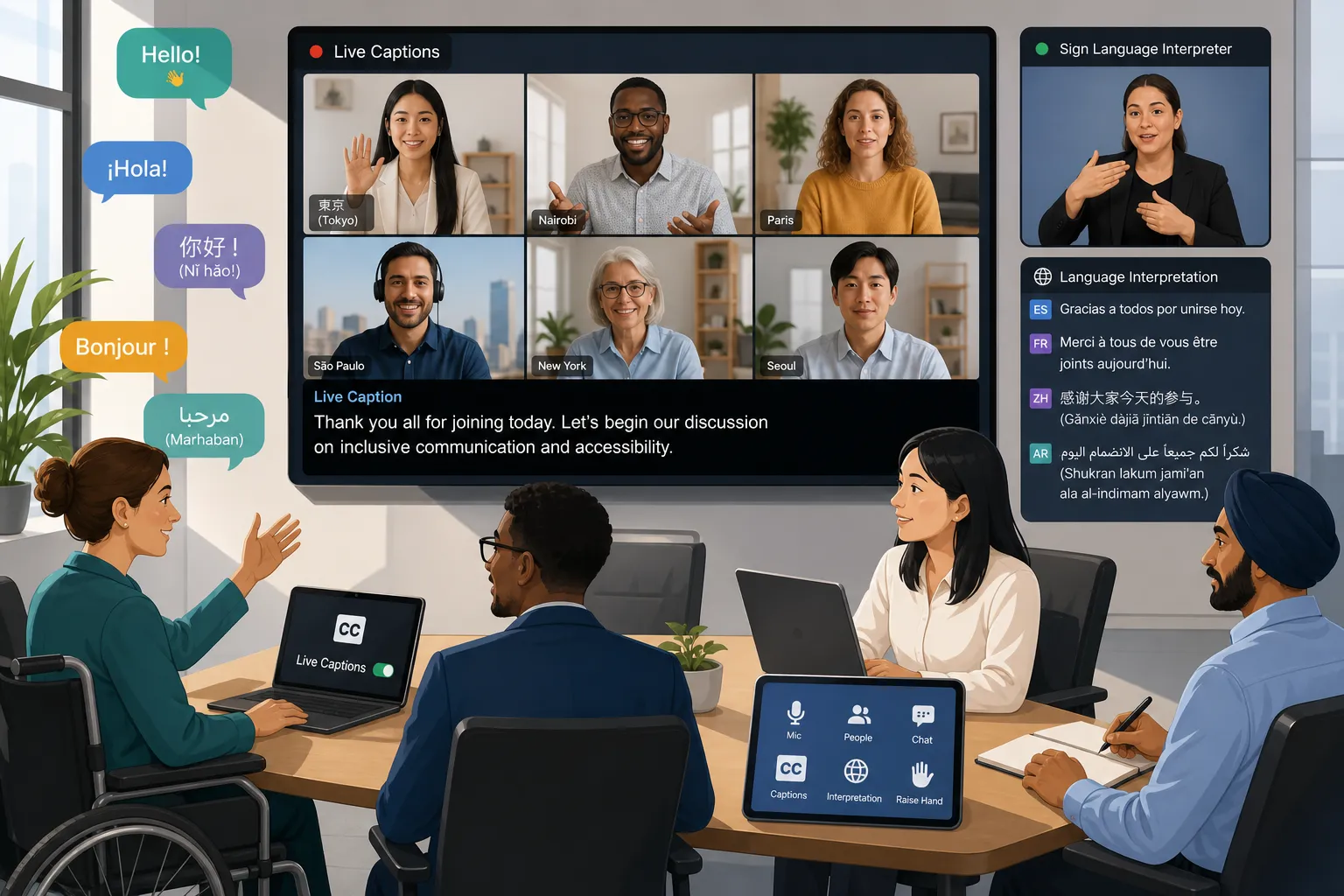
A Better Workflow for Accurate English-to-Norwegian Translation
Here is a practical framework that outperforms basic machine-only workflows.
1. Define the audience
Are you writing for travelers, employees, event attendees, customers, or viewers?
2. Choose the right Norwegian standard
In most cases, Bokmål is best, but not always.
3. Classify the content by risk
Internal note? Website homepage? Legal document? Live event screen? Each needs a different level of review.
4. Build a terminology list
Brand terms, product names, technical phrases, speaker names, and accessibility language should stay consistent.
5. Translate for the delivery format
A webpage, subtitle, script, and conference slide each require different wording choices.
6. Use human review before publication or broadcast
This is the step that catches literal phrasing, awkward tone, and cultural mismatches.
7. Add accessibility from the start
If the content will be presented live or digitally, think about captions, subtitle readability, voiceover pacing, and inclusive communication early.
Content Gaps Most Competitor Articles Miss
Many ranking pages on this topic focus on free tools, phrase lists, or language-pair pages. They rarely explain:
-
the difference between Bokmål and Nynorsk in business use
-
how translation quality changes by format
-
why captions, subtitling, and interpreting matter for multilingual communication
-
how accessibility and translation overlap
-
when AI is useful versus risky
-
how to manage translation for live, virtual, and hybrid events
-
the operational side: technicians, equipment, remote delivery, and compliance-friendly execution
Those are exactly the gaps organizations need filled when they are not just translating a sentence, but building communication that works for real people in real settings.
Signs You Need Professional Language Services
You should consider professional support when:
-
the content affects legal, safety, or compliance outcomes
-
the translation will be public-facing
-
brand voice matters
-
the content includes specialized terminology
-
you need live interpreting or multilingual event support
-
you need captioning, subtitling, or voiceover
-
the audience includes people who rely on accessibility services
-
failure would be expensive, embarrassing, or exclusionary
Team Stream is built for these higher-stakes situations. We provide accurate human and AI-powered translation and interpreting, real-time captioning, subtitling, voiceover, and end-to-end accessibility solutions tailored to each client. Whether you need remote support for a virtual webinar or on-site execution for a large hybrid conference, our team can scale the service mix to fit your timeline and audience.
Why Team Stream Is a Strong Partner for English-to-Norwegian Communication
A translation vendor can convert text. A true communication partner helps the whole message land.
Team Stream stands out because we combine:
-
expert human linguists with AI-enabled efficiency
-
written translation with interpreting, captioning, and media localization
-
support for live, virtual, and hybrid events
-
professional equipment rental and technician services
-
flexible in-person and remote delivery
-
accessibility and compliance-minded workflows
-
responsive customer service backed by 25+ years of experience
That matters when your Norwegian content is part of something bigger – a product launch, company-wide meeting, church service, trade show, training program, webcast, or multilingual customer experience.
Final Thoughts
To translate English to Norwegian well, you need more than a tool. You need context, tone awareness, localization judgment, and the right delivery method for the audience. The same is true when you translate Norwegian to English. Shortcuts can help with speed, but they rarely guarantee clarity.
If your content is important enough to publish, present, caption, subtitle, or broadcast, it is important enough to get right.
Team Stream helps organizations do exactly that – with accurate translation, interpreting, live captioning, subtitling, voiceover, accessibility support, and reliable event execution from a team that understands both language and logistics. If you want multilingual communication that is clear, inclusive, and professionally delivered, Team Stream is ready to help.
FAQ
What is the most accurate Norwegian translator?
The most accurate option is usually a professional human translator supported by AI tools, especially for business, legal, marketing, and event content. Machine translation can help with speed, but human review is essential when tone, context, and cultural nuance matter.
What does “går det bra” mean?
“Går det bra” usually means “Is it going well?” or “Are you okay?” depending on context. In conversation, it can be used to check whether something is fine, manageable, or proceeding properly.
What does “satte et hjerte ved” mean?
“Satte et hjerte ved” commonly means “put a heart on” or “liked with a heart,” often in digital or social media contexts. The exact meaning depends on usage, so context matters in translation.
How do Norwegians say “I love you”?
In Norwegian, “I love you” is usually “Jeg elsker deg”. It is a strong phrase, so in some contexts people may choose softer wording depending on tone and relationship.
What does “går det bra” mean?
“Går det bra” can mean “Is it okay?” “Are you doing fine?” or “Will that work?” It is a good example of why direct translation alone is not always enough without context.
How do Norwegians say “I love you”?
The standard phrase is “Jeg elsker deg”. For accurate communication, especially in emotional or brand-sensitive content, it is always best to consider the surrounding tone and audience.
