

Brazilian Portuguese to English Translation Guide
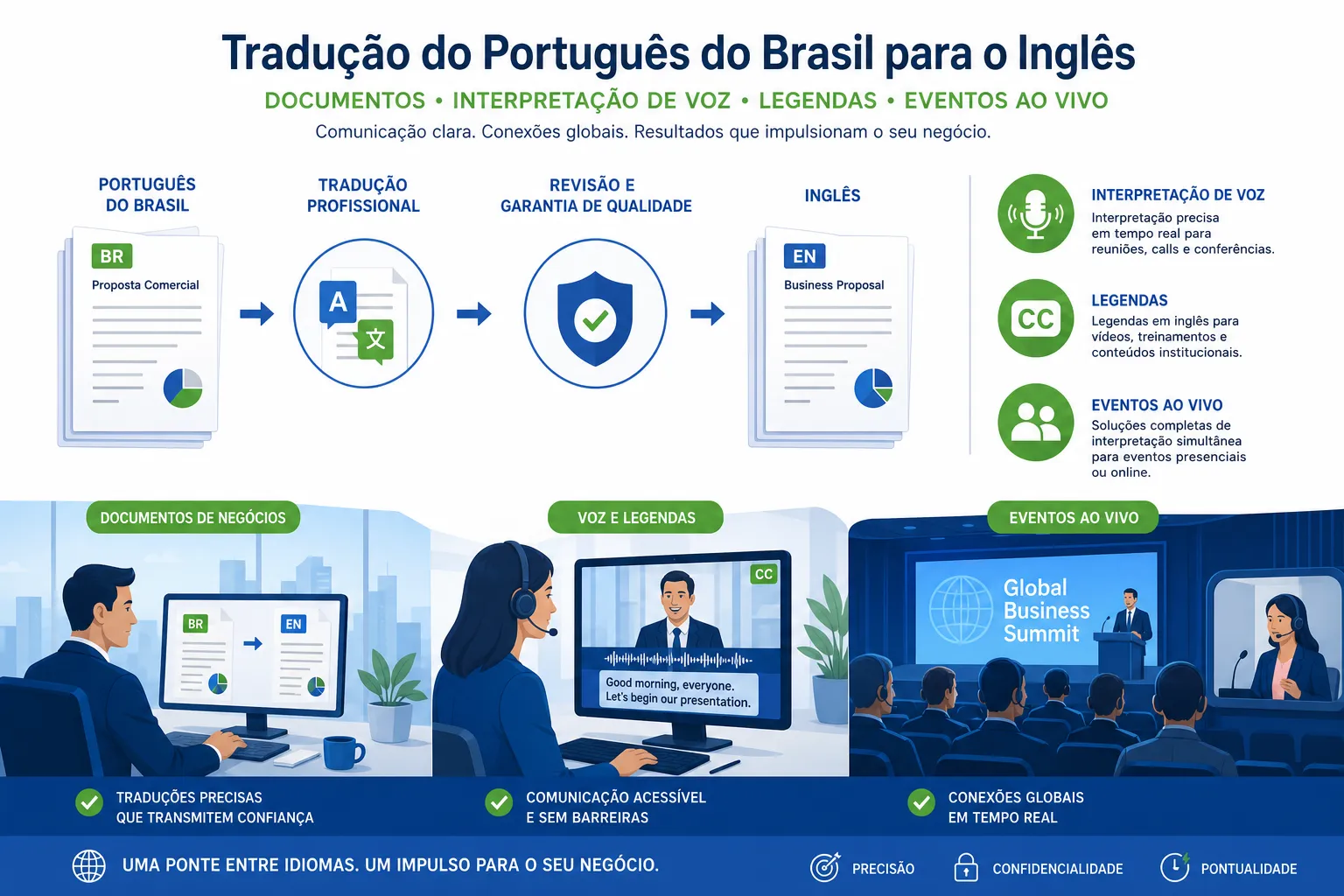
If you need reliable Brazilian Portuguese to English translation, the real challenge is rarely just swapping words. It is choosing the right level of accuracy for the moment: fast machine help for a rough draft, professional human translation for contracts and certificates, or live interpreting and captioning when people need to understand each other in real time.
For event organizers, operations leaders, conference planners, churches, broadcast teams, and businesses, the stakes are even higher. A missed nuance in a document, a mistranslated spoken phrase, or inaccessible communication in a live setting can create confusion, compliance risk, and a poor audience experience. That is why the smartest approach is not simply to “translate Portuguese to English,” but to match the translation method to the context.
At Team Stream, we help organizations do exactly that with accurate human and AI-powered translation and interpreting, real-time captioning, subtitling, voiceover, technician support, and multilingual event solutions for live, virtual, and hybrid environments. This guide explains when to use each option, how Brazilian Portuguese differs from other Portuguese variants, and how to avoid the most common mistakes in document, voice, and business translation.
Why Brazilian Portuguese translation requires special handling
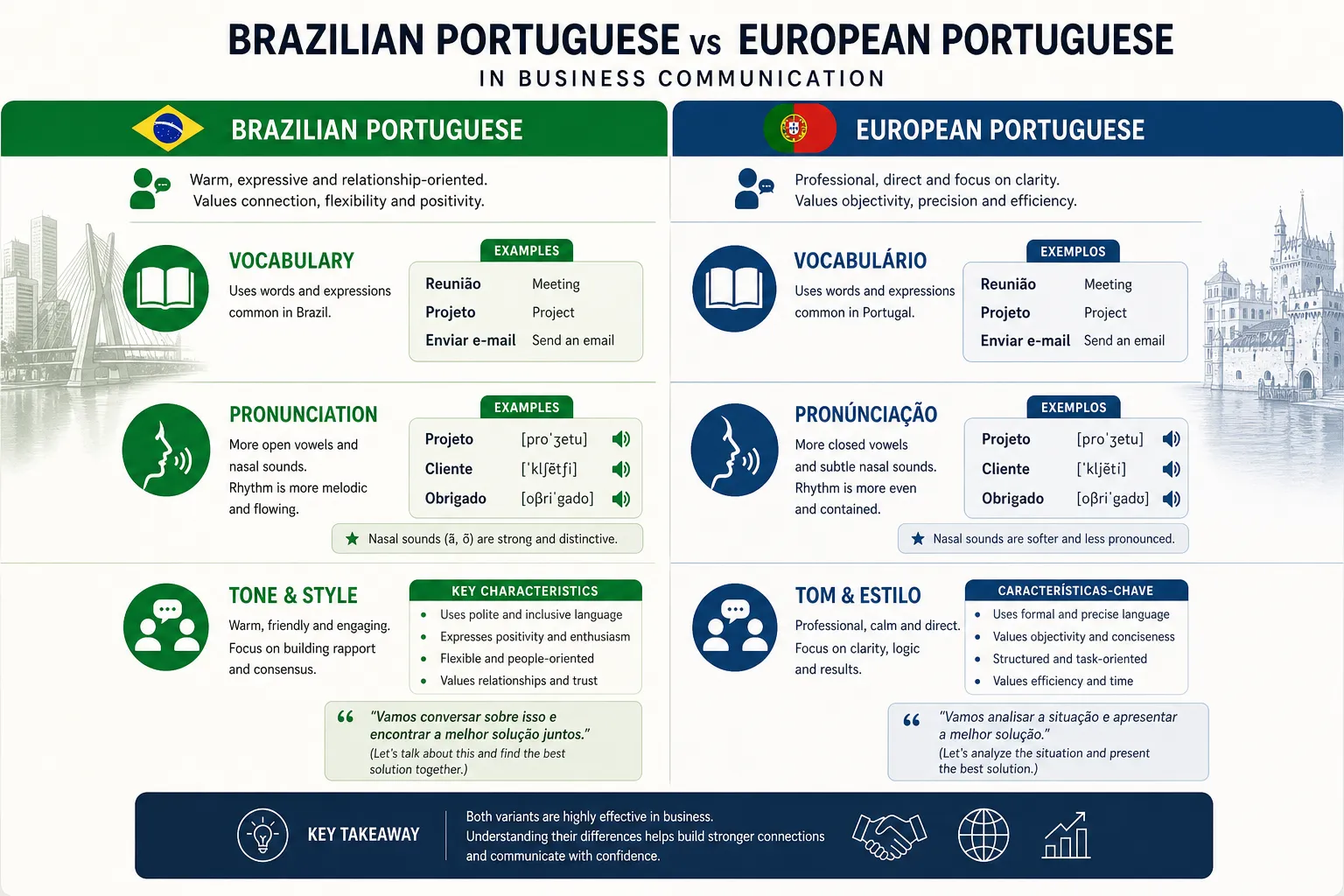
Brazilian Portuguese is not just “Portuguese with a different accent.” It differs from European Portuguese in vocabulary, tone, grammar preferences, pronunciation, and business style. That matters whether you want to translate a contract, localize website copy, support multilingual customer conversations, or provide interpreting for a live audience.
A translation that sounds natural in Lisbon can feel formal, distant, or simply wrong in São Paulo or Rio. Likewise, a literal rendering into English may preserve words but lose intent.
“Portuguese is spoken by over 265 million people across all continents, making it one of the most widespread languages worldwide.” – UNESCO
“As of 2026, English is the most widely spoken language globally, with approximately 1.5 billion speakers.” – Quantumrun
For organizations working across Brazil, the U.S., and Spanish-speaking markets, this language pair often sits inside a broader multilingual strategy. That is why a good translator Portuguese to English solution should account for:
-
regional language expectations
-
business context and tone
-
document type and intended use
-
accessibility requirements
-
whether communication is written, spoken, live, or recorded
When to use AI translation vs human translation
One gap in many competitor pages is that they blur all translation needs into one bucket. In practice, not every task needs the same workflow.
Best use cases for AI-powered translation
AI is useful when you need speed, scale, and a quick understanding of content. It works well for:
-
internal drafts
-
first-pass understanding of emails
-
rough summaries of Portuguese documents
-
basic multilingual chat support
-
rapid content triage before human review
If your goal is to translate Portuguese Brazil to English quickly for internal use, AI can be a practical starting point. It is also helpful if you need to translate English to Brazilian Portuguese free for brainstorming, basic comprehension, or low-risk messaging.
Best use cases for human translation
Human linguists are essential when precision, nuance, and accountability matter. Use professional human translation for:
-
legal contracts
-
HR and compliance documents
-
financial materials
-
official certificates
-
healthcare communication
-
board-level messaging
-
public-facing brand content
-
subtitles and voiceover scripts intended for publication
Team Stream combines human expertise with AI-enabled workflows so clients can move fast without sacrificing quality. That is especially important when you need official translation Portuguese to English, nuanced localization, or multilingual accessibility support.
Brazilian Portuguese vs European Portuguese: what changes?
Many people searching for English to Portuguese Brazil or English to Portuguese Portugal do not realize how important the distinction is. The two variants are mutually intelligible, but they are not interchangeable in professional communication.
Quick comparison table
|
Area |
Brazilian Portuguese |
European Portuguese |
Why it matters |
|---|---|---|---|
|
Tone |
Often warmer, more conversational |
Often more formal, compressed |
Affects customer experience and brand voice |
|
Vocabulary |
Uses terms common in Brazil |
Uses terms common in Portugal |
Wrong term can sound unnatural or unclear |
|
Pronunciation |
More open vowels, clearer syllables |
More reduced vowels |
Important for voiceover, dubbing, and spoken translation |
|
Grammar preference |
More explicit subject use |
More omitted subjects |
Influences fluency in translation |
|
Business localization |
Best for Brazilian audiences |
Best for Portugal-based audiences |
Critical for campaigns, events, and HR communication |
Examples of differences
|
English |
Brazil |
Portugal |
|---|---|---|
|
Cell phone |
celular |
telemóvel |
|
Bus |
ônibus |
autocarro |
|
Juice |
suco |
sumo |
|
Train |
trem |
comboio |
If your audience is in Brazil, you should not default to translate English to Portuguese Portugal. And if your content is meant for Brazil-based attendees, customers, employees, or viewers, English to Brazilian Portuguese localization is the better fit.
How to translate Portuguese to English documents the right way
Document translation is one of the most common needs in this language pair. But “document translation Portuguese to English” can mean very different things depending on the file and the use case.
Standard document translation
Standard translation is ideal for:
-
presentations
-
employee communications
-
training materials
-
website copy
-
product descriptions
-
reports
-
internal manuals
This is the right path when you need to translate documents from Portuguese to English for business use, publication, or collaboration.
Official or certified-style translation support
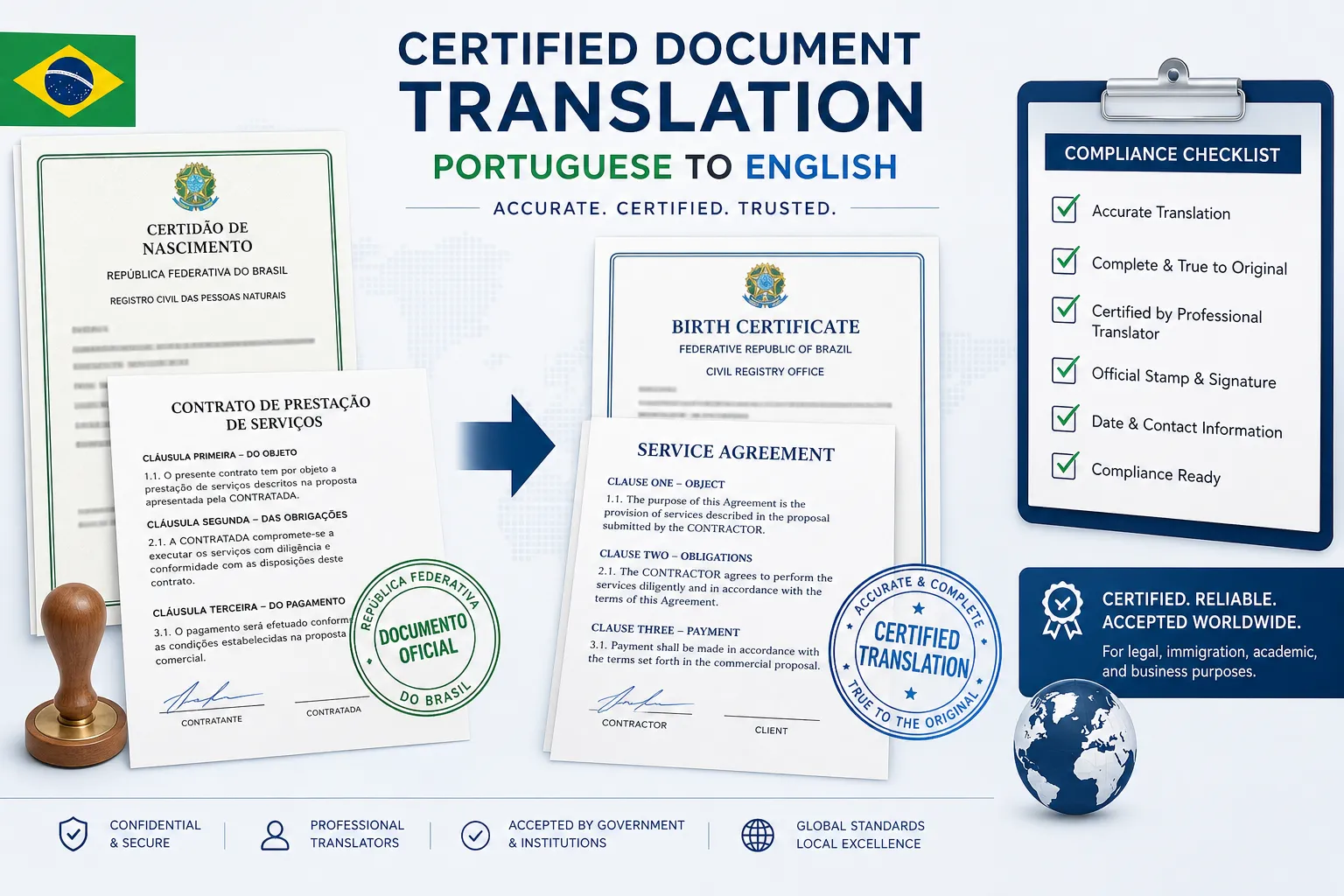
For immigration, legal, educational, and administrative use, requirements may be stricter. In those cases, the receiving institution may require a formal, signed, certified, or notarized translation format depending on jurisdiction.
Typical examples include:
-
birth certificates
-
marriage certificates
-
diplomas and transcripts
-
court documents
-
identity records
-
tax and corporate filings
If you need to translate Portuguese to English document content for official submission, do not rely solely on a consumer app. Confirm the destination requirements first, then use a professional provider that understands formatting, terminology, and compliance expectations.
Document translation checklist
Before you send any file for translation, ask:
-
Is this for internal use or official submission?
-
Does the translation need to preserve layout?
-
Are names, dates, and seals critical?
-
Will the translated version be quoted in legal or HR settings?
-
Does the audience expect U.S. English, plain English, or industry-specific terminology?
At Team Stream, we tailor the workflow to the document’s purpose rather than forcing one-size-fits-all packages. That reduces risk and improves turnaround time.
Voice and spoken Portuguese translation: what works best?
A major content gap in many competitor articles is spoken language support. Text translation and speech translation are not the same service.
When you need voice translate Portuguese to English
Use spoken translation or interpreting when communication is happening live or through audio/video, such as:
-
conference sessions
-
webinars
-
sales meetings
-
interviews
-
pastoral services
-
training calls
-
media productions
-
executive briefings
If your goal is to translate spoken Portuguese to English, the best solution depends on whether the conversation is live, recorded, or hybrid.
Your options at a glance
|
Scenario |
Best solution |
Why |
|---|---|---|
|
Live meeting |
Interpreter |
Real-time, high accuracy, natural flow |
|
Webinar or virtual event |
Remote interpreting + live captions |
Supports multilingual and accessible engagement |
|
Recorded audio |
Human transcription + translation |
Better context handling and editability |
|
Fast internal review |
AI speech translation |
Useful for rough understanding, not final publication |
|
Broadcast or public video |
Subtitling or voiceover |
Better audience experience and brand consistency |
Interpreting vs speech-to-text translation
Many users searching for translate voice Portuguese to English assume one tool can do everything. In reality:
-
AI speech translation is fast, but can miss accents, proper nouns, jargon, and overlap.
-
Human interpreting is more accurate and responsive in high-stakes settings.
-
Captioning and subtitling are essential when you also need accessibility.
Team Stream supports all three: live interpreting, real-time captioning, subtitling, and AI-powered language services, with in-person and remote delivery options.
Translation for live, virtual, and hybrid events
For event producers and corporate teams, translation is often only one piece of the audience experience. The bigger goal is making sure every attendee can follow, participate, and engage.

Common event needs
-
simultaneous interpreting for Portuguese and English sessions
-
bilingual moderator support
-
live captioning for accessibility and compliance
-
multilingual slides and handouts
-
subtitled replay videos
-
interpreter headsets and receiver systems
-
on-site technician support
-
remote language support for virtual participants
Why event translation fails
Event translation problems usually come from planning gaps, not language gaps. Common issues include:
-
booking translators too late
-
using the wrong Portuguese variant
-
forgetting accessibility requirements
-
poor audio quality for remote interpreters
-
no technician support for equipment
-
unreviewed presenter terminology
The Team Stream advantage
This is where Team Stream stands apart. We provide end-to-end language and accessibility solutions tailored to each client, including:
-
accurate human and AI-assisted translation
-
interpreting for live, virtual, and hybrid events
-
real-time captioning for accessibility and engagement
-
compliance-friendly communication support
-
equipment rental and professional technician services
-
flexible remote and in-person delivery
-
responsive service backed by 25+ years of experience
That means less coordination burden for your team and more confidence that multilingual communication will work under real event conditions.
How to translate English to Brazilian Portuguese effectively
Sometimes the need goes in the other direction. Maybe you are launching in Brazil, sending employee updates to Brazilian staff, or preparing event materials for a Portuguese-speaking audience.
Best practices for English to Portuguese Brazil translation
When you translate English to Brazilian Portuguese, focus on:
-
audience location and region
-
intended reading level
-
local business etiquette
-
terminology consistency
-
tone adaptation, not literal wording
Common mistakes
-
using Portugal-specific wording for Brazilian readers
-
over-literal translation of slogans or idioms
-
ignoring legal or regulated terminology
-
machine-translating HR or safety content without review
-
forgetting subtitle timing and readability limits in video
If you are comparing translation English to Portuguese tools, make sure they can support localization, not just language conversion.
Portuguese to English for business communication
Business translation is more than grammar. It is about clarity, risk reduction, and trust.
Common business materials that need translation
-
contracts and procurement documents
-
employee handbooks
-
onboarding materials
-
compliance notices
-
customer support content
-
marketing collateral
-
investor presentations
-
trade show signage
-
product training modules
What good business translation looks like
A strong business translation should be:
-
accurate
-
audience-appropriate
-
terminology-consistent
-
brand-aligned
-
legally aware where necessary
-
easy to understand under pressure
For multinational teams, the best results often come from combining translation with interpreting, captioning, and multilingual production support. Team Stream is built for exactly that kind of cross-functional need.
Spanish to Portuguese and Portuguese to Spanish: where they help
Many organizations working with Brazil also need support across Spanish-speaking markets. This creates another common workflow: translate Spanish to Portuguese or translate Portuguese to Spanish.
Why Spanish and Portuguese still need careful handling
Spanish and Portuguese share similarities, but false friends and grammatical differences can cause errors. A Spanish-speaking professional may understand some Portuguese, but that does not mean a business message will land correctly.
Common multilingual scenarios
|
Need |
Best approach |
|---|---|
|
Latin American campaign adaptation |
Human localization by market |
|
Trilingual event support |
Interpreting + live captions + translated materials |
|
Cross-border internal communication |
Central terminology management |
|
Recorded training for Brazil and Spanish-speaking teams |
Source script adaptation, subtitling, and voiceover |
If you operate across English, Portuguese, and Spanish, it is more efficient to work with one partner that can manage all three layers together.
Free tools vs professional services: how to choose
Searches for translate Portuguese to English free or translate English to Brazilian Portuguese free are understandable. Free tools are useful, but only for certain tasks.
Free tools are fine for
-
casual phrases
-
travel basics
-
low-risk draft comprehension
-
early-stage research
-
personal note-taking
Professional services are better for
-
official documentation
-
business-critical communication
-
public-facing marketing
-
employee and customer communication
-
accessibility compliance
-
live events and broadcasts
-
multilingual video assets
Quick decision table
|
Need |
Free tool |
Professional service |
|---|---|---|
|
Understand a short message |
Yes |
Optional |
|
Translate a contract |
No |
Yes |
|
Translate a diploma or certificate |
No |
Yes |
|
Interpret a live webinar |
No |
Yes |
|
Caption a conference session |
No |
Yes |
|
Localize a product launch for Brazil |
Limited |
Yes |
The best strategy is often hybrid: use AI to move fast, then bring in professionals when the communication matters most.
Practical phrases: Brazilian Portuguese to English examples
Here are a few useful examples for quick reference.
|
Brazilian Portuguese |
English |
|---|---|
|
Olá |
Hi / Hello |
|
Bom dia |
Good morning |
|
Tudo bem? |
How are you? / All good? |
|
Vamos lá |
Let’s go |
|
Eu te amo muito |
I love you very much |
|
Você pode me ajudar? |
Can you help me? |
|
Preciso de uma tradução oficial |
I need an official translation |
|
Você fala inglês? |
Do you speak English? |
These are helpful for basic understanding, but spoken meaning still depends on tone, context, and region.
What competitors often miss – and what actually matters
After analyzing leading pages in this topic area, several patterns show up. Most competitors do a decent job explaining that translation exists, but many stop at feature lists or generic promises. Here are the practical gaps that users still need answered:
1. They rarely distinguish text translation from interpreting
Translating a document is not the same as handling live speech in a meeting or conference.
2. They underplay the Brazil vs Portugal issue
This can lead to localization that is technically correct but commercially ineffective.
3. They do not connect translation to accessibility
Captioning, subtitling, and language access often belong in the same plan.
4. They skip operational realities
Event teams need equipment, technicians, hybrid workflows, and contingency planning.
5. They oversimplify official translation
Users need guidance on when accuracy, certification, formatting, and compliance actually matter.
These gaps are exactly where Team Stream adds value: not just by translating words, but by delivering complete communication solutions.
How to choose the right Brazilian Portuguese translation partner
Use this checklist before selecting a provider.
Look for a partner that can handle:
-
Brazilian Portuguese and U.S. English fluency
-
document, voice, and live-event workflows
-
human and AI-enabled service options
-
captioning and accessibility support
-
remote and on-site delivery
-
compliance-sensitive content
-
technical production and equipment needs
-
responsive account management
Questions worth asking
-
Do you support both translation and interpreting?
-
Can you handle live, virtual, and hybrid events?
-
Do you offer captioning, subtitling, and voiceover?
-
Can you work with official or compliance-sensitive documents?
-
Do you provide technician support and equipment if needed?
-
How do you ensure quality across English, Portuguese, and Spanish?
Team Stream checks those boxes with a service model designed for real business and event communication, not just isolated language tasks.
Final takeaway
The best Brazilian Portuguese to English solution depends on what you are trying to accomplish. For a rough draft, AI may be enough. For contracts, official paperwork, business messaging, multilingual video, or live events, you need a more structured approach.
That is where Team Stream delivers the most value. We combine accurate human translation and interpreting, AI-powered language support, live captioning, subtitling, voiceover, compliance-friendly accessibility services, equipment rental, and technician support into one responsive partnership. Whether your communication is in-person, remote, broadcast, or hybrid, our team helps you make it clear, inclusive, and reliable.
If you need help with Portuguese to English document translation, English to Brazilian Portuguese localization, spoken language support, or multilingual accessibility for events, Team Stream is ready to help you execute with confidence.
FAQ
What is the best translator for Brazilian Portuguese?
The best choice depends on the task. For casual use, an AI tool may be enough, but for business, official, or live-event communication, a professional partner like Team Stream is a better fit because it combines human expertise, AI support, and accessibility services.
How do Brazilians say “let’s go”?
A common Brazilian Portuguese equivalent is “Vamos lá”. Depending on context, Brazilians may also use casual variations, but “Vamos lá” is widely understood and appropriate in many situations.
How do you say “hi” in Portuguese in Brazil?
The most common way to say “hi” in Brazilian Portuguese is “Olá”. In informal settings, tone and familiarity may shape how people greet each other, but “Olá” is a safe standard.
How do I say “I love you so much” in Brazilian Portuguese?
You can say “Eu te amo muito”. It is a clear and natural way to express strong affection in Brazilian Portuguese.
How do Brazilians say “let’s go”?
Brazilians often say “Vamos lá” for “let’s go.” It can be used to encourage action, begin something, or motivate a group in both casual and professional contexts.
Is Brazilian Portuguese harder to learn?
It is not necessarily harder, but it does have its own pronunciation, rhythm, and vocabulary. Many learners find Brazilian Portuguese more approachable in conversation than European Portuguese because of its clearer vowel sounds and conversational style.
