

Real Time Interpretation for Live Events
If you organize conferences, corporate meetings, trade shows, church services, broadcasts, or hybrid events, you already know the challenge: great content only works if people can actually understand it. That is where real time interpretation becomes essential.
For multilingual audiences, language access is not a nice-to-have. It directly affects participation, clarity, accessibility, compliance, and the overall success of the event. Whether you are supporting international attendees, internal global teams, Deaf and hard-of-hearing participants, or public-facing audiences with diverse language needs, the right interpretation and captioning strategy can turn a fragmented experience into a fully inclusive one.
At Team Stream, we help organizations deliver that experience through a practical blend of professional interpreters, AI-powered language tools, live captioning, accessibility support, and event technology services. With more than 25 years of experience, our team supports in-person, virtual, and hybrid events with solutions tailored to the stakes, audience, and format of each event.
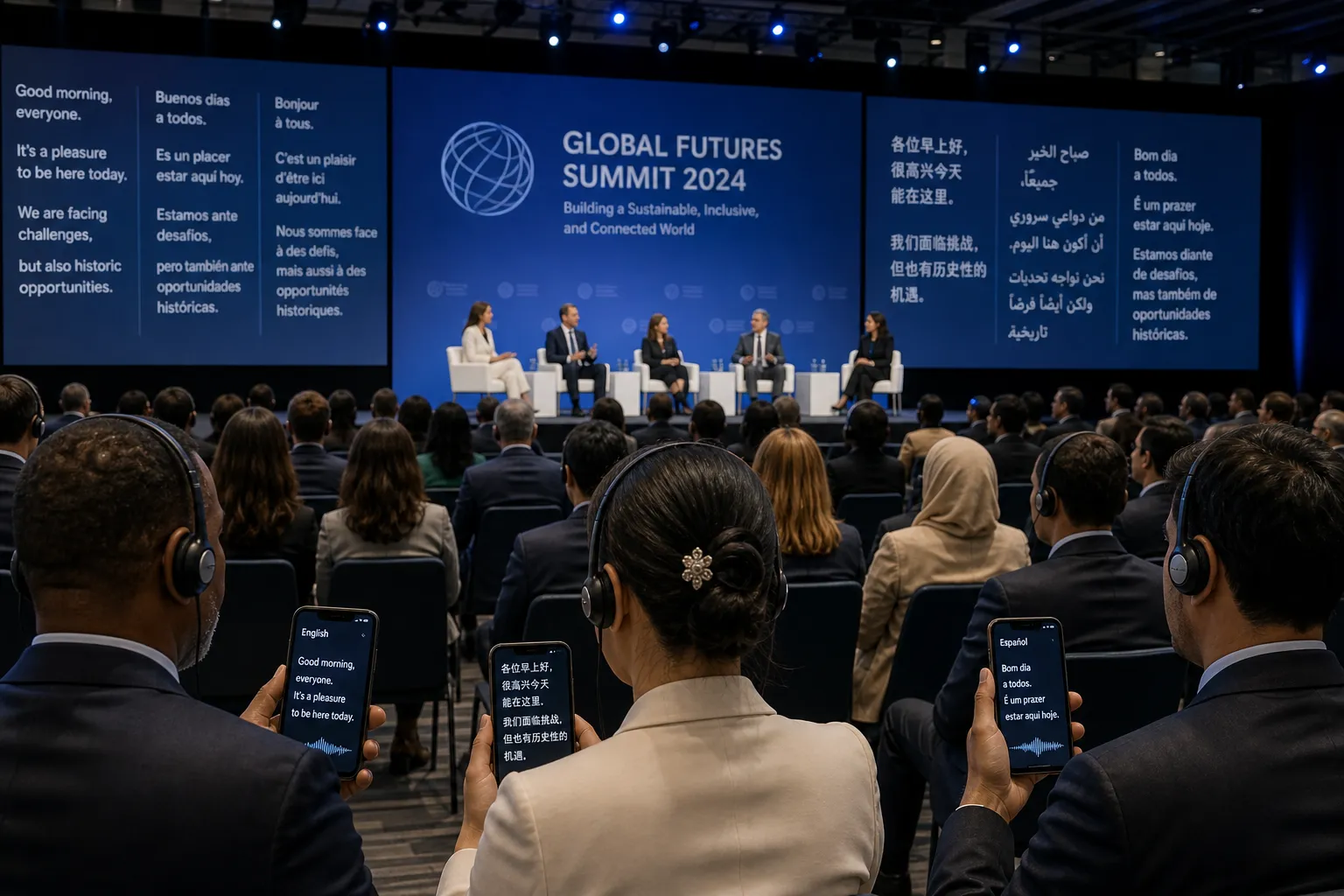
What Real Time Interpretation Means
Real time interpretation is the process of converting spoken content from one language into another as the speaker is talking. In live events, this usually happens with minimal delay so attendees can follow the session in their preferred language without waiting for a transcript or recording later.
This can include:
-
Human simultaneous interpreting, where trained interpreters listen and speak the target language almost instantly
-
AI speech translation, where software converts spoken language into translated audio or text in real time
-
Live captions and subtitles, which display spoken content on screens, event platforms, or attendee devices
-
Hybrid workflows, where human expertise and AI tools are combined for better scale, speed, and control
For many organizers, the goal is not just translation. It is making sure the event remains understandable, accessible, and professionally delivered for every attendee, no matter where they are or what language they speak.
Why It Matters More Than Ever
Today’s events are more global, more distributed, and more accessibility-conscious than ever before. A single audience may include employees in multiple countries, customers across regions, public sector stakeholders, media, investors, or community members with different language and access needs.
When interpretation is missing or poorly executed, the impact is immediate:
-
Attendees disengage
-
Important nuance is lost
-
Accessibility goals are weakened
-
Compliance risks increase
-
Speakers sound less credible across languages
-
Audience satisfaction drops
By contrast, a strong language access strategy helps audiences feel included and informed from the first minute of the event.
“79% of event professionals observed an increase in attendees whose first language is not English, and 97% prioritized inclusivity at their events.” – Wordly
“98.6% of students find captions helpful, with 52% stating that captions aid in learning by enhancing understanding.” – USU Accessibility
Those numbers reflect a broader truth for live events: when people can follow content clearly, they engage more, retain more, and feel more welcome participating.
How Real Time Interpretation Works at a Live Event
At a high level, the workflow is simple. The speaker talks, the content is captured, interpreted or translated, and then delivered to the audience through audio, captions, or both.
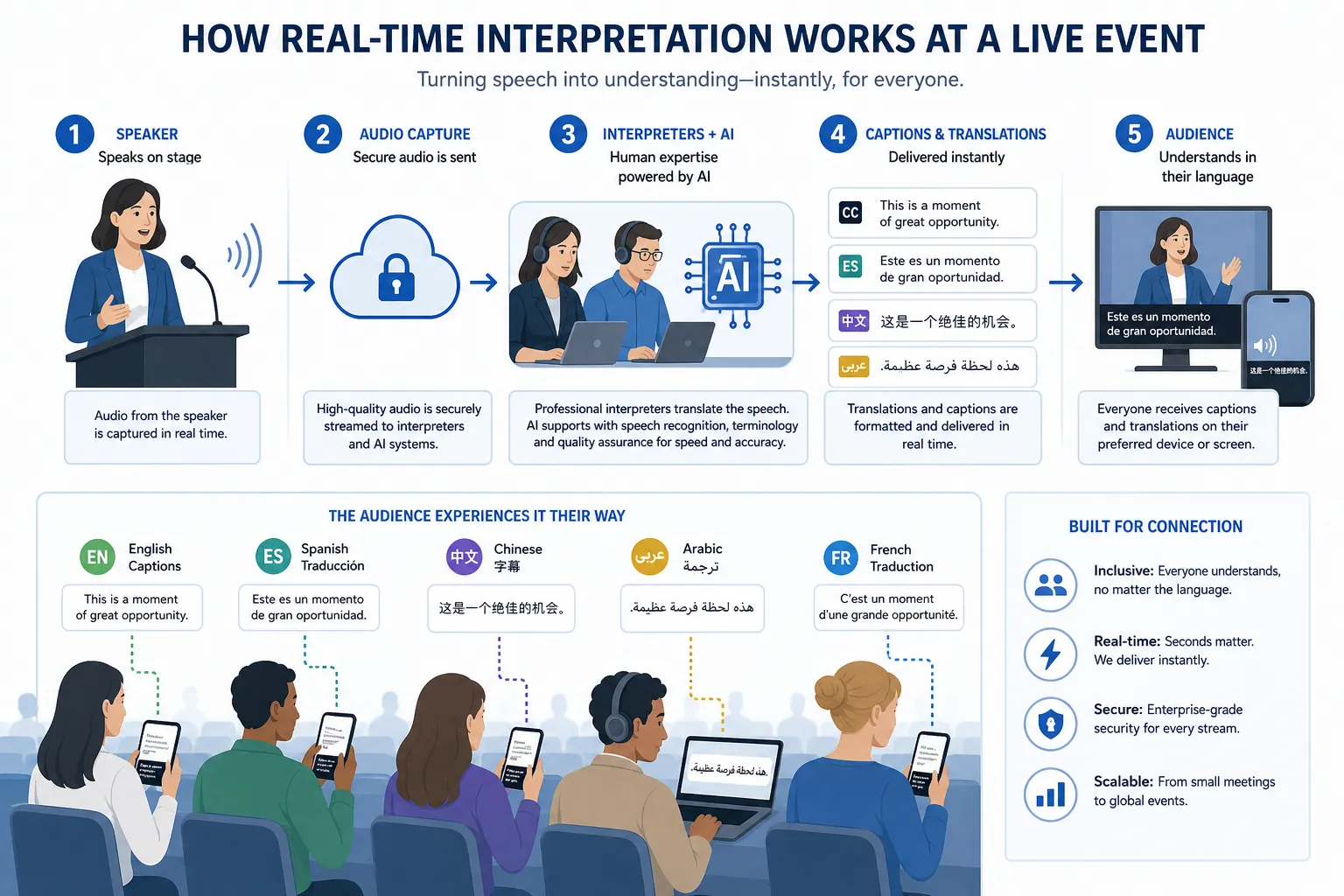
Typical Event Workflow
|
Stage |
What Happens |
Why It Matters |
|---|---|---|
|
Audio capture |
Speaker audio is taken from room sound, platform feed, or broadcast mix |
Clean audio is the foundation for quality |
|
Interpretation or translation |
Human interpreters, AI tools, or both process the speech |
Determines speed, nuance, and language coverage |
|
Delivery |
Audience receives interpreted audio, translated text, captions, or subtitles |
Must be easy to access and reliable |
|
Monitoring |
Technicians and support staff monitor quality and continuity |
Reduces disruption and protects attendee experience |
|
Post-event assets |
Transcripts, subtitles, translations, summaries, or recordings are created |
Extends value beyond the live session |
Common Delivery Options
Attendees may access interpreted content through:
-
Mobile devices
-
Event apps
-
Web platforms
-
Headsets and receivers
-
On-screen captions
-
Embedded captions in virtual platforms
-
Broadcast subtitle workflows
This is one of the biggest content gaps in many articles on the topic: they explain interpretation conceptually, but not operationally. In practice, success depends just as much on audio routing, access method, technician support, platform compatibility, and rehearsal planning as it does on the language service itself.
Human Interpreters vs AI Translation vs Hybrid Support
Not every session needs the same level of language support. A board meeting, keynote, training, and trade show demo may all require different solutions.
Human Interpreting
Human interpreters are best when the content is:
-
High-stakes
-
Sensitive
-
Technical
-
Legally important
-
Fast-moving and nuanced
-
Audience-facing at an executive or public level
This is the gold standard for accuracy, tone, context, and cultural nuance.
AI Translation
AI-powered real-time translation can be an excellent option when you need:
-
Broad language coverage
-
Faster deployment
-
Lower cost per language
-
Support for large audience scale
-
Text translation and captions
-
Flexible multilingual access across devices
AI is especially useful for large events, recurring meetings, internal communications, breakout sessions, and multilingual access where human interpreters for every language pair may not be practical.
Hybrid Support
Hybrid models are often the smartest choice. For example:
-
Human interpreters for keynote sessions
-
AI translation for breakout rooms
-
Human-edited captions for compliance-sensitive content
-
Remote interpreters supported by on-site technicians
-
AI-generated transcripts paired with professional cleanup
At Team Stream, this tailored approach matters. We do not force one delivery model onto every client. We assess the event format, audience profile, compliance needs, technical environment, and budget to recommend a solution that fits.
Where Real Time Interpretation Fits Best
Real time interpretation is valuable in many settings, but the priorities change depending on the event type.
Conferences and Conventions
Large conferences often need multilingual support for keynote stages, breakout sessions, exhibitor content, and networking environments. Here, interpretation improves reach, attendee satisfaction, and international participation.
Corporate Meetings and Town Halls
Global companies use interpretation for all-hands meetings, executive updates, investor relations, training, and internal communications. These environments need both clarity and confidentiality.
Trade Shows and Product Launches
At trade shows, multilingual communication helps exhibitors, presenters, and buyers connect more effectively. Product demonstrations, live presentations, and branded content all benefit from fast, high-quality translation and captions.
Broadcasts and Livestreams
Broadcast teams often need real-time language support with low latency, clean caption workflows, and compatibility with production environments. This may include subtitling, voiceover, interpreted audio channels, or multilingual livestream distribution.
Churches and Faith-Based Events
Live interpretation and captioning help congregations include multilingual communities, remote viewers, and attendees with hearing loss. For churches, the goal is often both inclusion and simplicity.
Public Sector and Community Events
Government agencies, schools, healthcare organizations, and community groups may need interpretation to support compliance, accessibility, and public participation. In these cases, clarity and equitable access are mission-critical.
Accessibility Is Not Separate From Interpretation
A common mistake is treating interpretation as one service and accessibility as another. In reality, the strongest live event strategies combine them.
Real time interpretation supports people who need content in another language. Accessibility services support people who need content presented in another format. Often, attendees need both.
Accessibility Services Often Paired With Interpretation
-
Real-time captioning
-
CART captioning
-
Closed captioning for streams and recordings
-
Subtitles for replay content
-
Sign language interpreting
-
Audio description
-
Accessible display workflows
-
Compliance-friendly documentation and support
This is where Team Stream stands out. We are not just a language vendor. We provide end-to-end language and accessibility solutions designed to help clients communicate effectively and inclusively across live, virtual, and hybrid environments.
What Event Organizers Should Evaluate Before Choosing a Solution
Many top-ranking pages focus heavily on product features, but they often skip the real planning questions buyers need answered. Here are the factors that actually shape a successful implementation.
1. Audience Needs
Start with the basics:
-
Which languages are needed?
-
How many attendees need each language?
-
Do any participants require captions or other accessibility accommodations?
-
Will attendees be in-room, remote, or both?
2. Content Complexity
Simple presentations can be handled differently than dense technical sessions. Acronyms, product names, legal language, speaker accents, and fast pacing all affect the right solution.
3. Event Format
In-person, hybrid, and virtual events each introduce different workflows. An in-person ballroom has different needs than a Zoom webinar or a broadcast studio.
4. Delivery Experience
How will attendees access the service?
-
Personal phones
-
Event platform
-
Dedicated receivers
-
In-room screens
-
Embedded webcast player
Ease of access matters. If attendees cannot figure out how to join the language channel quickly, usage drops.
5. Audio Quality
Poor source audio undermines everything. Microphone choice, room acoustics, audio mixing, and feed reliability are foundational.
6. Support and Redundancy
What happens if the feed drops? Who helps speakers and interpreters? Who monitors captions? Is there a technician on-site or remote support team available?
7. Compliance and Inclusion Goals
For many organizations, language access is tied to ADA, public access, DEI, or internal inclusivity goals. Your provider should understand those requirements, not just the software.
8. Post-Event Assets
Do you also need:
-
Edited transcripts
-
Translated subtitles
-
Voiceover
-
Written translation
-
Archived caption files
-
Repurposed video content
A provider that can support the full lifecycle saves time and reduces vendor sprawl.
What Good Real Time Interpretation Looks Like
A good solution is not just technically functional. It feels seamless to the audience.
Signs of a Strong Experience
-
Attendees can join quickly with clear instructions
-
Audio is understandable and stable
-
Interpreted output stays close to the speaker
-
Captions are readable and timely
-
Language channels are easy to switch
-
Support is available before and during the event
-
The service matches the tone and importance of the session
Signs of a Weak Experience
-
Confusing access steps
-
Delays that make it hard to follow the speaker
-
Inaccurate terminology
-
Missing technical rehearsals
-
No backup plan
-
Captions treated as an afterthought
-
One-size-fits-all tooling for every event type
Platform Examples in the Market
Several platforms in the market support real-time language access in different ways. These examples help illustrate the range of delivery models available, from enterprise multilingual platforms to AI-first tools to mobile audio distribution solutions.
Interprefy
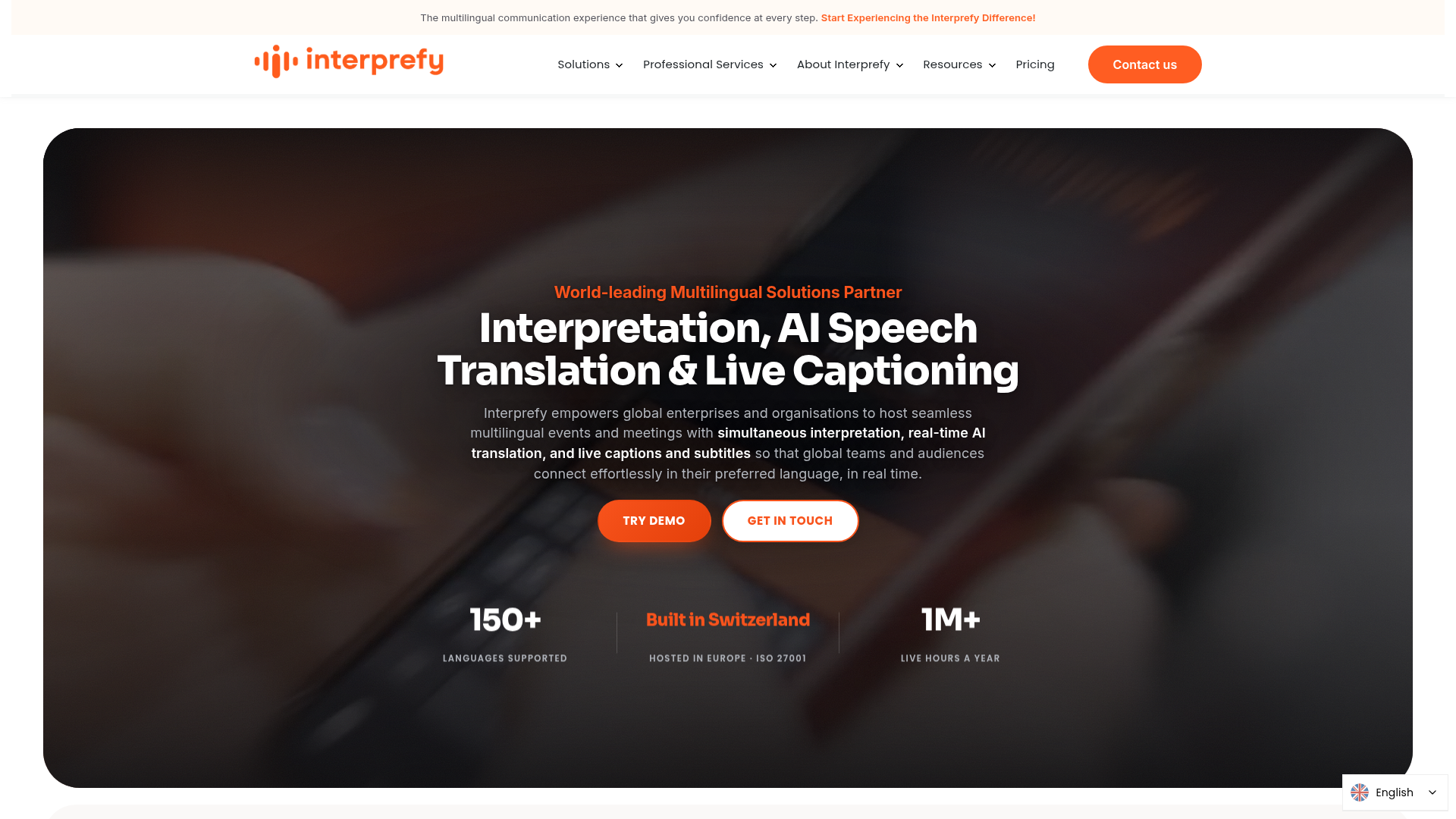
Interprefy positions itself around enterprise multilingual communication with remote simultaneous interpretation, AI speech translation, and live captions. It emphasizes European hosting, ISO 27001 certification, and integration with a wide range of meeting and event platforms.
Wordly
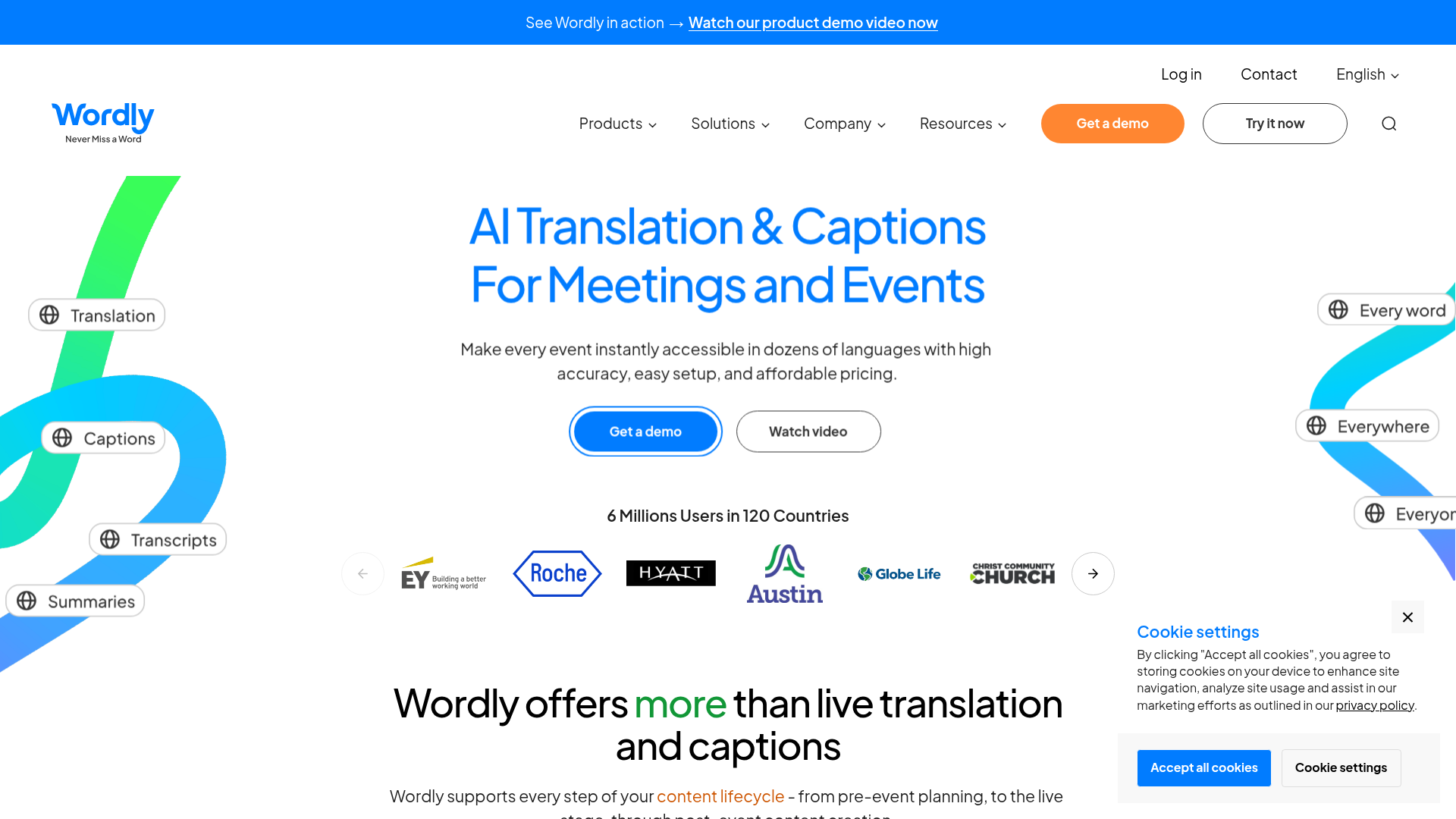
Wordly focuses on AI translation and captions for meetings and events, with strong messaging around ease of use, QR-code access, affordability, and post-event summaries and transcripts.
LiveVoice
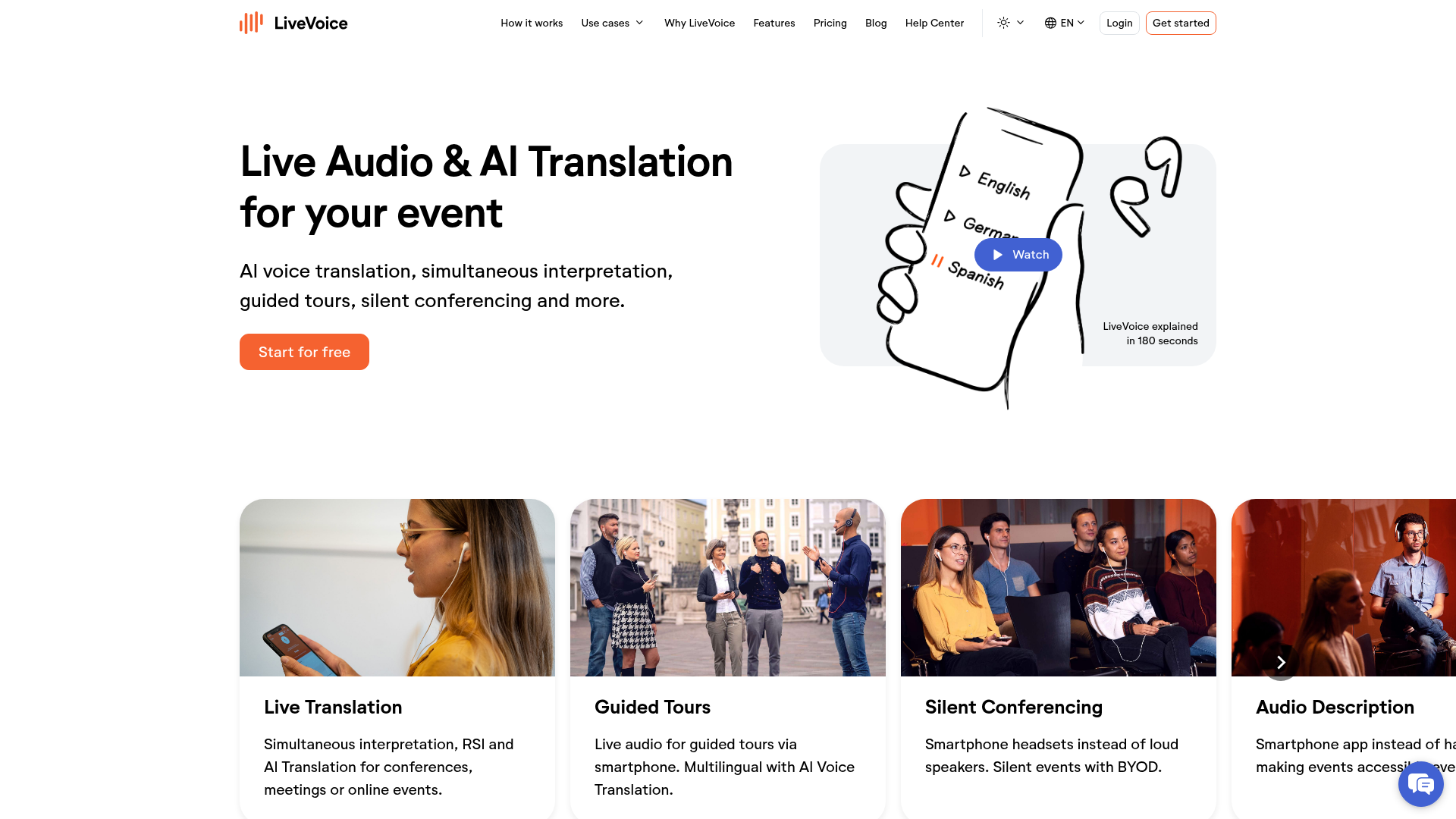
LiveVoice highlights smartphone-based audio delivery for interpretation, guided tours, silent conferencing, and accessibility use cases. Its bring-your-own-device model is especially relevant for on-site event flexibility.
The Missing Piece: Service-Led Execution
What many tools do not fully solve on their own is execution. Software matters, but successful multilingual events also require:
-
Experienced interpreters and captioners
-
Equipment rental when needed
-
Technician support
-
Event-specific planning
-
Accessibility expertise
-
Flexible in-person and remote service delivery
-
Responsive customer service
That is where Team Stream’s service model offers a practical advantage. We combine human expertise, AI-enabled workflows, accessibility support, and technical event services into one coordinated solution.
Real Time Interpretation and Live Captioning: Better Together
Interpretation and captions are often strongest when deployed together.
Why Use Both?
|
Need |
Interpretation |
Captions |
|---|---|---|
|
Multilingual audio understanding |
Excellent |
Helpful when translated |
|
Accessibility for Deaf or hard-of-hearing attendees |
Limited by itself |
Essential |
|
Better retention in noisy environments |
Helpful |
Strong |
|
Support for non-native speakers |
Excellent |
Strong |
|
Broadcast and replay usability |
Good |
Excellent |
|
Searchable post-event content |
Limited |
Excellent |
This combined strategy improves both language access and comprehension. It also expands the value of the content after the event through transcripts, subtitles, and searchable archives.
Common Myths About Real Time Interpretation
“It’s only for huge international conferences.”
Not true. Small meetings, internal town halls, community gatherings, worship services, and trainings can all benefit from interpretation or captioning support.
“AI has replaced human interpreters.”
AI is powerful, but it has not replaced human expertise in high-stakes communication. The better question is where AI fits best and where human professionals remain essential.
“If we have English captions, that covers inclusion.”
Captions help, but they do not replace interpretation for attendees who are most comfortable in another language.
“It’s too complicated to deploy.”
With the right planning and provider, it does not have to be. Team Stream regularly supports clients with solutions that are straightforward for organizers and easy for audiences to access.
Best Practices for a Smooth Multilingual Event
Before the Event
-
Identify audience languages and accessibility needs early
-
Decide which sessions need human, AI, or hybrid support
-
Gather speaker names, agendas, acronyms, and terminology
-
Confirm platform integrations and audio routing
-
Schedule rehearsals
-
Prepare attendee instructions
During the Event
-
Monitor audio feeds continuously
-
Keep support staff available
-
Watch timing, readability, and channel continuity
-
Communicate clearly with speakers and moderators
-
Maintain backup access paths when possible
After the Event
-
Deliver transcripts and caption files
-
Create translated subtitles or voiceover if needed
-
Review usage and attendee feedback
-
Refine glossary and workflow for the next event
Why Organizations Choose Team Stream
The strongest language access partner is not just the one with the most features. It is the one that can adapt the solution to your event and deliver it reliably.
Team Stream helps clients do that through:
-
Accurate human and AI-powered translation and interpreting
-
Real-time captioning for accessibility and engagement
-
End-to-end language and accessibility solutions tailored to each client
-
Support for live, virtual, and hybrid events
-
Compliance-friendly services for inclusive communication
-
Professional equipment rental and technician support
-
Flexible in-person and remote delivery options
-
More than 25 years of industry experience
-
Responsive customer service and dependable execution
For event organizers, operations teams, marketers, producers, and communications leaders, that means fewer handoffs, clearer planning, and a better audience experience.
Final Takeaway
Real time interpretation is no longer a specialty add-on reserved for global summits. It is a practical, high-impact part of modern event communication.
When used well, it helps organizations reach more people, improve comprehension, support accessibility, strengthen inclusion, and protect the quality of their message across languages and formats. The best solution is not always purely human or purely AI. It is the one designed around your audience, your event environment, and your communication goals.
If you need a partner that can bring together interpreting, captioning, accessibility services, translation, event technology, and real-world execution, Team Stream is built for exactly that. We help clients create multilingual, accessible experiences that feel polished, inclusive, and easy to use from start to finish.
If your next event needs language access that actually works in the real world, Team Stream is ready to help.
FAQ
Can Chatgpt do real-time translation?
Tools powered by large language models can assist with real-time translation, but they are not always the best standalone choice for live events. For high-stakes sessions, organizations usually need a more complete solution that includes live audio handling, audience access, support, and often human interpreters or professional captioning.
Is there a free app that translates in real-time?
Yes, some consumer apps offer basic free real-time translation features. However, for conferences, broadcasts, corporate meetings, or accessibility-sensitive events, professional services are usually needed for better accuracy, reliability, audience management, and support.
Can AI do real-time translation?
Yes, AI can translate speech in real time and is especially useful for scalable multilingual access, captions, and recurring events. Still, human expertise remains important for nuanced, technical, sensitive, or public-facing content where accuracy and tone matter most.
Can Google Translate do it in real-time?
Google Translate can support some real-time speech and conversation translation in consumer use cases. It is not typically enough by itself for professional live events, where organizers need cleaner workflows, accessibility support, and more dependable event execution.
Is there a free app that translates in real-time?
There are free apps available, but they are usually best for casual one-on-one situations rather than managed events. If you need multilingual communication for a live audience, a service partner like Team Stream can provide interpreting, captioning, technical support, and a better attendee experience.
Can Google Translate do it in real-time?
It can in limited scenarios, especially for simple conversations on personal devices. For live events, hybrid meetings, or compliance-minded organizations, a purpose-built solution with professional language access and accessibility support is usually the safer and more effective option.
