

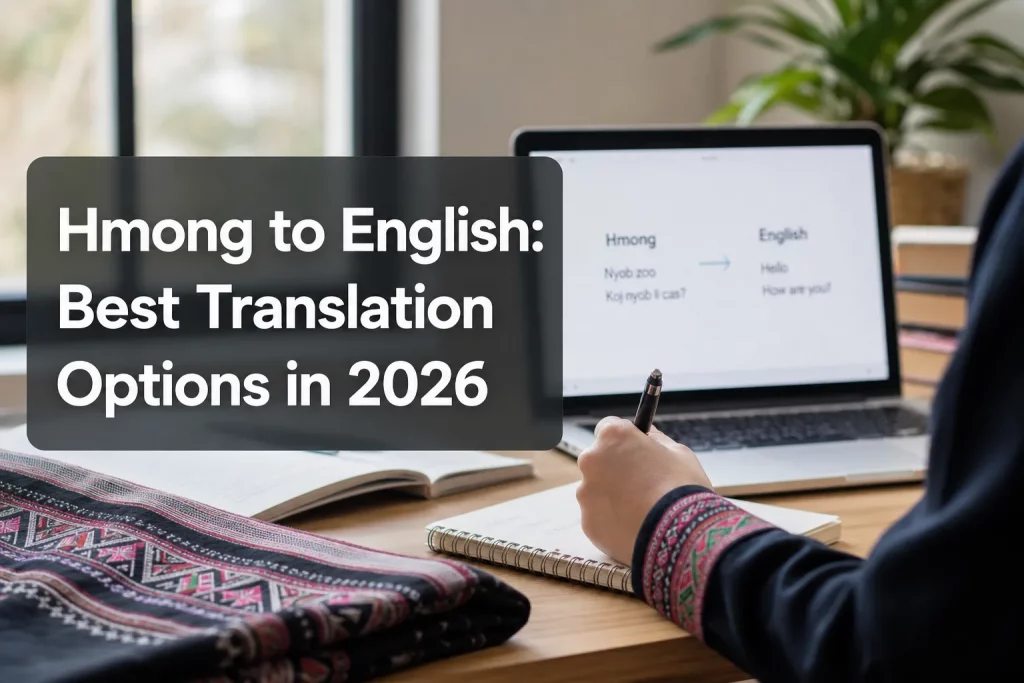
Hmong to English: Best Translation Options in 2026
If you need reliable Hmong to English communication in 2026, the right solution depends less on the app you pick and more on the stakes of the message. A quick personal phrase lookup, a hospital discharge summary, a live town hall, a church service, a trade show presentation, and a multilingual corporate event all require different levels of accuracy, speed, cultural awareness, and accessibility.
For event organizers, operations leaders, conference planners, marketing teams, churches, and broadcast producers, that distinction matters. A mistranslated phrase can create confusion. A missed interpretation cue can derail a live session. Poor captioning can create accessibility and compliance risks. That is why the best approach today is not simply “human vs. AI.” It is choosing the right mix of translation, interpreting, captioning, subtitling, and technical support for the audience and the moment.
In this guide, we break down the best translation options available in 2026, where apps fit, where they fall short, and when a full-service partner like Team Stream delivers better results through accurate human expertise, AI-powered language support, live captioning, interpreting, and end-to-end event execution.
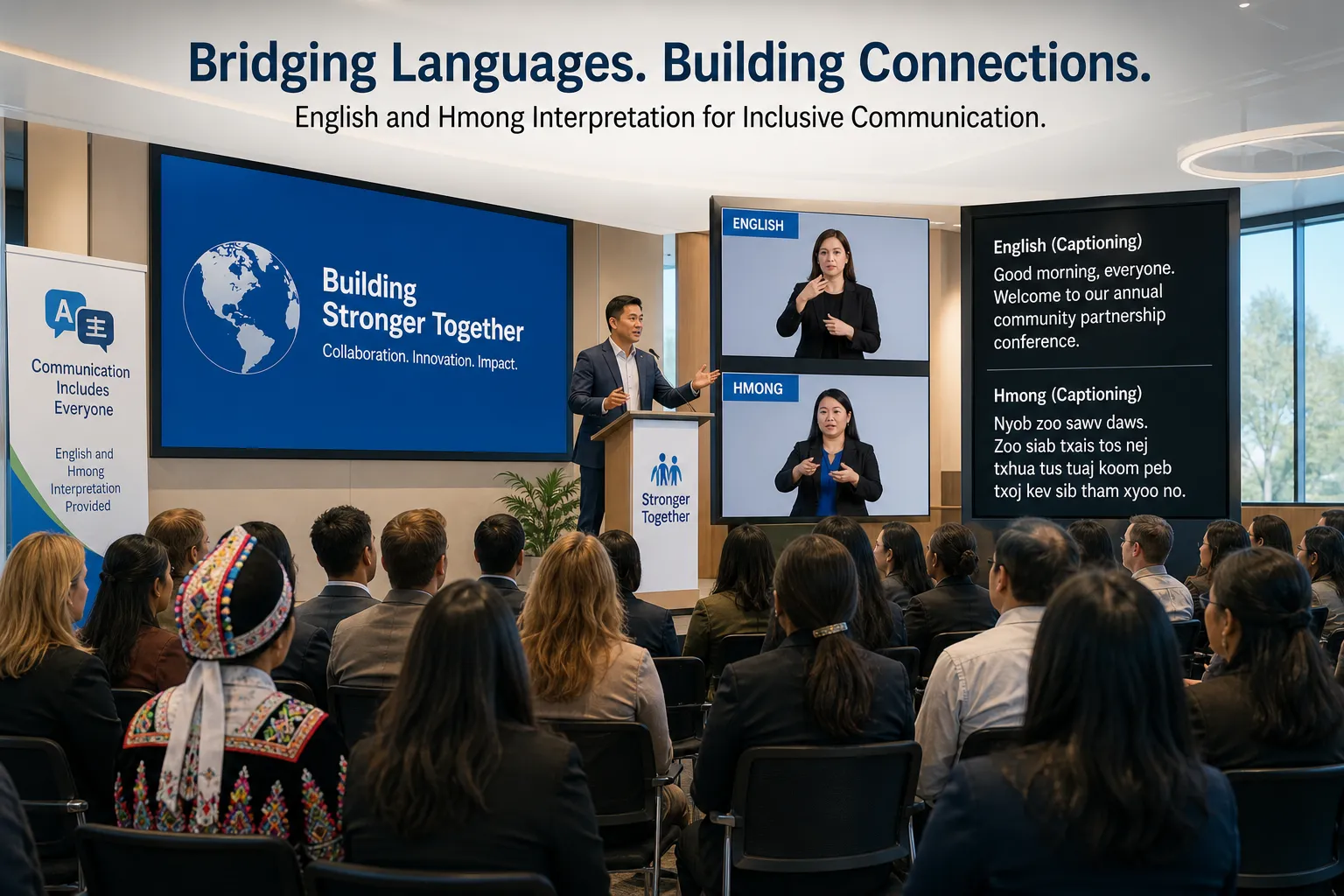
What people really mean when they search for Hmong to English
Most readers are not just looking for literal word conversion. They are trying to solve one of these problems:
-
Understand spoken or written Hmong accurately
-
Translate English materials for Hmong-speaking communities
-
Support multilingual meetings, trainings, or events
-
Add captions or subtitles for accessibility and engagement
-
Reduce risk in business, medical, legal, educational, or public-facing communication
That is a major content gap in many competing articles and app pages. They focus on “translation” as a simple text box activity, but real communication often requires several distinct services working together.
The 5 main options in 2026
1. Mobile translation apps
For casual use, mobile apps are often the first stop. They are convenient, inexpensive, and useful for short phrases or everyday vocabulary.
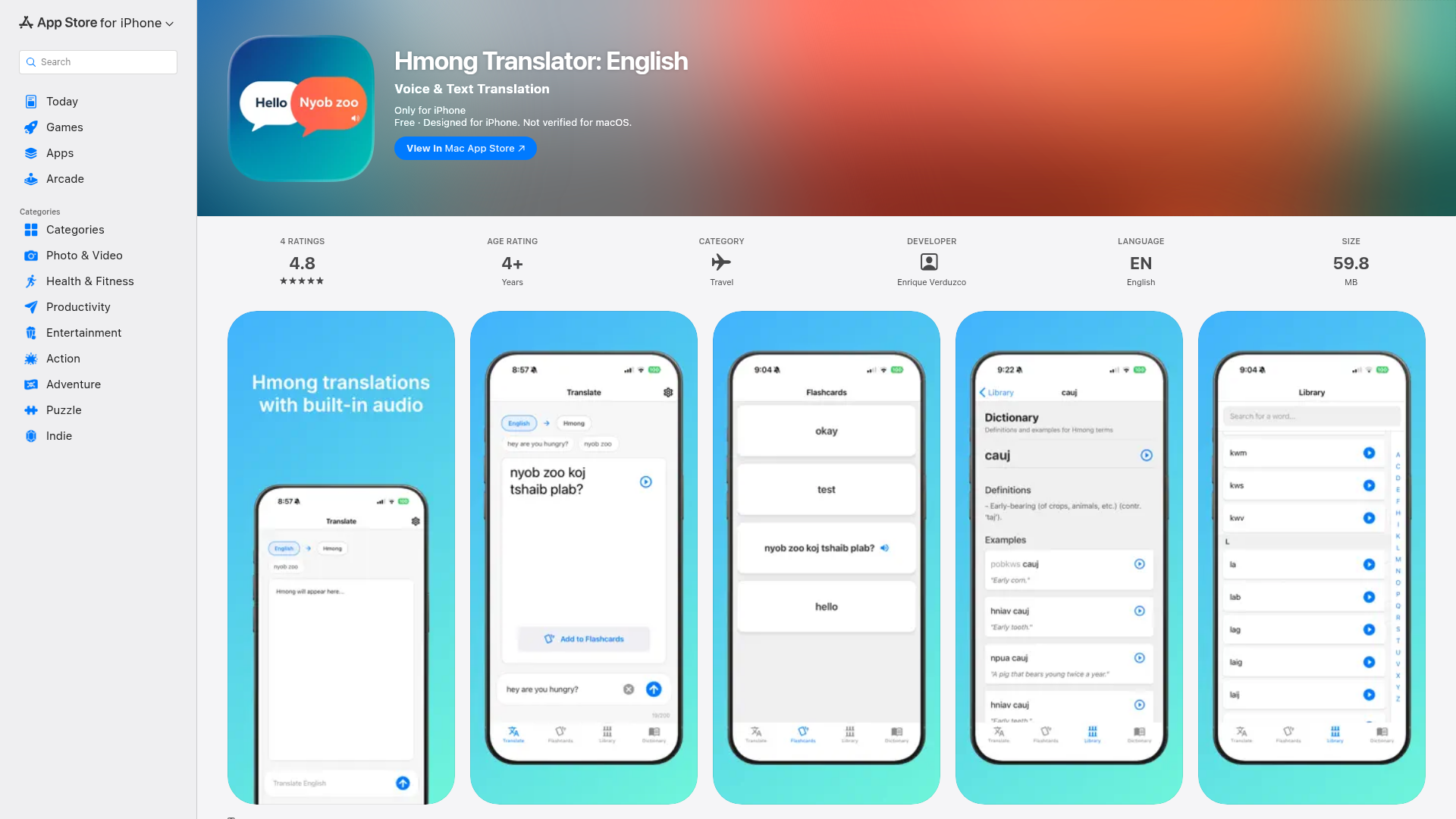
A current example on iPhone is the Hmong Translator: English app, which promotes text and voice translation, pronunciation, flashcards, dictionary features, and recent support for both translation directions.
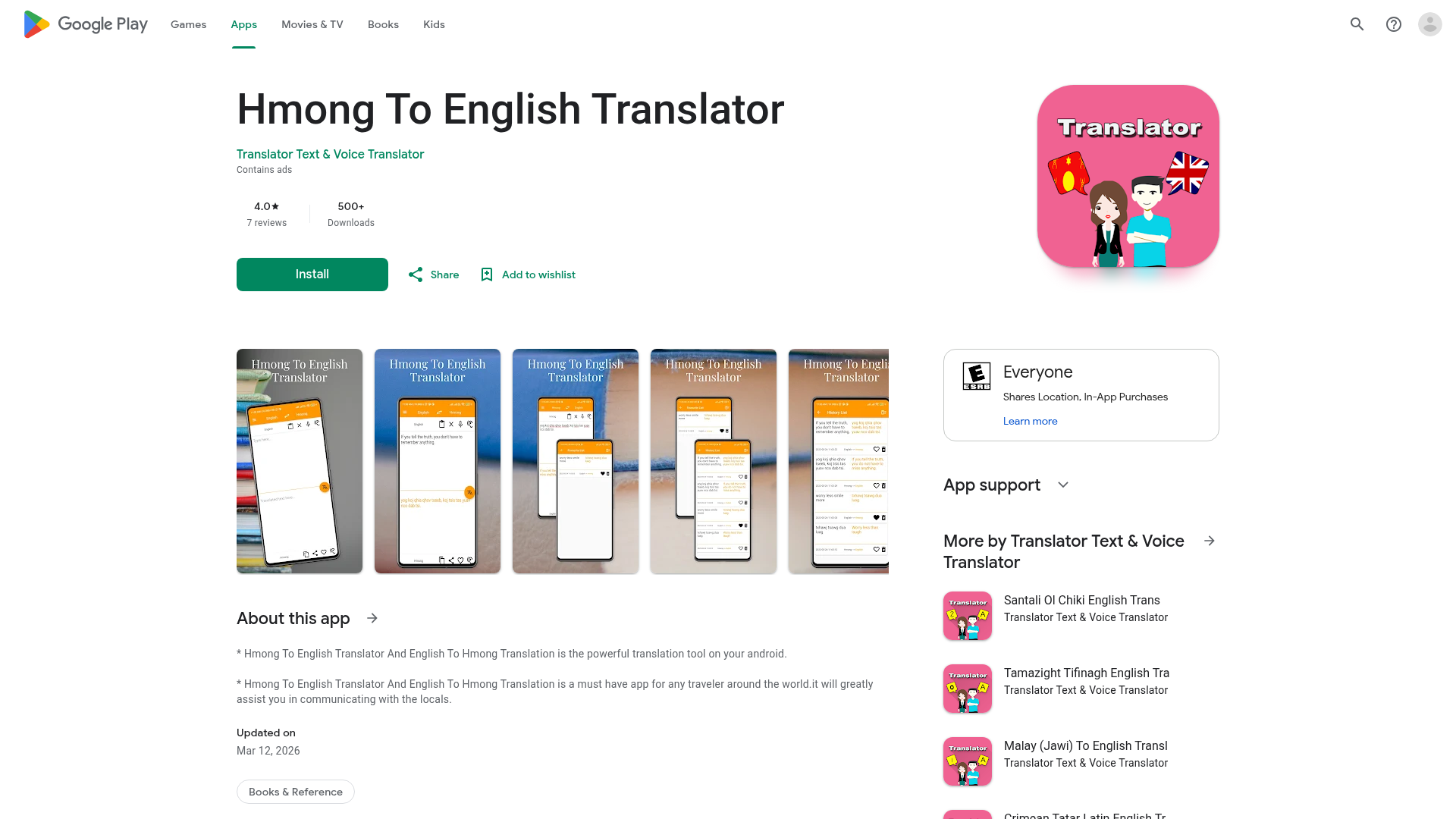
On Android, the Hmong To English Translator app positions itself as a travel-friendly phrase tool with voice and text translation.
Best for:
-
Basic personal use
-
Vocabulary lookup
-
Informal travel or daily conversation
-
Learning support
Limitations:
-
Mixed quality across dialects, spelling, and context
-
Inconsistent voice features
-
Weak handling of nuance, idioms, and sensitive topics
-
Not ideal for live events, compliance needs, or audience-facing messaging
App store listings also reveal practical issues competitors rarely discuss: small review volumes, feature limitations, inconsistent audio support, and unclear accuracy standards.
2. General AI translators
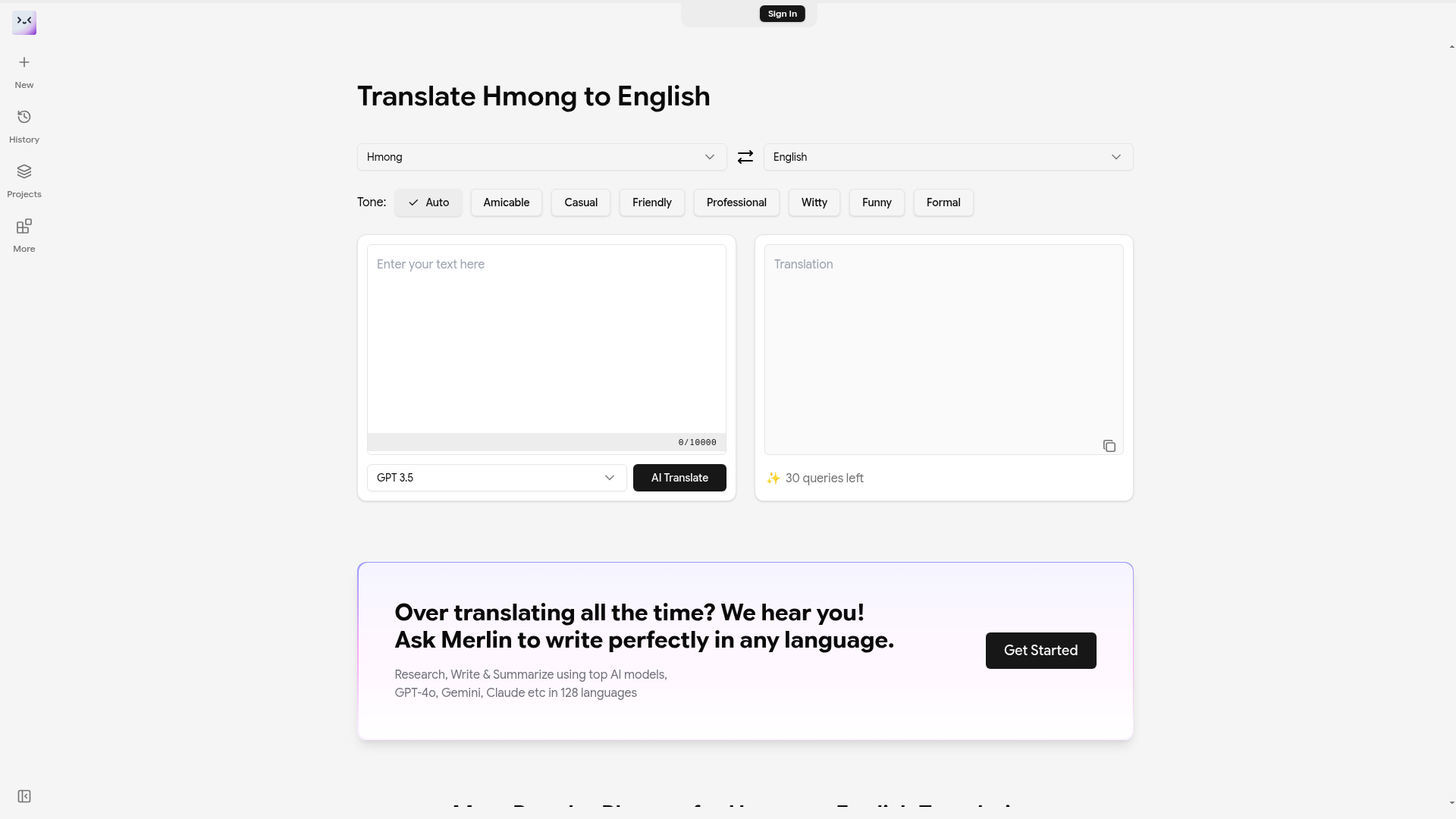
AI translation tools can be fast and flexible, especially for rough drafts, summaries, and internal workflows. A tool like Merlin’s online Hmong-to-English translator shows how AI translation is now widely available through web interfaces and browser extensions.
Best for:
-
First-pass translation
-
Quick internal understanding
-
Drafting summaries
-
Low-risk content review
Limitations:
-
May miss cultural meaning
-
Can overconfidently produce incorrect output
-
Quality varies by prompt, sentence structure, and source clarity
-
Not sufficient alone for public, legal, medical, or mission-critical use
3. Human written translation
When the message must be right, professional human translation is still the standard. This is especially true for documents, outreach materials, training resources, signage, internal communications, and regulated content.
Best for:
-
Business documents
-
Community communications
-
Healthcare or public sector materials
-
Marketing assets
-
Faith-based and nonprofit outreach
-
Materials needing review for tone and clarity
Strengths:
-
Better contextual judgment
-
Greater cultural sensitivity
-
Quality assurance and editing
-
Audience-appropriate wording
4. Live interpreting
If communication is happening in real time, you need interpreting, not translation. This is one of the biggest distinctions competitor pages often gloss over.
Translation converts written text.
Interpreting conveys spoken language live.
For Hmong-speaking audiences in meetings, conferences, church services, press briefings, webinars, trade shows, and hybrid events, live interpreting is often the most important service layer.
Best for:
-
Conferences and breakout sessions
-
Live presentations
-
Meetings and training sessions
-
Community engagement events
-
Broadcasts and livestreams
5. Captioning, subtitling, and accessibility services
A modern language solution does not stop at words. If your audience includes Deaf or hard-of-hearing attendees, multilingual viewers, or remote participants, accessibility has to be part of the plan.
That means considering:
-
Real-time captioning
-
Closed captioning
-
Subtitles
-
Voiceover
-
Platform integration
-
Technician support
-
Audio routing and equipment setup
This is where Team Stream stands out. Rather than treating language access as a standalone add-on, Team Stream delivers a complete communication layer: interpreting, captioning, translation, subtitling, voiceover, equipment rental, and technical support for live, virtual, and hybrid environments.
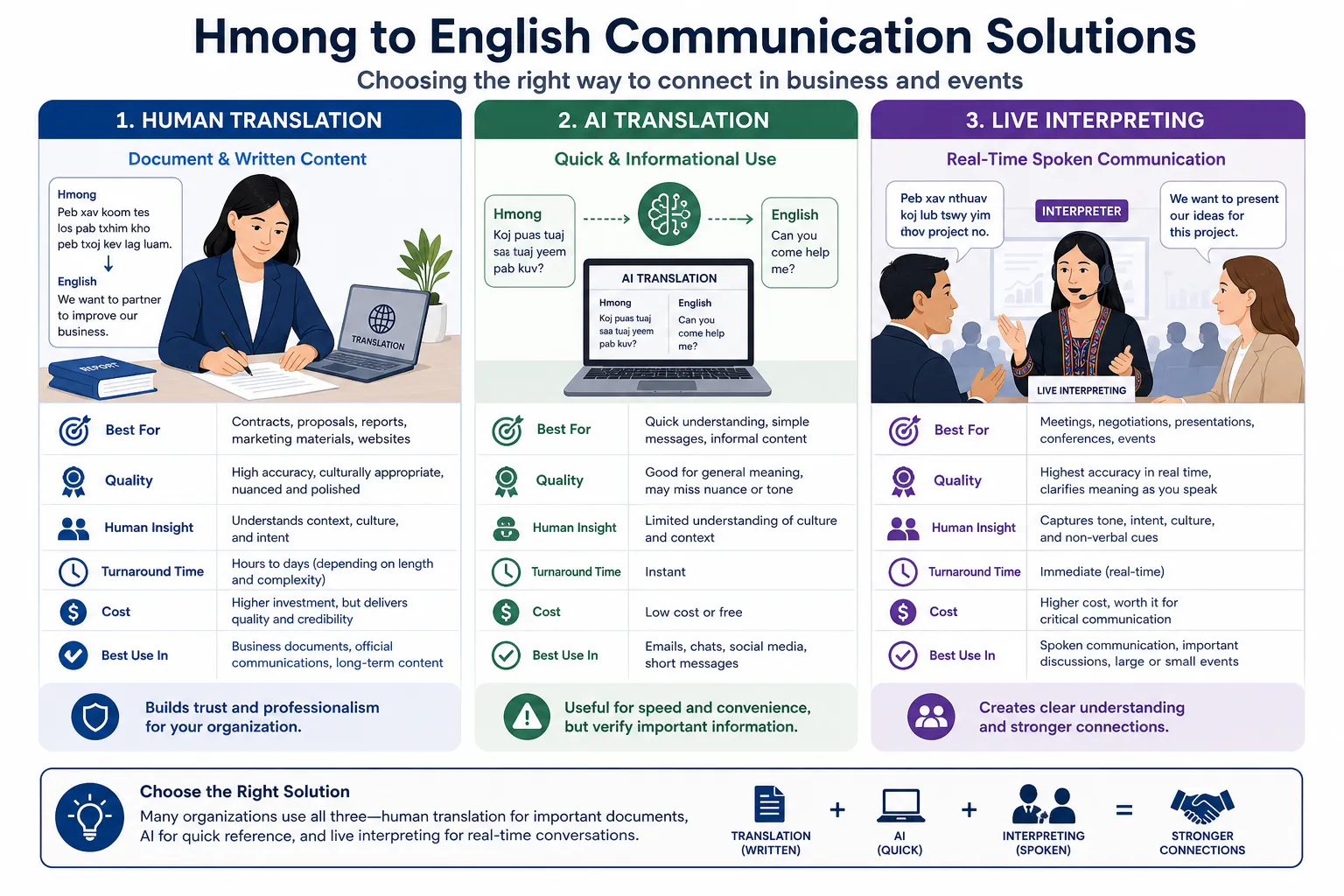
Human vs. AI for Hmong to English in 2026
The best question is not which one wins in all cases. It is which one fits the communication risk.
Quick comparison
|
Option |
Speed |
Accuracy |
Cultural nuance |
Best for |
Risk level |
|---|---|---|---|---|---|
|
Mobile app |
Fast |
Low to moderate |
Limited |
Casual phrases, learning |
High for business-critical use |
|
General AI translator |
Fast |
Moderate |
Variable |
Drafts, summaries, internal use |
Moderate to high |
|
Human translator |
Moderate |
High |
Strong |
Documents, outreach, regulated content |
Low |
|
Live interpreter |
Real-time |
High |
Strong |
Meetings, conferences, events |
Low |
|
AI + human review |
Fast and balanced |
High |
Stronger than AI alone |
Scalable business workflows |
Low to moderate |
|
Full-service language partner |
End-to-end |
Highest practical reliability |
Strong |
Events, broadcasts, accessibility programs |
Lowest |
The real-world takeaway
AI is useful. Human expertise is essential. The strongest results usually come from combining both in a structured workflow.
That is the model Team Stream is built around: accurate human and AI-powered translation and interpreting, tailored to the setting, audience, timeline, and compliance requirements.
“88% have increased their use of interpretation or captioning services.” – Wordly
That rise makes sense. More organizations are now expected to communicate clearly across languages and across formats: in-person, remote, live, on-demand, accessible, and compliant.
“50% of respondents reported instances where individuals with Limited English Proficiency required an interpreter but did not receive one.” – GALA
This is where “good enough” tools stop being good enough. If language access breaks down in a critical moment, the cost is not just inconvenience. It can affect trust, participation, safety, accessibility, and outcomes.
Why Hmong translation requires extra care
Hmong is often underserved in mainstream language technology. That matters because lower-resource languages can present extra challenges for AI systems and generic tools.
Common problem areas
-
Dialect and orthography variation
-
Community-specific expressions
-
Sensitive cultural context
-
Proper names and place references
-
Spoken-language ambiguity in live settings
-
Low-quality captions generated from noisy event audio
These are exactly the situations where a specialized, service-oriented partner creates value. Team Stream does not force clients into a one-size-fits-all package. Instead, the team evaluates audience needs, content type, event format, and delivery constraints to recommend the right combination of human interpreters, translators, AI-enabled workflows, captioning, and technical support.
Best use cases by scenario
For personal use
If you are translating short messages, checking vocabulary, or learning basic phrases, a mobile app or AI translator may be enough.
For business documents
Use professional written translation with human review. Internal memos, training materials, handbooks, and external communications should be accurate, clear, and audience-appropriate.
For conferences and live events
Use live interpreting plus captioning. If the event is hybrid or virtual, you also need platform-ready technical delivery and potentially remote interpreter integration.
For churches and community organizations
Use a blended solution: spoken interpreting for services or gatherings, written translation for bulletins and outreach, and captions or subtitles for online media.
For video and broadcast
Use subtitling, voiceover, captioning, and translation together. Accessibility and multilingual engagement both improve when language services are built into the production workflow from the start.
For compliance-sensitive communication
Use professional human translation and captioning, ideally through a provider that understands inclusive communication and can support documentation, process consistency, and quality control.
What most competitor content misses
Many top-ranking pages in this space fall into one of three categories: app listings, lightweight translator tools, or generic AI pages. They are useful for discovery, but they rarely answer the questions that matter to organizations.
Here are the gaps:
They do not distinguish translation from interpreting
This is a fundamental mistake for event planners and business teams. If your need is live spoken communication, a text translator is the wrong solution.
They ignore accessibility
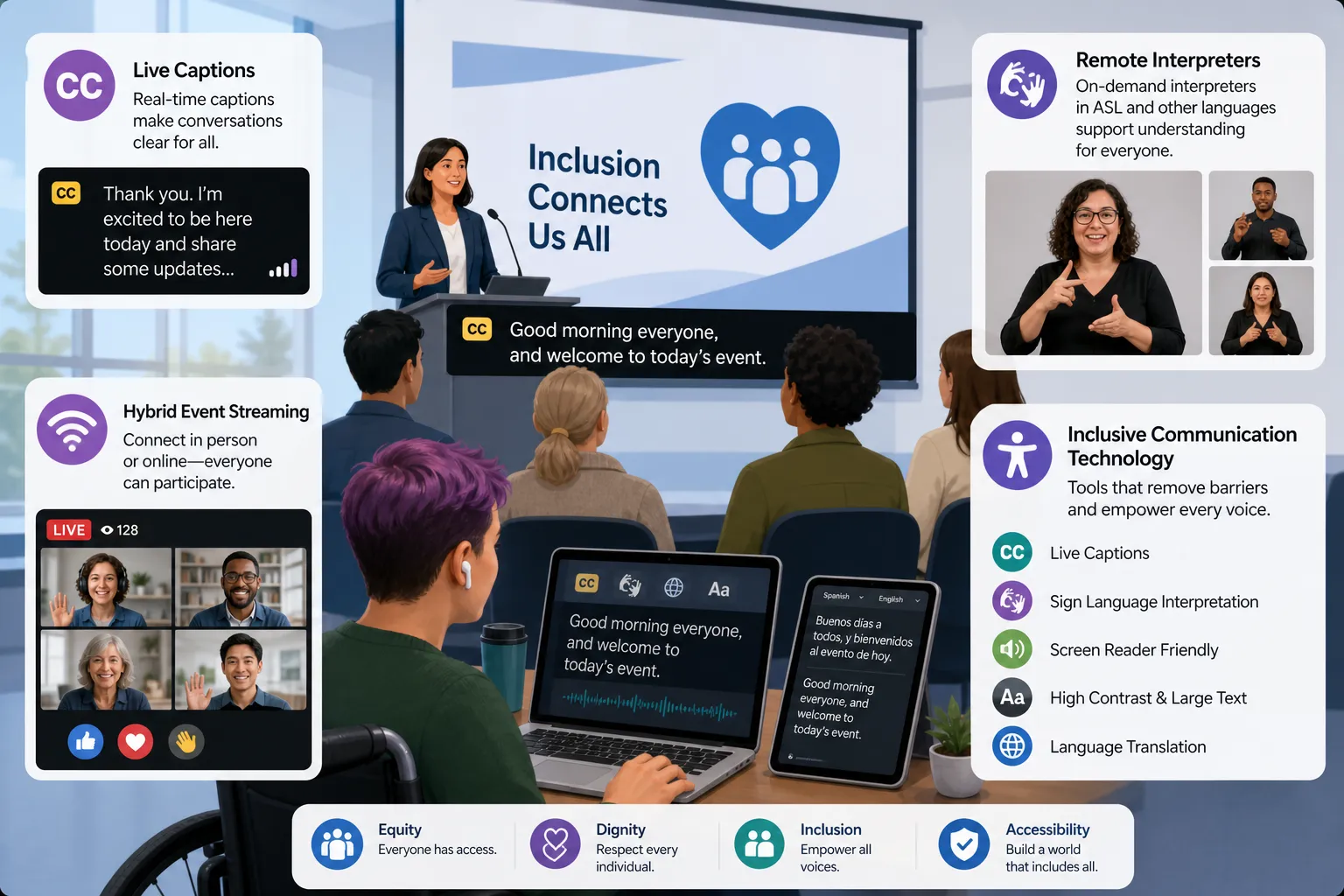
Captions, subtitles, and inclusive design are not optional extras. They affect comprehension, audience reach, engagement, and in many cases compliance.
They do not address risk
Not all communication has the same stakes. A social caption and a healthcare form should not be handled the same way.
They lack operational guidance
Most pages do not explain how to deploy multilingual communication across live, virtual, or hybrid events.
They do not offer end-to-end service
A language tool is not the same as a language solution. Events often need interpreters, captions, receivers, technician support, streaming integration, and contingency planning all at once.
How Team Stream solves the bigger problem
Team Stream is not just a translation vendor. It is a full language access and accessibility partner built for organizations that need reliable execution.
What makes Team Stream different
-
Accurate human and AI-powered translation and interpreting
-
Real-time captioning for accessibility and engagement
-
Written translation, subtitling, and voiceover services
-
End-to-end language and accessibility solutions tailored to each client
-
Support for live, virtual, and hybrid events
-
Compliance-friendly services for inclusive communication
-
Professional equipment rental and technician support
-
Flexible in-person and remote delivery models
-
More than 25 years of experience
-
Responsive service and dependable execution
Why that matters for Hmong-speaking audiences
When communication involves Hmong-speaking communities, quality depends on more than software. You need the right linguistic support, the right delivery format, and the right event operations behind it. Team Stream helps clients put all of those pieces together without the fragmentation that often comes from juggling separate app tools, caption vendors, interpreters, and production teams.
A practical decision framework
Use this checklist to choose the right option.
Choose an app or AI tool if:
-
The content is informal
-
The stakes are low
-
You need speed more than precision
-
A rough understanding is acceptable
Choose professional human translation if:
-
The content is public-facing
-
Meaning, tone, and trust matter
-
The document supports business, community, or regulated communication
-
Errors would create confusion or reputational risk
Choose live interpreting if:
-
The communication is spoken and happening in real time
-
Participants need two-way understanding
-
You are hosting a meeting, service, webinar, or conference
Choose captioning and accessibility support if:
-
Your event or video has remote viewers
-
You need inclusive communication
-
You want to improve comprehension and engagement
-
Accessibility requirements or standards apply
Choose Team Stream if:
-
You need multiple services working together
-
The event is live, virtual, or hybrid
-
Reliability matters as much as language quality
-
You want one accountable partner from planning through execution
Best translation options in 2026: quick summary
|
Need |
Best option |
|---|---|
|
Casual phrase lookup |
Mobile translation app |
|
Quick internal draft |
AI translator |
|
Business or community documents |
Human translation |
|
Live meetings or presentations |
Professional interpreting |
|
Video accessibility and multilingual reach |
Captioning, subtitling, voiceover |
|
Conferences, broadcasts, hybrid events |
Team Stream end-to-end language and accessibility support |
Final verdict
In 2026, there is no single “best” Hmong to English tool for every situation. Apps and AI translators are helpful for quick, low-risk tasks. But once accuracy, accessibility, professionalism, or live audience experience matter, human expertise becomes essential.
That is why the strongest option for organizations is a partner that can combine translation, interpreting, captioning, subtitling, voiceover, and technical event support into one reliable workflow. Team Stream delivers exactly that. With over 25 years of experience, flexible in-person and remote service, compliance-friendly accessibility solutions, and a reputation for strong customer support, Team Stream helps clients communicate clearly and inclusively when it matters most.
If your organization needs more than a text box and more than guesswork, Team Stream is the smarter next step.
FAQ
What is the best translator in 2026?
The best translator in 2026 depends on the stakes. For casual use, an app or AI tool may be enough, but for business, events, or community communication, human-reviewed translation and interpreting remain the most reliable choice. For organizations, Team Stream offers the strongest all-around solution because it combines language accuracy with accessibility and event support.
Is DeepL better than Google Translate 2026?
That depends on the language pair and the use case. For major languages, one may read more naturally than the other, but for Hmong to English, neither should be treated as a final authority for high-stakes communication. Important content should still be reviewed by a professional translator or interpreter.
How to translate Hmong to English?
You can translate Hmong to English with a mobile app, an AI translation tool, or a professional language provider. For simple personal phrases, apps are fine, but for documents, live meetings, events, captions, or public communication, a professional service like Team Stream is the better choice.
Is Chatgpt a good translator?
ChatGPT can be a useful first-pass translator for drafts, summaries, and low-risk content. However, it can miss nuance, cultural context, and terminology, especially in less-supported languages. For important Hmong-to-English communication, it works best with human review.
Is DeepL better than Google Translate 2026?
For some common languages, DeepL may sound more natural, while Google Translate may offer broader utility and integrations. But for professional Hmong language access, the better question is whether either tool is sufficient on its own. In critical settings, a managed solution with human expertise, captioning, and interpreting support is far more dependable.
