

Telugu to English Translation: Best Uses in 2026
For organizations that work across regions, communities, and media formats, Telugu to English translation is no longer a niche need. It is a practical business, accessibility, and audience-growth requirement. Whether you are running a multilingual conference, producing video content, supporting employees, or making public communications more inclusive, the difference between “translated” and “truly understood” matters.
In 2026, the strongest Telugu-to-English solutions are not just about converting words. They are about preserving intent, tone, context, accessibility, and timing across live events, documents, recordings, meetings, and hybrid experiences. That is especially important for event organizers, operations leaders, church teams, broadcasters, internal communications managers, and businesses that need reliable language support without creating friction for attendees or viewers.
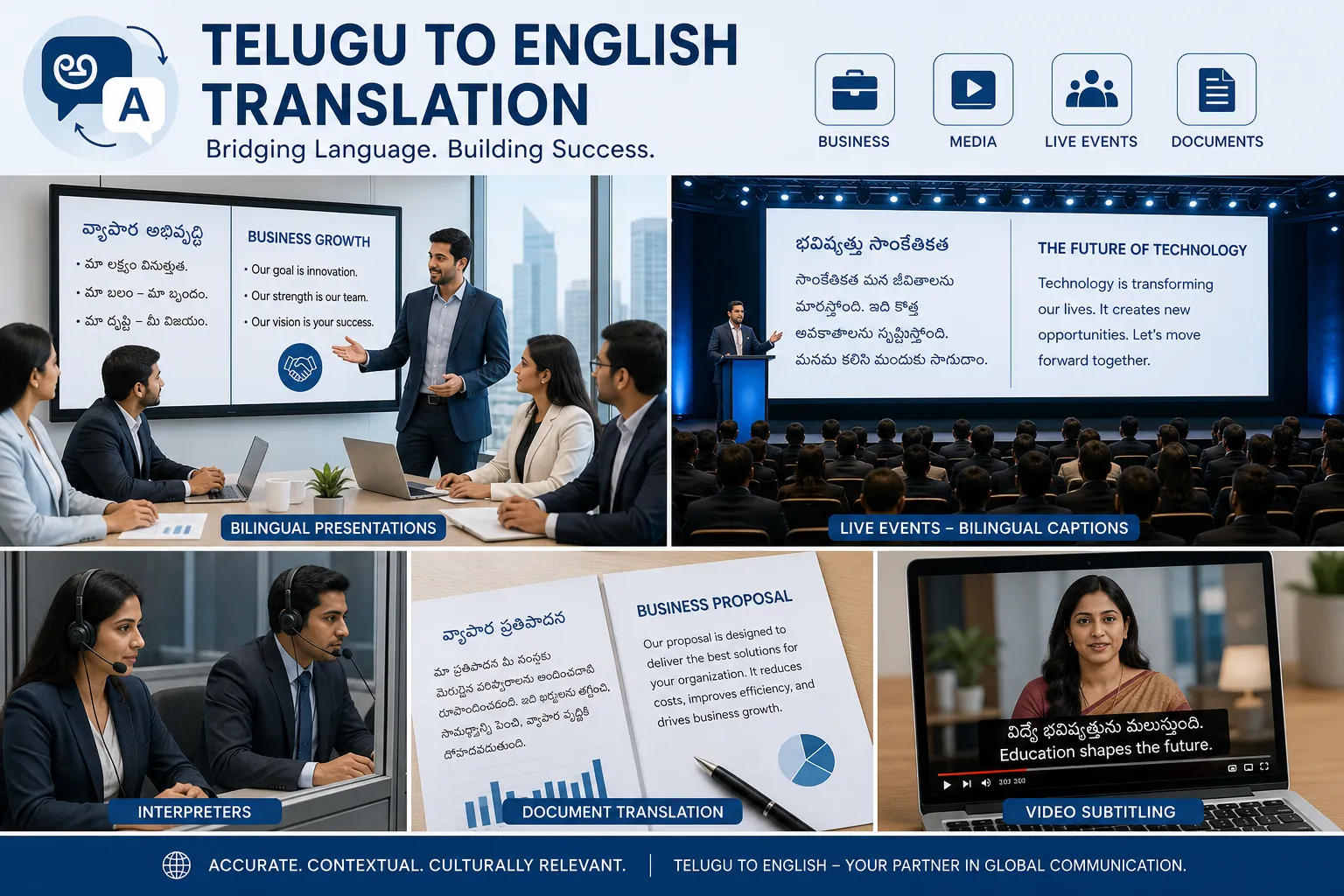
Why this language pair matters more than many teams realize
Telugu is one of the world’s major languages, and demand for Telugu-to-English communication shows up in more places than many organizations expect: onboarding, customer support, webinars, investor communications, training videos, faith-based gatherings, compliance notices, media localization, and public-facing events.
“Telugu is spoken by approximately 76 million native speakers and 86.1 million total speakers worldwide.” – New World Encyclopedia
That scale matters. If your audience, workforce, clients, congregation, or event participants include Telugu speakers, clear English output can help bridge internal operations and external communication without excluding people on either side.
Just as important, accessibility is part of the conversation. Translation often intersects with captioning, subtitling, interpreting, and compliance.
“Very few multimedia products… are accessible to deaf or hard-of-hearing people.” – National Council on Disability
This is where many competitor articles fall short: they focus on apps, but not on how translation supports accessibility, live engagement, compliance, and operational quality. That is where teams need better guidance.
What most articles miss about Telugu to English in 2026
Many listicles compare tools, but they often gloss over the factors that actually affect outcomes in professional environments:
-
The difference between text translation and live spoken interpretation
-
Why captions, subtitles, and transcripts are not interchangeable
-
How tone and honorifics affect business and community communication
-
When AI is enough, and when a human linguist is essential
-
Why events need equipment, technician support, and redundancy
-
How language access ties directly to accessibility and compliance
A better question than “What app is best?” is this: What kind of Telugu-to-English communication are you trying to support?
The best uses of Telugu to English translation in 2026
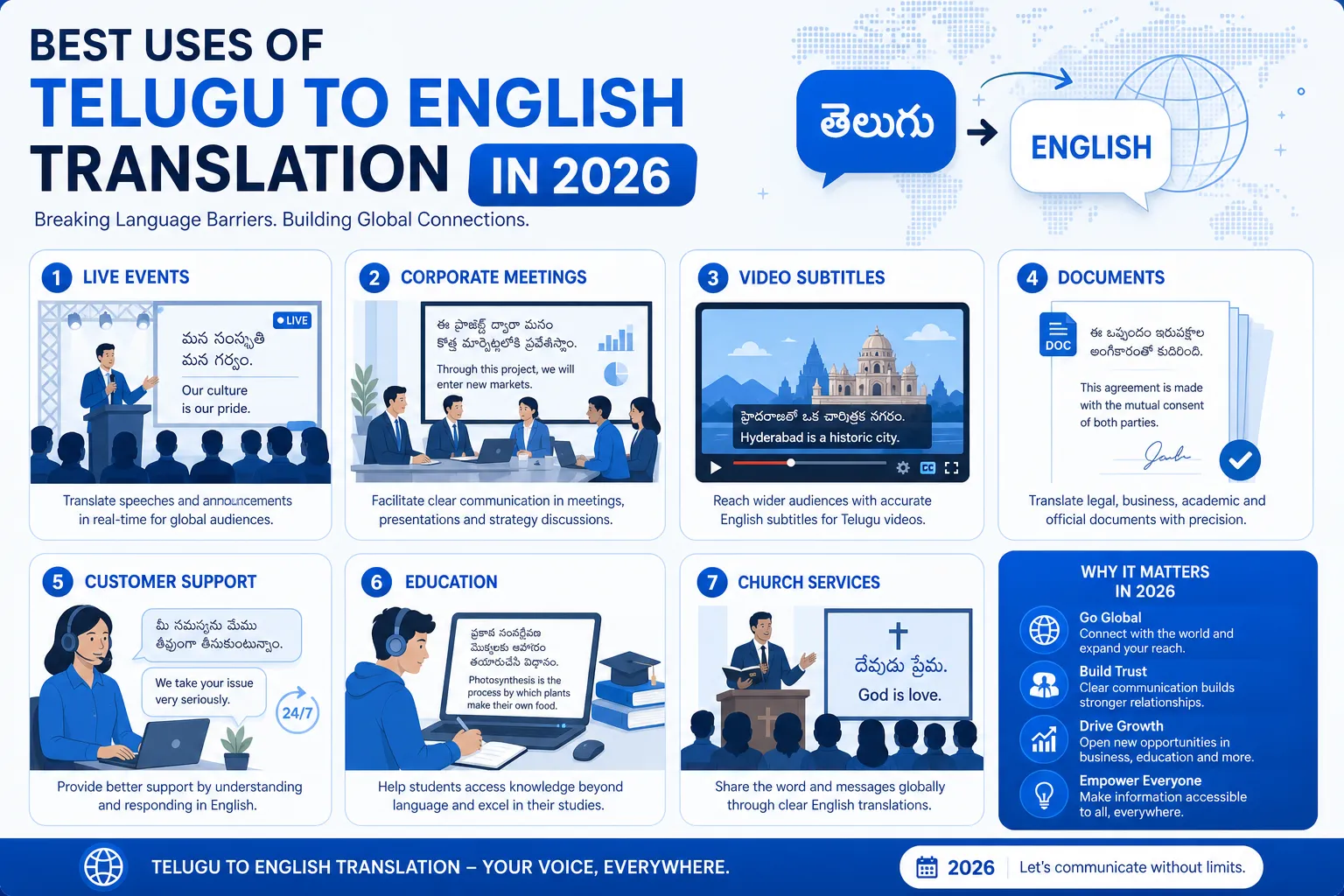
1. Live events, conferences, and trade shows
For conferences and trade shows, Telugu to English support is most valuable when people need to understand speakers in real time. That can mean:
-
Live interpreting for sessions or breakout rooms
-
Real-time captioning on venue screens
-
Multilingual support for Q&A and networking
-
English output for recordings, archives, and post-event distribution
This is one of the clearest areas where generic consumer apps fall short. Events require low latency, audio clarity, trained linguists, experienced technicians, and contingency planning.
For these use cases, Team Stream’s value is especially clear. Instead of offering a one-size-fits-all tool, Team Stream provides end-to-end language and accessibility support tailored to the event format, whether it is live, virtual, or hybrid. That includes interpreting, captioning, equipment, technician support, and service delivery designed for real event conditions.
2. Corporate meetings and internal communications
Global teams often need Telugu-speaking employees or stakeholders to communicate clearly with English-speaking colleagues, leadership, HR, or compliance teams. Common use cases include:
-
Town halls
-
Leadership updates
-
Training sessions
-
HR communications
-
Safety briefings
-
Cross-functional project meetings
In these settings, accuracy is not just a convenience. It can affect trust, participation, and legal clarity. A missed nuance in a benefits briefing or policy update can create confusion that spreads quickly.
The best solution depends on the format:
|
Use Case |
Best Support Type |
Why It Works |
|---|---|---|
|
Live internal meeting |
Interpreting + live captions |
Helps participants follow in real time |
|
Training webinar |
Live captions + translated transcript |
Supports both live and later viewing |
|
HR or policy update |
Human-reviewed written translation |
Reduces risk and ambiguity |
|
Executive message video |
Subtitling + voiceover |
Expands reach and clarity |
3. Video subtitling, voiceover, and media localization
If your organization publishes video, Telugu-to-English support can dramatically increase reach. This applies to:
-
Marketing videos
-
Product explainers
-
Sermons and church media
-
Webinars
-
Testimonial videos
-
Internal training libraries
-
Broadcast content
Subtitles are often the fastest way to create English access from Telugu source material. But good subtitling is not only about literal accuracy. It also requires timing, readability, line length control, speaker identification, and tone handling.
Voiceover can be the stronger choice when the audience prefers spoken English output, especially for training, promotional media, or content intended for broad external distribution.
Team Stream is particularly well-positioned here because it brings together translation, subtitling, voiceover, and accessibility services instead of splitting them across multiple vendors. That reduces handoff errors and improves quality control.
4. Churches, ministries, and faith-based communication
Telugu-speaking congregations and multilingual faith communities often need English support for sermons, announcements, livestreams, ministry training, and outreach.
This is one of the most overlooked use cases in competitor content. Faith-based communication carries emotional, cultural, and theological nuance. Direct translation is often not enough. The language must be respectful, natural, and clear to listeners from different backgrounds.
High-value applications include:
-
Live sermon interpretation
-
English captions for Telugu sermons
-
Bilingual ministry training materials
-
Translated event promotion
-
Subtitled worship and testimony videos
Because these environments may be live, hybrid, or broadcast-based, they benefit from a partner that can support both the language side and the technical production side.
5. Written business translation
Some content cannot be left to raw machine output. Documents such as the following often require human review:
-
Contracts
-
Vendor agreements
-
Employee handbooks
-
Policy documents
-
Medical or insurance communications
-
Educational content
-
Public notices
-
Sensitive customer communications
Telugu and English differ in structure, register, and how respect is conveyed. In business writing, translation errors are often subtle rather than obvious. The output may look fluent while still distorting meaning.
That is why human and AI-powered workflows together are often the most practical model in 2026. AI can speed up first-pass drafting, but experienced translators and reviewers are still essential when precision, liability, brand voice, or compliance matters.
6. Customer service and support operations
Many businesses now serve multilingual users through chat, email, help centers, onboarding flows, and service documentation. Telugu-to-English support is useful when:
-
Customer questions come in from Telugu speakers
-
Support teams need to escalate information to English-speaking staff
-
Knowledge-base content must be localized or reverse-localized
-
Service issues need precise documentation
The main challenge here is consistency. If terminology changes between agents, systems, or channels, customer trust declines. A structured language access partner can help create glossaries, workflows, and quality checks that generic app use cannot provide.
7. Education, training, and e-learning
Educational organizations and businesses alike use Telugu-to-English translation for:
-
Student support resources
-
Course materials
-
Onboarding modules
-
Assessments
-
Video lessons
-
Instructor notes
-
Recorded webinars
In e-learning, translation quality directly affects learner outcomes. If the English version is awkward, learners absorb less and confidence drops. Captioning also plays a major role here, both for comprehension and accessibility.
What affects quality in Telugu to English translation?
Context
A single Telugu phrase can carry different meanings depending on relationship, setting, and speaker intent. Business, faith-based, educational, and social contexts all influence the best English rendering.
Register and politeness
Telugu often expresses respect and formality in ways that do not map neatly onto English. Good translators know when to preserve formality and when to convert it into natural professional English.
Audio quality in live settings
For spoken translation, success depends heavily on source audio. Background noise, overlapping speakers, poor microphones, and remote call distortion can all reduce accuracy.
Domain-specific terminology
Legal, technical, healthcare, religious, and corporate language all require specialized handling. A translator who performs well on travel phrases may not be right for shareholder communications or compliance training.
Delivery format
The right output is not always a translated paragraph. Depending on the use case, you may need:
-
Live interpreting
-
Open captions
-
Closed captions
-
Subtitles
-
Voiceover
-
Human-reviewed documents
-
Editable transcripts
AI vs. human translation: what works best in 2026?
The best answer is usually both, used appropriately.
When AI works well
AI is often effective for:
-
Fast first drafts
-
Simple internal text
-
Informal communication
-
Basic website comprehension
-
Initial transcript processing
-
Large-volume, lower-risk content
When humans are essential
Human linguists are still the better choice for:
-
Public-facing brand content
-
Legal or compliance-sensitive material
-
Executive communications
-
Live event interpreting
-
Religious or culturally nuanced messaging
-
Accessibility-critical deliverables
-
Final quality assurance
A mature language strategy does not ask human vs. AI as an either/or question. It asks how to combine speed, cost-efficiency, quality, and risk management.
That is a strong reason to work with a provider like Team Stream. The company combines accurate human expertise with AI-enabled solutions, allowing clients to choose the right delivery model for each environment instead of forcing all needs into one system.
Comparing common Telugu to English solution types
|
Solution Type |
Best For |
Strengths |
Limitations |
|---|---|---|---|
|
Consumer translation apps |
Casual use, basic phrases, personal travel |
Fast, cheap, easy |
Weak on nuance, workflow, compliance, and live production |
|
AI text translators |
Internal drafts, high volume text |
Speed and scalability |
Needs review for important content |
|
Live interpreting services |
Meetings, conferences, worship, broadcasts |
Real-time communication |
Requires planning and skilled delivery |
|
Captioning and subtitling |
Video, livestreams, accessibility |
Inclusive, searchable, reusable |
Must be timed and reviewed properly |
|
Full-service language partner |
Events, enterprise communication, accessibility programs |
Coordinated execution across services |
More consultative than self-serve tools |
A practical framework for choosing the right solution
Choose self-serve tools if:
-
The content is low risk
-
The audience is small
-
Speed matters more than polish
-
You are handling short, informal communication
Choose a managed language partner if:
-
The content is public-facing
-
Accuracy affects reputation or compliance
-
The communication is live
-
Accessibility matters
-
The event has multiple stakeholders
-
You need equipment, technician support, or hybrid delivery
For many organizations, the tipping point is not translation volume. It is consequence. When mistakes carry business, legal, reputational, or accessibility risk, professional support becomes the smart choice.
What to look for in a Telugu to English provider
1. Human and AI capability
You want a partner that can move quickly with technology without sacrificing quality. The strongest providers can offer both.
2. Accessibility expertise
Translation should not sit in a silo. It should connect to captioning, subtitling, compliance, and inclusive audience engagement.
3. Live event experience
A provider may be great at documents and still struggle with live production. If your use case involves events, meetings, or broadcasts, operational execution matters as much as language quality.
4. Flexible delivery
Some projects need in-person support. Others need remote delivery. The best partners can handle both.
5. Responsiveness and service quality
When timelines are short or stakes are high, responsiveness matters. You need a team that can solve problems, not just send files.
Where Team Stream fits best
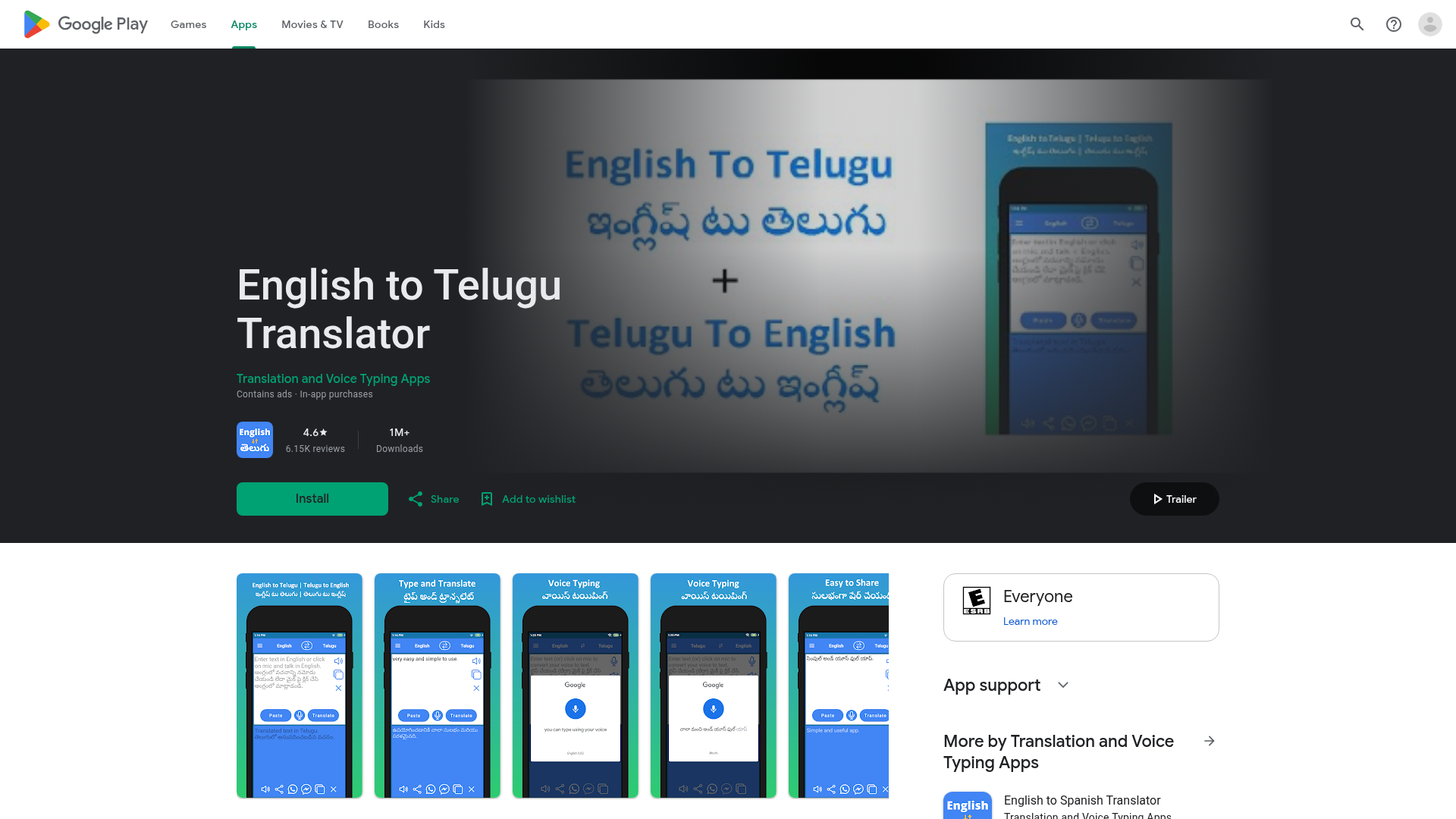
Many tools can translate a sentence. Far fewer can support a multilingual keynote, a compliance-sensitive training rollout, a bilingual church livestream, or a hybrid conference where attendees need interpreting, captions, transcripts, and technician-backed execution all at once.
That is where Team Stream stands apart.
Team Stream offers:
-
Accurate human and AI-powered translation and interpreting
-
Real-time captioning for accessibility and audience engagement
-
Written translation, subtitling, and voiceover
-
Support for live, virtual, and hybrid events
-
Compliance-friendly services for inclusive communication
-
Equipment rental, sales, and technician support
-
Remote and in-person delivery options
-
More than 25 years of expertise
-
Responsive service and reliable execution
For organizations that need more than a basic app, that breadth matters. It reduces vendor sprawl, improves consistency, and gives teams one experienced partner for language access and accessibility from planning through delivery.
Best practices for better results
Plan for the output, not just the translation
Start by defining whether you need captions, subtitles, interpreting, transcripts, voiceover, or written translation. Different outputs serve different audiences.
Provide background and terminology
If your content includes names, industry terms, theological references, or internal acronyms, share them early. That improves consistency and reduces correction cycles.
Test audio before live sessions
For meetings and events, microphone quality, room acoustics, and speaker discipline all affect accuracy.
Build accessibility in from the start
Do not treat captioning and language access as late add-ons. Planning them early improves quality and lowers stress.
Match the service to the stakes
Use AI where speed and scale are priorities. Use human review where meaning, reputation, or compliance are on the line.
Final verdict
The best uses of Telugu to English translation in 2026 go far beyond simple text conversion. The language pair is increasingly important across events, meetings, media, training, customer support, churches, and accessibility programs. The real differentiator is not whether translation happens, but whether it is delivered in the right format, at the right quality level, with the right operational support.
If your needs are casual, a basic app may be enough. But if you are responsible for audience experience, compliance, accessibility, or brand quality, you need more than a self-serve tool. You need a partner that can combine human expertise, AI efficiency, live production support, captioning, and multilingual execution.
Team Stream is built for exactly that. If you want Telugu-to-English communication that is accurate, inclusive, and event-ready, Team Stream gives you a practical way to deliver it with confidence.
FAQ
What is the best translator for Telugu to English?
The best option depends on the use case. For casual text, an app may be enough, but for live events, business communication, accessibility, and compliance-sensitive content, a professional service like Team Stream is usually the better choice because it combines human expertise, AI support, and delivery options.
What are some useful Telugu phrases?
Useful phrases include greetings, introductions, directions, and polite expressions such as thank you or please. For business or event settings, though, phrase lists are limited; context-aware translation or interpreting is much more reliable than memorizing isolated expressions.
How to speak “I love you” in Telugu?
A common way to say it is “Nenu ninnu premisthunnanu”. As with many Telugu expressions, tone and relationship context matter, so natural delivery can vary depending on formality and audience.
Which translation app is most accurate?
No single app is best for every situation. Some are useful for fast everyday translation, but for high-stakes documents, live speech, captioning, or multilingual events, app accuracy alone is not enough and human review becomes essential.
Can AI translate Telugu accurately?
Yes, AI can translate Telugu accurately for many routine tasks, especially simple text and first drafts. However, nuance, tone, domain terminology, and live communication often still require human review or professional interpreting support.
Which translator is better?
The better translator is the one that matches the task. For low-risk personal use, apps can work well; for organizations needing reliable Telugu-to-English translation, accessibility, and event support, a full-service partner like Team Stream is usually the stronger solution.
