

Telephonic Interpretation Services for Clear Calls
When a customer, patient, attendee, or community member cannot fully communicate in English, the cost of confusion rises fast. Calls take longer, trust drops, compliance risk increases, and key details can be missed. That is exactly why telephonic interpretation services have become a core part of modern communication strategies across healthcare, legal, customer service, government, and event operations.
For organizations that need fast, reliable multilingual support, phone-based interpreting fills a critical gap. It offers immediate access to a qualified interpreter without the delay of scheduling someone onsite. For busy support teams, care coordinators, intake staff, event hotlines, and operations leaders, that speed can make the difference between a smooth interaction and a failed one.
At Team Stream, we see telephonic interpretation as part of a broader language access strategy. The strongest organizations do not treat interpretation as a last-minute fix. They build it into customer experience, accessibility planning, live event operations, virtual meetings, and compliance workflows. That is where Team Stream stands apart: combining accurate human expertise, AI-powered support where appropriate, real-time captioning, translation, technician services, and end-to-end event and accessibility solutions tailored to each client.
“Approximately 8% of U.S. adults have limited English proficiency.” – Journal of General Internal Medicine
“99% of enterprise leaders acknowledge that offering interpretation and captioning enhances event effectiveness.” – Wordly
What Telephonic Interpretation Services Actually Are
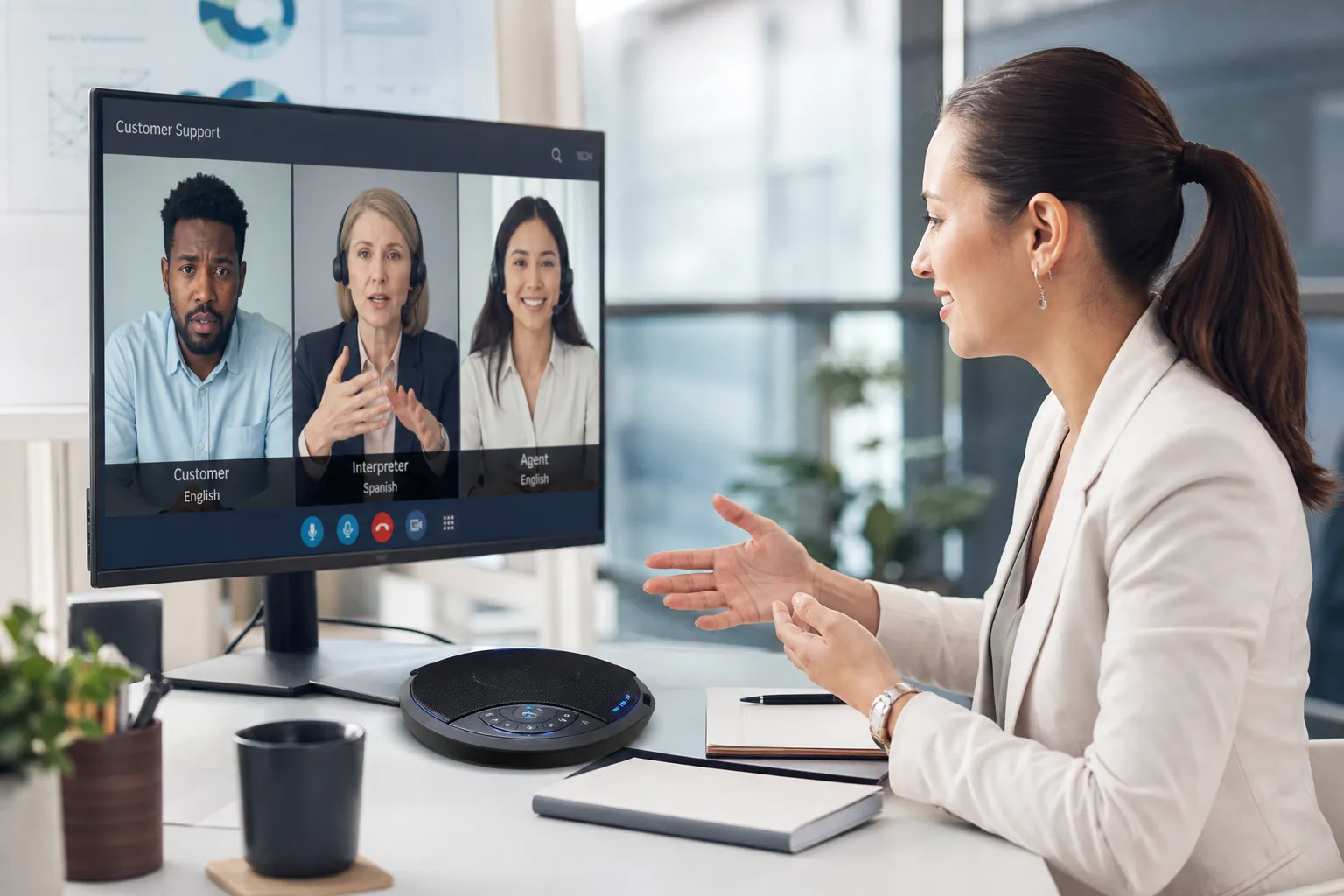
Telephonic interpretation services connect two or more parties by phone with a professional interpreter who converts spoken language in real time. One person speaks, the interpreter renders the message into the other language, and the conversation continues back and forth.
This is often called over-the-phone interpreting, telephone interpreting, or audio interpretation. The goal is simple: make spoken communication possible when participants do not share the same language.
Unlike written translation, which converts documents, interpretation happens live. Unlike onsite interpreting, it does not require travel or advance arrival at a physical location. Unlike video interpreting, it does not depend on visual cues or camera access. That makes it especially useful when speed, simplicity, and flexibility matter most.
How It Works Step by Step
Most phone interpreting workflows are straightforward.
1. A staff member identifies the language need
This may happen on an inbound service line, during a patient call, in a legal intake conversation, or while supporting a participant before or during an event.
2. The organization connects to an interpreter
The staff member dials a dedicated number or uses an integrated call workflow. In more advanced environments, the phone system or contact center platform can route language needs automatically.
3. The interpreter joins the call
Once connected, the interpreter facilitates the conversation between the parties, accurately conveying meaning, tone, and intent without adding or omitting information.
4. The call ends when the communication goal is met
Organizations typically pay based on usage, often by the minute, though enterprise setups can vary depending on volume, languages, and support requirements.
Why Businesses Use Phone Interpreting Instead of Waiting for Onsite Help
The main reason is speed, but that is not the whole story.
Telephonic interpreting solves several practical problems at once:
|
Need |
Why Phone Interpreting Helps |
|---|---|
|
Urgent communication |
Connects in seconds instead of waiting for onsite scheduling |
|
Broad language coverage |
Supports many languages without maintaining in-house staff |
|
Cost control |
Avoids travel, minimum visit fees, and idle onsite time |
|
Operational simplicity |
Works from standard phones and common call workflows |
|
Compliance support |
Helps organizations provide more equitable access |
|
Scalability |
Handles fluctuating call volume more easily than onsite models |
Competitor pages often focus on availability and language counts. What they usually under-explain is the operational value: telephonic interpretation is not just a language tool. It is a workflow tool. It helps organizations protect service quality during unpredictable, high-volume, short-notice interactions.
Where Telephonic Interpretation Services Work Best
Customer support and call centers
For support teams, every second matters. If an agent cannot understand a caller, handle time rises and the experience degrades quickly. Phone interpretation allows agents to resolve billing questions, service requests, account inquiries, and troubleshooting calls without transferring the customer away from help.
This is especially useful for businesses handling multilingual inbound support, retention calls, appointment scheduling, or escalations.
Healthcare and patient communication
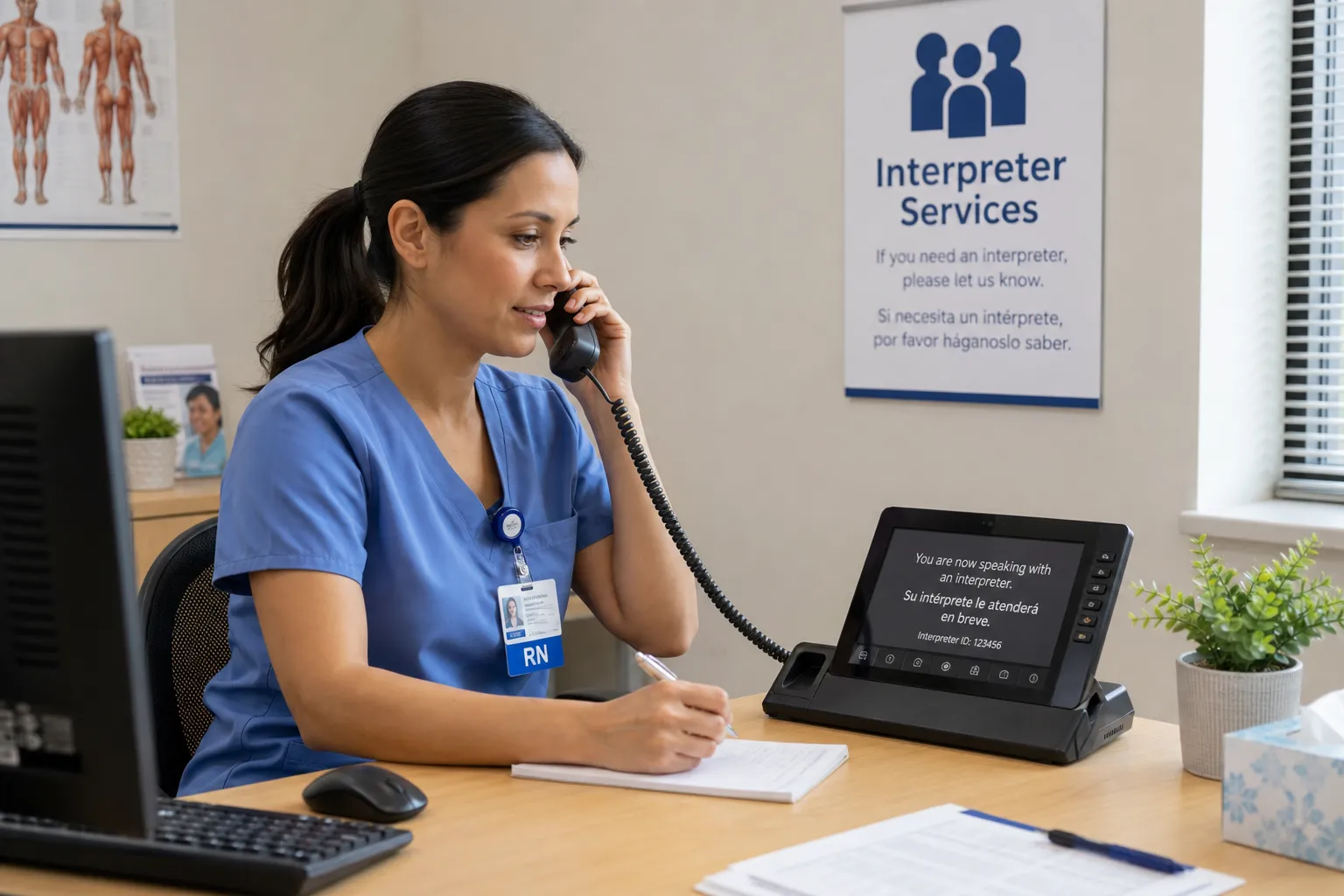
Healthcare organizations use telephone interpreting for appointment reminders, patient intake, pharmacy questions, discharge follow-up, care coordination, benefits conversations, and non-visual clinical discussions.
When used appropriately, it helps reduce confusion, supports informed communication, and strengthens compliance efforts around language access.
Legal intake and non-evidentiary communication
Law firms, legal aid groups, and justice-related organizations use phone interpreting for client screening, scheduling, case updates, and administrative communication. In many cases, it is the fastest way to ensure that a client understands next steps and can respond accurately.
Community services and public sector outreach
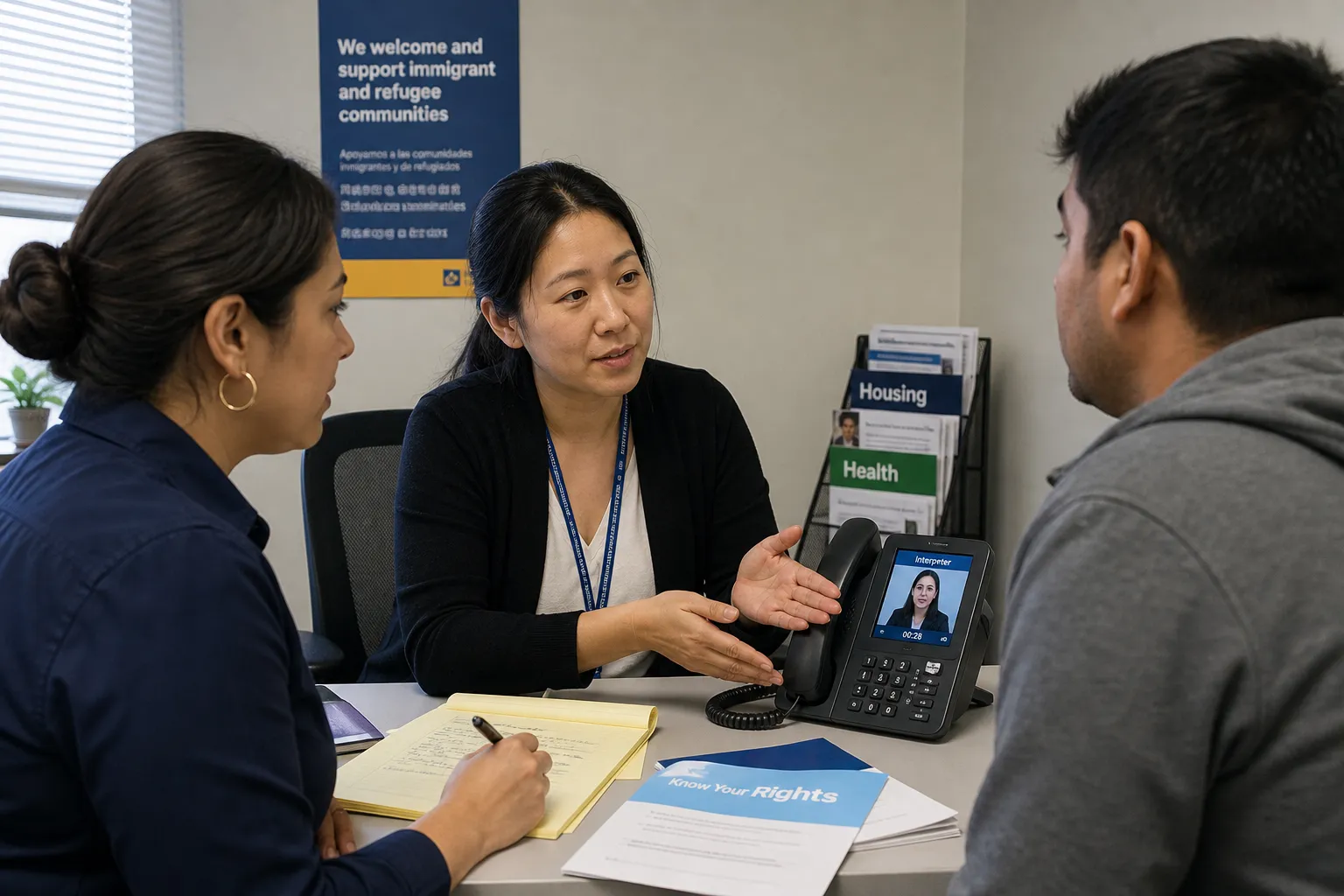
Government offices, schools, nonprofits, housing teams, and community support organizations frequently use telephonic interpreting when assisting residents with forms, benefits, service access, crisis response, or hotline support.
Events, conferences, and attendee services
This is a major content gap in competitor articles. Most providers talk about healthcare and call centers, but not how phone interpretation fits event operations.
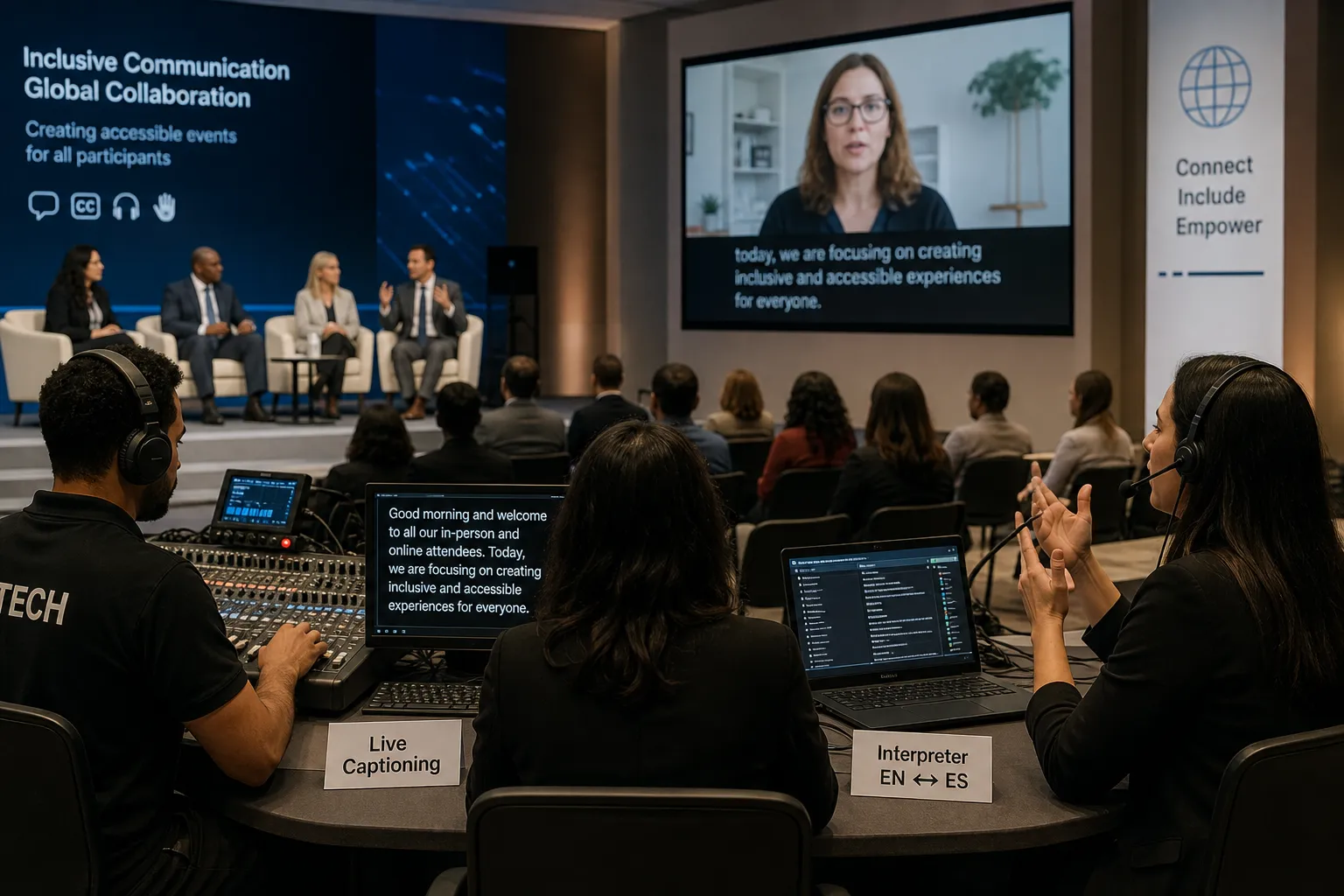
For conferences, trade shows, hybrid events, churches, and broadcasts, telephonic interpretation can support multilingual registration lines, attendee hotlines, sponsor coordination, vendor communication, and pre-event support calls. It also works as one layer within a broader access plan that may include live interpreters, real-time captioning, subtitling, translated materials, and technician-managed audio workflows.
That broader view matters. Team Stream helps clients align telephonic support with live, virtual, and hybrid event delivery so language access is not fragmented across vendors.
Telephonic vs Video vs Onsite Interpreting
Organizations often choose the wrong format because they treat all interpretation methods as interchangeable. They are not.
|
Format |
Best For |
Key Strength |
Main Limitation |
|---|---|---|---|
|
Telephonic interpreting |
Fast, audio-based conversations |
Immediate access and low friction |
No visual cues |
|
Video remote interpreting |
Conversations where visual context matters |
Facial expressions, gestures, and visual clarity |
Requires stronger tech setup |
|
Onsite interpreting |
High-stakes, extended, or complex in-person interactions |
Physical presence and full situational context |
Higher scheduling and cost burden |
A strong language access strategy uses the right mode for the right situation. Team Stream regularly helps clients design blended service models so phone, video, live interpretation, captioning, and translated content work together instead of competing.
What Good Telephonic Interpretation Looks Like
Not every phone interpreting setup delivers the same quality. Clear calls depend on more than simply finding someone who speaks the language.
Qualified interpreters
The interpreter should have strong command of both languages, professional ethics, listening discipline, and the ability to preserve meaning accurately in real time.
Fast connection times
In urgent settings, waiting several minutes can derail the interaction. Speed is one of the biggest reasons organizations choose telephonic interpreting in the first place.
Confidential handling of sensitive conversations
Healthcare, legal, HR, and financial calls require careful privacy practices and professional standards.
Strong audio quality
Another content gap in competitor pages is audio quality. Even a highly skilled interpreter cannot rescue a call with poor sound, overlapping speakers, or bad device setup. Clear connections, good speaker habits, and the right audio equipment can dramatically improve outcomes.
Workflow integration
The best solution is not just available; it is easy for staff to use consistently. That may mean direct dial access, call routing logic, training, documentation, or support for multilingual event and meeting environments.
Best Practices for Clearer Interpreted Calls
Organizations often assume that once the interpreter joins, the job is done. In reality, call quality depends heavily on how staff manage the conversation.
Brief the interpreter quickly
State the topic and any essential context at the start. This helps the interpreter prepare for terminology and tone.
Speak in short segments
Pause regularly instead of speaking in long paragraphs. This improves accuracy and keeps the conversation flowing.
Use plain language
Avoid jargon, stacked questions, and vague phrasing when possible.
Address the other person directly
Say “How are you feeling today?” instead of “Ask her how she is feeling today.” This keeps the interaction more natural and respectful.
Confirm understanding for critical information
For medication instructions, legal next steps, event logistics, or financial actions, ask the other party to repeat back key points.
Reduce background noise
A quiet environment matters. In conference environments, field operations, and hybrid events, professional audio support can be a major advantage.
That is one reason Team Stream’s model is valuable beyond language alone. When a client also needs captioning, event audio support, technician services, or remote participation tools, the entire communication chain can be managed more reliably.
Common Mistakes to Avoid
Using untrained bilingual staff
Bilingual ability is not the same as interpreting skill. This is one of the biggest risks competitors mention, but not always strongly enough. Informal interpreting can lead to omissions, bias, confidentiality issues, and misunderstood instructions.
Choosing phone when visual cues are essential
Telephonic interpreting is excellent for many use cases, but not all. If sign language, physical demonstrations, emotional nuance, or visual verification matters, video or onsite support may be better.
Treating accessibility and language access separately
This is a major strategic mistake. Multilingual communication and accessibility often intersect, especially in events, webinars, internal meetings, public messaging, and media content. If you only solve for language, you may still exclude deaf or hard-of-hearing participants. If you only solve for captioning, you may still miss multilingual audiences.
Team Stream helps organizations address both together through interpreting, captioning, subtitling, translation, voiceover, and hybrid event support.
Failing to plan for peak demand
High-volume times, emergency situations, and major public-facing events expose weak language access planning fast. Organizations need scalable workflows, not just a vendor phone number saved somewhere.
Compliance, Inclusion, and Risk Reduction
Many organizations start exploring telephonic interpretation because of service pressure. They stay committed because of risk management.
In regulated environments, language access is tied to fairness, informed communication, and equitable participation. In business settings, it affects customer trust and brand reputation. In live events and public-facing communications, it shapes audience reach and accessibility performance.
Telephonic interpreting can support compliance efforts, but it is strongest when paired with a broader inclusion strategy. That may include:
-
translated written content
-
multilingual registration or support flows
-
live captioning for accessibility
-
subtitling for recorded media
-
interpreted virtual sessions
-
equipment rental and technician support for multilingual live events
This is where Team Stream adds meaningful value. Instead of forcing clients to patch together separate providers for language services, accessibility support, and production logistics, Team Stream can deliver a more unified solution.
What Competitor Content Often Misses
After reviewing leading pages in this space, the common themes are predictable: 24/7 access, many languages, fast connections, pay-by-the-minute pricing, and industry coverage. Those are important, but they are not enough to make a truly useful decision.
Here are the biggest gaps:
They rarely explain when not to use telephonic interpreting
A better article should help readers avoid the wrong-fit scenario, not just sell the service.
They underplay operational design
Connection speed matters, but so do call routing, training, device quality, audio clarity, escalation paths, and integration into everyday workflows.
They overlook events, broadcasts, and hybrid environments
This is especially relevant for Team Stream’s audience. Event producers and communications teams need language access that works across hotlines, virtual sessions, live rooms, translated assets, and accessibility requirements.
They separate interpretation from accessibility
In practice, inclusive communication often requires both multilingual support and accommodations like captioning.
They do not address blended human and AI-enabled delivery thoughtfully
Some interactions call for human interpreters. Some workflows benefit from AI-powered support, especially for scale, speed, or lower-risk use cases. The smart approach is not human versus AI. It is choosing the right combination for the context.
How Team Stream Approaches Telephonic Interpretation More Strategically
Team Stream is not just a call-based interpreting provider. We are a language access and accessibility partner.
That changes the conversation.
Human expertise where accuracy matters most
For sensitive, nuanced, or high-stakes conversations, professional human interpreters remain essential.
AI-powered support where it improves speed and scale
Some clients benefit from AI-enabled language workflows for faster turnaround or broader multilingual reach. The key is using those tools responsibly and pairing them with human oversight where needed.
Accessibility built into the plan
Real-time captioning, closed captioning, subtitling, and voiceover can be coordinated alongside interpreting, especially for meetings, events, broadcasts, and public content.
Support for live, virtual, and hybrid experiences
If your organization runs conferences, webinars, trade shows, worship services, or multilingual broadcasts, Team Stream can help unify language access, audio, captioning, and production support.
Equipment and technician support
This is another differentiator competitors usually do not offer. If your calls, meetings, or events depend on clean audio and reliable execution, equipment rental and experienced technicians can prevent the quality issues that undermine otherwise strong interpreting.
A tailored service model
With more than 25 years of experience, Team Stream understands that no two organizations need the same setup. A hospital, a conference producer, a legal services office, and a corporate communications team will each require a different mix of services, workflows, and support levels.
How to Decide if Telephonic Interpretation Is Right for You
It is likely a strong fit if you need to:
-
support fast-moving or unscheduled multilingual calls
-
improve customer service across language barriers
-
reduce delays in healthcare, legal, or public service interactions
-
create a more inclusive attendee or participant experience
-
add language access without the cost and logistics of onsite-only coverage
-
extend existing accessibility and communications programs
It may not be the only solution you need. Many organizations benefit most from a layered model that includes phone interpreting plus video, captioning, translation, subtitling, or event support.
That is often the smartest next step: not asking “Do we need telephonic interpretation?” but asking “What mix of language and accessibility services will help us communicate clearly everywhere we operate?”
Final Takeaway
Telephonic interpretation services remain one of the fastest, most practical ways to remove language barriers in real time. They help organizations communicate clearly, serve diverse audiences more effectively, and reduce the friction that language gaps create across support, care, legal, public, and event-driven environments.
But the best outcomes come from thinking beyond the phone call. Clear multilingual communication is not just about access to an interpreter. It is about accuracy, usability, accessibility, workflow design, and dependable execution.
That is why organizations choose Team Stream. We bring together human and AI-powered language solutions, real-time captioning, translation, subtitling, voiceover, equipment, technicians, and event-ready support into one responsive, service-oriented partnership. Whether you need help with customer calls, healthcare communication, multilingual meetings, or fully accessible live and hybrid events, Team Stream helps you deliver communication that is inclusive, professional, and clear.
If you are ready to strengthen language access without piecing together multiple vendors, Team Stream is ready to help you build the right solution.
FAQ
How much does telephone interpreting cost?
Telephone interpreting is often priced per minute, but the actual cost depends on language needs, call volume, service hours, and whether the solution is on-demand or integrated into a larger workflow. Organizations should also consider the value of faster resolution, reduced risk, and better customer or patient outcomes.
Does Medicare pay for interpreter services?
Medicare rules can be complex, but healthcare organizations still have important obligations around language access and meaningful communication. Many providers treat interpreter services as part of compliant, equitable care rather than something to bill separately in every situation.
What is telephonic interpretation?
Telephonic interpretation is real-time spoken language support delivered over the phone. A professional interpreter joins the call and helps two or more people communicate accurately when they do not share the same language.
Does Medicare pay for interpreter services?
Coverage questions vary, but the more important point is that providers should not rely on family members or untrained bilingual staff when accurate communication is needed. Qualified interpreting helps support patient safety, compliance, and clarity.
Does Medicare pay for interpreter services?
Even when reimbursement is not straightforward, interpreter access remains a practical and compliance-friendly investment. For many organizations, the better question is how to deliver reliable language access efficiently across calls, appointments, and care coordination.
