

Interpreting Services: Best Companies in 2026
Choosing between interpreting companies is no longer just about who can provide a linguist on short notice. In 2026, buyers are comparing platforms, responsiveness, accessibility support, AI capabilities, compliance readiness, event experience, technician support, and whether a provider can deliver consistently across live, virtual, and hybrid environments.
For event organizers, conference planners, corporate teams, trade show producers, churches, and broadcast teams, the stakes are high. A weak interpreting setup can derail audience engagement, reduce sponsor value, create compliance risks, and leave multilingual attendees feeling excluded. The best providers do more than translate words. They help organizations communicate clearly, inclusively, and confidently.
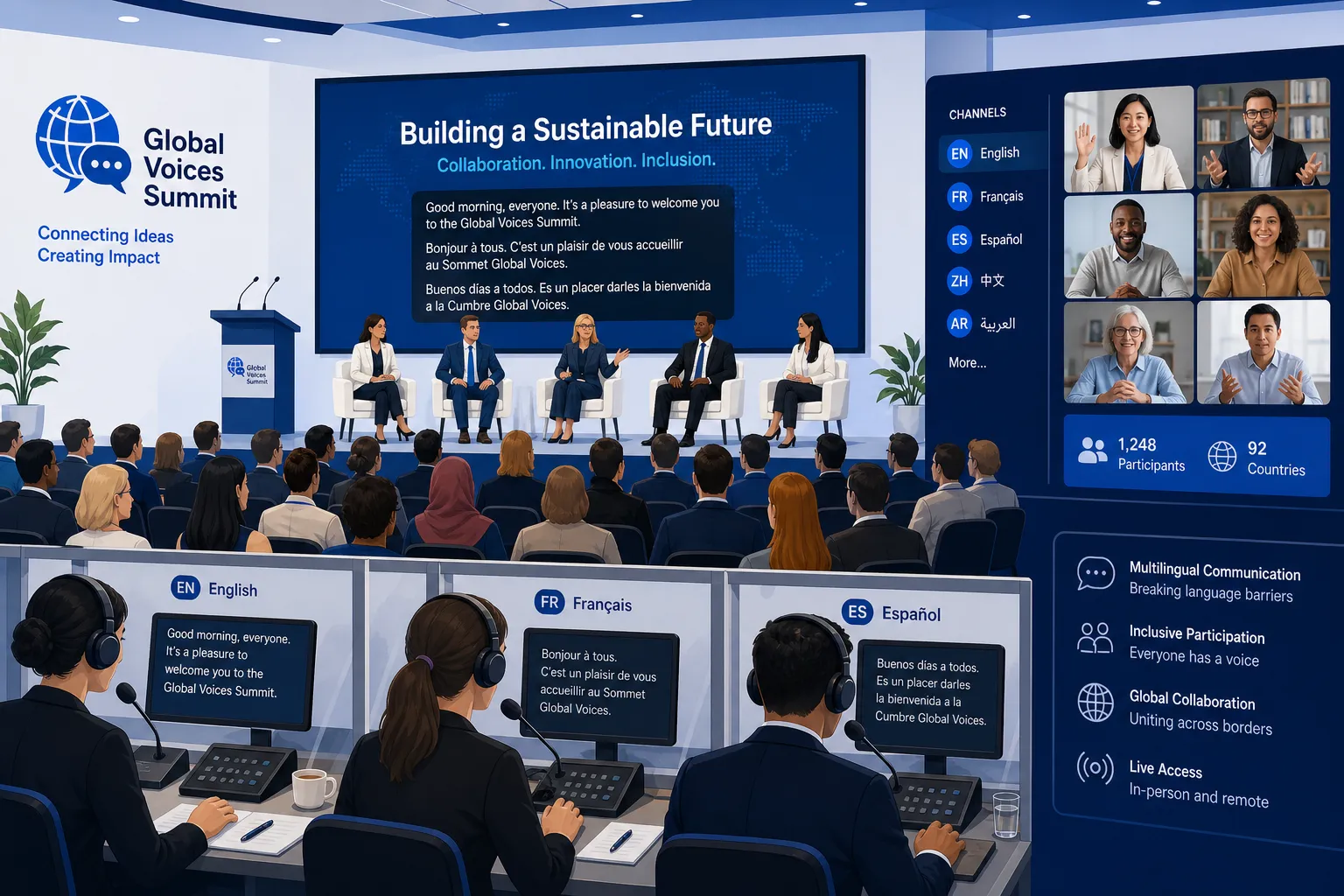
This guide breaks down what interpreting services include, how to evaluate the best interpretation companies, and which providers stand out in 2026. It also fills in a gap many competitor articles miss: the connection between interpreting, accessibility, captioning, event production, and execution quality.
What the Best Interpreting Services Actually Include
Many articles treat interpretation as a single service. In practice, the strongest interpretation services companies offer a broader delivery model.
Core interpreting formats
Most buyers will encounter these primary service types:
|
Service Type |
Best For |
Key Strength |
|---|---|---|
|
Over-the-phone interpreting (OPI) |
Fast support, customer service, healthcare, legal intake |
Speed and convenience |
|
Video remote interpreting (VRI) |
Meetings, support calls, telehealth, remote communication |
Visual cues and higher clarity |
|
On-site interpreting |
Conferences, executive meetings, court, medical, training |
In-room presence and control |
|
Simultaneous interpreting |
Conferences, live events, broadcasts, multilingual sessions |
Real-time delivery without stopping the speaker |
|
Consecutive interpreting |
Small meetings, interviews, negotiations |
Precision in lower-volume settings |
|
AI-assisted interpreting |
High-volume, lower-risk conversations, internal workflows |
Scale and rapid access |
Adjacent services smart buyers now expect
This is where many top interpretation companies separate themselves:
-
Real-time captioning for accessibility and engagement
-
Closed captioning for recorded content
-
Translation for event materials, agendas, slide decks, and signage
-
Subtitling and voiceover for post-event media
-
Equipment rental for receiver sets, booths, transmitters, and audio distribution
-
On-site or remote technicians
-
Hybrid event support for multilingual audiences in-room and online
-
Accessibility planning for inclusive communication
That broader mix matters because modern events and business communications rarely need just one service. They need a coordinated language access strategy.
Why Buyers Are Raising the Bar in 2026
A good interpreter is essential. But that alone is no longer enough.
“Patient-provider encounters in the United States are conducted in an increasingly diverse set of languages beyond English and Spanish, with 45 languages most commonly spoken in clinical visits over the last 12 months.” – AMN Healthcare / Healthcare World Languages Index 2023
That same shift is visible in business, events, training, media, and internal communications. Organizations are reaching more multilingual audiences and are under growing pressure to be inclusive, compliant, and easy to understand.
“87% of Americans use captions at least sometimes when watching videos, with nearly half (49%) using them often or always.” – XR Extreme Reach, reported by TV Tech
This is a major content gap in competitor roundups. The best providers are not only language partners; they are accessibility partners. If your audience needs interpreting, there is a strong chance they also benefit from captions, subtitling, transcripts, or multilingual media support.
How We Evaluated the Best Interpretation Companies in 2026
Competitor lists often rank brands by visibility, not by buying usefulness. A more practical comparison looks at what matters to real decision-makers.
Evaluation criteria
We assessed providers based on:
-
Service breadth
Do they offer OPI, VRI, on-site, simultaneous, and multilingual event support? -
Accessibility support
Can they pair interpreting with live captioning, subtitling, and compliance-friendly delivery? -
Technology and platform readiness
Are they strong in virtual and hybrid environments? -
Industry specialization
Do they focus on healthcare, legal, enterprise, events, or a mix? -
Scalability
Can they support a one-hour board meeting and a global conference? -
Execution support
Do they provide equipment, technician services, or event coordination help? -
Flexibility
Can they deliver in-person and remote options without forcing a rigid model? -
Responsiveness and service quality
Are they known for reliable, high-quality execution and support?
Quick Comparison of Leading Providers
|
Company |
Best Known For |
Strengths |
Potential Limitation |
|---|---|---|---|
|
Team Stream |
Events, accessibility, multilingual production support |
Interpreting, captioning, translation, equipment, technicians, hybrid flexibility |
Best fit for buyers who need more than basic call-based interpreting |
|
LanguageLine Solutions |
On-demand interpreting at scale |
Large network, phone and video support, established brand |
Less event-production oriented |
|
TransPerfect |
Global enterprise language services |
Scale, multilingual content operations, corporate depth |
Can be more complex for smaller or mid-size needs |
|
Lionbridge |
Large-scale localization and content |
Enterprise workflow, global scale, AI-enabled operations |
More localization-centric than event-centric |
|
Propio |
Fast-growing remote interpreting |
Accessible remote options, quick deployment |
Less known for full event accessibility execution |
|
CyraCom |
Healthcare communication |
Medical specialization, compliance focus |
Narrower fit for event and marketing teams |
|
RWS |
Technical, regulated, and IP-heavy language work |
High specialization, global infrastructure |
Less centered on live event delivery |
|
Day Translations |
Human-powered translation and interpreting |
Broad language services, 24/7 support |
Positioning is broader language support rather than end-to-end event execution |
The Best Interpreting Companies in 2026
1. Team Stream
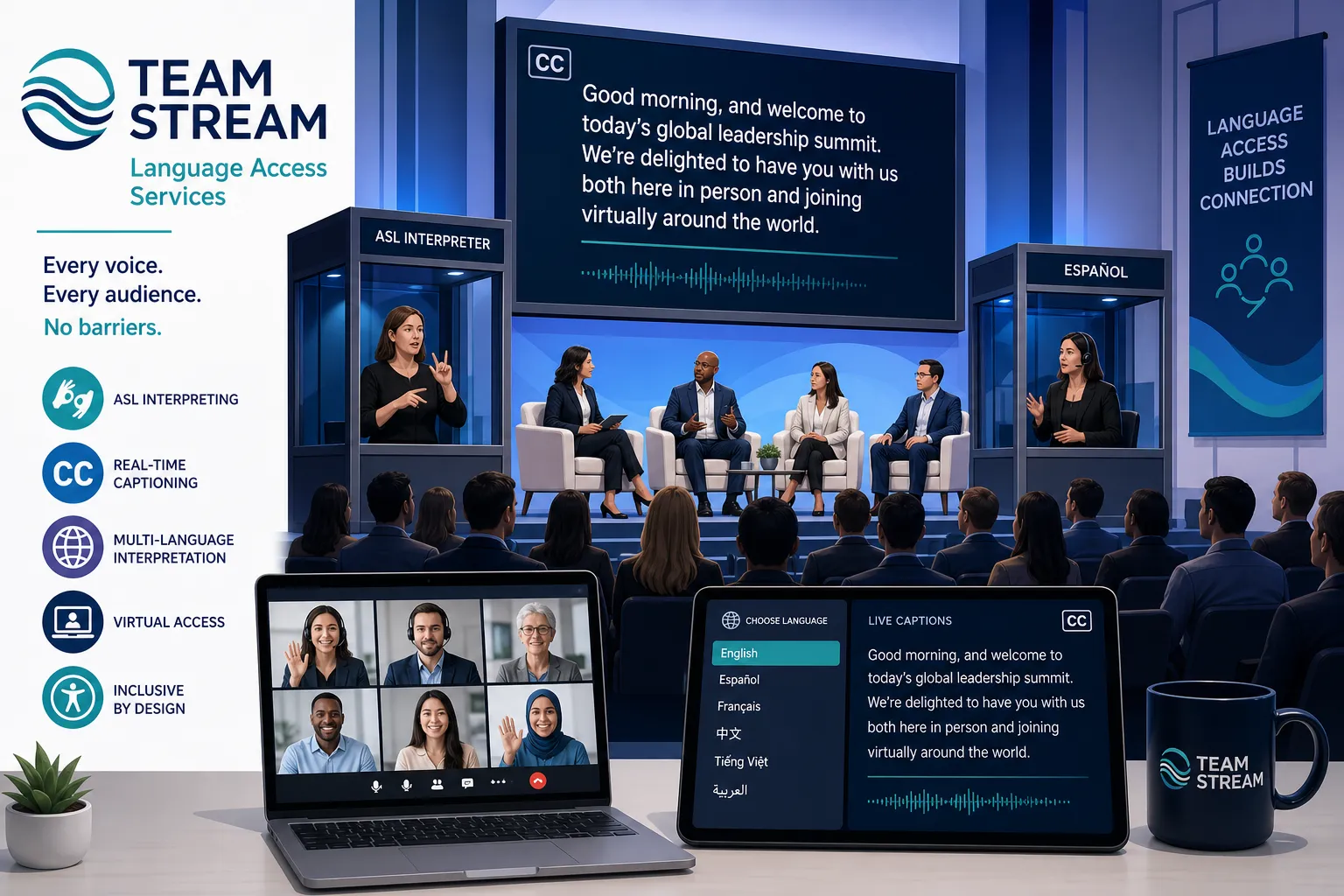
Team Stream stands out because it approaches interpreting as part of a complete communication and accessibility solution, not a standalone commodity service. For organizations running conferences, corporate meetings, live broadcasts, church events, trade shows, and hybrid experiences, that difference is significant.
Why Team Stream stands out
Team Stream combines:
-
Accurate human and AI-powered translation and interpreting
-
Real-time captioning for accessibility and audience engagement
-
End-to-end language and accessibility solutions tailored to each client
-
Support for live, virtual, and hybrid events
-
Compliance-friendly services for inclusive communication
-
Professional equipment rental and technician support
-
Flexible service delivery with in-person and remote options
-
An experienced team with over 25 years of expertise
-
Strong customer service and responsive execution
This is especially valuable for buyers who do not want to coordinate multiple vendors for interpretation, captioning, subtitling, translation, and event tech.
Best fit
Team Stream is an excellent choice for:
-
Conference planners
-
Event producers
-
Corporate communications teams
-
Churches and ministries
-
Broadcast teams
-
Organizations that need multilingual communication and accessibility support together
What makes Team Stream different from many interpretation companies in USA and abroad
Many providers are built around call-center-style interpreting. Team Stream is built for real-world communication outcomes. That means planning for audience experience, accessibility compliance, technical delivery, multilingual content, and post-event assets, not just interpreter assignment.
2. LanguageLine Solutions
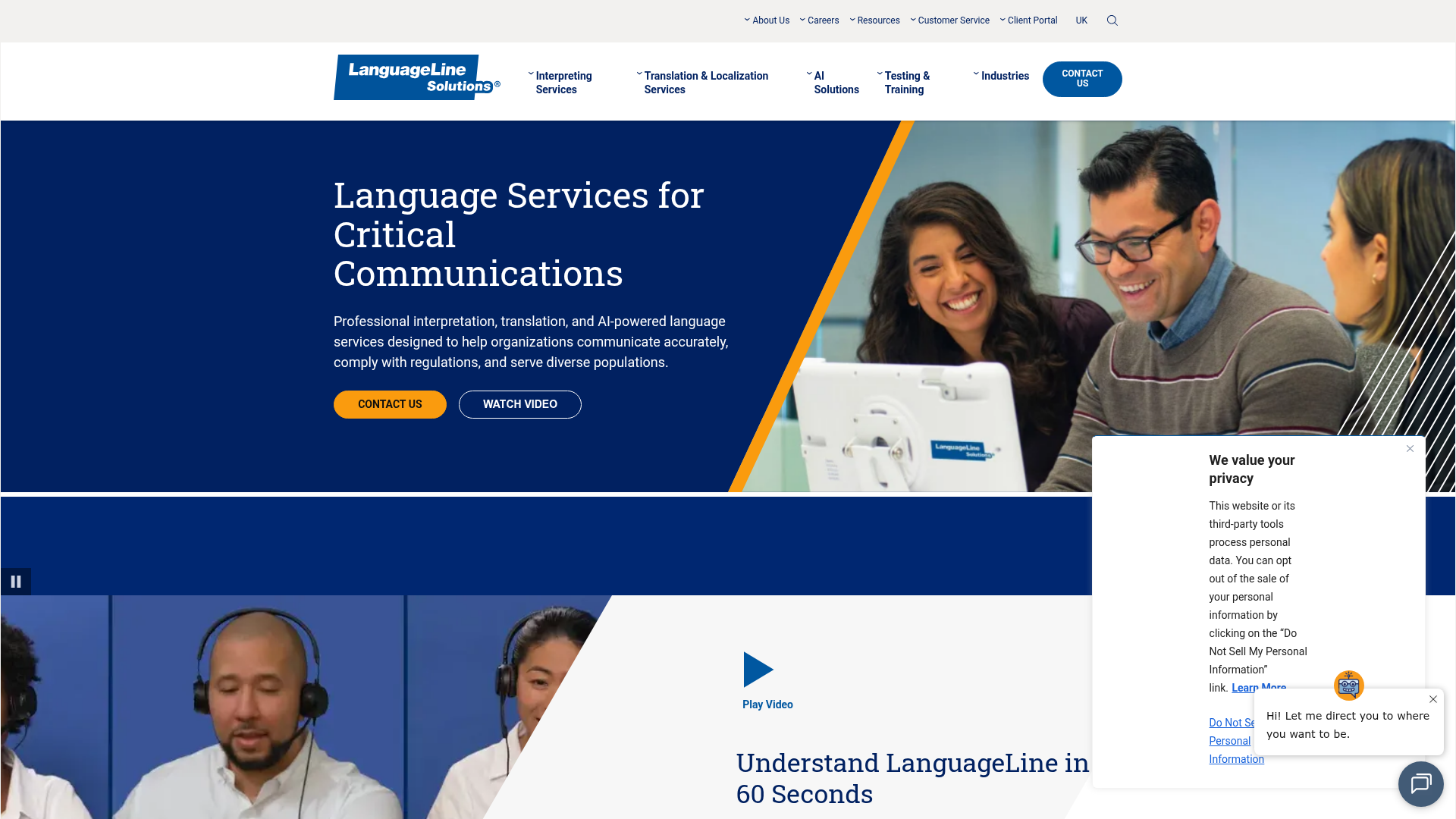
LanguageLine remains one of the most recognized names in interpretation services, especially for organizations that need rapid, on-demand access to interpreters across many languages.
Strengths
-
Strong OPI and VRI presence
-
Well-established reputation
-
Broad language coverage
-
Common choice in healthcare, public sector, and enterprise settings
Best fit
-
Hospitals and healthcare systems
-
Government agencies
-
Customer support operations
-
Organizations prioritizing high-volume remote interpreting
Watchouts
LanguageLine is a major player, but buyers planning multilingual events may need separate partners for captioning, accessibility production, or equipment logistics.
3. TransPerfect
TransPerfect is a global heavyweight with deep enterprise capabilities across translation, localization, and interpretation.
Strengths
-
Large international infrastructure
-
Strong enterprise workflows
-
Broad multilingual service portfolio
-
Useful for complex, multi-market communication needs
Best fit
-
Global corporations
-
Legal and regulated industries
-
Companies needing localization and interpreting under one umbrella
Watchouts
Its scale is a plus for large buyers, but smaller teams may find onboarding, scoping, or pricing less simple than more service-focused partners.
4. Lionbridge
Lionbridge is one of the top interpretation companies associated with large-scale multilingual content and global communication infrastructure.
Strengths
-
Strong localization pedigree
-
Scalable workflows
-
Technology-enabled operations
-
Good fit for large content ecosystems
Best fit
-
Global brands
-
Software and gaming companies
-
Enterprises with ongoing multilingual content programs
Watchouts
For buyers focused primarily on live events, interpreting plus accessibility may require more specialized coordination than an event-centered partner provides.
5. Propio
Propio has grown quickly by focusing on accessible remote interpreting and easy-to-deploy services.
Strengths
-
Remote interpreting focus
-
User-friendly technology
-
Good for fast-turnaround needs
-
Useful across healthcare, legal, and business environments
Best fit
-
Mid-sized organizations
-
Teams needing VRI and OPI without complex setup
-
Buyers wanting responsiveness in remote contexts
Watchouts
If your project includes live multilingual production, physical equipment, or full accessibility integration, you may need broader support.
6. CyraCom
CyraCom is especially strong in healthcare and is often mentioned among the best interpretation companies for medical communication.
Strengths
-
Healthcare specialization
-
HIPAA-aware delivery
-
Medical interpreting experience
-
Strong relevance for patient-provider settings
Best fit
-
Hospitals
-
Clinics
-
Health systems
-
Healthcare contact centers
Watchouts
Its strengths are concentrated in healthcare. Event teams, churches, and broadcast producers may need a provider with a wider event-service footprint.
7. RWS
RWS brings serious capability to regulated, technical, and intellectual property-heavy environments.
Strengths
-
Precision in technical translation
-
Strong enterprise systems
-
Trusted in complex regulated sectors
-
Global reach
Best fit
-
Pharma and life sciences
-
Patent-heavy businesses
-
Technical and industrial organizations
Watchouts
RWS is often a better fit for specialized content ecosystems than for event-first interpreting deployments.
8. Day Translations
Day Translations positions itself around human-powered accuracy and broad availability across translation and interpreting needs.
Strengths
-
24/7 support model
-
Broad language services
-
Certified translation positioning
-
Strong cross-industry coverage
Best fit
-
Organizations needing general language support
-
Legal and business document workflows
-
Buyers looking for translation and interpreting from one provider
Watchouts
For teams managing multilingual live events, it is important to confirm the depth of event operations, real-time accessibility support, and technician coordination available.
What Most “Best Interpreting Companies” Articles Miss
This is where buyers can make better decisions than competitor lists encourage.
1. Interpreting is only one part of multilingual communication
A conference or hybrid meeting often needs:
-
Interpreters
-
Captioners
-
Audio routing
-
Screen display planning
-
Multilingual slides or handouts
-
Subtitles for replay content
-
Technician support
-
Accessibility coordination
If you hire each piece separately, you increase failure points.
2. Accessibility is not optional anymore
Captions are no longer just a compliance checkbox. They improve comprehension, retention, engagement, and usability in noisy, remote, and recorded environments.
3. Event execution matters as much as linguistic quality
A great interpreter cannot overcome bad audio, poor routing, missing receivers, unclear stage cues, or unplanned handoffs between virtual and in-person audiences.
4. AI is useful, but not universal
The smartest providers are not “human-only” or “AI-only.” They know when to use each. For routine or scalable workflows, AI can help. For high-stakes, nuanced, or public-facing live experiences, experienced human interpreters remain critical.
How to Choose the Right Interpreting Company for Your Use Case
If you run conferences, trade shows, or hybrid events
Prioritize:
-
Simultaneous interpreting
-
Live captioning
-
Equipment rental
-
Technician support
-
Hybrid platform familiarity
-
Clear project management
Team Stream is especially strong here because it supports both multilingual communication and accessibility execution in a coordinated way.
If you need healthcare or public-sector interpreting
Prioritize:
-
OPI and VRI availability
-
Compliance readiness
-
Medical or government specialization
-
Reliable coverage across many languages
LanguageLine and CyraCom are especially relevant here.
If you manage enterprise localization at scale
Prioritize:
-
Translation management
-
Content workflows
-
Multi-market coordination
-
Integration with internal systems
TransPerfect, Lionbridge, and RWS often shine in these environments.
If you need flexible business support without building a huge program
Prioritize:
-
Easy onboarding
-
Responsive support
-
Remote interpreting options
-
Scalable pricing
Propio and Day Translations can be worth reviewing, depending on your specific needs.
Questions to Ask Before You Sign
Use these questions to evaluate interpretation companies more effectively:
-
Which interpreting modes do you support: on-site, video, phone, consecutive, simultaneous?
-
Can you provide live captioning or accessibility support as part of the same project?
-
Do you support both in-person and hybrid events?
-
Do you provide equipment rental and technicians?
-
How do you handle rare languages or last-minute changes?
-
What quality controls do you use for interpreter selection?
-
Where does AI fit into your workflow, and where do humans remain essential?
-
Can you support post-event subtitling, voiceover, or translation?
-
What is your process for rehearsals, run-of-show alignment, and technical checks?
-
Who owns coordination if something changes during the event?
If a provider struggles to answer these clearly, that is useful information.
USA vs. UK vs. Global: Does Geography Still Matter?
Buyers often search for interpretation companies in USA or interpreting companies UK because local support still matters in some scenarios:
-
On-site event staffing
-
Compliance or procurement requirements
-
Time zone coverage
-
Regional language demand
-
Equipment logistics
But geography matters less than operational fit. In 2026, the best interpretation companies are often those that can combine local presence with global delivery. A provider should be able to support a boardroom in New York, a product launch in London, a hybrid summit across Europe, and a multilingual webcast reaching audiences worldwide.
Where Team Stream Fits Best in the 2026 Market
Team Stream is not trying to be everything to everyone. Its real advantage is that it solves a very real modern problem better than many competitors: organizations do not just need interpreting; they need a reliable partner for multilingual communication and accessibility across events, media, meetings, and live experiences.
That means Team Stream is particularly compelling when you need:
-
Interpreting plus captioning
-
Multilingual live event support
-
Accessibility-friendly communication
-
Equipment and technician coordination
-
Human expertise with AI-enabled flexibility
-
Responsive service and tailored execution
For planners and teams tired of stitching together separate vendors, this is a major advantage.
Final Verdict
The best interpretation services in 2026 depend on your use case.
-
Choose Team Stream if you need a complete multilingual and accessibility partner for events, meetings, broadcasts, churches, and hybrid experiences.
-
Choose LanguageLine or CyraCom if your priority is healthcare or high-volume remote interpreting.
-
Choose TransPerfect, Lionbridge, or RWS if you need large-scale enterprise language infrastructure.
-
Choose Propio or Day Translations if you want broader language support with strong remote or general service capabilities.
If your goal is not merely to translate speech but to create clear, inclusive, high-quality communication across every audience touchpoint, Team Stream offers one of the strongest value propositions in the market. Its blend of interpreting, captioning, translation, technical support, accessibility awareness, and over 25 years of experience makes it especially well-suited for the real demands buyers face now.
When the event is live, the audience is diverse, and the message matters, execution is everything. Team Stream is built for that moment.
FAQ
What is the best interpreter company to work for?
The best company depends on your specialty, but interpreters often look for fair pay, consistent scheduling, strong support, and quality standards. Companies serving healthcare, legal, and live events can all be strong options, while firms like Team Stream may appeal to professionals who want to work on multilingual events, accessibility services, and hybrid productions.
What is the highest paid interpreter?
Typically, the highest paid interpreters are those in specialized, high-stakes fields such as conference interpreting, legal interpreting, diplomatic work, and rare-language assignments. Rates also rise when interpreters bring technical expertise, travel availability, and experience in live broadcast or executive-level events.
Is the interpreting industry going to be replaced by AI?
No. AI will expand and support the industry, especially for routine, high-volume, or lower-risk communication, but it is unlikely to replace skilled human interpreters in nuanced, public-facing, or high-consequence settings. The strongest providers now combine human expertise with AI-enabled efficiency where appropriate.
What is the highest paid interpreter?
The top earners are usually elite simultaneous interpreters and specialists working in conferences, courts, diplomacy, healthcare, or technical industries. Compensation depends on language pair, subject matter, urgency, geography, and whether the assignment includes travel or live event production demands.
Are interpreters still in demand?
Yes, demand remains strong because organizations need multilingual communication, accessibility support, and inclusive audience engagement across healthcare, business, government, and events. As global and hybrid communication grows, interpreters are increasingly needed alongside captioning, translation, and accessibility services.
