

English to Persian Translation Made Simple
If you need english to persian translation for meetings, videos, customer communication, travel content, training materials, or live events, the challenge is rarely just converting words. The real goal is to preserve meaning, tone, speed, and cultural context – especially when you need to translate english to farsi, handle reverse workflows like translate persian to english, or support live speech with translate english to persian voice tools.
For event organizers, corporate teams, church leaders, conference producers, and communications managers, that challenge becomes even bigger. You may need written translation, live interpreting, real-time captioning, subtitling, voiceover, or hybrid language support across in-person and virtual environments. That is where a partner like Team Stream stands out: combining accurate human expertise, AI-enabled workflows, accessibility support, and over 25 years of experience to help organizations communicate clearly and inclusively.
“Persian, also known as Farsi, is spoken by approximately 130 million people worldwide, including about 90 million native speakers.” – Indiana University Center for Languages of the Central Asian Region
“Only 10% of global TV advertisements include accessibility features such as closed captions or audio descriptions, despite the fact that over 50% of adults, and more than 75% of millennials and Gen Z, regularly watch TV with captions enabled.” – XR report via Business Wire
Why English to Persian translation matters more than ever
Persian – commonly called Farsi in Iran – is not a niche language. It is used across business, education, media, religion, diplomacy, and family communication. If your organization serves Persian-speaking audiences, even occasional translation mistakes can create confusion, reduce trust, or exclude people from critical information.
This matters in contexts such as:
-
Corporate town halls and executive messaging
-
Conferences and trade shows
-
Broadcast and livestream content
-
Church services and multilingual worship events
-
Training modules and HR documentation
-
Product localization and customer support
-
Accessibility and compliance-driven communication
For these use cases, literal translation is not enough. You need language support that reflects audience expectations, formality, script direction, and spoken context.
Farsi vs. Persian: are they the same?
Yes – Farsi and Persian generally refer to the same language, though usage varies by audience.
A simple distinction
-
Persian is the English-language term
-
Farsi is the native name used in Iran
-
Dari is the Afghan variety
-
Tajik is the Tajikistan variety, often written in Cyrillic
If someone searches for farsi to english, translate farsi to english, or translate persian to english, they are usually looking for the same core language pair. For SEO and practical usability, it is smart to address both terms naturally.
What makes English to Persian translation difficult?
Many tools promise one-click results, but English and Persian differ in ways that can affect meaning.
1. Different writing systems
English uses the Latin alphabet. Persian uses a modified Arabic script and is written right to left. This changes layout, punctuation behavior, and formatting requirements.
2. Word order and sentence flow
English and Persian often structure sentences differently. A direct word-for-word swap can sound unnatural or even misleading.
3. Formal vs. informal tone
Persian has important tone distinctions. The right translation for a legal notice, marketing headline, executive speech, or casual message will not be the same.
4. Idioms and cultural references
Expressions like “circle back,” “touch base,” or “move the needle” rarely translate cleanly. Good translators adapt the message rather than mirror the phrase.
5. Speech recognition challenges
Voice tools can struggle with accents, noisy rooms, code-switching, names, and domain-specific vocabulary. That is especially relevant for translate farsi to english voice and translate persian to english voice workflows.
How to translate English to Persian the right way
There is no single best method for every situation. The best workflow depends on your content type, audience, risk level, and speed requirements.
Best workflow by use case
|
Use case |
Recommended method |
Why |
|---|---|---|
|
Casual phrases and quick understanding |
AI translator |
Fast and convenient |
|
Emails and internal notes |
AI + human review |
Better clarity and tone |
|
Marketing copy |
Human or hybrid translation |
Preserves persuasion and brand voice |
|
Legal, medical, or compliance content |
Professional human translation |
Reduces risk |
|
Live meetings and events |
Interpreting + live captions |
Real-time understanding and accessibility |
|
Video content |
Translation + subtitling + QC |
Supports accuracy and audience engagement |
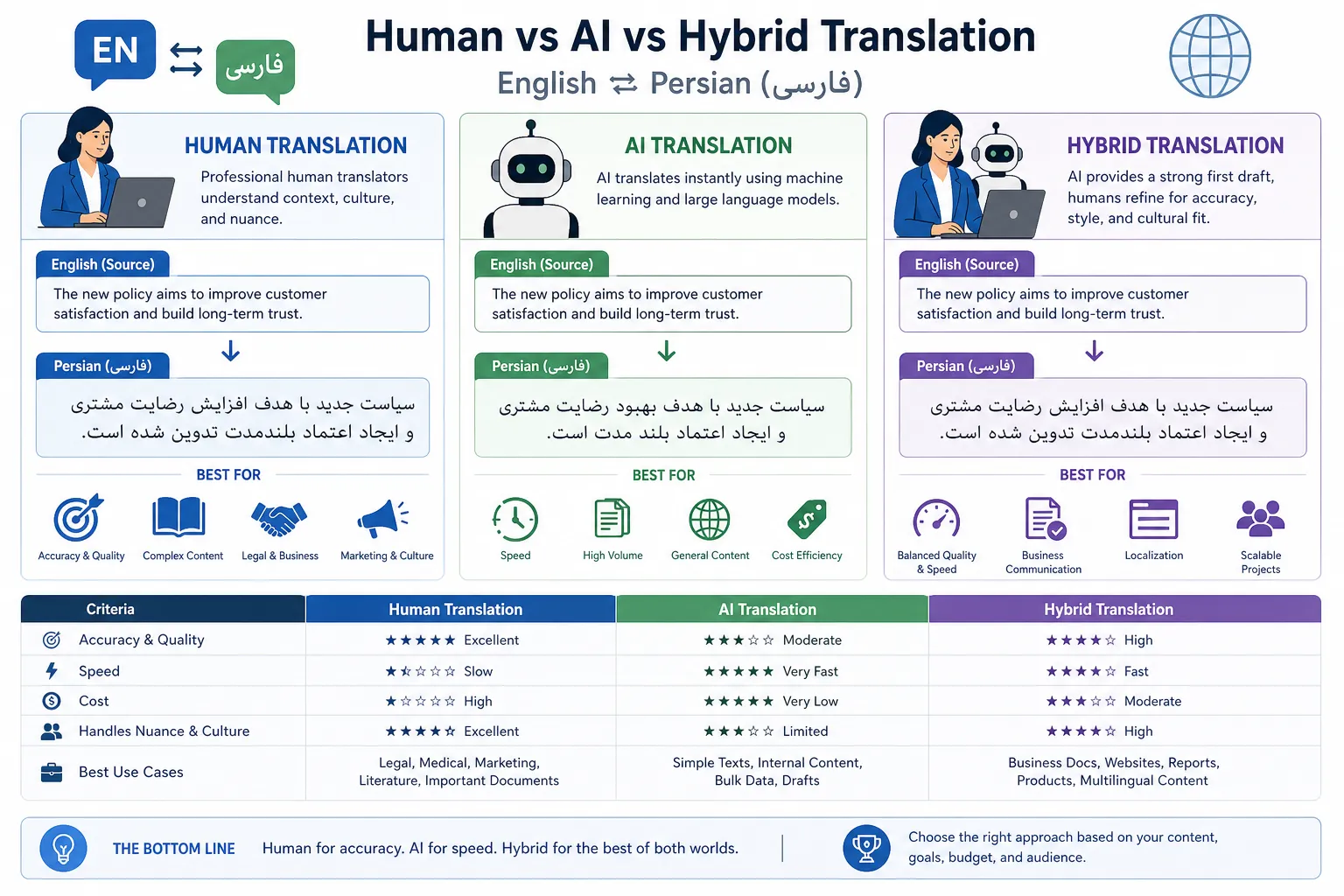
Human vs. AI vs. hybrid translation
AI translation
AI is excellent for speed, drafts, and low-risk content. It is useful when you need to translate english to persian instantly or understand incoming Persian text at a basic level.
Pros
-
Fast
-
Scalable
-
Affordable
-
Helpful for first drafts
Cons
-
Can miss nuance
-
May mistranslate idioms
-
Inconsistent with industry terminology
-
Risky for high-stakes communication
Human translation
Human linguists are best for nuance, accuracy, and cultural adaptation. This is the right choice when tone, trust, or legal precision matter.
Pros
-
Better nuance and audience fit
-
Stronger quality control
-
Better handling of ambiguity
-
Cultural sensitivity
Cons
-
Slower than machine-only workflows
-
Higher cost for large volumes
Hybrid translation
Hybrid means using AI for speed and trained professionals for review, editing, and context correction. For many organizations, this is the sweet spot.
This is also where Team Stream delivers significant value. Their approach combines accurate human and AI-powered translation and interpreting, giving clients flexible workflows that match urgency, budget, and complexity – without sacrificing quality.
Tool comparison: popular ways to translate English and Persian
Here is a practical look at the kinds of tools people commonly use.
|
Tool type |
Best for |
Limits |
|---|---|---|
|
Free online translator |
Quick phrases and gist translation |
Limited nuance and terminology control |
|
Mobile translation app |
Travel, signs, basic speech |
Variable voice accuracy |
|
Writing platform translator |
Short-to-medium text drafts |
Not ideal for live interpreting or compliance content |
|
Professional translation provider |
Business-critical materials |
Higher investment, but higher confidence |
|
Live language access partner |
Meetings, conferences, broadcasts, accessibility |
Requires planning and coordination |
Example: browser-based translation tool
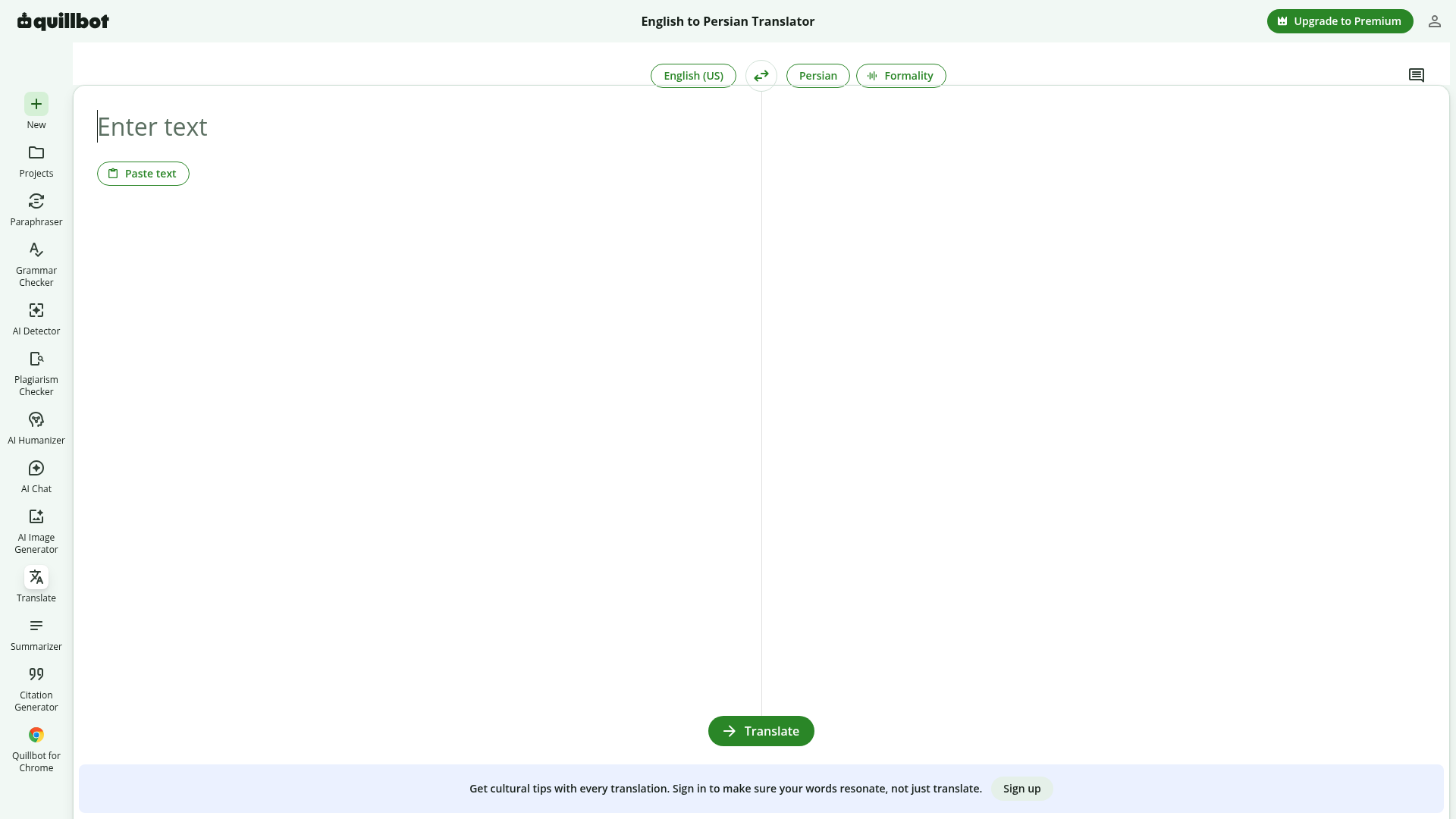
Browser tools are useful for quick text conversion and testing phrasing. They are often a good starting point for low-risk content.
Example: machine translation platform
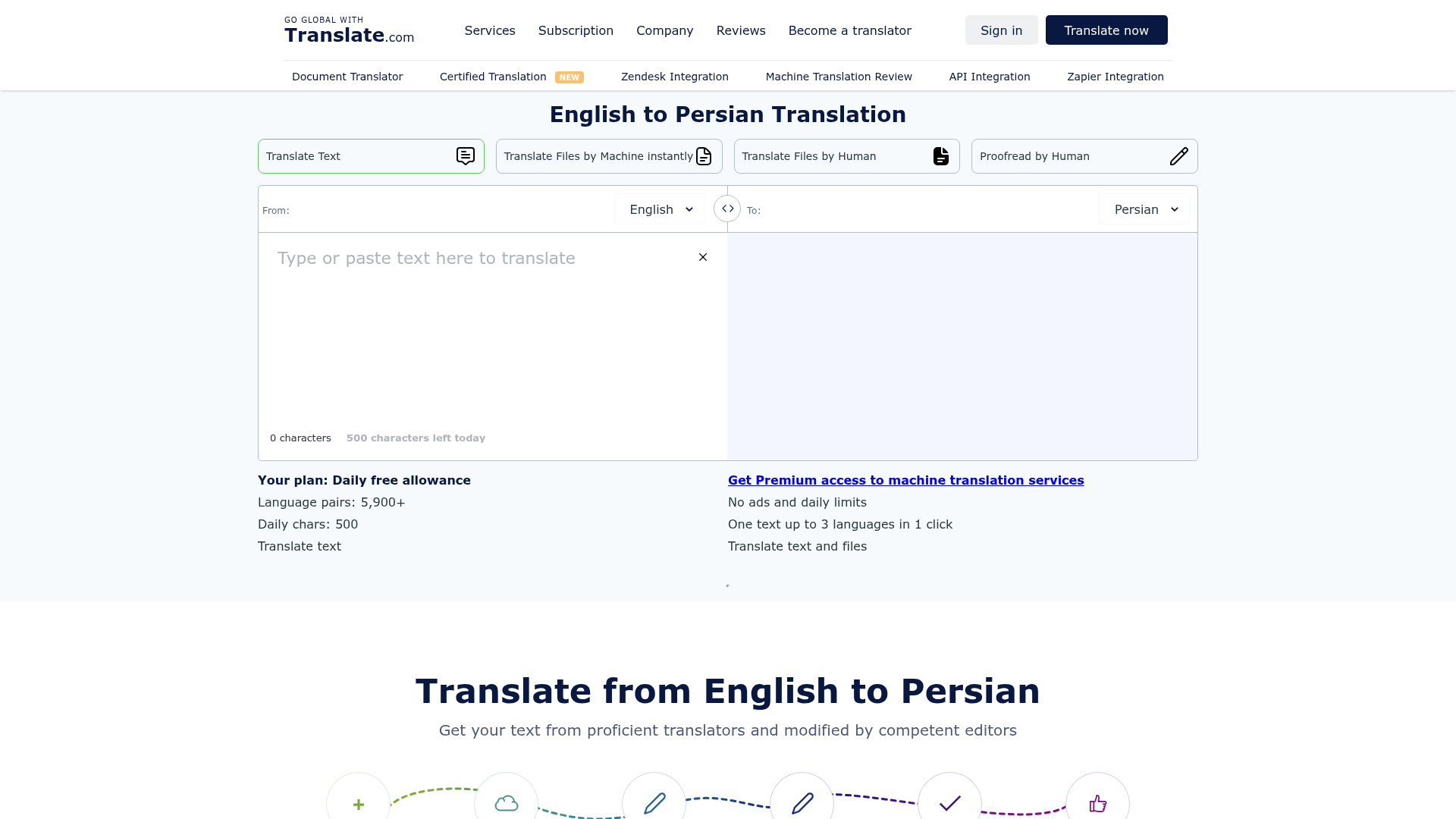
Some platforms offer both machine translation and paid human review. That can be useful if you want to move from draft output to polished business-ready copy.
Example: mobile translation app
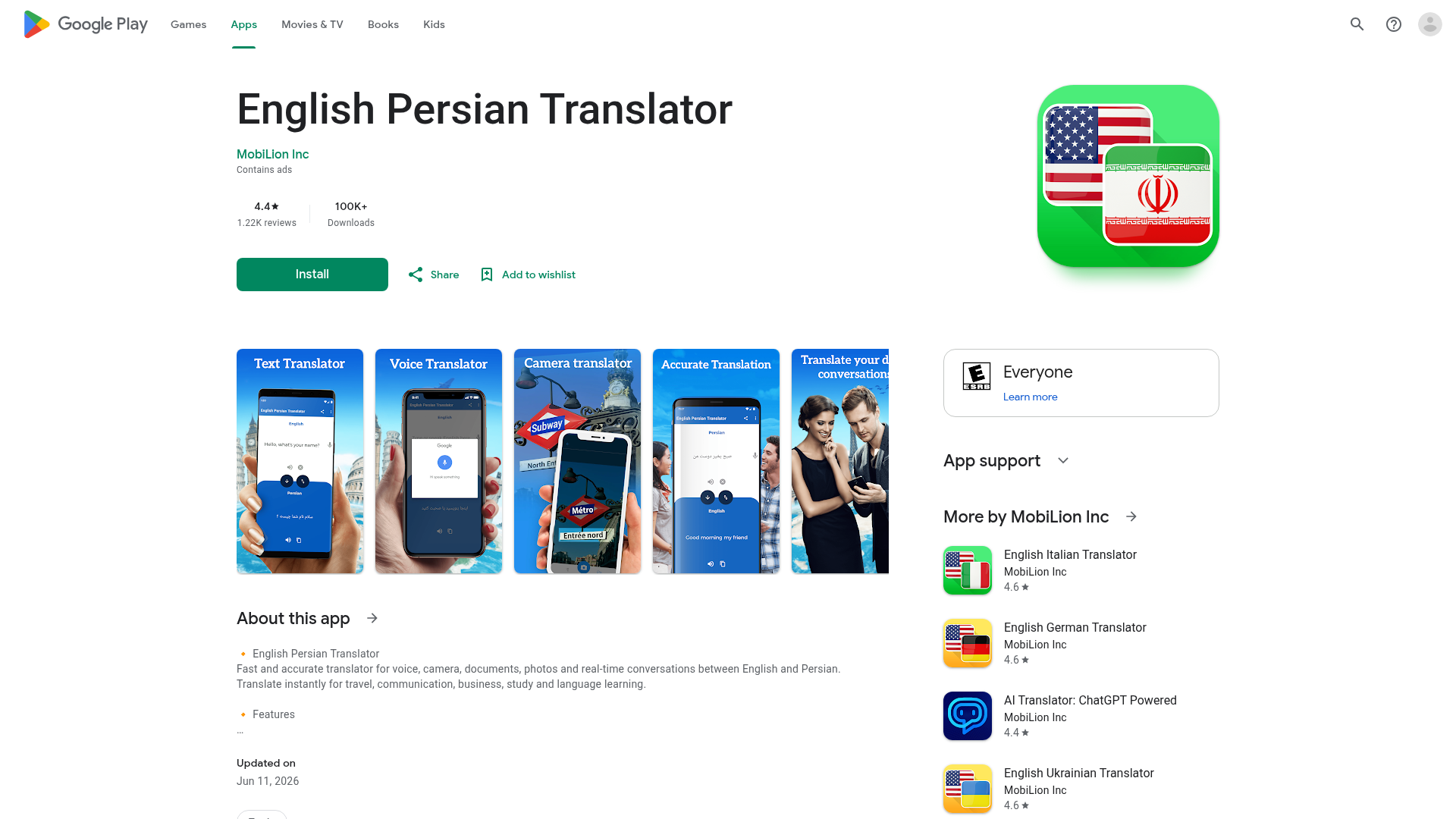
Mobile apps can help with quick farsi to english lookups, phrase translation, and basic camera or voice workflows. They are convenient, but they should not be your only system for mission-critical communication.
Voice translation: when it helps and when it fails
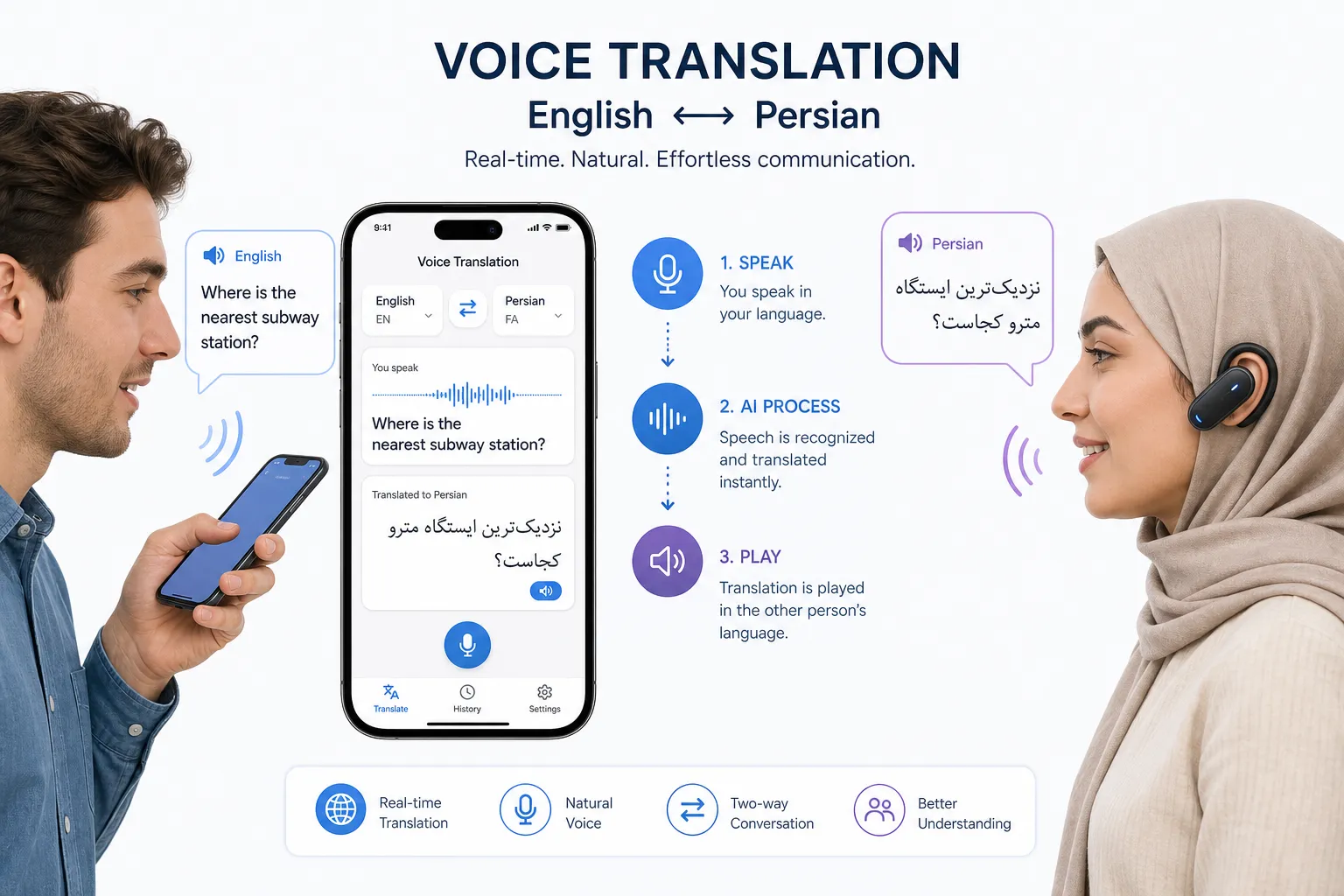
Voice workflows are increasingly popular, especially for searches like:
-
translate farsi to english voice
-
translate persian to english voice
-
translate english to persian voice
When voice translation works well
Voice tools are useful for:
-
Travel conversations
-
Basic customer service exchanges
-
Quick Q&A in informal settings
-
On-the-go phrase interpretation
-
Pronunciation support for learners
Where voice translation often breaks down
Voice translation becomes less reliable when you have:
-
Multiple speakers
-
Background noise
-
Technical terminology
-
Proper nouns and brand names
-
Fast speech or overlapping speech
-
Formal speeches or compliance-sensitive communication
For live events, executive meetings, and audience-facing broadcasts, you typically need more than an app. You need trained interpreters, real-time captioning, audio routing, platform integration, and backup support.
That is why organizations turn to Team Stream for live, virtual, and hybrid events. Their end-to-end support can include interpreting, captioning, subtitling, accessibility planning, equipment rental, and technician support – so your multilingual communication works in the real world, not just in a demo.
English to Persian voice translation for events and meetings
If you are running a multilingual event, voice translation is not just about speech recognition. It is about the full communication environment.
What a reliable live setup may include
-
Professional interpreters
-
Remote or on-site delivery
-
Real-time captioning for accessibility
-
Audience listening options
-
AV integration
-
Technician monitoring
-
Backup channels
-
Compliance-friendly workflows
Why this matters
If your CEO, keynote speaker, pastor, moderator, or trainer says something important, your audience cannot wait for a flawed machine guess. For public-facing events, inclusion and professionalism depend on accuracy.
How to translate Persian to English accurately
Reverse translation matters just as much. Many organizations focus on outbound messaging, but they also need to translate persian to english for incoming documents, customer feedback, surveys, recorded interviews, and live audience questions.
Best practices for Persian to English translation
-
Start with context
-
Is it legal, conversational, marketing, religious, or technical?
-
-
Identify the source variety
-
Iranian Persian, Dari, or Tajik can affect vocabulary and phrasing.
-
-
Watch for omitted subjects
-
Persian sometimes leaves implied meaning unstated.
-
-
Check names and locations carefully
-
Transliteration varies.
-
-
Review tone
-
Direct English phrasing can accidentally become too blunt or too soft.
-
For speech specifically
When handling translate persian to english voice tasks, capture clean audio whenever possible. A poor transcript leads to poor translation, no matter how advanced the tool is.
Cultural context: the difference between correct and effective
A sentence can be technically accurate and still fail with native speakers. Strong English to Persian translation considers audience expectations, politeness levels, and local communication norms.
Common cultural considerations
-
Respectful forms of address
-
Indirect vs. direct requests
-
Religious or social sensitivity
-
Regional vocabulary preferences
-
Formality in business communication
-
Localization of dates, numbers, and visual layout
Example
A marketing CTA that sounds energetic in English may sound pushy in Persian if translated too literally. Likewise, a diplomatic or pastoral message may need warmer phrasing than a machine translation would produce.
This is one of the biggest content gaps in many translation guides: they compare apps, but they do not explain why cultural fit determines whether your message is trusted, ignored, or misunderstood.
Common mistakes to avoid
Translating word-for-word
Literal output often sounds robotic and can distort meaning.
Ignoring right-to-left formatting
Persian layout issues can make polished content look broken.
Treating all Persian audiences as identical
Iranian Persian, Dari, and Tajik audiences may require different choices.
Using voice tools in noisy environments
Poor audio quality ruins speech recognition.
Skipping human review for high-stakes content
This is risky for contracts, executive communication, medical materials, accessibility content, and live events.
Useful English to Persian examples
Here are a few practical examples for orientation.
|
English |
Persian |
Notes |
|---|---|---|
|
Hello |
سلام |
Universal greeting |
|
Thank you |
متشکرم / ممنون |
Formal and common variants |
|
Excuse me |
ببخشید |
Useful for politeness and attention |
|
Why |
چرا |
Core question word |
|
How much? |
چقدر؟ |
Common in shopping and services |
|
Please |
لطفاً |
Formal politeness marker |
When should you use a professional translation partner?
You should strongly consider professional help when:
-
The content affects legal, financial, medical, or reputational outcomes
-
You are hosting a multilingual live event
-
Accessibility compliance matters
-
You need captions, subtitles, or voiceover
-
Your brand voice must remain consistent
-
You want one partner to handle language access and technical delivery
Why Team Stream is a strong choice

Team Stream is not just another generic translation vendor. They bring together the pieces organizations actually need:
-
Accurate human and AI-powered translation and interpreting
-
Real-time captioning for accessibility and engagement
-
Written translation, subtitling, voiceover, and closed captioning
-
Support for live, virtual, and hybrid events
-
Compliance-friendly accessibility solutions
-
Equipment rental and technician support
-
Flexible in-person and remote service delivery
-
Over 25 years of expertise
-
Responsive customer service and reliable execution
That combination is especially valuable for conferences, corporate communications, churches, trade shows, livestreams, internal meetings, and broadcasts where language access and accessibility must work together – not as separate afterthoughts.
Final verdict
If you only need to decode a simple phrase, a free tool may be enough to translate english to farsi or translate farsi to english. But when accuracy, speed, accessibility, or live communication matter, the right solution is a smarter workflow – not just a faster button.
The most effective English-Persian communication usually comes from a hybrid approach: AI for speed, people for nuance, and a professional delivery team for live and high-stakes environments. That is exactly where Team Stream excels.
If your organization needs dependable english to persian translation, translate persian to english support, real-time language access, captioning, subtitling, or event-ready multilingual execution, Team Stream is the partner to call. They help you communicate clearly, inclusively, and confidently – whether your audience is in the room, online, or across the world.
FAQ
How do you say “why” in Persian?
You say “why” in Persian as چرا (cherâ). It is a common question word used in everyday conversation, business discussion, and formal writing.
What is the best Persian translator?
The best option depends on your use case. For quick phrases, an AI tool may work, but for accurate, professional, or live communication, a hybrid or human-led solution like Team Stream is the stronger choice.
What are some basic Persian phrases?
Useful basics include سلام (hello), ممنون or متشکرم (thank you), ببخشید (excuse me), and لطفاً (please). These phrases cover greetings, politeness, and everyday interaction.
How do you say free in Farsi?
The word free can be translated in different ways depending on context. For “no cost,” Persian speakers often use terms like رایگان, while other meanings of “free” may require different wording.
How do I say “excuse me” in Farsi?
A common way to say “excuse me” in Farsi is ببخشید (bebakhshid). It works in many situations, including getting attention, apologizing lightly, or being polite in conversation.
What does nooshe joon mean?
Nooshe joon (نوش جان) is a warm Persian expression often said around food. It means something like “enjoy your meal” or “may it nourish your soul,” and reflects Persian hospitality.
